
Table of Contents
2026 Next-Gen Corporate Hospitality: Moving Beyond Multilingual Human Guides to AI-On-Demand
- Retekess
- Aug 10, 2026
Global cross-border business and cultural exchange continue to expand. According to Business Research Insights, the global interpretation services market will reach $22.43 billion in 2026, with a compound annual growth rate of 5.49% through 2035. Corporate travel budgets are projected to rise by 5% in 2026 as in-person international engagements rebound, driving steady growth in multilingual hospitality demand. At the same time, shortages of specialized language talent and climbing labor costs put growing pressure on traditional in-house interpretation teams.
The future of multilingual hospitality relies on a flexible hybrid model: one general-language host paired with real-time AI interpretation devices. Human staff handle logistics and guest experience, while AI delivers standardized translation. This balance supports quality service at lower cost.
This article breaks down the logic, use cases, and selection criteria for this new hospitality model.
Challenges of Traditional Multilingual Hospitality Models
1. High labor costs
Full-time specialized interpreters carry high fixed annual costs. Most organizations host international visits on a limited, occasional basis, leading to long idle periods and low return on fixed investment. Freelance in-person interpreters charge $45 to $150 per hour on average, with peak-season price surges and limited booking availability for rare language pairs.
2. Inflexible scheduling
Multilingual hospitality demand fluctuates widely. Peak periods bring staffing shortages, while off-peak periods create unused labor capacity. Rare language interpreters are scarce, making last-minute project matching difficult.
3. Inconsistent service quality
Translation quality and communication style vary across interpreters. Technical terms may be translated with inconsistent phrasing, leading to uneven guest experience and potential information gaps.
4. Complex multilingual coordination
Events with guests from multiple language backgrounds require multiple on-site interpreters, multiplying costs and organizational complexity.
The Light-Asset Model: One Host + AI Interpretation System
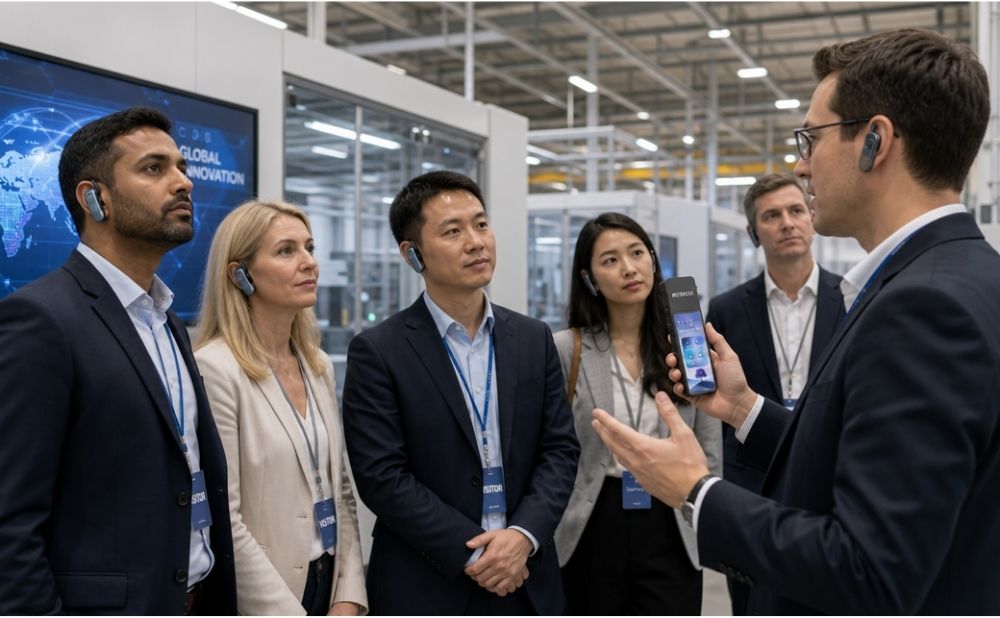
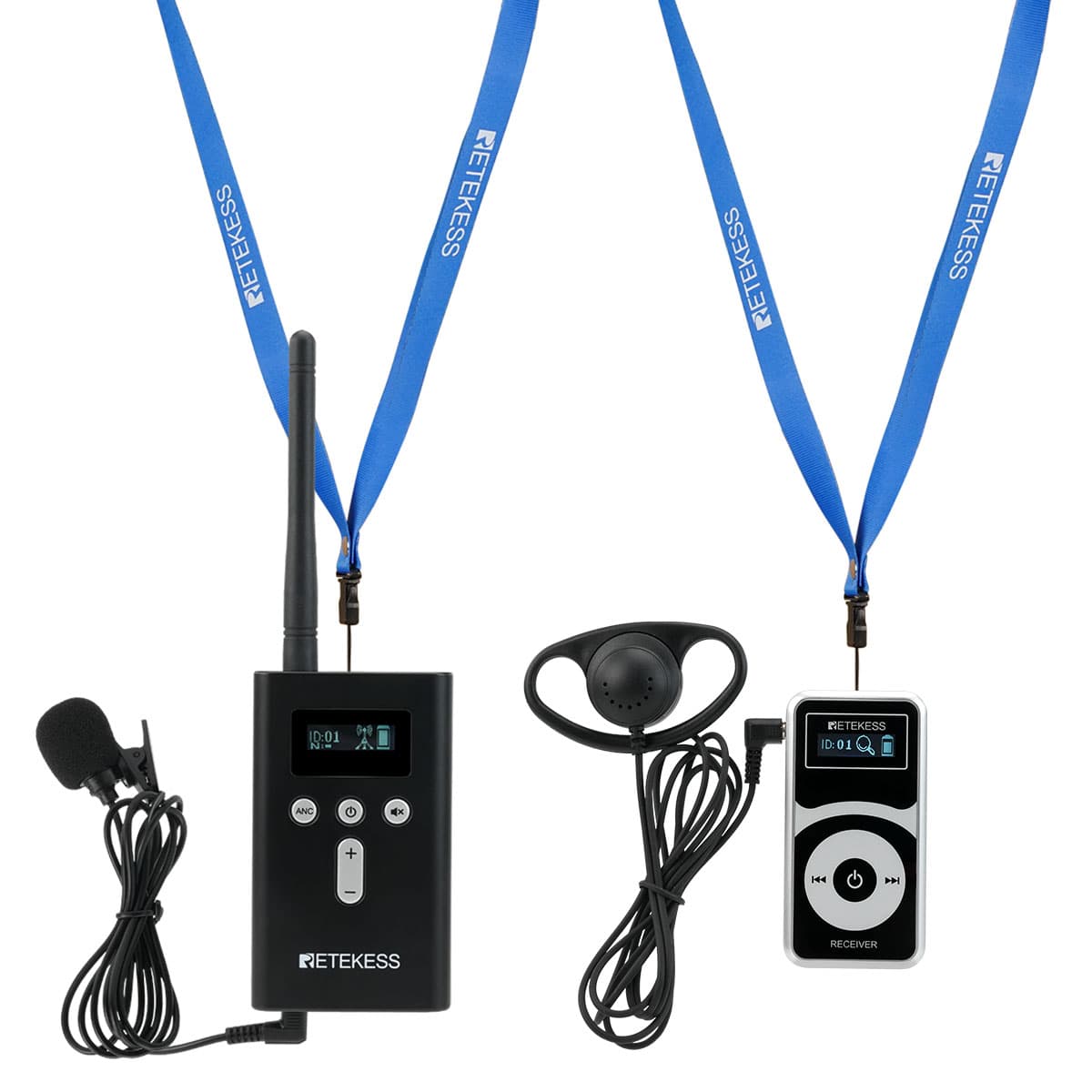
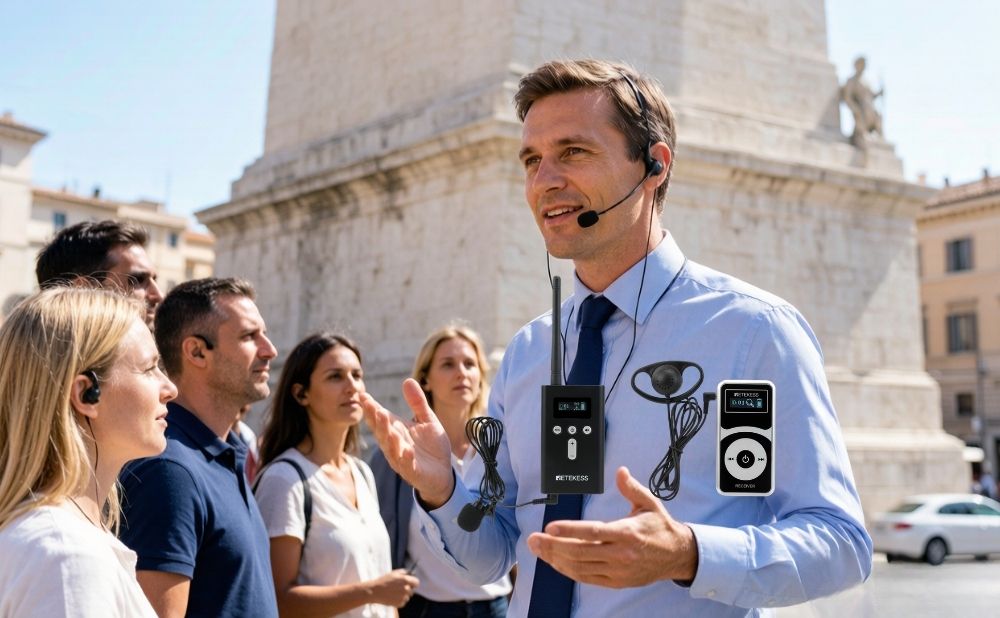
This model eliminates the need for dedicated multilingual interpreters. One host speaking a common language leads sessions and speaks into a transmitter, while the AI interpretation system handles real-time translation for group audiences.
Clear role division creates efficient, reliable operation:
- The host manages itinerary coordination, on-site support, personalized Q&A, and emergency response.
- The AI system recognizes speech in real time, translates content, and delivers audio to all receiver headphones simultaneously.
Core advantages of the model
- Cost efficiency: AI credits are consumed on demand, with no extra cost during idle periods. This reduces spending on full-time interpreter salaries and freelance booking fees, with predictable, controllable investment returns.
- Flexible deployment: Multilingual sessions can launch at any time, with no advance interpreter scheduling required. The model adapts to seasonal demand fluctuations and last-minute reception requests.
- Standardized quality: AI translation uses consistent phrasing for technical terms and formal content. Service quality stays stable across all sessions, eliminating variation between individual interpreters.
- Broad language coverage: 120+ languages are available in the system library. Two target languages can be output simultaneously per session. Settings are adjusted directly on transmitters and receivers to match different guest groups.
Applicable Multilingual Hospitality Scenarios
One AI interpretation system supports multiple common commercial scenarios.
- Corporate visitor and factory tours
Overseas clients and suppliers receive synchronized multilingual commentary on site. No dedicated on-site interpreters are required, creating a streamlined, professional reception process.
- International exhibitions and business events
Multi-national visitors receive on-demand language support at exhibition booths and event spaces. No advance interpreter coordination is needed, improving reception efficiency and brand presentation.
- Custom cross-border tour groups
Custom tours with multi-national participants run with one lead host delivering bilingual guidance. No additional language-specific guides are required, lowering group operational costs.
- Institutional and academic exchange
Cross-border institutional visits and academic seminars support flexible target language switching, accommodating participants from multiple countries.
5 Key Selection Criteria for Enterprise-Grade AI Interpretation Systems
- Choose commercial multi-user group systems, not single-unit consumer translation devices. One-to-one devices cannot support group reception. Commercial multi-channel systems support simultaneous listening for large audiences, making them suitable for group hospitality scenarios.
- Prioritize flexible language configuration with clear capability boundaries. A broad language library is valuable, but clear specifications for simultaneous output languages ensure reliable real-world performance without overstated claims.
- Select systems optimized for professional use cases. AI vocabulary should cover business, industrial, and other specialized fields to ensure accurate translation of technical terms in formal enterprise settings.
- Look for simple, intuitive operation. General staff can set up and launch sessions without professional interpretation background, with no extensive training required.
- Prioritize comfortable design for extended wear. Headphones should follow ergonomic design and support different wearing preferences to avoid discomfort during long reception sessions.
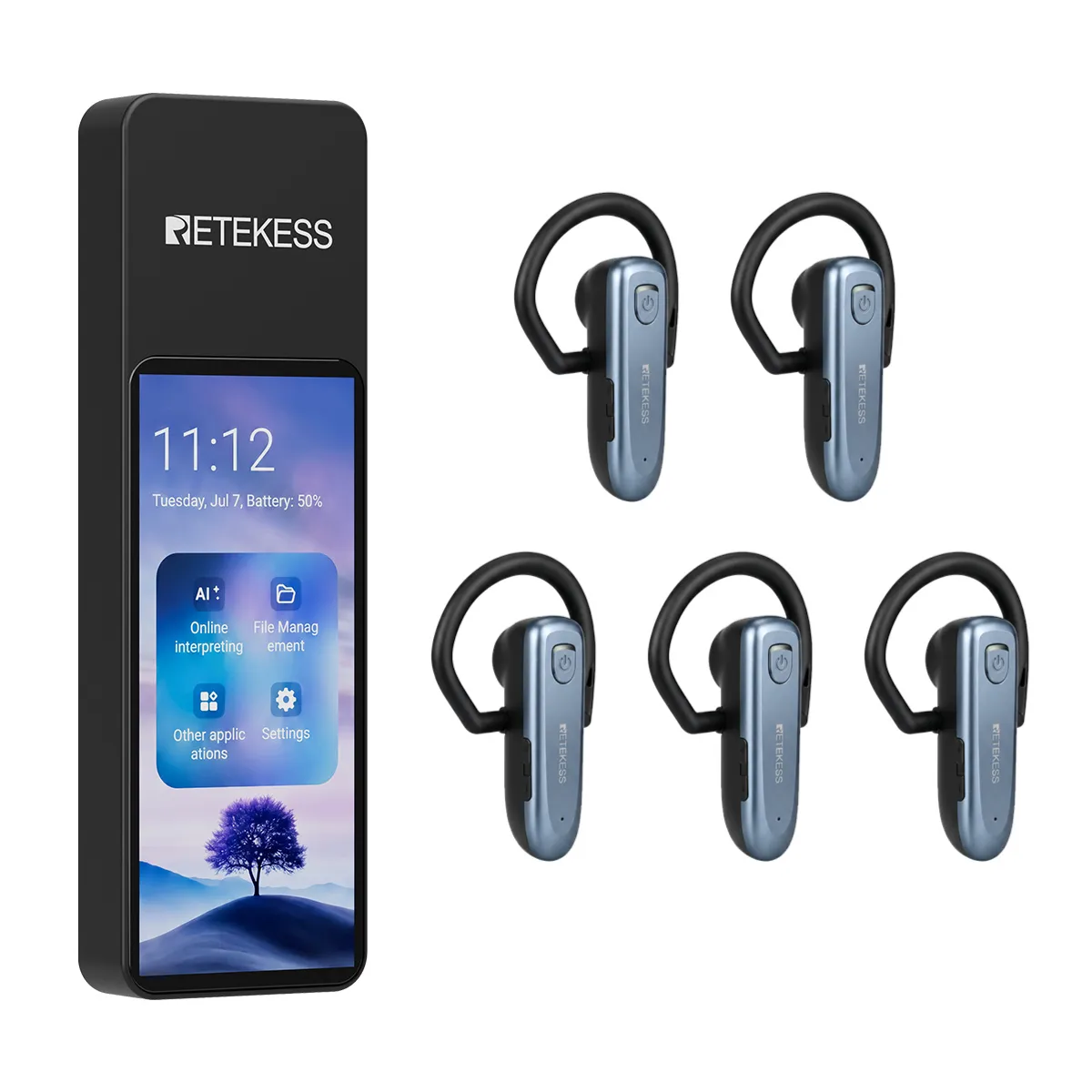
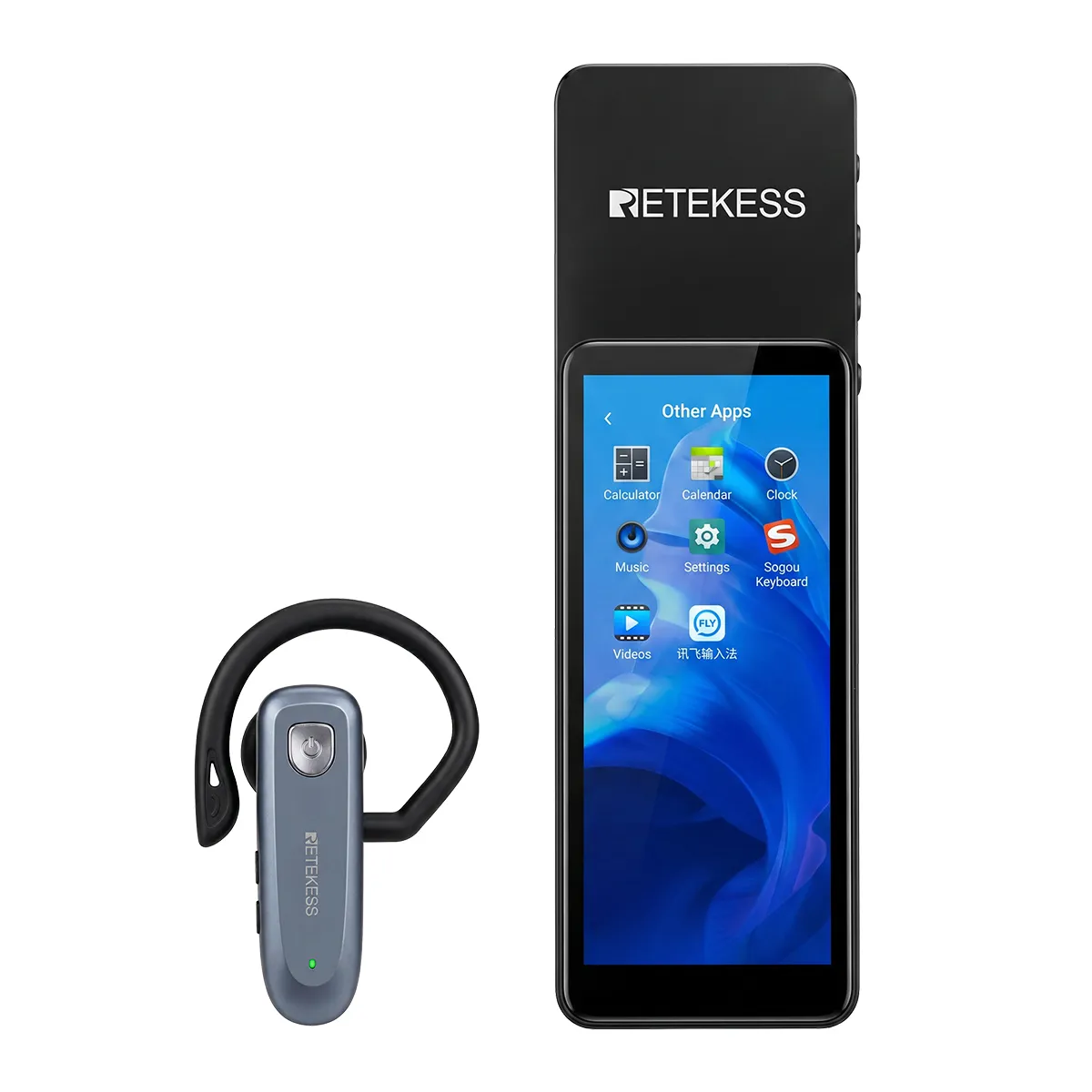
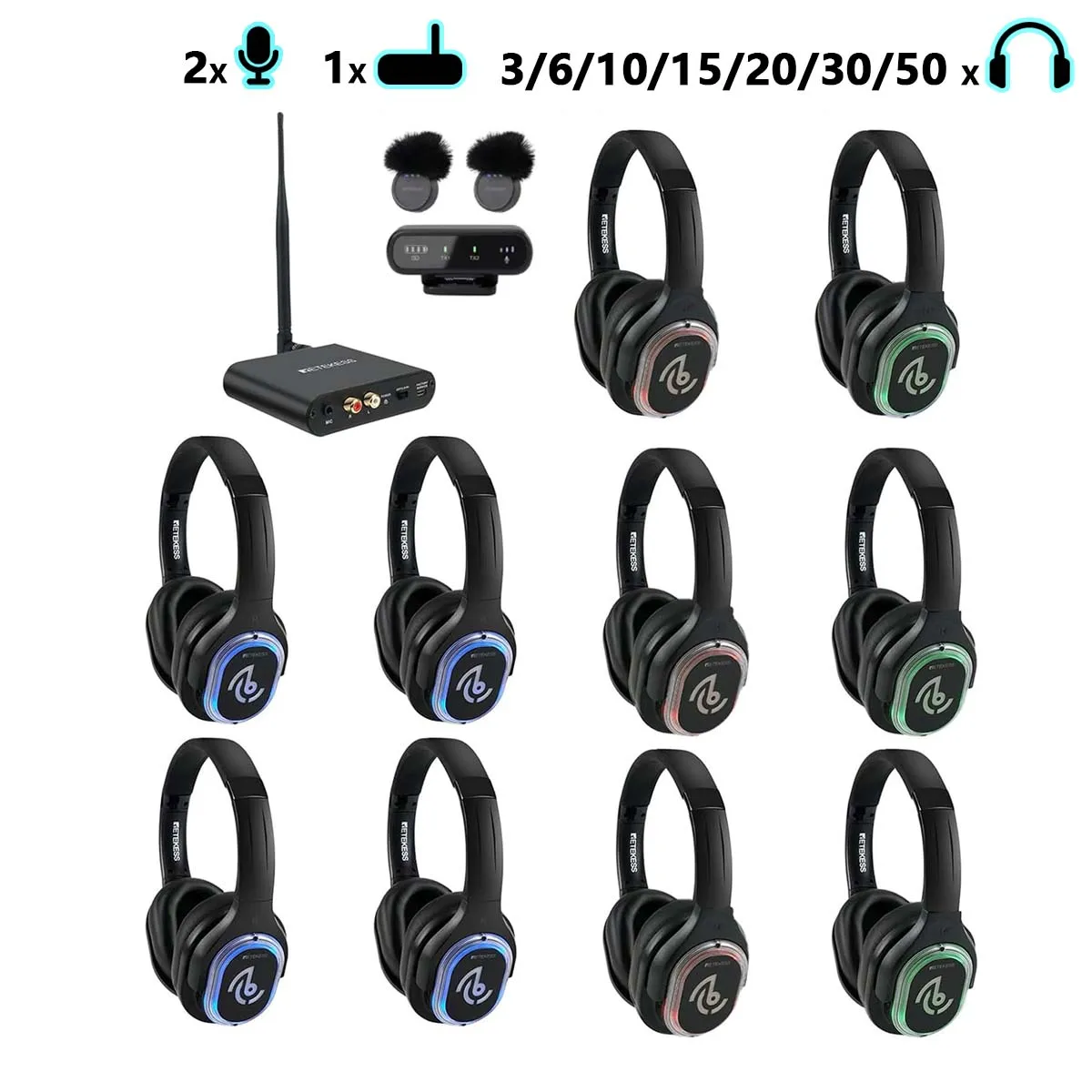
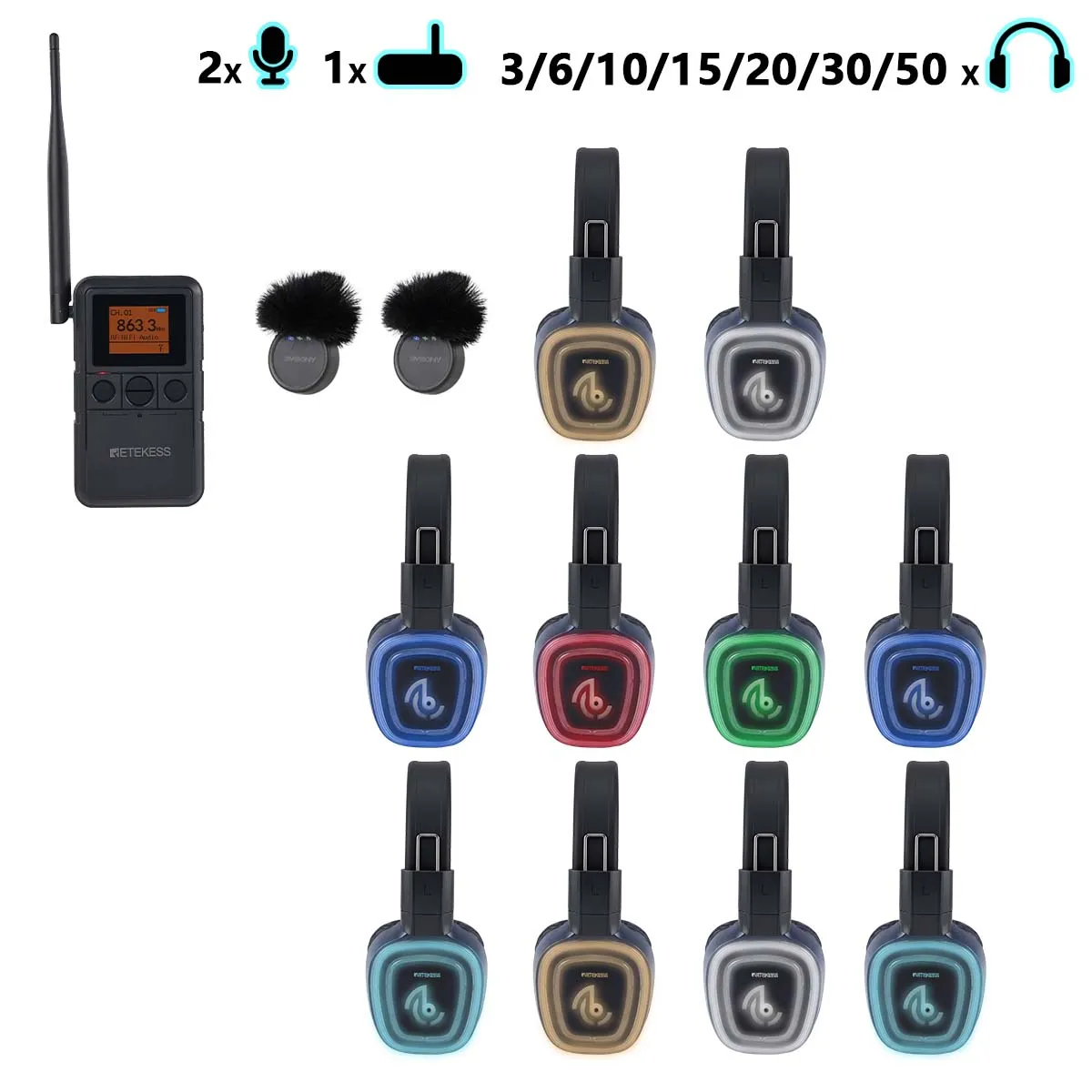
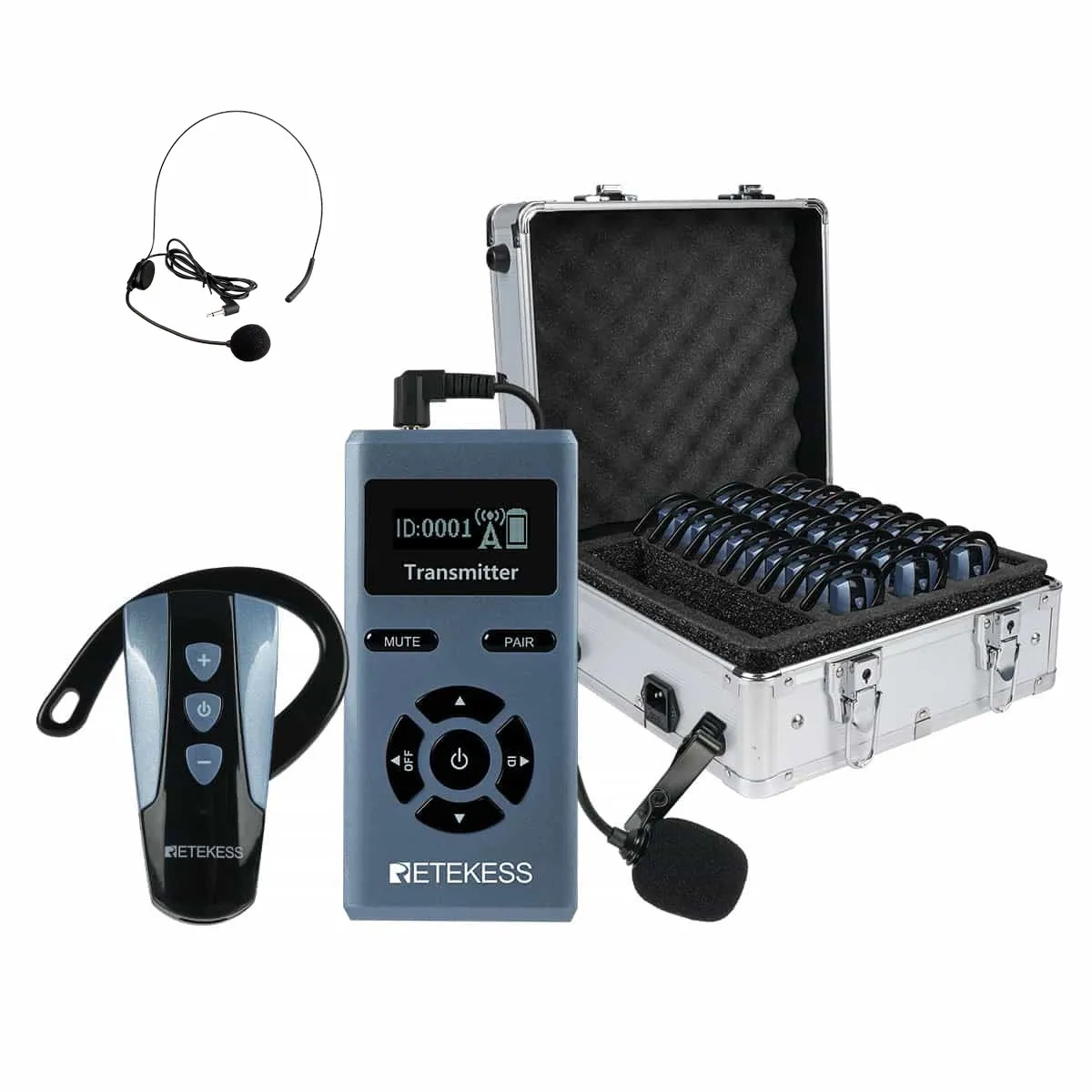
The Retekess TT136 AI real-time interpretation system is built for group hospitality settings.
- 120+ languages are available in the system library. Two target languages can be output simultaneously per session. Settings are adjusted directly on transmitters and receivers to adapt to different guest groups.
- The system uses a one-to-many group transmission model. One speaker speaks into the transmitter, and the system translates content in real time and delivers it to all receiver headphones. This design fits perfectly with the “one host + AI interpretation” light-asset hospitality model.
- AI vocabulary covers business, industrial, and other professional scenarios for consistent translation accuracy. The system operates on a credit-based pricing model, with credits consumed on demand and no idle-time costs, delivering strong long-term value.
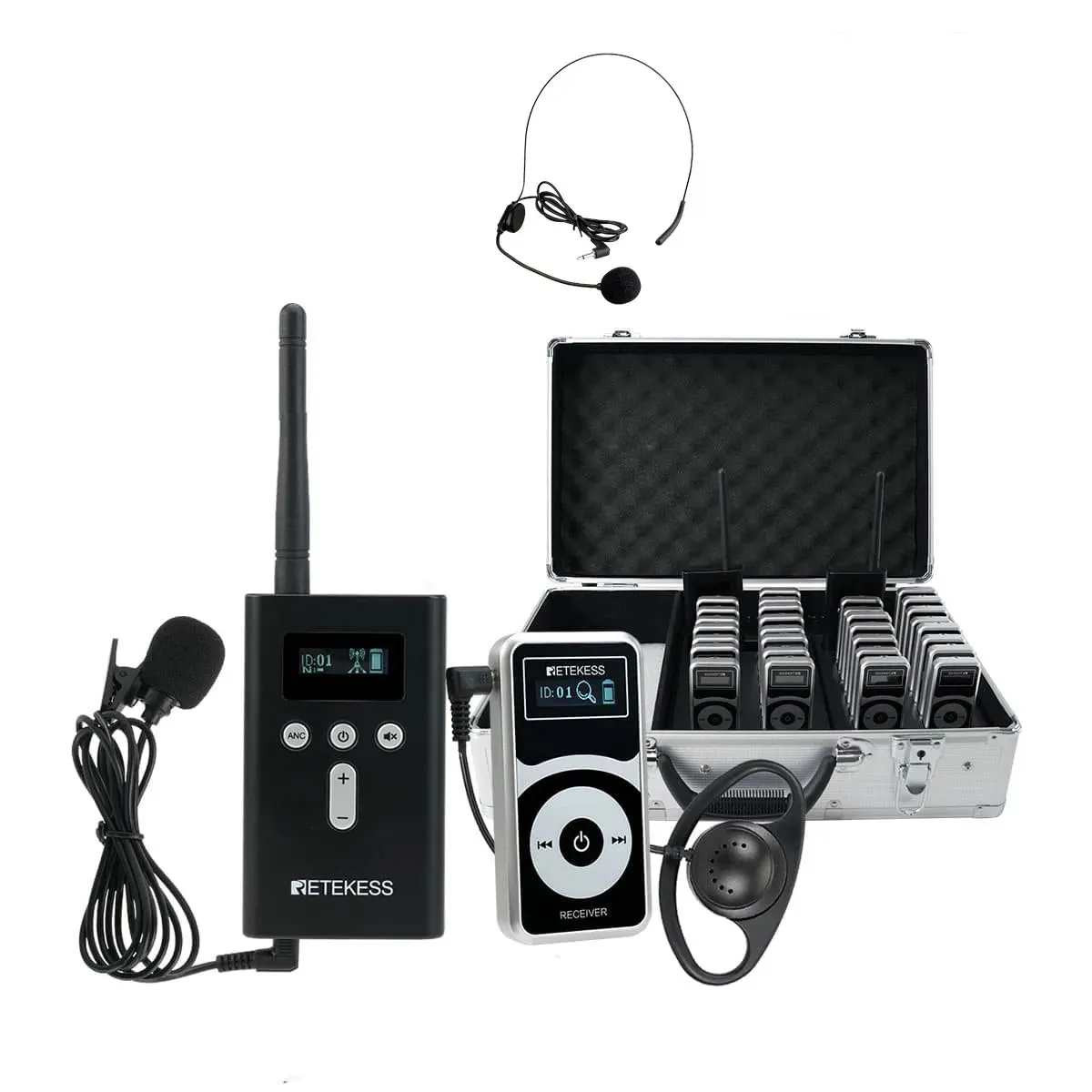
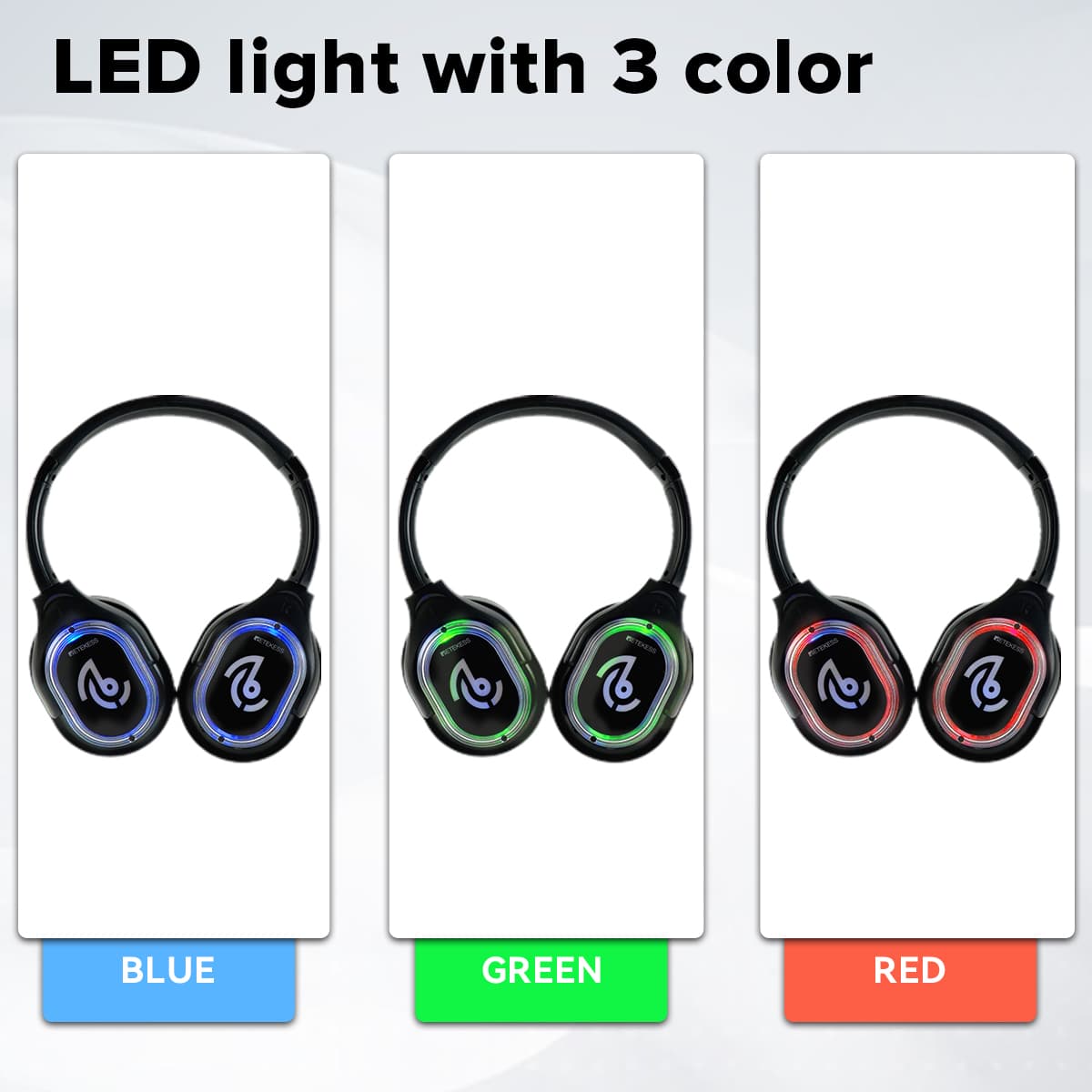
- Receiver headphones feature rotatable ear hooks that flip left or right to fit preferred wearing sides for comfortable extended use. Matching multi-slot charging and storage cases are available for streamlined bulk management.
Frequently Asked Questions
Q: Can AI translation deliver accurate results for specialized industry terminology?
A: The system includes specialized vocabulary for business, industrial, and other professional fields to support accurate translation of common technical terms in formal reception scenarios.
Q: What is the maximum number of simultaneous listeners per system?
A: There is no fixed limit on connected receivers. The system supports groups of any size within the transmission range.
Q: How complex is it to switch target languages?
A: Language settings are adjusted directly on the transmitter and receivers with simple button controls. No specialized technical knowledge is required.
Q: Can staff without interpretation experience operate the system?
A: Yes. The system features straightforward controls and automatic pairing. General staff can begin use after a brief walkthrough with no professional language background required.
![[18th Anniversary] 18 Years of Echoing Excellence: Making Communication Easier, Connecting Trust Beyond Borders](https://res.retekess.com/z_file/20260716/retekess-brand-story-making-communication-easier_20260716151044_7682.jpg)
![[18 Years in Wireless Communication] Silent Disco Systems Anniversary Celebration: Top-Selling Headphones & Event Mechanics Revealed!](https://res.retekess.com/z_file/20260713/18-years-in-wireless-communication-silent-disco-systems-anniversary-celebration_20260713175011_5749.webp)
![[Anniversary Carnival] Ding-dong! 18th Anniversary Mega Sale on Guest Paging & Calling Systems: Full Reveal of 12+ Products & Promo Rules!](https://res.retekess.com/z_file/20260713/18th-anniversary-mega-sale-on-guest-paging-calling-systems_20260713175257_0295.webp)
![[Retekess 18th Anniversary Teaser] Tour Guide System Exclusive Perks: Sneak Peek at Event Dates & Mechanics!](https://res.retekess.com/z_file/20260713/retekess-18th-anniversary-tour-guide-system-exclusive-perks--2-_20260713180135_6435.webp)
Follow Us
Pay With


 Google
 Amazon
Comments (0)