If you run a travel agency, museum, school study tour program, or corporate training organization, and you own more than 50 tour guide interpretation devices, you are undoubtedly familiar with the daily management struggles: The distribution and collection process takes hours, charging turns into a chaotic mess, responsibility is disputed when devices are damaged, and valuable staff time is wasted on logistical chores instead of creating excellent tour experiences.
You are not alone. Managing large quantities of group communication equipment is a common pain point for travel agencies and team leaders worldwide. But this situation doesn't have to be permanent. Today, I'll teach you how to efficiently manage over 50 tour guide interpretation devices, revolutionize your operational processes, save time and costs, and ultimately increase efficiency while reducing expenses.
The Hidden Chaos: 3 Core Pain Points of Managing 50+ Tour Guide Devices
Before diving into solutions, let's confront the issues that might be keeping you up at night. For teams with 50+ devices, these three problems are almost universal:
1. Cumbersome Distribution & Collection, Leading to Low Efficiency
Imagine a tour group of 30 people arriving, ready to depart. You need to manually check each device one by one: pair the transmitter with receivers, check battery levels, and register who is using which device. After a full day's tour, you repeat the entire process – and you might find lost earpieces, devices with dead batteries, or units not returned at all. When multiple tour groups depart on a single day, you'll find that hours of staff time are consumed by basic logistical registration work.
2. The Charging Nightmare: Tangled Cables + Disorganized Devices
Batch charging over 50 devices can be a logistical nightmare. Tangled USB cables, missing chargers, and devices not being charged for the next day become the norm. You might be left with a pile of devices that are only partially charged. Worse still, repeatedly plugging and unplugging can damage the charging ports of the devices. This not only delays trips but also shortens the overall lifespan of your equipment.
3. Concurrent Tours: Signal Interference + Allocation Confusion, Hurting the Visitor Experience
For institutions like scenic spots and museums that need to host multiple groups simultaneously, managing "channel allocation" for over 50 devices is another major challenge. If the devices have a limited number of channels or require manual setup one by one, "frequency crossover" is highly likely – Group A hears the guide from Group B, Group B's signal is interfered with by Group C, leading to constant visitor complaints.
Even more troublesome is the lack of a standardized channel allocation rule. When multiple tours run concurrently, staff have to manually set different channels for each group's devices. This is not only time-consuming but also prone to errors. Ultimately, the devices intended to enhance the experience become an obstacle affecting service quality.
The Solution:
The key to solving device management challenges isn't adding more staff, but choosing the right tour guide system designed for large-scale management, combined with standardized operating procedures. This combination can completely eliminate the chaos. An ideal system needs the following 4 core features:
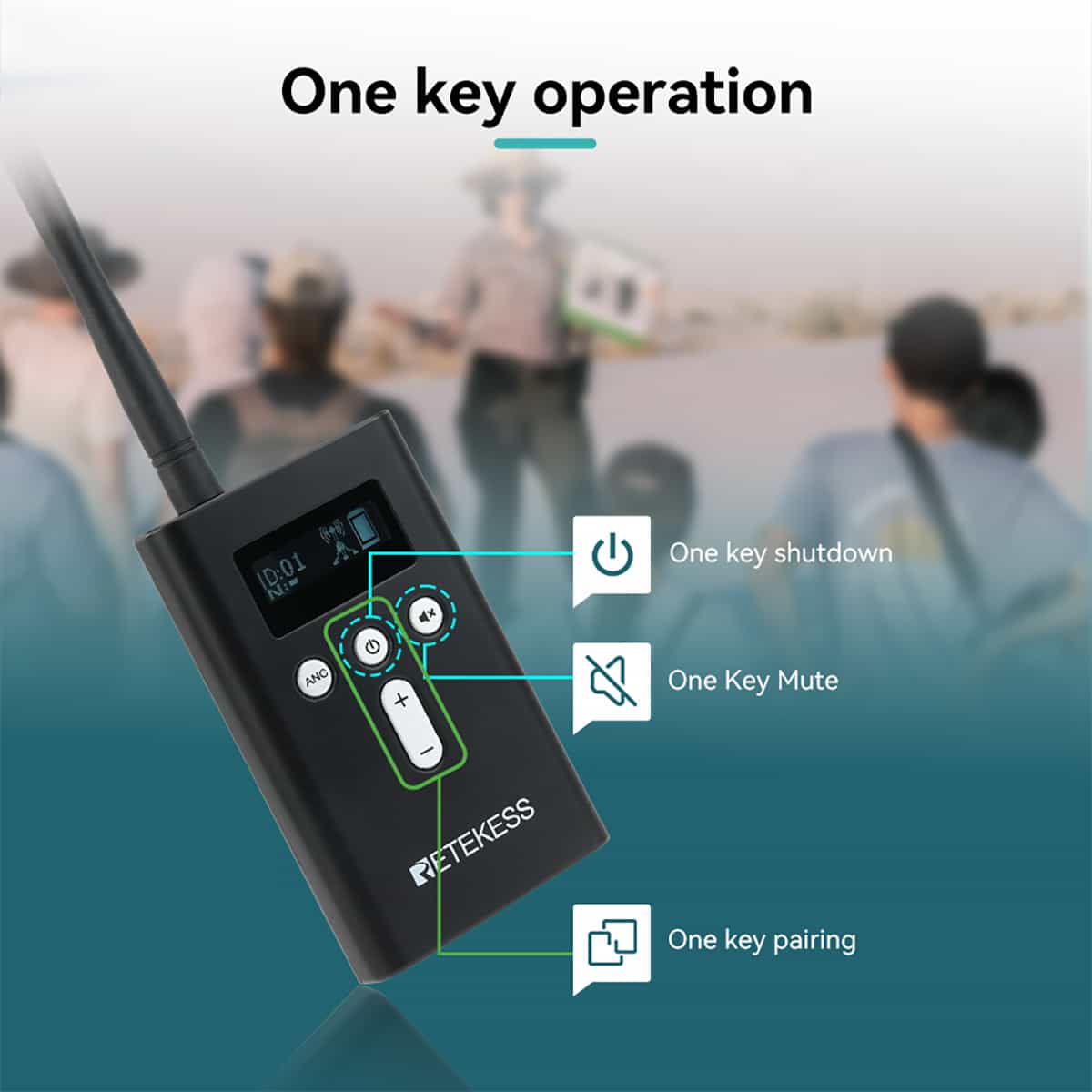
1. One-Key Pairing + One-Key Mute:
Supports one-key pairing between the transmitter and receivers, one-key muting of the transmitter, and the ability to batch power off all receivers by long-pressing the transmitter. This boosts equipment setup efficiency by up to 70%. The system automatically saves the paired channel, so devices are ready to use once powered on, with no need for reconfiguration.
(Note: Most Retekess products have this feature.)
2. Integrated Batch Charging + Storage: Say Goodbye to Cable Hassles, Devices are "Grab-and-Go"
To address the pain points of charging and storing 50+ devices, a professional interpretation system must include a "charging + storage + transport" all-in-one solution, completely replacing the inefficient model of scattered charging and random storage:
-
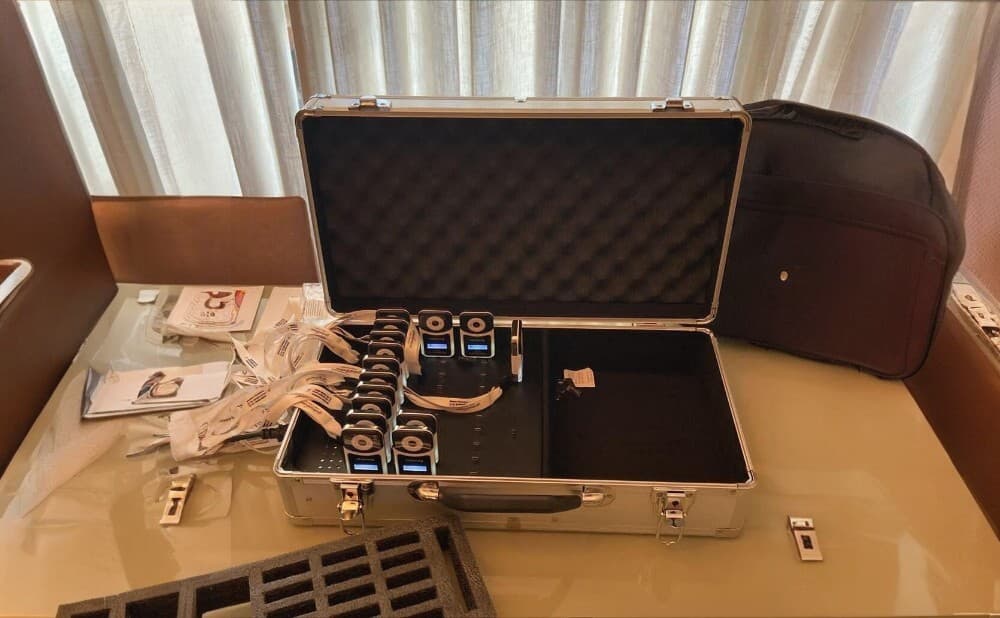
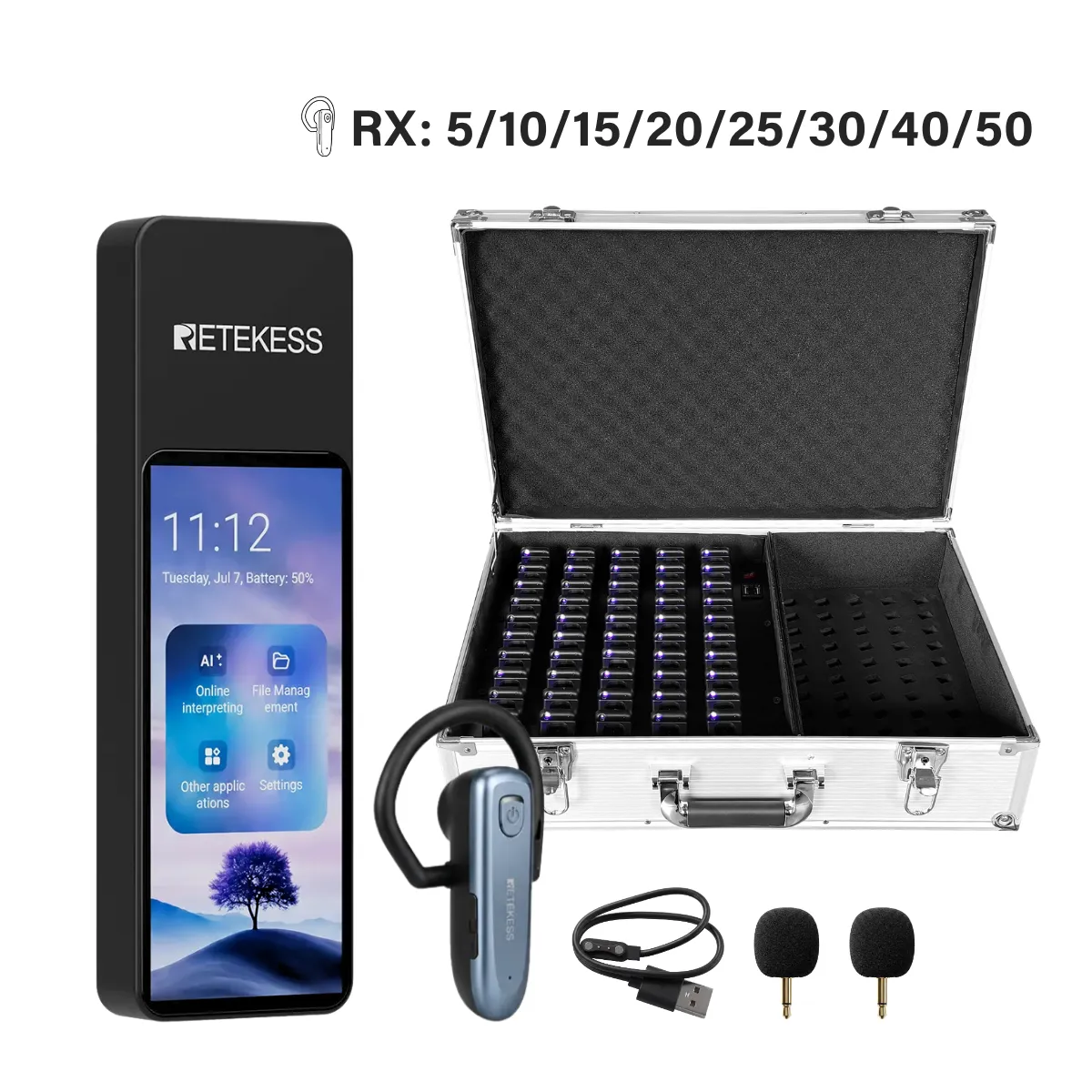
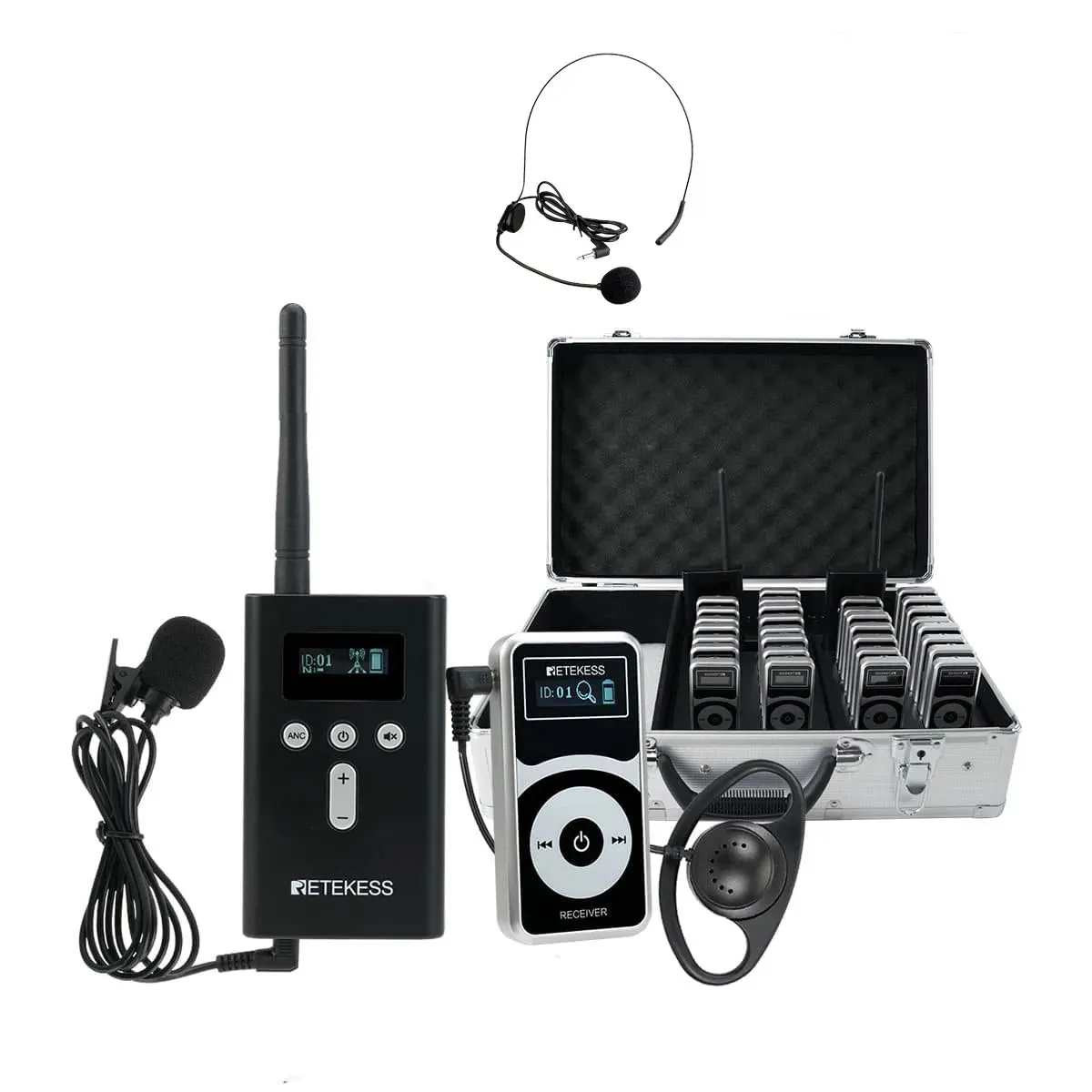
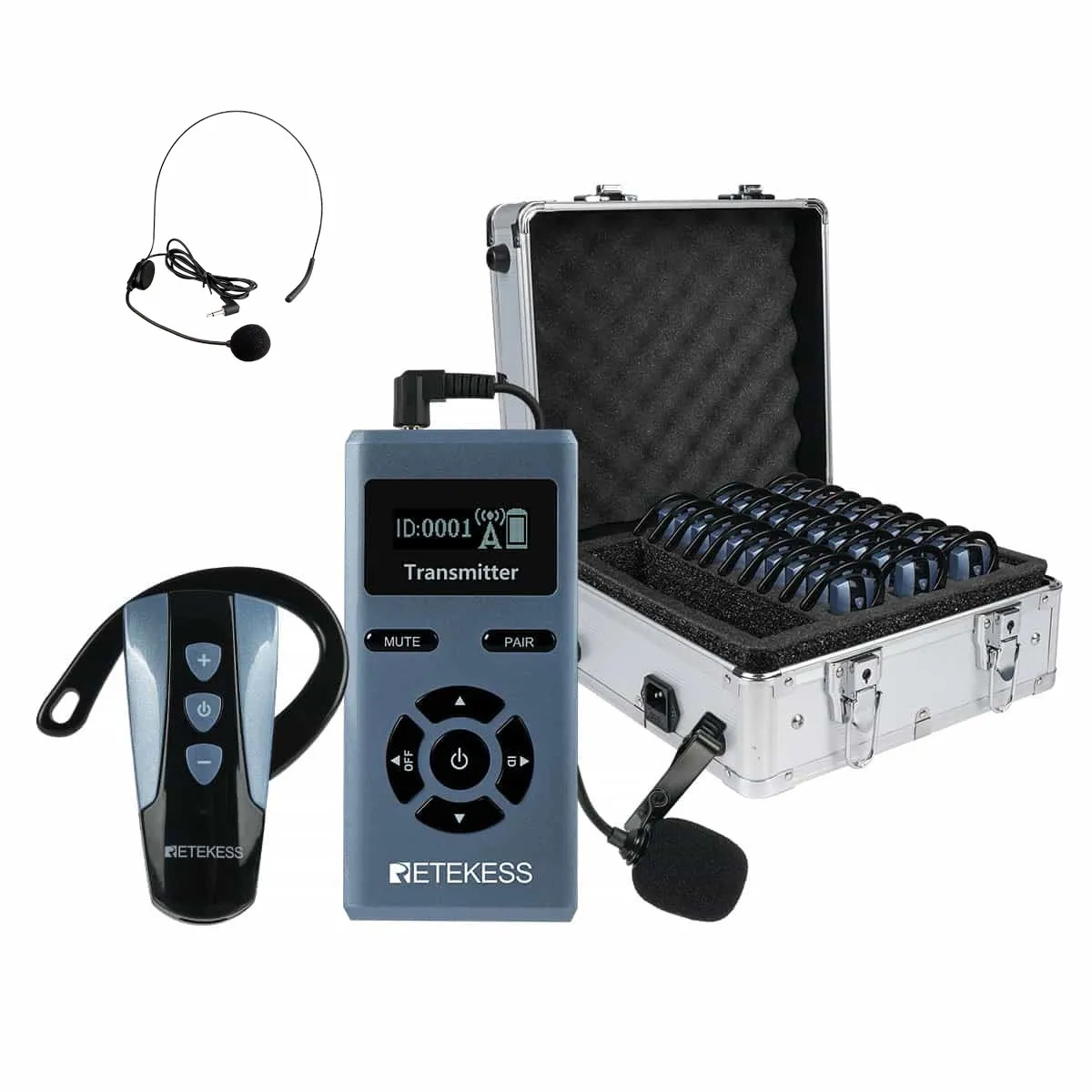
Multi-Slot Charging Cases (32 slots, 64 slots, etc.): Utilize contact charging technology, eliminating the need for manual plugging. Simply place the device into the slot, and it charges automatically. The case, often made of durable aluminum alloy, can simultaneously accommodate multiple devices and all accessories (lapel mic, earphone, lanyard), providing one-stop storage.
-
Multi-Slot Storage Cases: Portable, shockproof, and wear-resistant, these are the ideal choice for transporting equipment between locations – they can be carried by hand or worn across the body, ensuring devices remain organized during transit.
3. Unique Numbering + Group Labeling: Clear Responsibility, Orderly Management
In the absence of complex tracking systems, "unique device numbering + group labeling" is the most effective means to achieve precise management and clarify responsibility. It's simple to implement yet solves major problems.
Assign a unique number to each device and create clear labels for groups. When distributing, simply issue transmitters and receivers with the corresponding numbers based on the group size. When collecting, check each number against the list to ensure everything is returned and in good working order. This brings order to the process. (If you need label stickers, feel free to contact us.)
4. Multi-Channel, No Interference: Meeting the Needs of Concurrent Tours, Ensuring Visitor Experience
For organizations that need to host multiple groups simultaneously, the equipment's "anti-interference capability" is crucial. A professional interpretation system must have a sufficient number of selectable channels to avoid frequency crossover that ruins the experience:
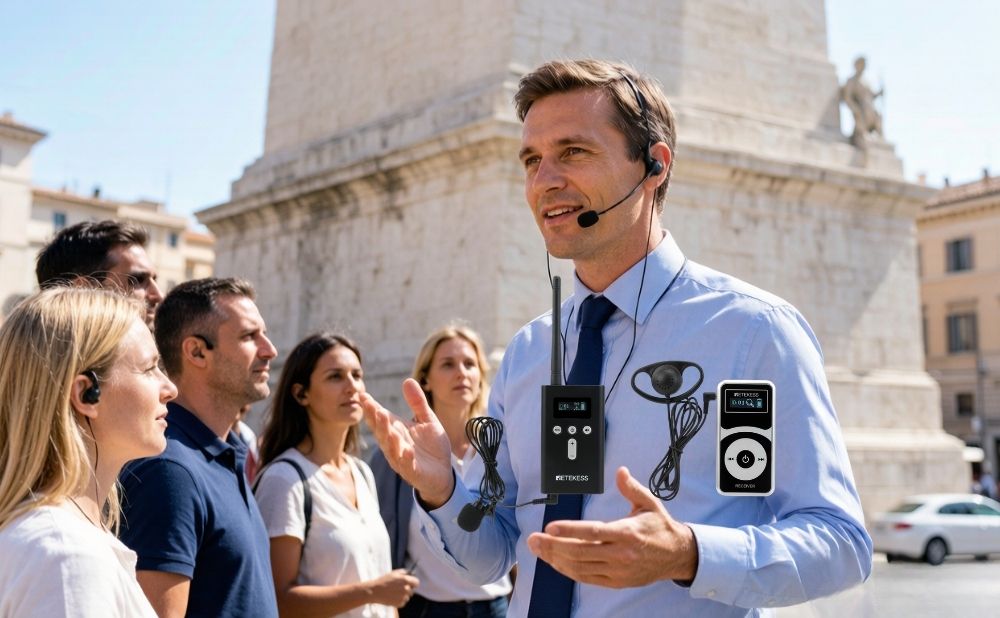
The Retekess T130P features 49 selectable channels, supporting multiple tour groups operating simultaneously in the same area. By simply assigning a different channel to each group, signal interference is completely eliminated. Combined with its 160-meter transmission range in open scenarios and DSP smart noise reduction technology, whether in outdoor scenic spots, large exhibition halls, or factory workshops, the audio quality remains clear, ensuring visitors hear only their specific guide's commentary.
Conclusion: Choose the Right Tools + Follow the Right Process – Managing 50+ Devices is No Longer Difficult
The core principle for managing over 50 tour guide interpretation devices is "the right tools + standardized processes," not simply adding more people.
By leveraging equipment features like batch charging and quick pairing, combined with practical methods like numbering labels and standardized registration, you can effectively overcome the core pain points.
The ultimate result is reduced costs, increased efficiency, and clear accountability – allowing device management to truly serve and enhance the quality of the visitor experience.



![[18th Anniversary] 18 Years of Echoing Excellence: Making Communication Easier, Connecting Trust Beyond Borders](https://res.retekess.com/z_file/20260716/retekess-brand-story-making-communication-easier_20260716151044_7682.jpg)
![[18 Years in Wireless Communication] Silent Disco Systems Anniversary Celebration: Top-Selling Headphones & Event Mechanics Revealed!](https://res.retekess.com/z_file/20260713/18-years-in-wireless-communication-silent-disco-systems-anniversary-celebration_20260713175011_5749.webp)
![[Anniversary Carnival] Ding-dong! 18th Anniversary Mega Sale on Guest Paging & Calling Systems: Full Reveal of 12+ Products & Promo Rules!](https://res.retekess.com/z_file/20260713/18th-anniversary-mega-sale-on-guest-paging-calling-systems_20260713175257_0295.webp)
![[Retekess 18th Anniversary Teaser] Tour Guide System Exclusive Perks: Sneak Peek at Event Dates & Mechanics!](https://res.retekess.com/z_file/20260713/retekess-18th-anniversary-tour-guide-system-exclusive-perks--2-_20260713180135_6435.webp)


 Google
 Amazon
Comments (0)