
Table of Contents
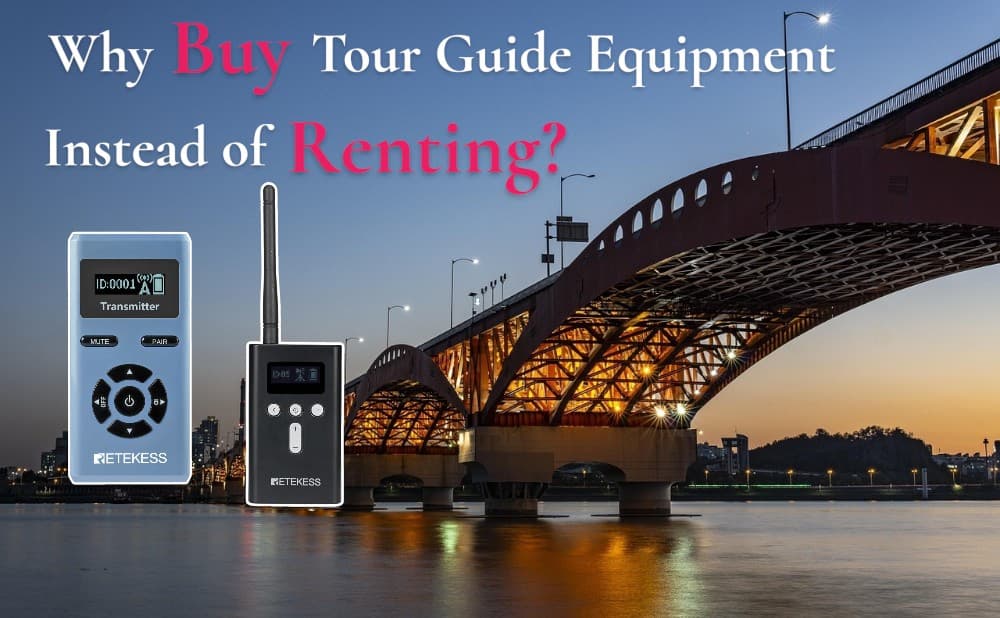
Why Buy Tour Guide Equipment Instead of Renting? — Solving 5 Key Pain Points
- Retekess
- Feb 27, 2026
- 0 Comments
Renting tour guide equipment offers convenience, but it also comes with significant downsides that often become apparent over time—impacting service quality, costs, and your control over operations. Here are the five major pain points, illustrated with real-world scenarios.
Pain Point 1: Uncontrolled Long-Term Costs & Hidden Fees
-
High Accumulated Costs: For frequent users (e.g., 3+ days per week), annual rental fees can easily exceed the cost of purchasing. Example: A device rented at $3/day for 150 days costs $450 annually—while purchasing that same device might cost only $50.
-
Hidden Fees: Unexpected charges for shipping, insurance, cleaning, battery replacement, or "wear and tear" are common. During peak seasons, rental rates may suddenly spike.
-
Cost Breakdown: Take the Retekess T130P (2 transmitters + 30 receivers) as an example. After just 17 days of intensive use, buying becomes more cost-effective than renting.
Purchase (One-Time Investment):
-
Retekess T130P (2+30) market price: $1,199.99
-
Annual maintenance cost (battery degradation, accessory replacement): approx. $50
Rental (Recurring Expense):
-
Total cost = (daily rate × days used) + hidden fees × number of rentals
-
Rental rate for 2 transmitters/30 receivers: approx. $800 per event
-
This typically includes equipment, basic insurance, and delivery. Extra charges may apply for overtime, replacement earpads, or special delivery locations.
| Annual Usage Frequency | Total Rental Cost (USD) | Total Purchase Cost (Year 1, USD) | Annual Savings with Purchase (USD) |
|---|---|---|---|
| Low: 2x/year | 800 × 2 = 1,600 | 1,160 | 440 |
| Medium: 12x/year | 800 × 12 = 9,600 | 1,160 | 8,440 |
| High: 30x/year | 800 × 30 = 24,000 | 1,160 | 22,840 |
Conclusion: The break-even point is just 1.5 events. If you run more than 2 events per year, buying starts saving you money immediately. For a mid-sized team running just one event per month, purchase pays for itself within the first quarter—and the savings over the next two years are almost pure profit.
Pain Point 2: Operational Efficiency & Flexibility Constraints
-
Logistical Hassles: Each event requires coordinating pickup and return—consuming staff time and energy. For multi-day, multi-destination tours, replacing faulty equipment mid-journey is extremely difficult.
-
Lack of Control: You can't pre-set channels or volume to your preferences. Each rental may bring different models, forcing guides to adapt on the fly.
-
Inability to Respond Quickly: Need extra units for an unexpected group size? Rentals may not be available last minute, causing missed opportunities.
Pain Point 3: Inconsistent Equipment Quality & Hygiene
-
Aging, Unreliable Gear: Rental companies often recycle older equipment to cut costs. Expect issues like dying batteries mid-tour, spotty signals, or worn-out earphones with static—all of which degrade the visitor experience.
-
Hygiene Concerns: Earpads and mic covers are high-contact items. Despite claims of sanitization, you can't verify standards. In the post-pandemic era, travelers are increasingly sensitive to this issue.
Pain Point 4: Business Risk & Dependency
-
Vendor Dependency: You're outsourcing a core operational tool to a third party. If they go out of business, run out of stock, or deliver poor service, your operations suffer directly.
-
Contractual Traps: Long-term commitments, vague damage policies, and unclear liability clauses can lead to disputes.
-
Poor Emergency Response: If gear fails during an event, rental companies rarely offer on-site support—potentially disrupting your entire tour.
Pain Point 5: Inconsistent Brand Image & Guest Experience
-
No Branding Opportunity: Rental gear usually sports the rental company's logo—or none at all. You miss the chance to turn equipment into a mobile brand ambassador (e.g., devices printed with your own logo and tagline).
-
Inconsistent Experience: Different batches and models mean varying sound quality and operation. This prevents you from delivering a stable, professional experience every time.
Renting Pays for Convenience—Buying Invests in Your Independence
The numbers speak for themselves: A tour guide system pays for itself after just 2 uses. For frequent users, annual savings can reach tens of thousands of dollars. More importantly, buying transforms a cost center into a brand asset, giving you full control over experience, hygiene, and operations.
Stop paying the "rental tax." Start building your brand equity.
Choosing to buy means investing every dollar in the certainty and professionalism of your own business!






Comments (0)