
Table of Contents
A Comprehensive Guide to Christian Denominations
- Retekess
- Mar 13, 2026
When you type "churches near me" into a search engine, you aren’t just looking for a building; you are searching for a community, a tradition, and a spiritual home. However, the sheer variety of results—ranging from the Catholic Church to Non-denominational congregations and even the LDS Church—can be overwhelming.
This guide provides an in-depth analysis of the global ecclesiastical landscape to help you navigate the complex world of faith traditions.
1. The Great Divide: Catholic, Orthodox, and Protestant
To understand the current landscape, we must look at the three major branches of Christianity that emerged from historical "schisms."
The Roman Catholic Church
The Catholic Church is the largest Christian denomination globally, characterized by a centralized hierarchy under the Pope.
-
Worship Style: Highly liturgical and sacramental. The center of worship is the Eucharist (Mass).
-
Beliefs: Places high value on both Sacred Scripture and Sacred Tradition.
The Eastern Orthodox Church
The Orthodox Church (including Greek and Russian traditions) separated from Rome in 1054.
-
Worship Style: Mystical and ancient. Services feature frequent chanting, and sanctuaries are filled with Icons (sacred paintings).
2. The Protestant Reformation and Its Legacy
The 16th-century Reformation triggered a wave of diversification. Today, the vast majority of "Christian churches" you see in the United States fall under the Protestant umbrella.
The Baptist Church
Baptists make up one of the largest Protestant groups in North America.
-
Core Tenet: Believer's Baptism. They believe baptism should only be performed on professing adults who have personally declared their faith, rather than on infants.
The Methodist Church
Founded by John Wesley, Methodism focuses on social holiness and the systematic practice of spiritual disciplines.
The Lutheran Church
Based on the teachings of Martin Luther, this denomination retains much of the liturgical "feel" of Catholicism while emphasizing "Sola Gratia" (Grace Alone) and "Sola Fide" (Faith Alone).
3. High-Interest Traditions: LDS and Episcopal
Search data shows massive interest in specific, unique traditions like the LDS Church and the Episcopal Church.
The Church of Jesus Christ of Latter-day Saints (LDS)
Often referred to as the Mormon Church, this tradition is distinct due to its belief in the Book of Mormon alongside the Holy Bible.
-
Community: Renowned for exceptionally strong family values and extensive global missionary work.
The Episcopal Church
The Episcopal Church is the American branch of the Anglican Communion. It is often described as the "Via Media" (The Middle Way) because it is Catholic in its appearance and ritual but Protestant in its theological thought. It is well-known for its socially progressive stances.
4. The Rise of the "Non-Denominational" Mega-Church
If you see names like Life Church, Elevation Church, or Grace Community Church, you are likely looking at a Non-denominational church.
-
Why They Are Popular: They focus on contemporary music, high-tech production, and practical, life-application preaching that resonates with modern culture.
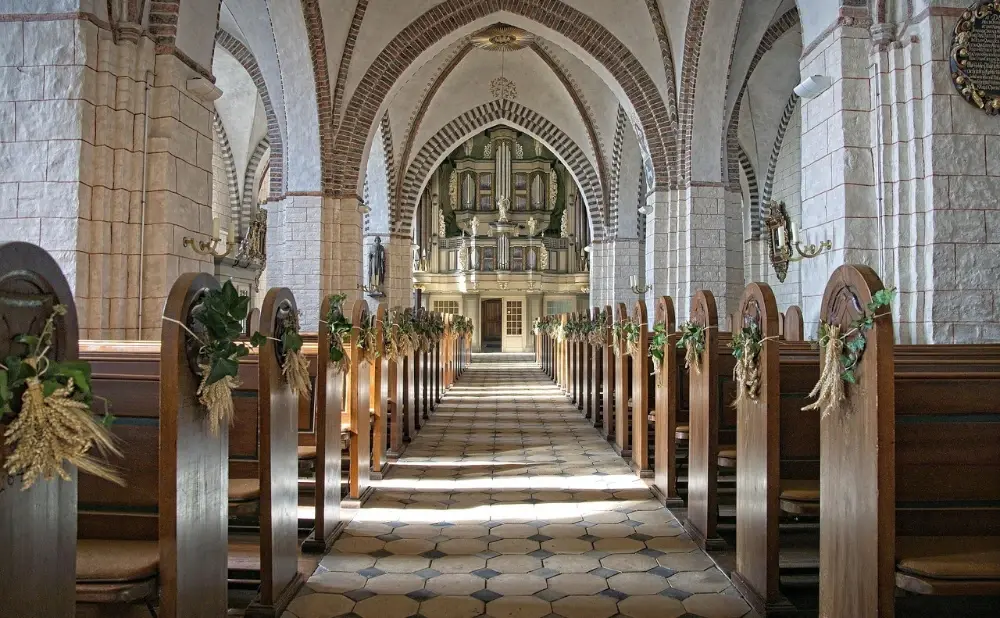
[Image comparing a traditional cathedral interior with a modern non-denominational church stage setup]
5. Practical Guide: How to Find the Right Church "Near Me"
To find a church that fits your soul, use this three-step framework:
-
Identify Your Liturgical Preference: Do you prefer high-energy contemporary music (Non-denominational) or quiet, ancient rituals (Catholic/Orthodox)?
-
Review the "Statement of Faith": Most churches list their core beliefs on their "About Us" page. Look for terms like "Biblical Inerrancy" or "Sacramental Theology."
-
Explore the Community Online: Before visiting in person, search for [Church Name] reviews or watch their YouTube live stream to get a feel for the atmosphere.
FAQ Section
Q: What is the difference between a Catholic Church and a Christian Church?
A: Catholicism is the oldest and largest branch of Christianity. While all Catholics are Christians, not all Christians are Catholics. In a search context, "Christian Church" often refers to Protestant or Non-denominational groups.
Q: Are the "Mormon Church" and the "Church of Jesus Christ of Latter-day Saints" the same?
A: Yes. The official name is The Church of Jesus Christ of Latter-day Saints. "Mormon" is a nickname based on the Book of Mormon, though the church currently prefers the use of its full, official name.
Q: Can I attend a church service if I am not a member?
A: Almost all churches welcome visitors. In Catholic and Orthodox traditions, you are welcome to participate in all activities except for receiving Holy Communion. In many Protestant churches, Communion is "open" to all believers.








![[18th Anniversary] 18 Years of Echoing Excellence: Making Communication Easier, Connecting Trust Beyond Borders](https://res.retekess.com/z_file/20260716/retekess-brand-story-making-communication-easier_20260716151044_7682.jpg)
![[18 Years in Wireless Communication] Silent Disco Systems Anniversary Celebration: Top-Selling Headphones & Event Mechanics Revealed!](https://res.retekess.com/z_file/20260713/18-years-in-wireless-communication-silent-disco-systems-anniversary-celebration_20260713175011_5749.webp)
![[Anniversary Carnival] Ding-dong! 18th Anniversary Mega Sale on Guest Paging & Calling Systems: Full Reveal of 12+ Products & Promo Rules!](https://res.retekess.com/z_file/20260713/18th-anniversary-mega-sale-on-guest-paging-calling-systems_20260713175257_0295.webp)
![[Retekess 18th Anniversary Teaser] Tour Guide System Exclusive Perks: Sneak Peek at Event Dates & Mechanics!](https://res.retekess.com/z_file/20260713/retekess-18th-anniversary-tour-guide-system-exclusive-perks--2-_20260713180135_6435.webp)

Follow Us
Pay With


 Google
 Amazon
Comments (0)