
Table of Contents
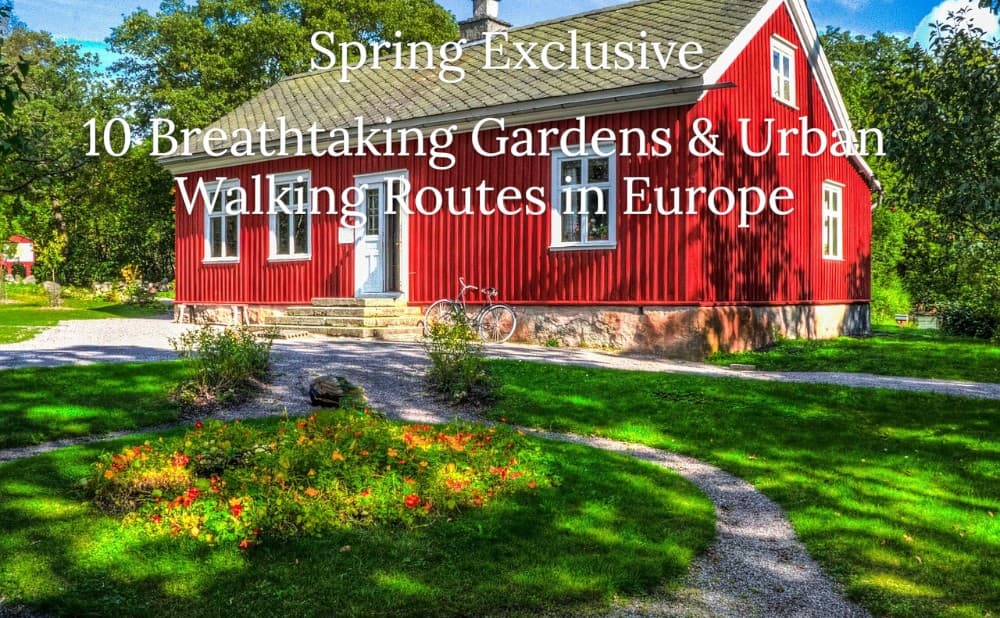
Spring Exclusive: 10 Breathtaking Gardens & Urban Walking Routes in Europe
- Retekess
- Feb 24, 2026
As March winds sweep across the Alps and April rains nourish the Rhine, Europe welcomes its most romantic season with the first tulip breaking through Dutch soil and the first cherry blossom blooming in Bonn. Spring in Europe is never a singular landscape—it's a flowing floral spectacle: medieval stone walls draped with geraniums, Renaissance gardens adorned with irises, wild forests carpeted in bluebells, and coastal fields where gold meets azure in a stunning collision of colors.
For travelers, spring in Europe is about more than just "seeing flowers"—it's about understanding a city's soul through its scents. The water lilies at Monet's Garden hold the secrets of Impressionist light, Spello's floral carpets continue an ancient Roman tradition, and Bonn's cherry blossom avenues weave together classical music and Eastern aesthetics. This guide curates ten of Europe's most beautiful spring gardens, paired with immersive urban walking routes—perfect for travel agencies seeking differentiated products or independent travelers wanting deep "flower + city" experiences. Meet Europe at its most enchanting during these fleeting bloom seasons.
🌷 1. Keukenhof, Netherlands
Highlight: The world's tulip sanctuary—a rainbow carpet of 6 million bulbs
Best time: March 20 – May 1 (peak bloom: mid-to-late April)
Cultural background: Originally a 15th-century hunting ground for a countess, named "Keukenhof" (kitchen garden) for its herb and vegetable plots. Transformed into a flower exhibition park in 1949, featuring English landscape design with meandering paths and tranquil ponds.
Urban walking route:
-
Half-day Amsterdam: Canal cruise → Van Gogh Museum → Jordaan district cafés
-
Garden access: Direct bus from Amsterdam Central Station (40 min)
-
Extension: Day trip to Giethoorn (1.5 hrs by train + bus), explore reed-lined waterways by boat
🎨 2. Monet's Garden at Giverny, France
Highlight: Birthplace of Impressionism—water lily pond and Japanese bridge straight out of Monet's paintings
Best time: April–June (tulips and irises bloom in succession; water lilies appear in May)
Cultural background: Monet settled here in 1883 until his death, personally designing the "Clos Normand" and "Japanese Garden," weaving light and color into the landscape—a living extension of Impressionist art.
Urban walking route:
-
From Paris: Train to Vernon station (1.5 hrs), then shuttle bus (15 min)
-
Giverny village: Stroll through the artist's house → enjoy a cider à la Monet → explore local gardens
-
Extension: Day trip to Rouen (30 min drive), visit the Gothic cathedral and Monet's childhood home
🌸 3. Hallerbos (Haller Forest), Belgium
Highlight: A wild blue carpet of bluebells—Europe's only large-scale wild orchid colony
Best time: April–May (bluebells and wild orchids in simultaneous bloom)
Cultural background: Ancient beech forest home to over 1,200 plant species. A royal hunting ground in the 19th century, now a protected nature reserve and hiking destination.
Urban walking route:
-
From Brussels: Metro + bus (1 hr) to forest entrance
-
Forest hike: Recommended "Orchid Valley Loop" (3 km) with interpretive signs
-
City connection: Half-day Brussels old town → Grand Place → Atomium by night
🌿 4. Heerstraße Cherry Blossom Avenue, Bonn, Germany
Highlight: A 2-km pink floral corridor—Europe's most stunning cherry blossom display
Best time: Mid-April (bloom lasts approx. 10 days)
Cultural background: Trees planted in the 1980s, mostly Somei-Yoshino cherries gifted from Japan. Now Bonn's spring icon, paired with Beethoven's birthplace as twin city landmarks.
Urban walking route:
-
Avenue walk: Start at North Rhine Bridge → Cherry tunnel → Poppelsdorf Palace Gardens
-
Cultural trail: Beethoven House → Bonn University Main Building (Baroque)
-
Extension: Day trip to Cologne Cathedral (20 min by train), climb the tower for Rhine views
🌹 5. Spello, Italy
Highlight: Medieval streets carpeted in flowers—spectacular during the June Infiorata festival
Best time: May–June (regular blooms through June; festival mid-June)
Cultural background: Hidden hilltown in Umbria. Residents continue the ancient Roman tradition of floral decoration, creating intricate carpets from dried petals depicting Dante's Divine Comedy verses and religious motifs.
Urban walking route:
-
From Rome: Train to Perugia (1.5 hrs), then bus 30 min to Spello
-
Town stroll: Cathedral Square → main Infiorata street → castle ruins viewpoint
-
Food experience: Taste "flower honey cake" → join a petal mosaic workshop (€80/person)
🖼️ 6. Yvoire, France
Highlight: Medieval stone houses draped in cascading geraniums on Lake Geneva—"One of the Most Beautiful Villages of France"
Best time: April–May (geraniums and climbing roses cover stone walls)
Cultural background: 13th-century fortified village. Stone houses preserve original military architecture, while residents uphold a Provençal tradition of "every household must plant flowers."
Urban walking route:
-
From Geneva: Train to Évian-les-Bains (20 min), then ferry 15 min to village
-
Lakeside stroll: Garden of the Five Senses (blindfolded herb-touching experience) → Old Port swans → castle ruins
-
Cross-border experience: Ferry to Lausanne, Switzerland (30 min), visit Olympic Museum
🌼 7. Parque del Retiro Rose Garden, Madrid, Spain
Highlight: One of Europe's largest rose gardens—over 500 rose varieties surrounding fountains
Best time: May (peak rose bloom, complemented by daffodils and hyacinths)
Cultural background: Former Spanish royal gardens, opened to the public in the 19th century. The rose garden blends French symmetrical aesthetics with Spanish courtyard style.
Urban walking route:
-
Madrid city center: 15-min walk to park entrance
-
Park experience: Rose fountain photos → Crystal Palace light display → rowboat on the lake
-
City connection: Prado Museum → Plaza Mayor → Plaza de España
🌾 8. Boboli Gardens, Florence, Italy
Highlight: Renaissance garden masterpiece—irises and classical sculpture in perfect harmony
Best time: May (over 3,000 iris varieties in bloom)
Cultural background: Created in the 16th century for the Medici family. Terraced layout mirrors Florence's hills, with sculptures largely from ancient Roman collections.
Urban walking route:
-
Florence old town: 10-min walk from Uffizi Gallery to garden entrance
-
Garden stroll: Circular fountain → Orangery → hilltop viewpoint (panoramic red rooftops)
-
Art connection: Uffizi Gallery → Florence Cathedral → Arno River sunset
🌲 9. Čičmany Folk Garden, Slovakia
Highlight: Wooden cottages and wildflower valleys—Central Europe's purest folk heritage gem
Best time: May–June (valley wildflowers in bloom, cool climate)
Cultural background: Over 100 wooden cottages preserve 17th-century architecture. Geometric patterns painted in white lime serve both decoration and wood preservation. Added to UNESCO Tentative List in 2017.
Urban walking route:
-
From Žilina: 30 min by rental car or bus
-
Village experience: Folk craft workshop (natural pigment painting) → forest foraging → fireplace dinner at family guesthouse
-
Nature extension: Rajčanka River hike → Strážov Mountains viewpoints
🌊 10. Heringsdorf Flower Fields, Germany
Highlight: Baltic Sea rapeseed fields—golden blooms meeting azure coastline
Best time: April–May (rapeseed peak, with coastal hyacinths)
Cultural background: Seaside town in Mecklenburg-Vorpommern, famed as premiere venue for a Mozart opera. Spring fields and seven lakes create a "nature's palette" landscape.
Urban walking route:
-
From Hamburg: 1.5 hrs by train; explore by bike or on foot
-
Coastal stroll: Field walks → Old Port → lakeside café views
-
Cross-border experience: Ferry to Sønderborg, Denmark (1 hr), enjoy Nordic vibes
Conclusion: Answer the Call of Spring
Spring 2026 has arrived—Europe's gardens are in bloom, waiting for you.
Leave a Reply














![[18th Anniversary] 18 Years of Echoing Excellence: Making Communication Easier, Connecting Trust Beyond Borders](https://res.retekess.com/z_file/20260716/retekess-brand-story-making-communication-easier_20260716151044_7682.jpg)
![[18 Years in Wireless Communication] Silent Disco Systems Anniversary Celebration: Top-Selling Headphones & Event Mechanics Revealed!](https://res.retekess.com/z_file/20260713/18-years-in-wireless-communication-silent-disco-systems-anniversary-celebration_20260713175011_5749.webp)
![[Anniversary Carnival] Ding-dong! 18th Anniversary Mega Sale on Guest Paging & Calling Systems: Full Reveal of 12+ Products & Promo Rules!](https://res.retekess.com/z_file/20260713/18th-anniversary-mega-sale-on-guest-paging-calling-systems_20260713175257_0295.webp)
![[Retekess 18th Anniversary Teaser] Tour Guide System Exclusive Perks: Sneak Peek at Event Dates & Mechanics!](https://res.retekess.com/z_file/20260713/retekess-18th-anniversary-tour-guide-system-exclusive-perks--2-_20260713180135_6435.webp)

Follow Us
Pay With


 Google
 Amazon
Comments (0)