
Table of Contents

Breathe to Renew: The Best Breathing Exercise for Adults Over 50
- Retekess
- Mar 26, 2026
In the landscape of healthy aging, we often prioritize macro-nutrients, VO2 max, and sleep hygiene. These are critical, but we often overlook the most frequent biological action we perform: breathing.
The average adult breathes approximately 25,000 times a day. However, for a significant portion of adults over 50, the way they breathe has insidiously shifted over decades. Shallow, rapid breathing centered in the chest has become the default. This seemingly minor behavioral habit is actually a major physiological drain that accelerates biological aging.
The good news is that breathing is a behavior you can relearn. By consciously transitioning from chronic chest breathing to Diaphragmatic Breathing (commonly known as "belly breathing"), you can tap into a powerful, free, and accessible tool for renewing your energy, calming your nervous system, and supporting long-term health.
1. Why We Become Chest Breathers After 50
If you watch a newborn sleep, their belly rises and falls perfectly. Diaphragmatic breathing is our natural, optimal state. So why do we lose it?
For many adults, decades of stressful jobs, poor posture (slouching at desks), and the societal pressure to "hold in our stomachs" gradually train us to use only the upper portion of our lungs.
By age 50, physical changes further complicate this:
-
Ribcage Stiffness: The bones and cartilage of the ribcage can become less flexible, making full expansion harder.
-
Diaphragm Weakness: Like any muscle, if the diaphragm isn't used to its full capacity, it weakens.
-
Lung Elasticity: Aging can cause lung tissue to lose some of its springiness.
This leads to a vicious cycle. We rely on the small "accessory" muscles in the neck and shoulders to pull air into the upper chest. This type of breathing signals "fight or flight" to the brain, maintaining elevated stress levels that further restrict deep breathing.
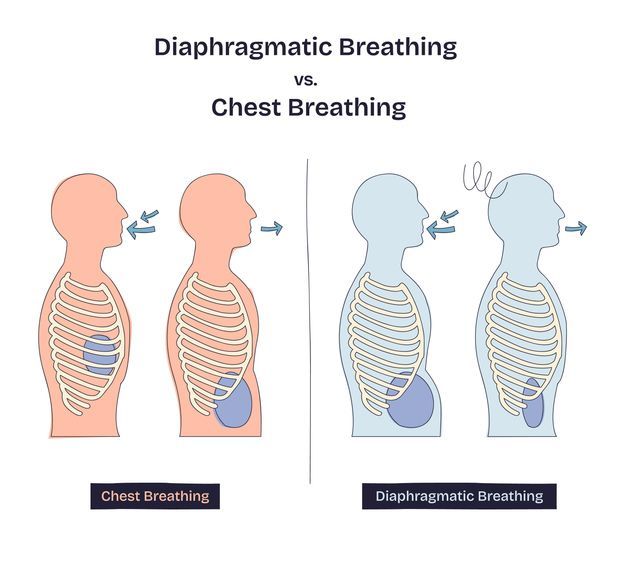
2. The Science: Belly Breathing as a Longevity Strategy
Shifting the center of your breath from your chest to your abdomen isn't just a relaxation technique; it is a fundamental shift in your internal chemistry. The scientific benefits are particularly profound for adults over 50.
A. Activating the "Rest and Digest" System
Chronic chest breathing keeps the body dominant in the Sympathetic Nervous System (the stress response). Belly breathing is the fastest way to manually override this system.
When you breathe deeply from the diaphragm, you stimulate the Vagus Nerve. This nerve is the "boss" of the Parasympathetic Nervous System (the PNS, or "rest and digest" system). Activating the PNS instantly triggers a cascade of calming effects:
-
Lowers heart rate.
-
Reduces blood pressure.
-
Cuts levels of the stress hormone cortisol.
According to research insights shared by the Andrew Weil Center for Integrative Medicine (AWCIM), controlling the stress response through breath is a cornerstone of mitigating the chronic inflammation that accelerates aging.
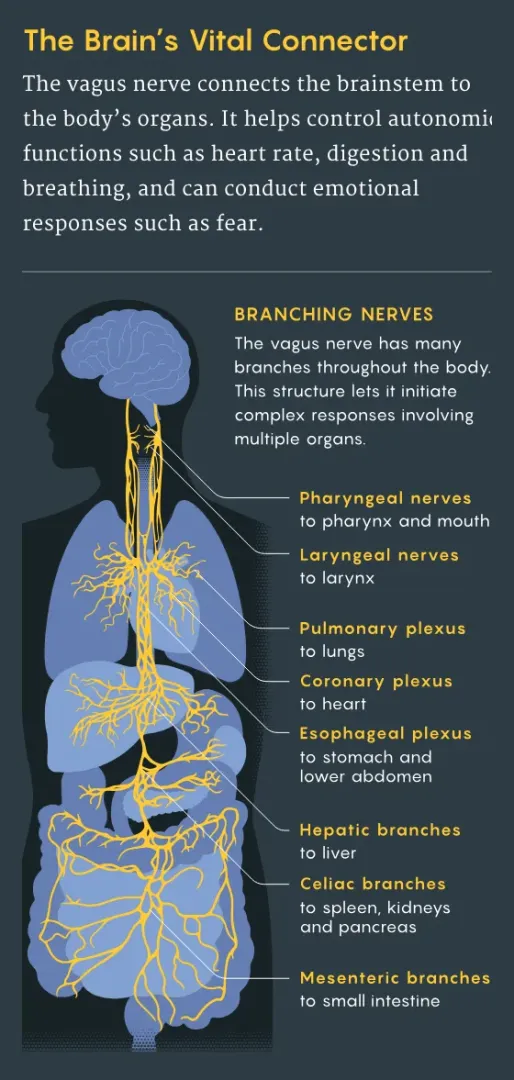
B. The Miracle Molecule: Nitric Oxide ($NO$)
Perhaps the most significant longevity advantage of belly breathing is the production of Nitric Oxide ($NO$). $NO$ is a molecule produced in the paranasal sinuses. When you breathe slowly and through the nose—which naturally occurs during proper belly breathing—you carry this molecule directly into the lungs.
$NO$ is a potent vasodilator. It relaxes blood vessels, allowing for increased blood flow and oxygen uptake. Research validated by the
3. Step-by-Step: The Best Exercise to Transition to Belly Breathing
This isn't about learning a complex yoga technique; it's about reacquainting your body with its own optimal mechanics. We will use a standard Diaphragmatic Breathing technique, optimized for behavioral change.
When to Practice:
To change a decades-old habit, you need consistent repetition. Practice this for 5–10 minutes, twice daily. Excellent times are immediately upon waking and just before bed.
The Practice Setup:
-
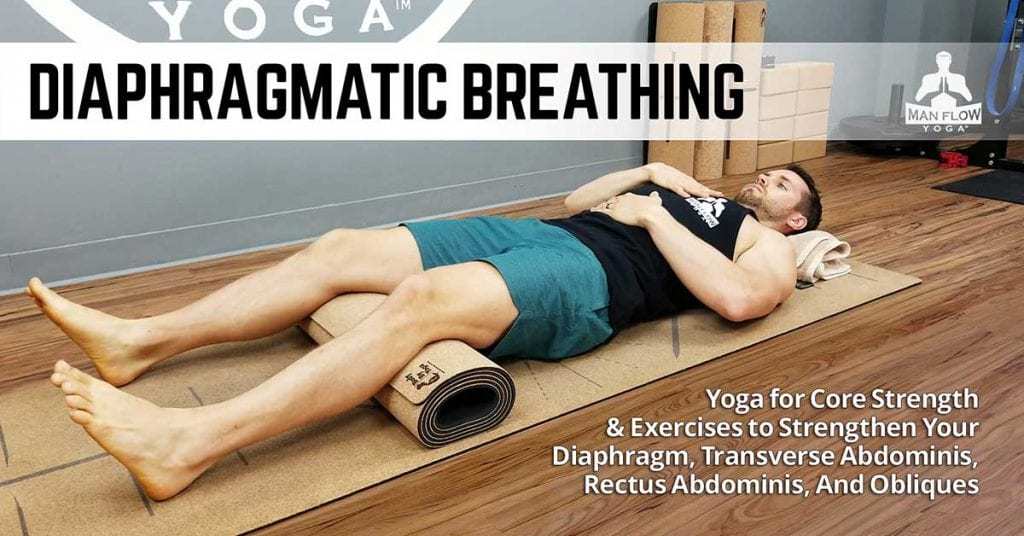
Lie Down: Especially in the beginning, lie on your back on a flat surface or in bed, with your knees bent and your head supported. This relaxes your abdominal muscles.
-
Hand Placement: Place one hand on your upper chest and the other hand just below your ribcage (on your belly). This provides crucial feedback.
The Behavioral Transition Technique:
-
Exhale Fully: Start by gently blowing all the stale air out of your lungs through pursed lips. Feel your belly sink inward.
-
Inhale Slowly: Inhale quietly through your nose. Your goal is to keep the hand on your chest completely still. Instead, direct the air downward, allowing the hand on your belly to rise. Imagine filling a balloon inside your abdomen.
-
The Hold (Optional): Gently hold the breath for a count of 2 or 3.
-
Exhale Completely: Tighten your abdominal muscles and exhale slowly through pursed lips (like you are blowing out a candle). Feel the hand on your belly fall back to its original position.
-
Repeat: Continue this cycle, focusing entirely on keeping the chest still and the belly moving.
4. Troubleshooting the Transition: Common Mental & Physical Blocks
After 50 years of a specific habit, your body and mind will resist the change. Here’s how to handle common hurdles.
Physical Block: "I feel like I'm not getting enough air."
This is common. Chest breathing feels "faster," and belly breathing feels "slow." Trust the physiology: belly breathing actually gets more oxygen into the blood-rich lower lobes of the lungs. If you feel dizzy, you are breathing too fast. Slow down the exhale.
Mental Block: "I can't stop my chest from moving."
Postural and structural stiffness are real. Don't force it. Even a tiny, partial movement of the belly while keeping the chest relatively still is a victory. With regular practice, the diaphragm will strengthen, and the ribcage will become more supple.
Postural Block: "I can't do this while sitting."
Correct. Transitioning this to sitting is the next stage. When you are ready, sit up straight in a chair. Ensure your shoulders are relaxed and not hunched. Place your hands in the same feedback position. It is harder to belly breathe while sitting because the core must also support posture, but regular practice lying down makes it easier.
5. Integrating Belly Breathing into Daily Life After 50
The final goal is to make belly breathing your automatic, default breath. This requires more than just dedicated practice sessions; it requires behavioral "triggers" throughout your day.
-
The Posture Check: Slouching mechanically prevents the diaphragm from dropping. Every time you notice your posture is poor, sit up, relax your shoulders, and take three conscious belly breaths.
-
The "Red Light" Trigger: While driving or waiting in line, use the pause as a cue to check your hand placement (mentally) and direct your breath to your belly.
-
Stress Intervention: When you feel anxiety rising (e.g., before an appointment), don't just "take a deep breath" (which often means a huge chest breath). Instead, stop, exhale fully, and take five slow belly breaths. This instantly tones the nervous system.
You can also eventually integrate structured counts, such as the 4-7-8 technique championed by
Conclusion: Investing in Your Primary Biological Function
Relearning how to breathe is one of the highest-ROI investments you can make in your health after 50. It requires zero financial cost, zero special equipment, and only a modest investment of time.
By shifting from the shallow, stressful default of chest breathing to the deep, renewing power of diaphragmatic belly breathing, you aren't just taking in air. You are optimizing your cardiovascular system, calibrating your nervous system, and signaling your body that it is safe, strong, and capable of long-term vitality. Start today, with your very next breath.
References & Further Reading:
-
Andrew Weil Center for Integrative Medicine (AWCIM):
Just Breathe: Using Breathwork for Wellbeing -
National Library of Medicine (NIH):
Nasal contribution to exhaled nitric oxide -
American Lung Association:
Breathing Exercises for Lung Health








![[18th Anniversary] 18 Years of Echoing Excellence: Making Communication Easier, Connecting Trust Beyond Borders](https://res.retekess.com/z_file/20260716/retekess-brand-story-making-communication-easier_20260716151044_7682.jpg)
![[18 Years in Wireless Communication] Silent Disco Systems Anniversary Celebration: Top-Selling Headphones & Event Mechanics Revealed!](https://res.retekess.com/z_file/20260713/18-years-in-wireless-communication-silent-disco-systems-anniversary-celebration_20260713175011_5749.webp)
![[Anniversary Carnival] Ding-dong! 18th Anniversary Mega Sale on Guest Paging & Calling Systems: Full Reveal of 12+ Products & Promo Rules!](https://res.retekess.com/z_file/20260713/18th-anniversary-mega-sale-on-guest-paging-calling-systems_20260713175257_0295.webp)
![[Retekess 18th Anniversary Teaser] Tour Guide System Exclusive Perks: Sneak Peek at Event Dates & Mechanics!](https://res.retekess.com/z_file/20260713/retekess-18th-anniversary-tour-guide-system-exclusive-perks--2-_20260713180135_6435.webp)

Follow Us
Pay With


 Google
 Amazon
Comments (0)