
Table of Contents
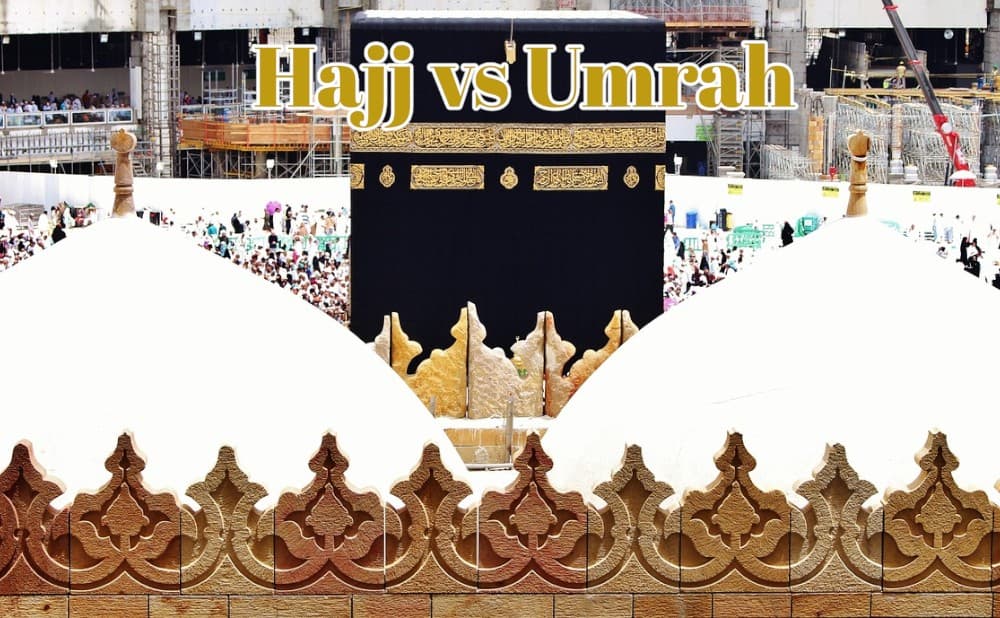
Hajj vs Umrah: A Complete Guide to Islam's Two Sacred Pilgrimages
- Retekess
- Jan 14, 2026
- 1 Comments
Introduction: Journeys of Faith to the Holiest City
Every year, the city of Makkah in Saudi Arabia becomes the spiritual epicenter for the global Muslim community, welcoming millions of pilgrims performing either Hajj or Umrah. While both pilgrimages involve sacred rituals at Islam's holiest sites and share a common geography, they are distinct in their religious significance, timing, and practice. This comprehensive guide will explore the profound difference between Hajj and Umrah, delve into their spiritual and historical contexts, and provide practical insights, including the role of Hajj and Umrah packages in facilitating these sacred journeys.
The Spiritual and Historical Foundations
To understand the difference between Hajj and Umrah, one must appreciate their origins. Both pilgrimages trace their roots to the legacy of Prophet Ibrahim (Abraham) and his family. Hajj specifically commemorates Ibrahim's unwavering faith, his wife Hajar's desperate search for water between Safa and Marwah, and God's ultimate mercy in providing the Zamzam well. Umrah, while also connected to this legacy, is more focused on the act of visiting and honoring the Sacred Mosque. The rituals are ancient acts of worship that symbolise unity, submission, and spiritual cleansing, linking modern Muslims to a tradition thousands of years old.
Hajj: The Fifth Pillar of Islam
Hajj is not merely a pilgrimage; it is one of the Five Pillars of Islam, making it a compulsory (Fard) duty for every financially and physically capable Muslim at least once in their lifetime. Its status as a pillar places it on the same level of obligation as the declaration of faith (Shahadah) and the five daily prayers (Salah).
The pilgrimage is performed during a specific and narrow window in the Islamic lunar calendar: in the month of Dhul-Hijjah, from the 8th to the 12th (or 13th) days. This fixed timing is non-negotiable. The rites of Hajj are extensive and follow a strict sequence:
-
Ihram: Entering a state of spiritual and physical purity at designated points (Miqat), marked by wearing simple white cloths.
-
Tawaf al-Qudum: Upon arriving in Makkah, performing the initial circumambulation of the Kaaba seven times.
-
Sa'i: Walking or hastening seven times between the hills of Safa and Marwah.
-
Wuquf at Arafat: The pinnacle of Hajj. Pilgrims must stand in prayer and supplication on the Plain of Arafat from noon until sunset on the 9th of Dhul-Hijjah. Missing this invalidates the Hajj.
-
Muzdalifah & Mina: Spending the night under the sky at Muzdalifah, collecting pebbles, then proceeding to Mina for the ritual stoning of the pillars (Jamarat), symbolising the rejection of temptation.
-
Eid al-Adha & Sacrifice: The 10th of Dhul-Hijjah is the Day of Sacrifice (Eid al-Adha), where pilgrims offer an animal sacrifice, commemorating Ibrahim's willingness to sacrifice his son.
-
Farewell Tawaf: A final circumambulation of the Kaaba before leaving Makkah.
Umrah: The Voluntary "Lesser Pilgrimage"
Umrah, often translated as the "lesser pilgrimage," is a highly recommended (Sunnah Mu'akkadah) but voluntary act of worship. It can be performed at any time of the year, except during the five core days of Hajj, when the focus is solely on the obligatory rites. Its flexibility is one of the key aspects of the difference between Hajj and Umrah.
The rituals of Umrah are simpler and shorter, essentially forming a subset of the Hajj rites:
-
Ihram: Assuming the same state of consecration at a Miqat.
-
Tawaf: Performing the seven circuits around the Kaaba.
-
Sa'i: Completing the seven journeys between Safa and Marwah.
-
Tahallul: Concluding the state of Ihram by shaving or clipping the hair.
Umrah can be completed in a matter of hours, making it a powerful spiritual retreat for Muslims seeking blessings, forgiveness, or a deeper connection with their faith outside the intense, crowded period of Hajj.
Comparative Analysis: Key Differences Summarized
To clearly outline the difference between Hajj and Umrah, here is a direct comparison:
| Aspect | Hajj | Umrah |
|---|---|---|
| Status | Obligatory (Fard) - Fifth Pillar of Islam | Voluntary (Sunnah) - Highly recommended |
| Timing | Fixed dates: 8th-12/13th of Dhul-Hijjah | Any time of year (except Hajj days) |
| Duration | 5-6 days of mandatory rituals | Can be completed in a few hours |
| Rituals | Comprehensive: Includes all Umrah rites plus Wuquf at Arafat, Muzdalifah, stoning (Ramy), sacrifice (Hady). | Simpler: Consists of Ihram, Tawaf, Sa'i, and haircut (Tahallul). |
| Spiritual Scale | A complete wiping clean of past sins, a "rebirth." | A great expiation for sins committed between it and the previous Umrah. |
| Crowds & Planning | Extremely crowded; requires rigid, long-term planning years in advance. | Less crowded (outside Ramadan); offers more flexible planning. |
Navigating with Hajj and Umrah Packages
Organising a pilgrimage from abroad involves complex logistics. This is where licensed travel agencies and their Hajj and Umrah packages become essential. These packages are designed to handle the administrative, travel, and accommodation needs, allowing pilgrims to focus entirely on worship.
-
Hajj Packages: Given the scale and fixed timeline, these are comprehensive and structured. They include visa processing, charter flights, government-allocated accommodation in Makkah, Mina, and Arafat (often tents), meals, ground transportation between holy sites, and the guidance of experienced scholars or group leaders. Due to Saudi quotas, securing a Hajj package often requires applying well over a year in advance.
-
Umrah Packages: These offer significant flexibility. Pilgrims can choose from budget to luxury options, varying lengths of stay (e.g., 7, 10, or 14-day trips), and different hotel proximities to the Haram (Sacred Mosque). Many Umrah packages also include a visit to the Prophet's Mosque in Madinah, which, while not part of the Umrah ritual, is a profoundly blessed journey. They can be booked relatively close to the travel date, especially outside peak seasons like Ramadan.
Choosing the Right Pilgrimage for You
Your choice depends on religious obligation, personal circumstance, and spiritual goals. If you are eligible and have never performed Hajj, it takes priority. Umrah serves as a beautiful spiritual retreat, a practice of devotion, or a preparatory step for Hajj. When planning, research reputable providers of Hajj and Umrah packages, ensuring they are accredited and transparent about services. Consider your physical capacity, budget, and the level of guidance you desire.
Conclusion
Both Hajj and Umrah are profound journeys of faith, cleansing, and submission to God. The core difference between Hajj and Umrah lies in their obligation, timing, and complexity of rites. Whether you are preparing for the once-in-a-lifetime obligation of Hajj or the spiritually rewarding Umrah, thorough understanding and planning—often through well-chosen Hajj and Umrah packages—are key to a focused and peaceful pilgrimage experience. May all who aspire to undertake these journeys be granted the opportunity to do so.
Leave a Reply








![[18th Anniversary] 18 Years of Echoing Excellence: Making Communication Easier, Connecting Trust Beyond Borders](https://res.retekess.com/z_file/20260716/retekess-brand-story-making-communication-easier_20260716151044_7682.jpg)
![[18 Years in Wireless Communication] Silent Disco Systems Anniversary Celebration: Top-Selling Headphones & Event Mechanics Revealed!](https://res.retekess.com/z_file/20260713/18-years-in-wireless-communication-silent-disco-systems-anniversary-celebration_20260713175011_5749.webp)
![[Anniversary Carnival] Ding-dong! 18th Anniversary Mega Sale on Guest Paging & Calling Systems: Full Reveal of 12+ Products & Promo Rules!](https://res.retekess.com/z_file/20260713/18th-anniversary-mega-sale-on-guest-paging-calling-systems_20260713175257_0295.webp)
![[Retekess 18th Anniversary Teaser] Tour Guide System Exclusive Perks: Sneak Peek at Event Dates & Mechanics!](https://res.retekess.com/z_file/20260713/retekess-18th-anniversary-tour-guide-system-exclusive-perks--2-_20260713180135_6435.webp)
Follow Us
Pay With


 Google
 Amazon
Comments (1)