
Table of Contents

No More Ear Fatigue: How Lightweight Wireless Headsets Upgrade Courtroom Interpretation
- Retekess
- Sep 1, 2026
Courtroom interpretation leaves zero room for error. Every word of testimony, every judicial ruling, and every attorney statement must be conveyed accurately and instantly. For professional interpreters, the quality of their audio equipment directly impacts the quality of their work. Yet for years, court interpreters have relied on bulky, uncomfortable, and unreliable headsets that create as many problems as they solve.
Heavy over-ear headsets cause ear fatigue and jaw strain over multi-hour trials. Poor signal stability leads to dropped words and missed details. Obtrusive equipment disrupts the formal tone of the courtroom. A well-designed wireless audio system eliminates all of these barriers. It fades into the background, so interpreters can focus entirely on accurate, timely translation instead of adjusting equipment or managing discomfort.
The Unique Demands of Courtroom Interpretation
Unlike casual or event translation, courtroom interpretation comes with three non-negotiable requirements. Any audio solution must meet all three to be viable for legal use.
First, reliability is non-negotiable. A single dropped word or moment of static can change the meaning of testimony, disrupt proceedings, or even lead to procedural errors. Courts cannot afford signal dropouts, cross-channel interference, or sudden battery failures mid-hearing. The system must deliver consistent, clear audio from the moment a trial opens to the moment it adjourns.
Second, all-day wearability is a practical necessity. Trials, depositions, and multi-day hearings can stretch for 6 to 8 hours or more. Traditional heavy headsets press on the ear cartilage and jaw, leading to soreness, headaches, and chronic discomfort over time. Many veteran interpreters develop recurring ear and jaw strain from years of wearing poorly designed equipment, which impacts their ability to work full days consistently.
Third, discretion and professionalism matter. Courtrooms are formal, focused environments. Interpretation is a supporting function, not a centerpiece. Bulky, visible headsets draw unnecessary attention and can disrupt the solemn tone of proceedings. The ideal system is lightweight, low-profile, and unobtrusive — effective without being noticeable.
How Wireless Audio Reshapes Courtroom Interpretation Workflows
Modern wireless audio systems address all three core demands, making them a fast-growing upgrade for both court systems and freelance interpreters.
On the reliability side, UHF-based wireless systems deliver far more consistent coverage than standard Bluetooth or infrared options. The signal penetrates courtroom furniture, barriers, and partition walls without dropouts, so interpreters can work from any position in the room without losing audio clarity. Independent encrypted channels prevent cross-talk, even when multiple language teams are working in adjacent courtrooms.
For comfort, the shift from heavy over-ear headsets to lightweight earhook designs has been transformative. Removing the headband and heavy ear cups cuts most of the weight, reducing pressure on the ears and jaw. Interpreters can work full trial days without the end-of-day soreness that was once considered an unavoidable part of the job.
Finally, compact wireless systems are far more discreet than traditional fixed interpretation booths and bulky headsets. They require no permanent installation, no visible wiring, and no large hardware. For smaller courts, circuit courts, and deposition suites that cannot afford dedicated interpretation booths, wireless systems provide a professional, low-profile alternative that meets accessibility compliance standards.
Why the Retekess T131R Is Built for Court Interpretation Work
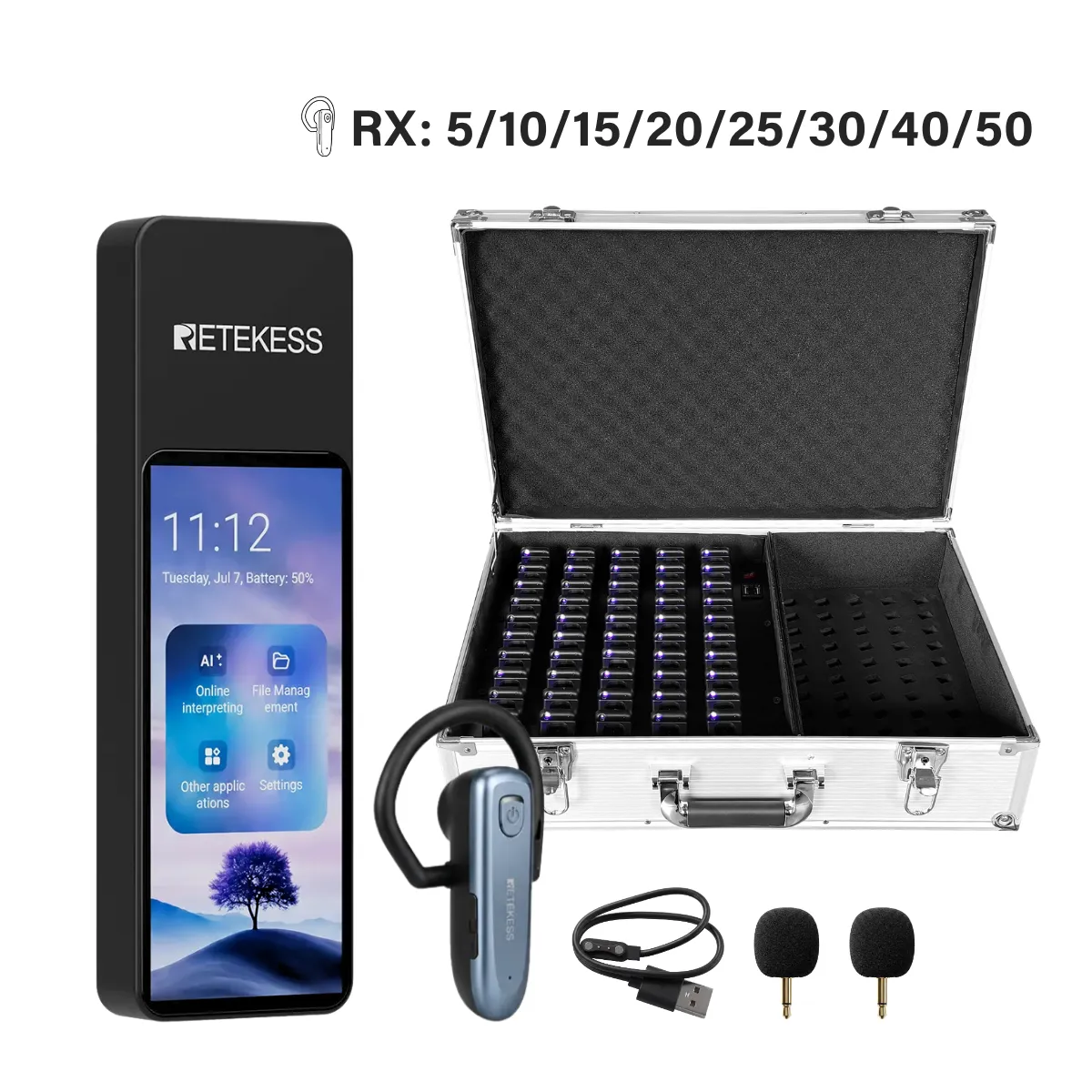
Plenty of wireless headsets are designed for casual or industrial use. The Retekess T131R is particularly well suited for courtroom interpretation, with features that directly answer the most common pain points of legal language professionals.
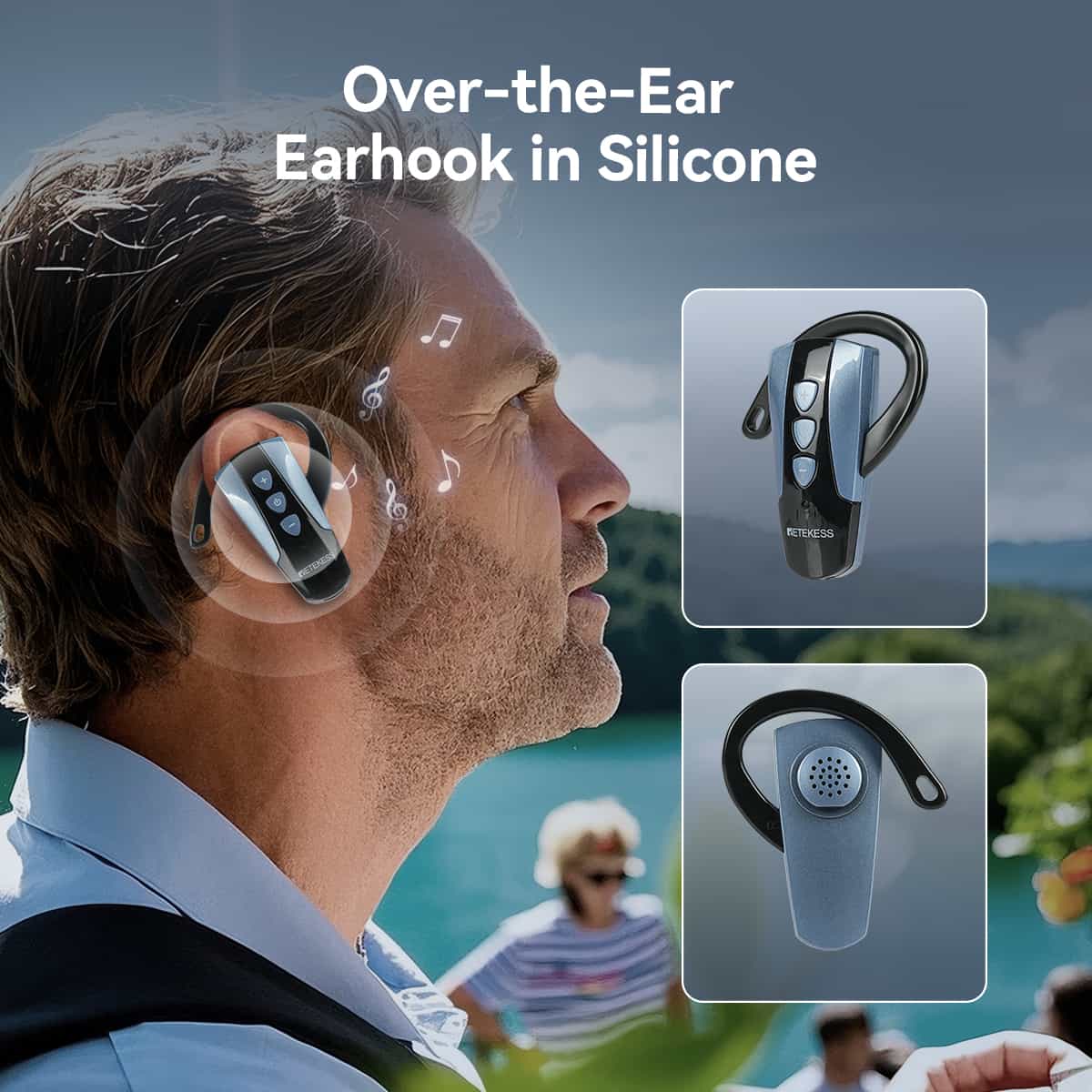
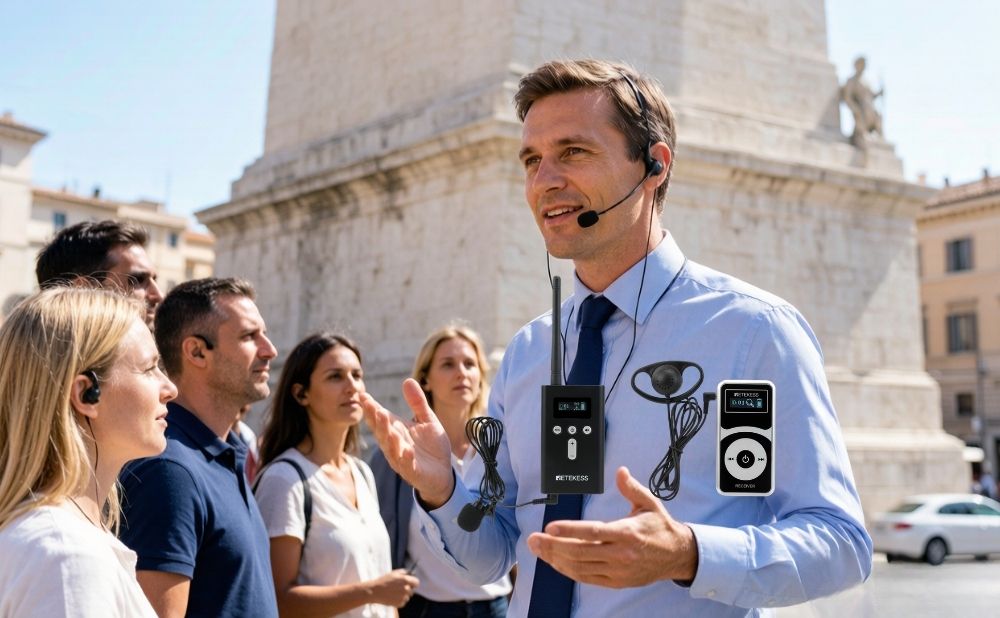
First, its ultra-lightweight earhook design sets a new standard for all-day comfort. Each receiver weighs just 15 grams, with a soft silicone earhook that sits gently against the ear without pinching or pressing. There is no heavy headband, no rigid ear cup, and no constant pressure on the jaw. The ambidextrous design fits either the left or right ear, so interpreters can switch sides as needed to avoid strain over long sessions. For professionals who wear headsets for hours at a time, the reduction in daily physical fatigue is immediately noticeable.
Second, its fast-charging, long-lasting battery eliminates scheduling stress. A full 1.5-hour charge delivers up to 13 hours of continuous use, which easily covers a full day of court proceedings, depositions, or back-to-back hearings. For freelance interpreters who travel between multiple court locations, the fast charge capability is particularly valuable — a short break between cases is enough to top up battery for the rest of the day. There is no need to carry extra batteries, charging cables, or backup devices to get through a full workday.
Third, its stable UHF transmission delivers consistent, clear audio without interference. The signal stays reliable across every corner of a standard courtroom, with no dropouts near the bench, jury box, or witness stand. The system supports 99 independent channels, so multiple language teams can work in the same building or adjacent courtrooms without cross-talk or signal overlap. Critically, the system operates without interfering with courtroom recording equipment, which is a mandatory requirement for legal environments.
A Practical Fit for Courts and Freelance Interpreters Alike
The value of the T131R extends to both institutional court buyers and independent freelance interpreters.
For county and state court systems, the system is a cost-effective way to meet language accessibility requirements without investing in expensive permanent interpretation booths. Units are easy to deploy, simple to operate, and durable enough for daily shared use across multiple courtrooms. Bulk charging and storage cases make end-of-day management straightforward for administrative staff.
For freelance interpreters, the compact, lightweight system is easy to transport between court locations, law offices, and deposition suites. It requires no complicated setup — just power on and connect. The professional, low-profile design fits the formal tone of legal settings, and the reliable performance removes the risk of equipment failure during high-stakes proceedings.
Final Thought
Great courtroom interpretation is precise, seamless, and unnoticeable. The best equipment supports that goal by fading into the background, so interpreters can focus entirely on language accuracy instead of managing hardware discomfort or signal issues.
The Retekess T131R does not try to be the flashiest or most feature-heavy interpretation device on the market. It is a practical, reliable tool built for the real demands of legal interpretation work: all-day comfort, rock-solid audio, and a discreet professional profile. For court systems and working interpreters tired of bulky, uncomfortable, and unreliable equipment, it is a straightforward upgrade that makes every day on the job easier and more effective.
Leave a Reply


![[18th Anniversary] 18 Years of Echoing Excellence: Making Communication Easier, Connecting Trust Beyond Borders](https://res.retekess.com/z_file/20260716/retekess-brand-story-making-communication-easier_20260716151044_7682.jpg)
![[18 Years in Wireless Communication] Silent Disco Systems Anniversary Celebration: Top-Selling Headphones & Event Mechanics Revealed!](https://res.retekess.com/z_file/20260713/18-years-in-wireless-communication-silent-disco-systems-anniversary-celebration_20260713175011_5749.webp)
![[Anniversary Carnival] Ding-dong! 18th Anniversary Mega Sale on Guest Paging & Calling Systems: Full Reveal of 12+ Products & Promo Rules!](https://res.retekess.com/z_file/20260713/18th-anniversary-mega-sale-on-guest-paging-calling-systems_20260713175257_0295.webp)
![[Retekess 18th Anniversary Teaser] Tour Guide System Exclusive Perks: Sneak Peek at Event Dates & Mechanics!](https://res.retekess.com/z_file/20260713/retekess-18th-anniversary-tour-guide-system-exclusive-perks--2-_20260713180135_6435.webp)
Follow Us
Pay With


 Google
 Amazon
Comments (0)