
Table of Contents
Saying Goodbye to the "Pool Yelling" Culture: The Modern Guide to Real-Time Swim Coaching
- Retekess
- May 20, 2026
If you have spent more than ten minutes at a swimming pool during a training session, you already know the soundtrack by heart: the relentless splashing of water, the low hum of ventilation systems, and, above all, the sound of a swim coach screaming at the top of their lungs.
For decades, yelling has been accepted as an inevitable part of the job. Coaches pace back and forth on the pool deck, cupping their hands or using paper megaphones, trying to shout instructions to a swimmer whose head is submerged under water. By the time the athlete finishes their lap, reaches the wall, and pulls down their goggles to receive feedback, the precise moment for correction has passed. Muscle memory has already reinforced the wrong stroke, and the coach's vocal cords are left shredded.
But what if you didn’t have to scream to be heard? What if you could speak at a completely normal conversational volume, and your swimmers could hear your precise instructions while they are actively swimming underwater?
Driven by breakthrough innovations in bone conduction and radio frequency engineering, a massive shift is happening in aquatics. The industry is moving away from post-lap critiques and embracing real-time, in-water communication. If you have ever wondered, "Is there a tool for this?"—the definitive answer is yes.
The Invisible Wall: Why Traditional Swim Coaching is Inherently Broken
To understand why a modern swim coach communicator system is transforming the industry, we first need to look at the physics of the traditional pool environment. Acoustic communication at a swimming pool is inherently flawed due to two major barriers:
1. The Air-Water Interface Barrier
Water is an excellent conductor of sound, but the boundary between air and water acts as a highly reflective acoustic mirror. When a trainer stands on the deck and shouts into the air, over 99% of the sound energy bounces right off the surface of the pool. For a student with their ears underwater, the coach’s voice sounds like an indistinguishable, muffled rumble.
2. Ambient Pool Noise and "The Bubble Blast"
When a swimmer moves through the water, the turbulence generated around their ears creates localized hydrodynamic noise—essentially a constant rushing sound of bubbles and water. Combine this with the echo-chamber architecture of indoor aquatic centers, and it becomes clear why relying on a standard swimming radio or sheer vocal power fails to deliver results.
The traditional workflow looks like this:
The student swims an entire 50-meter lap with a flawed elbow position.
They stop at the wall, gasping for air.
The coach explains what went wrong 60 seconds ago.
The student tries to visualize the correction on the next lap, often missing the nuance.
This delayed feedback loop wastes valuable pool rental time, slows down athlete progression, and burns out instructors.
Enter the Solution: What is a Water Guide System?
To bridge this gap, manufacturers have engineered specialized underwater transmitter and receiver kits designed specifically for aquatic environments. Often referred to colloquially by trainers as a water talkie or a swimming buzzer, these commercial-grade systems allow for uninterrupted, real-time audio broadcasting directly from the deck to the water.
A complete professional system consists of two primary components:
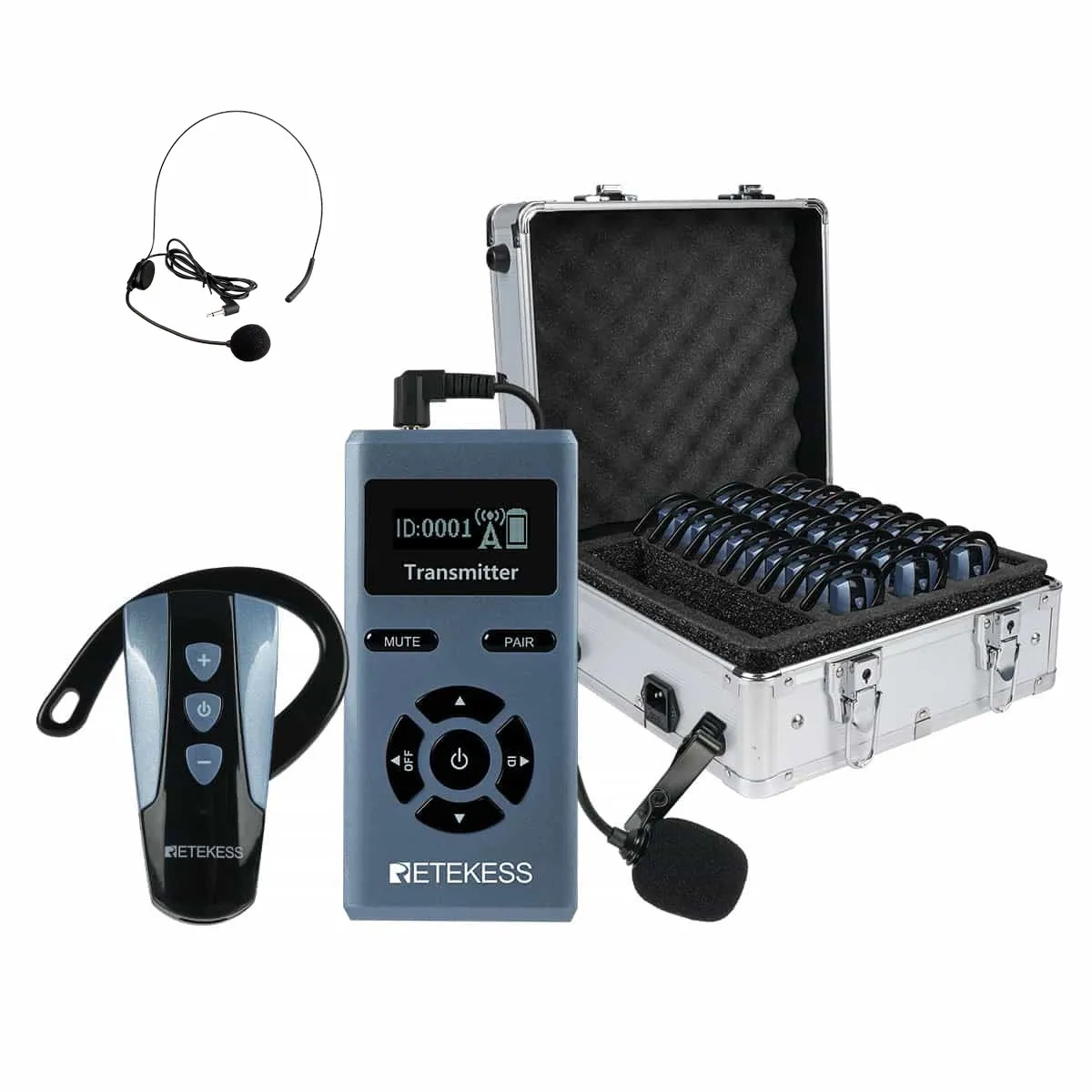
The Coaching Transmitter: A compact, lightweight radio unit worn by the instructor via a lanyard or a secure belt clip. It features an integrated microphone (or a flexible lavalier mic option) that captures the coach's natural speaking voice.
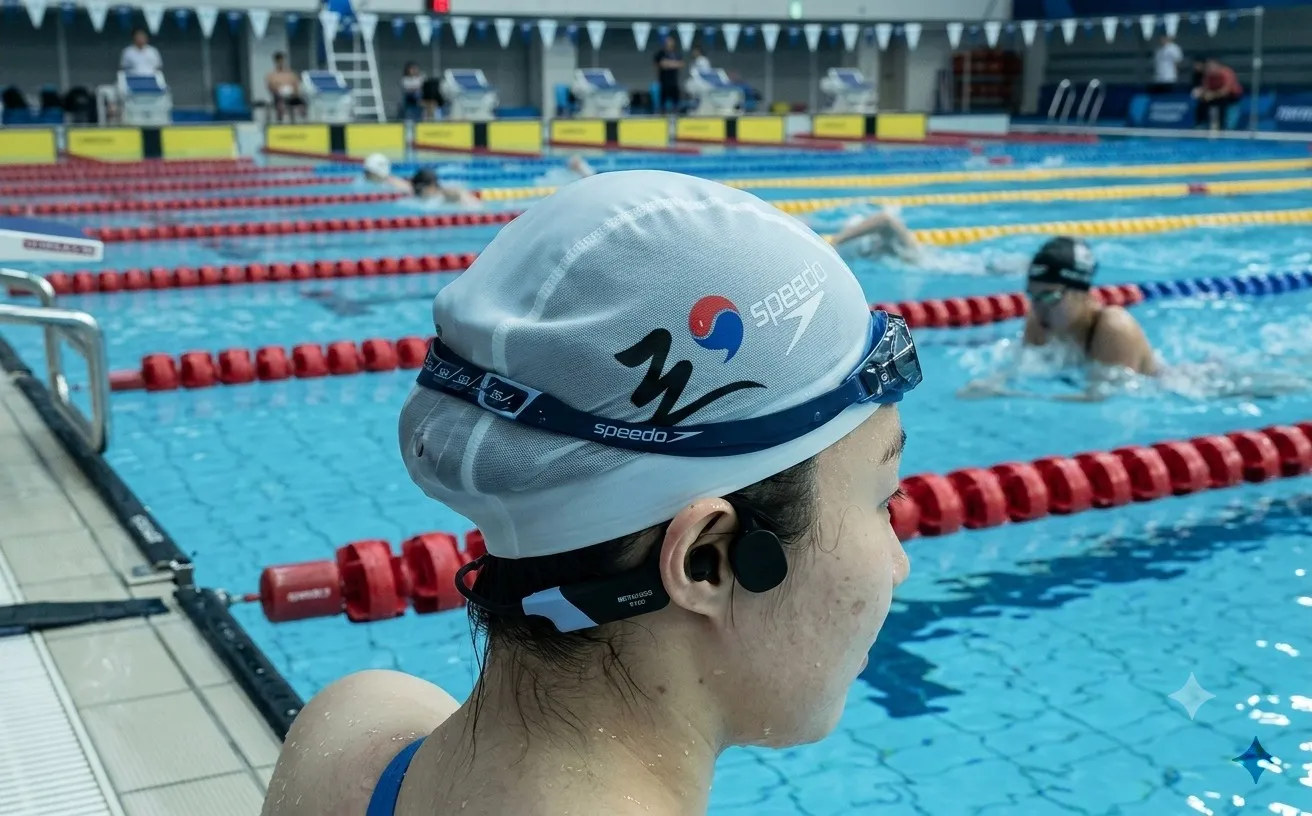
The Student Receiver: A specialized, waterproof wireless headphone worn by the swimmer. It wraps comfortably around the back of the head, resting perfectly on the cheekbones just outside the ear canal.
Instead of sending sound waves through the air to crash into the water, the coach’s voice is transmitted via optimized radio frequencies. The receiver then translates those electronic signals into physical vibrations, completely bypassing the water barrier.
The Secret Ingredient: How Submerged Bone Conduction Works
One of the most frequent questions aquatic directors ask when researching an underwater radio transmission system manufacturer is: "How can an athlete safely wear underwater earphones for swimming without blocking out essential environmental sounds?"
The answer lies in bone conduction technology.
Unlike standard consumer earbuds that sit inside the ear canal and rely on air conduction to vibrate the eardrum, a professional water receiver utilizes transducer pads that sit on the user's temples or cheekbones. These pads send tiny, completely safe micro-vibrations through the bones of the skull directly to the inner ear (the cochlea).
This brings three massive advantages to the swimming pool:
Uncompromised Ear Safety: Because the earbuds are not stuffed inside the ear canal, there is zero risk of trapping water inside the ear, which drastically reduces the occurrence of swimmer’s ear (otitis externa).
Situational Awareness: Swimmers can hear their coach's precise voice perfectly beneath the surface while remaining completely aware of their surrounding environment, pool walls, and fellow lane-mates above the waterline.
Flawless Submerged Clarity: It does not matter if the athlete is performing a deep flip-turn, gliding off the wall, or swimming on the surface—the bone conduction transmission bypasses the rushing sound of water bubbles entirely, delivering crystal-clear speech straight to the auditory nerve.
Choosing the Right System: Key Architectural Features to Look For
If you are a club manager looking for a durable water resistant intuitive operation headphone setup that can survive the harsh realities of daily commercial pool operations, you must look beyond basic consumer electronics. Professional swim training requires heavy-duty engineering.
When evaluating an underwater headphones for swimming system for your team, look closely at the following technical specifications:
Maximum Waterproof Engineering (IP68 vs. IP54)
A pool deck is a hostile environment for electronics, characterized by high humidity, chemical fumes, and constant splashing. Your equipment must be rated to handle it:
The Receiver: Must carry a strict IP68 rating, certifying that the unit is built for prolonged, continuous immersion in deep water.
The Transmitter: Should carry at least an IP54 rating, protecting the internal circuitry against wet hands, chlorinated splashes, and accidental drops on concrete decks.
Multi-Channel Architecture for Busy Facilities
A common point of failure for cheap radio gear is signal overlapping. If multiple coaches are working in adjacent lanes, you cannot have their voices bleeding into each other's groups. A commercial-grade system should feature at least 9 discrete channels. This allows up to nine separate training groups to run simultaneously in the exact same pool area without a single instance of cross-talk or frequency interference. Alternatively, a head coach can switch to a master channel to broadcast a single motivational message or drill instruction to all underwater receivers at once.
Range and Penetration Dynamics
Water severely dampens standard Wi-Fi and Bluetooth signals, which is why consumer wireless headphones disconnect the moment your head goes under. Professional systems use specialized radio frequencies capable of maintaining a massive transmission range—up to 120 meters on the water’s surface and maintaining a rock-solid 50-meter range when fully submerged at typical training depths of 1.5 to 2 meters.
From Lap Swimmers to Remote Workers: Who Uses Water Communications Systems?
While the primary demographic for this technology is competitive athletic programs, the applications for real-time water communication have expanded dramatically across various sectors.
| Industry / User Segment | Core Application & Operational Value |
| Elite Swim Trainers & Clubs | Directing real-time stroke corrections, pacing adjustments, and interval timers without interrupting the flow of a set. |
| Water Sports Enthusiasts | Providing immediate safety and technique adjustments for high-speed sports like windsurfing, kitesurfing, and Stand-Up Paddleboarding (SUP). |
| Commercial Synchronized Swimming | Synchronizing complex choreographies by injecting background music and coaching cues simultaneously into the dancers' headsets. |
| Aquatic Security & Lifeguards | Providing a robust communication line for safety teams and emergency response coordination around large waterfront venues. |
| Niche Applications & Remote Work | Emerging as unique swimming equipment for remote workers and multi-tasking athletes who utilize lap swimming for active recovery while staying connected to audio instructions or educational audio feeds. |
Conclusion: Investing in the Future of Aquatics
The era of the shouting swim coach is rapidly drawing to a close. Relying on outdated, disruptive teaching methods wastes time, limits an athlete's potential, and places an unnecessary physical burden on the instructor.
By upgrading your program with a dedicated swim coach communicator system, you are not just purchasing a piece of sports hardware—you are investing in a significantly higher tier of athletic performance, premium club branding, and operational efficiency. Your coaches will preserve their voices, your athletes will correct their mistakes instantly as they happen in the water, and your facility will stand out as a cutting-edge hub for modern aquatic training.
If you are ready to transform your pool deck from an echo chamber of shouting into an organized environment of calm, clear, and professional instruction, it is time to explore a dedicated water talkie system for your team.
![[18th Anniversary] 18 Years of Echoing Excellence: Making Communication Easier, Connecting Trust Beyond Borders](https://res.retekess.com/z_file/20260716/retekess-brand-story-making-communication-easier_20260716151044_7682.jpg)
![[18 Years in Wireless Communication] Silent Disco Systems Anniversary Celebration: Top-Selling Headphones & Event Mechanics Revealed!](https://res.retekess.com/z_file/20260713/18-years-in-wireless-communication-silent-disco-systems-anniversary-celebration_20260713175011_5749.webp)
![[Anniversary Carnival] Ding-dong! 18th Anniversary Mega Sale on Guest Paging & Calling Systems: Full Reveal of 12+ Products & Promo Rules!](https://res.retekess.com/z_file/20260713/18th-anniversary-mega-sale-on-guest-paging-calling-systems_20260713175257_0295.webp)
![[Retekess 18th Anniversary Teaser] Tour Guide System Exclusive Perks: Sneak Peek at Event Dates & Mechanics!](https://res.retekess.com/z_file/20260713/retekess-18th-anniversary-tour-guide-system-exclusive-perks--2-_20260713180135_6435.webp)
Follow Us
Pay With


 Google
 Amazon
Comments (0)