
Table of Contents
Student Factory Tours: How to Keep Students Connected, Comfortable and Safe
- Retekess
- Sep 29, 2026
Factory visits give students something a classroom cannot: direct exposure to real manufacturing processes, equipment, workplaces, and career opportunities. For schools and manufacturing companies, opening a plant to student groups can turn an ordinary field trip into a practical learning experience that connects classroom knowledge with the real world.
But a student factory tour is also more difficult to manage than a typical guided visit. Students may be spread across a large facility, machinery can make communication difficult, and the group needs to stay within designated areas while continuing to listen and learn.
This makes communication more than a way to deliver information. It becomes part of group control, visitor experience, and safety management.
Why Student Factory Tours Need More Than Traditional Communication
A factory is an active working environment rather than a conventional sightseeing venue. Students may move through production floors, observation areas, machinery zones, and designated visitor routes while manufacturing operations continue around them.
For tour organizers, three challenges usually stand out: keeping the group together, making communication comfortable, and delivering safety instructions at the right time.
A communication system designed for student factory visits therefore needs to do more than simply make the guide's voice louder.
It should help students hear clearly, stay connected, and follow the group throughout the visit.
Stay Together: Keeping the Group Connected in a Large Factory
Large manufacturing facilities can cover extensive areas, with long walking routes connecting different production zones. A student group that starts as one organized line can gradually become spread out as students stop to observe equipment, take notes, or wait for others.
This creates a familiar problem for tour guides: the students at the back may no longer hear the explanation clearly, while the front of the group may already be moving toward the next area.
Traditional communication methods often require the guide to stop repeatedly, raise their voice, or wait for the entire group to gather.
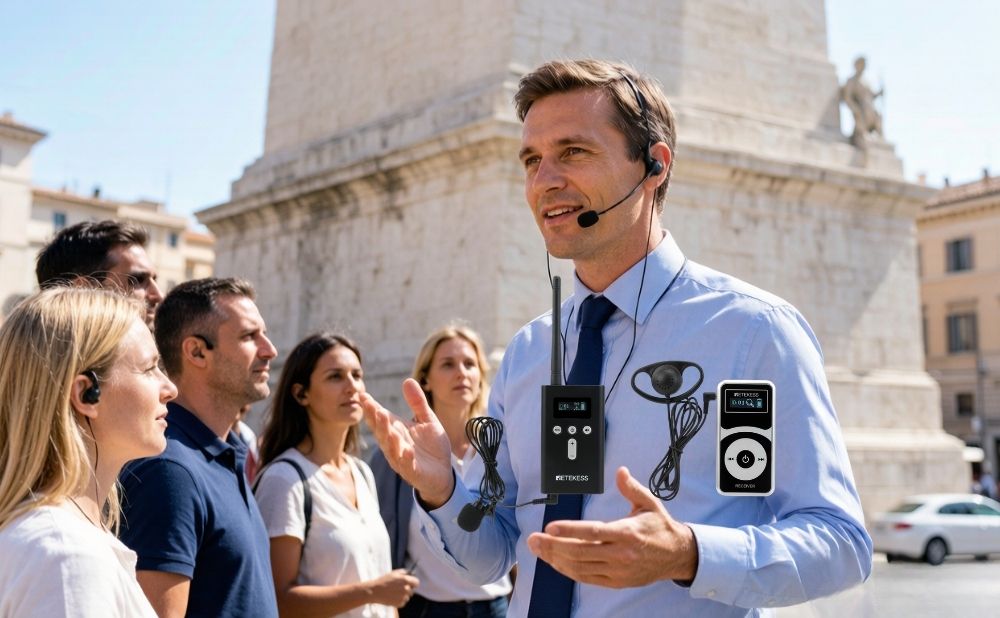
Wireless tour communication changes this dynamic by allowing students to receive the explanation while moving through the facility rather than having to stay close to the guide.
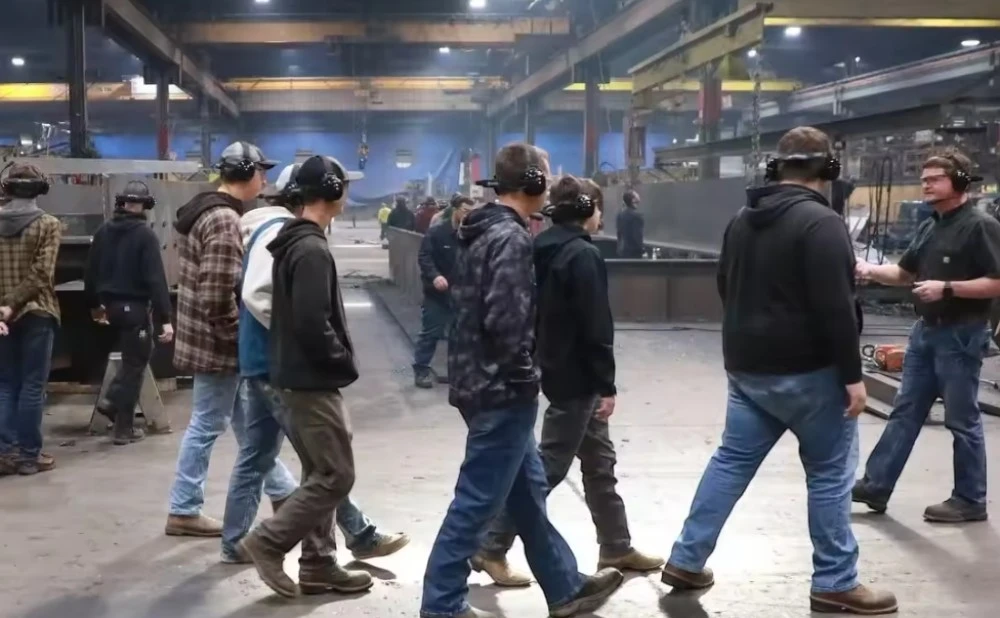
The challenge is especially relevant in real manufacturing environments. In a Merrillsteel student factory visit, for example, students explored a large manufacturing facility where machinery noise and the scale of the plant made it difficult to communicate effectively during the tour. A dedicated communication system helped make the visit easier for students to follow while they experienced the manufacturing environment firsthand.
For schools planning similar visits, the goal is not simply to keep everyone within sight. It is to keep the group connected through every stage of the route.
Stay Comfortable: Making Long Tours Easier to Follow
Students may spend several hours walking through a factory, listening to explanations, observing equipment, and interacting with instructors. If the communication device is uncomfortable, complicated, or easy to lose, it quickly becomes another management problem for teachers and tour organizers.
Traditional wired earphones can introduce cable management issues. Bulky equipment can become uncomfortable during extended use, while poorly fitted devices may require frequent adjustment.
For student visits, a lightweight wearable design can make a meaningful difference.
A Lightweight Wireless Listening Solution for Student Tours
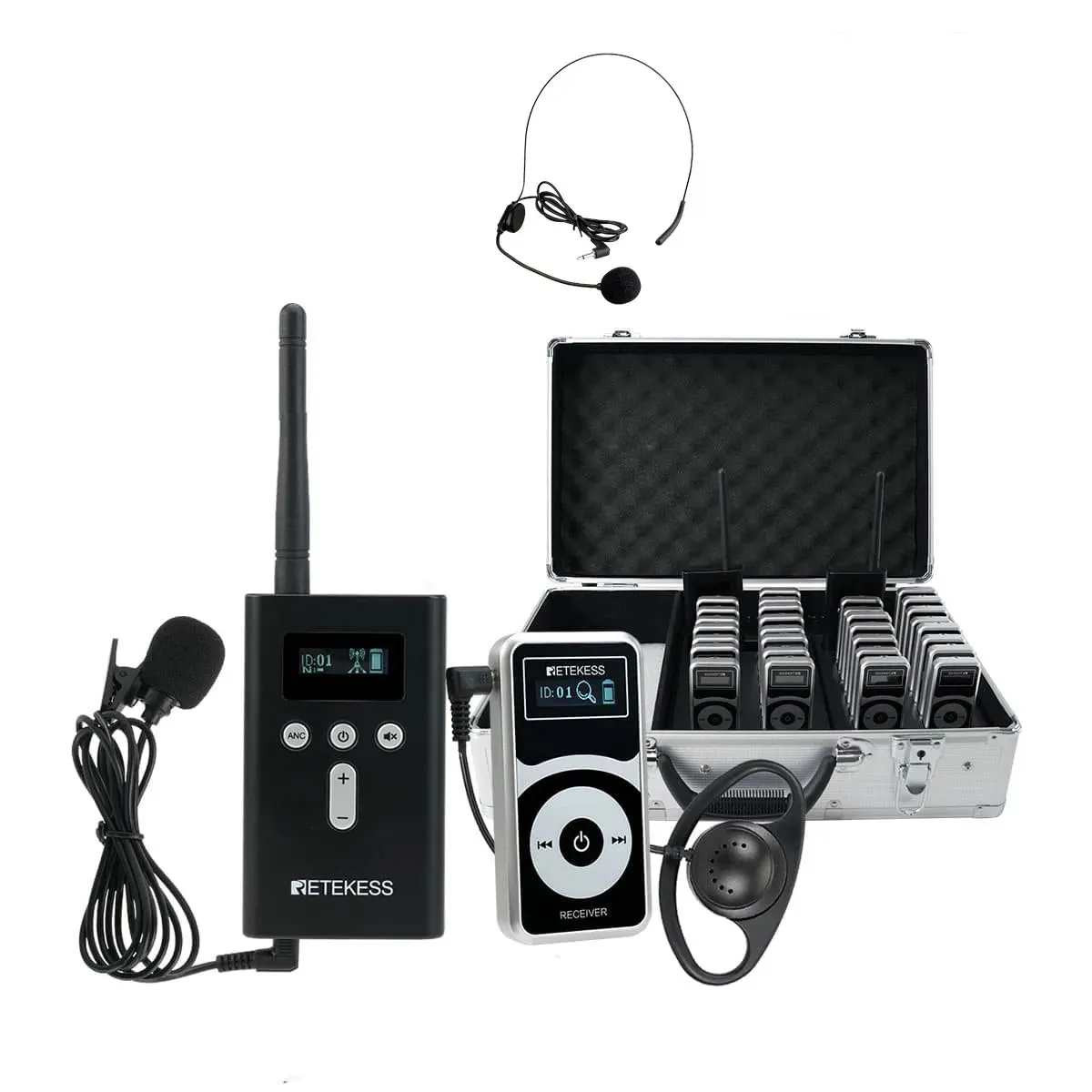
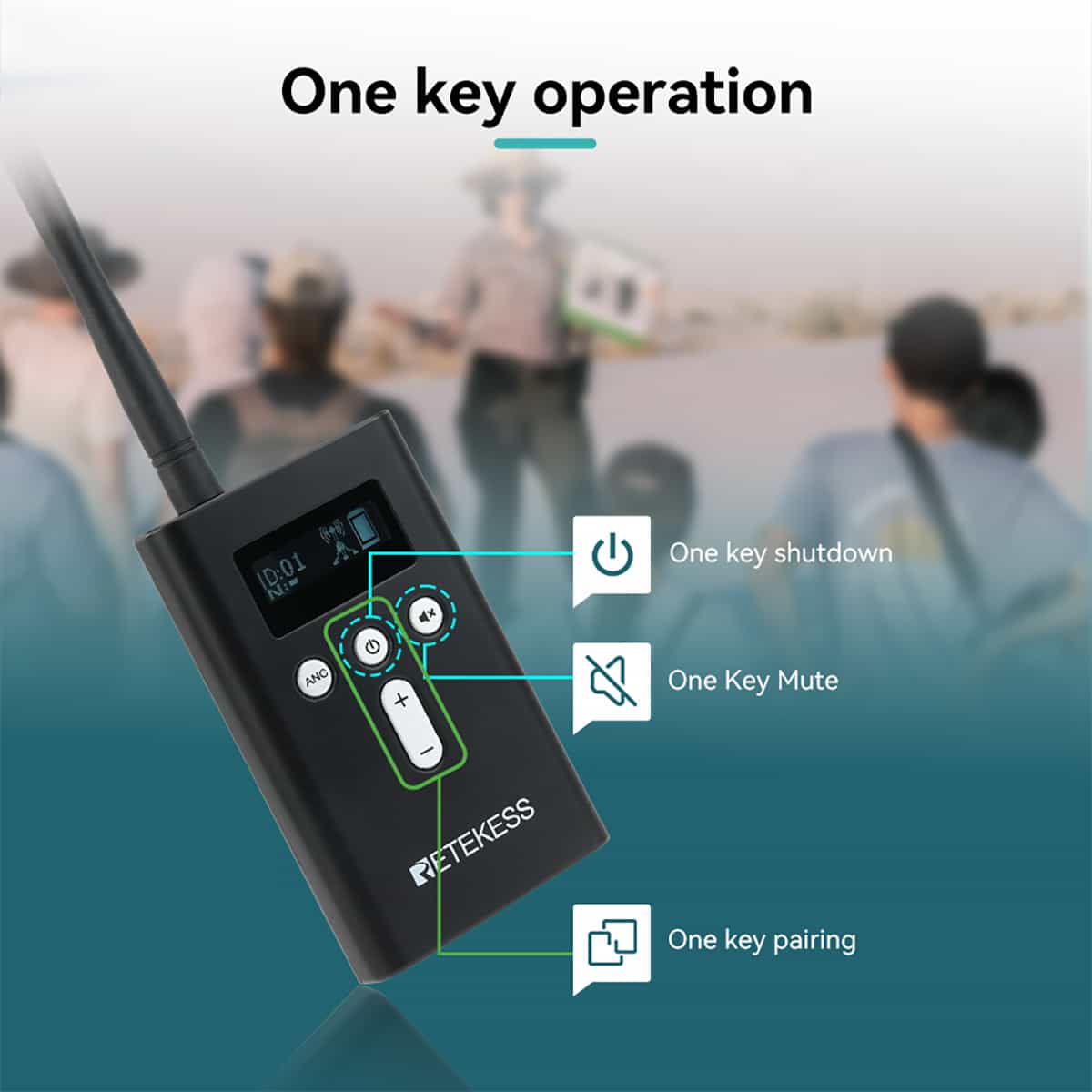
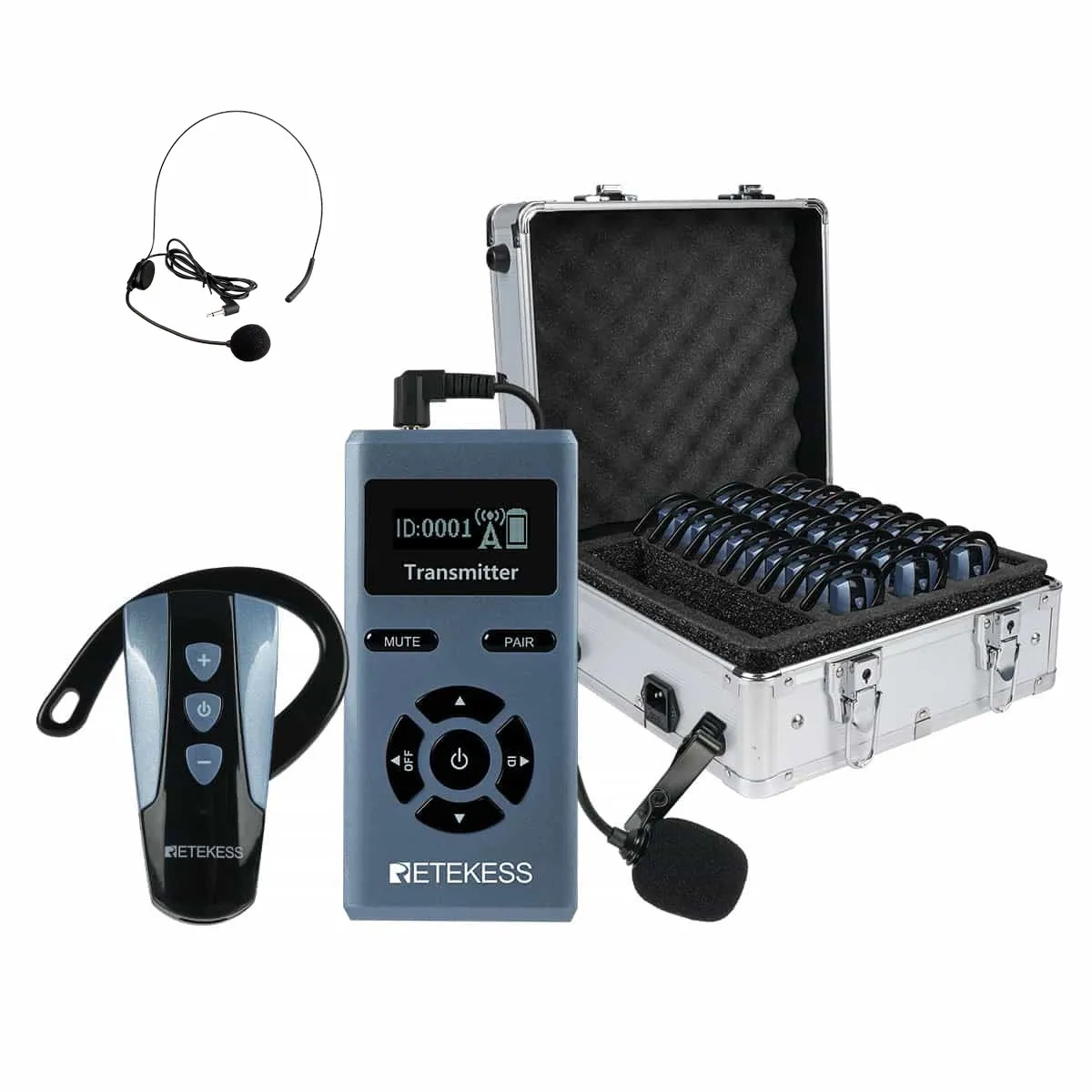
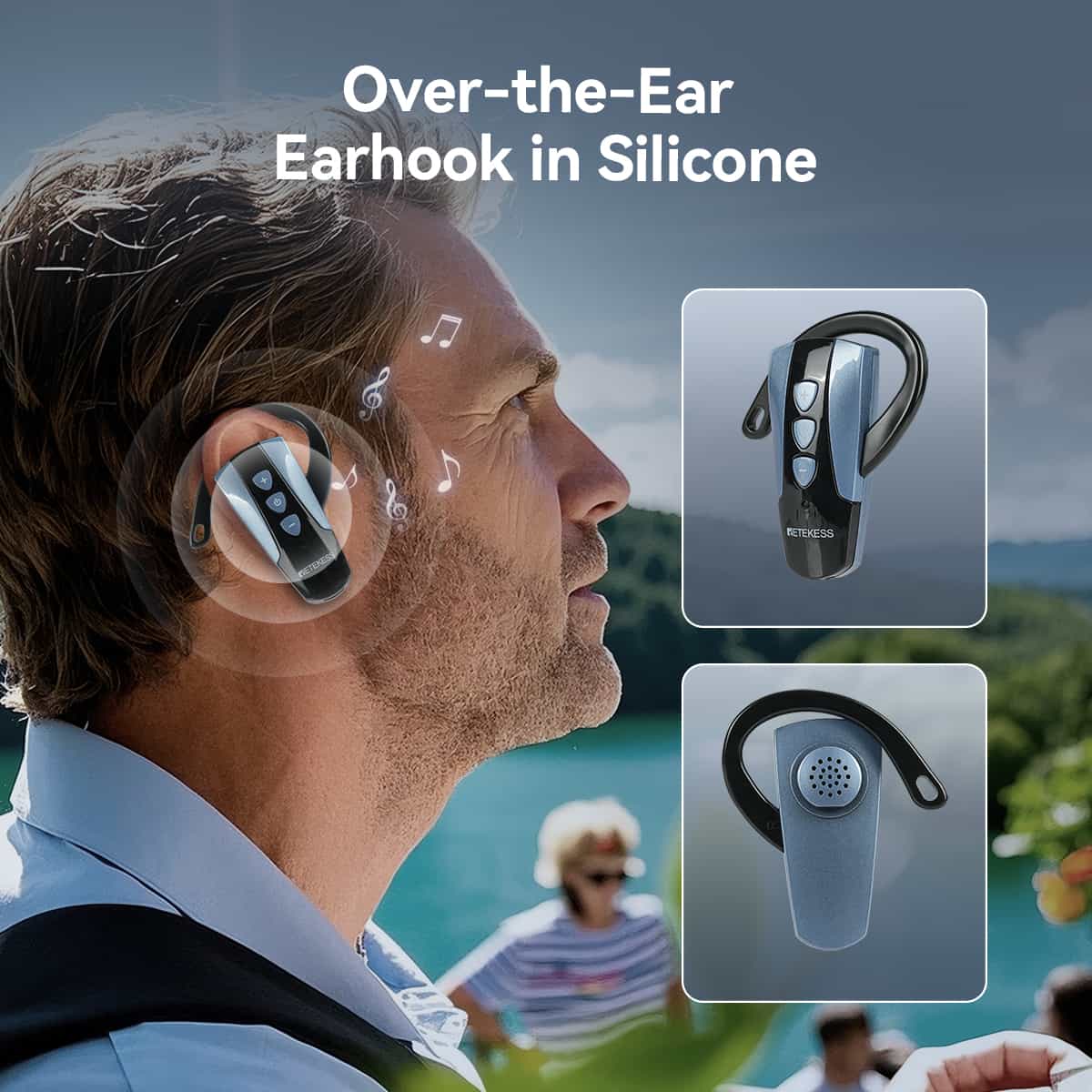
The Retekess TT106S uses an ear-hook receiver designed for lightweight, hands-free wearing. At around 18 g, it reduces the physical burden of carrying a receiver throughout a long factory visit. Its ear-hook structure also helps keep the receiver positioned during movement.
The system provides long operating time and wireless transmission, allowing students to focus on the tour instead of constantly adjusting their equipment.
This is particularly useful when the visit combines walking, observation, note-taking, and listening.
Less equipment burden means more attention for learning. Instead of asking students to gather tightly around the guide to hear the explanation, a wireless receiver allows them to maintain a more natural viewing distance while continuing to receive the commentary.
Stay Connected: From One-Way Listening to Two-Way Communication
In a noisy manufacturing environment, these instructions need to reach the group quickly.
“Please stay behind the safety line.”
“Keep with the group.”
“We are moving to the next production area.”
“Please wait here.”
“Do not enter this section.”
A one-way tour system can distribute the guide's voice effectively, but some factory visits require more than one-way communication. When the guide needs to respond to students, adjust the group, or communicate during movement, two-way communication adds another layer of control.
This is where the communication requirements of a student factory visit become different from those of a conventional sightseeing tour.
The basic requirement is Everyone can hear the guide.
The more advanced requirement is that the guide and group can communicate when necessary.
Two-Way Communication System for More Connected Tours
The Retekess TT126 adds full-duplex two-way communication, allowing communication to flow between the guide and participants during the visit.
This makes it suitable for factory tours where interaction and real-time coordination are important.
The guide can explain manufacturing processes, remind students about safety requirements, and communicate route changes. Students can also communicate with the guide when they have questions or need to respond.
This creates a more connected communication structure:
Guide → Students
Explanation, instructions, safety reminders, route management
Students → Guide
Questions, responses, interaction, communication when needed
For educational factory visits, this can turn communication from a one-way information channel into part of the learning experience itself.
TT106S or TT126: Which Approach Fits Your Student Factory Tour?
The right choice depends on how the visit is organized.
|
Requirement |
TT106S |
TT126 |
|
Lightweight wearing |
✓ |
|
|
Long listening sessions |
✓ |
✓ |
|
One-way tour explanation |
✓ |
✓ |
|
Wireless group listening |
✓ |
✓ |
|
Student-guide interaction |
|
✓ |
|
Real-time two-way communication |
|
✓ |
|
Route and safety reminders |
✓ |
✓ |
|
Interactive learning activities |
|
✓ |
For a structured visit where students mainly need to hear the guide clearly and comfortably, TT106S provides a lightweight wireless listening approach.
For visits where guides need to communicate with students in both directions, TT126 provides a two-way communication structure that supports interaction and group coordination.
The important point is that these are not simply two different devices. They address different communication requirements within the same student factory tour environment.
Building a Safer and More Engaging Student Factory Visit
A well-organized factory visit starts before students enter the production floor.
Before the tour, organizers can define the route, visitor boundaries, gathering points, and communication roles. During the tour, wireless communication helps students continue listening without having to stay directly beside the guide.
When the group moves between production areas, the guide can communicate instructions without repeatedly stopping the entire group. When students have questions, two-way communication can make interaction part of the tour rather than something reserved for the end.
This creates a simple communication workflow:
Before the Tour → Prepare the Route and Devices
During the Tour → Keep Students Connected
Moving Between Areas → Communicate Instructions
Learning and Interaction → Ask, Answer, and Explore
The result is not simply a quieter or more convenient tour. It is a more organized way to combine industrial exposure with practical learning.
Conclusion
A student factory tour is more than a visit to see machines. It can give students a first-hand understanding of manufacturing, engineering, technology, and potential career paths.
But for that experience to work well, communication needs to support the entire visit.
Students need to hear the guide without staying tightly grouped around them. They need equipment that remains comfortable throughout the tour. And when they enter an active industrial environment, organizers need a practical way to communicate route changes and safety instructions.
A lightweight wireless system such as TT106S can simplify long listening sessions, while a two-way communication system such as TT126 can add real-time interaction and group communication.
Together, these approaches support a simple goal:
Keep students connected, so they can focus on what matters — seeing, learning, asking, and experiencing the real world of manufacturing.


![[18th Anniversary] 18 Years of Echoing Excellence: Making Communication Easier, Connecting Trust Beyond Borders](https://res.retekess.com/z_file/20260716/retekess-brand-story-making-communication-easier_20260716151044_7682.jpg)
![[18 Years in Wireless Communication] Silent Disco Systems Anniversary Celebration: Top-Selling Headphones & Event Mechanics Revealed!](https://res.retekess.com/z_file/20260713/18-years-in-wireless-communication-silent-disco-systems-anniversary-celebration_20260713175011_5749.webp)
![[Anniversary Carnival] Ding-dong! 18th Anniversary Mega Sale on Guest Paging & Calling Systems: Full Reveal of 12+ Products & Promo Rules!](https://res.retekess.com/z_file/20260713/18th-anniversary-mega-sale-on-guest-paging-calling-systems_20260713175257_0295.webp)
![[Retekess 18th Anniversary Teaser] Tour Guide System Exclusive Perks: Sneak Peek at Event Dates & Mechanics!](https://res.retekess.com/z_file/20260713/retekess-18th-anniversary-tour-guide-system-exclusive-perks--2-_20260713180135_6435.webp)
Follow Us
Pay With


 Google
 Amazon
Comments (0)