
Table of Contents
What is a Pilgrimage? A Guide to Sacred Journeys Across Faiths
- Retekess
- Jan 16, 2026
A pilgrimage is a deeply spiritual journey, often to a holy site or shrine, undertaken by individuals seeking spiritual significance, forgiveness, healing, or a deeper connection with their faith. It is a practice found in nearly every major religion, representing a physical manifestation of an inner quest for meaning. The journey itself—marked by challenge, devotion, and community—is as transformative as reaching the destination.
What is Pilgrimage in Islam?
In Islam, pilgrimage holds a central place. It is primarily defined by the Hajj, one of the Five Pillars of Islam, but also encompasses devotional visits to other sites. Islamic pilgrimage emphasizes unity, equality before God, and the commemoration of the faith of the Prophets.
What is a Muslim Pilgrimage?
The primary Muslim pilgrimage is the Hajj—the obligatory journey to the holy city of Mecca. It is a mandatory religious duty for every able-bodied Muslim who can afford it, at least once in their lifetime. The Hajj is a profound, multi-day ritual that occurs during the Islamic month of Dhu al-Hijjah, involving specific rites that symbolize faith, sacrifice, and redemption.
What is Pilgrimage to Mecca?
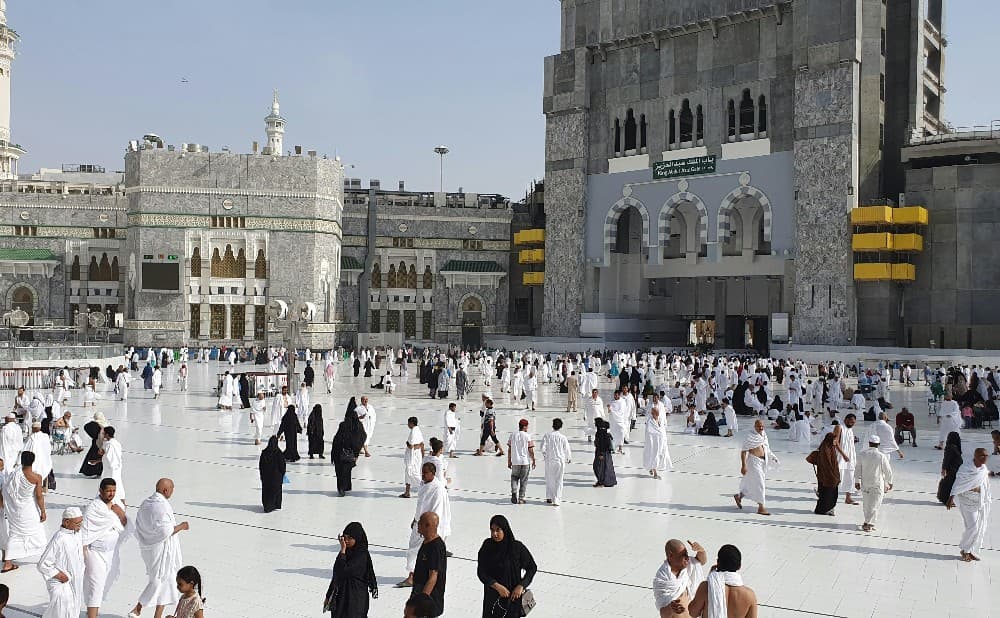
Pilgrimage to Mecca refers specifically to the rites of the Hajj. Pilgrims, dressed in simple white garments (ihram) symbolizing equality and purity, perform a series of rites:
-
Circumambulating the Kaaba: Walking seven times counter-clockwise around the Kaaba, the cube-shaped structure at the heart of the Great Mosque (Masjid al-Haram).
-
Walking between Safa and Marwah: Re-enacting Hagar’s search for water.
-
Standing at Arafat: Spending a day in prayer and reflection on the Plain of Arafat, the climax of the Hajj.
This pilgrimage commemorates the trials and faith of Prophet Abraham (Ibrahim) and his family.
Beyond the Hajj, pilgrimage in Islam can also include ziyarat—visits to other revered sites, such as the Prophet's Mosque in Medina or the Dome of the Rock in Jerusalem (Al-Aqsa Mosque complex).
What is a Pilgrimage Road?
A pilgrimage road refers to the historic routes traveled by pilgrims to reach sacred destinations. In Christianity, these roads flourished in the Middle Ages. The most famous is the Camino de Santiago (Way of St. James), a network of paths leading to the cathedral in Santiago de Compostela, Spain, believed to house the relics of Saint James. The journey along such a road is itself an act of penance, devotion, and community.
What is a Pilgrimage Church?
A pilgrimage church is a specific type of church, often built along pilgrimage routes, designed to accommodate large flows of pilgrims coming to venerate important relics (venerated remains or objects associated with saints or Christ). Key architectural features include:
-
Radiating Chapels: Allowing pilgrims to view relics without disrupting the main altar.
-
Ambulatories: A walkway around the apse for processional flow.
-
Grand Portals: Often with elaborate sculptural tympanums depicting biblical scenes like the Last Judgment.
Famous examples include the Basilica of Saint-Sernin in Toulouse and Saint Peter's Basilica in Vatican City.
Common Threads: The Universal Elements
Across faiths, pilgrimages share key elements that define this sacred practice:
-
Sacred Destination: A place made holy by revelation (like Muhammad's journey), the presence of relics, or pivotal events.
-
The Journey: The physical travel is an integral act of devotion and purification.
-
Prescribed Ritual: Specific actions, like the Tawaf around the Kaaba or prayers at a shrine, structure the experience.
-
Transformation: The pilgrim aims to return changed—purified, renewed, or with a deepened faith.
Conclusion
Whether it is a Muslim fulfilling the duty of Hajj in Mecca or a Christian walking the Camino to a grand cathedral, pilgrimage represents a universal human yearning to transcend the ordinary. It is a powerful fusion of movement and faith, where the outer path mirrors the inner journey. From the Great Mosque to the great pilgrimage churches, these sacred spaces and the roads to them continue to guide millions on their timeless quest for the divine.
Leave a Reply














![[18th Anniversary] 18 Years of Echoing Excellence: Making Communication Easier, Connecting Trust Beyond Borders](https://res.retekess.com/z_file/20260716/retekess-brand-story-making-communication-easier_20260716151044_7682.jpg)
![[18 Years in Wireless Communication] Silent Disco Systems Anniversary Celebration: Top-Selling Headphones & Event Mechanics Revealed!](https://res.retekess.com/z_file/20260713/18-years-in-wireless-communication-silent-disco-systems-anniversary-celebration_20260713175011_5749.webp)
![[Anniversary Carnival] Ding-dong! 18th Anniversary Mega Sale on Guest Paging & Calling Systems: Full Reveal of 12+ Products & Promo Rules!](https://res.retekess.com/z_file/20260713/18th-anniversary-mega-sale-on-guest-paging-calling-systems_20260713175257_0295.webp)
![[Retekess 18th Anniversary Teaser] Tour Guide System Exclusive Perks: Sneak Peek at Event Dates & Mechanics!](https://res.retekess.com/z_file/20260713/retekess-18th-anniversary-tour-guide-system-exclusive-perks--2-_20260713180135_6435.webp)
Follow Us
Pay With


 Google
 Amazon
Comments (0)