
Table of Contents
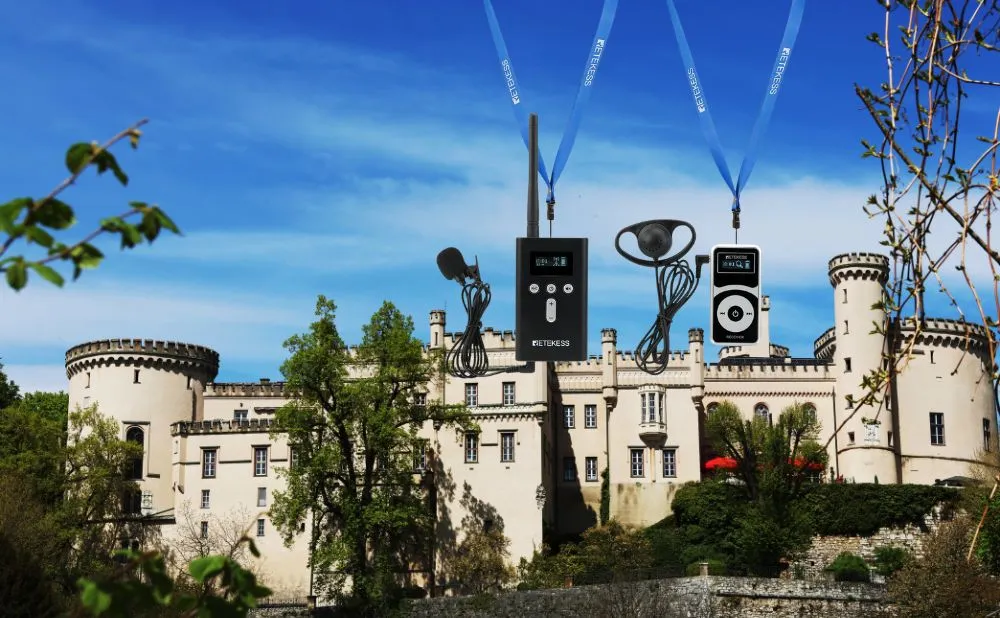
Elevate Your Travels: Why Every Tour Guide Needs a Professional Audio System
- Retekess
- Jun 16, 2026
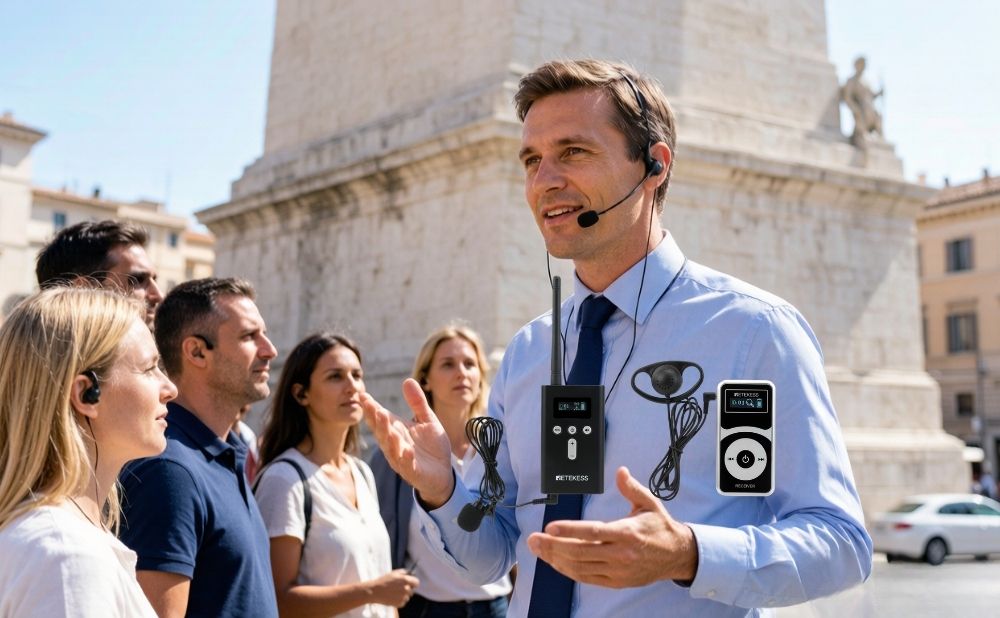
As a tour guide, your narrative is the heart of the experience. When guests struggle to hear, engagement drops and the magic fades. This is where a professional audio tour guide system becomes your most valuable travel companion.
Why You Need a Wireless Tour Guide System
Gone are the days of shouting over traffic or ambient noise. A portable wireless tour guide system bridges the gap between you and your audience, ensuring that your voice remains crisp, clear, and professional throughout the entire journey.
Here are the key reasons why integrating a tour guide audio system is a game-changer:
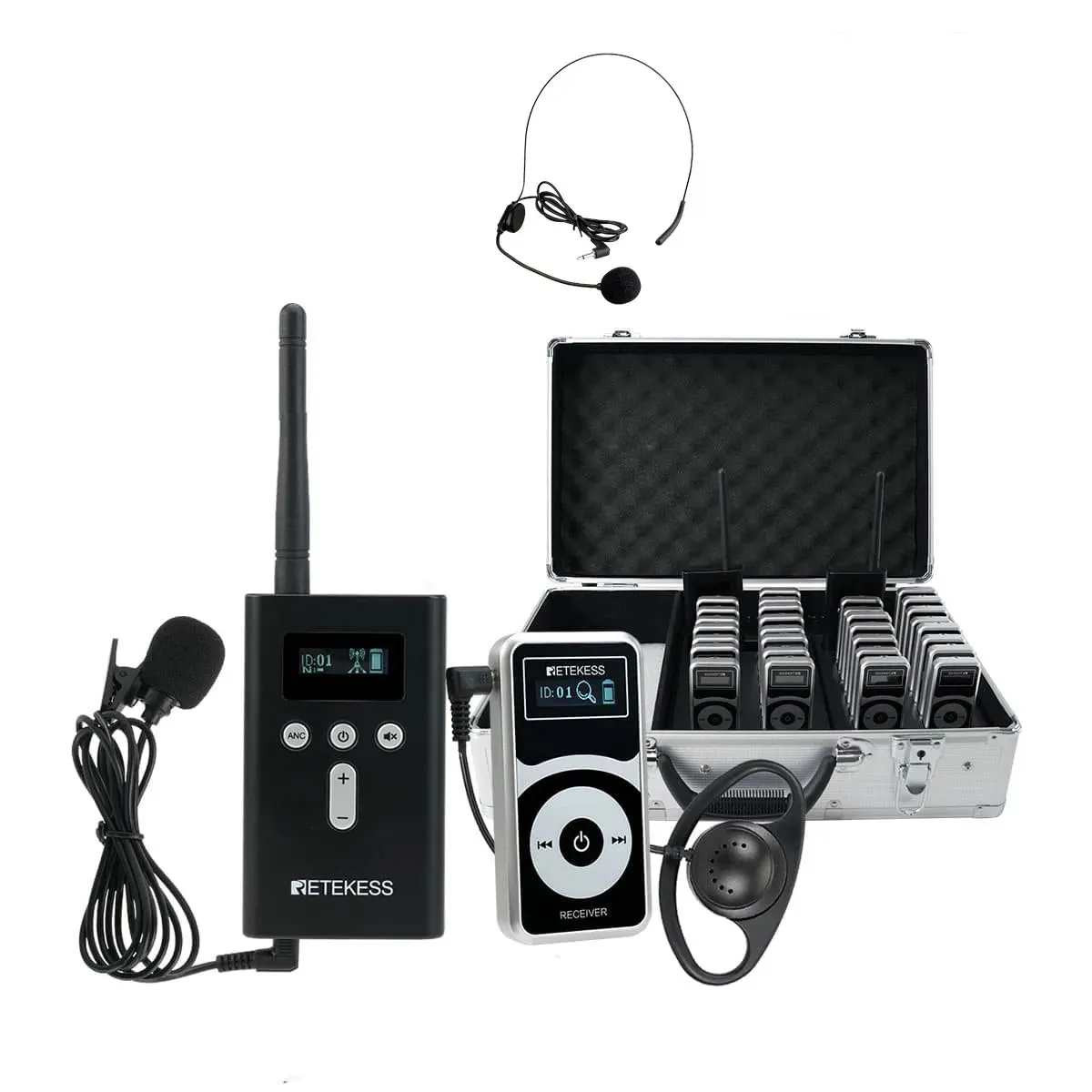
Crystal Clear Communication: With a tour guide microphone system, your voice is delivered directly to the listeners' ears, filtering out background noise and wind.
Reduced Vocal Strain: No more losing your voice at the end of a long day. You can speak at a conversational volume, and the tour guide transmitter and receiver will handle the rest.
Increased Flexibility: A wireless tour guide system allows your group to wander slightly, take photos, or linger at an exhibit without missing a single word of your commentary.
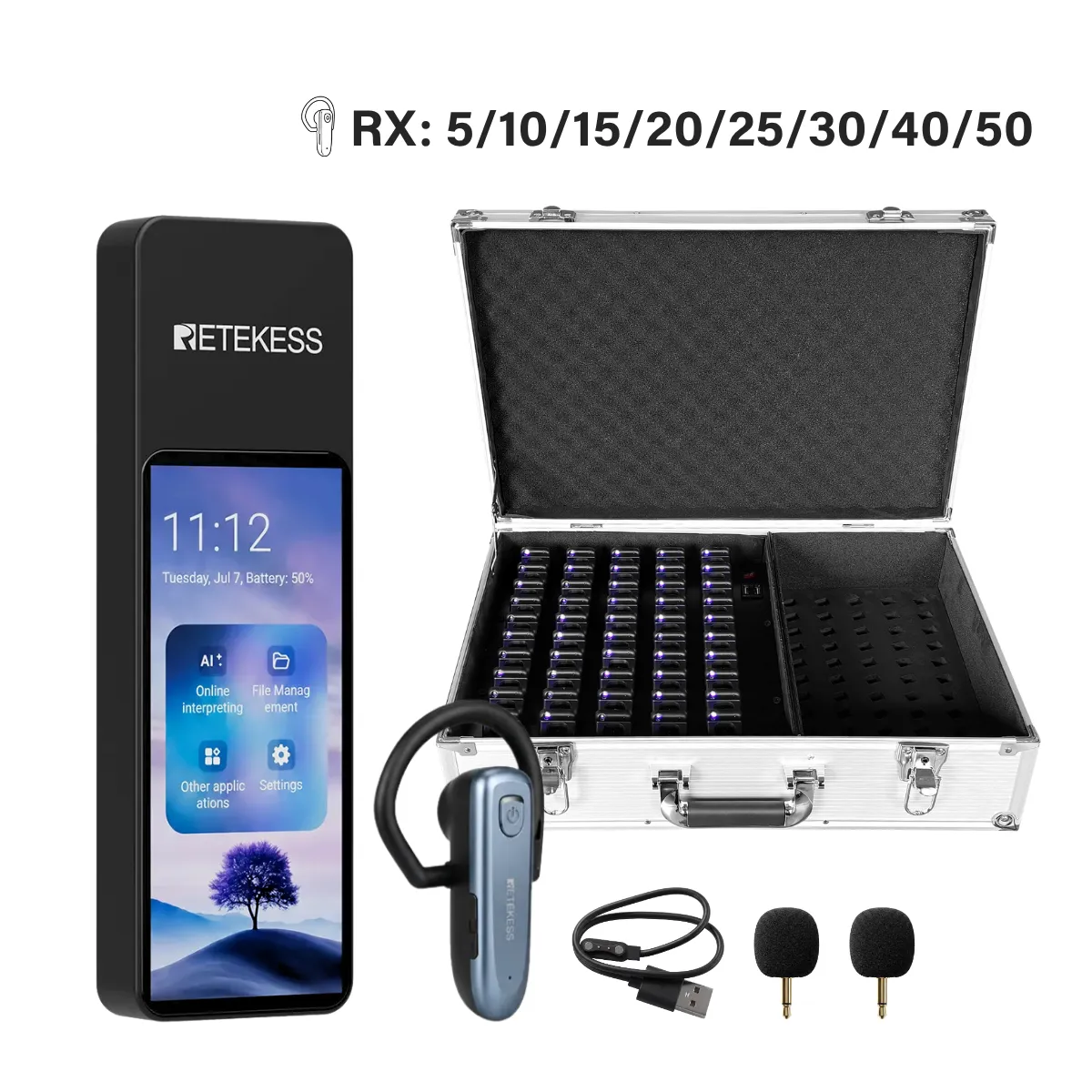
Scalability for Any Group Size: Whether you are working with an intimate group or a large crowd, systems are available to support any scale—even a tour guide system with 60 receivers or more.
Choosing the Best Equipment for Your Needs
Not all systems are created equal. When looking for the best wireless tour guide system, consider these configurations to find the perfect fit for your tours:
1. Core Performance & Audio Quality
Noise Cancellation: This is the "soul" of a professional system. Please check whether the tour guide equipment features noise-reduction functionality. This is critical for filtering out wind in outdoor environments or the mechanical hum in factories, ensuring your guests hear your voice, not the background chaos.
Signal Stability & Coverage: Check the effective transmission range. A professional system should comfortably cover 100–160 meters in an open area. Furthermore, investigate the system’s interference-avoidance technology, especially if you often work in popular tourist spots where other groups might be operating nearby.
2. Operational Efficiency (Workflow)
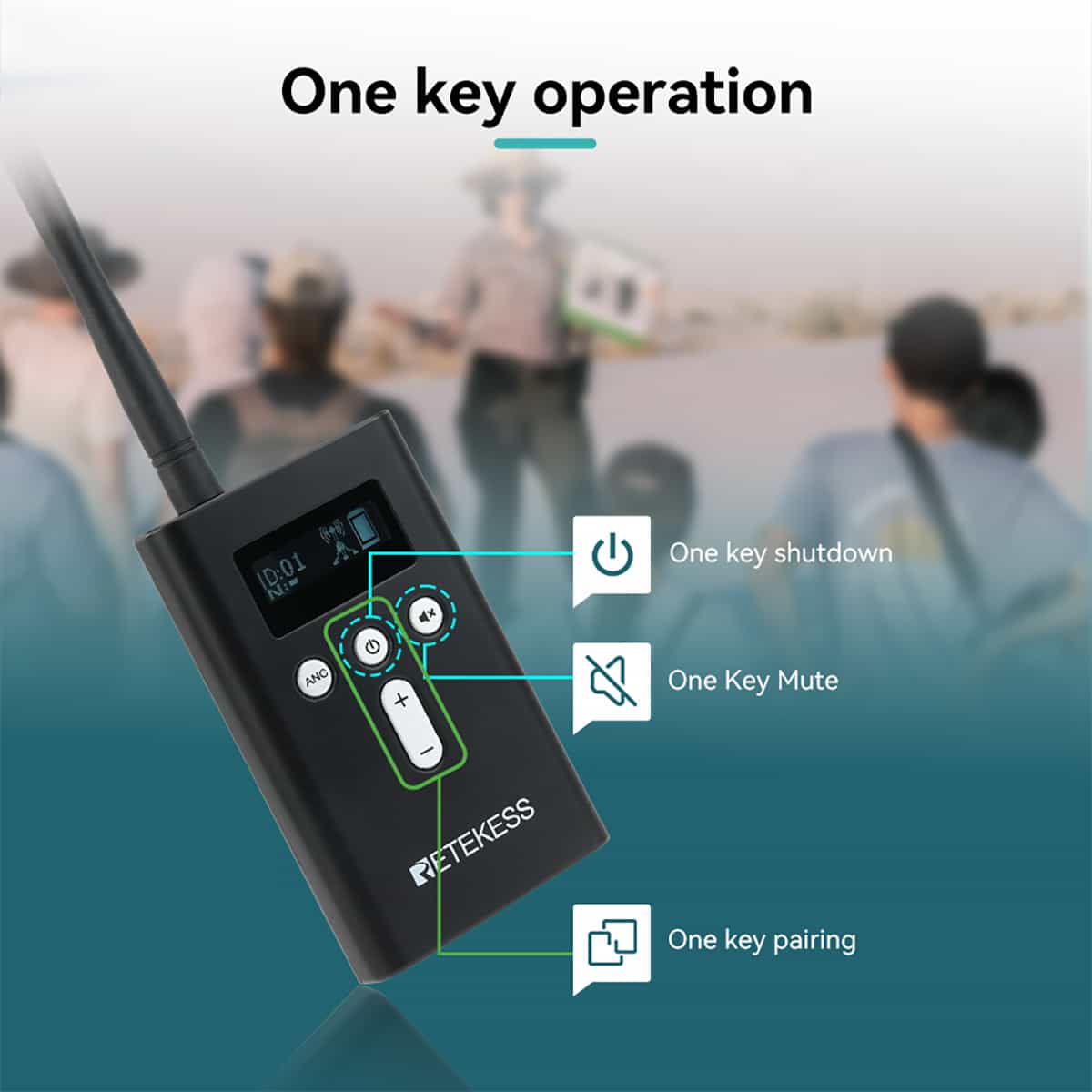
One-Touch Pairing & Memory: Your schedule is tight. Can the system sync all receivers to the transmitter with a single button press? Does it automatically remember the last used channel when powered on? These features save precious minutes every time you start a tour.
Batch Management: If you manage large groups (30+ people), look for a "batch shutdown" feature. Being able to turn off all receivers simultaneously with a long press on the transmitter is a game-changer for finishing your workday efficiently.
Ergonomics: Are the receivers and headsets lightweight? Guests may need to wear these for several hours, so comfort is a major factor in guest satisfaction.
3. Battery Life & Charging Ecosystem
All-Day Runtime: A professional system should easily last through a full day of touring. Look for 15–20+ hours for the transmitter and 20–30+ hours for the receivers.
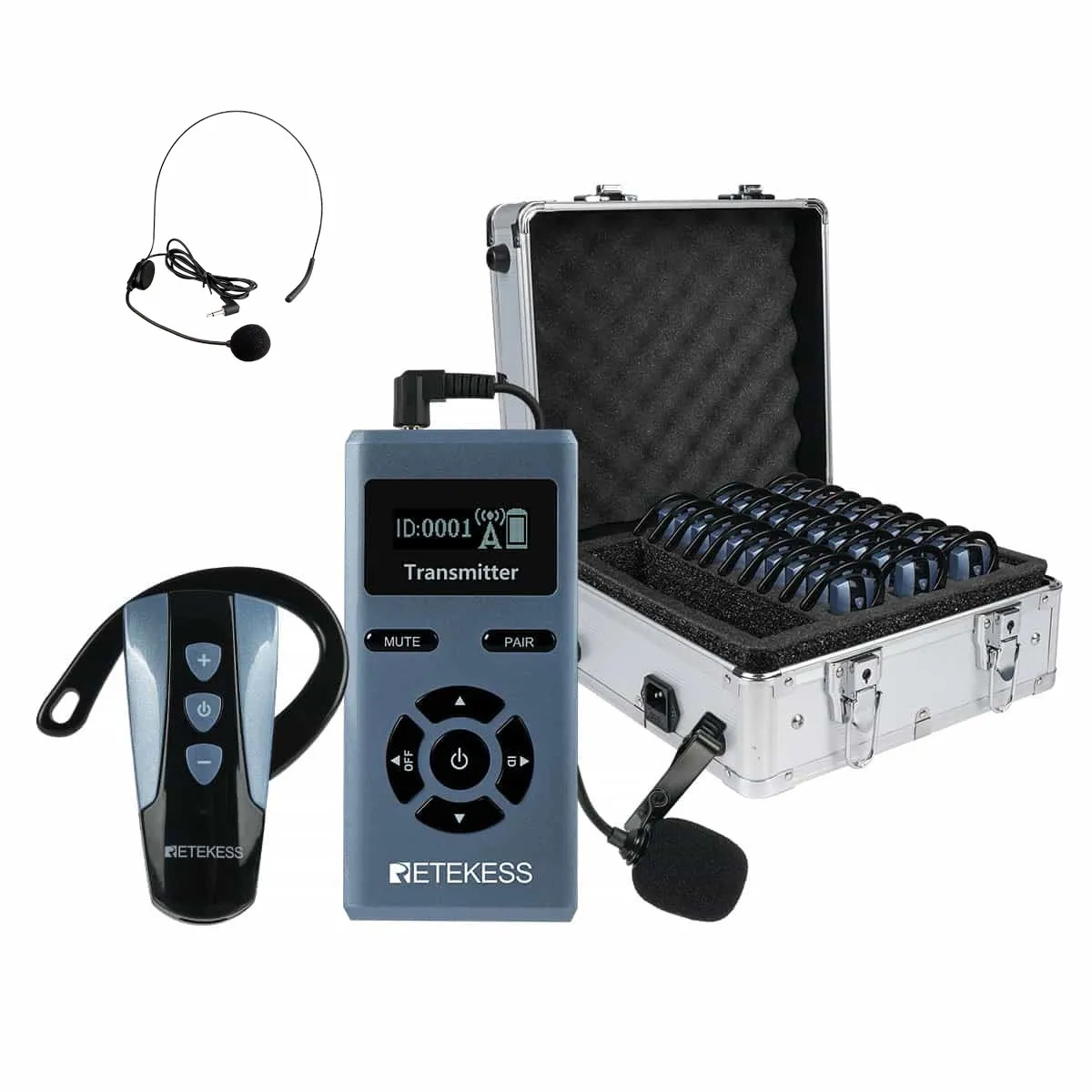
Charging Infrastructure (Crucial): Never underestimate this. If you are managing more than 10 units, avoid systems that require individual USB cables for each device. Always prioritize a system that offers a dedicated Charging Case or contact-based charging rack. This allows you to "drop and charge" your entire fleet in seconds, preventing the "cable nightmare" that plagues many amateur setups.
4. Flexibility & Scalability
Audio Input Options: Does the transmitter support an AUX input? Being able to plug in a smartphone to play background music or pre-recorded multi-language commentary adds a layer of professionalism and immersion to your tours.
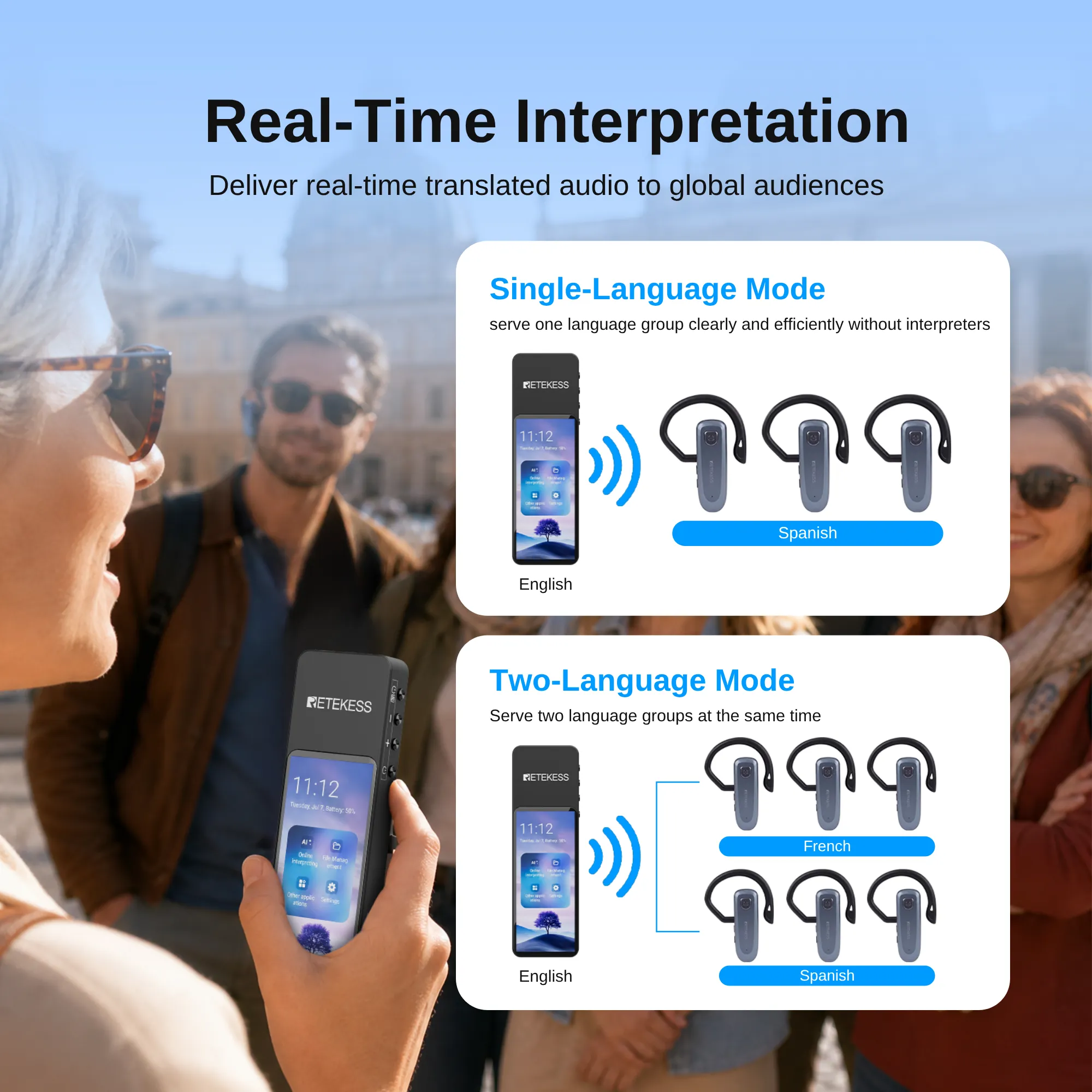
Communication Style: Do you need a two-way system for active Q&A, or is a one-way system better for maintaining focus and authority? Choose the configuration that best matches your guiding style.
Modular Expansion: Can you easily add more receivers to your fleet as your business grows? Ensure the system is modular so you don't have to buy a completely new set when your group sizes increase.
5. Durability & After-Sales Support
Build Quality: You are working in the field. Look for impact-resistant housing and designs that can withstand the occasional drop on a stone floor or exposure to light moisture.
Warranty & Accessories: Check the manufacturer’s warranty period (3 years is the industry gold standard for high-quality gear). Additionally, ensure that replacement parts like ear hooks, lanyards, and batteries are readily available. A system is only as good as its repairability.
Final Thoughts: Invest in Your Craft
Investing in high-quality tour guide system equipment is more than just buying electronics—it is an investment in your guests' experience. When your audience can hear you effortlessly, they stay engaged, satisfied, and more likely to leave glowing reviews.
If you are ready to take your tours to the next level, start by researching a reliable audio guide system that fits your specific group size and environment. Your voice—and your guests—will thank you!
Are you currently using an audio system for your tours, or are you looking to upgrade your setup this year?
Leave a Reply


![[18th Anniversary] 18 Years of Echoing Excellence: Making Communication Easier, Connecting Trust Beyond Borders](https://res.retekess.com/z_file/20260716/retekess-brand-story-making-communication-easier_20260716151044_7682.jpg)
![[18 Years in Wireless Communication] Silent Disco Systems Anniversary Celebration: Top-Selling Headphones & Event Mechanics Revealed!](https://res.retekess.com/z_file/20260713/18-years-in-wireless-communication-silent-disco-systems-anniversary-celebration_20260713175011_5749.webp)
![[Anniversary Carnival] Ding-dong! 18th Anniversary Mega Sale on Guest Paging & Calling Systems: Full Reveal of 12+ Products & Promo Rules!](https://res.retekess.com/z_file/20260713/18th-anniversary-mega-sale-on-guest-paging-calling-systems_20260713175257_0295.webp)
![[Retekess 18th Anniversary Teaser] Tour Guide System Exclusive Perks: Sneak Peek at Event Dates & Mechanics!](https://res.retekess.com/z_file/20260713/retekess-18th-anniversary-tour-guide-system-exclusive-perks--2-_20260713180135_6435.webp)
Follow Us
Pay With


 Google
 Amazon
Comments (0)