
Table of Contents
Why We Build: The Evolution of Christian Church Architecture Across History
- Retekess
- Mar 23, 2026
For centuries, the skyline of nearly every major city and rural village across the Western world has been defined by a solitary, dominant feature: the church spire. From the weathered stone of a medieval cathedral to the sleek, functional lines of a modern worship center, these structures are far more than mere shelters from the elements. They are physical manifestations of historical shifts, technological breakthroughs, cultural priorities, and the evolving needs of the communities that built them.
To understand the history of church architecture is to embark on a journey through human ingenuity and societal transformation. It is a story of how builders constantly pushed the limits of materials like stone and glass to create spaces that could inspire, educate, and house vast numbers of people. It is also a story of adaptation, showing how the very definition of a sacred space has changed to reflect the spirit of each age. By examining the evolution of church design, we can decode the practical and cultural meanings hidden within their walls.
The Birth of the Basilica: Repurposing Roman Civil Design
The earliest Christians did not build churches. For nearly three centuries, their gatherings were small, clandestine, and held in private homes to avoid persecution. This meant that when Christianity was finally legalized in the Roman Empire in 313 AD, there was no pre-existing architectural template for a "church." The need was immediate and practical: they required large, public buildings capable of sheltering a rapidly growing number of congregants for communal assembly and instruction.
They intentionally rejected the most obvious model: the Greco-Roman temple. Temples were designed as the exclusive, mysterious home of a pagan god's statue, with the public remaining outside on the steps for sacrifices. The Christians needed the opposite—an interior space for the entire community. They found their solution not in religious architecture, but in Roman civil engineering: the Basilica.
Function Over Form in the First Churches
In the Roman world, a basilica was a large, public civic building used primarily as a court of law or a busy commercial exchange. Its design was perfectly suited to the new religion’s functional requirements.
-
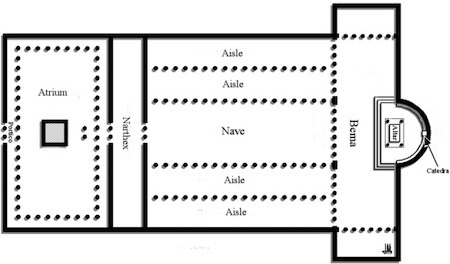
The Nave: This was the main central hall of the basilica. It was long, wide, and open, allowing hundreds of people to gather with a clear view of the proceedings at one end. This created an ideal space for teaching and the central assembly of the community.
-
The Apse: This semi-circular recess at the far end of the nave, which had housed the Roman judge’s seat, was logically repurposed. It became the focal point for the leader of the service, creating a clear sense of order and hierarchy within the large hall.
-
The Atrium: Early basilicas often included an enclosed forecourt. This served a vital practical function as a gathering space for the uninitiated or those not yet permitted to enter the main sanctuary, managing the flow of people into the building.
- The Colonnades: Rows of closely spaced columns that line the sides of the nave and help support the roof.
- The Aisles: Side sections of the basilica located between the colonnades and the exterior walls. These spaces are narrower than the nave and often divided into bays or small, more private sections. They typically rise lower than the nave, allowing for a clerestory.
- The Clerestory: The level of wall between the lower roof over the aisles and the higher roof of the nave, typically featuring windows to allow light into the nave.
The adoption of the basilica form was a stroke of pragmatic genius. It allowed the early church to create functional assembly spaces quickly and efficiently using established Roman construction techniques. By utilizing an existing secular design, they built spaces that were large, orderly, and focused, setting the foundational template for meaningful church design that centered on the communal experience.
Solid Walls and Rounded Arches: The Authority of the Romanesque Era
As the Roman Empire in the West collapsed and Europe entered the Early Middle Ages, a new architectural form began to take root, eventually spreading across the continent from roughly 800 to 1100 AD. This style, later termed Romanesque, was the first truly pan-European style since Roman times. It was a direct reflection of a society seeking stability and order in a chaotic world, where strong regional powers and the Church were the primary sources of authority.
The meaning of Romanesque church design is found in its perceived permanence and monumental presence. These buildings were designed to look like spiritual fortresses, offering a sense of immutable protection and authority in a period defined by regional conflict and uncertainty.
Building Spiritual Fortresses
When analyzing Romanesque architecture, several key features reveal its core meaning:
-
Massive Stone Walls: Romanesque churches are characterized by their immense, thick stone walls. These were structurally necessary to support the heavy stone barrel vaults (semi-circular ceilings) that replaced earlier fire-prone wooden roofs. Practically, these walls created a building that was incredibly durable, fireproof, and permanent—a physical statement of the enduring nature of the institution it housed.
-
Rounded Roman Arches: The define feature of the style, the semi-circular "Roman" arch was used for windows, doorways, and nave arcades. While structurally sound, the rounded arch has a practical limitation: it distributes weight outwards as much as downwards. This required thick walls and massive internal piers (pillars) to counter the force, creating an interior that was orderly but segmented.
-
Minimal Openings (Windows): To maintain the structural integrity of those massive walls, windows had to be small and few. This resulted in Romanesque interiors being famously dim and shadowy. This intentional use of darkness served to create a powerful atmosphere of solemnity and introspection, perfectly mirroring a cultural moment focused on penance and inner reflection.
-
Towers and Arcades: Romanesque designs often featured imposing defensive-style towers and decorative exterior arcading. This added to the monumental "fortress" feel, making the church the most dominant and secure structure in any town, physically embodying the concept of safe haven and authority.
A powerful Romanesque design, like that of the Chapel of Old St. Peter's Church (though a later rebuild, its base reflects this era’s resilience), tells a story of permanence and order. It was architecture designed to endure and to offer a definitive, unshakable physical presence in a turbulent world.
Reaching for the Sky: The Structural Innovation of the Gothic Revolution
Starting in France around 1140 AD, a revolutionary new way of building emerged that would sweep away the heavy, grounded aesthetic of the Romanesque. Gothic architecture was not just a new style; it was a profound technological leap that allowed architects to solve the puzzle that had limited their predecessors: how to build a church that was simultaneously taller, lighter, and filled with massive windows.
This revolution was driven by a new cultural spirit—an age of intellectual renaissance, expanding trade, and the rise of powerful city-states that wanted to showcase their wealth and innovation. The meaning of Gothic church design is centered on this sense of aspiration, civic pride, and a new humanistic focus that saw beauty and light as essential elements of the sacred experience.
Decoding the Gothic vs. Romanesque Breakthroughs
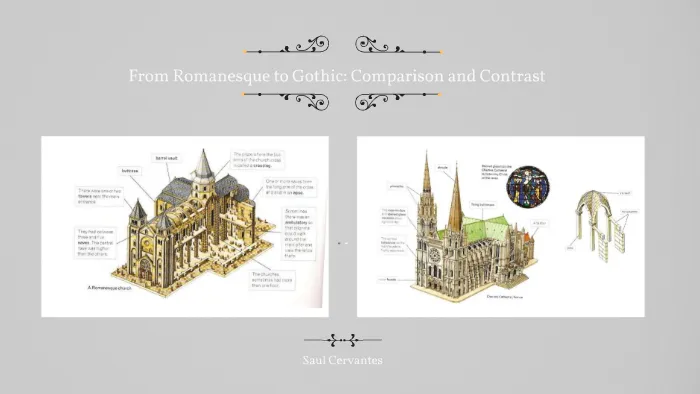
The core difference when comparing Gothic vs. Romanesque design lies in three key structural innovations that worked together to create an entirely new kind of space. Gothic masters essentially created a stone exoskeleton, freeing the walls from their load-bearing duties.
-
1. The Pointed Arch: The single most important innovation. Unlike the rounded arch, which is a fixed shape, the pointed arch’s height can be adjusted independently of its width. More importantly, it directs the weight of the roof more efficiently downwards rather than outwards. This crucial shift meant that arches could be taller and the supporting columns much slenderer, opening up the entire interior space.
-
2. The Ribbed Vault: Gothic builders advanced the stone ceiling by creating a framework of intersecting pointed arches (the "ribs") and then filling in the gaps with lighter, non-load-bearing stone panels. This made the entire vault lighter and allowed it to cover irregular-shaped bays, adding flexibility and elegance to the building’s layout.
-
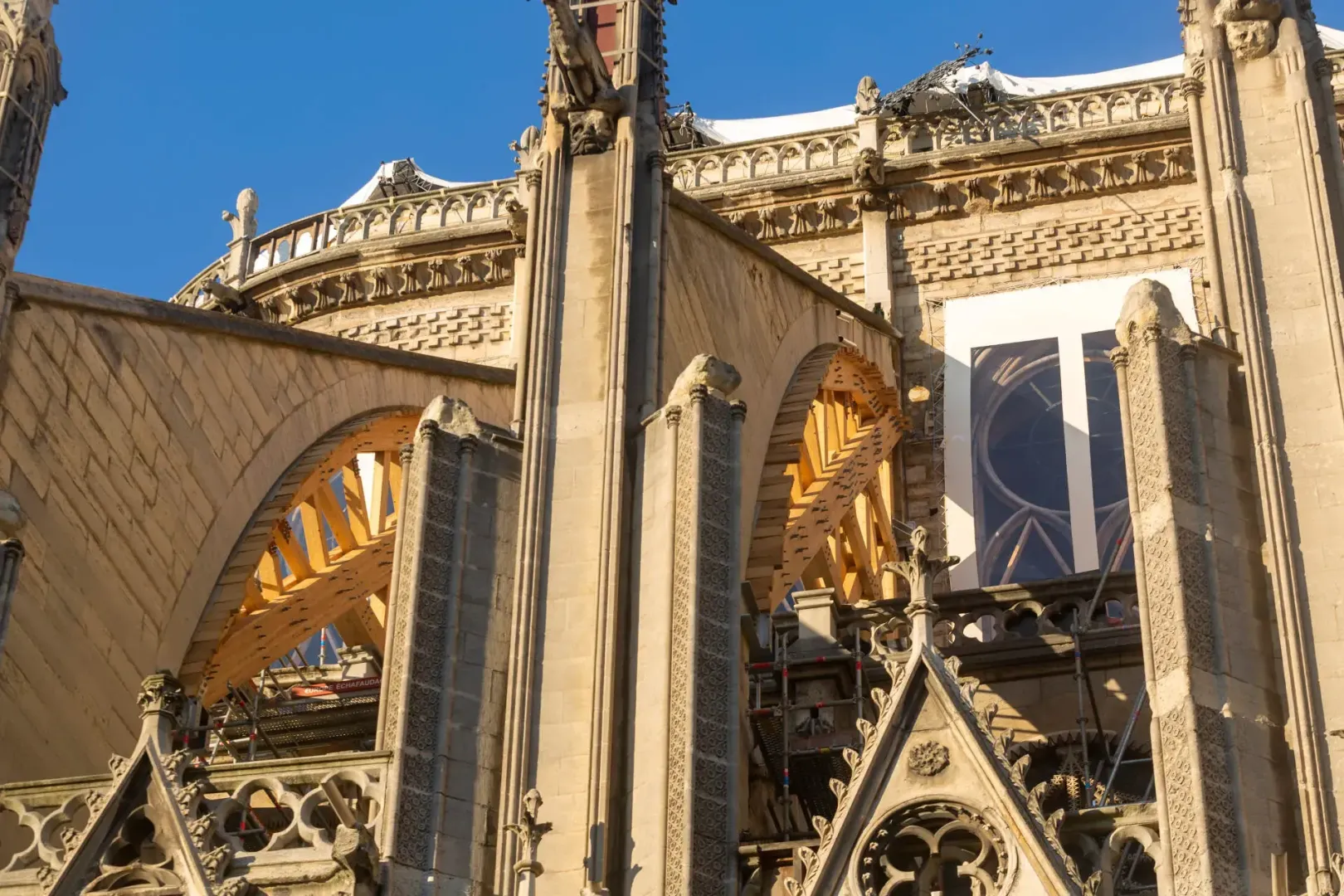
3. The Flying Buttress: This is the visible "exoskeleton." To support the unprecedented height and the outward thrust of the new vaulting, architects moved the external supports away from the main walls. They used stone "bridges" (the flying buttresses) to transmit the heavy forces down to massive external piers. This brilliant engineering solution meant that the main walls no longer needed to be thick or massive.
Form Follows Cultural Aspiration
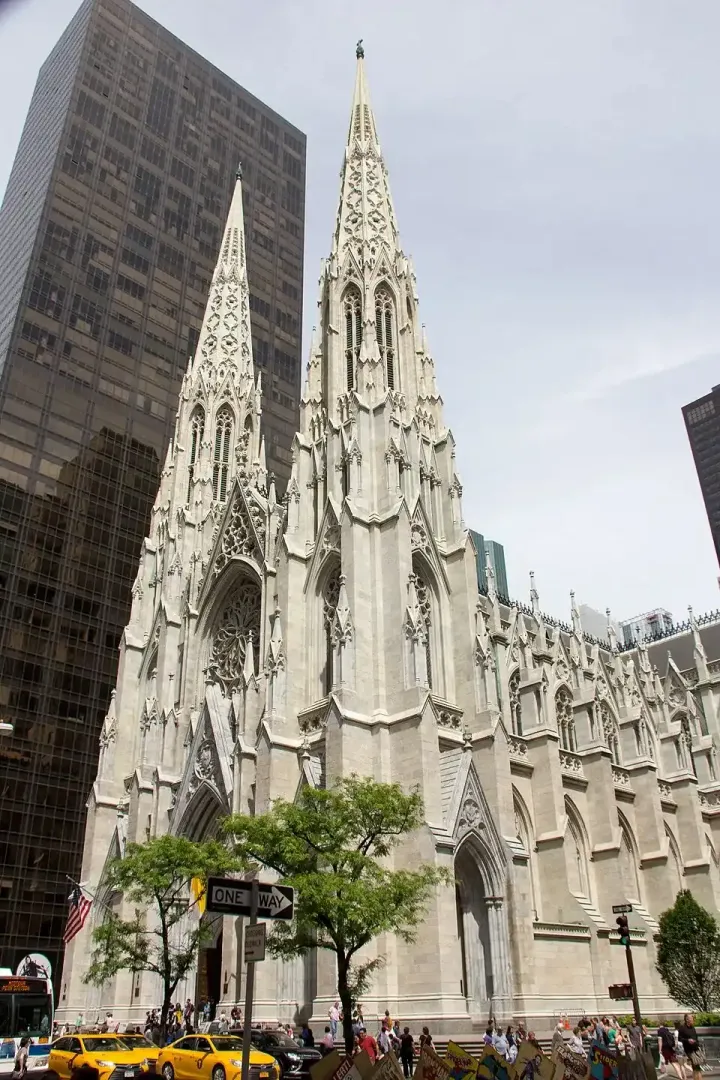
By utilizing this new toolkit, Gothic builders created a physical experience that spoke directly to the priorities of the time. The stunning features of a Gothic masterpiece like St. Patrick’s Cathedral in New York (a masterful Neo-Gothic revival) are clear expressions of this cultural meaning:
-
Verticality and Spired Heights: Every line in a Gothic design, from the clustered columns to the soaring spires, is designed to pull the eye upwards. This created an immediate, visceral sense of awe and upward movement, reflecting the intellectual and civic aspirations of the age. The church became a physical ladder, symbolizing the city's connection to a higher purpose and its own innovative spirit.
-
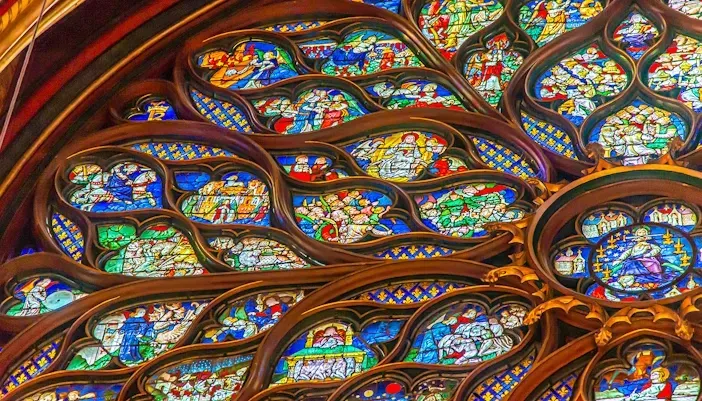
The Wall of Light (Stained Glass): Because the walls were no longer load-bearing, they could be replaced by vast expanses of glass. The invention of intricate stone tracery allowed these windows to become massive canvas-like spaces. These "walls of light" flooded the dim medieval interiors with brilliant, fractured color. Practically, they were illuminated picture books, using visual narratives to communicate complex stories and histories to a largely illiterate populace, making knowledge accessible and beautiful.
-
Complexity and Naturalism: Gothic decoration moved away from abstract patterns to detailed, naturalistic stone carvings of plants, animals, and human figures. This mirrored the intellectual shifts of the High Middle Ages, showing a new interest in the details of the observable world and the human experience.
The Gothic revolution was an era where structural daring met civic ambition, creating a meaningful church design that defined the city as a center of knowledge, art, and innovation.
More Than a Building: The Evolving Social Role of the Church
For most of its history, the meaning of a church’s design was not just about the space inside but how that space interacted with the world outside. The church building was the single most important and flexible structure in medieval society, serving as the physical stage for almost every aspect of civic life. It was, in essence, the "town hall," "community center," and "social safety net" all rolled into one stone structure.
The Flexible Civic and Social Hub
The social meaning of church design can be found in how its large, permanent interior was used.
-
Community and Commerce: In an era before dedicated civic buildings, the large, covered nave of the church often served as a town’s central market or a meeting place for local guilds. Business deals were finalized, contracts were sworn, and political discussions were held within its sacred but functional walls.
-
Education and Health: The first schools and universities were often housed within cathedral complexes. Likewise, early hospitals and alms houses (hospices) were frequently charitable extensions of the church, physically integrated into its architectural footprint and mission.
-
A Beacon and Refuge: Architecturally, the church tower or spire served as a vital practical landmark, a visual guide for travelers and a literal beacon that could broadcast news (via bells) or serve as a watchtower. More profoundly, it offered physical sanctuary. Any individual, regardless of their crime, could seek legal refuge within the church, where the civil authorities could not touch them, physically embodying the concept of mercy and a safe haven.
This deep integration into the daily fabric of the community meant that the church building was a truly shared space. Its architecture was designed to accommodate not just ritual but the full spectrum of human interaction, marking it as the definitive center of civic and social life.
Functionality Rediscovered: The Rise of Modern Minimalist Design
Starting in the early 20th century, the traditional language of church design began to dissolve. Modernism, with its emphasis on functionality, new materials like concrete and steel, and a rejection of historical ornament, offered a radical new perspective on sacred space. This architectural shift mirrored a profound cultural decentralization, where the church was no longer the sole center of civic or social life.
The meaning of modern church design lies in this return to functionality and a focus on creating a space for an intimate, authentic community experience. It’s a design language that often seeks to remove distractions rather than create overwhelming awe.
Stripping Away the Ornament for Connection
Key elements of modernist church design illustrate this functional shift:
-
Sleek Lines and Raw Materials: Modern churches often feature simple geometric forms, clean lines, and an honest exposure of raw materials like board-formed concrete, natural wood, and plain glass. There are no spires (or very abstract ones), no intricate carvings, and no traditional "religious" style. This creates a space that feels contemporary, authentic, and "of its time."
-
Flexible, Multi-Use Spaces: The modern "worship center" is often designed to be highly versatile. Seating is often removable, allowing the space to easily transition from a large service hall to a community theater, a food bank, or a social gathering space. This mirrors the early basilica, but with a new emphasis on adaptability in a secular world.
-
A Clear Focus (and No Distractions): Consider the auditorium-style layouts of many contemporary "mega-churches" like Life Church. Their design, often resembling a high-tech movie theater or a concert venue, is a direct expression of function. The architecture is minimal to eliminate any visual clutter, focusing the congregation's attention entirely on the centralized point of instruction—the stage, the screen, or the speaker. The "meaning" here is centered on clarity of communication and the immediate experience of the community gathering.
-
Integration with the Modern World: Contemporary designs, particularly those in bustling cities, often seek to physically blur the lines between sacred and secular. A church embedded within an office tower or a community center uses glass walls and inviting entrance plazas to signify openness and relevance, physically mirroring its desire to engage with the modern, diverse city around it.
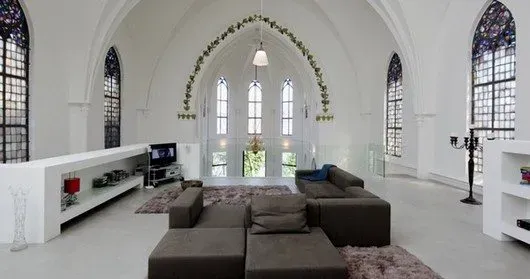
Modern church design is a return to basics. It is an architecture of practicality that prioritized the direct experience of community and clear teaching, reflecting a culture that values authenticity and functional connection over traditional monumentalism.
Conclusion: Decoding the Visual Language of Sacred Spaces
The next time you stand before a church building, try to look past the symbols and see the stories written in stone and steel. The history of church architecture is a powerful testament to the fact that these structures have always been far more than just "religious" buildings. They are, and always have been, active social and cultural agents, reflecting the deepest priorities of the communities that built them.
A Romanesque arch is a story of a society seeking stability. A Gothic spire is a monument to structural daring and civic pride. A modern, minimalist hall is an expression of functional connection in a crowded world. Every angle, every window, and every material is a deliberate choice made by architects and builders who wanted their structure to speak. By understanding this rich visual language, we don't just see a building; we see the very soul of the history that created it.
Leave a Reply














![[18th Anniversary] 18 Years of Echoing Excellence: Making Communication Easier, Connecting Trust Beyond Borders](https://res.retekess.com/z_file/20260716/retekess-brand-story-making-communication-easier_20260716151044_7682.jpg)
![[18 Years in Wireless Communication] Silent Disco Systems Anniversary Celebration: Top-Selling Headphones & Event Mechanics Revealed!](https://res.retekess.com/z_file/20260713/18-years-in-wireless-communication-silent-disco-systems-anniversary-celebration_20260713175011_5749.webp)
![[Anniversary Carnival] Ding-dong! 18th Anniversary Mega Sale on Guest Paging & Calling Systems: Full Reveal of 12+ Products & Promo Rules!](https://res.retekess.com/z_file/20260713/18th-anniversary-mega-sale-on-guest-paging-calling-systems_20260713175257_0295.webp)
![[Retekess 18th Anniversary Teaser] Tour Guide System Exclusive Perks: Sneak Peek at Event Dates & Mechanics!](https://res.retekess.com/z_file/20260713/retekess-18th-anniversary-tour-guide-system-exclusive-perks--2-_20260713180135_6435.webp)

Follow Us
Pay With


 Google
 Amazon
Comments (0)