
Table of Contents
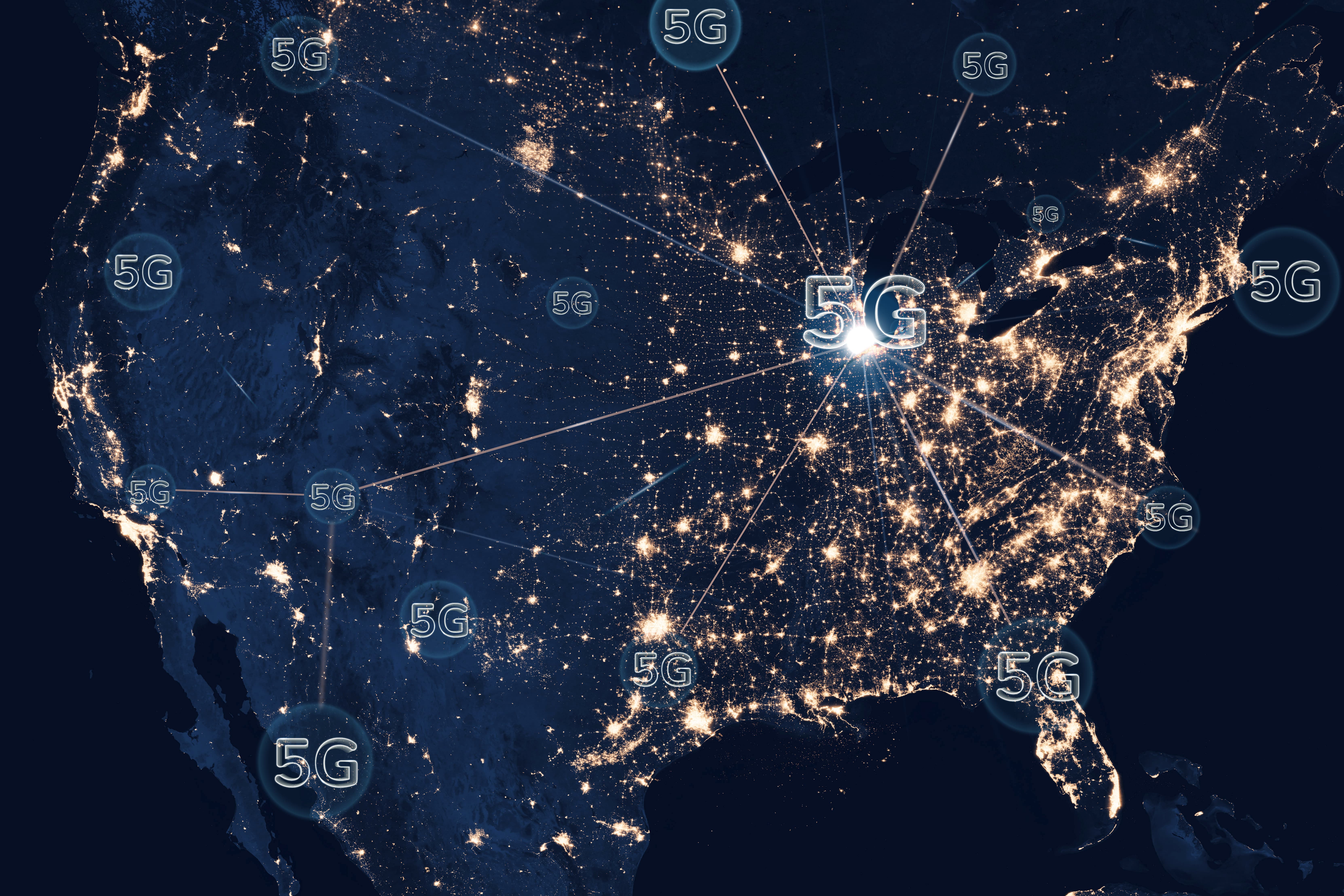
5G-Advanced and Beyond
- Retekess
- Dec 23, 2025
5G: The Connective Fabric of a New Digital Era
Beyond Speed: Redefining Connectivity
Often summarized by its staggering speed—up to 100 times faster than 4G—the fifth generation of mobile networks (5G) represents a far more profound shift. It is not merely an upgrade but a new global wireless standard designed to be the unifying fabric connecting virtually everyone and everything: people, machines, objects, and devices. While peak data rates can theoretically reach 20 Gbps, the true revolution lies in its combination of ultra-low latency (as low as 1 millisecond), massive network capacity, and unprecedented reliability. This triad enables a leap from enhanced mobile broadband to transformative, mission-critical applications, powering a projected $13.1 trillion in global economic output by 2035.
The Engine of Transformation: How 5G Works
5G’s capabilities are built on foundational technological breakthroughs. It operates across a broader spectrum, including new high-frequency bands (mmWave) for extreme capacity and re-farmed low-band spectrum for wide coverage. Key innovations like Massive MIMO (Multiple Input, Multiple Output) antennas allow multiple data streams simultaneously, vastly increasing capacity.
Furthermore, 5G architecture is fundamentally software-driven and cloud-native. It utilizes network slicing to create multiple virtual networks atop a single physical infrastructure, each tailored for specific needs (e.g., a slice for autonomous vehicles requiring instant response, and another for massive IoT sensors requiring minimal power). This, combined with edge computing—processing data closer to its source—ensures the low latency and high efficiency required for real-time applications.
5G vs. 4G: A Generational Leap
The difference between 4G and 5G is qualitative, not just quantitative. The following comparison highlights the paradigm shift:
| Feature | 4G LTE | 5G |
|---|---|---|
| Peak Download Speed | ~1 Gbps | Up to 20 Gbps |
| Latency | ~30-50 ms | ~1 ms |
| Connection Density | ~100,000 devices/sq km | 1 million devices/sq km |
| Mobility Support | Up to 350 km/h | Up to 500 km/h |
| Network Architecture | Hardware-centric, monolithic | Software-defined, cloud-native |
| Key Focus | Mobile broadband for people | Connective fabric for everything |
Three Pillars of Application: How 5G is Being Used
5G's impact unfolds across three interconnected service paradigms:
-
Enhanced Mobile Broadband (eMBB): This is the most direct user experience, delivering seamless ultra-HD video streaming, immersive VR/AR, and cloud gaming without lag. It transforms smartphones into gateways for rich, real-time digital experiences.
-
Mission-Critical Communications (URLLC): Leveraging ultra-reliable, low-latency links, 5G enables services where failure is not an option. This includes remote surgery in healthcare, real-time control of smart grids and critical infrastructure, and the coordination of autonomous vehicles for safer transportation.
-
Massive Internet of Things (mIoT): 5G is designed to connect a vast ecosystem of sensors and devices efficiently. By scaling down in power and data rate, it enables precision agriculture with soil monitors, digitized logistics with asset tracking, and smart city sensors—all on a massive scale previously untenable.
The Economic and Societal Impact
The 5G value chain is a powerful economic engine. Qualcomm's landmark study projects it will support 22.8 million new jobs and drive $265 billion in annual global CAPEX and R&D over the next 15 years. Its influence extends beyond traditional telecom, revolutionizing industries like automotive, manufacturing, and healthcare.
For society, 5G promises a smarter, safer, and more sustainable future. It enables remote health monitoring, improves traffic management to reduce emissions, and brings high-speed connectivity to underserved rural areas. As noted by industry leaders, 5G is advancing societies by turning futuristic concepts—like connected vehicle ecosystems and advanced industrial automation—into present-day realities.
The Present and The Road Ahead
5G is not a future promise; it is a present reality, deployed in over 60 countries with rapidly expanding coverage. Accessing it requires a 5G-compatible smartphone and a supporting carrier plan. The rollout, faster than 4G's, is now entering its next phase: 5G-Advanced. This evolution focuses on integrating AI for network automation, enhancing uplink speeds, and pioneering new capabilities like integrated sensing and communication, further blurring the line between the digital and physical worlds.
In conclusion, 5G is the foundational connectivity layer for the Fourth Industrial Revolution. It transcends faster download speeds to become a platform for innovation, economic growth, and societal transformation, truly connecting the world in ways previously unimaginable.
Leave a Reply



![[18th Anniversary] 18 Years of Echoing Excellence: Making Communication Easier, Connecting Trust Beyond Borders](https://res.retekess.com/z_file/20260716/retekess-brand-story-making-communication-easier_20260716151044_7682.jpg)
![[18 Years in Wireless Communication] Silent Disco Systems Anniversary Celebration: Top-Selling Headphones & Event Mechanics Revealed!](https://res.retekess.com/z_file/20260713/18-years-in-wireless-communication-silent-disco-systems-anniversary-celebration_20260713175011_5749.webp)
![[Anniversary Carnival] Ding-dong! 18th Anniversary Mega Sale on Guest Paging & Calling Systems: Full Reveal of 12+ Products & Promo Rules!](https://res.retekess.com/z_file/20260713/18th-anniversary-mega-sale-on-guest-paging-calling-systems_20260713175257_0295.webp)
![[Retekess 18th Anniversary Teaser] Tour Guide System Exclusive Perks: Sneak Peek at Event Dates & Mechanics!](https://res.retekess.com/z_file/20260713/retekess-18th-anniversary-tour-guide-system-exclusive-perks--2-_20260713180135_6435.webp)

Follow Us
Pay With


 Google
 Amazon
Comments (0)