
Table of Contents

The 6 Levels of Tour Guide Audio Fails (And How to Avoid Every Single One)
- Retekess
- Sep 9, 2026
Group tour audio systems make sightseeing smoother and more accessible, but they also create plenty of awkward, frustrating, and downright cringeworthy moments. Guides and guests alike run into small audio mishaps on a regular basis. Most of these issues feel minor in the moment, but they add up to worse tour experiences, lower review scores, and wasted time for everyone.
This post ranks the most common tour guide audio fails by severity, from tiny annoyances to full-group social disasters, and explains what causes each one. It also breaks down how a single design upgrade eliminates most of these problems before they happen.
Level 1: Minor Annoyance – Fumbling for Tiny Buttons
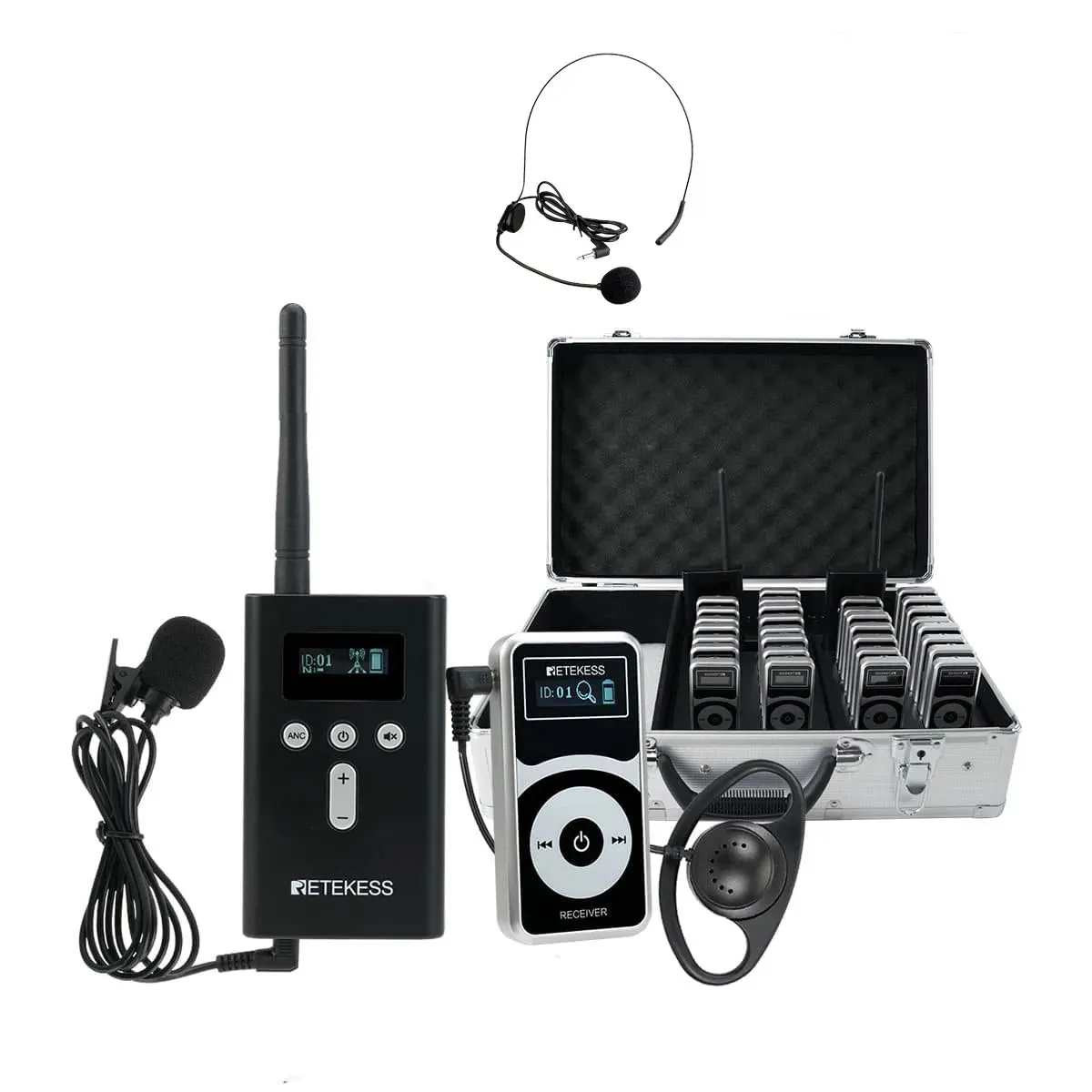
This is the most universal, low-stakes fail. Guests pick up a receiver and immediately struggle to locate volume and channel buttons. Many models tuck small, identical buttons along the side or back of the device, with no clear visual labels.
Guests often spend the first five minutes of a tour poking at the device instead of listening. Older guests and people with limited dexterity struggle most. Guides report stopping every few minutes to help someone adjust settings, which pulls focus away from the actual tour content.
It rarely ruins a whole visit, but it creates unnecessary friction right at the start of the experience. It also sets a low bar for perceived quality, even when the audio itself sounds fine.
Level 2: Quiet Mistake – Stuck on the Wrong Channel
This fail happens far more often than most guides admit. A guest puts on the receiver, hears voices, and assumes they are on the correct channel. Forty minutes later, they realize they have been listening to a different tour group entirely.
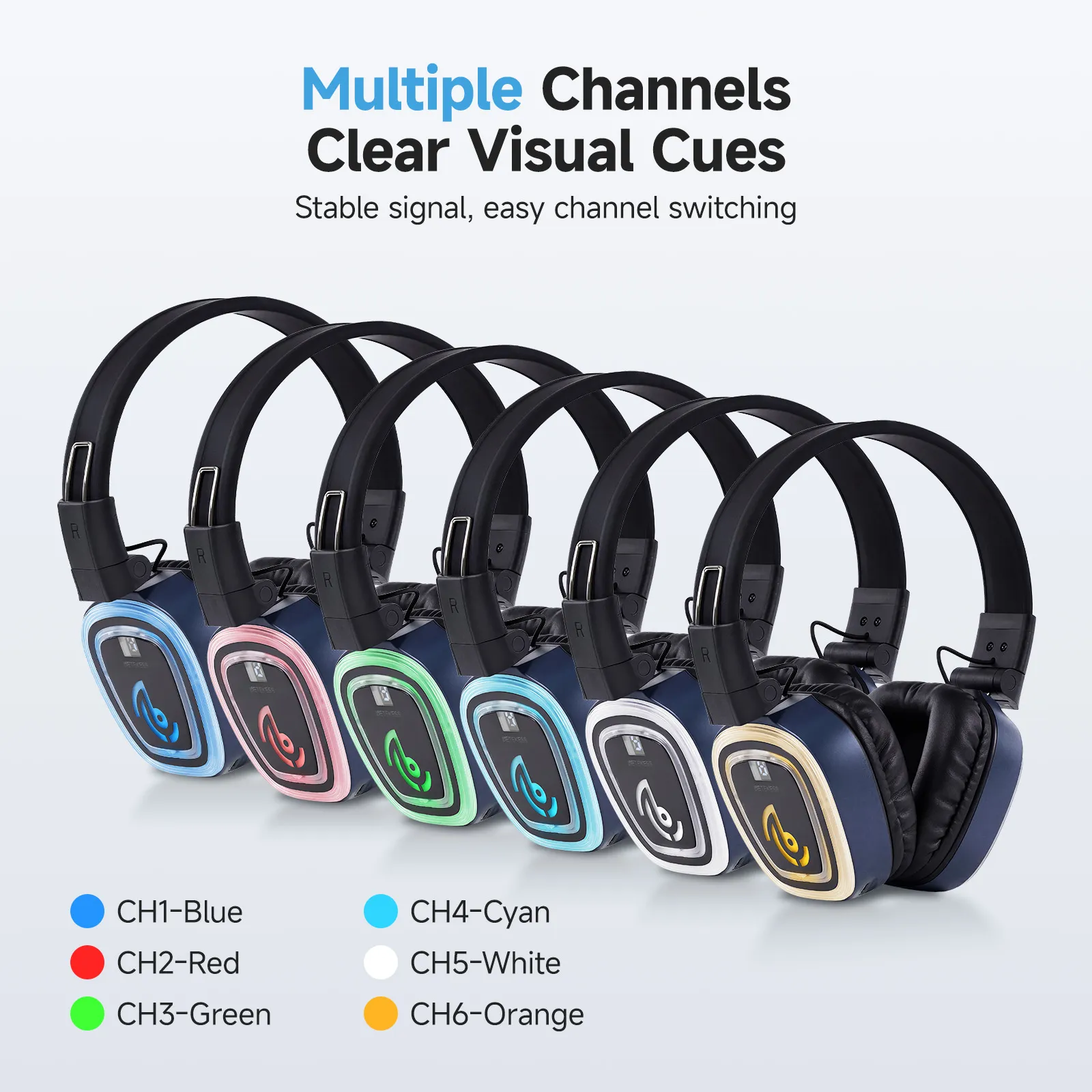
This issue happens because standard button-controlled receivers give no visual confirmation of which channel is active. Guests press a button and hope for the best. In sites with dozens of active tour groups, wrong-channel mix-ups happen daily.
Most guests do not mention the mistake out of embarrassment. They simply miss a large chunk of the tour and leave disappointed. For tour operators, this means paying for content that guests never actually hear.
Level 3: Awkward Moment – Accidental Mute Mid-Tour
This fail creates short, sharp moments of public awkwardness. A guest accidentally hits the mute button while adjusting volume. They then wave at the guide and signal that they cannot hear anything, often mid-explanation.
The whole group pauses while the guide walks over to fix the setting. The guest feels embarrassed. The rest of the group loses their train of thought. On busy tours with tight schedules, these small delays add up quickly.
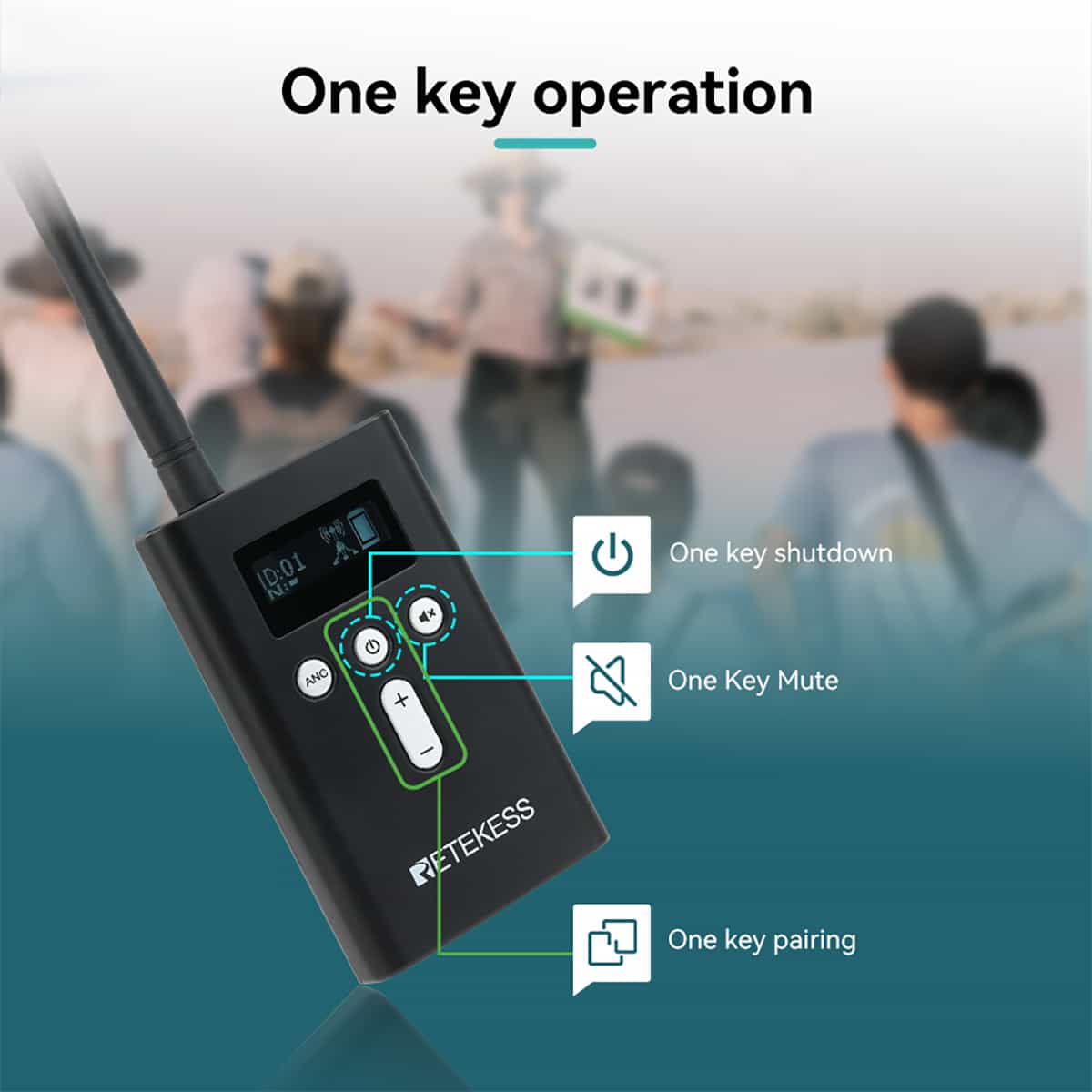
Again, the root cause is blind button operation. Guests cannot see whether mute is active, so accidental presses go unnoticed until audio cuts out entirely.
Level 4: Group Mix-Up – Cross-Talk With Another Tour
This fail turns a serious tour into unintentional comedy. Two nearby tour groups operating on similar frequencies pick up each other’s audio. One minute guests are listening to ancient Roman history, the next they hear a review of the best gelato shop on the block.
Cheap analog systems and overcrowded sites make this problem common. It happens most often in popular museums, historic city centers, and major landmarks where dozens of tours run at the same time.
Mild cross-talk is distracting. Severe cross-talk makes the tour impossible to follow. It also makes operators look unprofessional, even when the issue comes down to low-quality equipment.
Level 5: Full Stop – Dead Batteries Mid-Visit
This fail brings a tour to a complete halt. Receivers die halfway through a site visit, with no easy way to recharge on the spot. Guides either carry spare units and waste time swapping them out, or leave guests without audio for the rest of the stop.
This issue usually stems from two problems. First, many low-end systems overstate battery life and die well before the end of a full touring day. Second, standard receivers give no clear battery level indicator, so operators cannot spot low devices before a tour starts.
For full-day city tours and multi-site itineraries, mid-tour battery death is one of the most complained-about issues in guest reviews.
Level 6: Ultimate Cringe – Open Mic Private Chats
This is the most memorable and most embarrassing fail on the list. A guide forgets to mute their transmitter and makes a quiet offhand comment — about the site, about a guest, about their own plans — and the entire group hears it live.
These moments range from slightly awkward to deeply unprofessional. A throwaway joke, a frustrated sigh, or a private side comment gets broadcast to every listener. There is no way to take it back.
This fail happens most often with simple one-button transmitters that have no clear mute status display. Guides cannot tell at a glance whether their mic is live, so mistakes are inevitable.
How Smart Touch Tour Guide Systems Fix Most Fails
Nearly all of the fails listed above come from the same core design flaw: blind, button-only operation. When users cannot see what setting they are on, mistakes happen. Smart touch-controlled tour guide systems solve this problem by adding a clear visual interface to every receiver and transmitter.
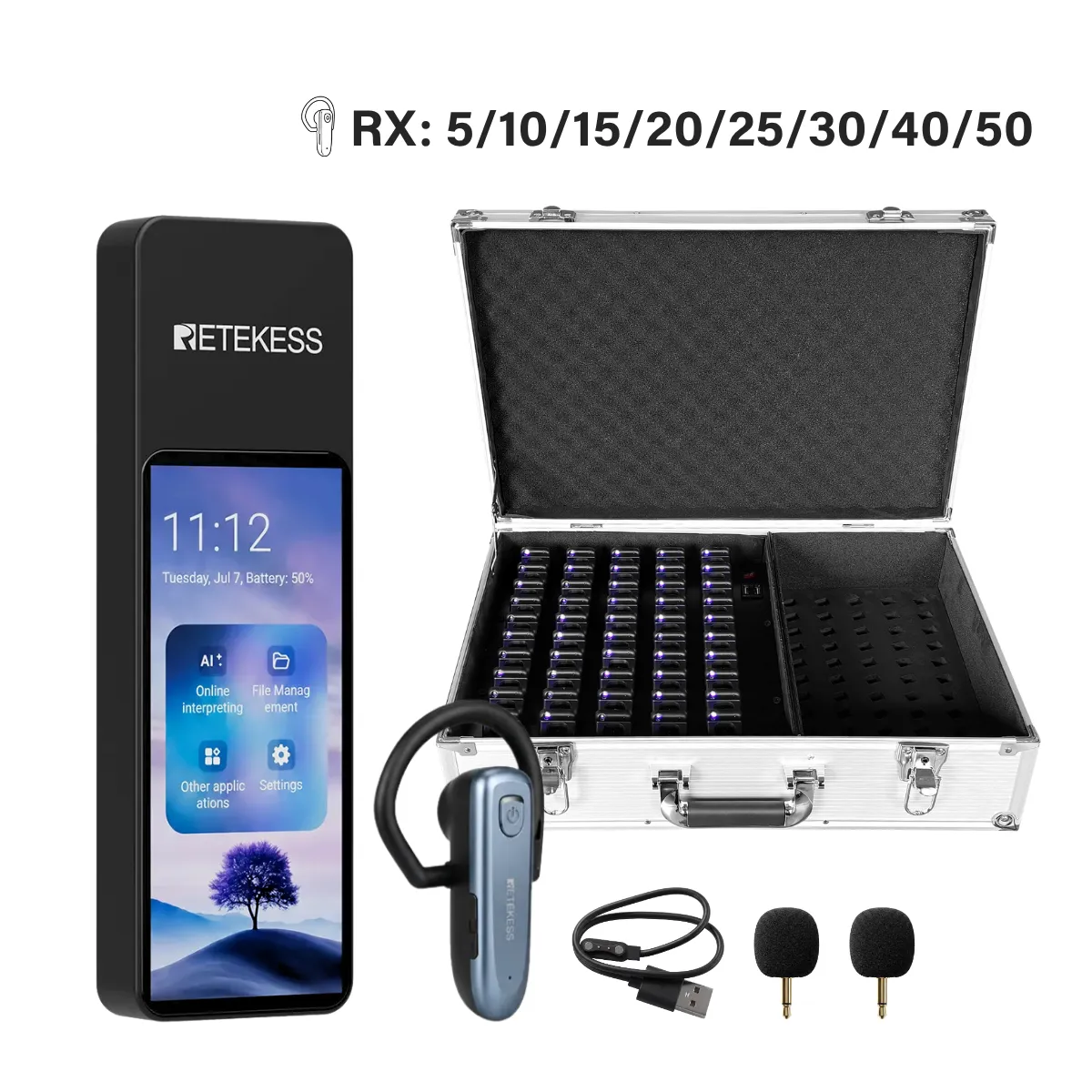
The Retekess TT133 is one such system, built specifically to cut down on on-tour technical issues and reduce guide workload.
First, the touch-based visual display eliminates button-fumbling and wrong-channel mistakes. Guests can see their active channel, volume level, and remaining battery at a glance. There is no guessing, no poking at hidden buttons, and no accidental mode switches. Even first-time users and older guests can adjust settings in one quick tap. This alone removes the first three levels of common audio fails.
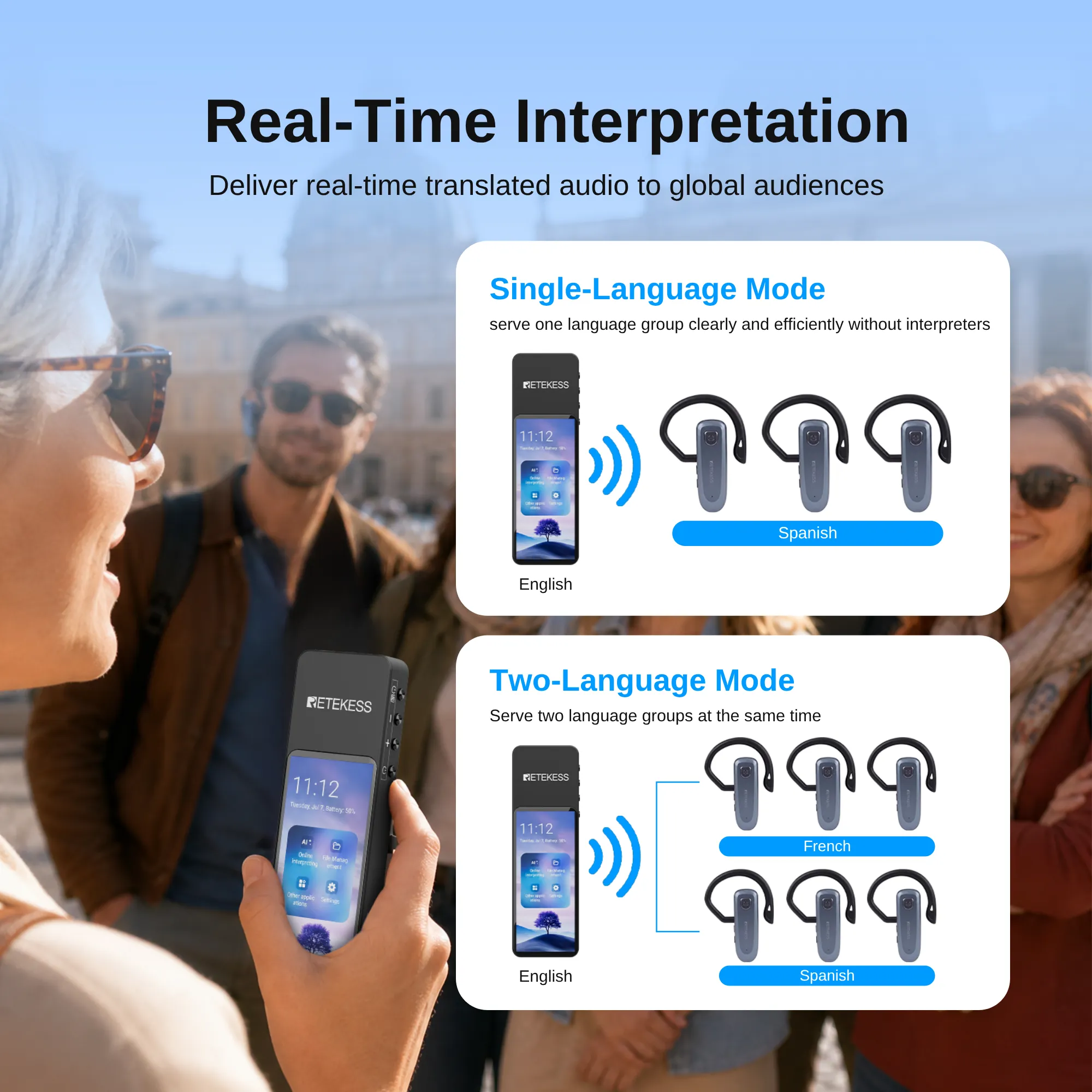
Second, the 2.4G digital transmission system eliminates cross-talk. It supports dozens of independent, encrypted channels. Multiple tour groups can operate in the same tight space without picking up each other’s signals. The stable signal also covers long ranges, so guests can step away to take photos without losing audio.
Third, clear battery status indicators and 18-hour receiver life prevent mid-tour power failures. Operators can check battery levels before each tour and spot low devices early. The included charging case makes bulk recharging fast and simple at the end of each day.
Finally, the transmitter’s clear touch interface gives guides full visibility of their mic status. There is no guesswork about whether the mic is live or muted. This cuts out the risk of accidental open-mic moments entirely.
Guides who switch to touch-based systems report spending far less time troubleshooting devices and more time engaging with guests. For tour operators, fewer technical fails mean better reviews, fewer guest complaints, and smoother daily operations.
Quick Pre-Tour Checklist to Avoid Audio Fails
Even with good equipment, a few quick checks prevent most avoidable issues:
- Test every transmitter and receiver before the tour starts
- Confirm all devices are set to the correct channel
- Verify battery levels for every unit
- Give guests a 30-second walkthrough of basic controls
- Keep 2 to 3 spare units on hand for unexpected issues
Final Thought
Tour guide audio fails are so common that many operators treat them as an unavoidable part of group travel. Most do not have to be. The majority of awkward, frustrating, and cringeworthy audio moments stem from outdated, poorly designed hardware, not from user error.
Switching to a touch-controlled system like the Retekess TT133 does not just make audio sound clearer. It removes dozens of small, daily frustrations for both guides and guests. It lets guides focus on telling stories, and lets guests focus on enjoying the tour. For any operator looking to raise service quality and cut down on on-tour headaches, the upgrade makes a measurable difference.



![[18th Anniversary] 18 Years of Echoing Excellence: Making Communication Easier, Connecting Trust Beyond Borders](https://res.retekess.com/z_file/20260716/retekess-brand-story-making-communication-easier_20260716151044_7682.jpg)
![[18 Years in Wireless Communication] Silent Disco Systems Anniversary Celebration: Top-Selling Headphones & Event Mechanics Revealed!](https://res.retekess.com/z_file/20260713/18-years-in-wireless-communication-silent-disco-systems-anniversary-celebration_20260713175011_5749.webp)
![[Anniversary Carnival] Ding-dong! 18th Anniversary Mega Sale on Guest Paging & Calling Systems: Full Reveal of 12+ Products & Promo Rules!](https://res.retekess.com/z_file/20260713/18th-anniversary-mega-sale-on-guest-paging-calling-systems_20260713175257_0295.webp)
![[Retekess 18th Anniversary Teaser] Tour Guide System Exclusive Perks: Sneak Peek at Event Dates & Mechanics!](https://res.retekess.com/z_file/20260713/retekess-18th-anniversary-tour-guide-system-exclusive-perks--2-_20260713180135_6435.webp)
Follow Us
Pay With


 Google
 Amazon
Comments (0)