
Table of Contents
A Practical Way to Support Parent-Teacher Conference Translation
- Retekess
- Aug 14, 2026
Parent-Teacher Conferences play an important role in school communication. They help teachers share progress, discuss concerns, and plan support with families. But for multilingual families, these meetings often lose value when language access is limited. Schools need a practical way to support parent-teacher conference translation without slowing down the meeting or splitting families into different sessions. That is why translation solutions for multilingual school meetings are becoming more important in modern education.
1. Why Parent-Teacher Conferences Need Better Language Support
A parent-teacher conference is not just a meeting. It is a chance for teachers and parents to work together around a child’s learning. When both sides can speak clearly and understand each other, the meeting is more useful and more respectful.
For multilingual families, language can become the biggest barrier. A parent may want to ask about grades, behavior, support plans, or next steps, but may not have the words to do it well in English. A teacher may try to explain an issue, but the parent may only catch part of the message. When that happens, the meeting loses value.
This is where parent-teacher conference translation matters. It helps schools turn a one-way talk into a real conversation. It also helps schools meet the growing need for multilingual school meetings without making families feel left out.
2. Why Traditional Translation Methods Fall Short at School Meetings
Many schools still rely on old methods to bridge language gaps. Each one has limits.
|
Traditional Method |
Real-World Pain Point |
Why It’s Not Practical |
|
Human interpreters |
$50–150/hr; hard to book for less-common languages; one interpreter moving between rooms breaks the schedule |
High cost, scheduling problems, no coverage for last-minute needs |
|
Student translation |
Not allowed in many cases; students may not know school terms; risk of wrong meaning |
Legal risk, distorted information, weak parent trust |
|
Phone / video interpreting |
Needs quiet space and stable connection; open rooms hurt audio quality; parents may feel distant |
Awkward experience, technical issues, poor fit for live meetings |
|
Split sessions |
English families in one slot, other languages in another |
Takes too much staff time and creates a poor parent experience |
These methods can work in some cases, but they do not scale well. They also make meetings feel slow and fragmented.
What schools really need is a way to support communication without adding another person into the room, without depending on a closed space, and without forcing families into separate sessions. That is where a wireless translation system can help.
3. How a Wireless Translation System Becomes the Practical Answer
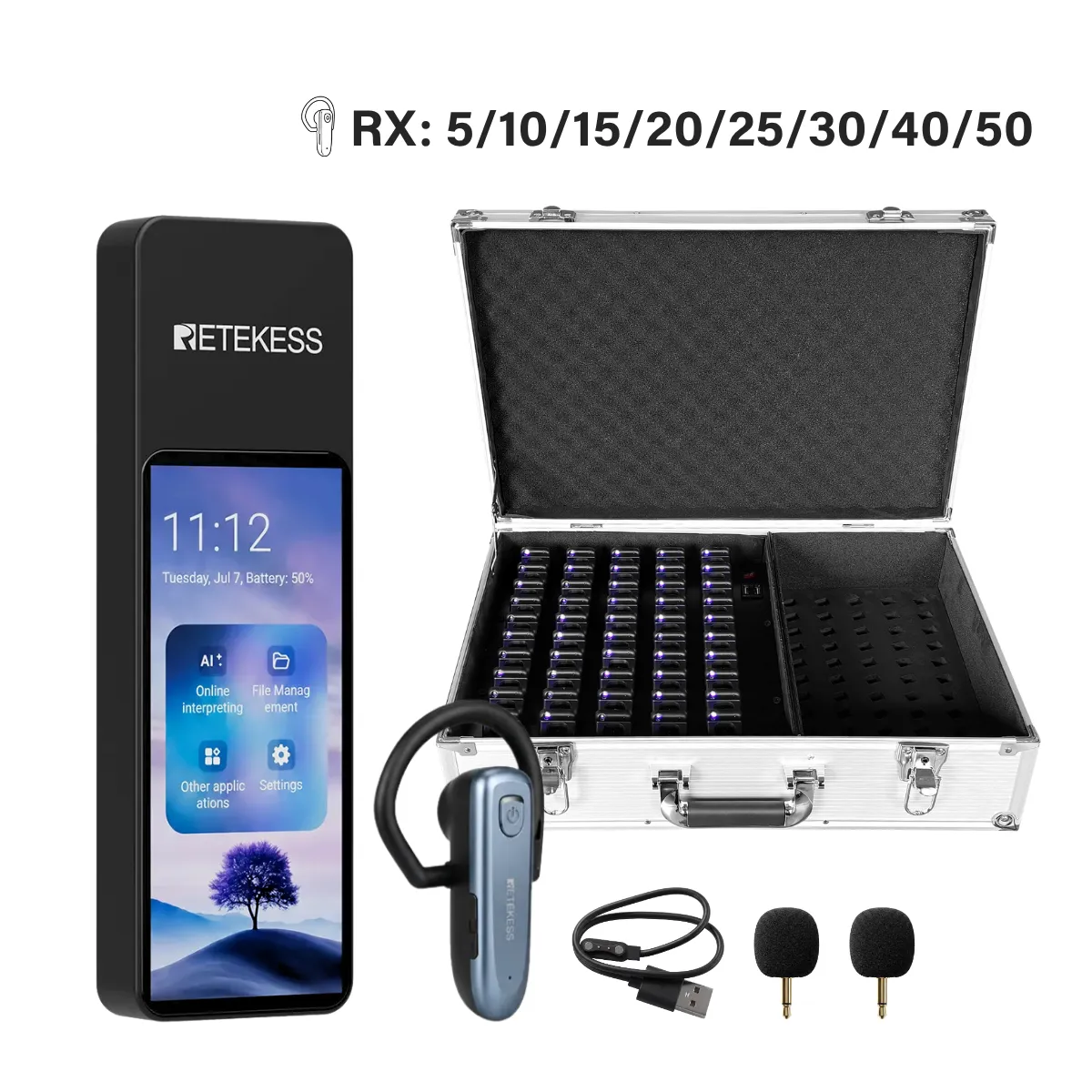
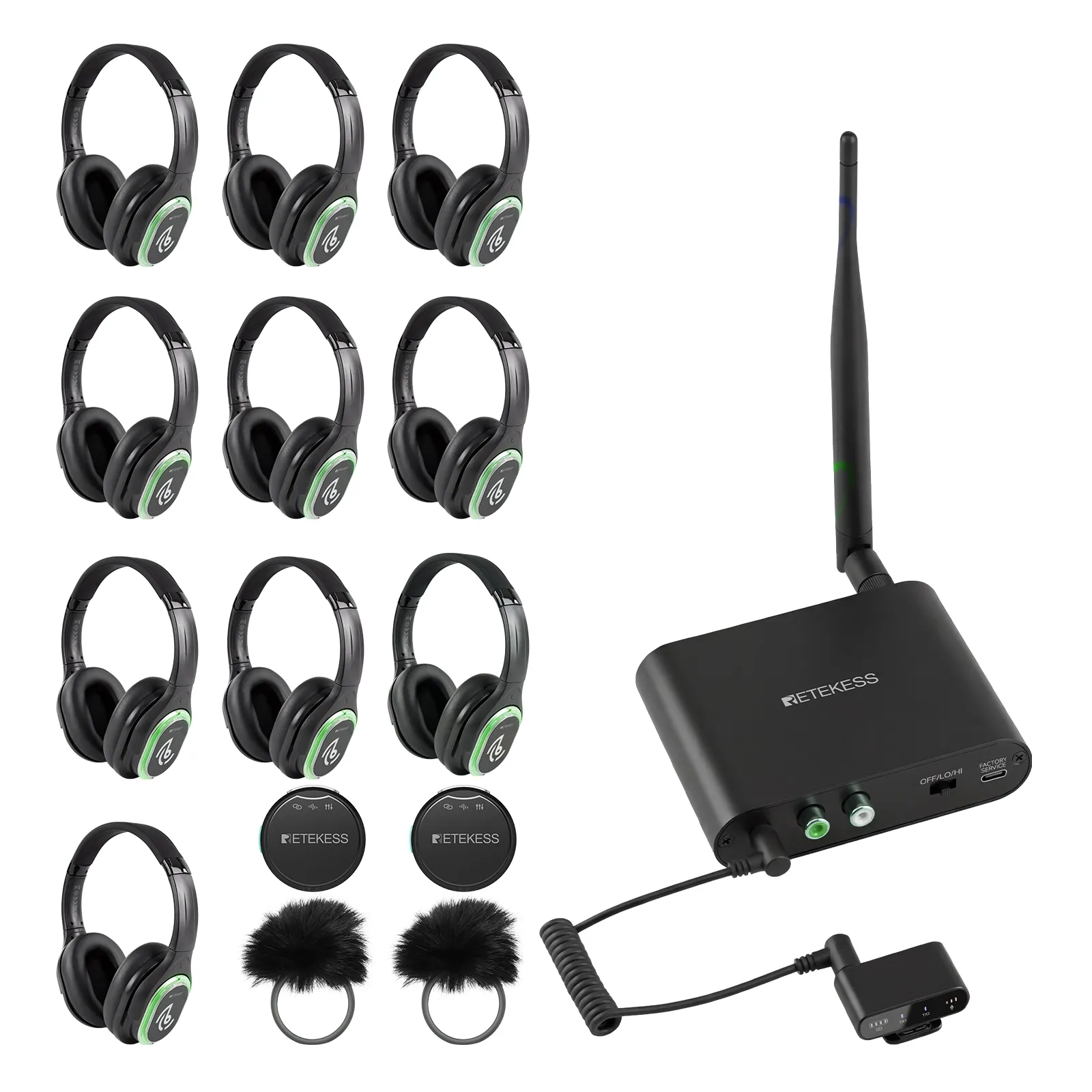
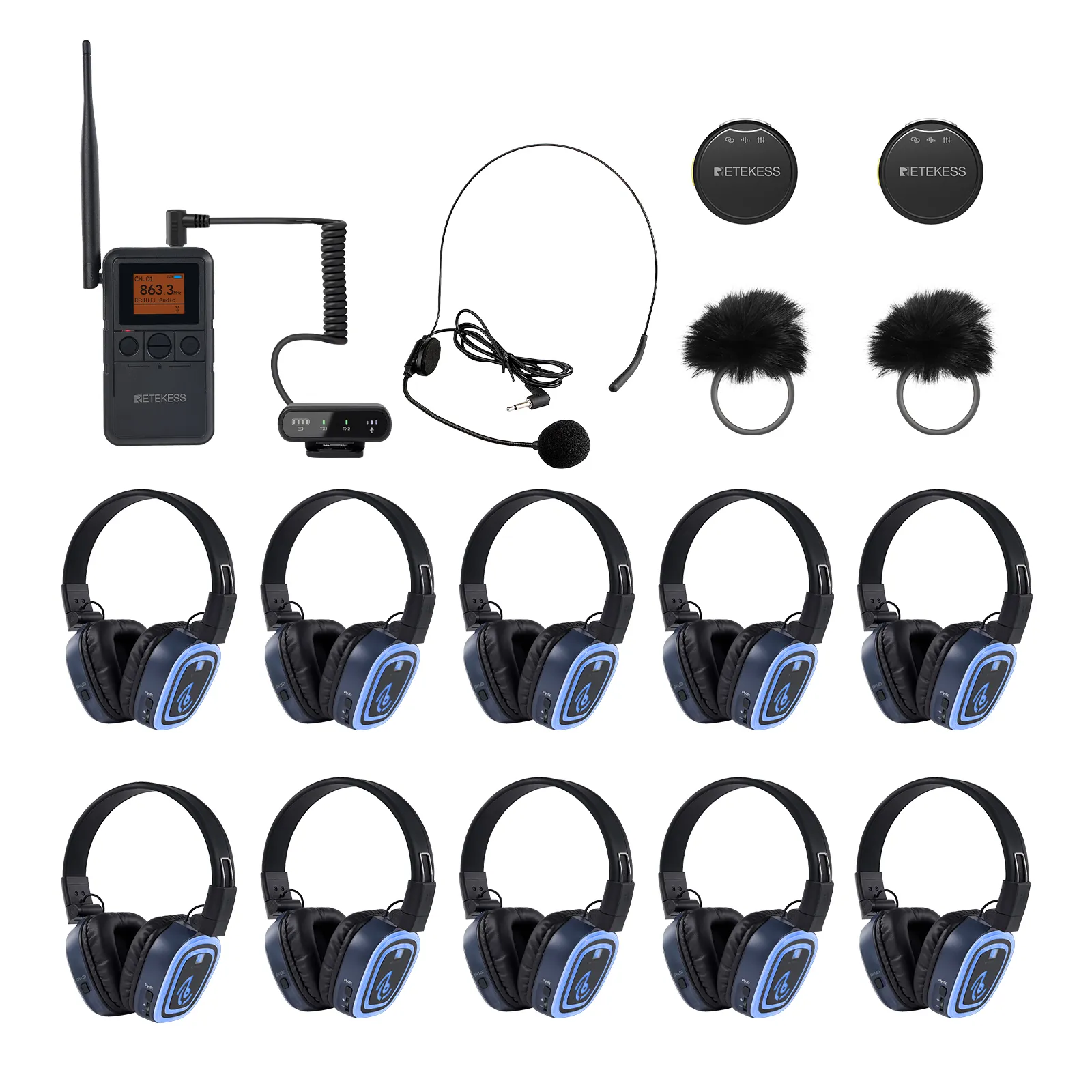
A wireless translation system gives schools a more flexible way to handle school meetings with mixed language needs. One practical example is the Retekess TT136 Wireless Simultaneous Interpretation System.
Teacher using TT136 wireless translation system during a multilingual parent meeting in a classroom
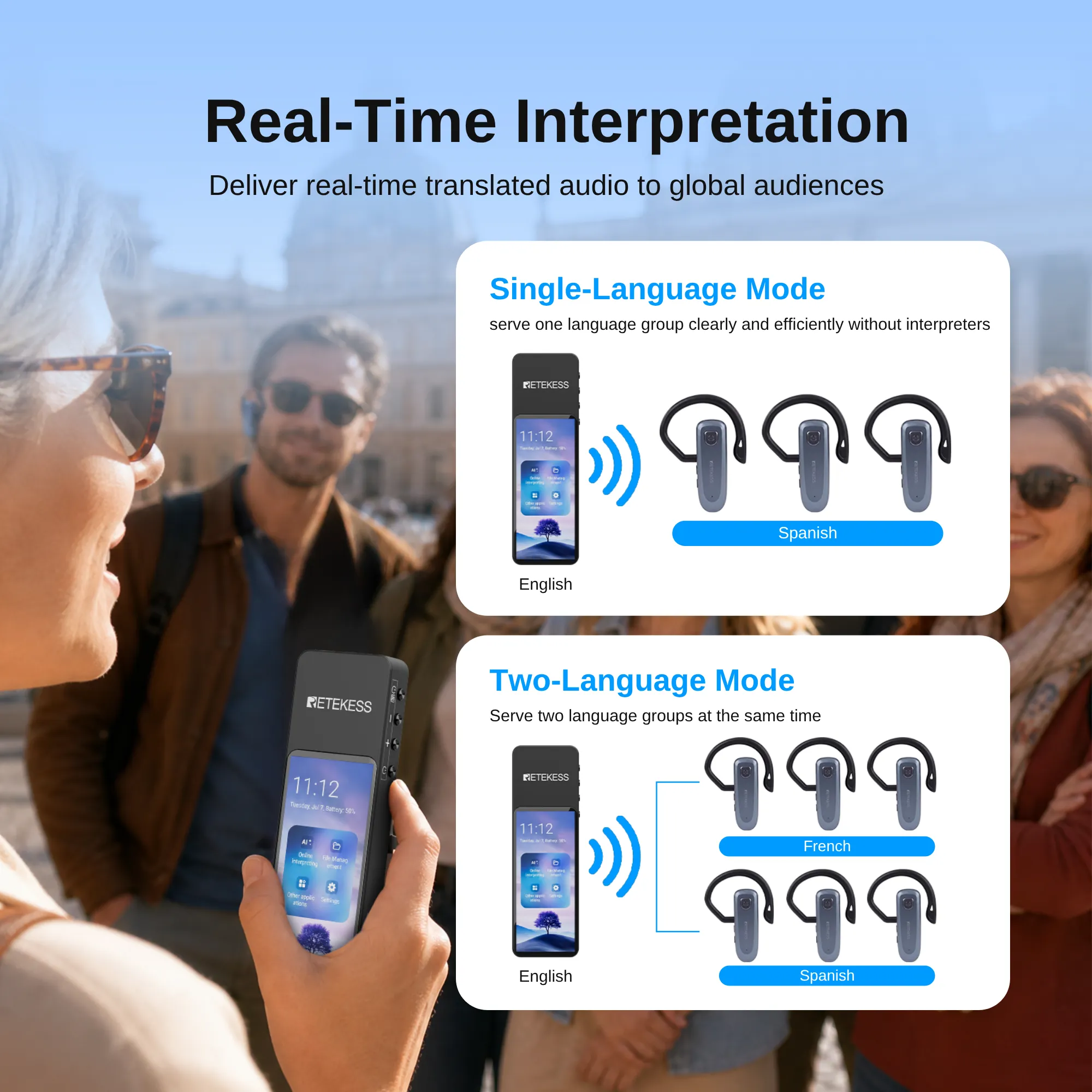
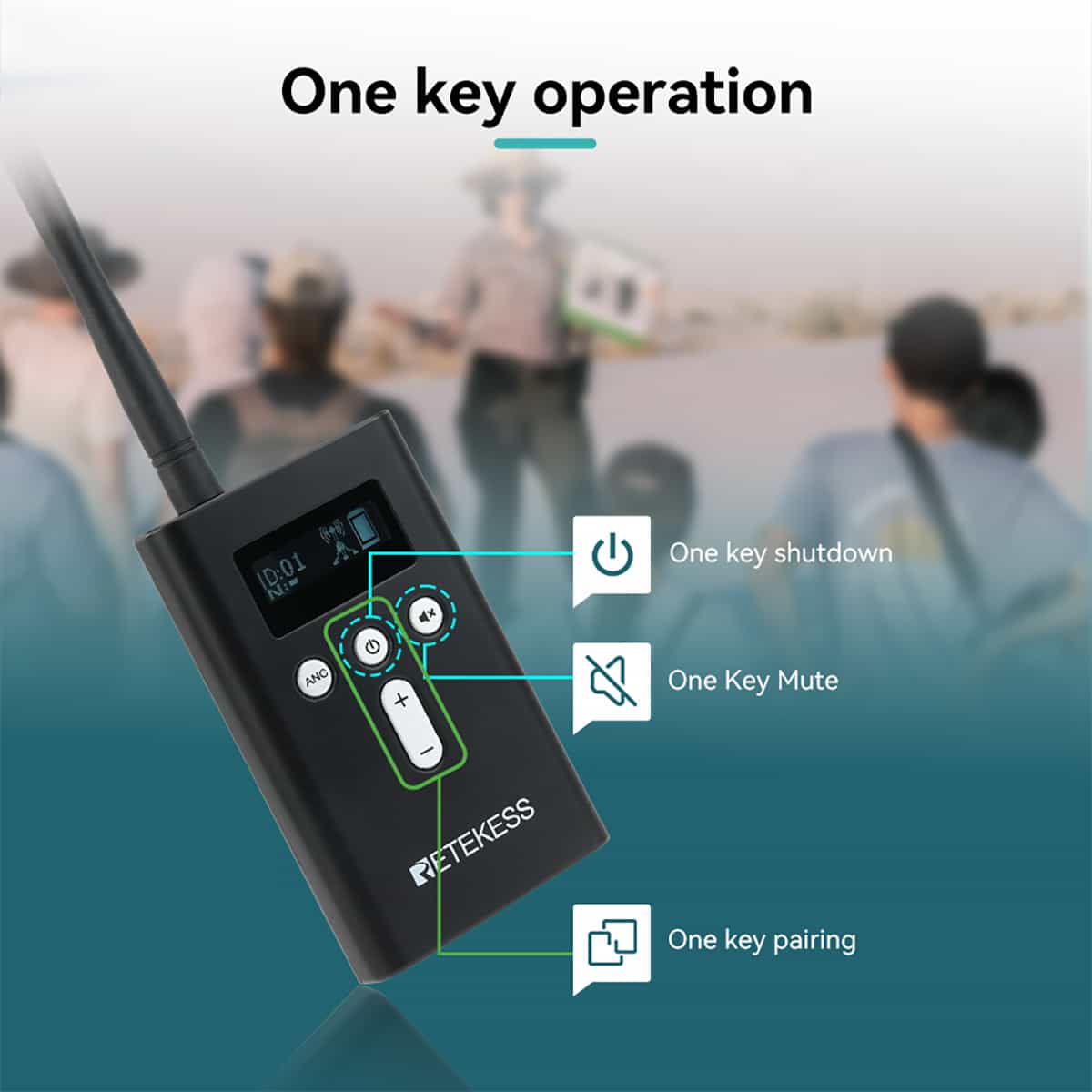
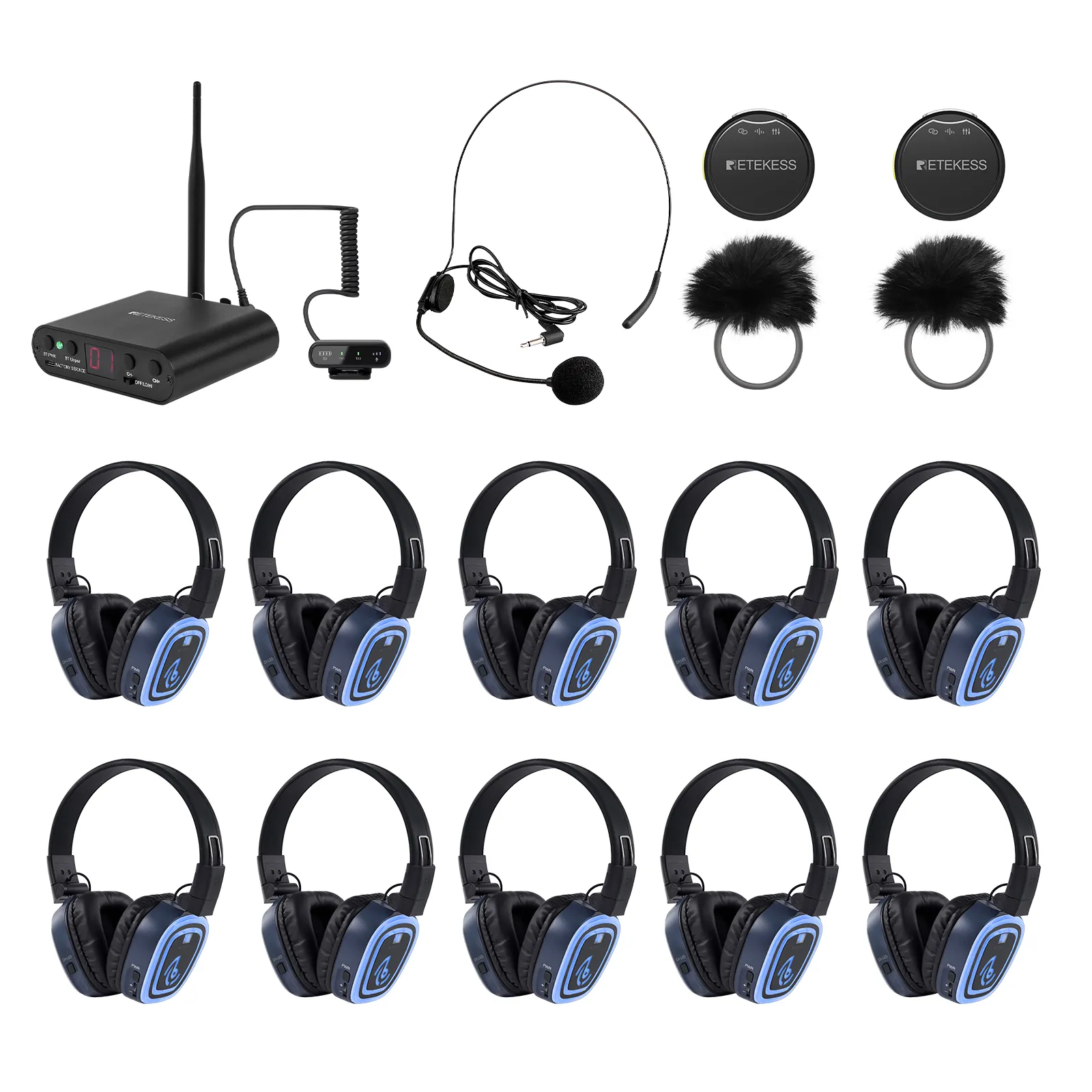
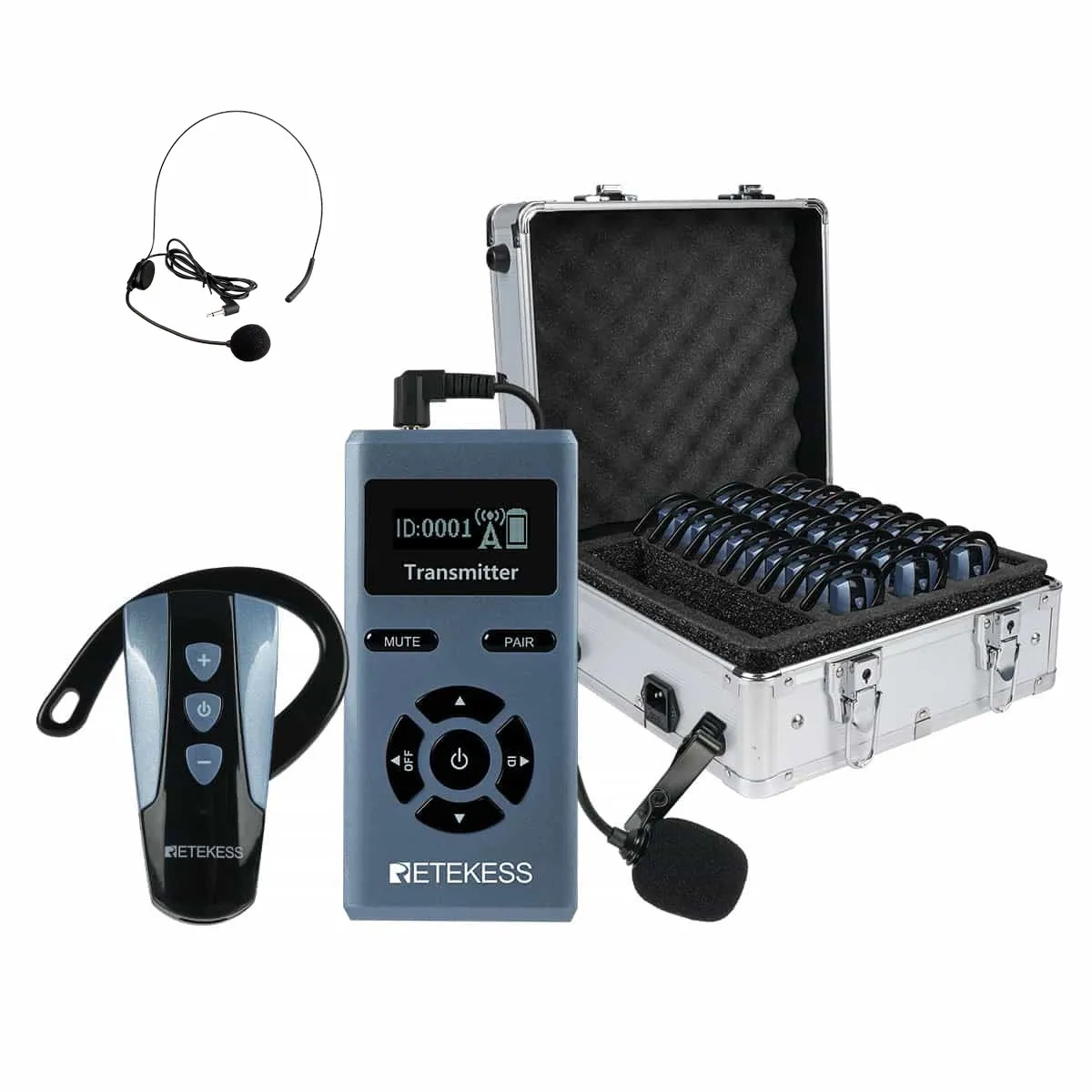
The setup is simple. The teacher or interpreter speaks into a transmitter. The system converts the speech into the target language in real time. Parents listen through a receiver, such as a single-ear hook headset, and hear the message in their own language. If parents respond, the system can translate back so the teacher hears the reply in English through a headset.
This changes the meeting experience in a few important ways:
- Teachers can speak naturally without stopping for repeated translation.
- Parents can hear in their own language without leaving the room.
- The meeting can stay in one shared space.
- Communication feels more direct and less awkward.
For schools that handle multilingual school meetings often, this is a practical way to reduce friction and improve the flow of the conversation.
4. Three Typical Use Cases for Parent-Teacher Conference Translation
A. One-on-One Private Consultations
Some of the most sensitive meetings happen in one-on-one settings. These include grade discussions, behavior concerns, and special education planning. These talks need privacy, but many schools do not have enough closed rooms to support every family.
With parent-teacher conference translation through a wireless system, parents can wait in a hallway or open area while still receiving clear audio. When it is their turn, they can talk with the teacher one-on-one through private, low-volume audio. Nearby families do not hear the conversation.
This turns an open area into a practical private booth without extra construction or room booking.
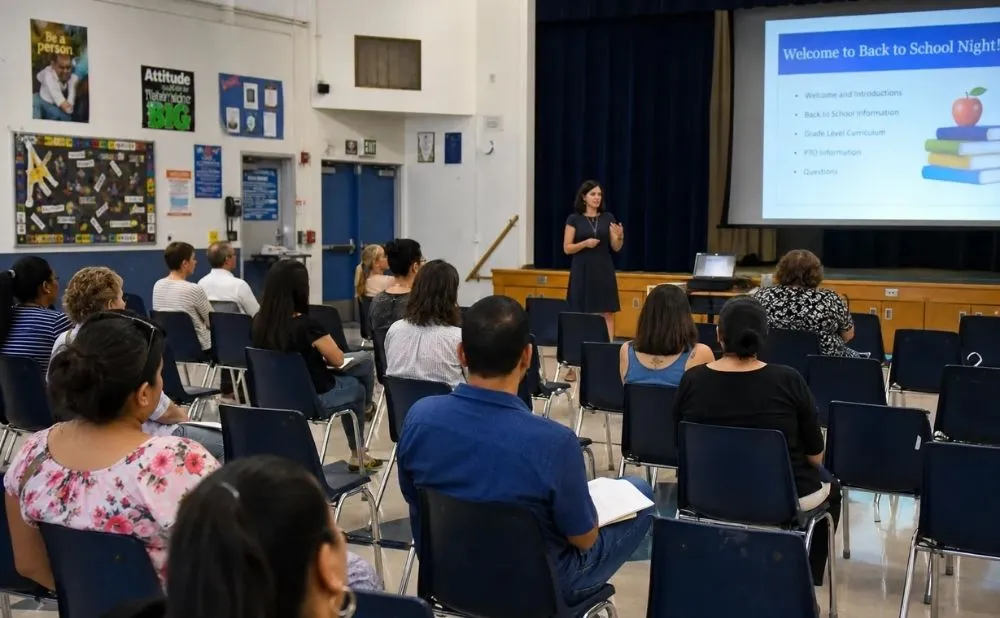
B. Principal’s Address and Back-to-School Night Assembly
Large school events often bring many families together at once. The principal may speak in English, but multilingual families need support in more than one language. Traditional methods often repeat the same talk several times, which takes too long and frustrates families who are waiting.
A wireless translation system changes that. The principal speaks once. An interpreter or translation feed runs in Spanish, Chinese, and other language channels at the same time. Parents choose their own channel and hear the message in real time.
This makes multilingual school meetings more efficient and keeps the whole audience engaged together.
C. Distributed Flow Communication in Hallways and Open Spaces
Some schools do not have enough classrooms for everyone. Parents may wait in hallways, reception areas, or outdoor spaces between sessions. Interpreters may run back and forth. Staff may lose time trying to guide different language groups.
With a wireless system, parents can move freely while still hearing updates. Staff can send queue calls, room changes, and meeting updates through the system. The whole process becomes smoother, and the meeting time stays closer to the normal 15–20 minute window instead of stretching far beyond it.
This is where translation solutions for school events become especially useful. They help schools manage movement, reduce confusion, and keep the day on schedule.
5. Why This Approach Is Practical: Value Across Four Dimensions
|
Dimension |
Traditional Approach |
TT136 Approach |
|
Cost |
$400–1,200+ in interpreter fees per event |
One-time hardware purchase; can pay for itself in a few events |
|
Compliance |
Ad hoc arrangements with language gaps |
Supports 120+ languages and helps schools meet language-access needs |
|
Experience |
Parents wait passively and may miss details |
Parents participate actively and understand more accurately |
|
Reuse |
Limited to parent conferences only |
Can also support ESL workshops, campus tours, emergency alerts, and PTA meetings |
This is why many schools look for a system that can do more than one job. They want something that supports the parent meeting today and still adds value later in the year.
A good wireless system helps schools manage real-world language diversity without creating more room problems or staff stress.
6. Why Technology Should Reduce Friction, Not Replace People
It is important to be clear about what this kind of system does and does not do. A wireless translation system is not meant to replace human interpreters in every case. It is a practical tool for schools that face real limits in budget, space, and staffing.
Its job is to reduce friction.
It helps teachers focus on the student, not the mechanics of communication. It helps parents feel included, not separated. It helps schools run multilingual school meetings in a way that feels smoother, more private, and more respectful.
That is the real value of parent-teacher conference translation. It is not only about words. It is about trust, access, and better family engagement.
Conclusion: Better Translation Means Better School Communication
A parent-teacher meeting should be a partnership, not a barrier. When families can understand the same message in real time, they can ask better questions, make better decisions, and support their child more effectively.
That is why parent-teacher conference translation matters. It gives schools a practical way to support multilingual school meetings without split sessions, awkward phone calls, or heavy scheduling problems. And with the right translation solutions for school events, schools can improve both communication quality and meeting efficiency across the whole year.
When language is no longer the main obstacle, teachers can focus on education, and parents can take part in the conversation the way they should.



![[18th Anniversary] 18 Years of Echoing Excellence: Making Communication Easier, Connecting Trust Beyond Borders](https://res.retekess.com/z_file/20260716/retekess-brand-story-making-communication-easier_20260716151044_7682.jpg)
![[18 Years in Wireless Communication] Silent Disco Systems Anniversary Celebration: Top-Selling Headphones & Event Mechanics Revealed!](https://res.retekess.com/z_file/20260713/18-years-in-wireless-communication-silent-disco-systems-anniversary-celebration_20260713175011_5749.webp)
![[Anniversary Carnival] Ding-dong! 18th Anniversary Mega Sale on Guest Paging & Calling Systems: Full Reveal of 12+ Products & Promo Rules!](https://res.retekess.com/z_file/20260713/18th-anniversary-mega-sale-on-guest-paging-calling-systems_20260713175257_0295.webp)
![[Retekess 18th Anniversary Teaser] Tour Guide System Exclusive Perks: Sneak Peek at Event Dates & Mechanics!](https://res.retekess.com/z_file/20260713/retekess-18th-anniversary-tour-guide-system-exclusive-perks--2-_20260713180135_6435.webp)
Follow Us
Pay With


 Google
 Amazon
Comments (0)