
Table of Contents
Best Tour Guide System for Travel Agencies in Spain & Italy
- Retekess
- Oct 16, 2026
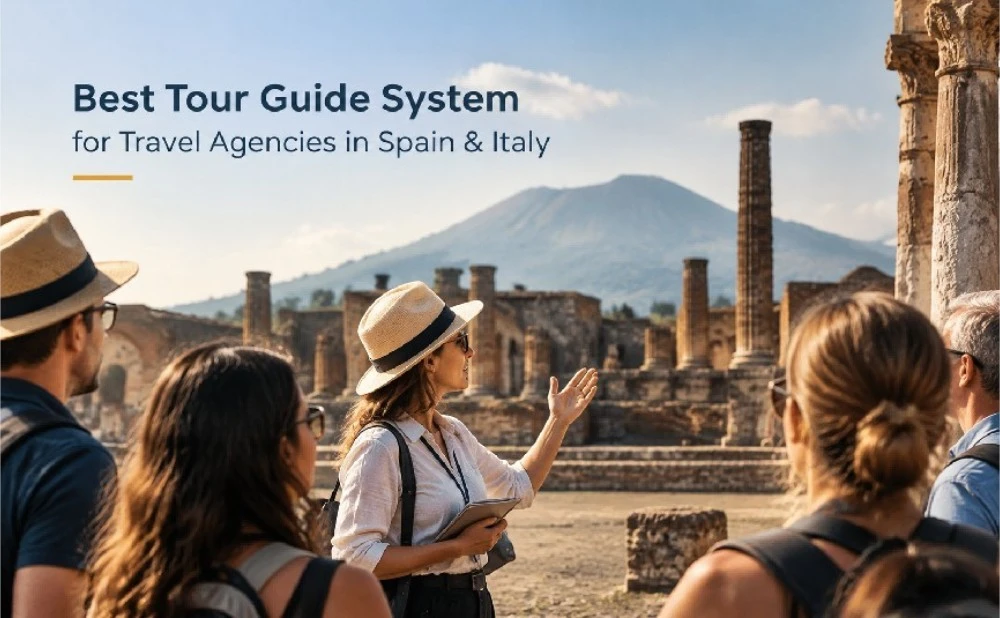
In Pompeii, a licensed guide can take 15 visitors through the ruins without audio equipment. Equip the group with whisper receivers, and the same guide can take 35. The park's visitor regulations set the tiers plainly: groups of 15 or fewer enter without audio systems, whisper or earphone systems are mandatory above 15, and no organized group above 35 is admitted.
That single rule changes the economics of a tour day. One guide with a wireless tour guide system carries 2.3 times the guests on the same route, in the same two hours, with the same timed ticket slot.
Pompeii is the bluntest example. It is far from the only one. Agencies running Spain and Italy programs face a map of group-size rules, and every city drew its own.
One Coach, Four Rulebooks
Venice and Florence cap organized groups at 25 people and ban megaphones citywide. The Uffizi caps groups at 16 and requires whisper systems for every group of six or more, with no voice amplifier allowed. The Vatican Museums require radio headsets for groups of ten or more and cap tours at 20. The Prado cut its group cap from 30 to 20 in 2026 and requires microphone-and-headset systems for guided groups. The Alhambra requires audio transmission systems for groups above six and caps each guide at 30. Barcelona caps Ciutat Vella walking groups at 20 and bans megaphones there. Rome zones the Colosseum and Trevi Fountain against amplification; Madrid uses noise ordinances to push headsets around Plaza Mayor and Puerta del Sol.
Now run a 40-person coach through that map. Venice: two groups. Uffizi: three groups. Vatican, Prado, Alhambra, or Barcelona old town: two groups. Pompeii without whispers: three groups; with whispers: two. Every split adds a licensed guide, a transmitter, a full set of receivers, and a channel. Venice's trade association flagged the 25-person rule when it passed: it raises costs because operators must field two guides for larger groups.
The cost side gets most of the attention. The capacity side deserves the same weight. Forty visitors in Pompeii need three guides without whispers and two with them. In the Uffizi, the 16-person cap is hard regardless of equipment, but the whisper requirement is the price of entry. Agencies that rent units at the door pay roughly €1.50 per person per visit in Florence and €1 per person in Barcelona, then queue for the units, accept whatever hygiene state they arrive in, and risk a sold-out rental desk at peak slots.
Owning the hardware turns a per-head fee into a fixed cost, and turns Pompeii's fifteen-person ceiling into a thirty-five-person booking.
One Day, Three Acoustic Environments
After the split, every small group moves through the same punishing sequence. Southern Europe's heritage is not behind a door. Most of it is outside.
Open-air ruins: distance, heat, and crowd noise
Pompeii is fully open-air, runs rain or shine, and now caps daily entries at 20,000, with 15,000 released in the morning window. Summer tours walk two hours on stone in direct sun. Verified visitor reviews repeatedly note guides pausing in shade to deliver commentary.
That environment makes four demands:
- 150–200 meters of real range when the group spreads down ancient streets
- Receivers light enough to survive sweat and 35–40°C heat for six hours
- Open-ear listening that keeps traffic and safety calls audible
- Transmitter gain that punches through wind and crowd noise
Interiors: silence and reverberation
The second half of the day reverses every requirement. Stone naves and frescoed rooms have hard, reflective surfaces. Voices blur into reverberation. Several small groups share one room, and the rules enforce whispers and silence — the Sistine Chapel bans talking and guiding outright.
Two features carry the room: digital modulation that rejects adjacent-channel bleed and survives reverberation, and fine receiver volume control for hushed spaces.
Old-town streets: traffic and the megaphone ban
The third leg is the Gothic Quarter, the lanes around the Colosseum, Santa Cruz in Seville. These are the noisiest, most crowded walking environments in Europe, with active pickpocket risk and no legal room for a loudspeaker.
The decisive feature here is the open-ear design. A sealed earbud isolates the visitor from the street — a safety problem when a scooter approaches or the guide calls a stop. An ear-hook receiver carries the commentary outside the ear canal and leaves the environment audible.
Multiple Groups, One Site: Why Channels Decide Peak Season
The rules force small groups. The visitors still arrive by the coachload. The result is dozens of small groups in the same gallery at the same time.
Europe reserves the 863–865 MHz band for tour guide equipment, license-free and outside the crowded 2.4 GHz band. CE-marked units are legal across Spain and Italy. The band answers the legal question. It does not answer the crowding question.
Each manufacturer programs channels differently, and most EU systems ship with 8 or 16. In the Uffizi's high-season rooms, the Alhambra's half-hour Nasrid slots, and Pompeii's morning quota, the number of clean channels sets the real ceiling on concurrent teams.
A digital UHF system with 19 EU channels gives a multi-coach agency the most room to run parallel groups without cross-talk. A 12-channel system covers single-coach and lower-density days. Channels do not map to groups one-to-one, but the gap between 12 and 19 is real slack at the busiest hour.
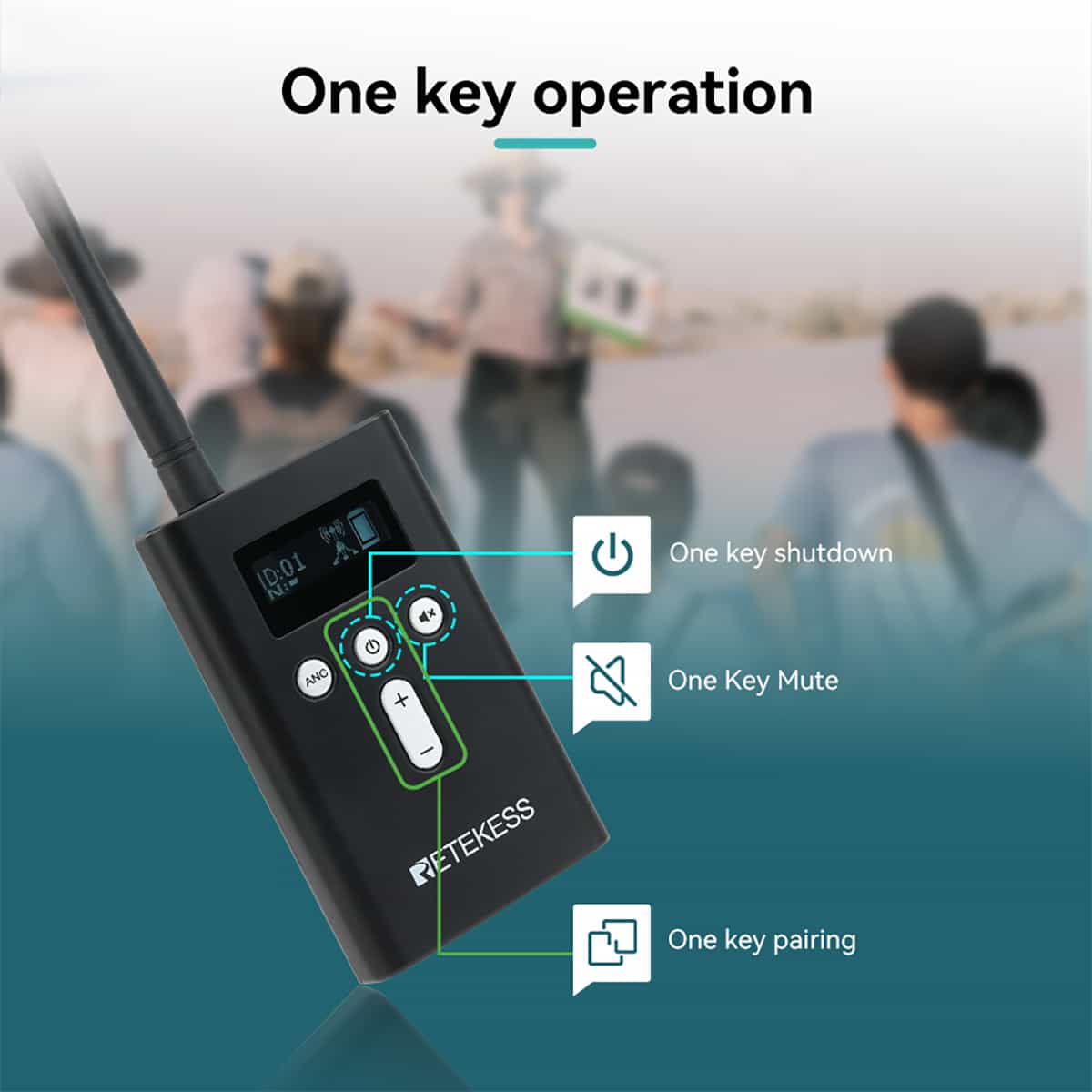
Daily turnover depends on the operational details: three-second auto-pairing, channel memory, one-touch mute for private conversations, one-touch shutdown of all receivers, and contact charging cases that repower the full fleet overnight.
The Multilingual Guide Gap
Italy's guide license was historically split by region and province. Law 190 of December 2023 created a national register, and 17,000 candidates sat the national test in June 2026 — supply is still catching up. Spain licenses official guides by autonomous community.
In peak season, a licensed English or Spanish guide is bookable. A licensed guide for Japanese, Korean, or Nordic markets may simply not exist on the coach's date.
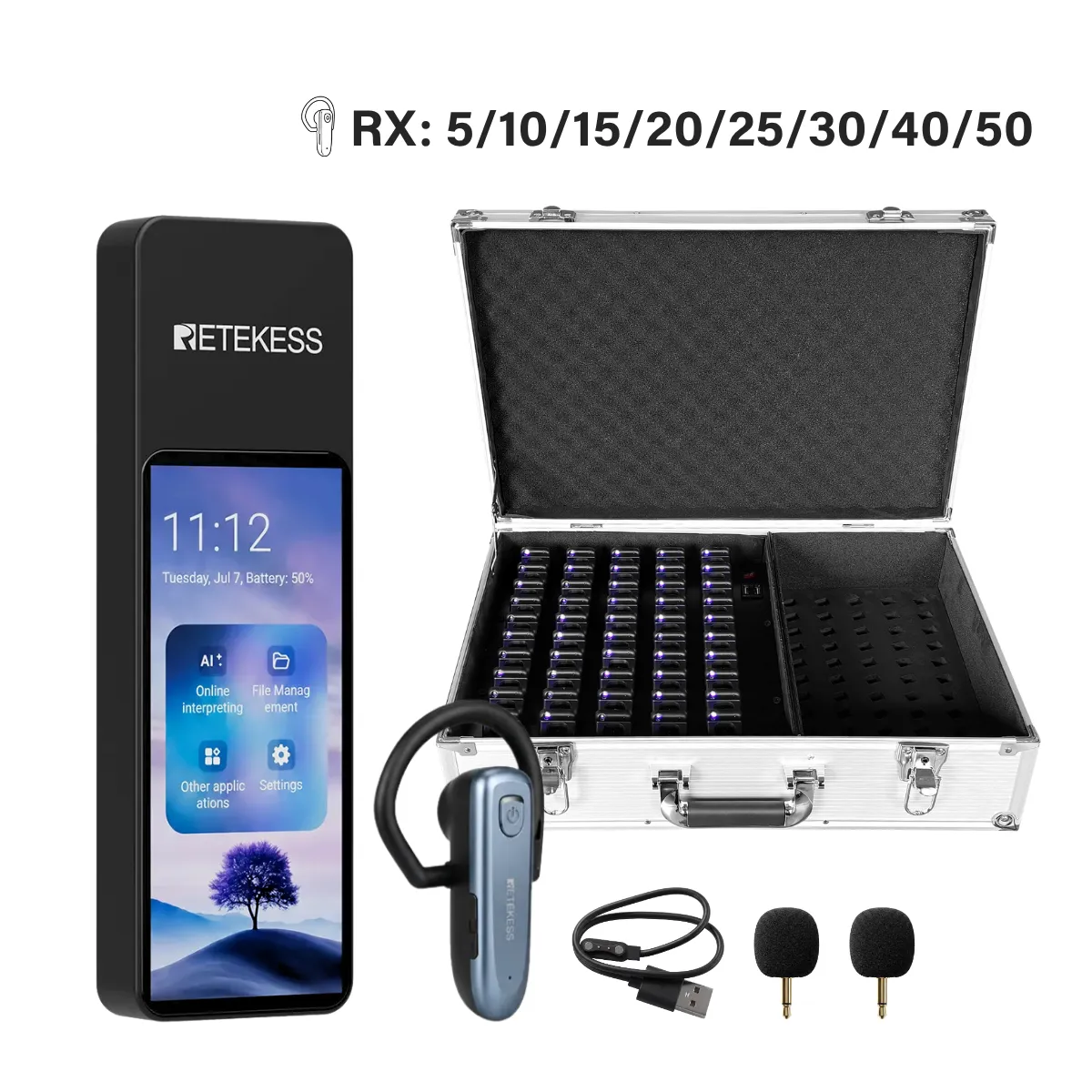
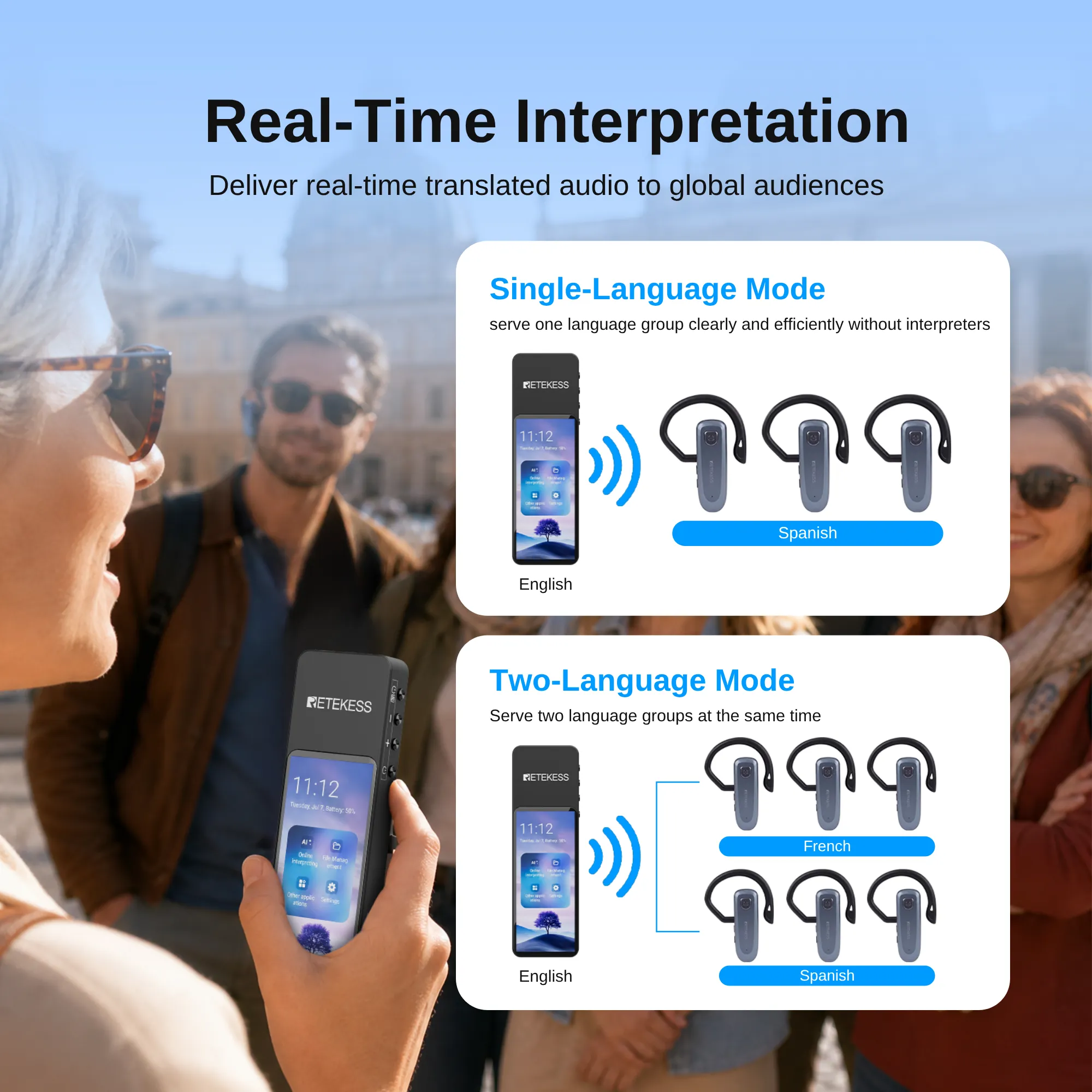
Both systems below accept a phone or audio player through Bluetooth and AUX. Pre-recorded mother-tongue commentary, prepared once by a qualified guide and reused all season, fills the gap for vineyard walks, museum rooms, and transfer content. The licensed guide carries the live room and the questions; the recording carries the fixed script in the guest's language. The hardware distributes audio. It does not replace the license.
Which System Fits Which Itinerary
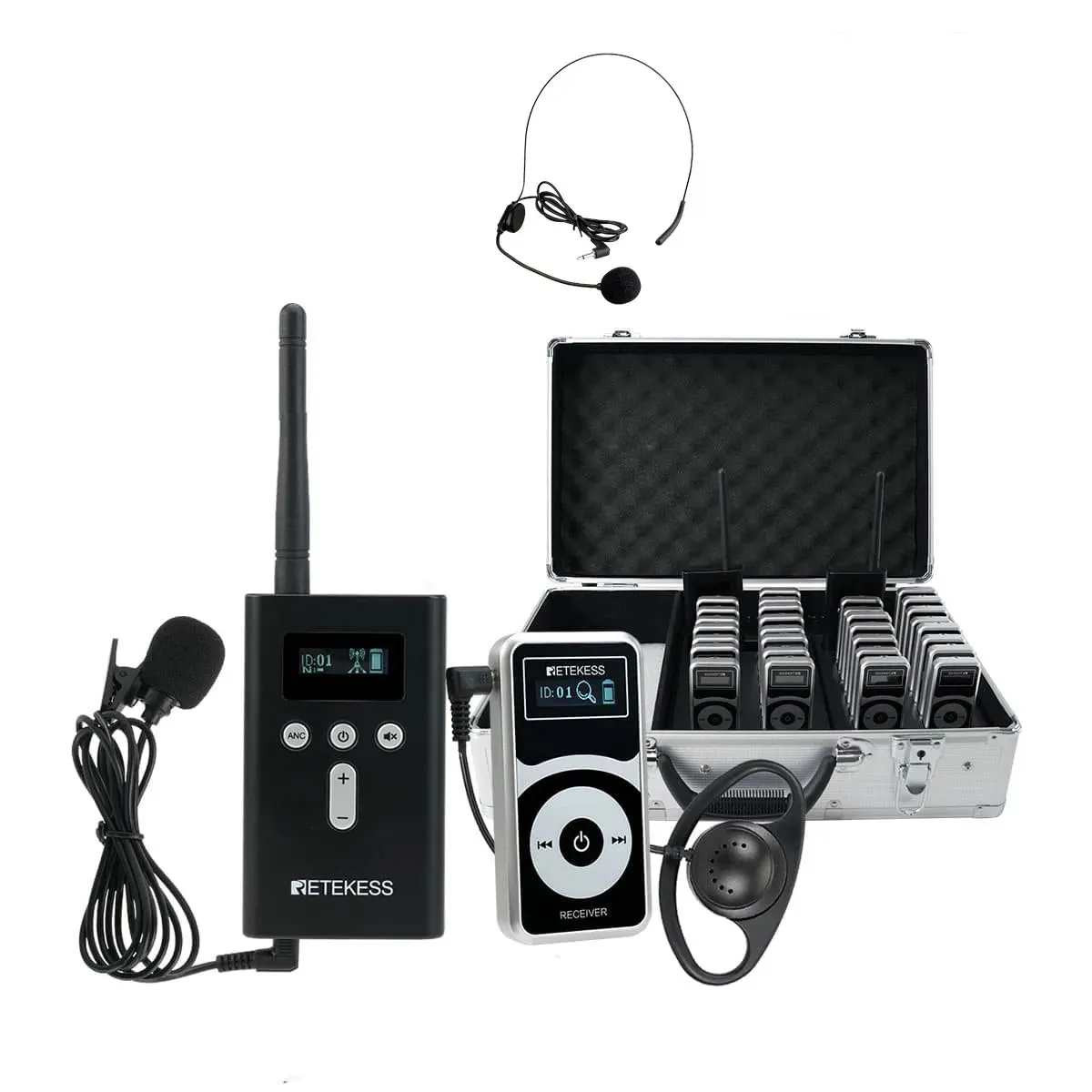
TT126 — old-town walking and open-air routes
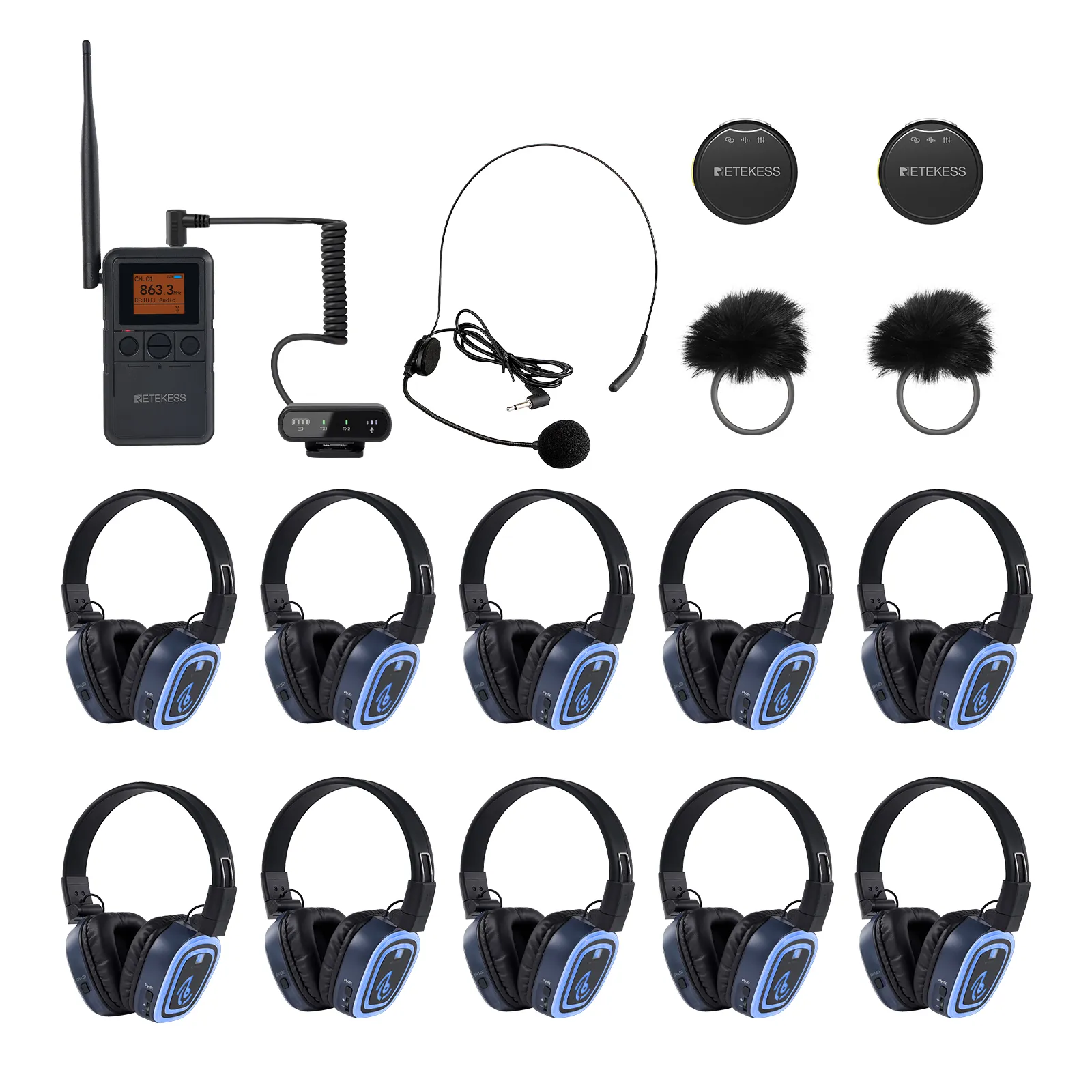
- 20g ear-hook receiver with no earbuds: open-ear listening for traffic and safety, no sweat buildup, no disposable earphone cost
- 12-hour receiver battery, 10-hour transmitter, 150m range
- 12 EU channels on 863–865 MHz, 25 dBm, 90 dB receiver signal-to-noise ratio
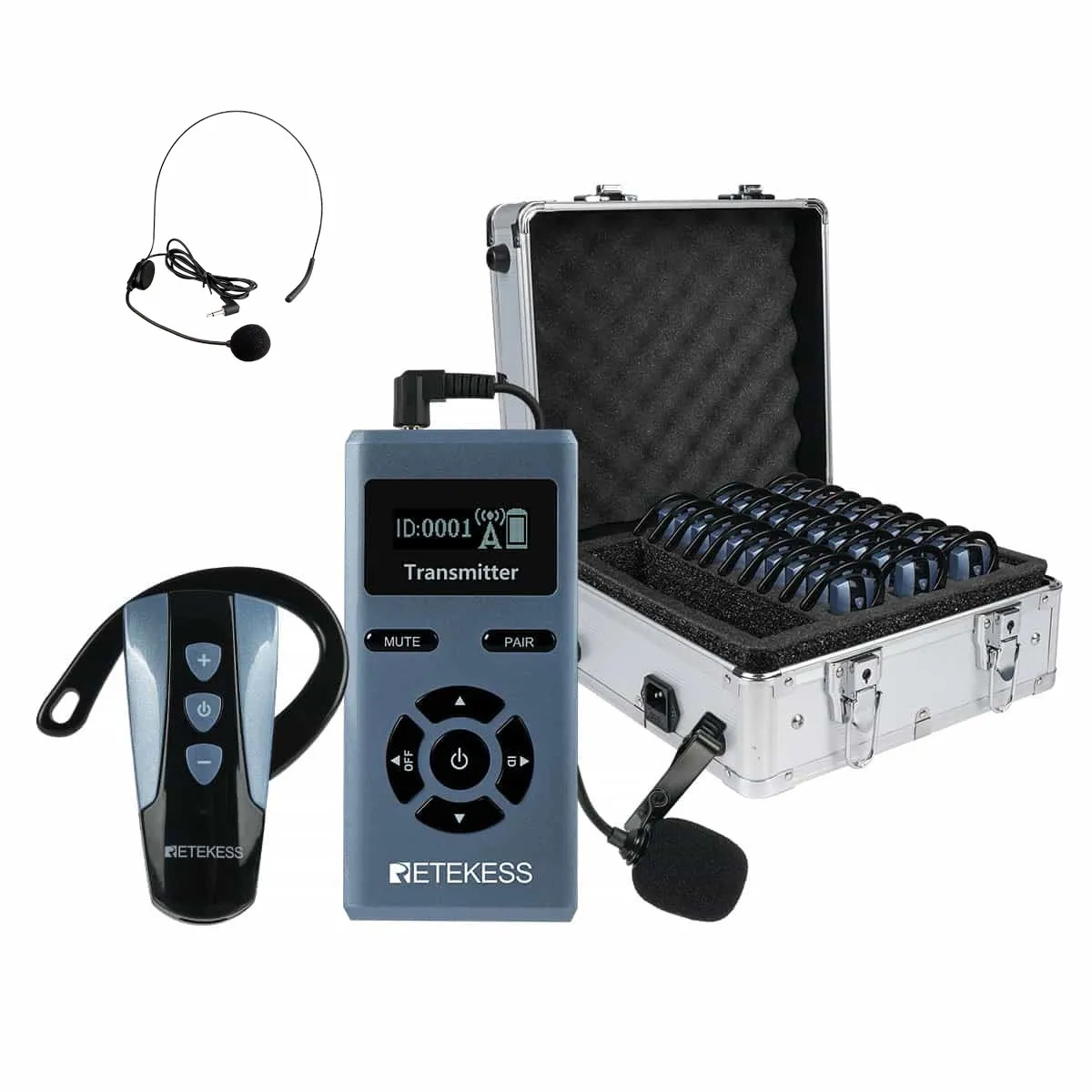
- 30-slot contact charging case (28 contacts plus 2 USB); kits ship as 1 transmitter with 27 receivers or 2 with 28
- 3-second auto-pairing, channel memory, MIC plus AUX inputs; add a vice transmitter for two-way questions on educational or vineyard visits
The TT126 is the walking-tour tool. A 20g open-ear receiver through a six-hour Barcelona or Rome day in August is the difference between a device guests forget and one they hand back sore.
T130U — museums, churches, vineyards, and high-density multi-group days
- Digital UHF with 19 EU channels: the most separation for concurrent groups sharing a gallery
- 200m range for vineyard rows and spread-out ruins
- 40-hour receiver battery; 10-hour 71g transmitter that charges while in use
- Bluetooth, microphone, and AUX inputs; 4-level transmitter gain and 10-level receiver volume
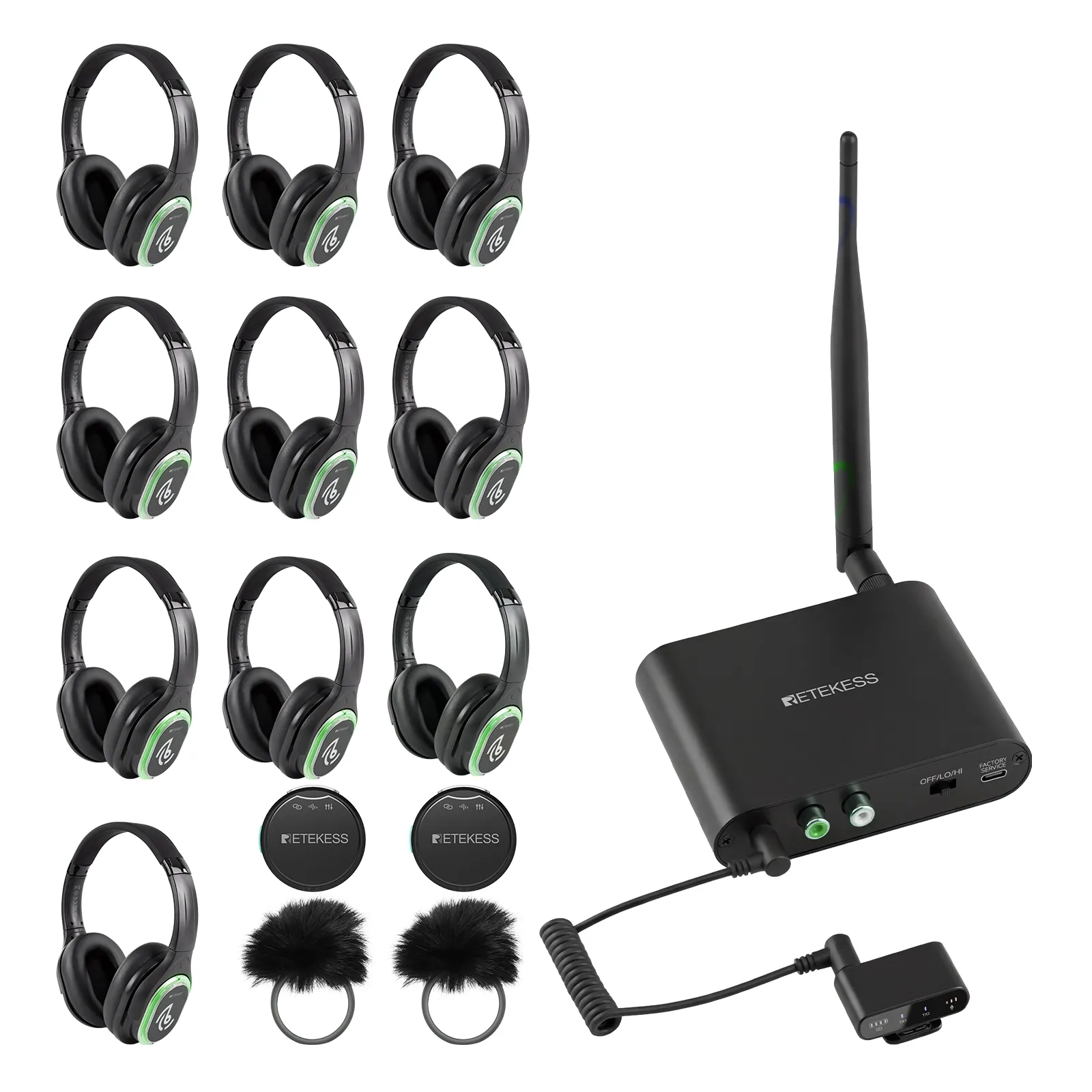
- Contact charging cases come in 32-slot and 60-slot versions for full fleet turnover
Digital modulation handles the reverberation in stone rooms and rejects adjacent-channel bleed. The 40-hour receivers run through multiple split days without charging. Bluetooth and AUX carry the pre-recorded multilingual tracks.
Building the fleet
- City walking programs: TT126
- Museum, church, and vineyard programs: T130U
- Full-service DMCs and incoming agencies: T130U as the compliance backbone for interiors and vineyards, TT126 to cover walking and the hottest outdoor days. Both work in the same EU band and follow the same pairing and charging logic, so guide training and maintenance stay consistent.
Final Word
Pompeii holds the clearest sentence in the whole rulebook. Fifteen without audio, thirty-five with.
The direction across Spain and Italy is the same. Venice and Florence hold at 25. The Prado moved from 30 to 20 in 2026. Rome and Madrid keep expanding no-amplification zones. Large groups are being split into many small ones, and the small ones still need to hear.
The best tour guide system for this market is not the one with the longest specification sheet. It is the one that passes the actual route: compliant in the Uffizi, separated in the Prado at peak hour, 200 meters wide in a vineyard, light enough for a six-hour August walk, and able to carry 35 people through Pompeii on one guide.





![[18th Anniversary] 18 Years of Echoing Excellence: Making Communication Easier, Connecting Trust Beyond Borders](https://res.retekess.com/z_file/20260716/retekess-brand-story-making-communication-easier_20260716151044_7682.jpg)
![[18 Years in Wireless Communication] Silent Disco Systems Anniversary Celebration: Top-Selling Headphones & Event Mechanics Revealed!](https://res.retekess.com/z_file/20260713/18-years-in-wireless-communication-silent-disco-systems-anniversary-celebration_20260713175011_5749.webp)
![[Anniversary Carnival] Ding-dong! 18th Anniversary Mega Sale on Guest Paging & Calling Systems: Full Reveal of 12+ Products & Promo Rules!](https://res.retekess.com/z_file/20260713/18th-anniversary-mega-sale-on-guest-paging-calling-systems_20260713175257_0295.webp)
![[Retekess 18th Anniversary Teaser] Tour Guide System Exclusive Perks: Sneak Peek at Event Dates & Mechanics!](https://res.retekess.com/z_file/20260713/retekess-18th-anniversary-tour-guide-system-exclusive-perks--2-_20260713180135_6435.webp)
Follow Us
Pay With


 Google
 Amazon
Comments (0)