
Table of Contents
Budget Translation Agency Equipment: Entry-Level Simultaneous Interpretation Kits for Small Teams
- Retekess
- Sep 23, 2026
Why Small Translation Agencies Are Missing Out on SI Revenue
Many small translation agencies write off simultaneous interpretation (SI) work as “too big” for their operation. The common myth is that SI requires tens of thousands of dollars in specialized gear, dedicated tech staff, and years of experience to deliver.
In reality, most regional conferences, corporate training sessions, and small international summits only require a reliable mid-range audio transmission system — not the flagship systems used for UN-level events. For small agencies, adding SI services opens up a high-margin revenue stream that most competitors ignore, because they assume the equipment barrier is too high.
The truth is: you can set up a fully functional entry-level SI kit for a fraction of the cost of premium systems, and use it to bid on 80% of the small-to-medium conference jobs in your market.
Core Components of an Entry-Level Simultaneous Interpretation Kit
You don’t need a complex rack of hardware to run professional simultaneous interpretation. A functional starter setup includes just three core categories:
Central Transmitter Unit
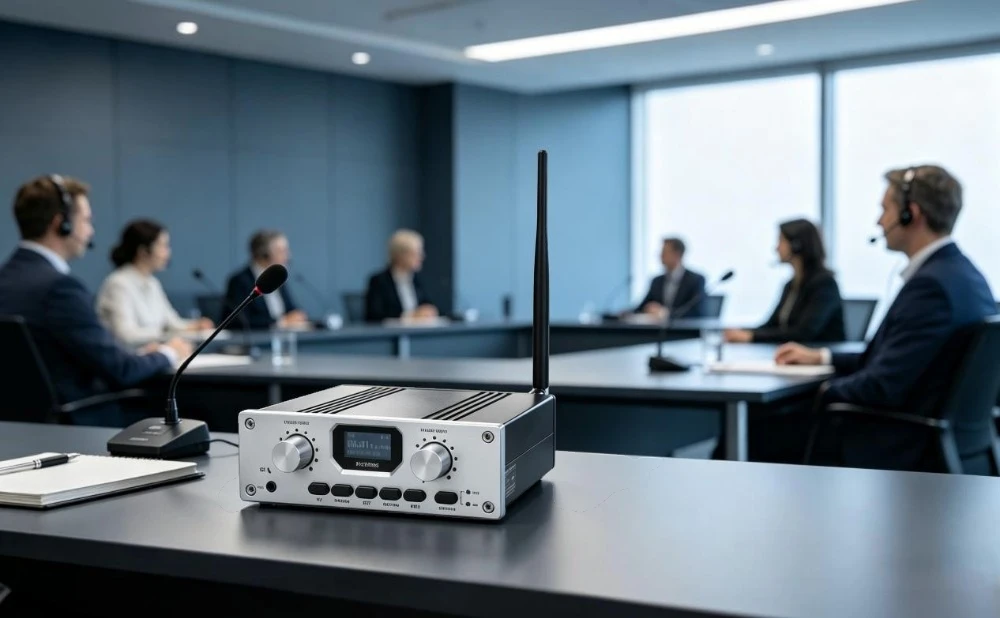
This is the hub of your setup. It takes the interpreter’s audio and broadcasts it wirelessly to receivers across the venue. For small agencies, look for a desktop unit that integrates both input and output functions, to save space and simplify on-site setup.
Audience Receivers & Headsets
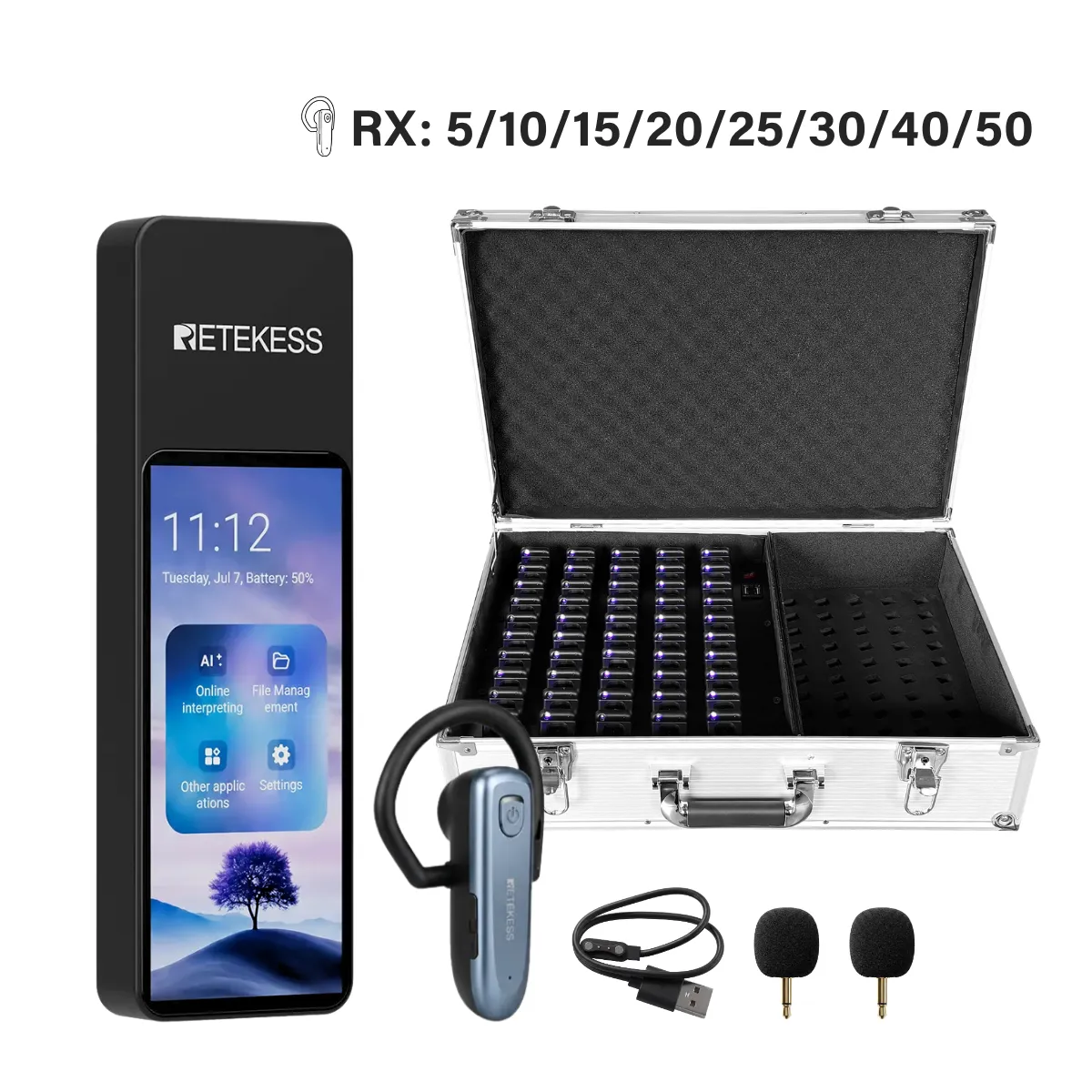
Attendees use these to listen to the translated audio. Lightweight, intuitive receivers are critical — you don’t want attendees struggling with controls during an event. Long battery life and clear audio are non-negotiable for professional delivery.
Basic Support Accessories
This includes charging bases, cables, and a carrying case. For agencies just starting out, you don’t need custom rack mounts or fiber optic links; standard accessories will work for most indoor and small outdoor events.
Top Budget-Friendly System Recommendation for Small Teams
After testing entry-level systems for small language service teams, the Retekess SI starter kit stands out for its balance of price, performance, and ease of use. It’s built specifically for small-to-medium events, and requires no advanced technical training to operate.
Retekess TT119: All-In-One Desktop Interpretation Transmitter
The TT119 is the workhorse of this starter kit, and it fixes the most frustrating pain point for small translation agency equipment setups: bulky, split transmitter-and-receiver systems that take forever to set up and haul around.
Instead of juggling multiple pieces of hardware at every event, you get both receiving and transmitting functions in one compact desktop device. It fits easily on an interpreter’s desk or inside a standard equipment bag, and takes just minutes to get up and running — no dedicated tech staff required. That’s a major win for lean teams that don’t have extra hands for on-site setup.
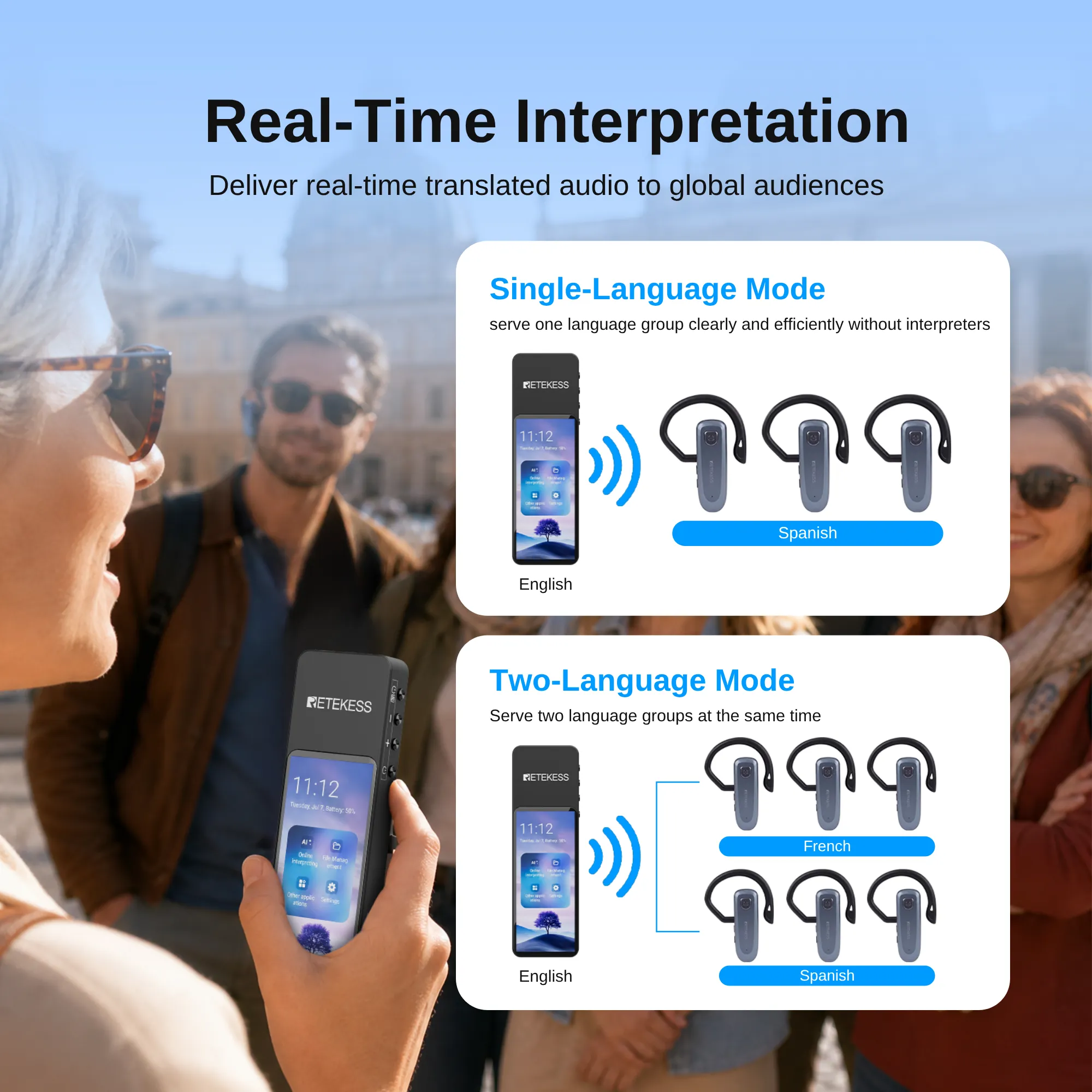
It supports 17 independent channels, more than enough to run 2–3 language pairs at a single event without signal interference or crosstalk. Its 100-meter (328ft) transmission range covers most standard conference rooms, training halls, and small outdoor venues, so you won’t need to invest in extra signal boosters for most jobs.
It also fits naturally into real interpreter workflows. One tap switches between translated and original language audio, and a one-click mute function keeps private side conversations between interpreters from reaching the audience. Stereo sound quality is clear and natural, so attendees catch every detail — an easy way to elevate the perceived professionalism of your service.
Retekess T130P-T131P: Lightweight, Low-Hassle Audience Receivers
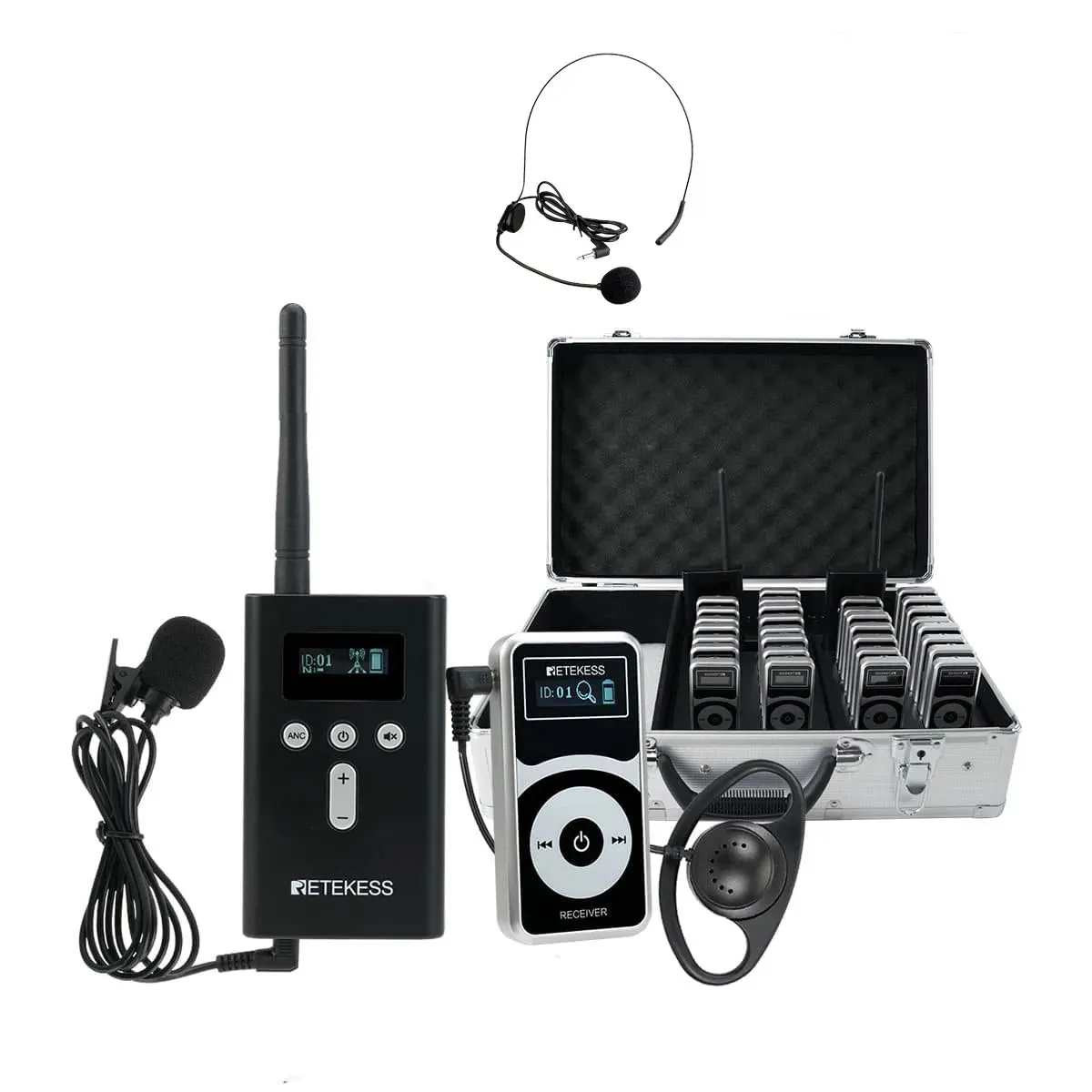
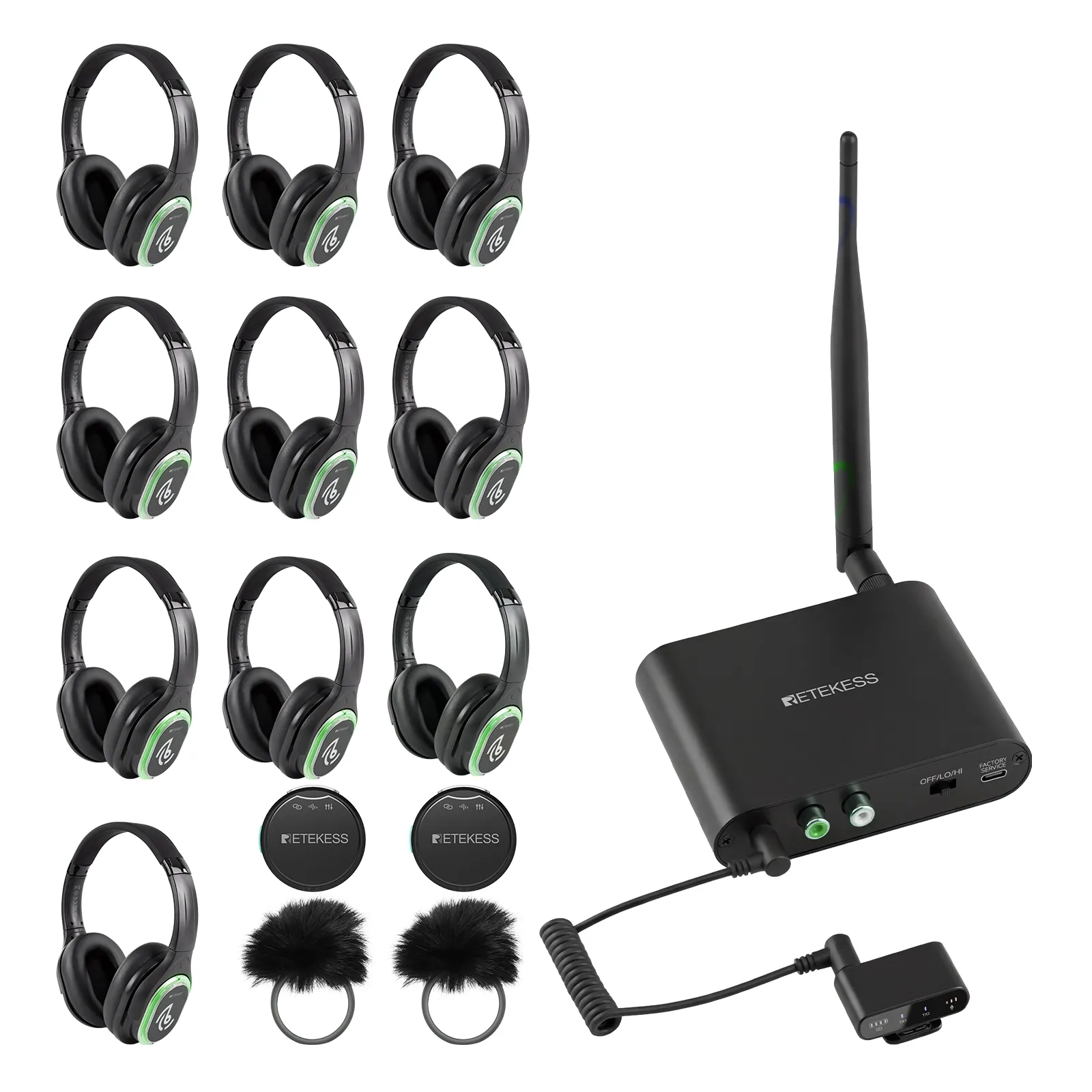
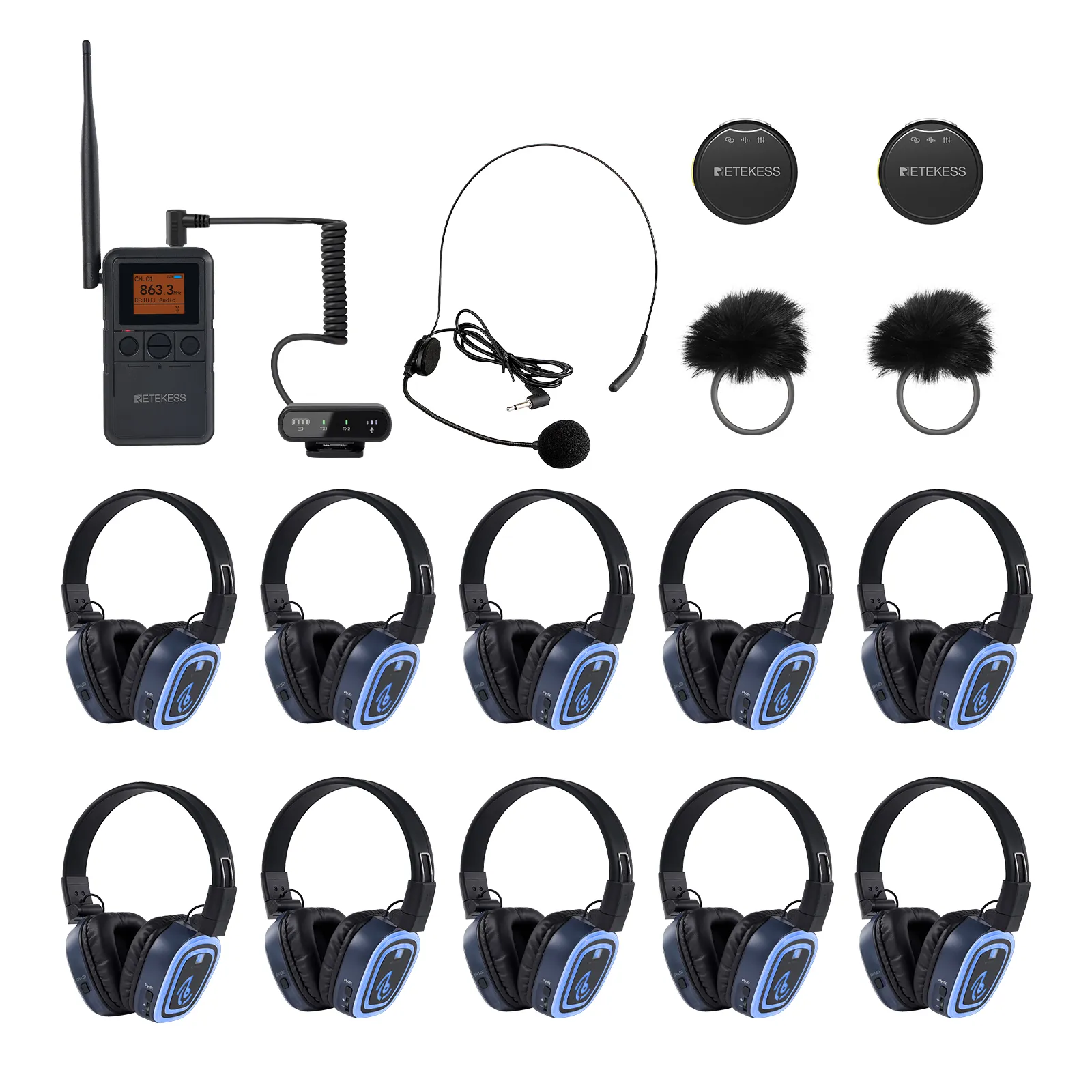
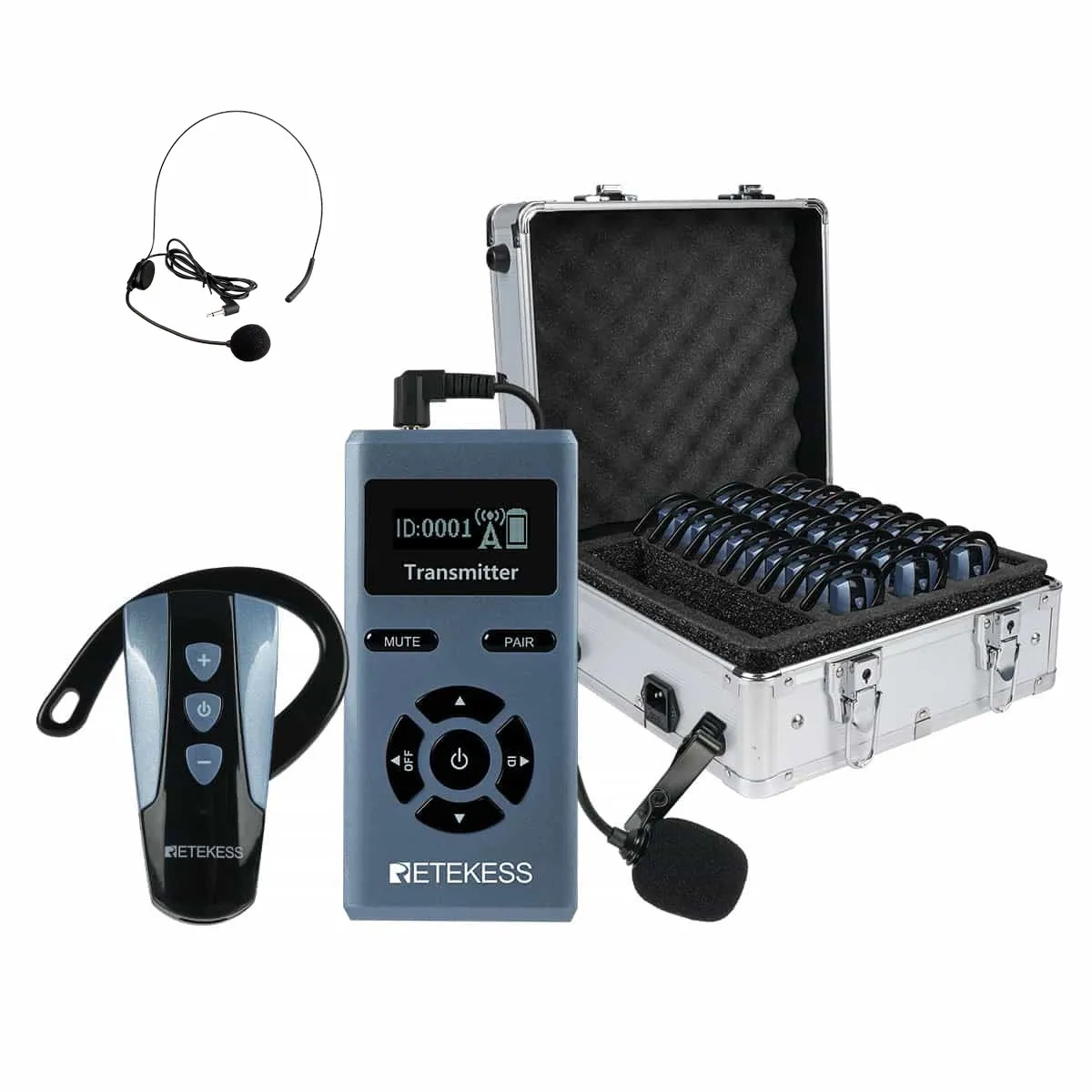
T130P-T131P tour guide system for a complete attendee listening solution built for repeated, fast-paced events.
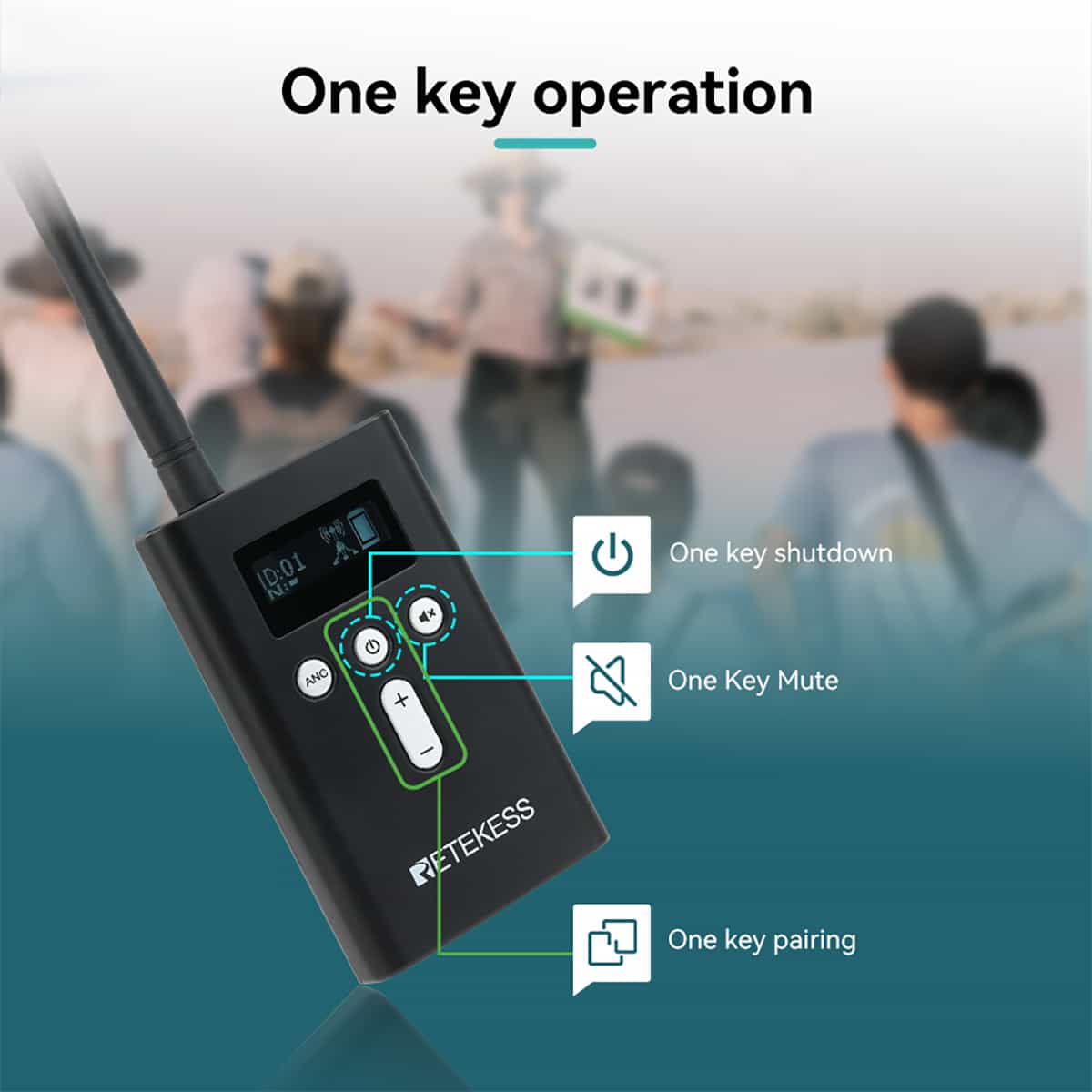
The D-shaped ear hooks fit comfortably on either ear, so attendees can wear them for hours without soreness or constant readjustments — a big improvement over cheap in-ear buds that slip out or cause fatigue over long conferences. Every core function — power, mute, pairing — works with a single button press, so attendees can use them right out of the case with no instruction. That cuts down dramatically on the time your team spends walking attendees through basic controls.
With 49 selectable channels, you can run multiple groups or events in the same building without frequency crosstalk. Built-in DSP noise cancellation cuts through background room noise, delivering crisp, clear translated audio even in busy, crowded venues.
The 160-meter open-air range works for both indoor conferences and larger outdoor events, and the 36-hour receiver battery life easily covers full-day events without mid-day charging breaks. They support both Type-C and contact charging, so you can charge an entire case of receivers at once between jobs — no tedious individual plugging required.
Cost Breakdown & ROI Timeline for Your Equipment Investment
One of the biggest questions for small agencies is: how long does it take to earn back the cost of translation agency equipment?
Let’s break it down with real-world numbers:
- A complete entry-level kit (1 transmitter + 30 receivers + accessories) costs a fraction of a single premium SI console.
- The average small-to-medium conference interpretation job bills $800–$1,500 per day, depending on language pair and event size.
- If you already have interpreters on staff or a trusted contractor network, your only variable cost is travel time and equipment transport.
For most small agencies, the initial equipment investment pays for itself after 3–5 booked SI jobs. After that point, every additional interpretation job generates near-pure margin on the equipment.
Compare that to renting SI equipment for every event: rental fees typically run $200–$400 per day, plus delivery and pickup. Over 10 events, that’s $2,000–$4,000 in rental costs — enough to buy your own kit outright.
Owning your equipment also gives you faster turnaround on bids. You can confirm availability instantly, instead of checking with rental companies and passing their markup on to the client.
Final Tips for Starting Your SI Service
- Start small: Bid on 20–50 person corporate meetings first, to test your setup and build case studies. You can scale up to larger events as you gain experience.
- Do a full tech check before every event: Arrive 30 minutes early to test signal strength, battery levels, and audio clarity across all parts of the venue.
- Package equipment with interpreters: Sell a full “interpretation package” (interpreters + equipment + on-site support) instead of just equipment rental. This increases your per-job revenue and positions you as a full-service provider.
Adding simultaneous interpretation to your service offerings doesn’t require a huge upfront investment. With the right budget translation agency equipment, you can break into a high-margin market, differentiate your agency from competitors, and grow your revenue without overextending your budget.

![[18th Anniversary] 18 Years of Echoing Excellence: Making Communication Easier, Connecting Trust Beyond Borders](https://res.retekess.com/z_file/20260716/retekess-brand-story-making-communication-easier_20260716151044_7682.jpg)
![[18 Years in Wireless Communication] Silent Disco Systems Anniversary Celebration: Top-Selling Headphones & Event Mechanics Revealed!](https://res.retekess.com/z_file/20260713/18-years-in-wireless-communication-silent-disco-systems-anniversary-celebration_20260713175011_5749.webp)
![[Anniversary Carnival] Ding-dong! 18th Anniversary Mega Sale on Guest Paging & Calling Systems: Full Reveal of 12+ Products & Promo Rules!](https://res.retekess.com/z_file/20260713/18th-anniversary-mega-sale-on-guest-paging-calling-systems_20260713175257_0295.webp)
![[Retekess 18th Anniversary Teaser] Tour Guide System Exclusive Perks: Sneak Peek at Event Dates & Mechanics!](https://res.retekess.com/z_file/20260713/retekess-18th-anniversary-tour-guide-system-exclusive-perks--2-_20260713180135_6435.webp)
Follow Us
Pay With


 Google
 Amazon
Comments (0)