
Table of Contents
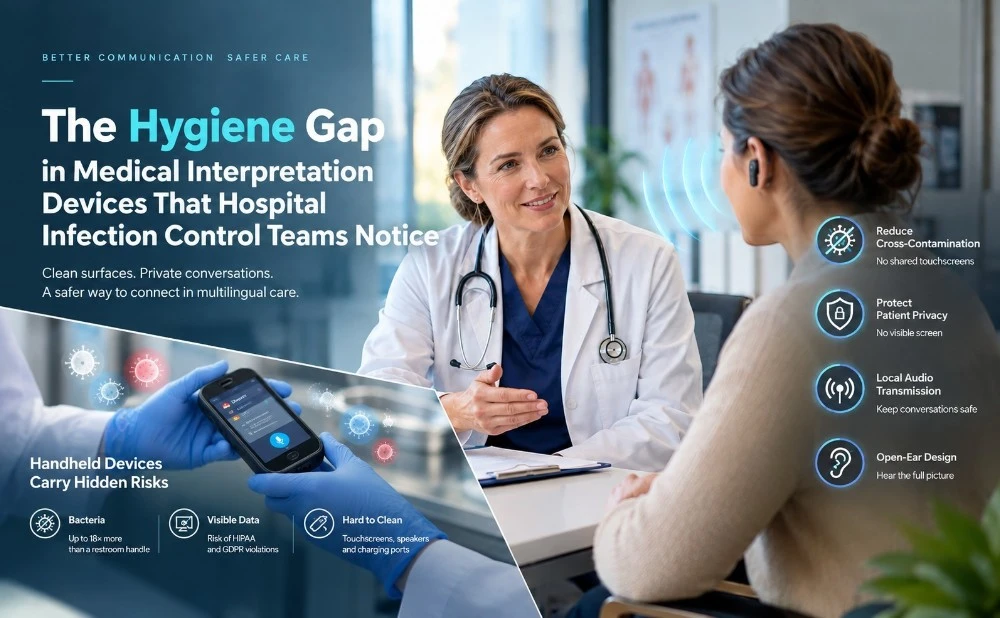
The Hygiene Gap in Medical Interpretation Devices That Hospital Infection Control Teams Notice
- Retekess
- Sep 20, 2026
Why translation devices landed in clinics in the first place
The global medical interpreter services market reached $7.8 billion in 2025, with hospitals accounting for 54.7% of total revenue. North America holds 37.2% of the global market, driven by Title VI requirements and state-level language access mandates.
International clinics and cross-border hospitals face consistent translation demand across three fixed touchpoints:
- Patient intake— history, symptoms, insurance
- Informed consent— procedure explanations, risk disclosure
- Discharge instructions— medication, follow-up, warning signs
Each requires accurate, private, repeatable interpretation with fast patient turnover. None of these workflows was designed around a shared touchscreen passing between strangers.
The hygiene problem handheld devices create
Bacteria counts and the restroom-handle comparison
Handheld translation devices entered clinical settings through the front door of convenience. They are cheap, portable, and support dozens of languages. They were also built for travelers, not for patients moving through a hospital.
A study in the Annals of Clinical Microbiology and Antimicrobials found that a typical mobile phone carries 18 times more harmful bacteria than a handle in a public restroom. Handheld translation devices share the same form factor: a glass touchscreen, a plastic casing, and a charging port that collects dust and residue. They pass from the front desk to the consultation room to the discharge area — sometimes between a dozen patients in a single shift.
Why disinfection protocols break down in real clinics
Hospital infection control protocols require all patient-contact surfaces to be disinfected between users. MedStar Health's published guidelines specify that mobile devices used in clinical areas must be wiped with an EPA-registered disinfectant after every patient encounter.
The problem is that most consumer-grade translation devices are not built for this cycle:
- Touchscreen coatings degradeafter repeated alcohol wipes
- Speaker grilles and charging portstrap moisture and cannot be fully cleaned
- 15-minute consultation slotsleave no time to stop and disinfect properly
The result is a device that looks clean but functions as a fomite moving between immunocompromised patients.
The privacy problem nobody puts on the spec sheet
Screen exposure in shared rooms
Handheld devices display text on a screen. In a clinical setting, that text is protected health information: symptoms, medication lists, prior diagnoses, treatment plans.
In a shared consultation room with a nurse, a medical student, or a family member present, that screen is visible to anyone within reading distance. In a waiting area where a staff member pre-screens patients, the screen is visible to the next patient in line.
This is not a theoretical risk. It is a direct violation of HIPAA's minimum necessary standard, which requires that protected health information be exposed only to those who need it to do their jobs.
Cloud audio and the compliance gap
Most consumer translation devices process audio through third-party cloud servers. The patient's voice, the doctor's questions, and the translated text all travel over the internet to a provider's data center.
Vasco and Pocketalk have both introduced HIPAA-compliant versions of their handheld devices specifically because this gap exists. The fact that compliance is sold as a premium upgrade tells you where the baseline product stands.
For international clinics operating under both HIPAA and GDPR, sending patient conversations through an unvetted cloud pipeline is not an acceptable risk.
How ear-worn receivers fix both problems
The patient contact surface changes
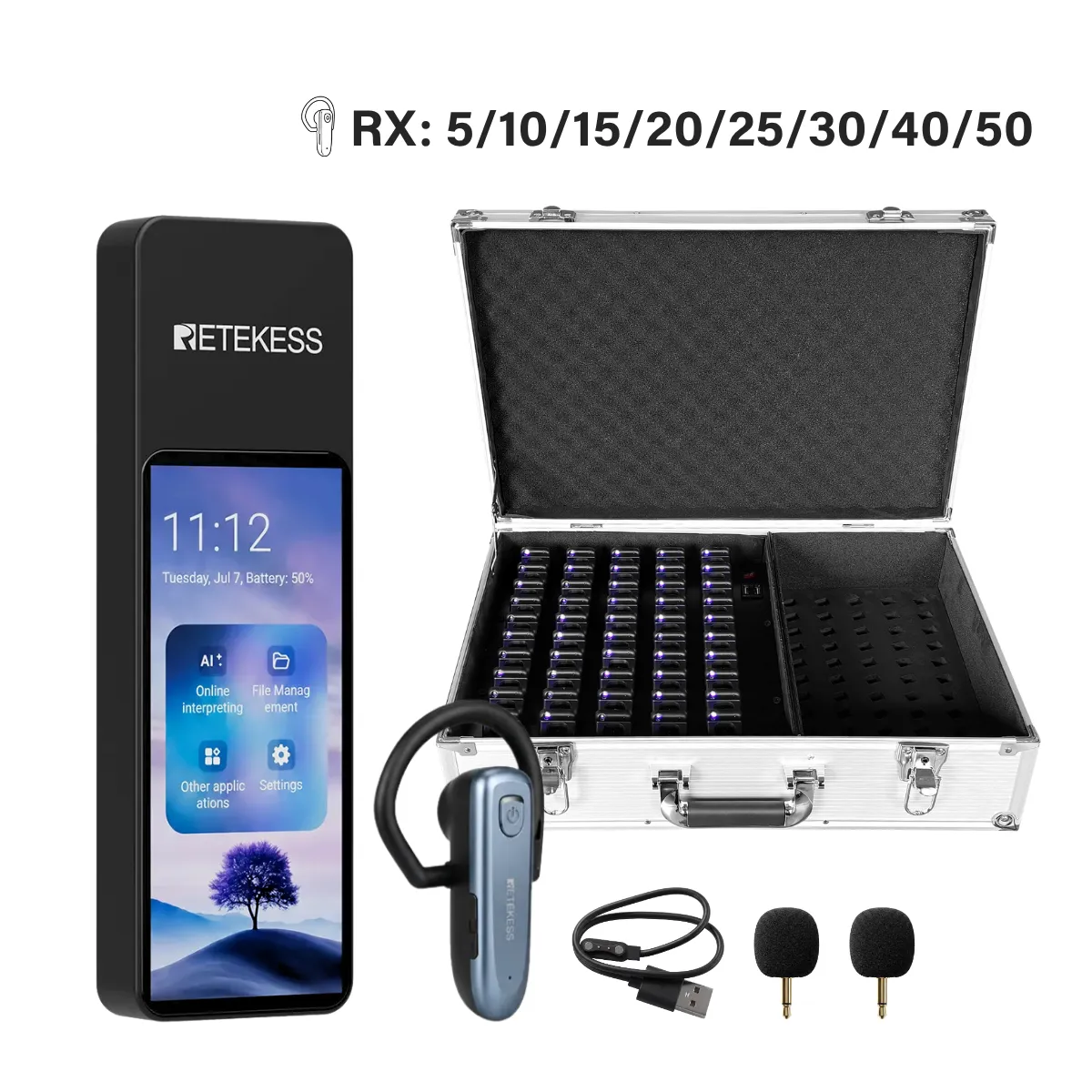
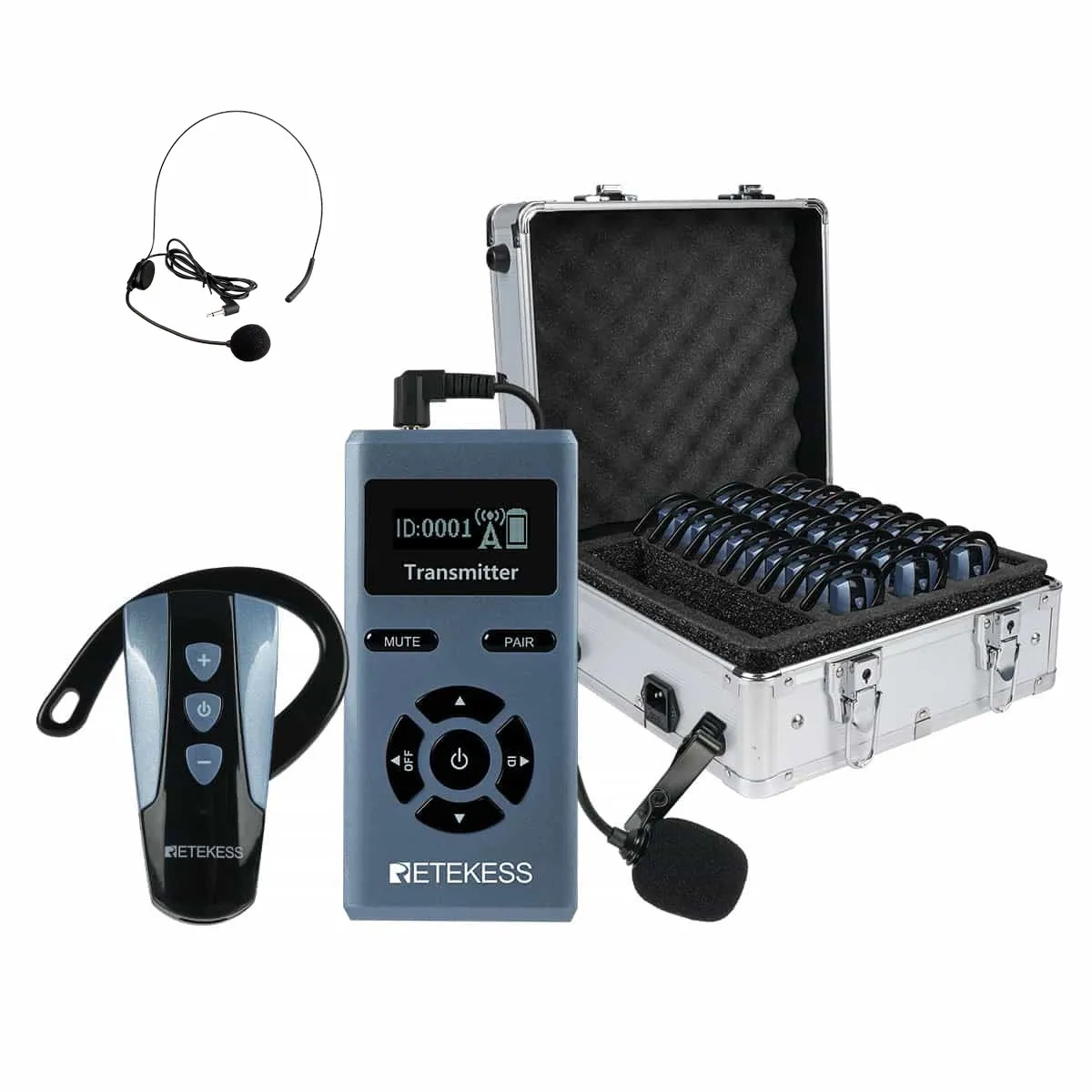
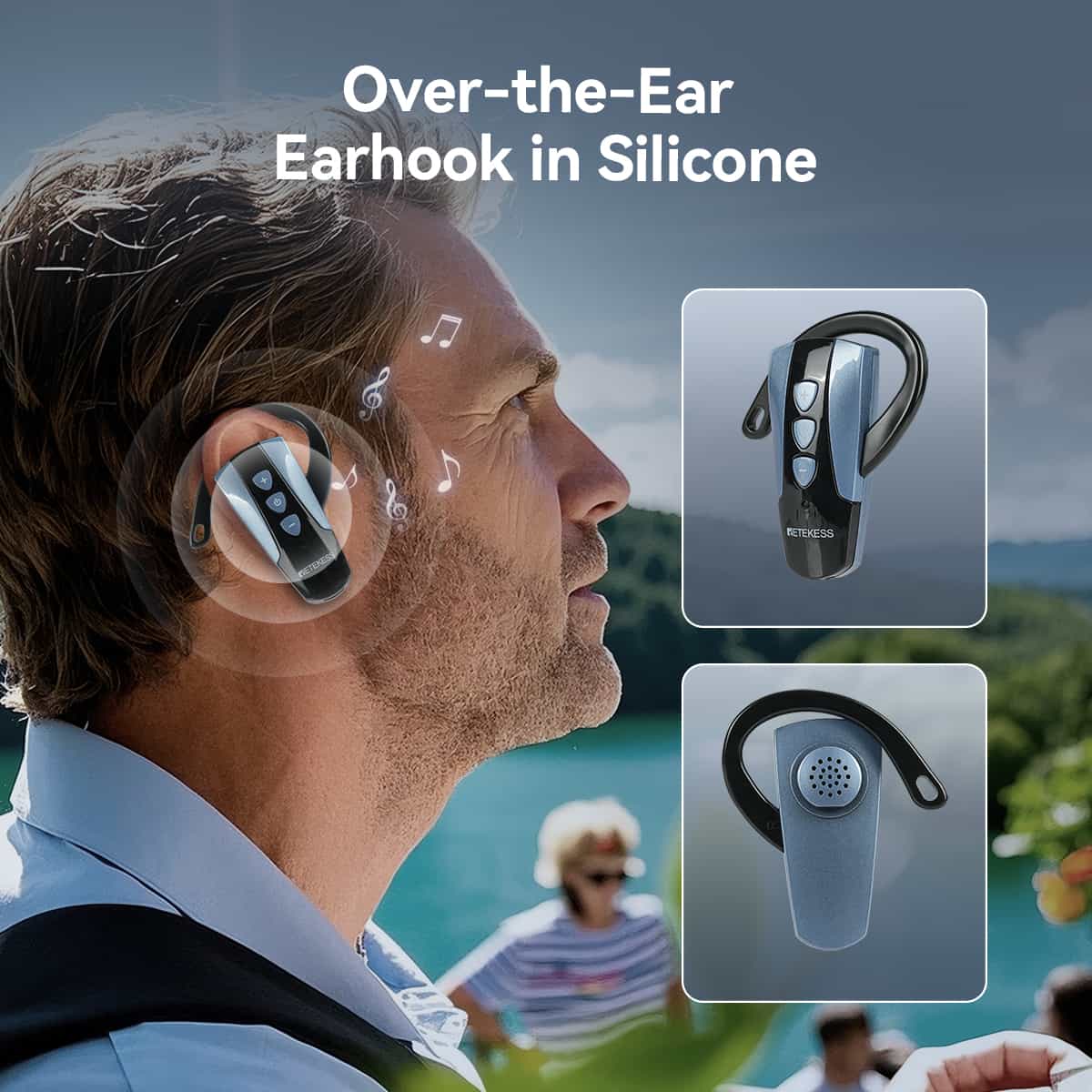
The patient wears a lightweight ear-hook receiver instead of holding a shared device. The receiver weighs approximately 13 grams, uses an open ear-hook design that fits either ear, and has no screen, no patient-side buttons, and no charging port that needs to be touched between uses.
- The smooth plastic surface has no crevices and wipes clean with a standard alcohol pad in under 10 seconds
- The device that touches the patient is fully disinfectable between users
No screen, no visual leak
Translation arrives as audio directly into the patient's ear canal. There is no text for a bystander to read, no screen to angle away from visitors, no lock screen that displays a recent translation when the device wakes up.
The doctor holds the transmitter, which does have a screen — but that screen faces the doctor and stays in the doctor's hand. It does not get passed around the room.
Local audio transmission, separate from translation processing
Audio travels over local 2.4G FHSS transmission from the transmitter to the receivers. This is a closed, short-range radio signal. The translated audio does not route through public Wi-Fi or cellular networks on its way from the transmitter to the patient's ear.
It is important to distinguish this from the translation process itself. The TT136 uses online AI translation engines from Microsoft and Google, which means the patient's voice is sent to a cloud server for language processing before the translated audio is broadcast locally. For clinics operating under HIPAA or GDPR, this requires reviewing the data handling policies of those translation service providers. The transmitter does support local recording to its internal storage, which can be wiped on demand rather than living on an external server.
Open-ear design preserves nonverbal care
Patients need to hear the doctor's natural voice and tone while also hearing the translation. A closed earbud blocks ambient sound and creates an artificial, isolated feeling.
An open ear-hook lets the patient hear:
- The translation in one ear
- The doctor's tone and natural voice
- Room sounds and any safety announcements
This preserves the nonverbal layer of clinical communication — the pause before a difficult diagnosis, the reassuring tone after a procedure explanation — that handheld speaker modes destroy entirely.
Four baseline requirements for clinical deployment
Before deploying any medical interpretation device, clinical teams should require:
- A patient contact surface that is either fully isolatable with disposable covers or fully disinfectable in under 30 seconds
- No patient-facing screenthat displays protected health information
- Audio transmission over a local or encrypted networkrather than an unvetted public cloud, with full transparency about where translation processing occurs
- Open-ear wearabilitythat preserves ambient sound and nonverbal communication
These are not premium features. They are entry requirements for any device that enters a room with a patient.
Where the TT136 fits
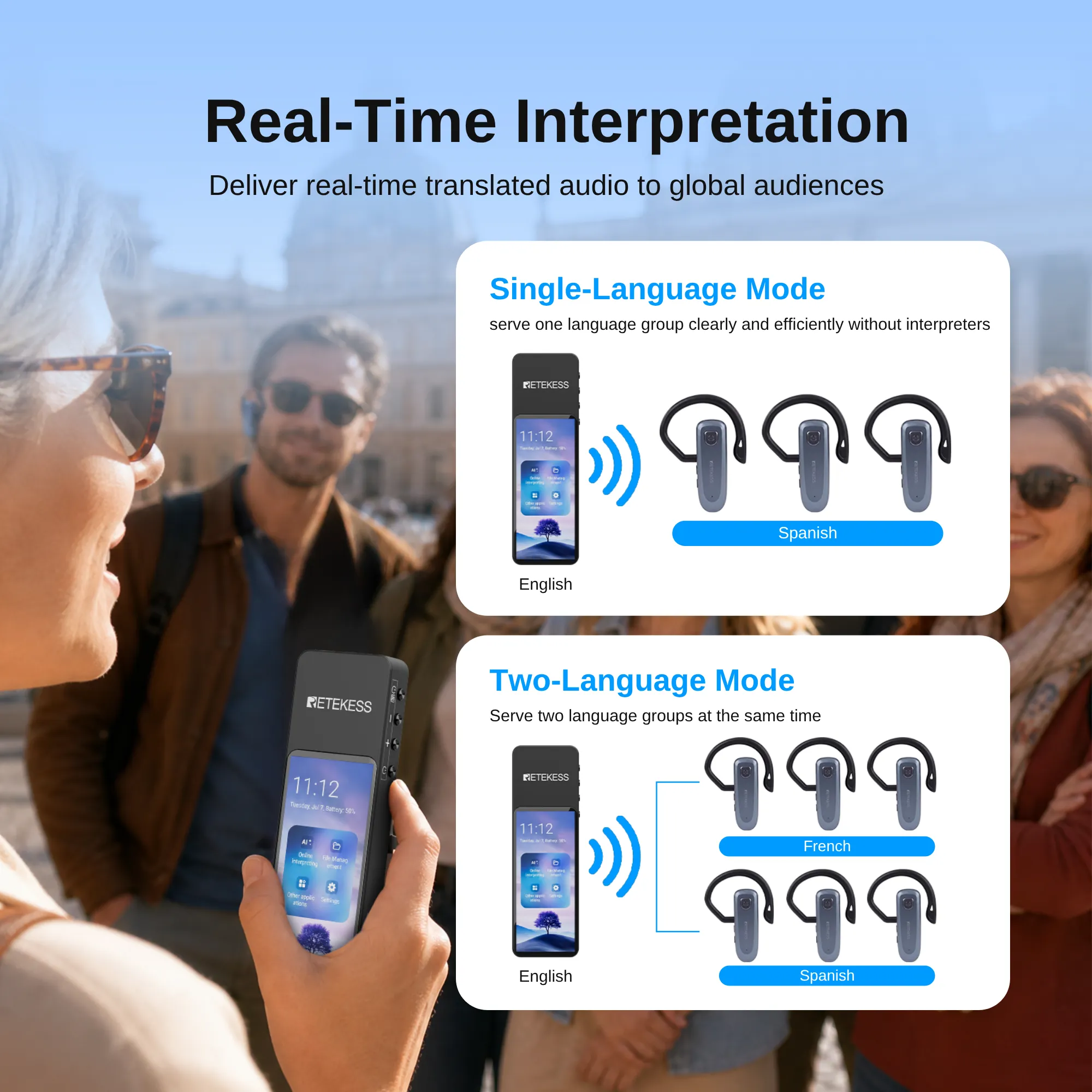
The Retekess TT136 maps directly onto this workflow. It pairs a handheld transmitter with 13-gram ear-hook receivers. The doctor holds the transmitter and speaks naturally. The system delivers real-time AI translation in 120+ languages to each patient's receiver over a 2.4G FHSS local signal.
Key specs that matter for clinical use:
- Receivers run approximately 13 hourson a single charge and fit either ear
- Two-way talklets patients respond; the doctor hears the translation back without handing over the device
- Transmitter runs approximately 4–6 hours in translation mode— clinics with full-day schedules should keep a second charged transmitter on hand or plan mid-day charging
- Centralized charging casesupports overnight storage and coordinated charging for the receiver fleet
What this does not replace
Translation devices entered clinical settings because they solved a real problem: patients who do not speak the local language still need to understand their care. Infection control and privacy teams are now asking the harder follow-up questions.
What does that device touch between patients? What does its screen display to the room? Where does the audio go after it leaves the doctor's mouth?
Ear-hook receivers do not replace human interpreters for complex diagnostic conversations, high-stakes consent discussions, or mental health encounters. Those situations still need a trained professional.
But for routine consultations, medication reviews, discharge instructions, and intake interviews — the volume work that fills a clinic's day — ear-worn systems remove the two risks that handheld screens cannot eliminate: shared touch surfaces and visible patient data. That is the hygiene gap infection control teams notice, and it is fixable without adding complexity to the clinical workflow.
![[18th Anniversary] 18 Years of Echoing Excellence: Making Communication Easier, Connecting Trust Beyond Borders](https://res.retekess.com/z_file/20260716/retekess-brand-story-making-communication-easier_20260716151044_7682.jpg)
![[18 Years in Wireless Communication] Silent Disco Systems Anniversary Celebration: Top-Selling Headphones & Event Mechanics Revealed!](https://res.retekess.com/z_file/20260713/18-years-in-wireless-communication-silent-disco-systems-anniversary-celebration_20260713175011_5749.webp)
![[Anniversary Carnival] Ding-dong! 18th Anniversary Mega Sale on Guest Paging & Calling Systems: Full Reveal of 12+ Products & Promo Rules!](https://res.retekess.com/z_file/20260713/18th-anniversary-mega-sale-on-guest-paging-calling-systems_20260713175257_0295.webp)
![[Retekess 18th Anniversary Teaser] Tour Guide System Exclusive Perks: Sneak Peek at Event Dates & Mechanics!](https://res.retekess.com/z_file/20260713/retekess-18th-anniversary-tour-guide-system-exclusive-perks--2-_20260713180135_6435.webp)
Follow Us
Pay With


 Google
 Amazon
Comments (0)