
Table of Contents
Communication Solutions for School Trips: From Group Tours to Multilingual Learning
- Retekess
- Jul 29, 2026
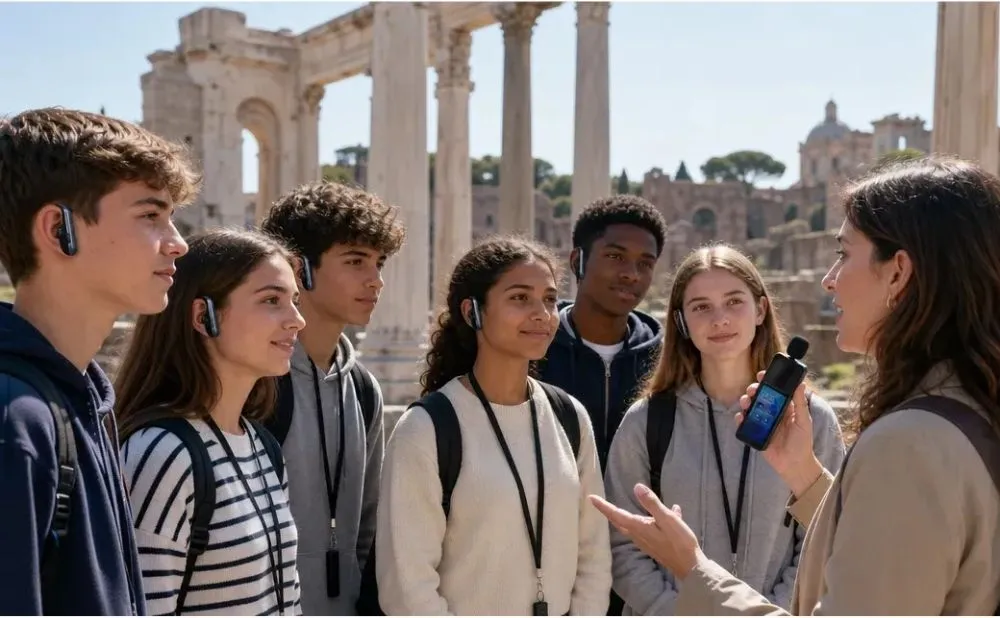
International educational school trips give students firsthand access to new cultures, academic environments, and global perspectives. Every successful trip depends on consistent, clear information sharing across the entire group. Reliable communication solutions for school trips do more than group management. They keep students safe and help everyone learn without language barriers.
1. Why Clear Communication Matters on International School Trips
Large group coordination needs
School trip groups usually include dozens of students of different ages. Students naturally spread out when visiting scenic spots, museums, or university campuses. Without one communication channel, messages reach people slowly and can cause confusion.
Noisy public environments
Most trip destinations are busy public areas. City centers, museum halls, and train stations all have high levels of background noise. Verbal instructions can easily get lost in surrounding sound, even when group leaders speak loudly. This issue worsens during peak tourist seasons.
Multilingual group inclusion
Many international exchange programs bring together students from different language backgrounds, including English, German, French, and Spanish. Equal access to information ensures every student can follow the trip schedule and take full part in learning activities.
Student safety and risk control
Clear communication ties directly to student safety. Group leaders need to send immediate alerts for route changes, weather issues, or unexpected events. Fast, reliable information delivery reduces the risk of students getting lost and ensures quick response when individual students need help.
2. Common Communication Challenges During International Educational Visits
Poor audio clarity in crowded spaces
When groups move through outdoor historical sites, busy market streets, or large exhibition halls, background noise drowns out spoken instructions. Students at the back of the group can barely hear the guide, even when standing close together. Missing key information can cause them to miss meeting points or safety reminders.
Inefficient group management
Students often stop to take photos, look into shop windows, or explore side streets. It takes significant time for teachers to gather the group again and repeat instructions. In worst-case scenarios, individual students may fall behind without immediate notice, adding work pressure for trip leaders who must split attention between guiding content and counting heads.
Language gaps that weaken learning value
In non-English speaking destinations, local guides and site staff may only speak the native language. Students with limited local language skills cannot understand on-site explanations, which reduces the educational value of the visit. Even in English-speaking destinations, students with different proficiency levels may miss details of live introductions.
Unreliable cross-border mobile connectivity
Remote towns, rural scenic spots, and old city centers often have weak or no mobile signal. Group leaders cannot rely on phone calls or messaging apps to contact separated students. Cross-border roaming rules also vary by region, creating unexpected costs and connectivity gaps for overseas group travel.
3. Why Traditional Communication Methods Are Not Enough
Shouting: Limited range and high fatigue
Shouting works only for very small groups in quiet spaces. For groups larger than 10 people, or in noisy public areas, it fails to deliver information reliably. It also strains the voices of group leaders over a full-day trip, and loud talking can disturb other visitors at cultural sites.
Mobile phones: High costs and signal dependence
Cross-border roaming charges add significant extra cost to trip budgets. Daily fees add up quickly for multi-day, multi-destination trips. Beyond cost, mobile phones depend on cellular signal, which is not available in all locations. Phone calls only connect one person at a time, so leaders must repeat the same message many times to reach the whole group. Personal phones can distract students, who may use them for social media instead of the trip.
Basic two-way radios: Compliance and functionality limits
Many radio systems require local frequency approval, which means they cannot be used legally across different regions. This creates administrative work and compliance risks for cross-border trips. Most basic radios are bulky and heavy, uncomfortable for students to wear all day. Sound quality is often poor in noisy environments, and these devices offer no language support for multilingual groups.
4. How a 2.4GHz Audio Transmitter and Receiver System Solves These Problems
Globally compliant 2.4GHz frequency
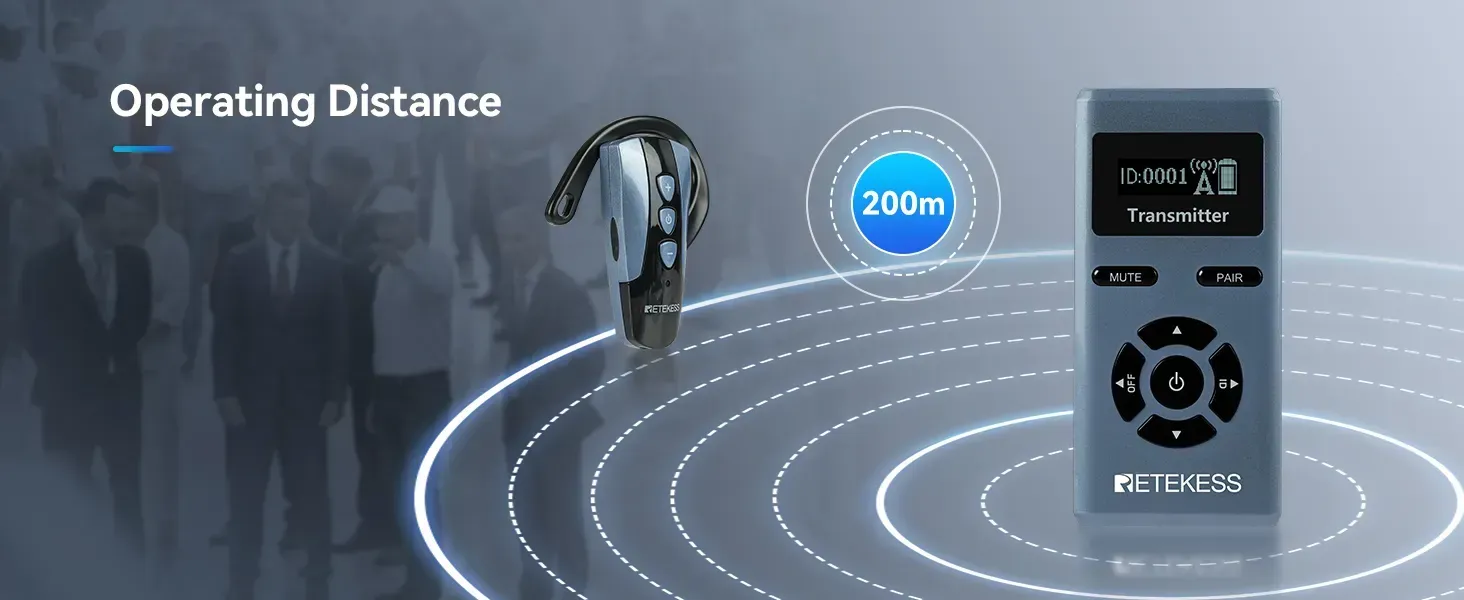
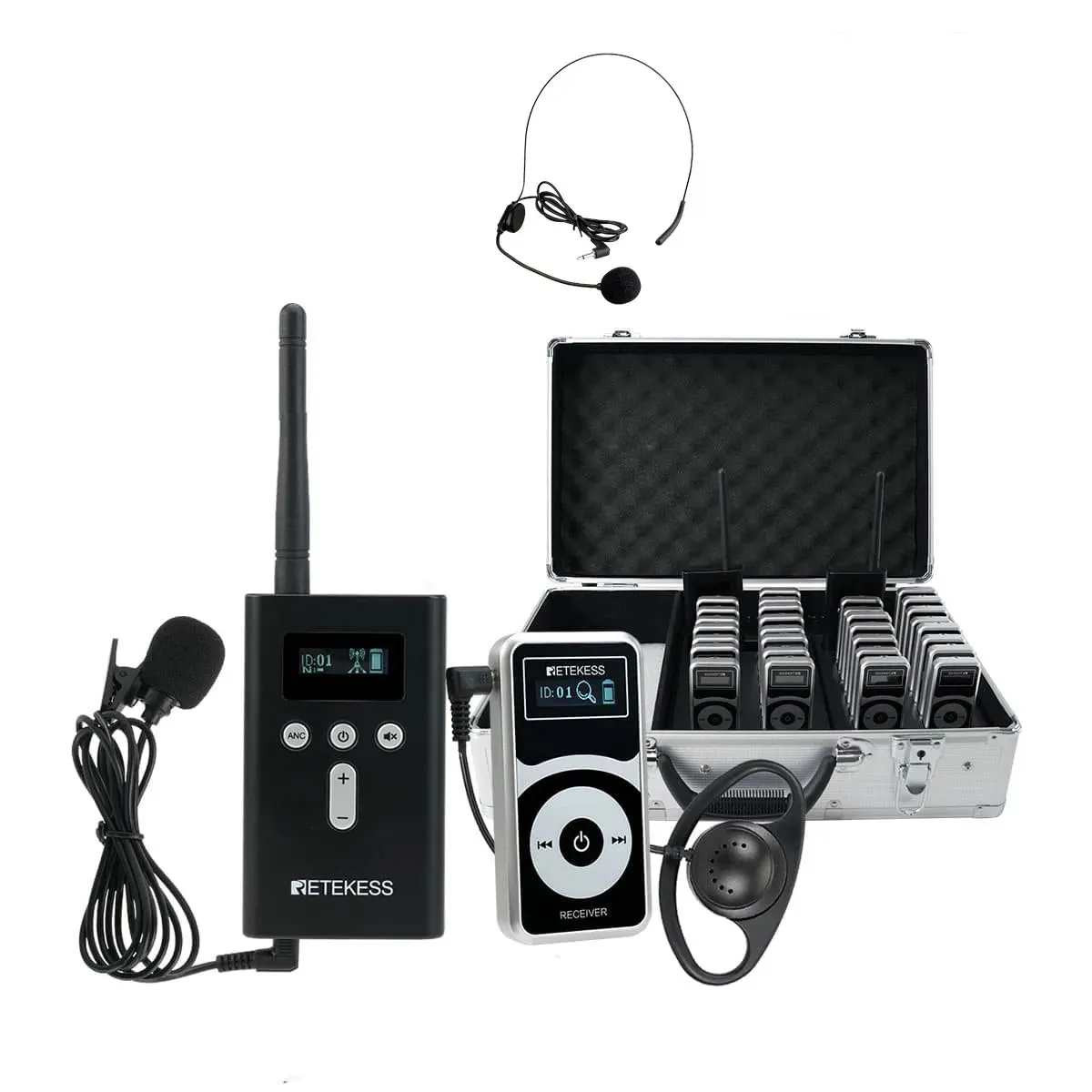
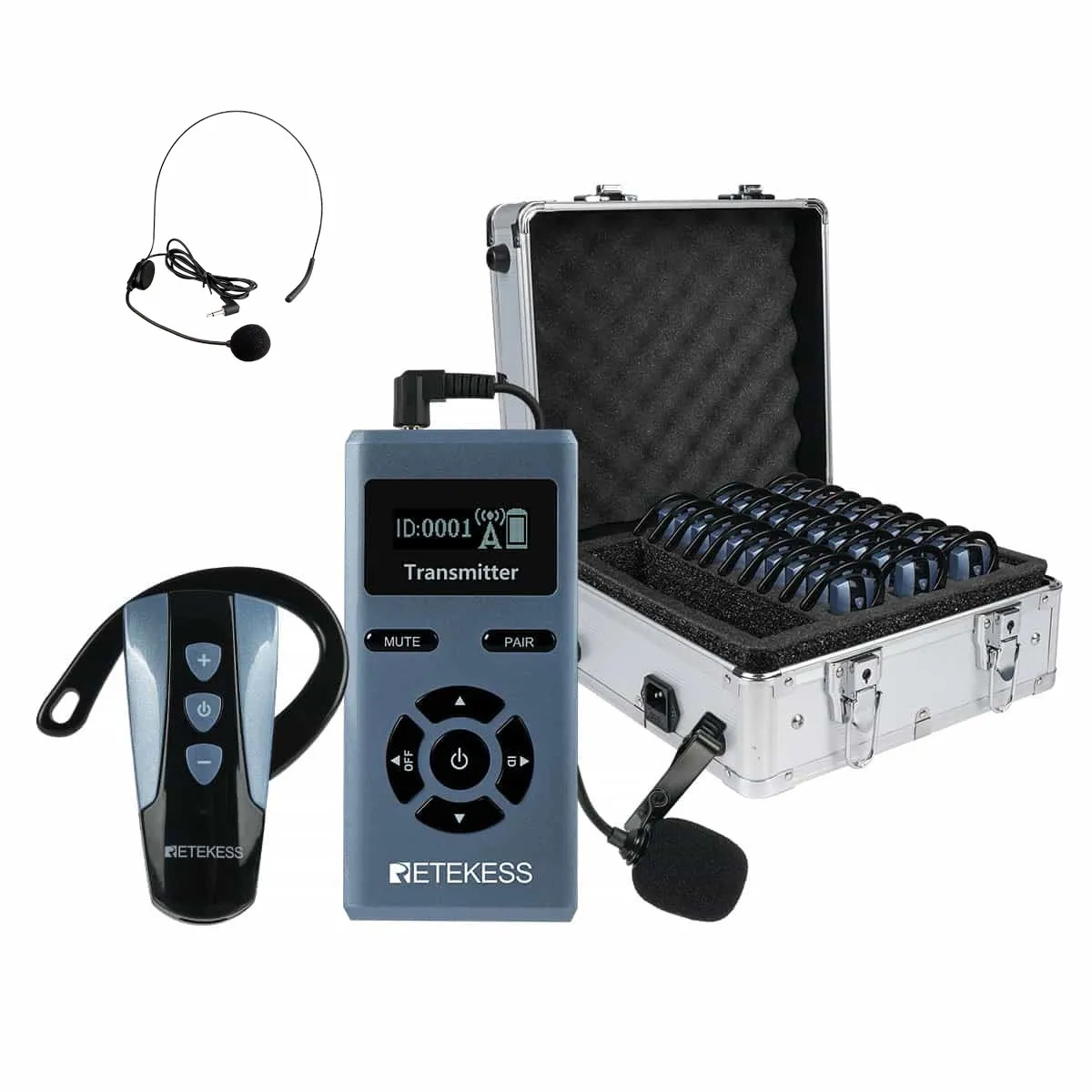
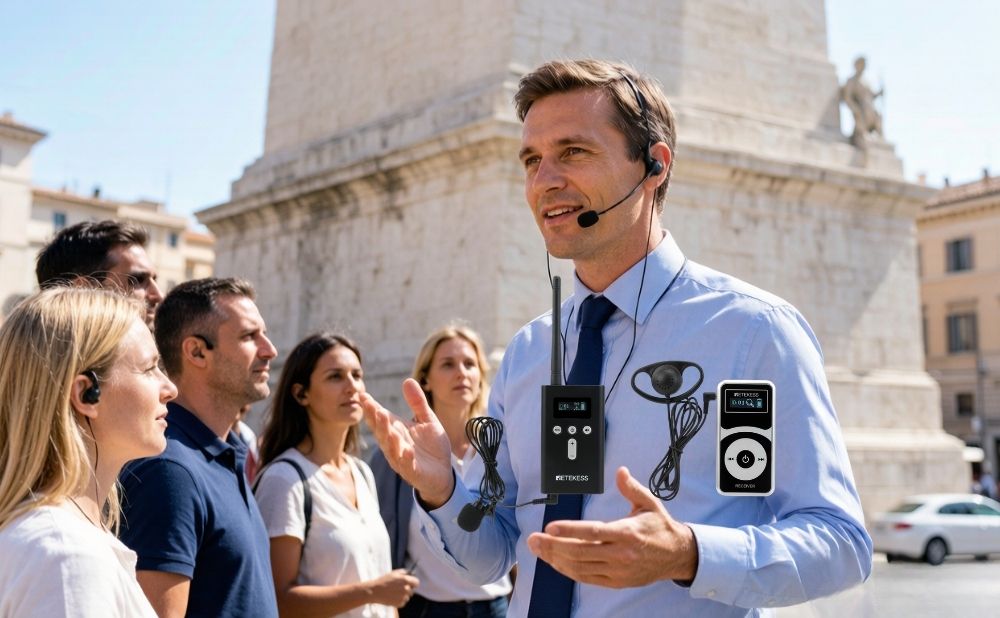
The 2.4GHz frequency band is available for free public use worldwide. Schools do not need to apply for separate frequency licenses in different countries and regions. One set of equipment works legally across all trip destinations, with no extra administrative procedures or compliance costs. The Retekess TT106S 2.4GHz Global ear-hook receivers is built on this universal standard, ready for cross-border use with no extra configuration.
Stable offline connection across all environments
The 2.4GHz signal penetrates walls and obstacles well, so it works reliably inside museum buildings, old town streets, and forested scenic areas. The system works offline without a mobile phone. It does not rely on cellular networks, so it keeps working even in areas with no phone signal.
Clear, consistent audio for every student
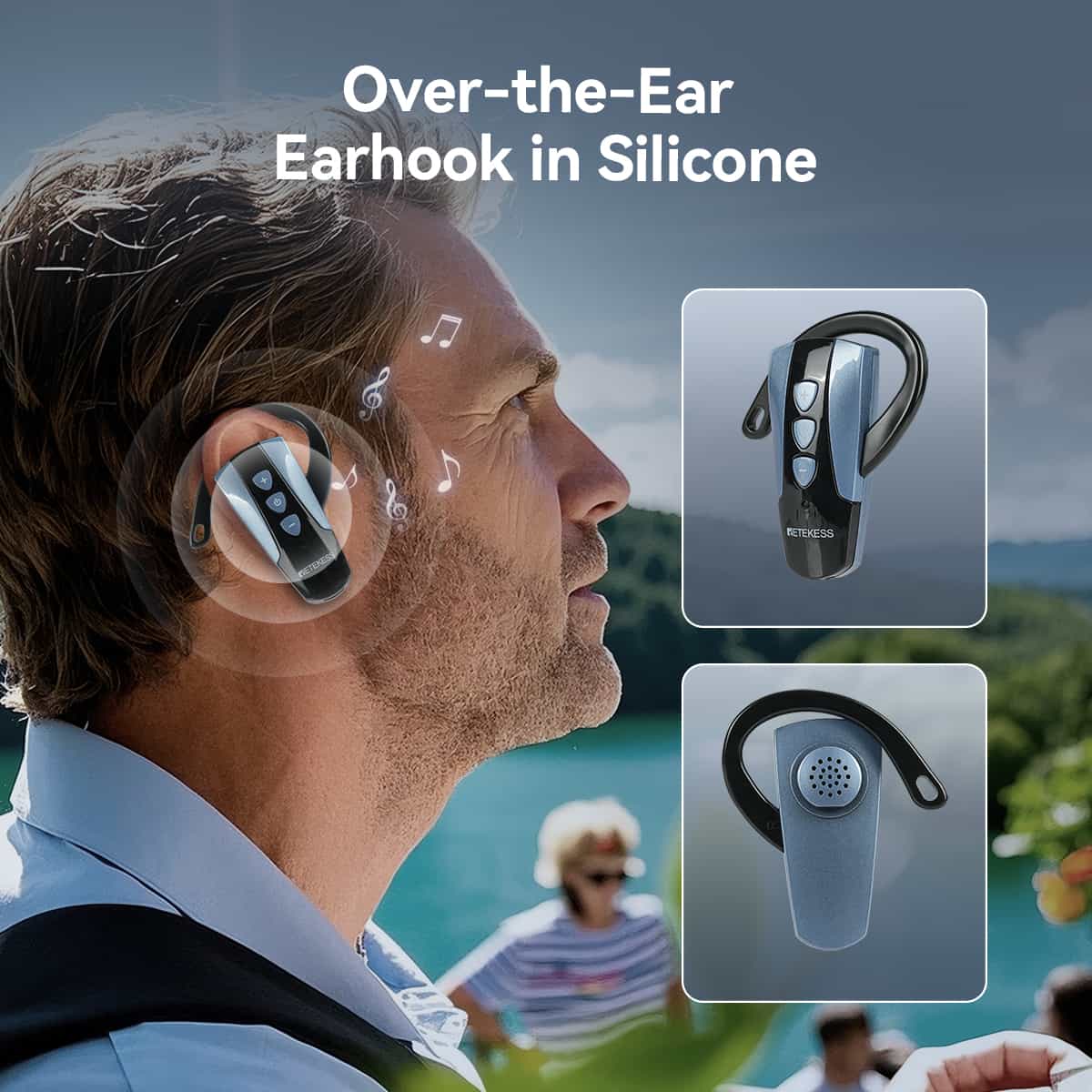
The transmitter sends voice directly to each receiver worn by students. Most receivers use a lightweight ear-hook design with noise reduction technology. Students can hear instructions clearly even in crowded, noisy environments. Every student in the group receives the same information at the same time, with no distortion or delay.
Easy operation with minimal training
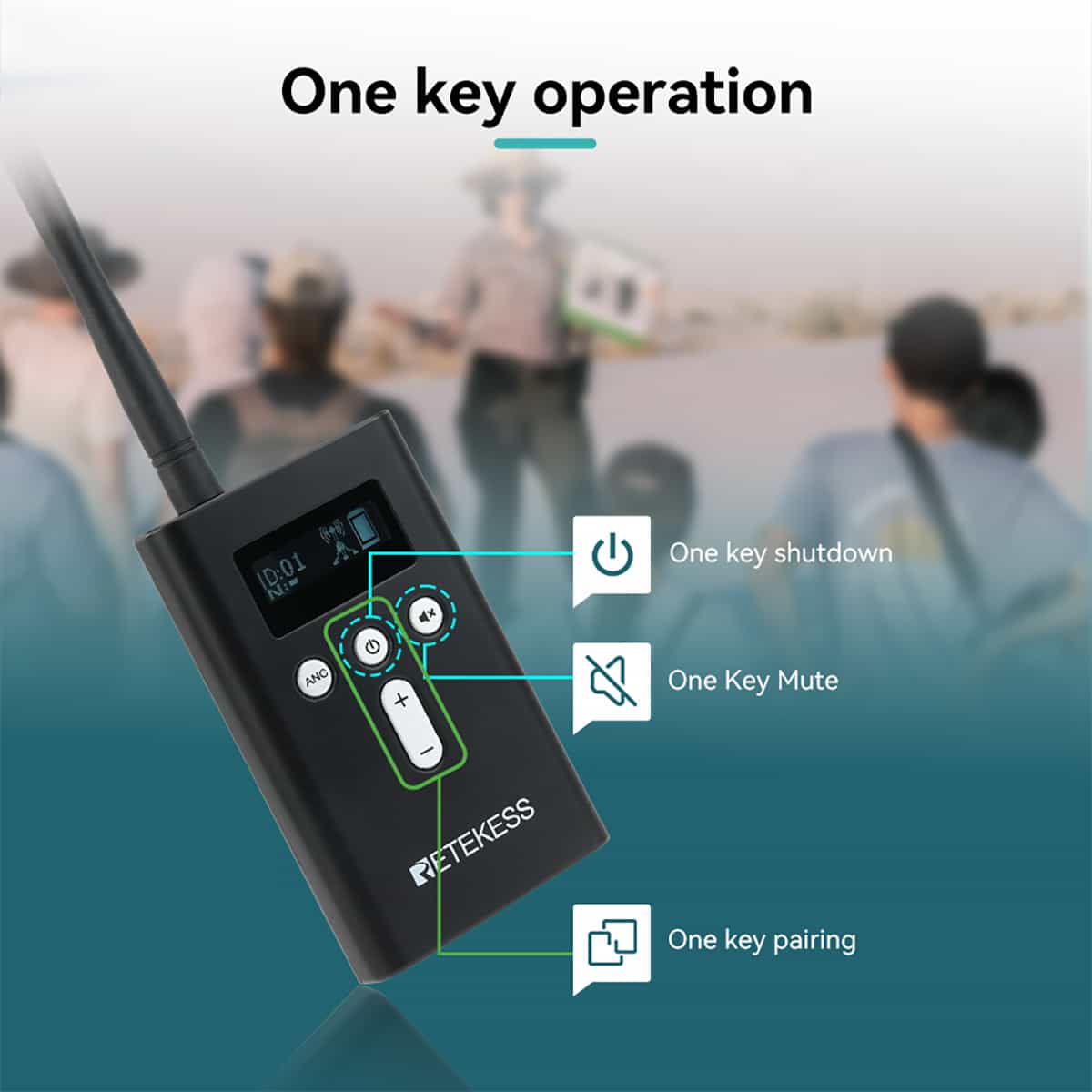
The transmitter has simple controls for group leaders, and receivers require almost no setup for students. Most models turn on with one button and connect automatically. Schools do not need to run long training sessions before trips. Students can use the devices independently with no technical support during the trip.
Zero roaming costs for long-term savings
The offline operation model removes all roaming costs. Schools pay a one-time purchase fee and can reuse the equipment for every future trip. There are no daily data charges or monthly service fees, creating long-term cost savings compared to roaming plans.
5. The Role of Tour Guide Systems with Interpretation in Multilingual Education
Equal access to museum and cultural content
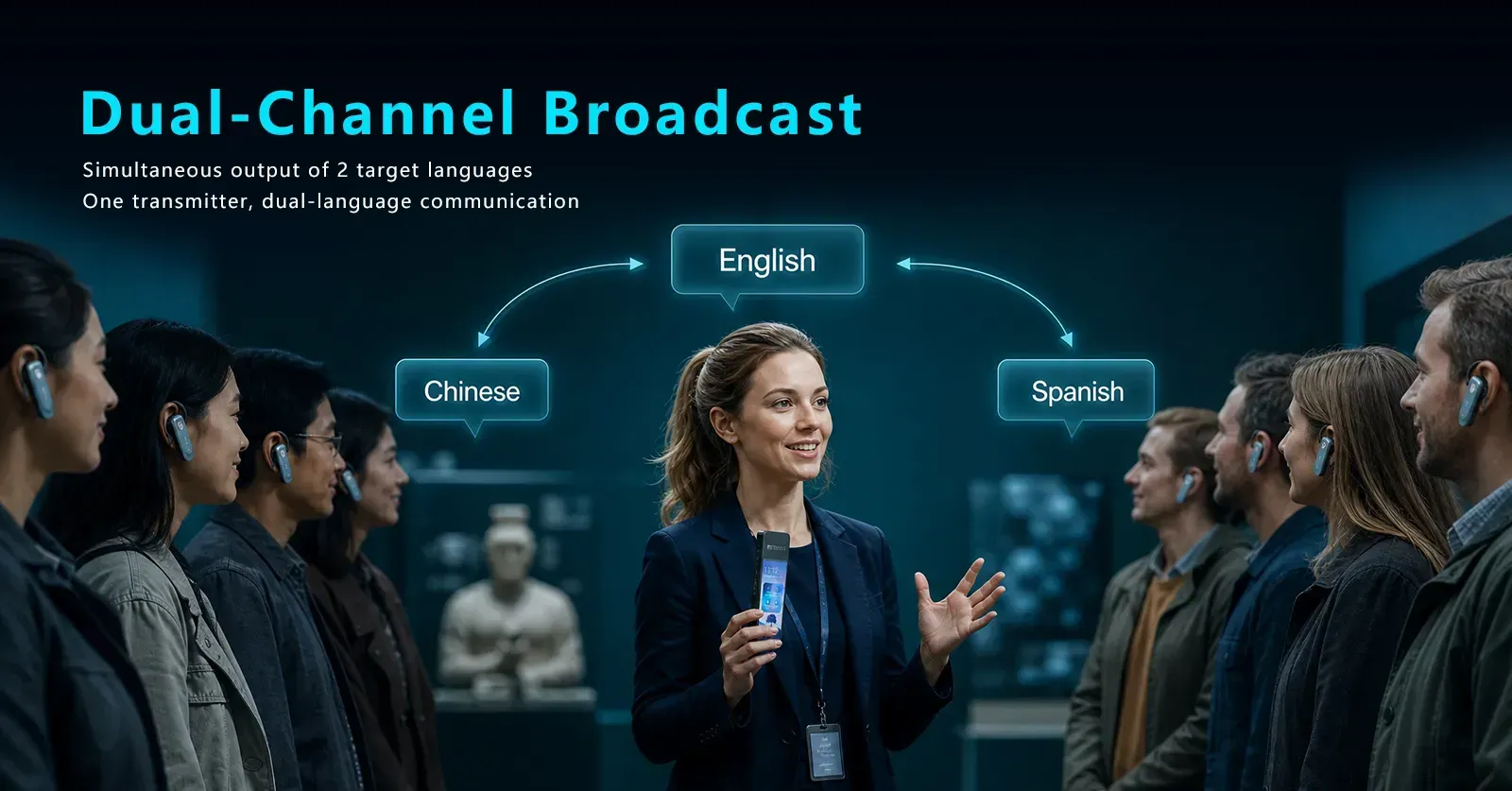
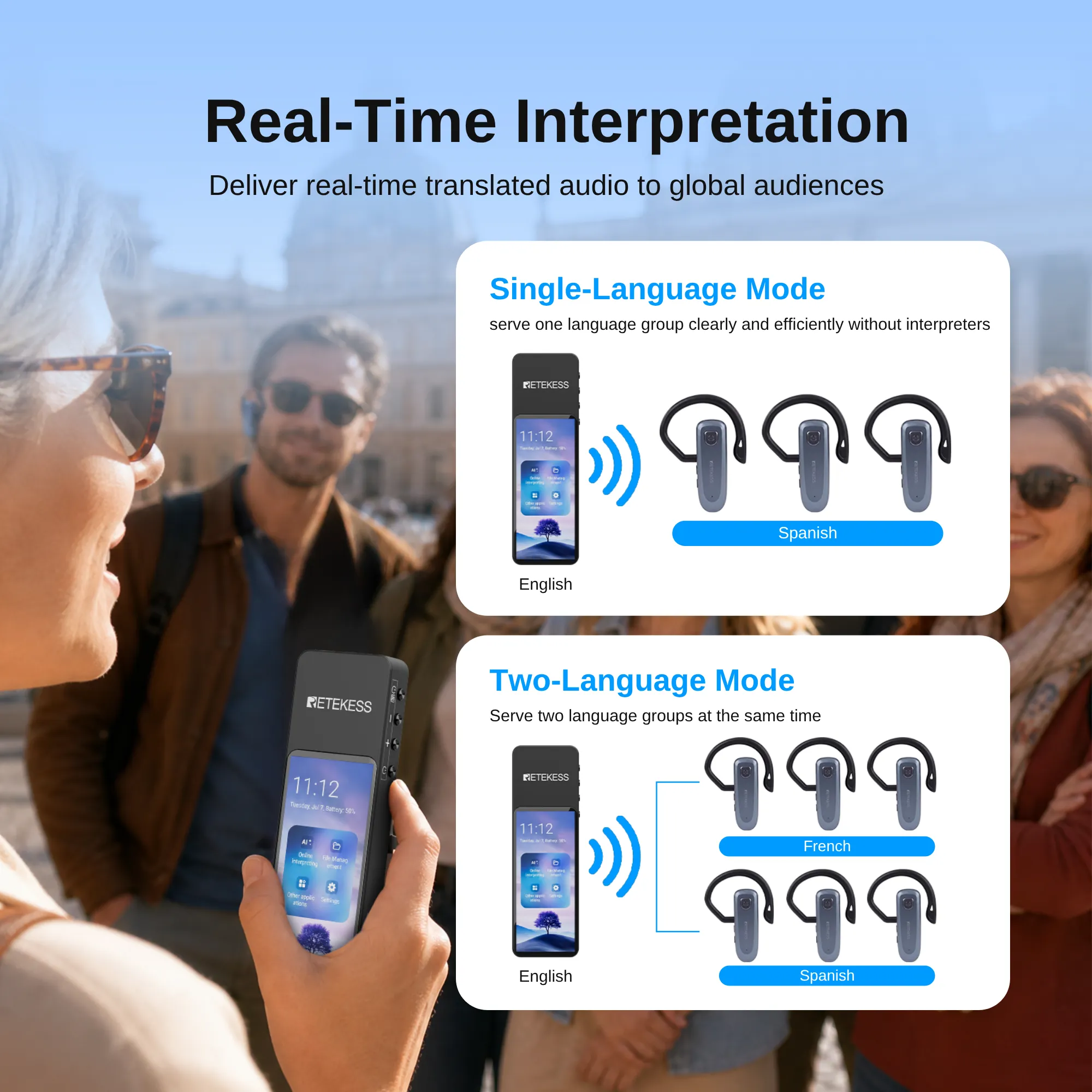
Interpretation functions allow students to listen to content in their native language. Each student can select their preferred language channel, so no one misses historical details or professional knowledge because of language gaps. This ensures equal learning experiences for all participants.
Smoother university visits and academic exchanges
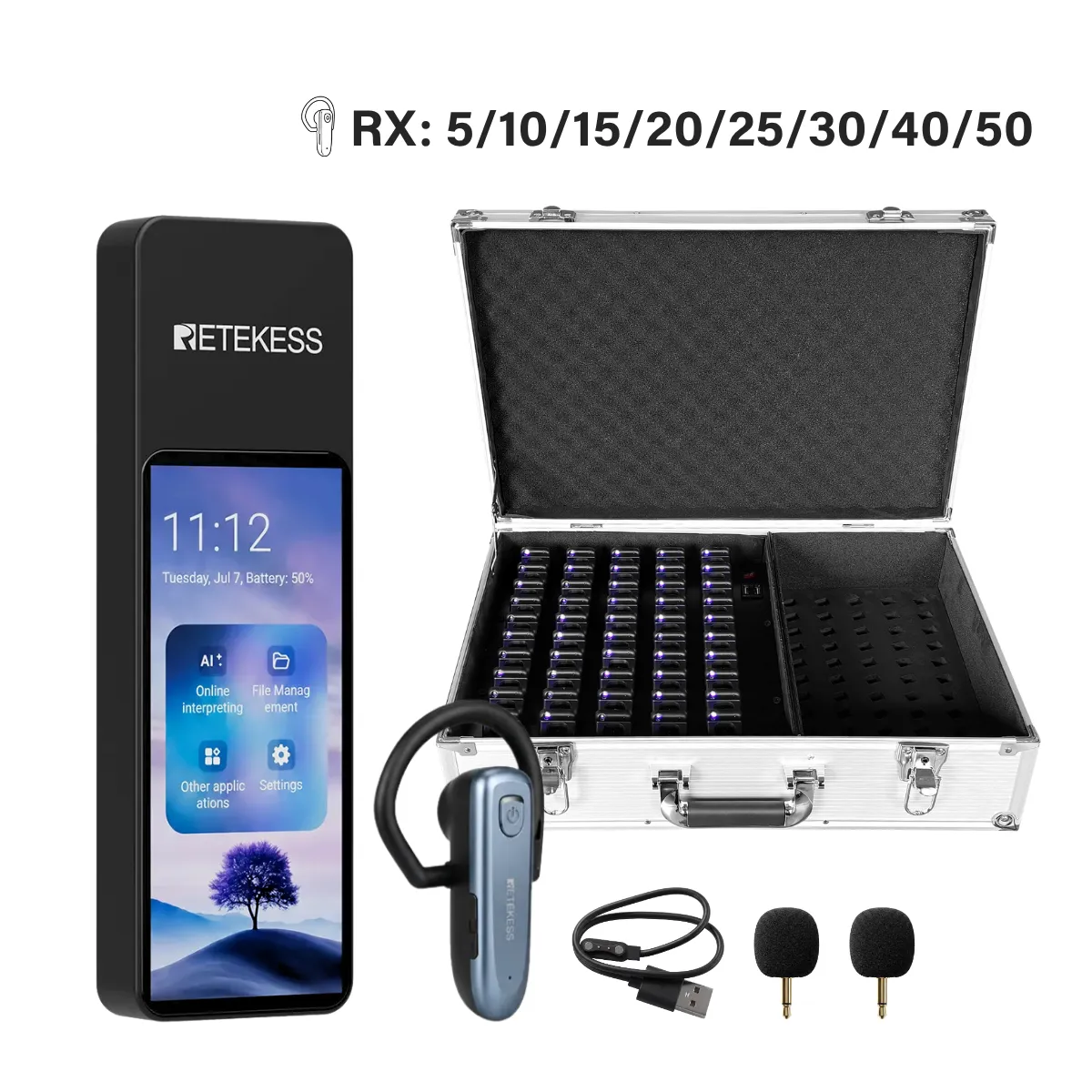
During campus tours and academic exchange activities, interpretation systems support smooth communication between visiting students and local staff. Formal introductions, lab tours, and Q&A sessions can run in multiple languages at the same time. Schools can reduce operating costs by using fewer on-site interpreters. For example, the Retekess TT136 offers both automatic and human interpretation modes, adapting well to both casual sightseeing and formal academic scenarios.
More immersive local cultural experiences
On city walking tours, interpretation tools help students engage with local life more deeply. Students can use the device to ask for directions or talk to local residents with language support. This reduces the stress of communicating in a foreign language and helps students engage more with local culture.
6. How to Choose the Right Communication Equipment for School Trips
Group size and scalability
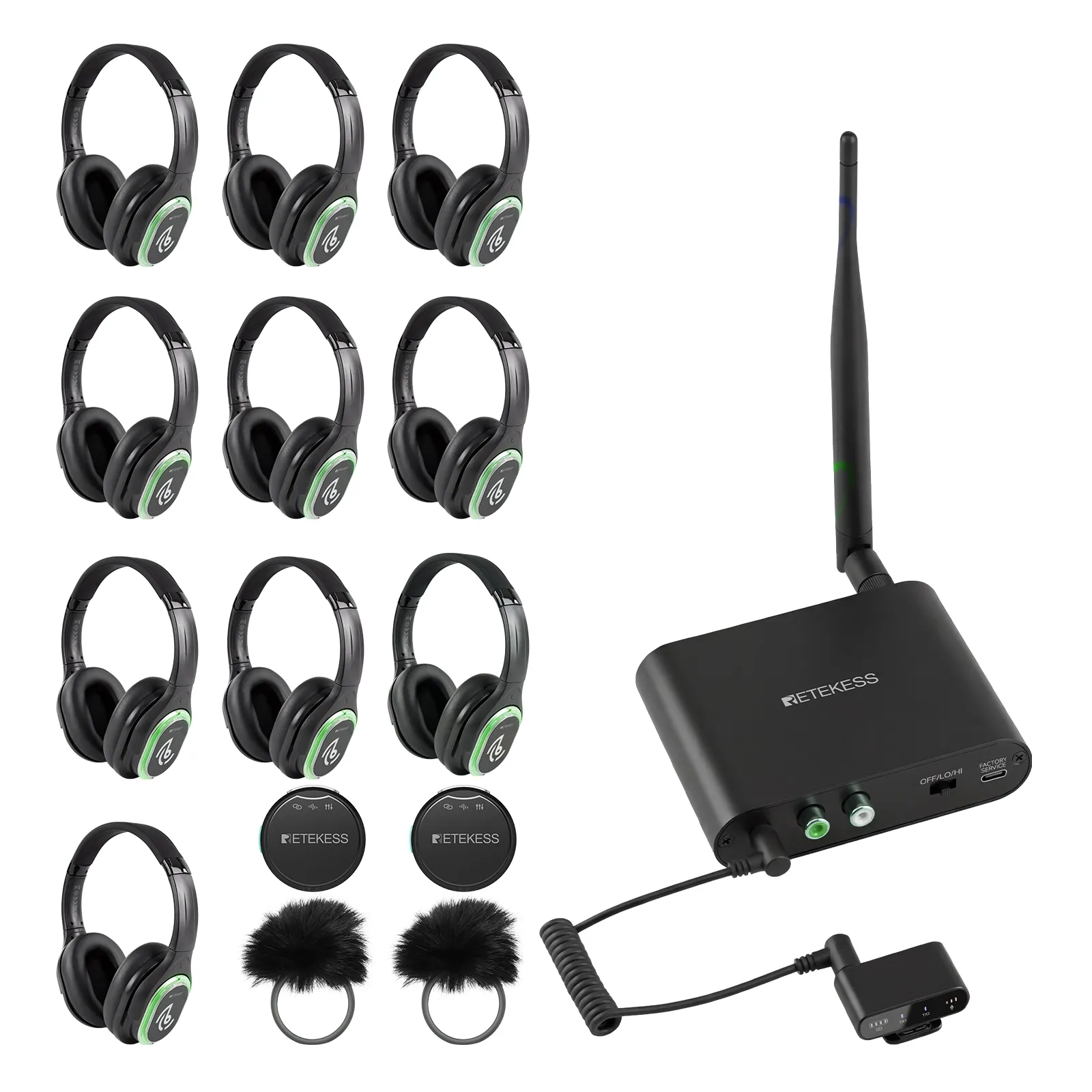
The system should support enough receivers to cover all students and accompanying staff. Most 2.4GHz systems support one transmitter paired with dozens of receivers. Organizers should check the maximum number of devices that can connect at the same time and keep extra capacity for more participants.
Language support requirements
For single-language groups, a basic audio transmission system may be enough. For multilingual groups or trips to non-English speaking regions, choose equipment with interpretation functions. Check the number of supported languages and whether the device offers human interpretation for formal events.
Environmental adaptability
For cross-border school trips, prioritize systems that use the globally compatible 2.4GHz frequency band to avoid legal issues. For outdoor trips and remote areas, choose devices with a strong signal and offline working capability. Equipment should also be lightweight and durable enough for all-day wear.
All-day battery life
A full-day school trip usually lasts 8 to 10 hours. The transmitter and receivers need enough battery life to last the whole day without recharging. Long battery life reduces the number of spare devices organizers need to carry.
Multi-scenario reusability
Good communication equipment works beyond off-campus trips. Schools can also use the same set of devices for campus open days, new student orientation, and internal training. Because the system can be used many times, it offers better value and a higher return on investment.
7. Conclusion: Better Communication Solutions Creates Better Learning Outcomes
Smooth communication is the backbone of safe, effective, and engaging international school trips. It supports daily group management, protects student well-being, and removes language barriers that limit learning. Traditional communication tools may not work well for cross-border school trips because of high costs, unstable connections, and limited functions.
A 2.4GHz audio transmitter and receiver system gives schools a stable and cost-effective way to manage group communication. When used with a tour guide system with interpretation, it creates a full setup for both group control and multilingual learning. These communication solutions for international school trips help schools cut costs, reduce safety risks, and give every student a better learning experience.
Leave a Reply

![[18th Anniversary] 18 Years of Echoing Excellence: Making Communication Easier, Connecting Trust Beyond Borders](https://res.retekess.com/z_file/20260716/retekess-brand-story-making-communication-easier_20260716151044_7682.jpg)
![[18 Years in Wireless Communication] Silent Disco Systems Anniversary Celebration: Top-Selling Headphones & Event Mechanics Revealed!](https://res.retekess.com/z_file/20260713/18-years-in-wireless-communication-silent-disco-systems-anniversary-celebration_20260713175011_5749.webp)
![[Anniversary Carnival] Ding-dong! 18th Anniversary Mega Sale on Guest Paging & Calling Systems: Full Reveal of 12+ Products & Promo Rules!](https://res.retekess.com/z_file/20260713/18th-anniversary-mega-sale-on-guest-paging-calling-systems_20260713175257_0295.webp)
![[Retekess 18th Anniversary Teaser] Tour Guide System Exclusive Perks: Sneak Peek at Event Dates & Mechanics!](https://res.retekess.com/z_file/20260713/retekess-18th-anniversary-tour-guide-system-exclusive-perks--2-_20260713180135_6435.webp)
Follow Us
Pay With


 Google
 Amazon
Comments (0)