
Table of Contents
Factory Tours Where Nobody Asks Questions: The Communication Barrier Costing You Customer Trust
- Retekess
- Jul 23, 2026
A plant manager at a mid-sized automotive parts manufacturer recently shared a troubling pattern. His facility hosted monthly tours for prospective clients, distributors, and engineering partners. The tours were meticulously planned. The production lines were spotless. The safety briefings were thorough. Yet the feedback forms told a consistent story: visitors found the experience "informative but impersonal," and several noted they "had questions but could not ask them."
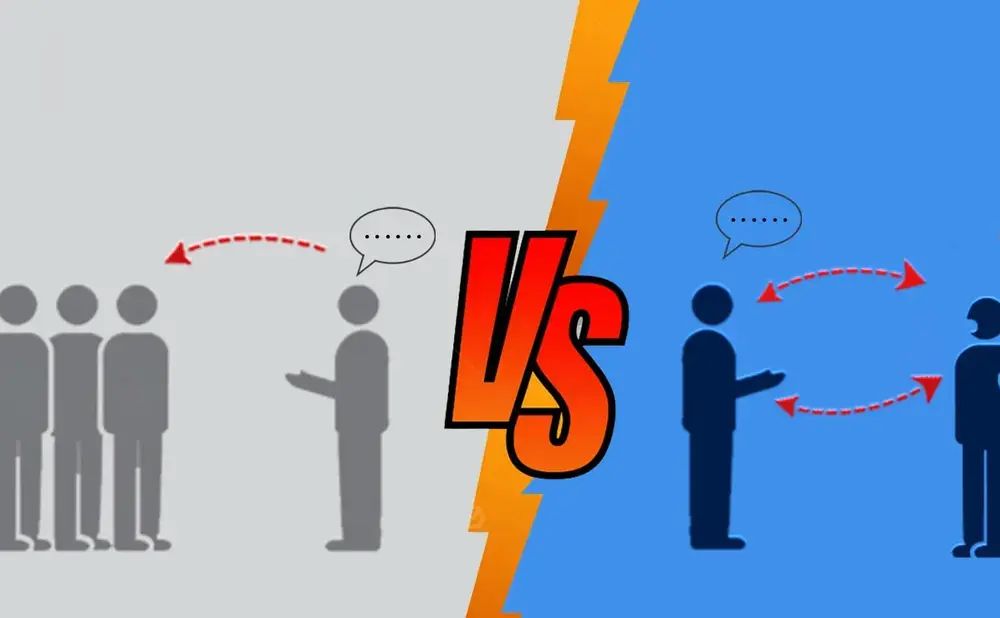
The problem was not the tour content. It was the communication infrastructure. The company used a standard one-way wireless guide system: the plant manager spoke into a transmitter, and visitors listened through earpieces. In theory, this solved the noise problem. The factory floor averaged 82 decibels from stamping presses and CNC machines. Without amplification, a guide would have to shout.
But the one-way system created a different problem. It turned every tour into a broadcast. Visitors became passive receivers. When a question occurred to them—about tolerances, about throughput, about quality control—they had no channel to ask it. They would raise a hand, the guide would not see it, or the ambient noise would swallow the attempt. By the end of the tour, the unasked questions had accumulated into a quiet dissatisfaction. The visitors left informed, but not convinced.
This is the hidden cost of one-way communication in high-noise industrial environments. It is not measured in decibels. It is measured in missed questions, unaddressed concerns, and eroded trust.
Why One-Way Headsets Fail on Noisy Factory Floors
The Broadcast Problem: Turning Visitors Into Passive Audiences
One-way tour guide systems were designed for museums, cathedrals, and quiet historical sites. In those environments, the primary challenge is distance. A guide walks 20 meters ahead of the group and needs a way to project their voice without shouting. The one-way transmitter-to-receiver model solves this elegantly.
Industrial environments are different. The challenge is not distance. It is noise density and interaction complexity. A factory tour is not a monologue. It is a dialogue that happens while moving through a hostile acoustic environment. Prospective clients need to ask about specifications. Safety trainees need to confirm they understood a procedure. Quality auditors need to challenge a claim. These interactions are the core value of the visit.
A one-way system strips away that value. It reduces an expert visitor to a passive listener. It signals, implicitly, that the factory has something to show but nothing to discuss. In B2B relationships, that signal is toxic.
The Noise Math: When 80 dB Becomes a Wall
Factory noise is not uniform. It fluctuates. A stamping press cycles on and off. A forklift passes. An alarm sounds. In these conditions, even a one-way system with noise-canceling microphones struggles. The guide must raise their voice to overcome the ambient spike, which increases vocal strain and degrades audio quality for listeners.
More critically, the visitor cannot respond. If a visitor attempts to ask a question during a noise spike, their voice is buried. The guide might see their lips moving but hears nothing through their own earpiece—because standard one-way receivers do not transmit back.
The result is a communication breakdown that looks like disengagement. Visitors stop asking questions not because they have none, but because they have learned that asking is futile. The tour continues, but the relationship does not deepen.
What Two-Way Audio System Changes on the Factory Floor
From Broadcast to Conversation
Two-way wireless systems restore the dialogue. Every participant carries a device that both receives and transmits. When a visitor has a question, they press a button and speak. Their voice travels back to the guide—and, depending on the system configuration, to the entire group or just the guide.
This changes the psychology of the tour. Visitors are no longer audience members. They are participants. The questions that would have been suppressed in a one-way system surface immediately. A quality manager asks about surface finish standards. A procurement director asks about lead times. A safety officer asks about incident history. Each question is an opportunity to build trust.
Real-Time Safety Confirmation
In safety training tours, two-way communication is not a convenience. It is a compliance necessity. Trainees must confirm understanding of lockout/tagout procedures, chemical handling protocols, and emergency evacuation routes. A one-way system delivers the information. A two-way system verifies that the information was received and understood.
Trainers can ask verification questions mid-tour. Trainees can request clarification before entering a hazardous zone. The system becomes a safety tool, not just a convenience tool.
Large Group Management Without Chaos
Factory tours often split into multiple groups. A one-way system requires each group to have its own guide, and groups cannot interact. A multi-channel two-way system allows several groups to operate on different frequencies in the same facility without cross-talk. It also allows a plant manager to broadcast an announcement to all channels simultaneously—say, an emergency alert or a schedule change—then return groups to their individual conversations.
The Technical Requirements for Industrial Two-Way Audio Systems
Not all two-way wireless systems are suitable for factory environments. Consumer-grade walkie-talkies fail for three reasons: they lack the audio clarity for detailed technical discussion, they are not designed for continuous wear during a 90-minute tour, and they broadcast openly, creating privacy and interference risks.
Industrial tour systems must meet specific criteria:
Full-duplex operation. Half-duplex systems force users to press a button to talk and release to listen. In a dynamic factory environment, this creates awkward pauses and missed interjections. Full-duplex allows simultaneous speaking and listening, which mirrors natural conversation.
Noise-adaptive microphones. The system must distinguish a speaking voice from 80+ dB ambient noise. Adjustable microphone gain and digital signal processing are essential. Without them, every transmission includes a wash of background machinery noise.
Sufficient range and channel capacity. A large manufacturing facility may require 200+ meters of coverage. Multiple tour groups operating simultaneously need dedicated channels to prevent cross-talk.
All-day battery life. A transmitter that dies mid-tour strands the entire group. Receivers with 10+ hours of runtime are the minimum for industrial applications.
Selecting Hardware for Industrial Tour Environments
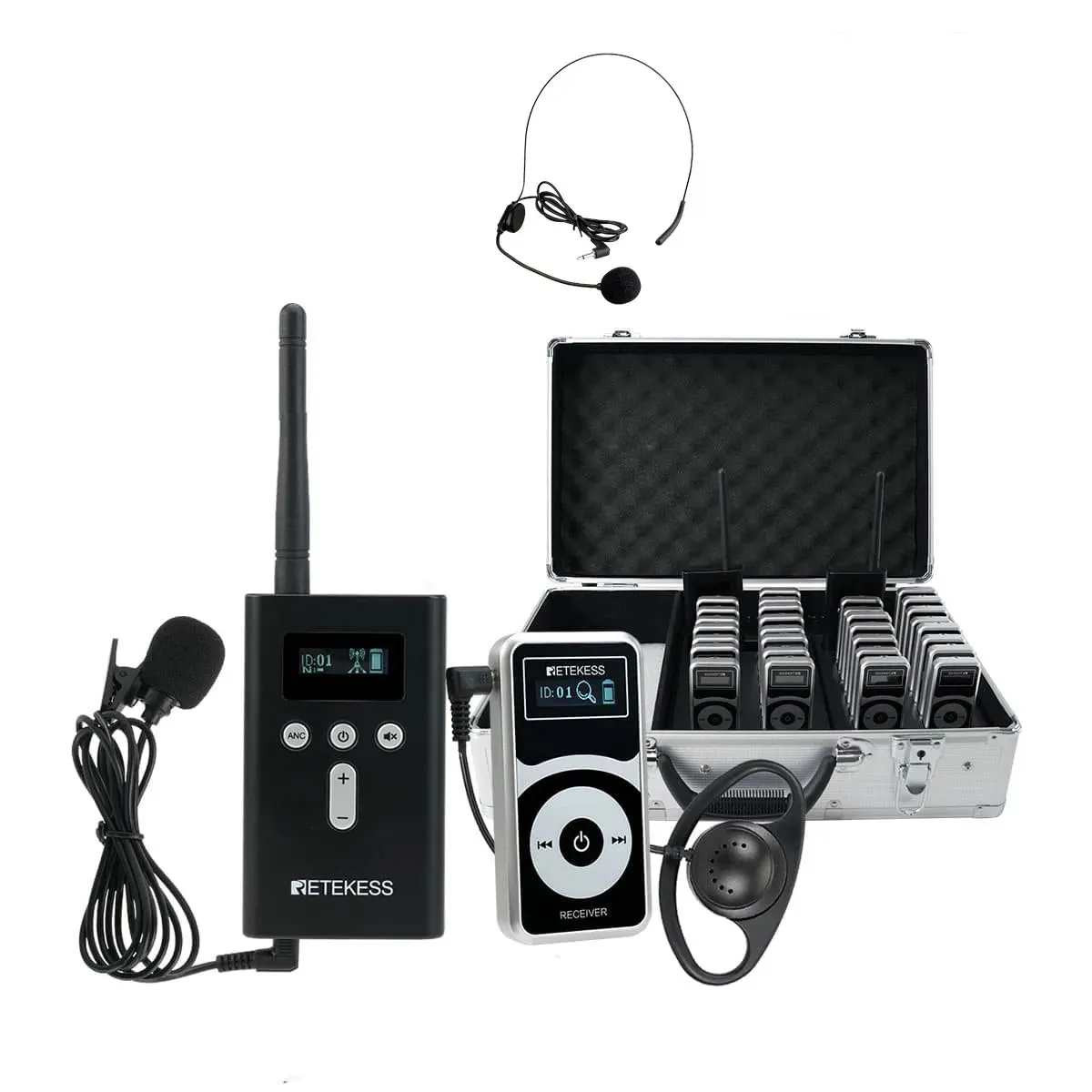
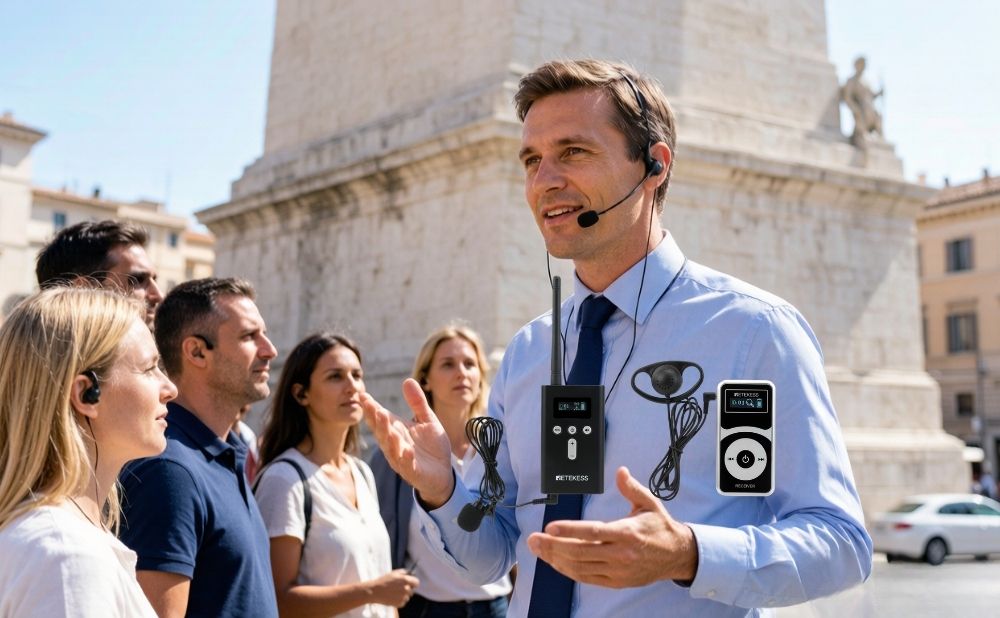
For organizations ready to move beyond one-way systems, several manufacturers offer industrial-grade full-duplex solutions. The Retekess TT126 is one option designed specifically for factory and plant tour environments. It operates in full-duplex mode with a 280-meter range in open conditions, supports 25 discrete channels for multi-group coordination, and features adjustable microphone gain across seven levels—a critical specification for environments where noise fluctuates between 75 and 95 decibels depending on which machines are active. The transmitter runs for 10 hours on a single charge, and the receiver units can operate for up to 70 hours, which covers multi-day training schedules without recharging.
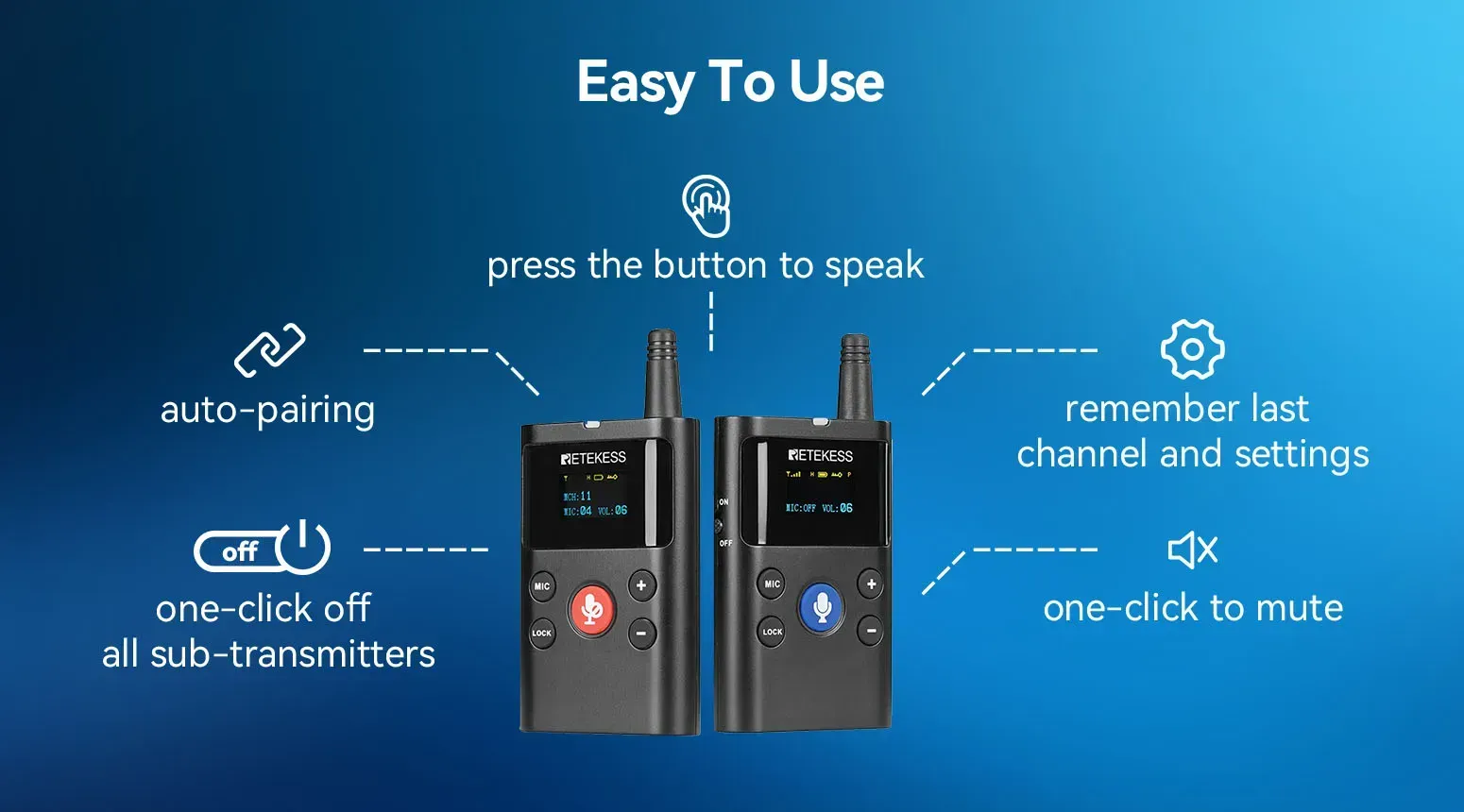
For scenarios requiring even more interactive capacity—such as panel discussions during VIP tours, multidisciplinary training sessions with multiple instructors, or quality audits where three specialists need to speak simultaneously—the Retekess TT129 offers a three-speaker full-duplex configuration. Up to three transmitters can speak at the same time, with all participants hearing every voice clearly. The receiver battery life extends to 120 hours, and the system includes four-level intelligent noise reduction for environments where machinery noise is particularly aggressive.
Implementation: Moving from One-Way to Two-Way Factory Tours
Transitioning from a one-way to a two-way system requires more than hardware replacement. It requires a shift in tour design.
Brief your guides differently. In a one-way system, the guide is a broadcaster. In a two-way system, the guide is a facilitator. Train guides to pause every 3–4 minutes for questions, to call on specific visitors by name, and to use silence as a tool—allowing time for questions to surface.
Set expectations at the start. Tell visitors explicitly that this is a two-way system and that questions are not just welcome but expected. This permission changes behavior.
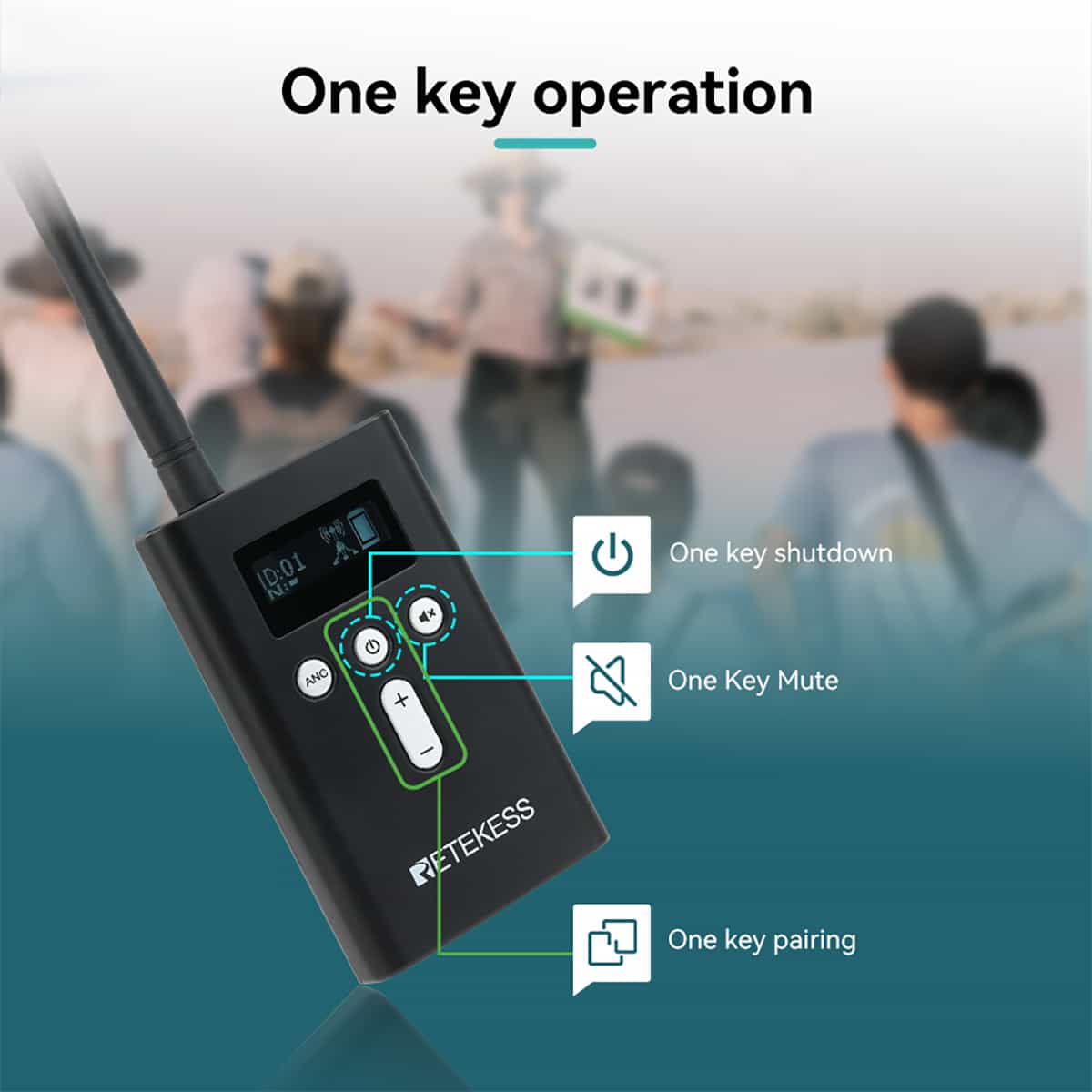
Use the mute function strategically. Full-duplex systems include mute capabilities for the guide. Use this during safety briefings or when passing through extremely noisy zones where questions would be inaudible anyway. Unmute when entering discussion-friendly areas.
Document the questions. Assign a staff member to record questions asked during the tour. These questions are market intelligence. They reveal what visitors actually care about, which often differs from what the marketing team thinks they care about.
Reduced safety incidents. Trainees who confirm understanding of safety protocols in real time are less likely to violate them later. The cost of a single preventable incident—medical, legal, reputational—far exceeds the cost of a two-way communication system.

Conclusion
The factory tour is a high-stakes communication event. It is where technical credibility is established, safety culture is demonstrated, and commercial relationships are deepened. A one-way headset system treats this event as a broadcast. It solves the noise problem while creating a trust problem.
Two-way full-duplex systems restore the dialogue. They allow visitors to challenge, to clarify, and to confirm. They turn a monologue into a conversation, and a visitor into a participant. In industrial environments where noise has always been the enemy of communication, the right technology does not just amplify voices. It reconnects them.
Leave a Reply



![[18th Anniversary] 18 Years of Echoing Excellence: Making Communication Easier, Connecting Trust Beyond Borders](https://res.retekess.com/z_file/20260716/retekess-brand-story-making-communication-easier_20260716151044_7682.jpg)
![[18 Years in Wireless Communication] Silent Disco Systems Anniversary Celebration: Top-Selling Headphones & Event Mechanics Revealed!](https://res.retekess.com/z_file/20260713/18-years-in-wireless-communication-silent-disco-systems-anniversary-celebration_20260713175011_5749.webp)
![[Anniversary Carnival] Ding-dong! 18th Anniversary Mega Sale on Guest Paging & Calling Systems: Full Reveal of 12+ Products & Promo Rules!](https://res.retekess.com/z_file/20260713/18th-anniversary-mega-sale-on-guest-paging-calling-systems_20260713175257_0295.webp)
![[Retekess 18th Anniversary Teaser] Tour Guide System Exclusive Perks: Sneak Peek at Event Dates & Mechanics!](https://res.retekess.com/z_file/20260713/retekess-18th-anniversary-tour-guide-system-exclusive-perks--2-_20260713180135_6435.webp)
Follow Us
Pay With


 Google
 Amazon
Comments (0)