
Table of Contents
How AI Translation Devices Are Transforming International Travel Services in 2026
- Retekess
- Aug 6, 2026
Global outbound tourist arrivals hit a record high of 1.52 billion in 2025. Meanwhile, according to the Precedence Research / GM Insights, AI translation device market surpassed $1.9 billion, with 28.2% of revenue — its largest single segment — generated by travel and tourism. These two figures are no coincidence. Take Japan for example: it welcomed 42.68 million overseas visitors in one year, many from English-speaking regions, yet its service industry suffers extremely low English proficiency rates. Language barriers have evolved from minor inconveniences into critical industry pain points.
A visitor may have questions about a tour schedule. A hotel guest may need help with a service request. A museum visitor may want to understand the story behind an exhibit.
These conversations happen every day. They are simple moments, but they directly affect the visitor experience.
An AI translation device is becoming a practical solution. It helps staff communicate with international visitors in real time, reducing language barriers and improving service efficiency.
Why Traditional Translation Methods Are Not Enough for Modern Tourism
Human Interpreters Are Not Always Practical
Professional interpreters provide accurate translation, but they are not suitable for every tourism scenario.
Hiring interpreters can increase operating costs. It also requires advance scheduling and coordination.
For large international conferences or important business meetings, professional interpretation is necessary. However, daily tourism services often involve many small conversations.
A tour guide may need to answer questions from different visitors. A hotel employee may need to communicate with guests from multiple countries. A museum staff member may need to explain information to international visitors.
These situations require a faster and more flexible communication method.
This is where translation devices for businesses can provide additional support.
Fixed Translation Solutions Cannot Handle Every Situation
Traditional tourism translation methods often depend on fixed content.
For example, audio guides can provide information in multiple languages, but they cannot answer unexpected questions.
A visitor may ask:
“Why is this building important?”
“What is special about this local tradition?”
“Can you recommend another place to visit?”
These questions require real communication. Modern tourism is not only about providing information. It is about creating connections between people.
An effective tourism translation solution should support flexible conversations, not just prepared translations.
How AI Translation Devices Improve International Visitor Experiences
What Is an AI Translation Device?
Artificial intelligence is changing the way people communicate across languages. In the past, multilingual communication mainly depended on human interpreters, printed materials, or fixed-language audio guides. These methods can still be valuable in specific situations, but they are often difficult to apply in daily tourism services where conversations happen anytime and anywhere.
An AI translation device is designed to solve this challenge. It combines technologies such as automatic speech recognition, artificial intelligence language processing, machine translation, and voice synthesis to create real-time communication between people who speak different languages. When a person speaks, the device captures the voice, analyzes the meaning, converts it into the target language, and plays the translated result through audio output.
How AI Translation Devices Support Tourism Communication
Tourism is a people-focused industry. Communication does not always happen in controlled environments.
A visitor may ask a sudden question at a scenic spot.
A guest may need help at a hotel reception.
A tour guide may need to explain local culture to international visitors.
These conversations are unpredictable. They cannot always rely on fixed translation content.
These situations cannot always be solved by traditional translation methods. They require flexible communication support that can adapt to different environments.
This is where AI translation devices create new value. They are not designed to replace professional interpreters in formal conferences. Instead, they provide tourism businesses with a practical communication tool for daily service scenarios.
Why Tourism Businesses Are Turning Toward AI Translation Devices
Tourism is different from many other industries because service quality often depends on direct human interaction. A visitor’s impression of a destination is not only shaped by attractions, but also by how easily they can communicate with local staff.
Language barriers can create small problems that influence the overall experience. A guest may misunderstand hotel instructions. A visitor may miss important information during a tour. A traveler may hesitate to ask questions because communication feels difficult.
For tourism businesses, solving these small communication gaps can create significant improvements in customer satisfaction.
An AI translation device provides a bridge between service teams and international visitors. It allows employees with different language abilities to provide more inclusive service without requiring every staff member to become multilingual.
This is especially valuable for businesses that receive international visitors regularly but cannot maintain large multilingual teams.
How AI Translation Devices Improve Different Tourism Scenarios
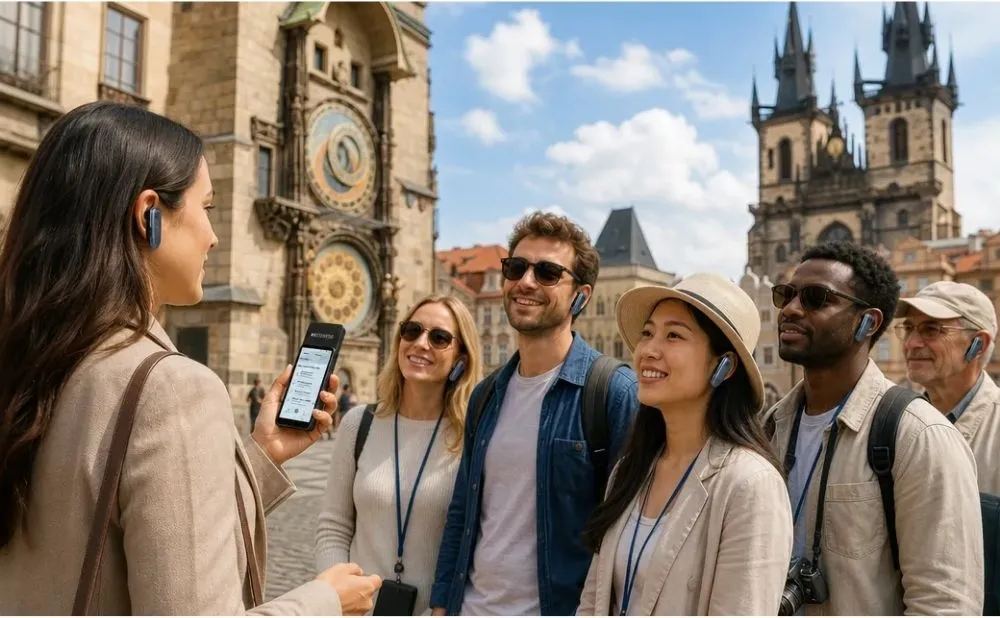
An AI translation device helps tourism businesses provide real-time multilingual support throughout the visitor journey. From welcoming international guests to answering questions during activities, it allows staff members to communicate more naturally and efficiently.
Travel Agencies: Supporting International Tour Groups
When a group includes visitors from different countries, relying on one language can limit participation. Hiring multiple interpreters may increase costs and make tour planning more complicated.
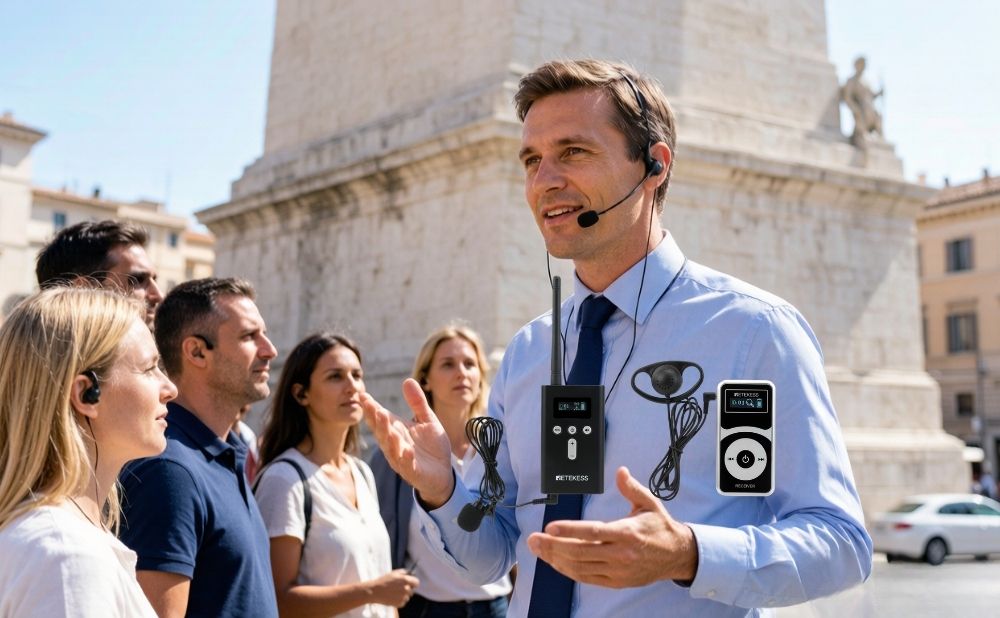
An AI translation device provides travel teams with a flexible communication option. Guides can explain information more efficiently, while international visitors can better understand the content and participate in conversations.
Museums and Attractions: Creating Better Cultural Experiences
Traditional audio guides can solve basic language needs, but they usually provide fixed content. They cannot respond when visitors ask additional questions or want deeper explanations.
An AI translation device creates a more interactive experience. Staff members can communicate directly with international visitors and provide additional information based on their interests.
International Events and Business Tourism
Compared with traditional interpretation arrangements, AI translation devices provide more flexibility for informal conversations and mobile communication scenarios.
A professional multilingual communication solution helps organizations reduce language barriers and improve interaction quality. It can support communication beyond conference rooms and help businesses create smoother international connections.
What Tourism Businesses Should Look for in an AI Translation Device
Choosing an AI translation device is not only about translation accuracy. For tourism businesses, the right solution needs to match real service environments.
Language Support for International Visitors
Tourism businesses often serve visitors from multiple regions. A useful AI translation device should support a wide range of languages to meet different communication needs.
Simple Operation for Different Staff Members
A practical AI translation device should be easy to understand and operate. Staff should be able to start communication quickly without spending long periods on training.
Portable Design for Flexible Tourism Environments
Tourism communication does not always happen at a fixed location. A portable AI translation device allows employees to carry communication support wherever it is needed.
Retekess TT136: A Smart AI Translation Solution for Global Communication
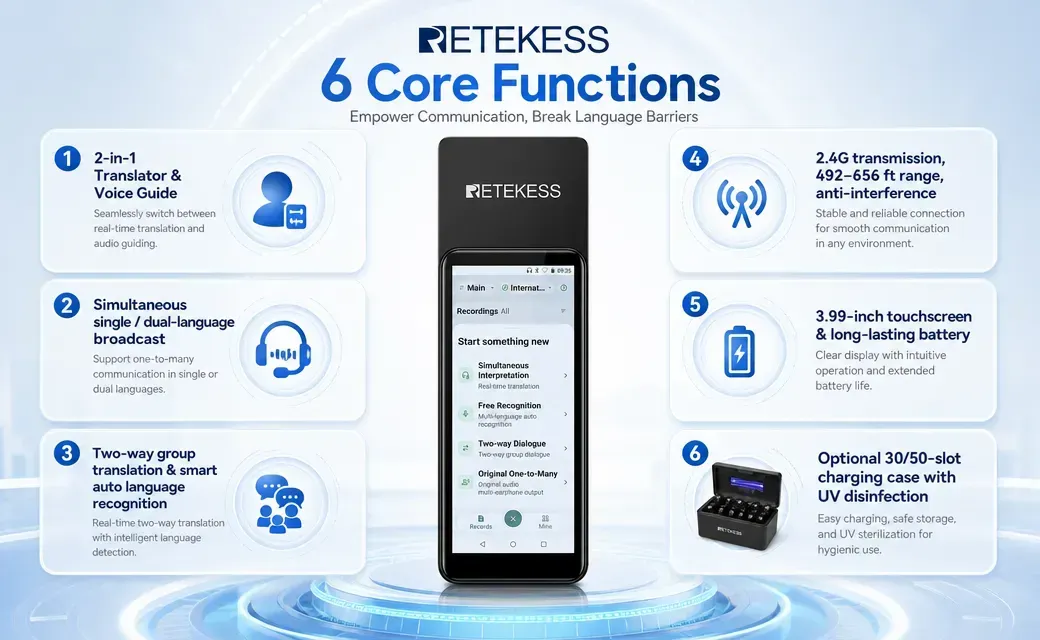
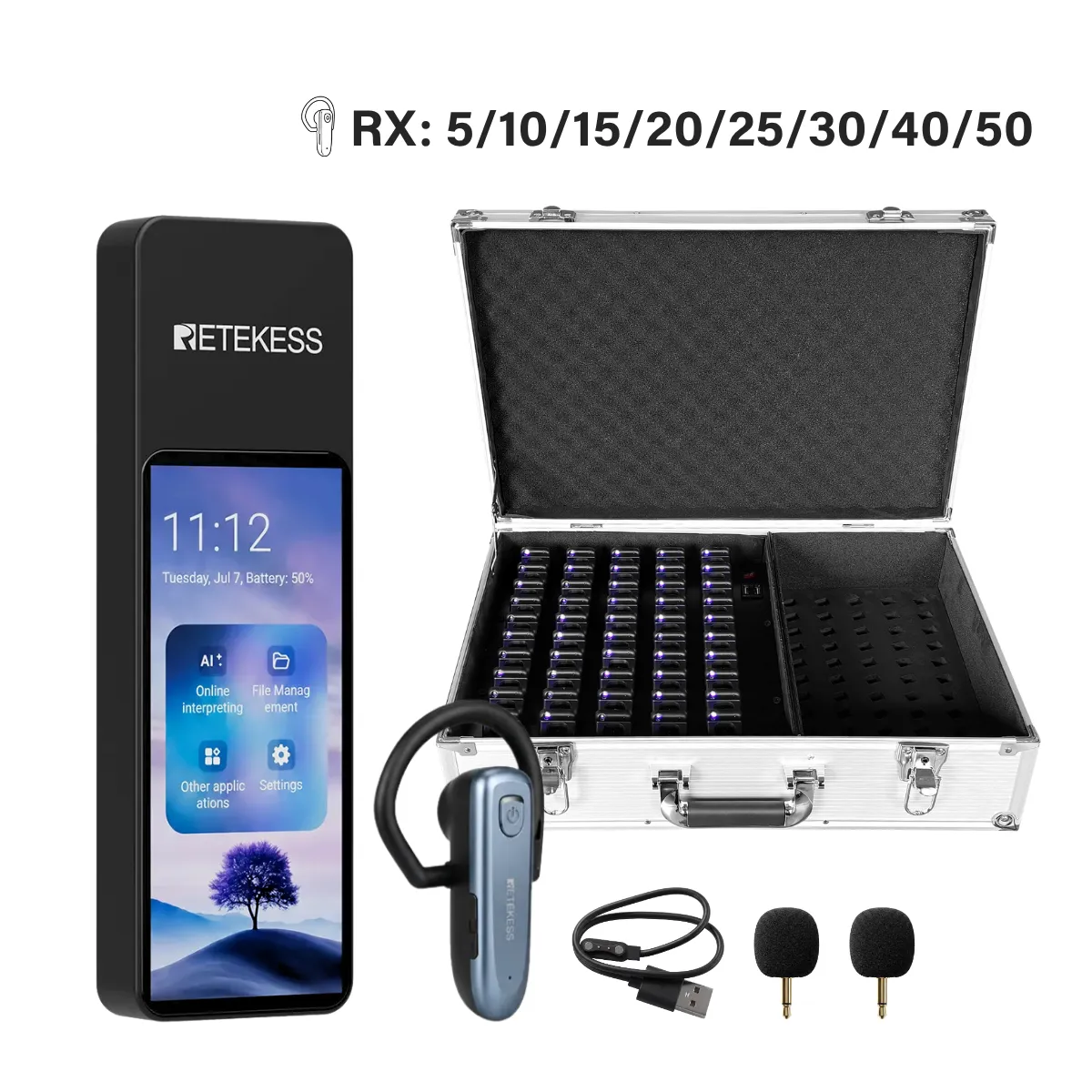
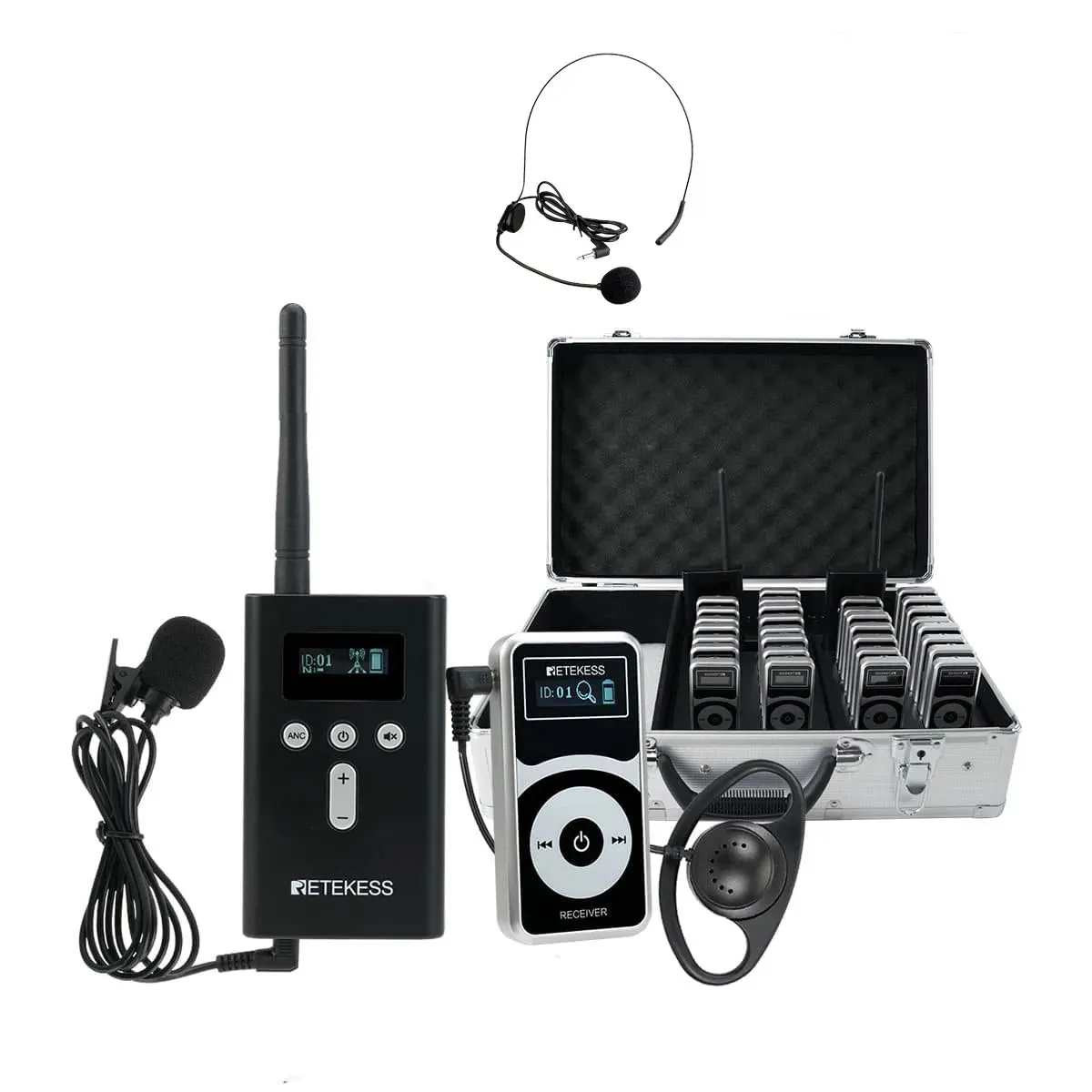
For tourism businesses looking for a flexible multilingual communication solution, Retekess TT136 all-in-one AI translation & audio guide system stands as your ideal solution, supporting 120 global languages..
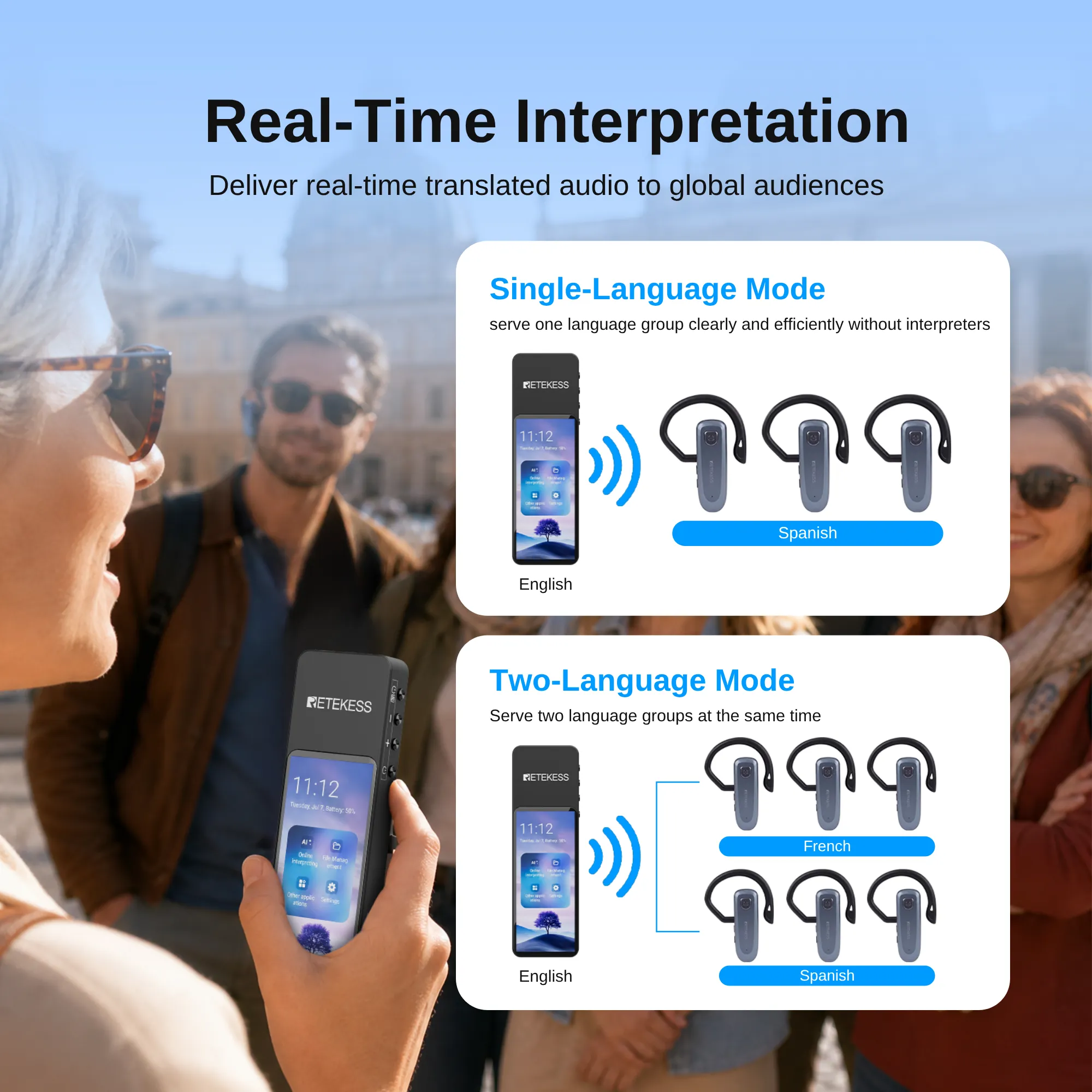
Unlike traditional interpretation systems designed mainly for large conferences, TT136 focuses on flexible communication scenarios where quick interaction is needed. Built with bidirectional real-time translation and switchable dual-language broadcast, it enables instant face-to-face interaction.
Powered by advanced AI translation, it eases language barriers and lifts service quality without full reliance on hired interpreters. Beyond pure translation functions, TT136 bridges cross-cultural communication to deliver smoother, more welcoming experiences for international tourists.
Conclusion: AI Translation Devices Are Becoming Essential Tools for Modern Tourism
The future of tourism is not only about attracting more international visitors. It is also about creating experiences where people from different countries can connect more easily.
Language has always been an important part of travel. It influences how visitors understand cultures, interact with local communities, and remember their journeys.
AI translation devices are becoming an important tool for businesses that want to improve international service capabilities.
For businesses preparing to upgrade their communication tools, 2026 is a valuable opportunity. Retekess is celebrating its 18th anniversary celebration, with special offers available during this period. Tourism companies and international service providers can explore smarter communication solutions while taking advantage of the anniversary promotion.
Better tourism experiences begin with better communication.
Leave a Reply

![[18th Anniversary] 18 Years of Echoing Excellence: Making Communication Easier, Connecting Trust Beyond Borders](https://res.retekess.com/z_file/20260716/retekess-brand-story-making-communication-easier_20260716151044_7682.jpg)
![[18 Years in Wireless Communication] Silent Disco Systems Anniversary Celebration: Top-Selling Headphones & Event Mechanics Revealed!](https://res.retekess.com/z_file/20260713/18-years-in-wireless-communication-silent-disco-systems-anniversary-celebration_20260713175011_5749.webp)
![[Anniversary Carnival] Ding-dong! 18th Anniversary Mega Sale on Guest Paging & Calling Systems: Full Reveal of 12+ Products & Promo Rules!](https://res.retekess.com/z_file/20260713/18th-anniversary-mega-sale-on-guest-paging-calling-systems_20260713175257_0295.webp)
![[Retekess 18th Anniversary Teaser] Tour Guide System Exclusive Perks: Sneak Peek at Event Dates & Mechanics!](https://res.retekess.com/z_file/20260713/retekess-18th-anniversary-tour-guide-system-exclusive-perks--2-_20260713180135_6435.webp)
Follow Us
Pay With


 Google
 Amazon
Comments (0)