
Table of Contents
How a Tour Guide System for Summer Camps Solves Head Count Panic
- Retekess
- Sep 11, 2026
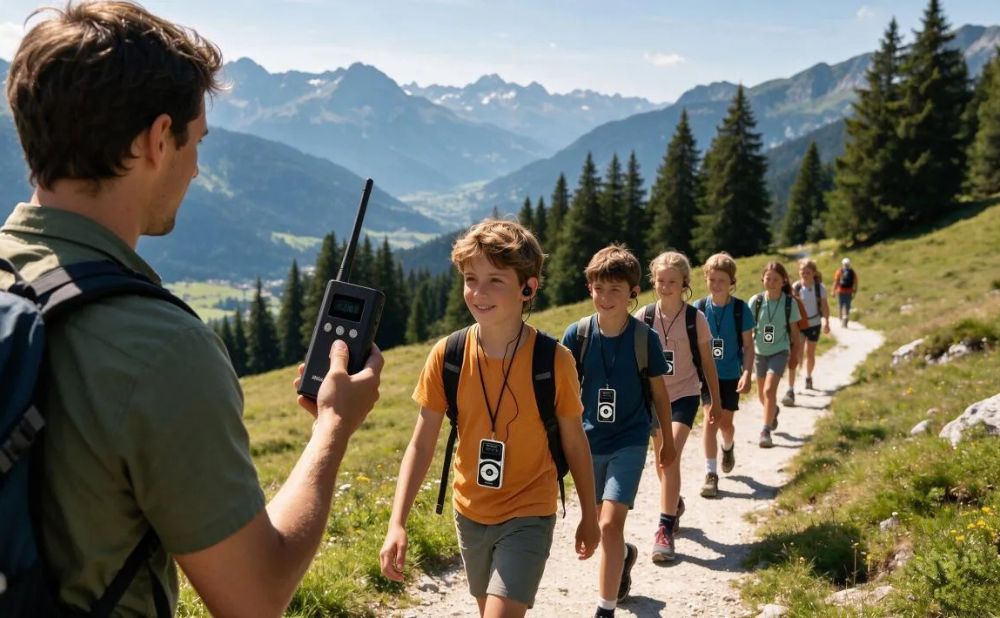
For summer camp directors across the UK, France and Germany, running programmes in the Alps or dense forests means balancing fun with non-stop safety pressure. Stragglers wander off, mobile signal cuts out, and slow head counts can turn a routine hike into a stressful situation fast. A tour guide system for summer camps has emerged as a reliable fix for these pain points, replacing outdated tools with proactive, real-time group management.
Core Safety Pain Points for Remote Summer Camps
Outdoor adventure settings amplify three key risks that directly impact child safety and business reputation. These issues are the top reason operators invest in a tour guide system for summer camps.
Vast Terrain Creates Tracking Gaps
Alpine trails and forest routes stretch for kilometres, with trees and elevation changes breaking line of sight. Traditional head counts take 10–15 minutes per stop, slowing activities and leaving gaps where children can wander off. Staff cannot stay connected to spread-out groups with basic tools, making consistent group management difficult. A tour guide system for summer camps eliminates these gaps by keeping every camper connected across long distances.
Poor Connectivity Delays Emergency Response
Most remote camp zones have zero or unreliable mobile signal. When weather shifts, a child is injured, or a group strays from route, there is no fast way to alert all staff and campers at once. Slow safety communication delays evacuation coordination and raises risk during time-sensitive incidents. This makes a tour guide system for summer camps a far more reliable safety tool than mobile-dependent solutions.
Parent Anxiety Erodes Booking Trust
Modern parents expect real-time safety reassurance. Operators field daily enquiries about camper whereabouts, and even minor delays in updates can damage booking confidence and word-of-mouth. Adopting a tour guide system for summer camps gives parents visible proof of your safety commitment, helping build long-term customer loyalty.
Why a Tour Guide System for Summer Camps Beats Traditional Tools
For years, teams have relied on shouted instructions and basic walkie-talkies to manage groups. But as safety regulations tighten and camps grow in popularity, these makeshift tools no longer meet basic standards. A tour guide system for summer camps outperforms basic tools in every critical category.
Side-by-Side Tool Comparison
The table below compares common communication solutions for outdoor camp operations:
|
Comparison Dimension |
Shouting + Basic Walkie-Talkies |
Professional Tour Guide System |
|
Coverage Range |
Short, easily blocked by terrain; only reaches staff |
Long-range UHF transmission; covers every camper |
|
Alert Speed |
Slow, line-of-sight dependent; causes staff fatigue |
One-tap whole-group broadcast; instant delivery |
|
Kid Wearability |
Bulky radios, easy to lose; unsuitable for young kids |
Lightweight headset; comfortable for all-day wear |
|
Outdoor Performance |
Prone to static, wind noise and cross-talk |
Noise-cancelling audio; clear in wind and woodland |
|
Emergency Response |
Slow, requires locating each group separately |
Instant mass notification; fast assembly |
|
Efficiency |
Frequent head counts; lots of lost activity time |
Continuous guidance; far fewer roll call stops |
Key Benefits of a Tour Guide System for Summer Camps
Purpose-built wireless audio systems solve all three core safety pain points, making them a top investment for outdoor youth programmes.
Real-Time Whole-Group Guidance
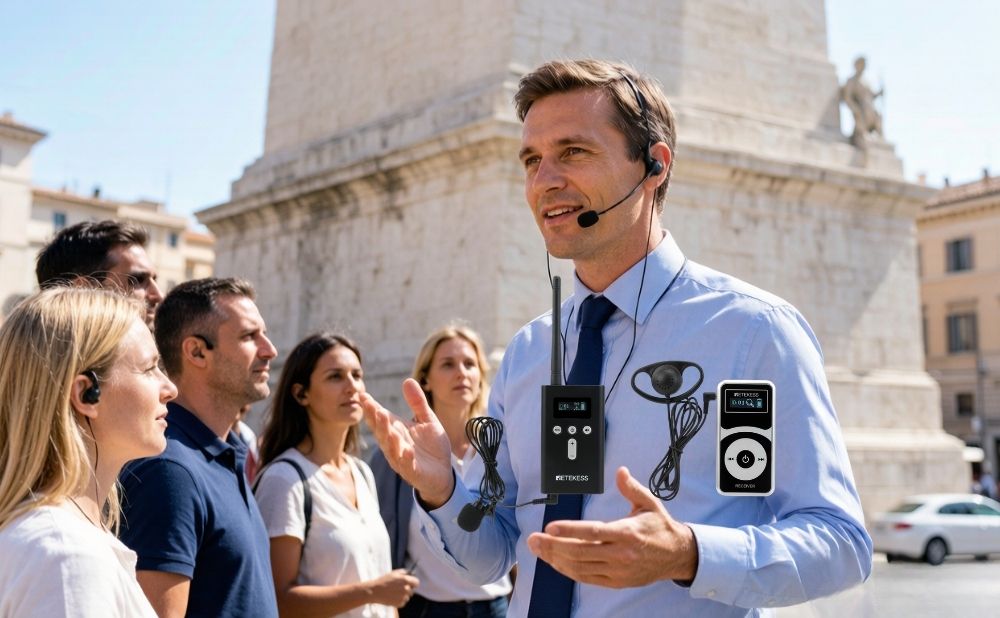
Leaders speak normally into a transmitter, and every camper hears instructions clearly through their individual headset — no shouting, no repeating, no lost stragglers. This eliminates long head count pauses and keeps activities on schedule. A tour guide system for summer camps streamlines day-to-day operations and lets staff focus on the camp experience, not roll calls.
Instant Alerts in No-Signal Zones
UHF-based systems operate independently of mobile networks, so they work reliably in the most remote valleys and woodlands. In the event of sudden storms, wildlife encounters or medical needs, leaders can broadcast an immediate assembly instruction to every camper in seconds. This level of speed is impossible with basic radios, making a tour guide system for summer camps a vital safety upgrade.
Stronger Parent Trust & Professionalism
Having a structured, dedicated safety communication system demonstrates compliance with duty-of-care standards. Operators can share their safety protocol with parents upfront, reducing daily enquiry volume and building long-term booking loyalty. A tour guide system for summer camps signals professionalism and sets operators apart from competitors.
How to Pick the Right Tour Guide System for Summer Camps
Not all audio systems are built for rugged outdoor use. When evaluating options for your programme, focus on three non-negotiable features to ensure long-term value and reliability. A good tour guide system for summer camps will check all three boxes without compromise.
3 Non-Negotiable Features for Outdoor Use
- Consistent wide coverage: Look for systems with stable transmission across elevation changes and dense tree cover, not just open flat spaces.
- Kid-friendly wearability: Lightweight, secure headsets that stay in place during running, climbing and active play are non-negotiable for youth camps.
- All-day battery life: Systems that last a full camp day on a single charge reduce maintenance work and eliminate mid-activity charging breaks.
Top Recommendation: Retekess T130P-T131P System
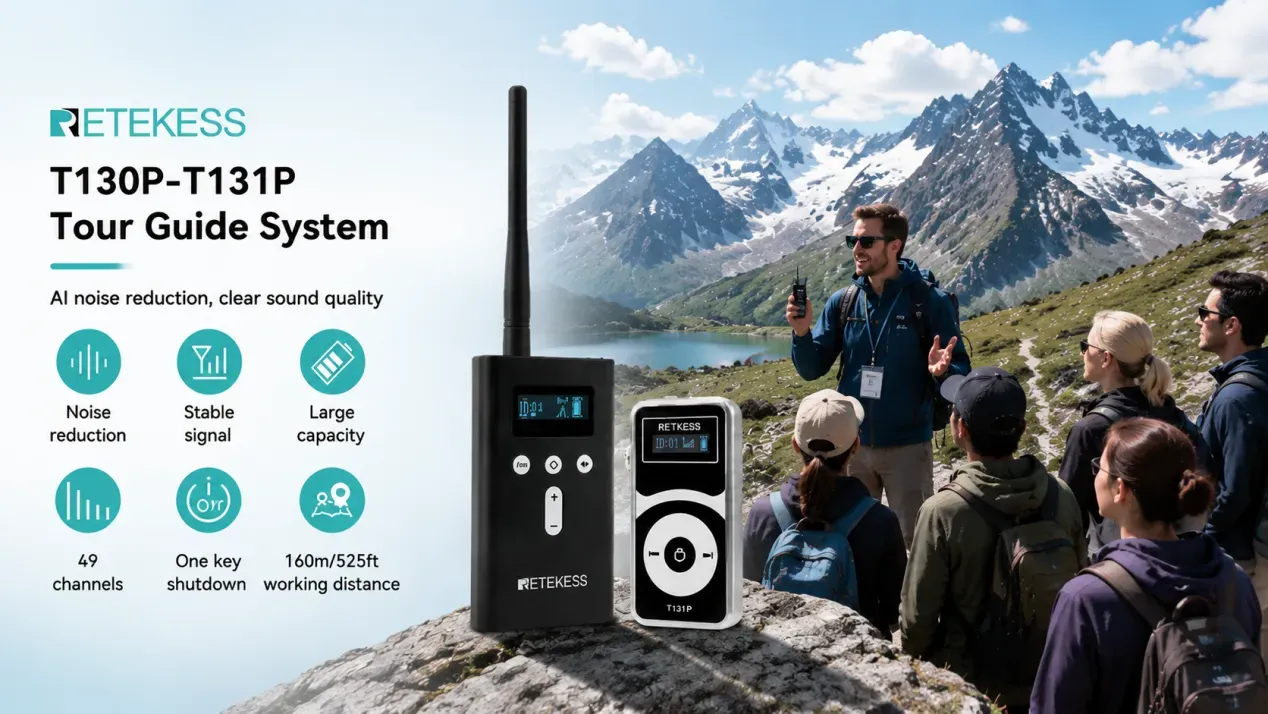
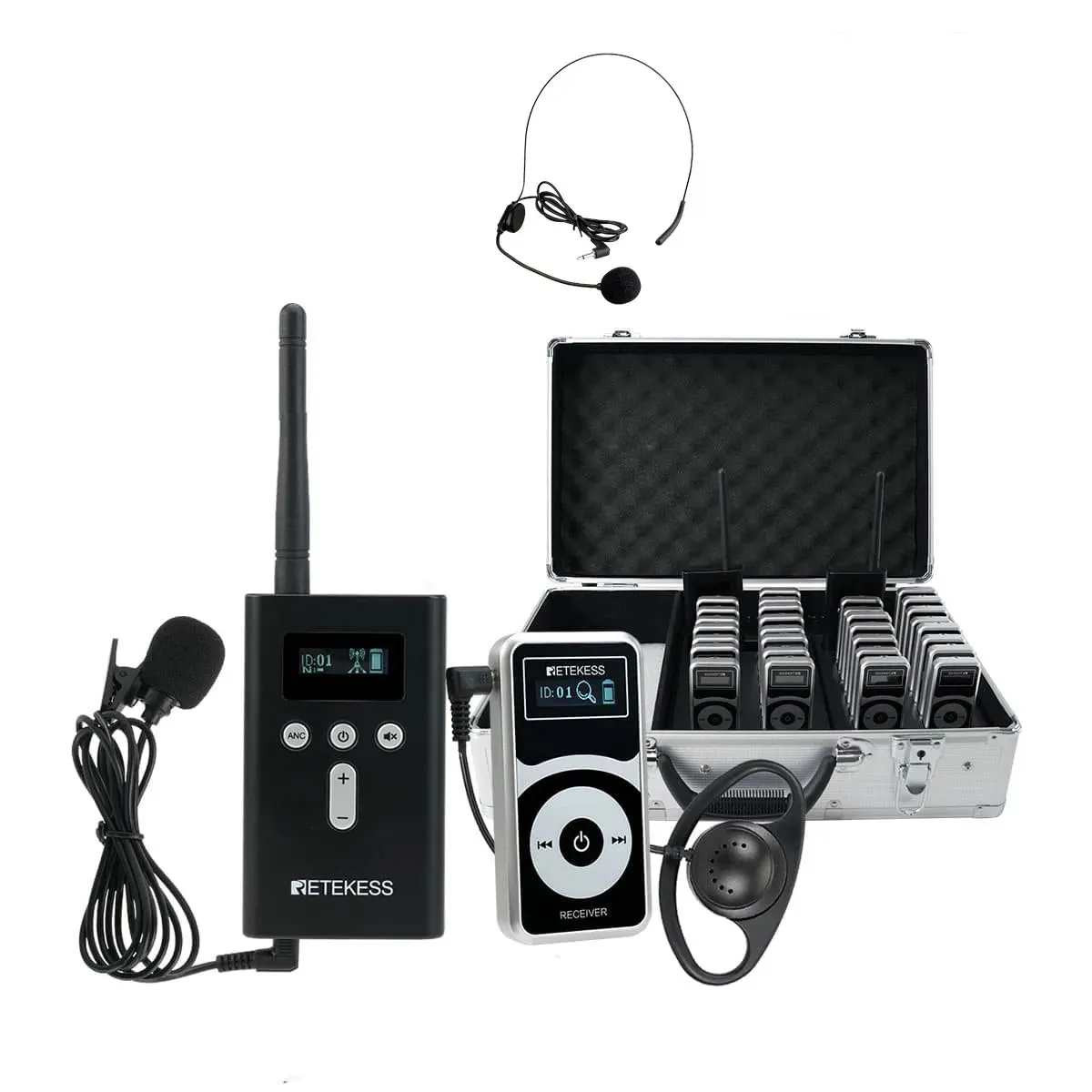
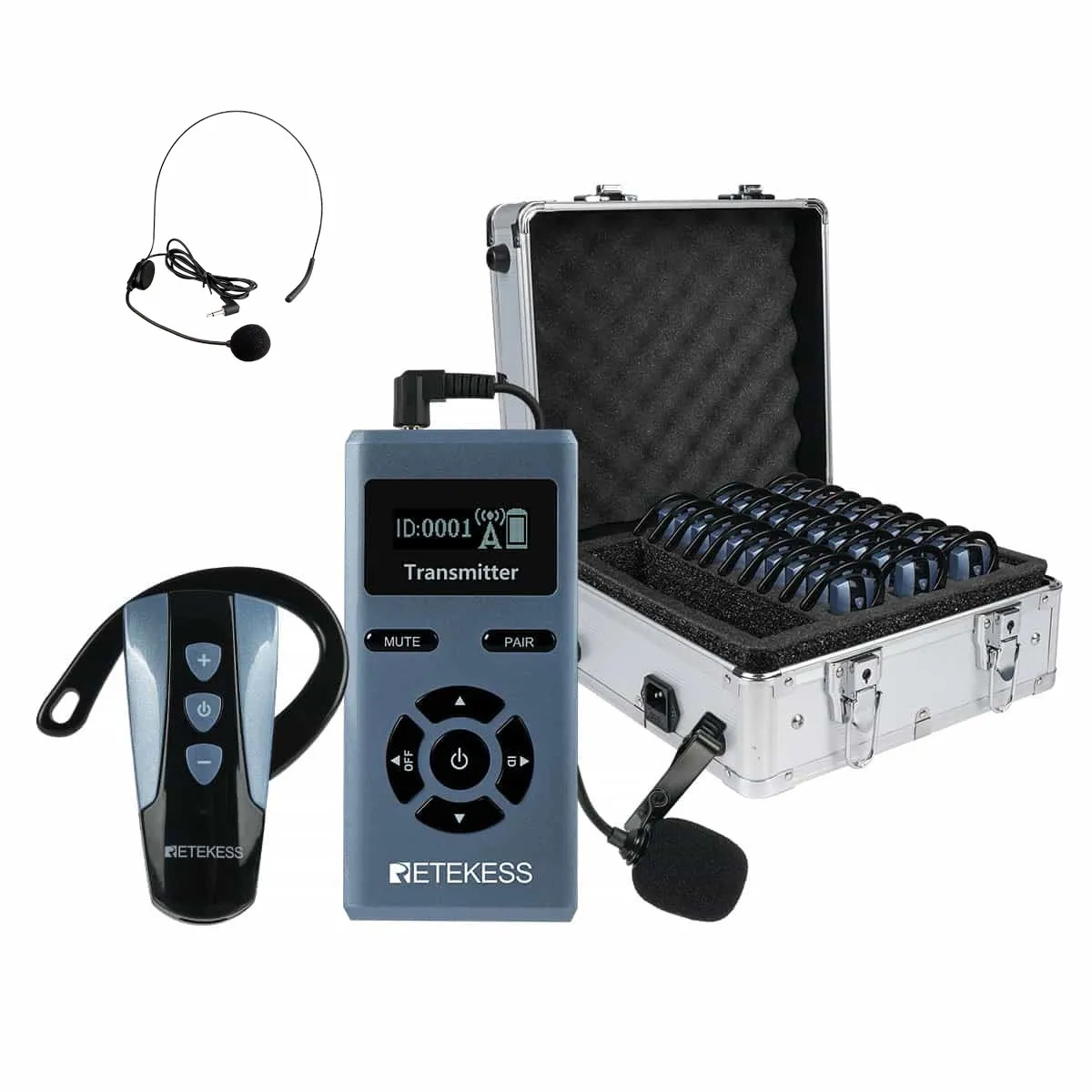
When testing options for outdoor youth camps, the Retekess T130P-T131P stands out as a reliable tour guide system for summer camps built specifically for rugged, group-focused environments.
With a 160-metre working range, its stable transmission covers wide alpine meadows and forested trails consistently, even with elevation changes and dense tree cover. Intelligent noise reduction technology cuts through wind and foliage to deliver clear, crisp voice instructions. As a tour guide system for summer camps, it balances performance, durability and ease of use perfectly.
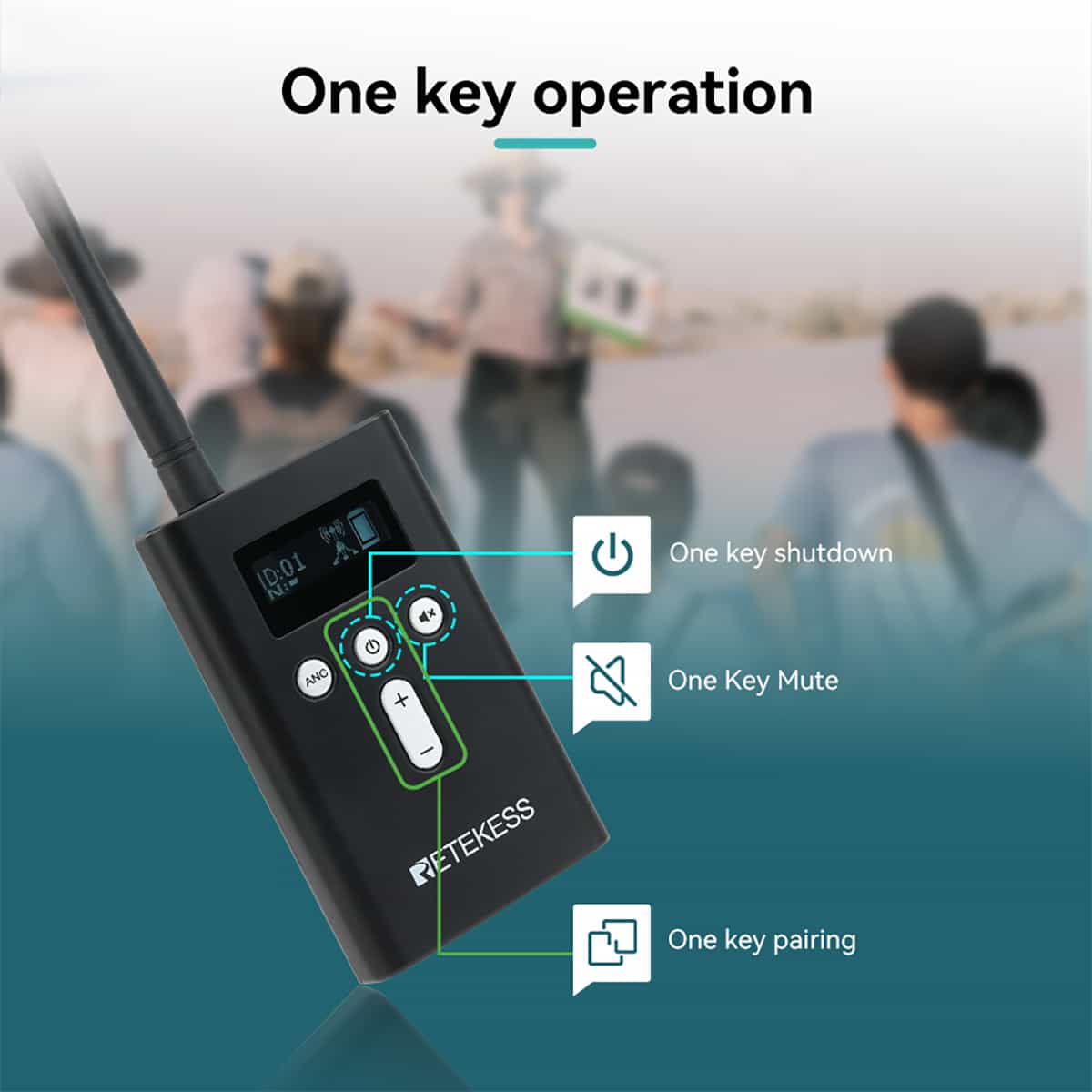
The D-shaped ear hook receivers are lightweight, fit both left and right ears, and stay secure during active play. Operation is simple: one-key pairing lets staff set up dozens of receivers in minutes, and large tactile buttons work even with gloved hands. Battery life supports full-day programmes, with 20 hours for the transmitter and 36 hours for receivers on a single charge. It is a practical tour guide system for summer camps of all sizes, from small groups to large multi-route programmes.
Move Beyond Head Count Panic for Your Summer Camp
Running outdoor summer camps in remote alpine and forest environments does not have to mean constant head count panic and safety stress. Upgrading to a professional tour guide system for summer camps is one of the most impactful ways to streamline operations, reduce risk, and build parent trust.
The right system delivers reliable audio, kid-friendly wearability and emergency-ready communication for operators across Western Europe. If you want to move from reactive head counts to proactive real-time safety, a wireless tour guide system for summer camps is a long-term investment that protects both your campers and your business reputation.
Frequently Asked Questions About Summer Camp Tour Guide Systems
1. Can a summer camp tour guide system work without cell service?
Yes. A summer camp tour guide system can operate without mobile or Wi-Fi networks. Systems using UHF radio transmission communicate directly between the transmitter and receivers, making them suitable for mountain trails, forests, remote campsites, and other areas with limited or no cellular coverage.
2. How many campers can use a summer camp tour guide system at once?
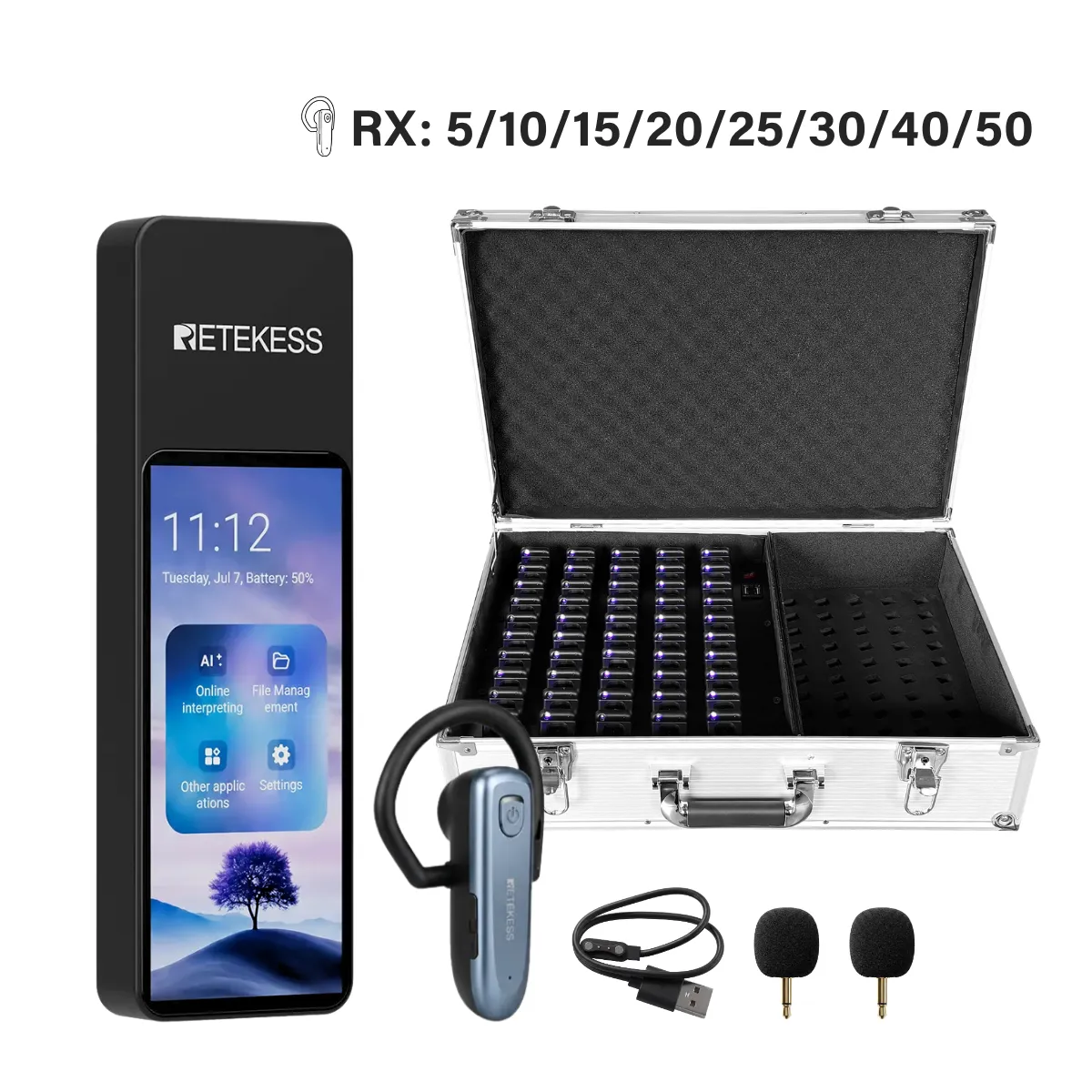
A summer camp tour guide system can support dozens of receivers from a single transmitter, depending on the specific model. The Retekess T130P-T131P system also supports multiple channels, allowing camp organizers to divide larger groups into separate teams or activity routes.
3. Is a summer camp tour guide system suitable for young children?
Yes. A summer camp tour guide system with a lightweight ear-hook receiver can be suitable for children during guided outdoor activities. The ear-hook design helps keep the receiver securely in place during walking, running, and climbing, while the lightweight housing reduces the burden of extended wear.
4. Does a summer camp tour guide system improve group management?
Yes. A summer camp tour guide system allows one guide to deliver instructions and announcements to multiple campers at the same time. This reduces the need to repeat information for smaller groups and helps guides communicate clearly while leading outdoor activities or moving between different locations.
Leave a Reply

![[18th Anniversary] 18 Years of Echoing Excellence: Making Communication Easier, Connecting Trust Beyond Borders](https://res.retekess.com/z_file/20260716/retekess-brand-story-making-communication-easier_20260716151044_7682.jpg)
![[18 Years in Wireless Communication] Silent Disco Systems Anniversary Celebration: Top-Selling Headphones & Event Mechanics Revealed!](https://res.retekess.com/z_file/20260713/18-years-in-wireless-communication-silent-disco-systems-anniversary-celebration_20260713175011_5749.webp)
![[Anniversary Carnival] Ding-dong! 18th Anniversary Mega Sale on Guest Paging & Calling Systems: Full Reveal of 12+ Products & Promo Rules!](https://res.retekess.com/z_file/20260713/18th-anniversary-mega-sale-on-guest-paging-calling-systems_20260713175257_0295.webp)
![[Retekess 18th Anniversary Teaser] Tour Guide System Exclusive Perks: Sneak Peek at Event Dates & Mechanics!](https://res.retekess.com/z_file/20260713/retekess-18th-anniversary-tour-guide-system-exclusive-perks--2-_20260713180135_6435.webp)
Follow Us
Pay With


 Google
 Amazon
Comments (0)