
Table of Contents

School Tour Headset System for Campus Visits: How to Choose the Right Equipment
- Retekess
- Jul 31, 2026
When a family drives three hours to visit your school, the campus tour is your best opportunity to make a lasting impression. But if parents in the back of the group cannot hear the guide over the wind, traffic, and competing tours, that opportunity is wasted. A school tour headset system for campus visits ensures every visitor hears every word — turning a good tour into an unforgettable one.
Whether you manage K-12 school open days, university admissions tours, or private school visit programs, this guide will help you choose the right headset system based on range, channel count, battery life, hygiene, and budget.
What Is a School Tour Headset System?
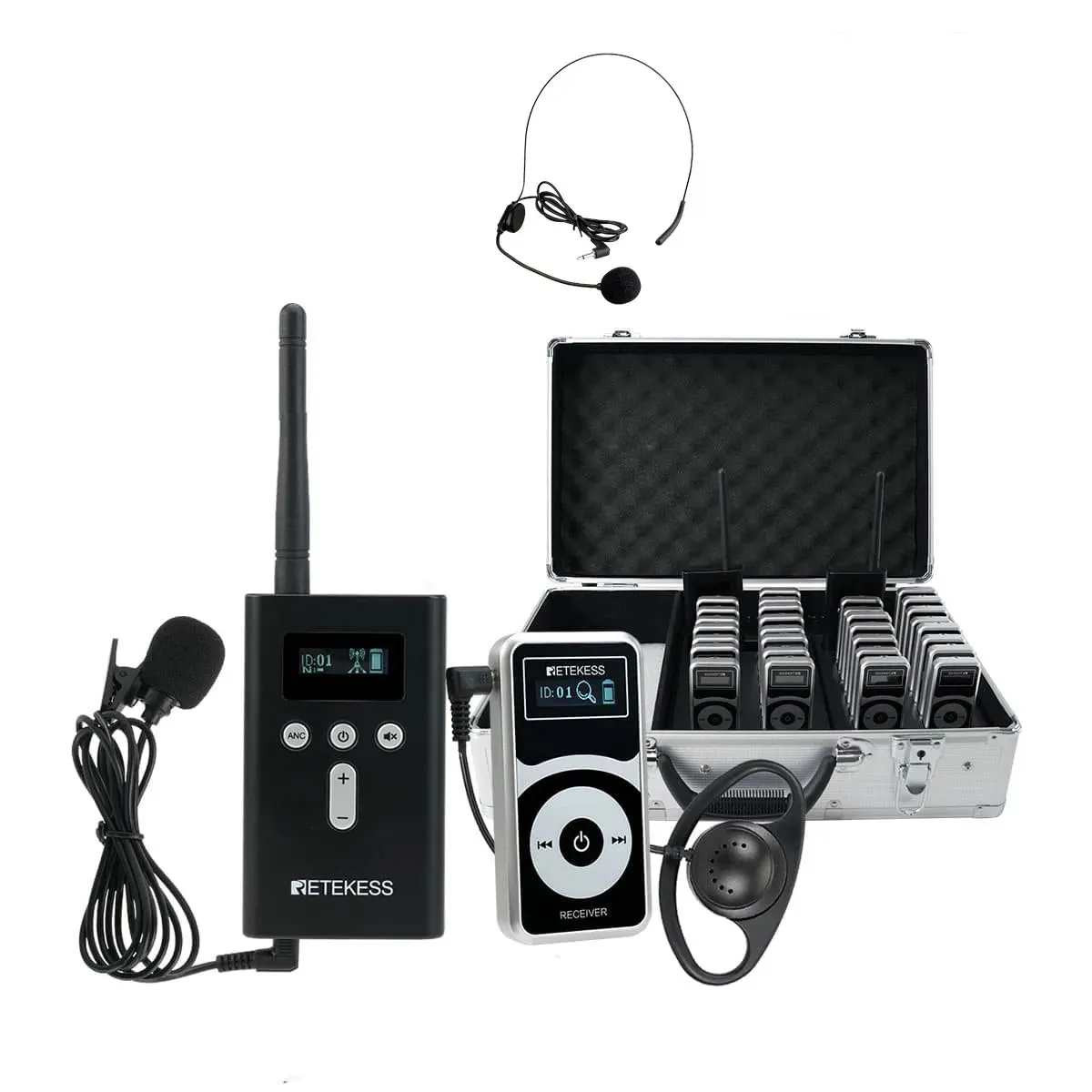
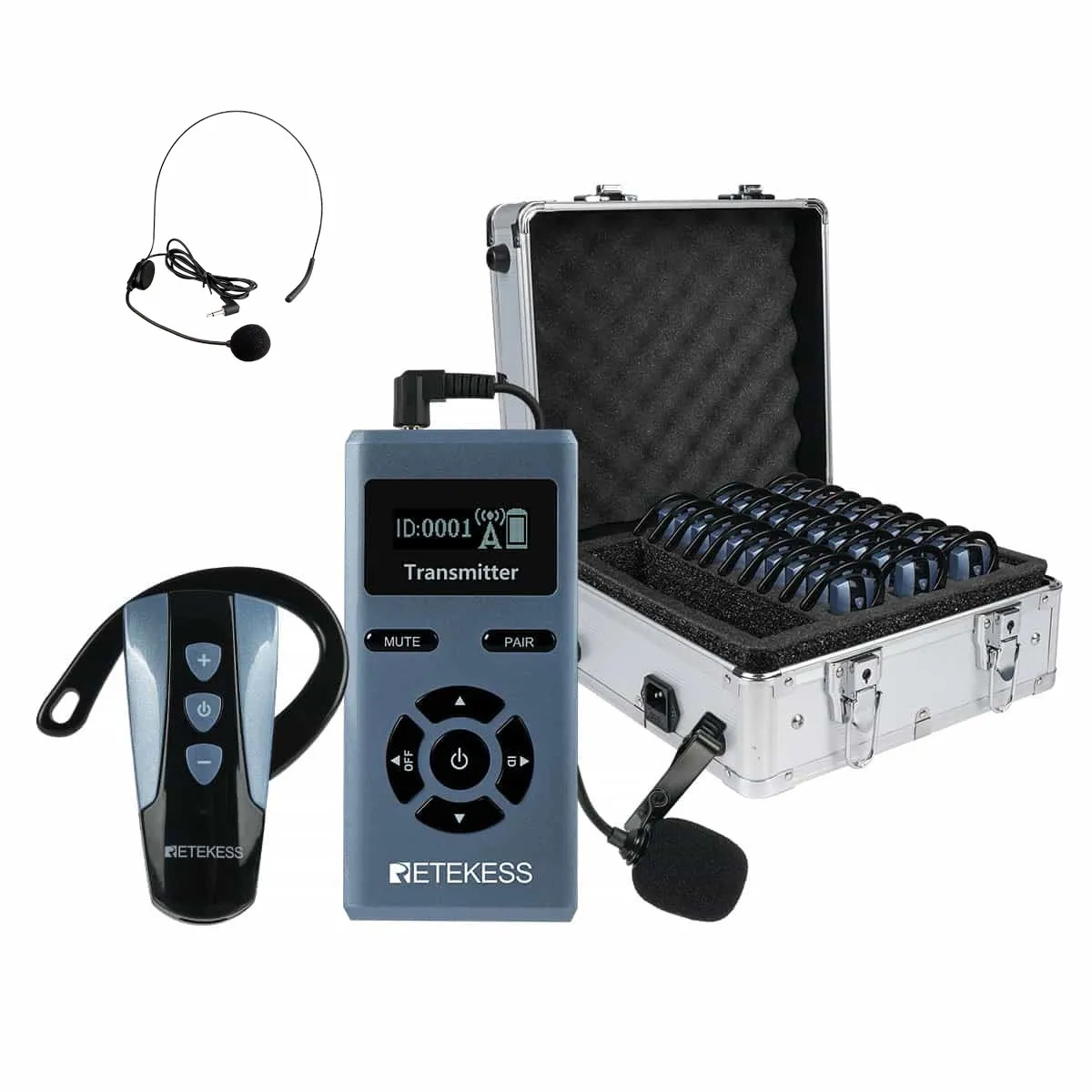
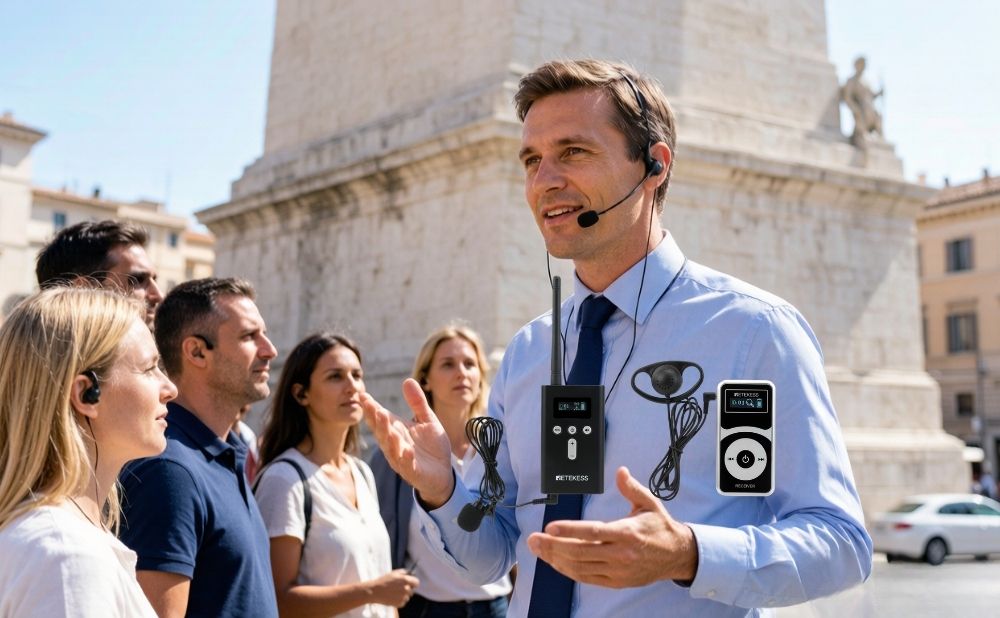
A school tour headset system is a wireless audio transmission solution designed for guided group tours. It consists of a transmitter (worn by the guide with a microphone) and multiple receivers (worn by visitors with earphones). The guide speaks at a normal volume, and the audio is transmitted wirelessly to all receivers simultaneously. This eliminates the need for shouting, ensures clear communication over background noise, and allows visitors to spread out while staying connected.
5 Critical Features to Evaluate
1. Transmission Range
Campus tours cover significant ground — from parking lots to athletic fields to residence halls. Your system needs a range of at least 150 meters to ensure uninterrupted audio as the group moves through different campus zones. Systems with 200-meter range provide an extra buffer for large campuses.
2. Channel Count for Concurrent Tours
During peak visit days, your school may run 5, 10, or even 20 simultaneous tours. Each tour needs its own channel to prevent cross-interference. A system with 50 channels handles small programs; 9,999 channels (2.4GHz digital) handles even the largest university open day.
3. Battery Life for Back-to-Back Tours
Admissions tour schedules are relentless — tours run from 9 AM to 4 PM with only short breaks. Your receivers need at least 8 hours of battery life; 20+ hours is ideal so you can run multiple tours on a single charge. Transmitters should last at least 10 hours.
4. Hygiene and Sanitization
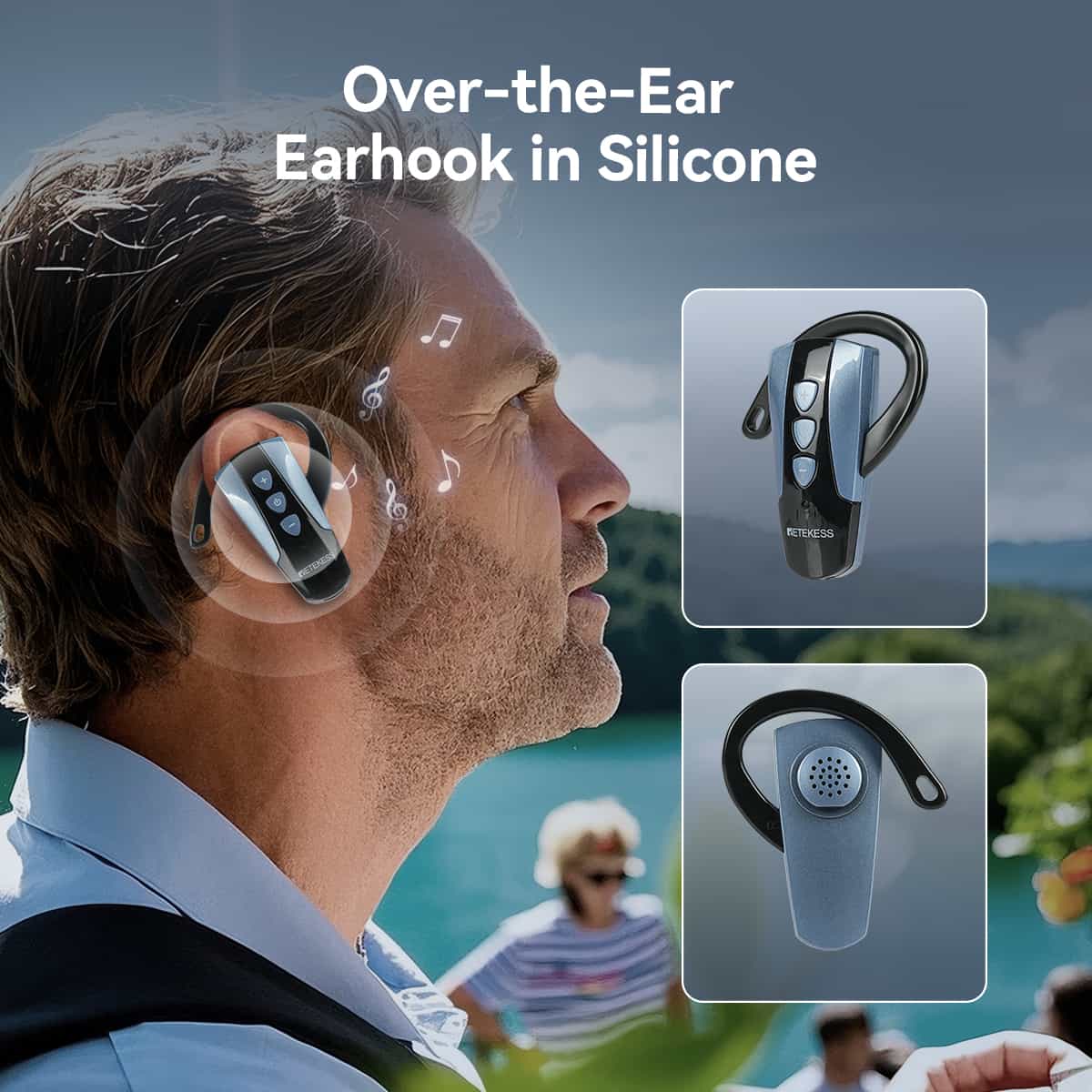
Receivers pass from visitor to visitor throughout the day. Earhook-style receivers are the most hygienic option because they are easy to wipe with alcohol pads and do not insert into the ear canal. Avoid in-ear designs for shared equipment.
5. Weight and Comfort
Visitors wear the receiver for 60–120 minutes per tour. Receivers weighing under 50g are comfortable for all ages, including elderly grandparents who frequently accompany prospective students. Lanyard attachments prevent drops and provide a professional appearance.
Best Overall: Retekess TT106S
The Retekess TT106S is the top recommendation for school tour headset systems. It checks every box: 2.4GHz digital transmission (globally license-free), 9,999 channels for unlimited concurrent tours, 200-meter range for the largest campuses, and an ergonomic earhook design that is both comfortable and easy to sanitize. The transmitter lasts 23 hours and receivers last an outstanding 50 hours — meaning you can run a full week of tours without recharging. Auto-shutdown after inactivity conserves battery, and USB Type-C charging simplifies fleet management. At a fraction of the cost of premium competitors, the TT106S delivers professional-grade campus tour audio that fits any school's budget.
Deployment Checklist for School Administrators
- ☐ Purchase 30+ receivers (account for peak tour group sizes plus spares)
- ☐ Order a multi-port USB charging station for simultaneous fleet charging
- ☐ Purchase lanyards with school branding for professional presentation
- ☐ Stock alcohol wipes and microfiber cloths for sanitization between tours
- ☐ Create a simple channel assignment chart for concurrent tours
- ☐ Train student ambassadors on microphone technique and equipment handoff
- ☐ Designate a charging/storage cabinet in the admissions office
People Also Ask
A: A complete system with 1 transmitter and 15 receivers typically costs $300–$1,000 depending on the brand and features. The Retekess TT106S offers excellent value at the lower end of this range while matching premium brands on core functionality.
A: Yes. Retekess systems are versatile. The TT106S works for campus tours, classroom audio distribution, parent-teacher meetings, and outdoor education. This multi-use capability maximizes ROI for school technology budgets.
Conclusion
A school tour headset system is a small investment with outsized impact. When every visitor hears clearly, engagement rises, questions increase, and families leave with a stronger connection to your school. The Retekess TT106S delivers everything you need — range, channels, battery life, hygiene, and comfort — at a price that fits education budgets. As you prepare for the back-to-school visit season, make tour audio a priority.
Leave a Reply
![[18th Anniversary] 18 Years of Echoing Excellence: Making Communication Easier, Connecting Trust Beyond Borders](https://res.retekess.com/z_file/20260716/retekess-brand-story-making-communication-easier_20260716151044_7682.jpg)
![[18 Years in Wireless Communication] Silent Disco Systems Anniversary Celebration: Top-Selling Headphones & Event Mechanics Revealed!](https://res.retekess.com/z_file/20260713/18-years-in-wireless-communication-silent-disco-systems-anniversary-celebration_20260713175011_5749.webp)
![[Anniversary Carnival] Ding-dong! 18th Anniversary Mega Sale on Guest Paging & Calling Systems: Full Reveal of 12+ Products & Promo Rules!](https://res.retekess.com/z_file/20260713/18th-anniversary-mega-sale-on-guest-paging-calling-systems_20260713175257_0295.webp)
![[Retekess 18th Anniversary Teaser] Tour Guide System Exclusive Perks: Sneak Peek at Event Dates & Mechanics!](https://res.retekess.com/z_file/20260713/retekess-18th-anniversary-tour-guide-system-exclusive-perks--2-_20260713180135_6435.webp)
Follow Us
Pay With


 Google
 Amazon
Comments (0)