
Table of Contents

How to Program a City Festival Without a Single Noise Complaint
- Retekess
- Aug 27, 2026
Public cultural events often need to balance energy, inclusiveness, and noise control. That is not always easy in shared spaces like museums, city plazas, parks, and community venues. Silent cultural events offer a practical way to create immersive public programs without disrupting the surrounding environment.
Instead of using one loudspeaker system for everyone, silent formats deliver audio directly to the audience through wireless headphones. That changes the experience for both organizers and guests. It reduces noise pressure, creates more room for different types of content, and allows public spaces to support more than one experience at the same time. For cities, venues, and cultural groups, this is not just a new event style. It is a smarter way to design public programs.
1. The Sound Dilemma in Public Space
Public cultural events often face the same core problem: they want to create energy without creating conflict.
Cities are full of shared spaces. A plaza may sit next to shops and apartments. A park may be used by walkers, families, and residents. A museum may need to stay calm for the art and the audience. That means sound is never unlimited. Every event has to balance atmosphere with responsibility.
- A festival wants multiple stages, but each stage can interfere with the others
- A community market wants live music or performance, but nearby businesses may not welcome the noise
- A museum night wants to feel special, but the event should not destroy the quiet setting people came to enjoy
For these reasons, wireless audio for city festivals without noise complaints has become a valuable idea. It gives organizers a way to build stronger experiences without forcing the whole space to absorb one loud sound source. That matters because public sound is not just a technical issue. It shapes who can host, who can attend, and how the event feels to everyone around it.
2. What Silent Cultural Events Actually Are
Silent cultural events are often misunderstood. Many people think of silent disco as a nightlife trend, but the technology is much broader than that.
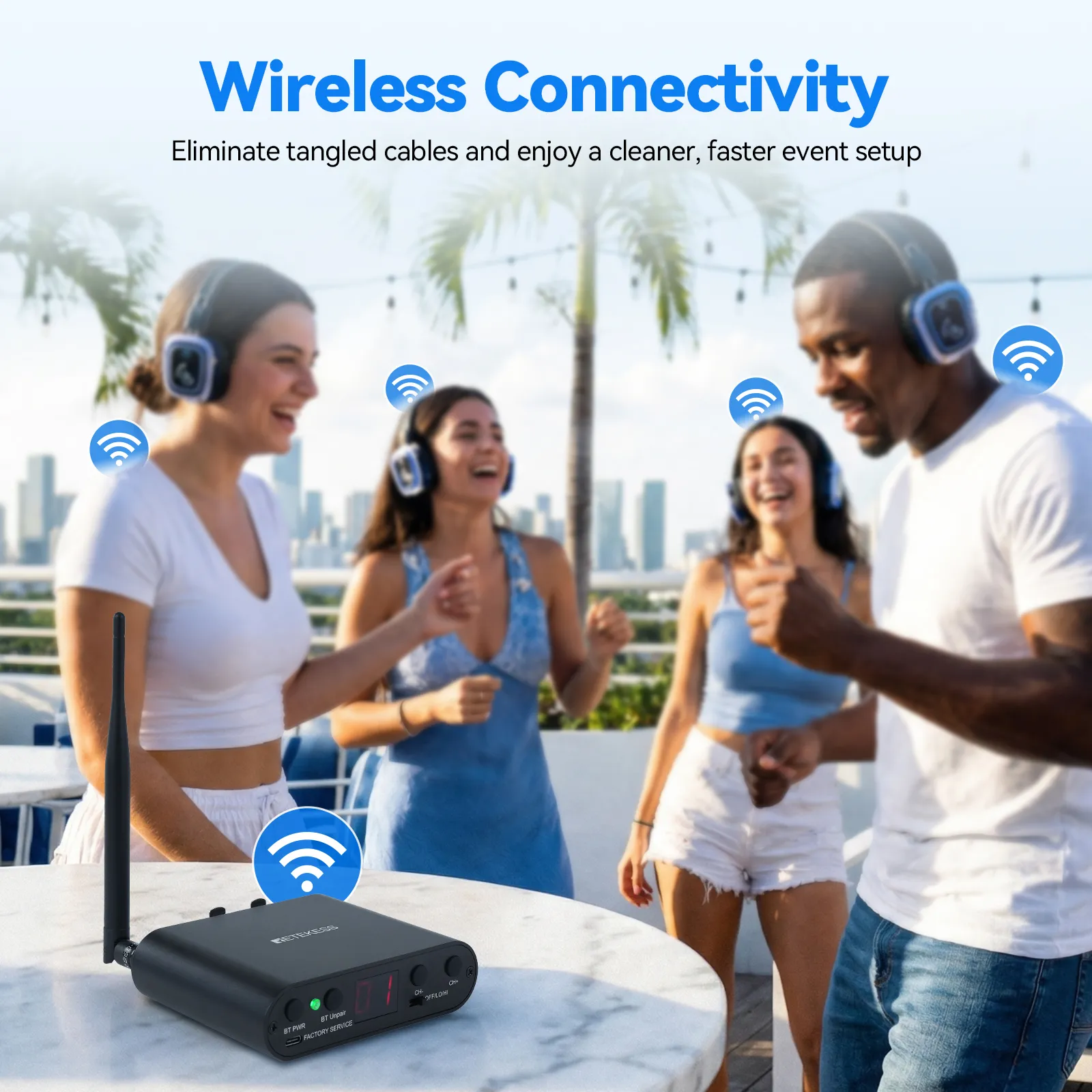
At the center of a silent event is a wireless transmitter. It sends audio through UHF or RF signals to individual headphones. Participants hear the content through their own devices, often on separate channels. That means one physical space can support more than one audio experience at the same time.
This is a major change from traditional public sound systems. Instead of broadcasting one loud signal to the entire area, silent audio lets each guest hear the version that fits them best. One channel might carry music. Another might carry guided narration. A third might carry a translation or a live host.
That is why a multi-channel silent event system for public spaces is so useful. It does not only reduce noise. It also allows more content to happen in parallel. In other words, silent does not mean less experience. It means sound is delivered in a more controlled and more personal way.
This shift also helps events become more inclusive. Guests who prefer lower sound levels, families with children, older adults, and people who are sensitive to noise can all participate more comfortably. Silent events are not only about technology. They are about how public space can work for more kinds of people.
3. Four Public Scenarios Where Silent Audio Changes the Game
Silent audio works best when it solves a real public-space problem. That is why it has started to appear in more than one kind of cultural event.
3.1 City Festivals
A city plaza can often hold more than one program, but loudspeakers make that difficult. With silent audio, a festival can run several sound experiences in the same area. Visitors can move between channels instead of choosing one stage and giving up the others.
This creates more flexibility in planning and more content in one location. It also reduces the risk of sound overlap, which is one of the biggest problems in crowded festival environments.
3.2 Community Programs
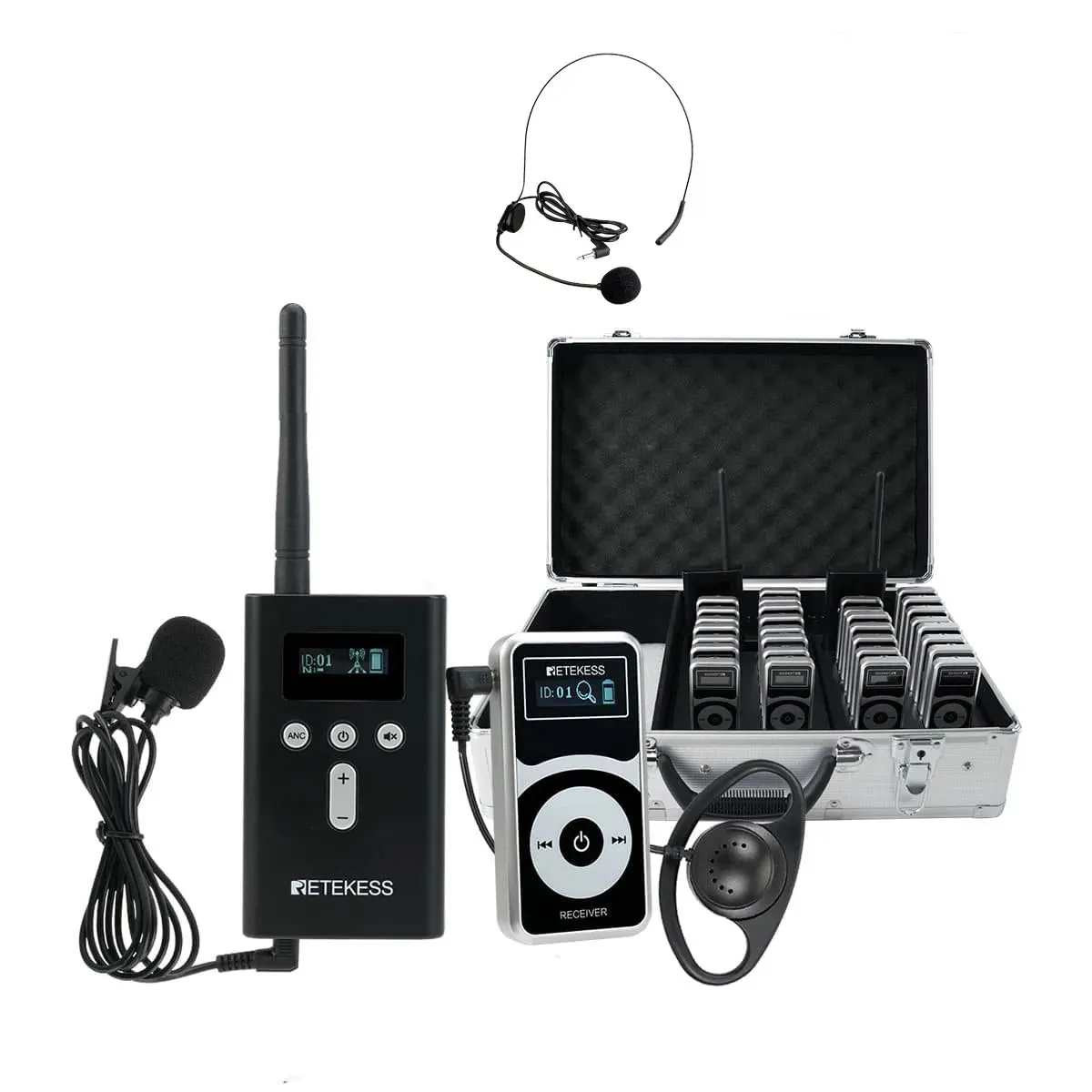
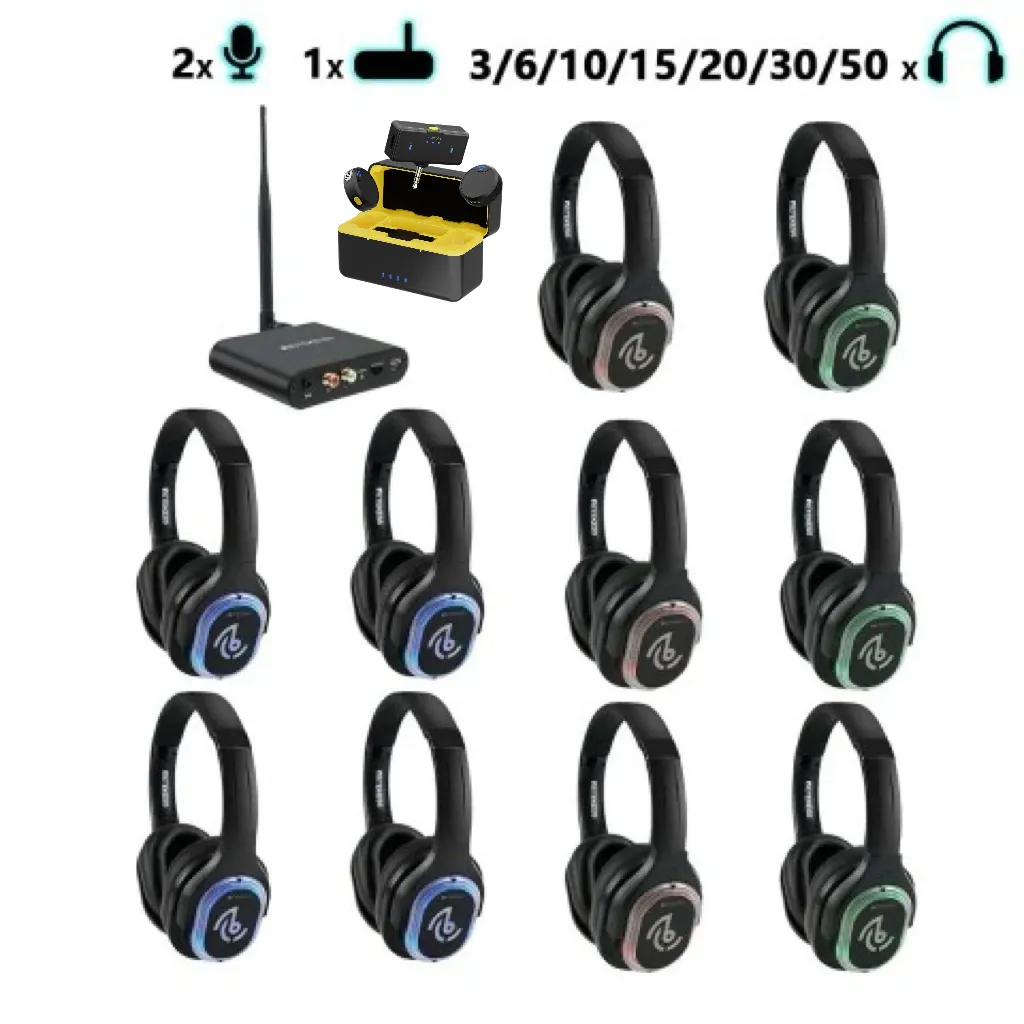
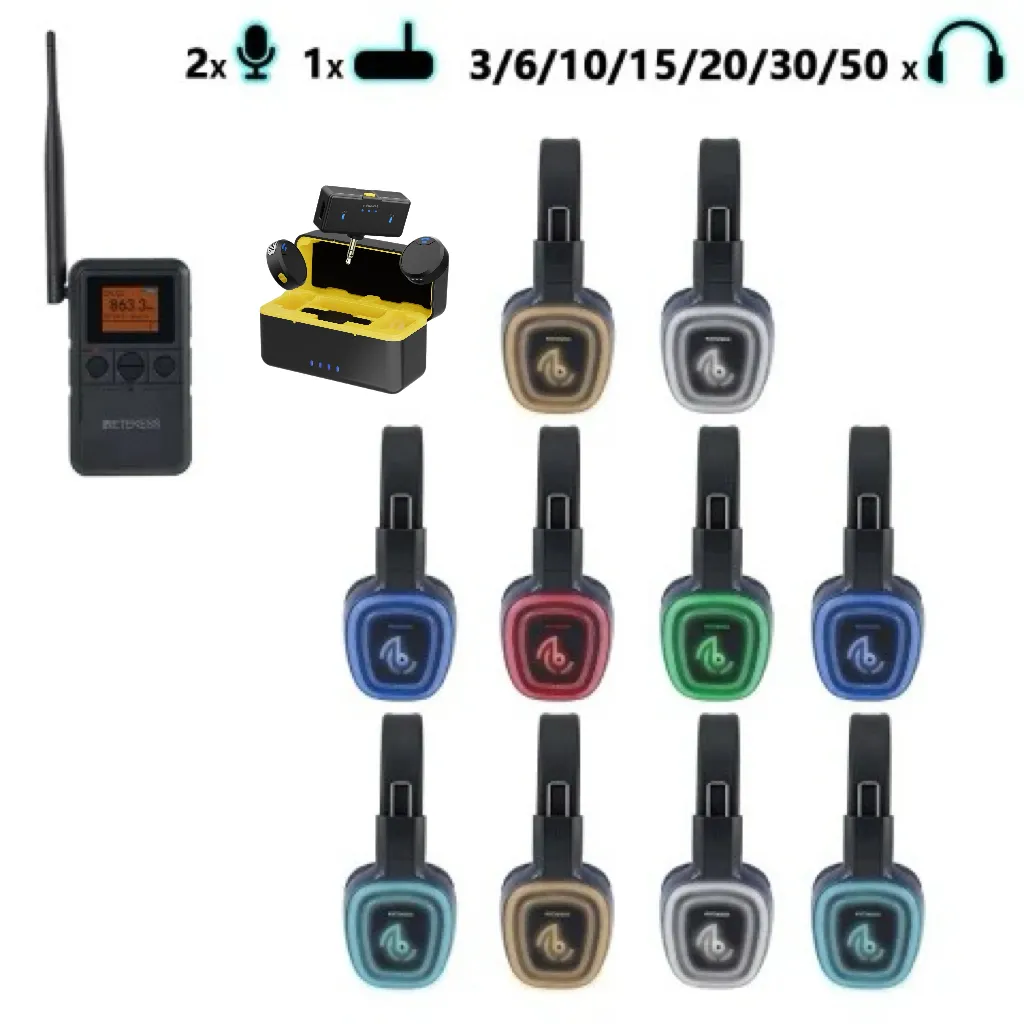
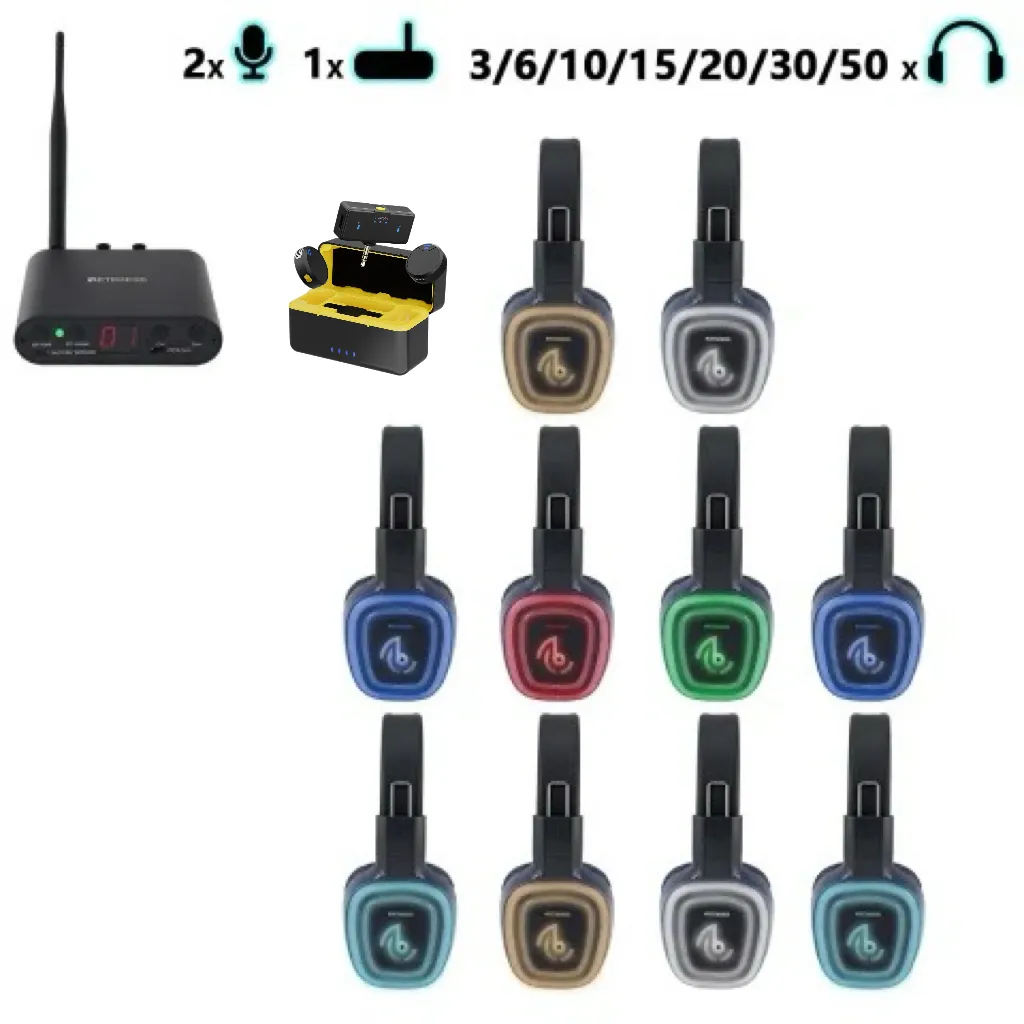
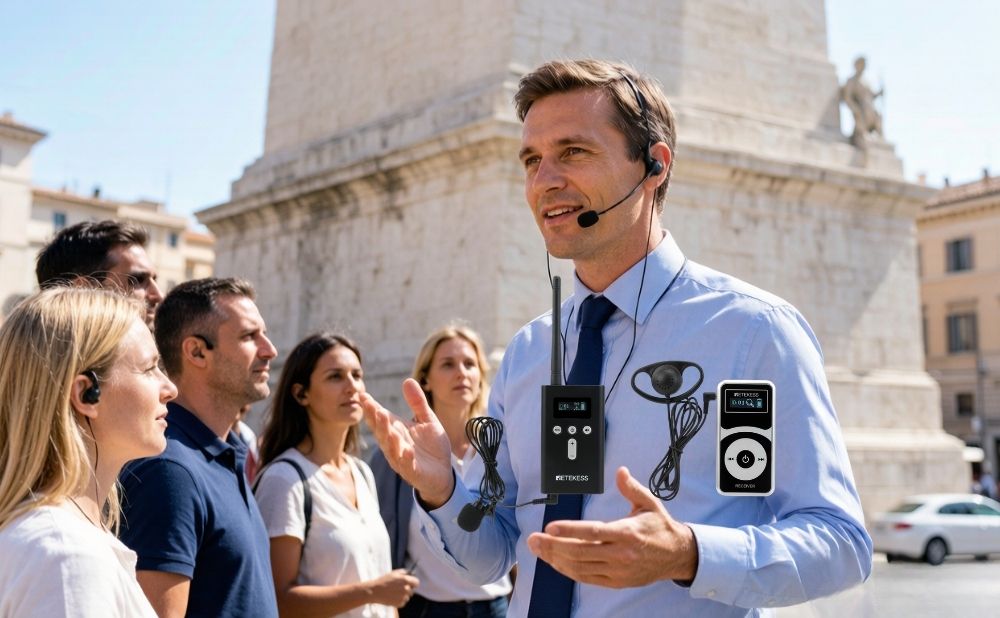
Retekess TA003S wireless Silent disco system used for a silent cultural event with multi-channel public program setup
Community events often take place in sensitive locations. A night market, outdoor film event, or local performance may be welcome in one part of town but not in another. Silent audio makes these events easier to approve and easier to manage.
This is one reason noise-free outdoor events technology has become more relevant. It gives communities the chance to host cultural programs without creating complaints or pressure on nearby residents and businesses.
3.3 Museum and Gallery Nights
Museums and galleries depend on atmosphere. A loud event can break the mood, distract visitors, and damage the experience. Silent audio helps protect that quiet context.
With the right system, a museum can run guided tours, ambient music, and artist talks in the same space. That is why silent cultural events equipment for museums is becoming more useful. It helps the venue stay calm while still offering a richer and more immersive visit.
3.4 Urban Public Projects
Cities are now using public space more creatively after dark. Waterfront paths, parks, historic districts, and pedestrian zones can all host cultural activations if sound is handled carefully.
This is where immersive audio public programs urban planning becomes important. Silent audio makes it possible to extend how a space is used without turning that space into a noise problem. It can support silent parties, guided yoga, quiet music events, and other nighttime programs that make the city feel more active without making it louder.
4. The Experience Advantage: Why Audiences Prefer Silent
Silent cultural events are not only convenient for organizers. They also feel better for many audiences.
Personal agency
People want to choose their own experience. When they can select a channel and adjust volume through their headphones, they stop being passive listeners and start becoming active participants.
Social visibility
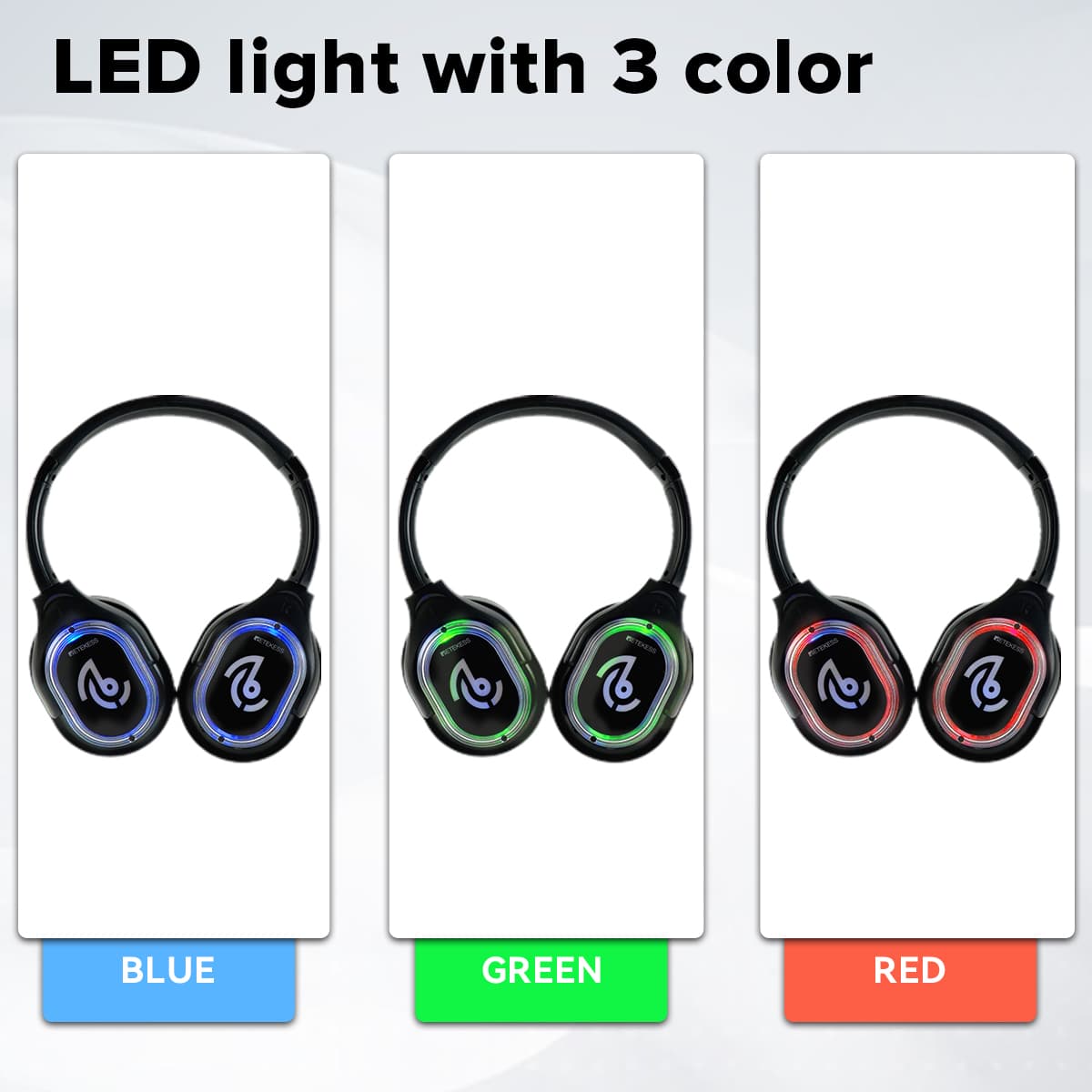
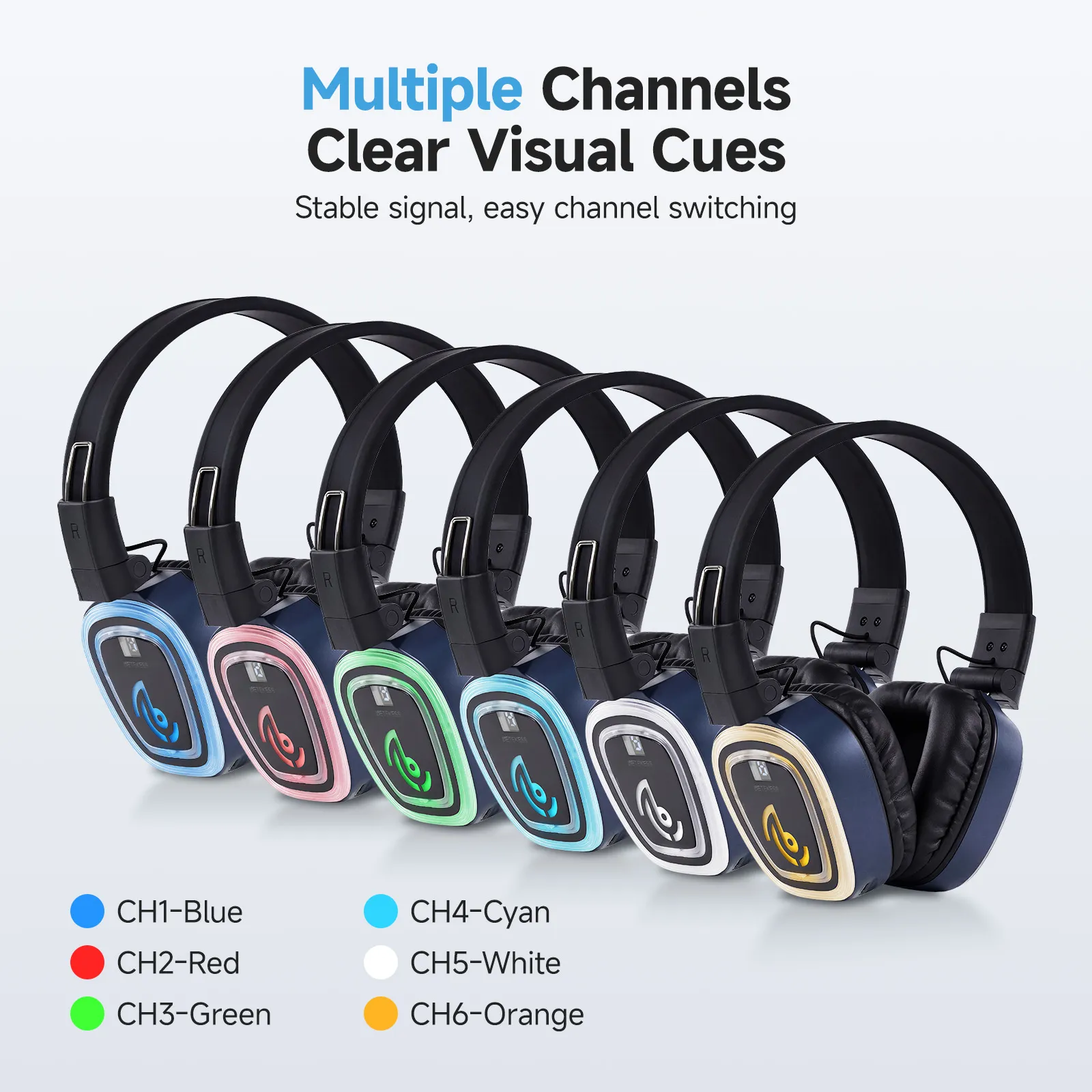
LED color cues help people see who is hearing what. That creates a new kind of social signal. In a silent event, people can tell at a glance that they are part of the same experience even if they are listening to different content.
Sensory inclusion
Many people find loud public events difficult. That includes neurodiverse audiences, people with sensory sensitivity, and families with small children. Silent formats create more room for those guests to participate comfortably.
That is why silent events for neurodiverse audiences is not just a niche idea. It is part of a bigger shift toward more thoughtful public programming. Silent events can make public culture feel more open, more respectful, and easier to join.
Environmental coexistence
A silent event does not need to compete with the neighborhood. It can exist alongside shops, homes, and natural surroundings without taking over the soundscape. That is a major advantage in cities where public space must be shared carefully.
5. Building a Silent Public Program: What to Look For
If organizers want to create a silent cultural event, they need a system that matches the size and style of the program.
Channel count decides content density
Three channels may be enough for smaller events or a single cultural theme with a few variations. More channels can support a larger festival with more parallel experiences.
Coverage range decides space scale
Smaller community events may only need 100–200 meters of coverage. Larger city festivals and outdoor public programs may need 300–400 meters to support the full space.
Battery life decides event continuity
A daytime program or night event can fail if headsets die halfway through. Twelve hours or more of battery life helps avoid interruptions.
Input flexibility decides content shape
AUX input supports high-fidelity music. Bluetooth helps with convenience and streaming. Microphone input supports live tour guides, hosts, and talks. The best system can handle more than one format without becoming complicated.
For this reason, the right silent cultural events equipment for museums or city programs should be chosen by use case, not just by price or channel number. A small museum night does not need the same setup as a large city festival. The right system should fit the space, the audience, and the program goals.
6. Final Takeaway: Silence as a Cultural Strategy
Silent cultural events are not a compromise. They are a strategy. They let cities and venues create richer programs without turning public space into a noise battle. They replace exclusivity with coexistence, and they make room for more people to participate in ways that feel comfortable and engaging.
That is why silent cultural events are becoming such an important idea for modern public programming. They work across festivals, museums, neighborhoods, and city projects because they do not force one sound on everyone. They let sound become more flexible, more personal, and more inclusive.
As public spaces continue to evolve, silent formats will likely become even more valuable. They offer a better way to design events for today’s cities: not louder, but smarter; not more disruptive, but more immersive; not closed off, but shared.
![[18th Anniversary] 18 Years of Echoing Excellence: Making Communication Easier, Connecting Trust Beyond Borders](https://res.retekess.com/z_file/20260716/retekess-brand-story-making-communication-easier_20260716151044_7682.jpg)
![[18 Years in Wireless Communication] Silent Disco Systems Anniversary Celebration: Top-Selling Headphones & Event Mechanics Revealed!](https://res.retekess.com/z_file/20260713/18-years-in-wireless-communication-silent-disco-systems-anniversary-celebration_20260713175011_5749.webp)
![[Anniversary Carnival] Ding-dong! 18th Anniversary Mega Sale on Guest Paging & Calling Systems: Full Reveal of 12+ Products & Promo Rules!](https://res.retekess.com/z_file/20260713/18th-anniversary-mega-sale-on-guest-paging-calling-systems_20260713175257_0295.webp)
![[Retekess 18th Anniversary Teaser] Tour Guide System Exclusive Perks: Sneak Peek at Event Dates & Mechanics!](https://res.retekess.com/z_file/20260713/retekess-18th-anniversary-tour-guide-system-exclusive-perks--2-_20260713180135_6435.webp)
Follow Us
Pay With


 Google
 Amazon
Comments (0)