
Table of Contents

Workshop Training Communication: How to Teach Safely in Noisy Production Areas
- Retekess
- Aug 27, 2026
When leading hands-on vocational training or factory practice sessions, instructors face a universal challenge: maintaining clear workshop training communication in spaces filled with running machinery, metalworking tools, and constant ambient noise. Without reliable voice transmission, safety reminders get lost, demonstration steps become hard to follow, and trainees cannot ask quick questions when they make operation mistakes. For both vocational schools and corporate training teams, fixing this gap directly improves learning outcomes, reduces on-site accidents, and makes every training session more productive.
Why Workshop Training Communication Breaks Down in Industrial Environments
Ambient Noise Dilutes Critical Safety Messages
Manufacturing and processing workshops typically run at 80–95 decibels during normal operation, loud enough to mask normal conversational speech. When trainers raise their voices to be heard, sound quality drops sharply, and key details — such as correct machine operating procedures, emergency stop steps, and personal protection requirements — become easy to mishear. Repeated shouting also strains instructors’ vocal cords, leading to fatigue and reduced teaching quality over full training days. This is one of the most common causes of poor workshop training communication in industrial settings.
Scattered Trainees Disrupt Continuous Instruction
Unlike classroom training, workshop practice often spreads trainees across multiple workstations, assembly lines, or demonstration zones. Instructors have to walk back and forth to check on each group, which interrupts the flow of teaching and leaves other trainees waiting without guidance. For large groups, gathering everyone around a single machine for demonstrations creates overcrowding, blocks sight lines, and raises safety risks from accidental contact with running equipment. All of these issues reduce the overall quality of workshop training communication and slow down skill development.
Core Challenges of Hands-On Workshop Training
Safety Instructions Are Easily Missed
Weak workshop training communication creates direct safety hazards on the training floor. The number one priority in any workshop training is safety. When trainees cannot hear instructions clearly, they may skip protective steps, operate tools incorrectly, or fail to respond quickly to emergency signals. Even small mishearing can lead to equipment damage or personal injury. This is especially true for new trainees and vocational students who have not yet developed familiarity with factory environments and safety protocols.
Live Demonstrations Lose Clarity Without Clear Audio
Hands-on skill learning relies heavily on live demonstration: instructors show correct movements, explain operation logic, and point out common mistakes in real time. In noisy workshops, trainees standing even a few meters away cannot catch full explanations. They may focus only on the physical action and miss the reasoning behind it, which slows down skill mastery and leads to repeated errors during independent practice. Strong workshop training communication ensures trainees both see and hear every key detail of a demonstration.
Practical Audio Tools to Improve Workshop Training Communication
One-Way Tour Guide Systems: Ideal for Group Demonstrations & Lectures
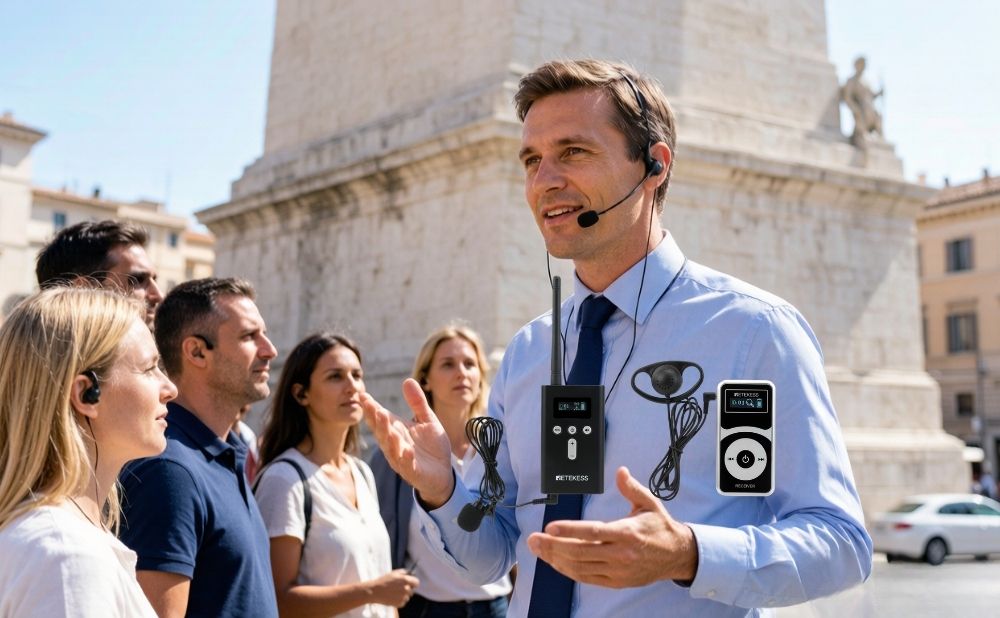
For large-group safety training, centralized process demonstrations, and factory orientation sessions, a one-way audio tour guide system is a cost-effective and reliable solution. It allows one instructor to speak normally while all trainees receive clear, direct audio in their ears, even in loud environments.
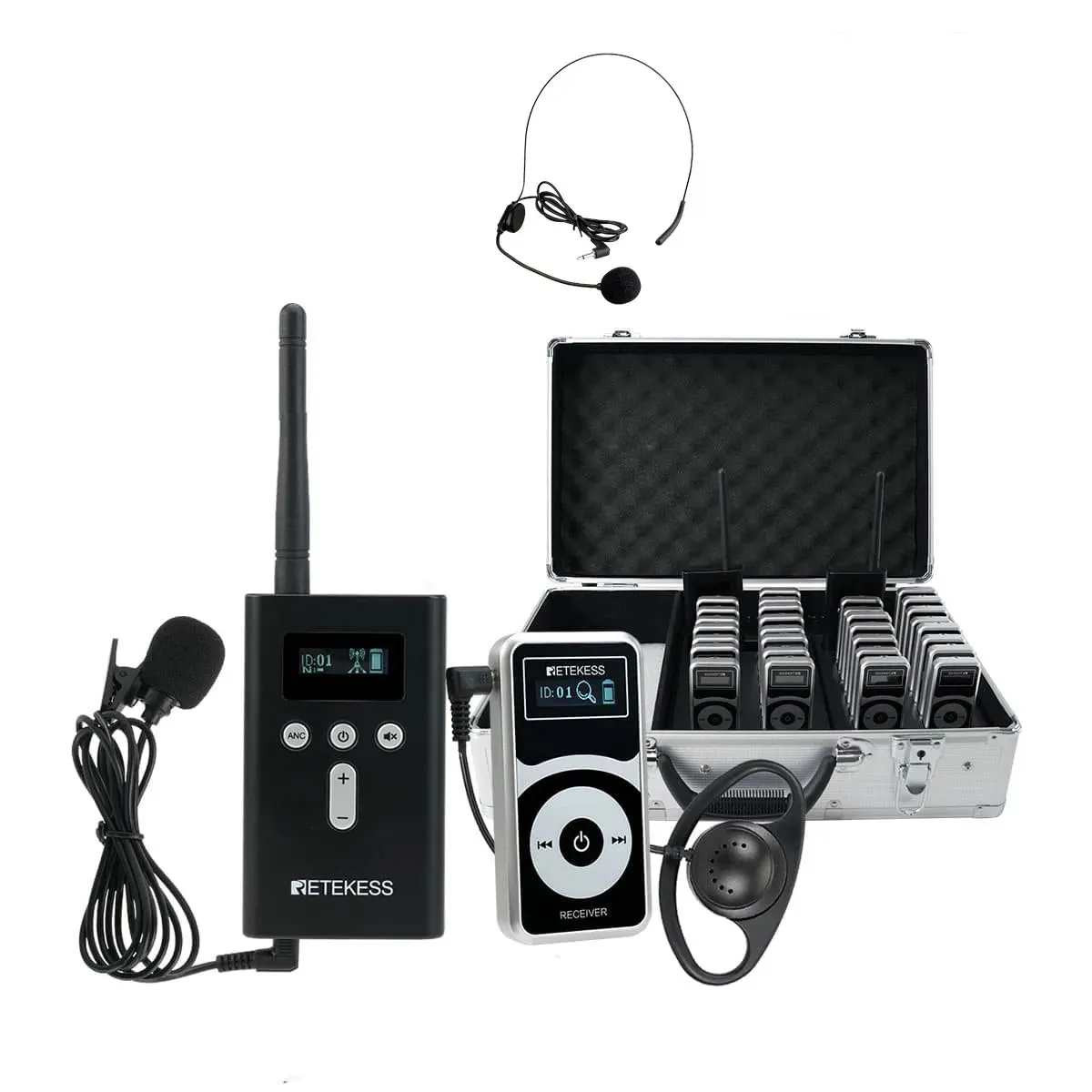
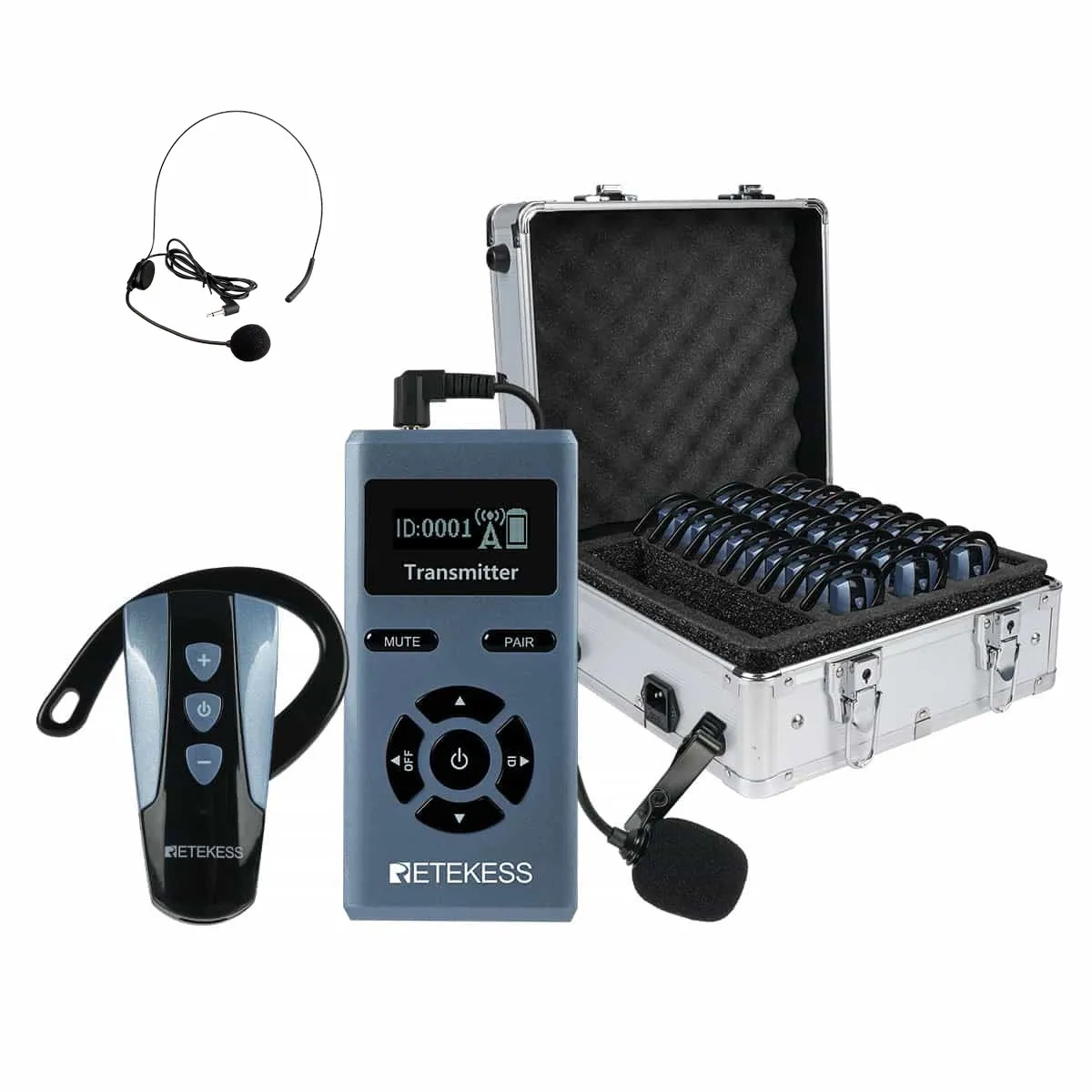
The Retekess T130P tour guide system is well suited for workshop training scenarios. Built with a DSP noise-canceling chip, it filters out steady background noise from machines and tools, so trainees hear only the instructor’s voice with exceptional clarity. It offers 4 adjustable noise reduction levels, so instructors can adapt settings to match different workshop noise levels.
With a 160-meter open-air transmission range, the system covers most standard workshop spaces and large training zones. It supports 49 selectable channels, so multiple classes or training groups can work in the same area at the same time without frequency crosstalk. This makes it easy to organize structured workshop training communication for multiple student groups at once.
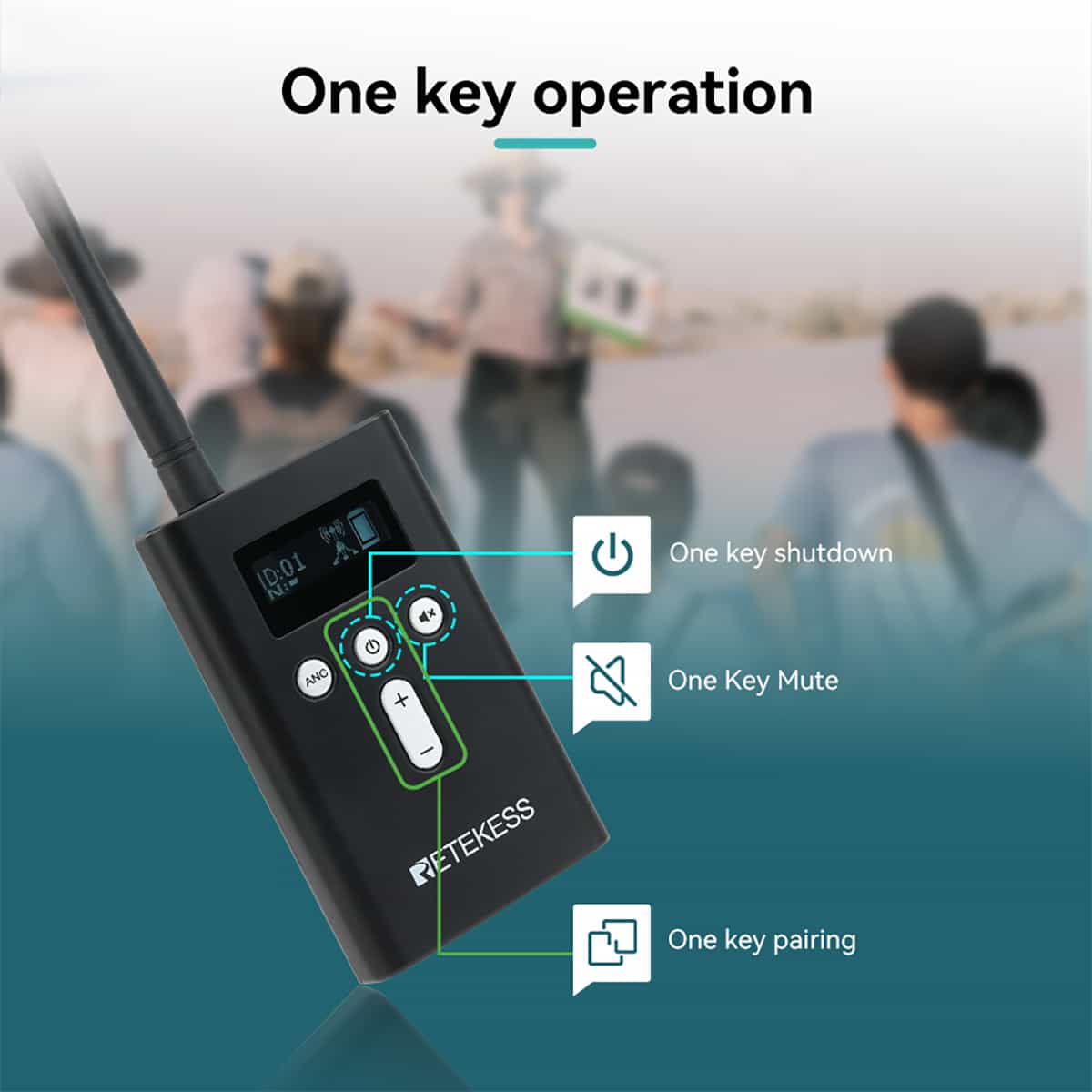
The T130P is designed for simple, stress-free daily use. It features one-key operation for power, mute, and pairing, so both instructors and students can start using it within seconds, with no lengthy training required. The D-shaped ear hooks fit comfortably on either the left or right ear, making them suitable for long hours of wear during full-day training sessions.
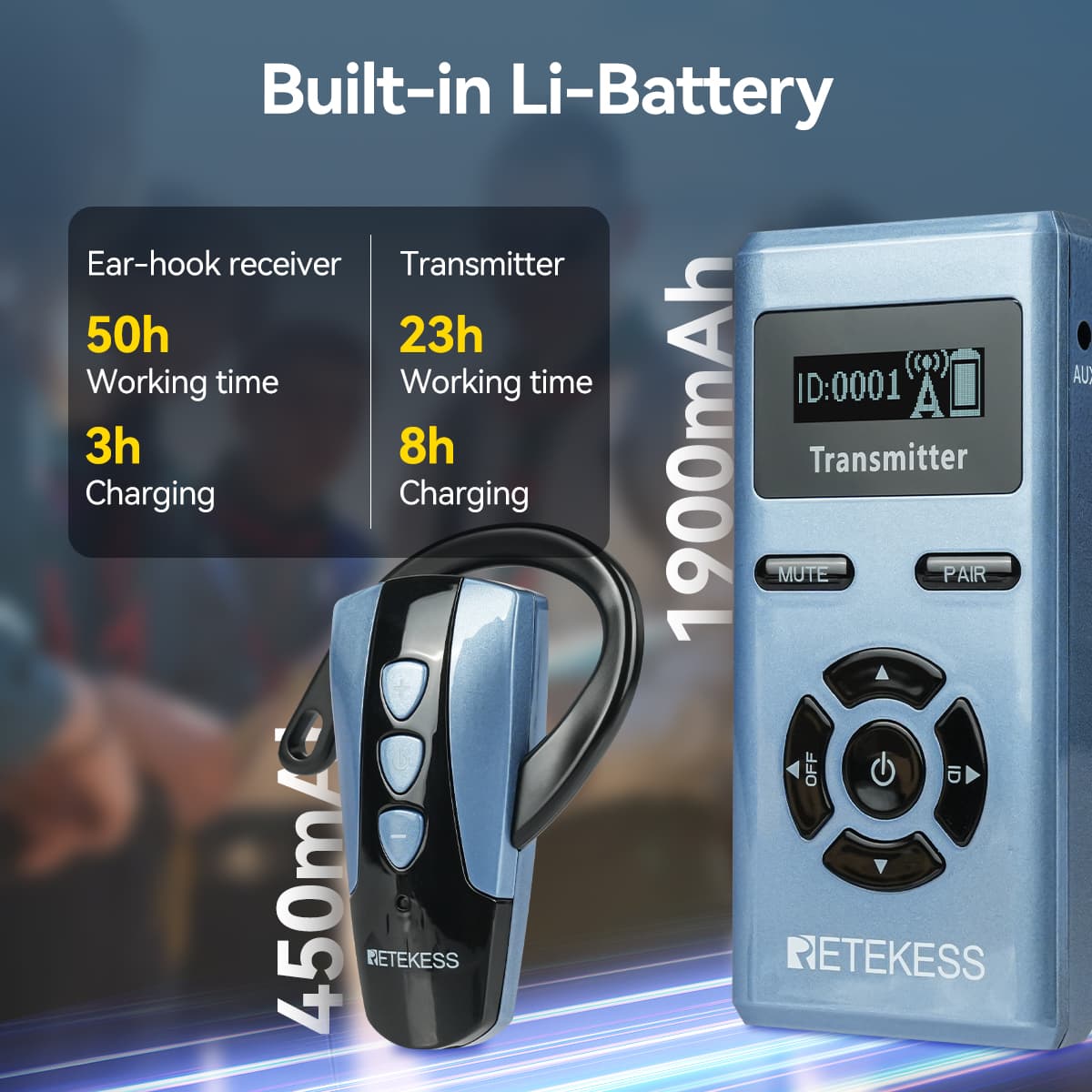
Battery life is another key advantage: the transmitter runs for 20 hours on a full charge, and receivers last up to 36 hours, easily covering a full day of training without mid-session recharging. It supports both Type-C direct charging and contact charging bases, which makes bulk charging and device management much simpler for schools and training departments. The system also automatically shuts down after 20 minutes without a signal, helping to preserve battery life when devices are accidentally left on.
Two-Way Communication Systems: Built for Interactive Hands-On Practice
When training moves from group demonstration to independent hands-on practice, trainees need to ask questions and receive instant feedback. In these scenarios, a two-way tour guide system creates a more interactive and efficient learning environment, and greatly strengthens workshop training communication across distributed workstations.
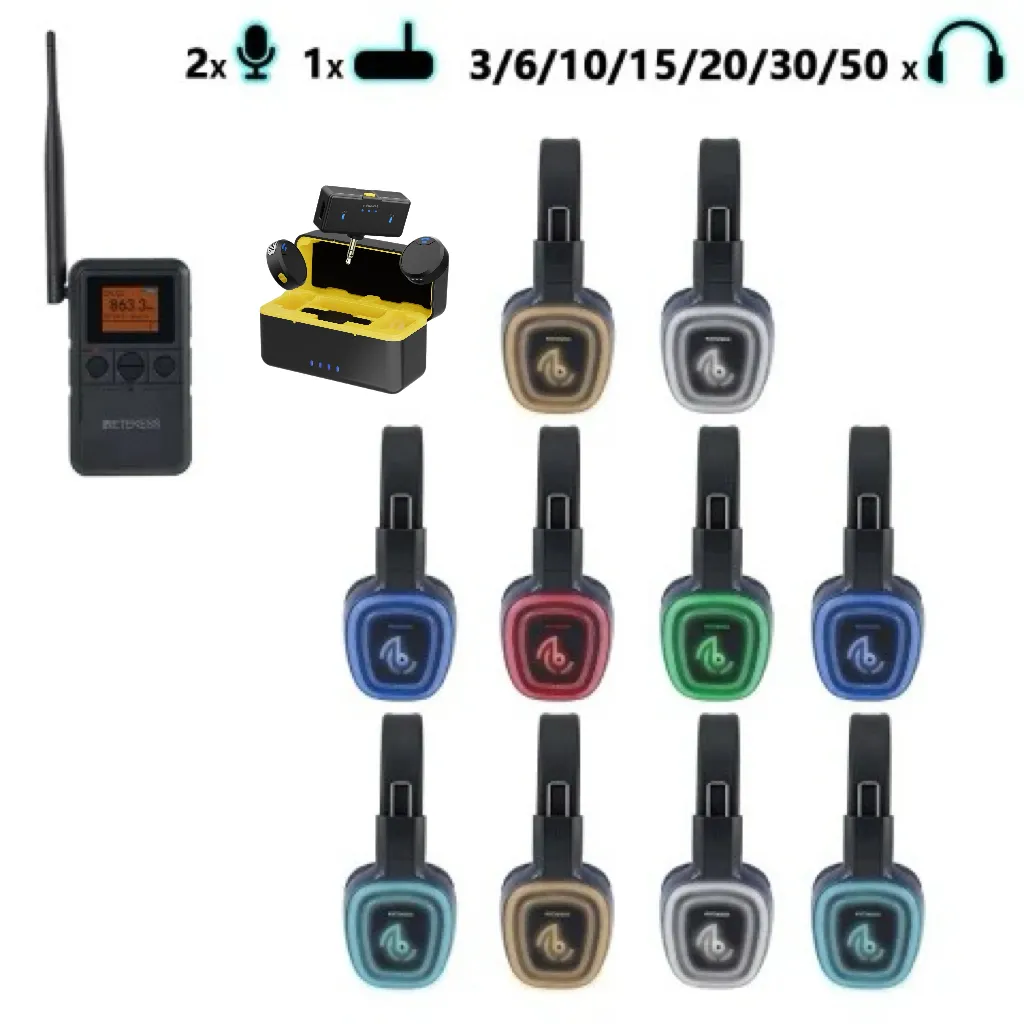
The Retekess TT126 two-way tour guide system supports full two-way voice communication, so trainees can ask questions at any time without leaving their workstations, and instructors can correct operations or give guidance immediately. This real-time back-and-forth greatly improves workshop training communication efficiency compared to traditional on-site shouting. It eliminates the need for instructors to walk back and forth between stations, keeps training continuous, and ensures no trainee waits long for help.
With a 280-meter open-air working distance, the TT126 covers large factory floors and multi-zone training areas easily. It supports automatic frequency pairing, which saves setup time before each training session — instructors simply turn on the devices and they connect automatically.
The system uses a 2500mAh lithium battery with Type-C charging, delivering long standby and working time to support all-day training. The main transmitter works for 10 hours continuously, and vice transmitters offer 10–70 hours of standby time, depending on usage. It also includes automatic shut-off when no signal is detected, reducing wasted power.
For flexible use, the TT126 supports both lanyard and back-clip wearing styles, so users can keep their hands free while operating machines or tools. The vice transmitter supports LINE-IN audio input, so instructors can play pre-recorded training materials or standard operation audio directly through the system. The main transmitter supports LINE-OUT output, which is useful for recording training sessions for later review or archiving.
How to Pick the Right System for Your Training Scenario
Choosing between one-way and two-way systems depends on your main training goals and daily workshop arrangements. The right tool will support consistent workshop training communication across all your daily activities.
If your training focuses heavily on safety lectures, process demonstrations, and factory orientation for large groups, the T130P one-way system is the most practical choice. It delivers excellent sound clarity, supports large groups, and is easy to manage at scale.
If your training involves lots of independent hands-on practice, multi-station skill building, and frequent back-and-forth Q&A, the TT126 two-way system will better support interactive learning and instant error correction.
For comprehensive training bases that run both lecture-style and hands-on sessions, combining both systems creates a complete solution for full-cycle workshop training communication.
Final Tips for Smooth, Safe Workshop Training
To get the most out of your audio system and maintain reliable workshop training communication session after session, follow these simple best practices:
- Test devices and signal coverage before each training session to avoid interruptions.
- Assign fixed channels to each training group to prevent crosstalk in shared workshop spaces.
- Remind trainees to wear receivers correctly for the best noise cancellation and sound quality.
- Use contact charging bases for bulk overnight charging to keep devices ready for the next day.
- Encourage trainees to use the two-way function to ask questions early, before small mistakes become safety issues.
Conclusion
Clear, reliable workshop training communication is the foundation of safe, effective hands-on learning in industrial environments. By addressing noise barriers and supporting continuous instruction and instant feedback, dedicated audio systems help vocational teachers and corporate trainers deliver higher-quality training, reduce safety risks, and help trainees build practical skills faster. Whether you run large group demonstrations or interactive station-based practice, choosing the right communication tool makes every workshop session more productive and secure.





![[18th Anniversary] 18 Years of Echoing Excellence: Making Communication Easier, Connecting Trust Beyond Borders](https://res.retekess.com/z_file/20260716/retekess-brand-story-making-communication-easier_20260716151044_7682.jpg)
![[18 Years in Wireless Communication] Silent Disco Systems Anniversary Celebration: Top-Selling Headphones & Event Mechanics Revealed!](https://res.retekess.com/z_file/20260713/18-years-in-wireless-communication-silent-disco-systems-anniversary-celebration_20260713175011_5749.webp)
![[Anniversary Carnival] Ding-dong! 18th Anniversary Mega Sale on Guest Paging & Calling Systems: Full Reveal of 12+ Products & Promo Rules!](https://res.retekess.com/z_file/20260713/18th-anniversary-mega-sale-on-guest-paging-calling-systems_20260713175257_0295.webp)
![[Retekess 18th Anniversary Teaser] Tour Guide System Exclusive Perks: Sneak Peek at Event Dates & Mechanics!](https://res.retekess.com/z_file/20260713/retekess-18th-anniversary-tour-guide-system-exclusive-perks--2-_20260713180135_6435.webp)
Follow Us
Pay With


 Google
 Amazon
Comments (0)