
Table of Contents
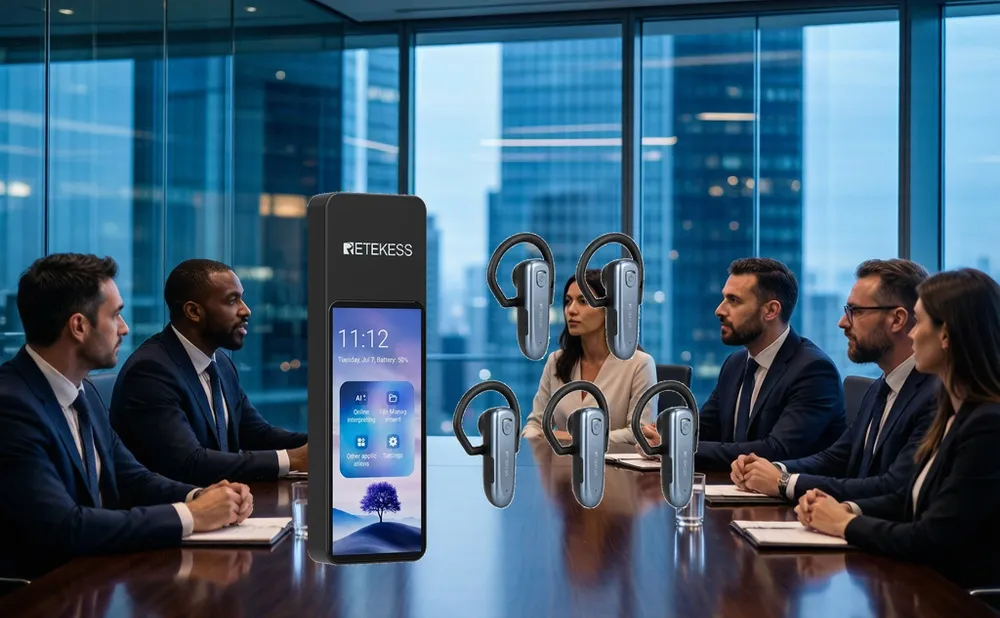
How to Translate Speech in Real Time: The Evolution of AI Translation in Global Business
- Retekess
- Aug 19, 2026
In the past, bridging linguistic gaps meant relying on traditional interpretation methods that, while accurate, often involved exorbitant costs, rigid scheduling logistics, and heavy hardware footprints. Today, the convergence of high-speed cloud computing, neural machine learning models, and advanced wireless audio engineering has introduced a revolutionary paradigm: the ability to translate speech in real time with remarkable precision. This technological shift is fundamentally transforming how organizations collaborate, communicate, and scale across international borders.
The Rising Demand for Instant Multilingual Communication
In modern boardrooms, international summits, and multi-party conferences, participants frequently speak dozens of different languages, reflecting increasingly diverse workforce ecosystems. Relying exclusively on sequential interpretation or hiring dedicated human interpreters for every small-scale meeting, departmental check-in, or regional training session is neither financially sustainable nor logistically scalable.
Organizations now require agile, on-demand tools that allow participants to communicate fluidly without experiencing conversational bottlenecks or losing the natural flow of dialogue. Furthermore, the rise of hybrid and remote work models has amplified this urgency. Teams scattered across different continents need reliable tools to translate speech in real time during video conferences, webinars, and live stream events, ensuring that geographical distance and native tongue differences never impede innovation, strategic alignment, or operational efficiency.
How to Translate Speech in Real Time
Achieving seamless, real-time speech translation involves a sophisticated integration of software intelligence and robust hardware distribution. Modern systems typically operate through two primary architectural approaches, each tailored to specific operational environments:
-
Cloud-Powered Streaming Architectures: These systems leverage high-performance cloud engines—powered by advanced neural machine translation models—to process spoken audio streams instantly. Audio is captured via smart transmitters or professional microphones, processed through cloud servers, and streamed directly to attendees' personal smartphones, web browsers, or wireless receivers over secure Wi-Fi or cellular networks. This setup is exceptionally suited for large-scale conferences, auditoriums, and corporate headquarters.
-
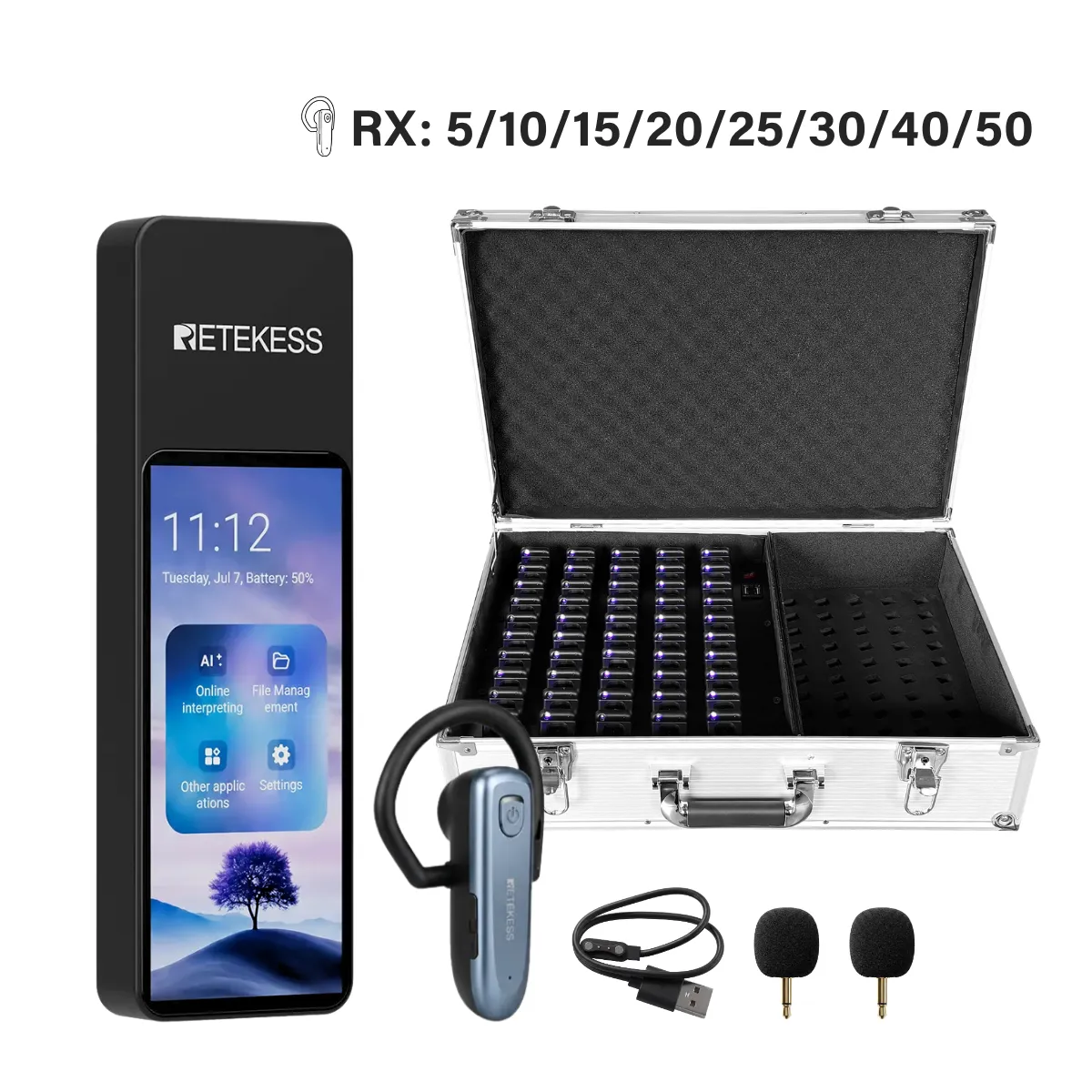
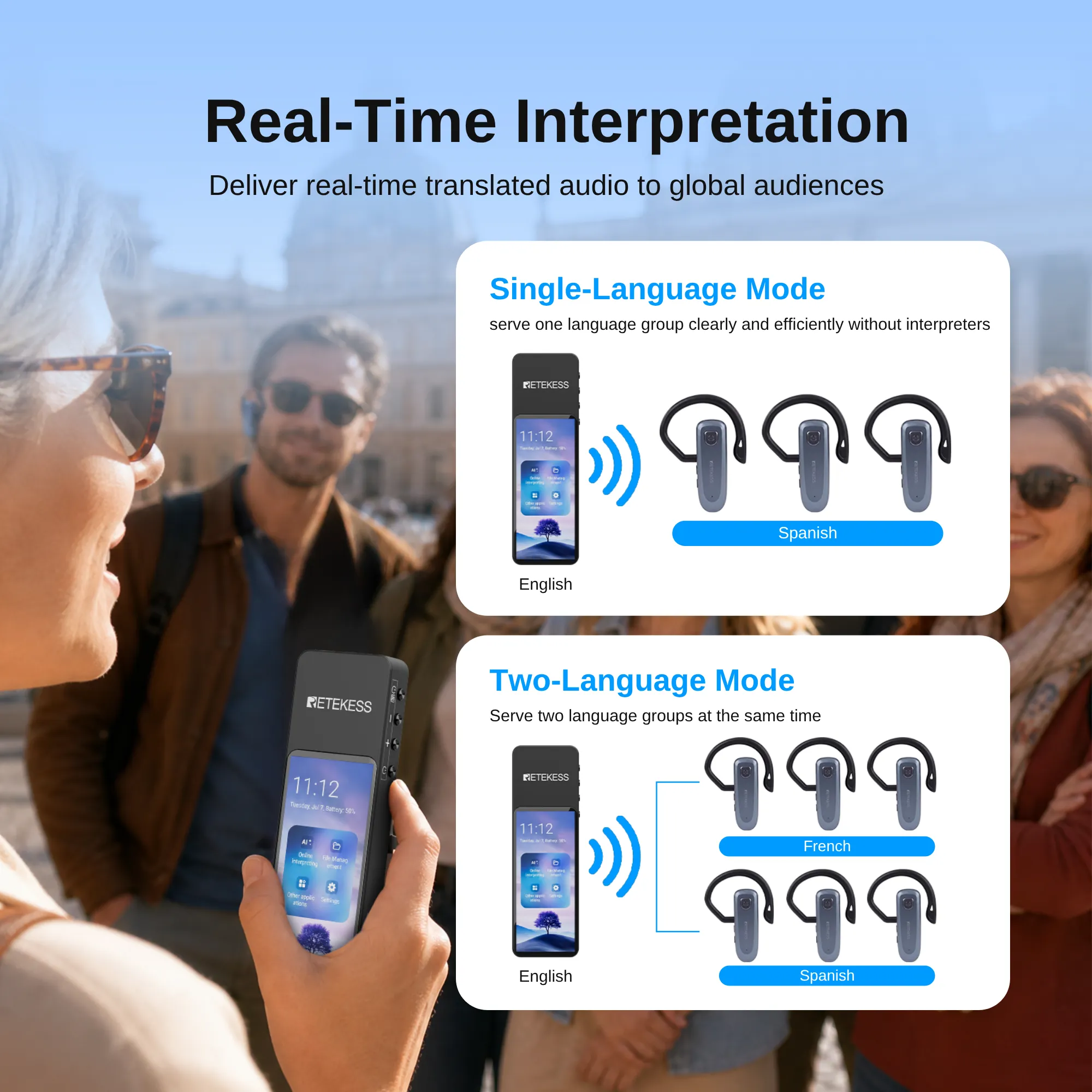
Standalone AI Hardware Devices: For mobile environments, field operations, and dynamic guided tours, dedicated hardware solutions integrate onboard AI translation engines directly into portable devices. These self-contained units process multiple spoken languages simultaneously without requiring external smartphone applications, complex Wi-Fi network configurations, or ongoing cloud dependencies, ensuring reliability even in remote or connectivity-restricted locations.
Key Technological Pillars Driving Modern Translation
To deliver sub-second latency and high semantic accuracy, modern real-time translation ecosystems rely on several critical technological pillars:
-
Automatic Speech Recognition (ASR): High-accuracy speech recognition engines rapidly convert spoken words into text across numerous regional dialects, accents, and colloquialisms with minimal error margins.
-
Neural Machine Translation (NMT): Unlike rigid literal translation methods, modern AI models contextualize phrases and idioms, ensuring natural phrasing, structural integrity, and deep cultural nuance.
-
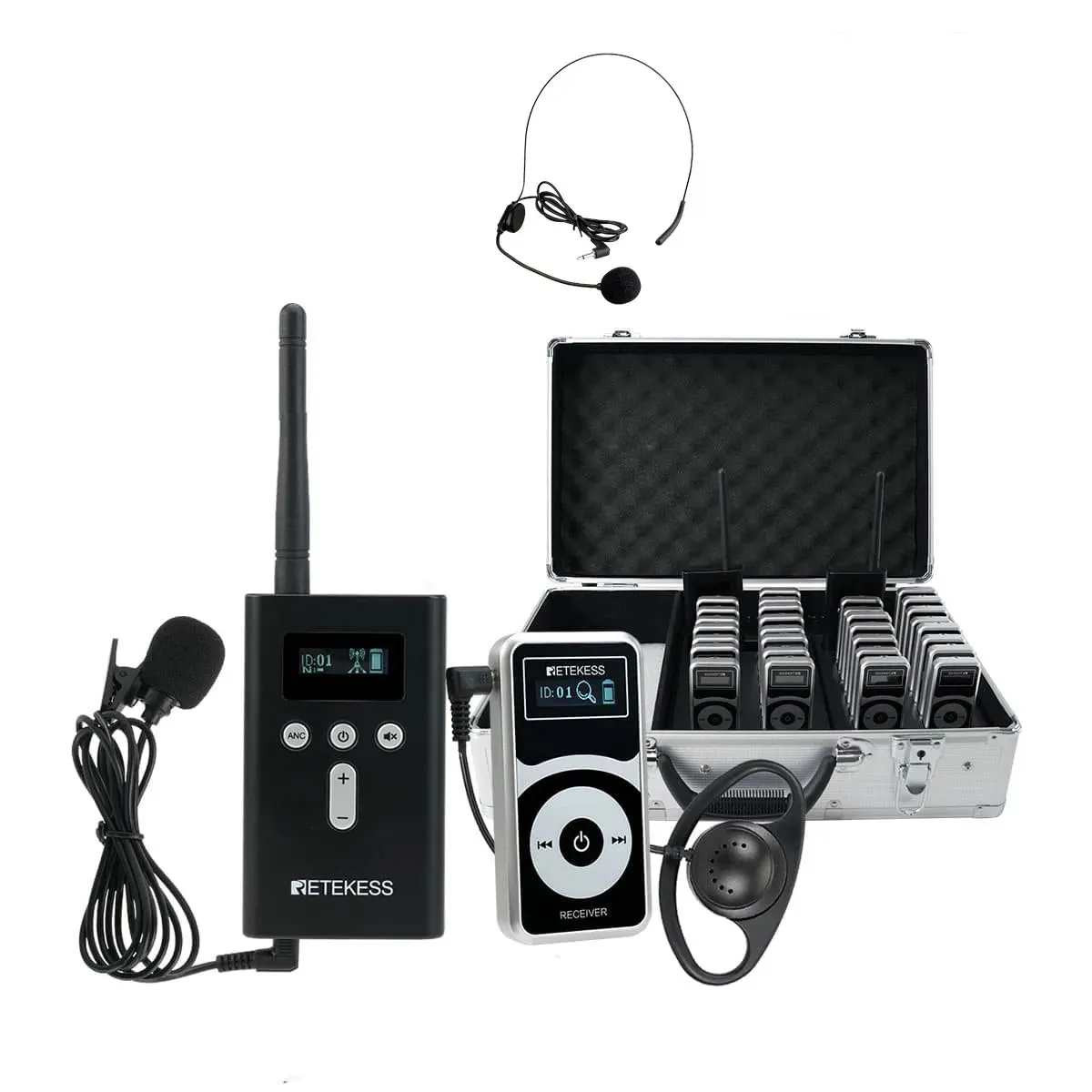
Low-Latency RF and Wireless Transmission: Utilizing stable wireless frequencies, such as advanced 2.4G RF technology, ensures crystal-clear audio distribution over hundreds of feet without interference, lag, or dropout issues in crowded exhibition venues.
-
Smart Multi-Language Recognition: Sophisticated translation hardware and software can automatically detect alternating speakers using different languages, eliminating the friction of manual channel switching and keeping multi-party conversations dynamic.
Real-World Applications Across Industries
The capability to translate speech in real time empowers diverse sectors to optimize their workflows and elevate international engagement:
-
Corporate Training & Human Resources: Multinational companies can seamlessly onboard global staff, conduct multi-location training programs, and stream live corporate updates in dozens of languages simultaneously, ensuring uniform company culture and compliance training worldwide.
-
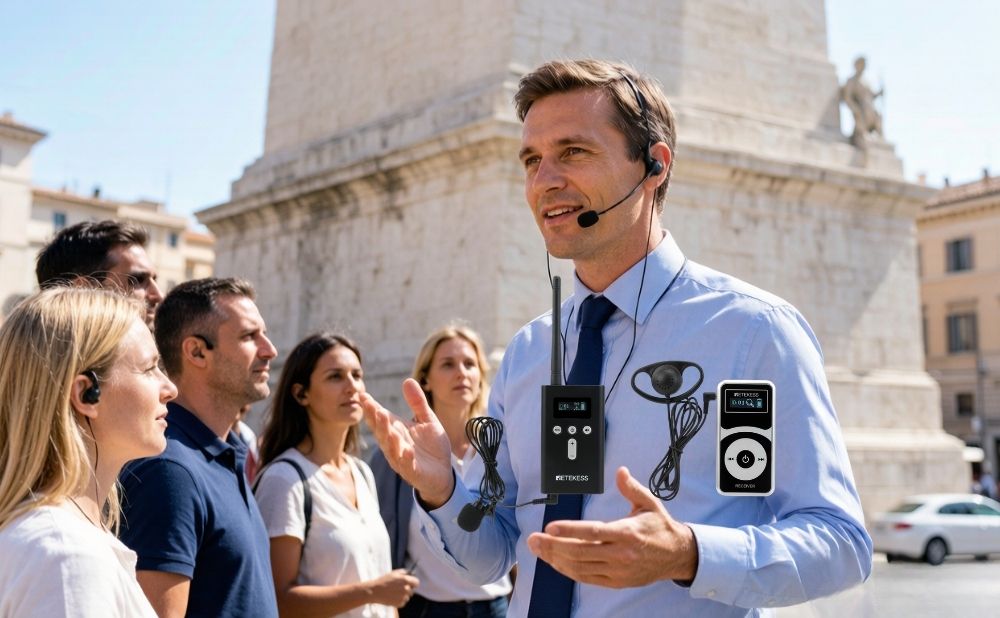
Factory Tours & Technical Audits: Visiting international clients, quality control inspectors, and manufacturing partners can inspect complex production lines while listening to precise, real-time translations through lightweight wireless receivers or dedicated portable translation devices.
-
Global Academic Exchanges: Universities, research institutions, and international youth programs utilize cloud and hardware translation solutions to bridge communication gaps during specialized lectures, campus tours, and cross-border collaborative forums.
Conclusion
The evolution from bulky, expensive interpretation booths to agile, AI-driven translation tools has permanently reshaped global communication. By understanding how to translate speech in real time using scalable cloud platforms and portable multi-language hardware, modern enterprises can foster true operational inclusivity, streamline cross-border collaborations, and connect effortlessly across any linguistic divide.





![[18th Anniversary] 18 Years of Echoing Excellence: Making Communication Easier, Connecting Trust Beyond Borders](https://res.retekess.com/z_file/20260716/retekess-brand-story-making-communication-easier_20260716151044_7682.jpg)
![[18 Years in Wireless Communication] Silent Disco Systems Anniversary Celebration: Top-Selling Headphones & Event Mechanics Revealed!](https://res.retekess.com/z_file/20260713/18-years-in-wireless-communication-silent-disco-systems-anniversary-celebration_20260713175011_5749.webp)
![[Anniversary Carnival] Ding-dong! 18th Anniversary Mega Sale on Guest Paging & Calling Systems: Full Reveal of 12+ Products & Promo Rules!](https://res.retekess.com/z_file/20260713/18th-anniversary-mega-sale-on-guest-paging-calling-systems_20260713175257_0295.webp)
![[Retekess 18th Anniversary Teaser] Tour Guide System Exclusive Perks: Sneak Peek at Event Dates & Mechanics!](https://res.retekess.com/z_file/20260713/retekess-18th-anniversary-tour-guide-system-exclusive-perks--2-_20260713180135_6435.webp)
Follow Us
Pay With


 Google
 Amazon
Comments (0)