
Table of Contents
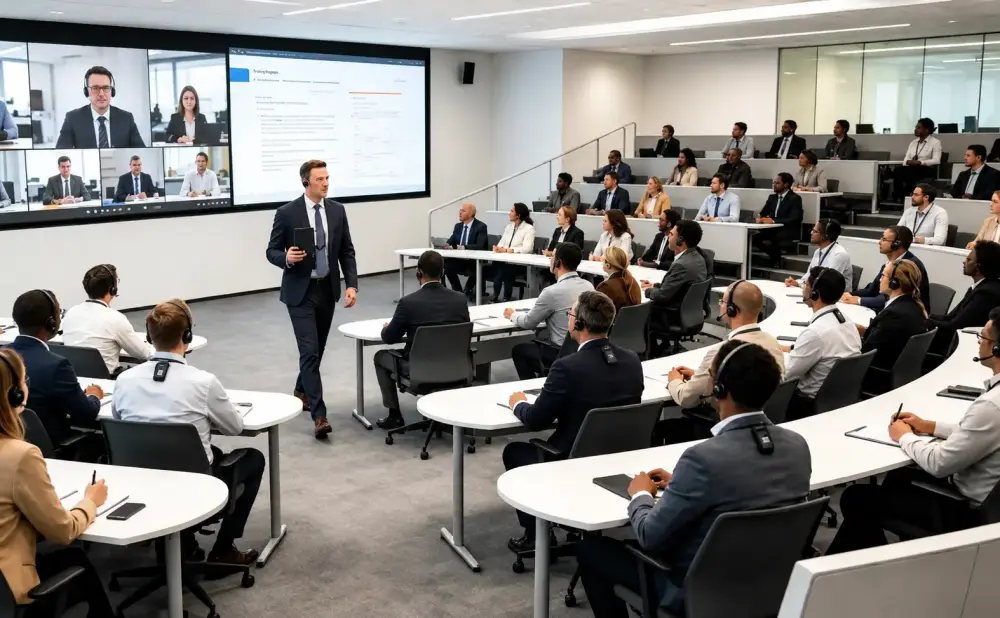
How Two-Way Wireless Audio Transmitters Transform Corporate Training Interaction
- Retekess
- Aug 5, 2026
For L&D teams and corporate trainers, delivering engaging, effective training to large or hybrid groups has never been more critical — and more challenging. A strong corporate training solution directly impacts employee performance, retention, and team alignment, but outdated audio tools often hold sessions back. From quiet participants who never speak up to messy group discussions that waste time, many common training roadblocks trace back to poor audio infrastructure. This is where a dedicated wireless audio transmitter makes a measurable difference, turning passive lectures into interactive, efficient training experiences.
The Core Pain Points of Modern Corporate Training Environments
Most underperforming training programs do not fail because of poor content — they fail because of poor participation and logistics. For teams managing large in-person sessions or hybrid workforces, four challenges consistently get in the way of results.
Low Engagement in Large Training Rooms
Large training spaces often mean only the front rows actively participate. Participants in the back can barely hear questions from the front, and speaking up requires raising voices, which discourages quieter team members. Over time, this turns training into one-way lectures, with low knowledge retention and minimal active participation. Trainers also waste valuable time repeating questions and passing handheld microphones, cutting into core learning time.
Disorganized Group Discussions and Hard-to-Measure Results
Group activities and breakout discussions are a staple of effective corporate training, but they are notoriously hard to manage in large rooms. Trainers struggle to monitor multiple groups at once, and sharing insights back to the full room is slow and inefficient. This disorganization also makes it harder to track participation levels and measure true training impact — a top pain point for HR and L&D leaders who need to prove program ROI to stakeholders.
Persistent Gaps in Hybrid and Remote Training
Hybrid training models add another layer of complexity. Remote participants often miss in-room side conversations and struggle to follow group discussions, while in-person teams find it clunky to include remote voices in real time. Standard video conferencing tools with a single room microphone pick up uneven audio and background noise, leaving remote attendees disconnected and reducing overall training effectiveness.
Why Traditional Audio Tools Aren’t a Reliable Corporate Training Solution
Many teams try to fix these issues with tools they already have, but most fall short of delivering a smooth, interactive experience.
Standard PA systems and handheld microphones work for one-way lectures, but they are poorly suited for interactive training. Passing a single mic around the room slows down discussions, and fixed speakers cannot pick up voices from every corner of a large space. They also offer no way for participants to speak naturally without interrupting the flow of the session.
Consumer-grade video conferencing tools fare even worse. Built for small meeting rooms, their built-in microphones cannot cover large training spaces, and they do not support individual, private audio for each participant. For fully on-site training, these tools are overcomplicated and underpowered, failing to solve the core problem of inclusive, two-way interaction.
How the Retekess TT126 Improves Training Outcomes
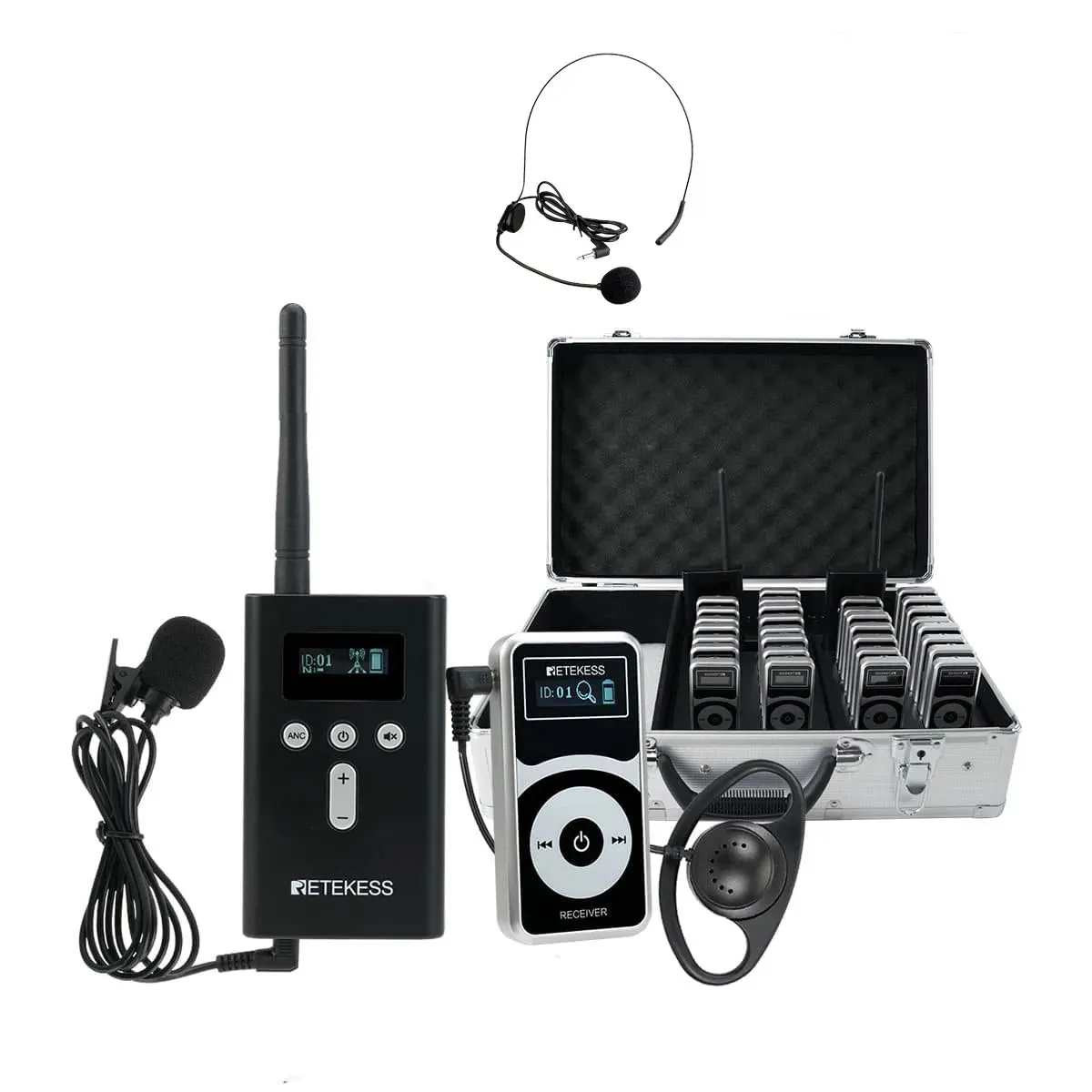
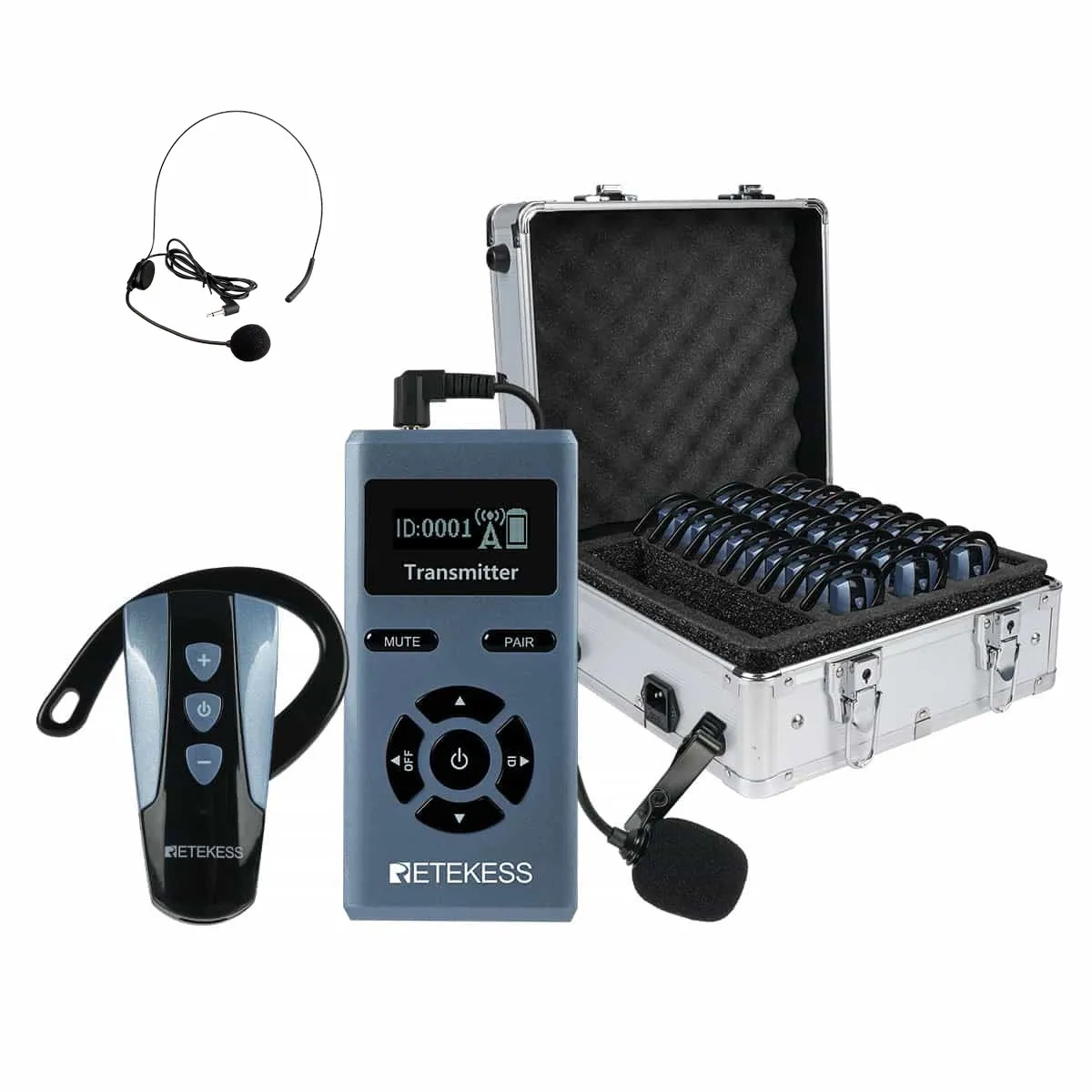
After evaluating multiple audio tools for corporate training environments, the Retekess TT126 Two-Way Tour Guide System stands out as a practical, high-performing wireless audio transmitter that addresses the most common training pain points without overcomplicating operations.
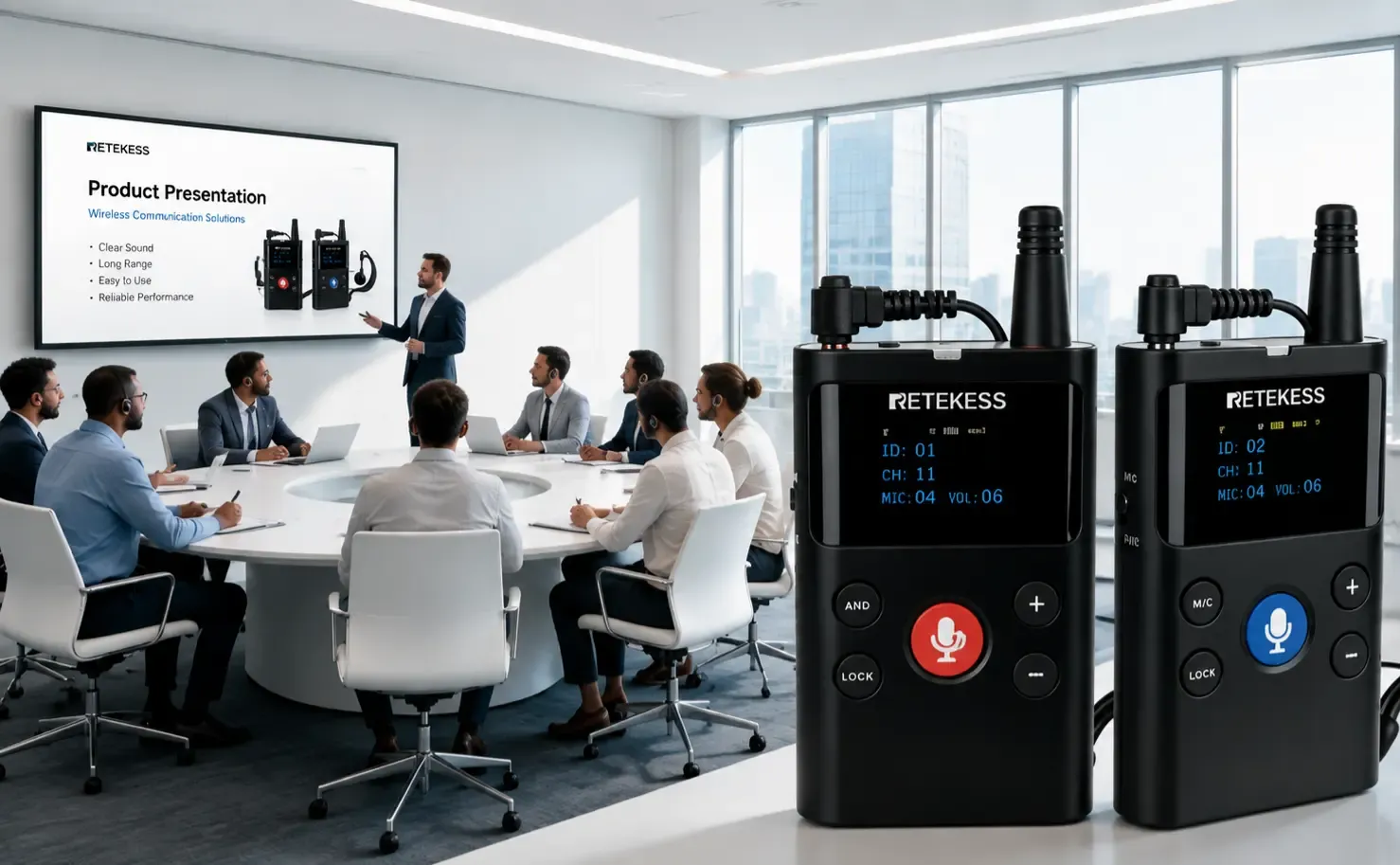
Natural Two-Way Interaction for More Engaging Sessions
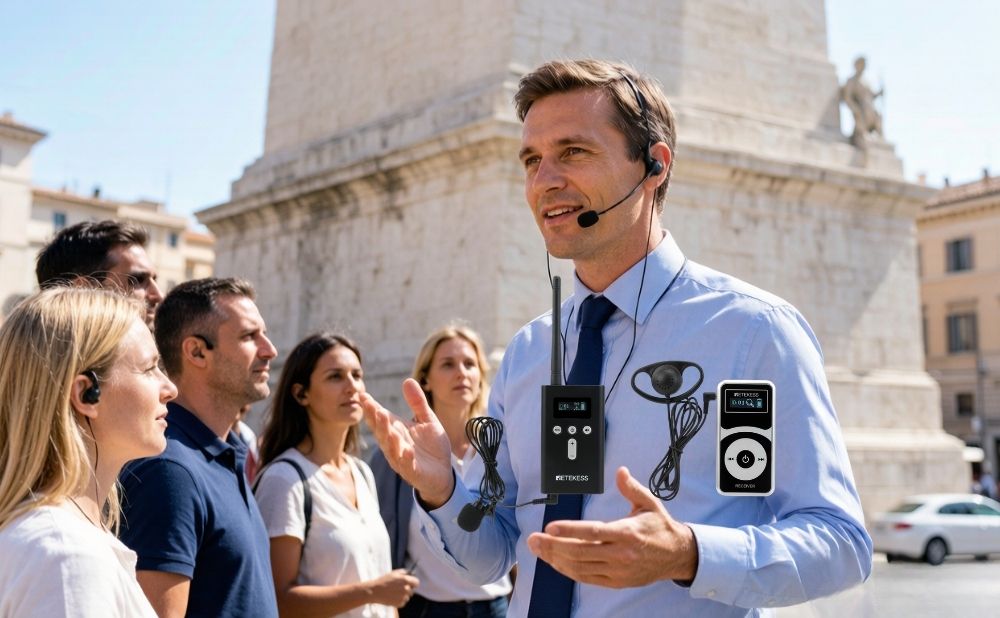
The biggest advantage of this system is its full-duplex two-way communication, with one-click speaking that lets participants contribute effortlessly. Every trainee wears a lightweight receiver with a headset, so they can ask questions or join discussions at the push of a button — no raising hands, no passing microphones, no raised voices. Trainers can call on anyone in the room, and everyone hears the response clearly, no matter where they are sitting. This simple change dramatically increases participation rates, especially among quieter team members, and makes sessions feel more inclusive.
Wide Coverage for Large Rooms and Breakout Activities
With a 280-meter (919-foot) working distance, this wireless audio transmitter covers even the largest training rooms, multi-zone spaces, and outdoor team building areas. Trainers can walk freely around the room or move between breakout groups while staying connected to the whole team. Automatic frequency pairing takes seconds to set up, so trainers spend less time troubleshooting tech and more time delivering content. For group discussions, the system makes it easy to share insights across groups without rearranging furniture or passing equipment.
Streamlined Hybrid Training Integration
The system works seamlessly with existing video conferencing setups, making it a flexible corporate training solution for both in-person and hybrid teams. Trainers can connect the audio feed directly to their meeting platform, so remote participants hear every in-room question and discussion clearly. In-person trainees can also hear remote participants’ questions through their headsets, creating a more unified experience for everyone.
All-Day Comfort and Hassle-Free Operation
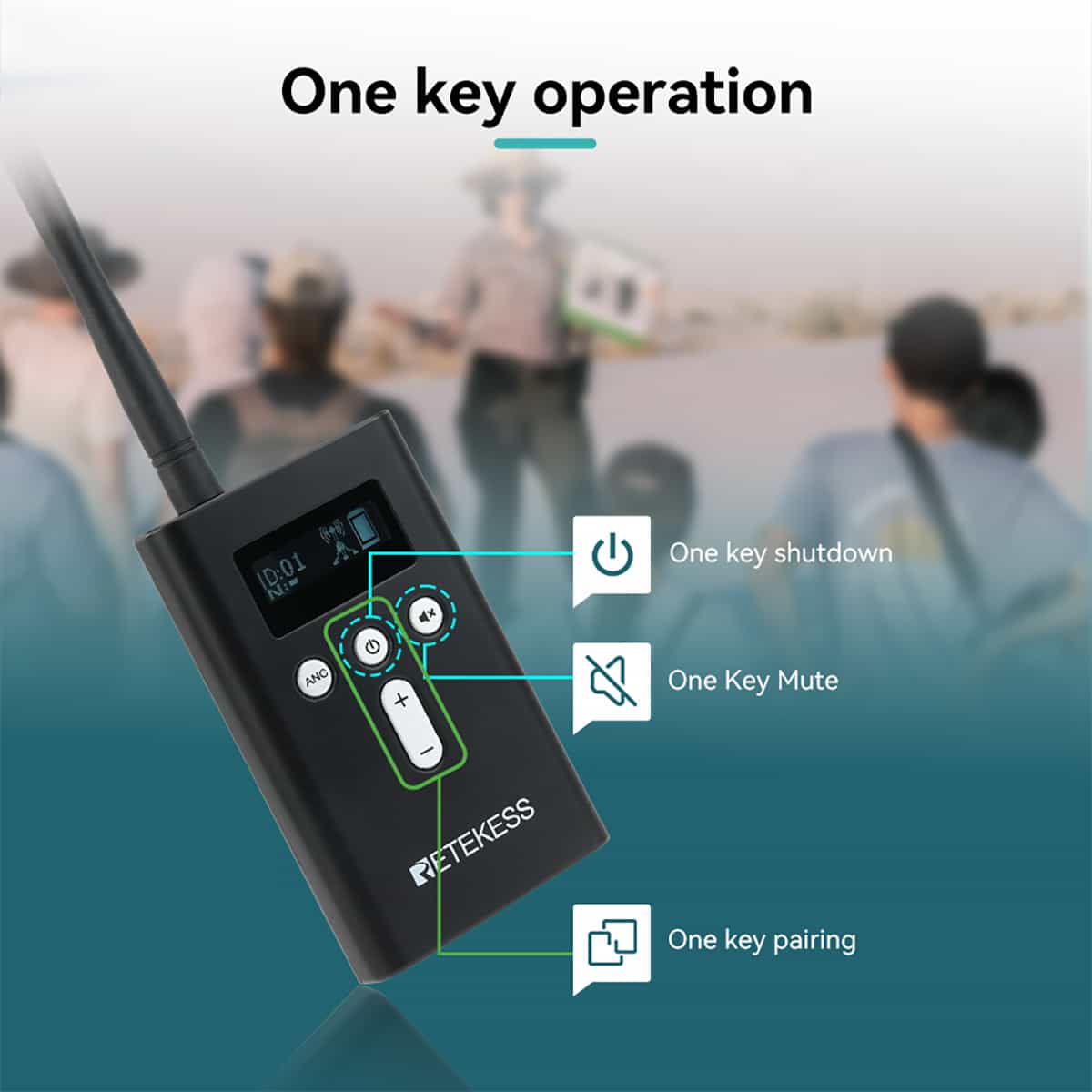
Weighing just 180g, each device is compact and lightweight, with both lanyard and back clip wearing options to free users’ hands during hands-on training activities. The OLED screen shows clear status updates, and Type-C charging supports long standby time for full-day training sessions. One-key shutdown makes end-of-day cleanup fast and simple. Trainers do not need advanced technical skills to run the system, and trainees can start using it with 30 seconds of instruction.
Key Features to Prioritize When Choosing a Training Audio System
If you are comparing options for your corporate training solution, focus on these non-negotiable features to ensure long-term value.
First, prioritize true two-way, full-duplex communication. Half-duplex systems that only let one person speak at a time feel unnatural and disrupt discussion flow. Second, verify sufficient transmission distance for your largest training space — you should not have to rearrange seating to make audio work. Third, look for easy setup features like automatic pairing, to reduce prep time for training teams. Finally, prioritize lightweight, comfortable wearability and long battery life, since users will wear the devices for 6–8 hours at a time.
Best Practices for Deploying Your System
To get the most value from your two way wireless audio transmitter, follow these simple guidelines:
- Test full-room coverage before your first training session to identify any dead zones.
- Give participants a 1-minute overview of basic controls at the start of each session.
- Use the back clip or lanyard option based on activity type — lanyards for seated training, clips for hands-on exercises.
- Charge all devices via Type-C overnight after each use to ensure full battery for the next session.
- Keep spare ear covers on hand for hygiene when sharing devices across multiple teams.
Frequently Asked Questions
Can a wireless audio transmitter support hybrid corporate training?
Yes. Most professional systems, including the Retekess TT126, can connect to video conferencing platforms via audio input, so remote attendees can hear in-room discussions clearly and participate in real time. This makes it a versatile corporate training solution for mixed in-person and remote teams.
How many participants can use one system at the same time?
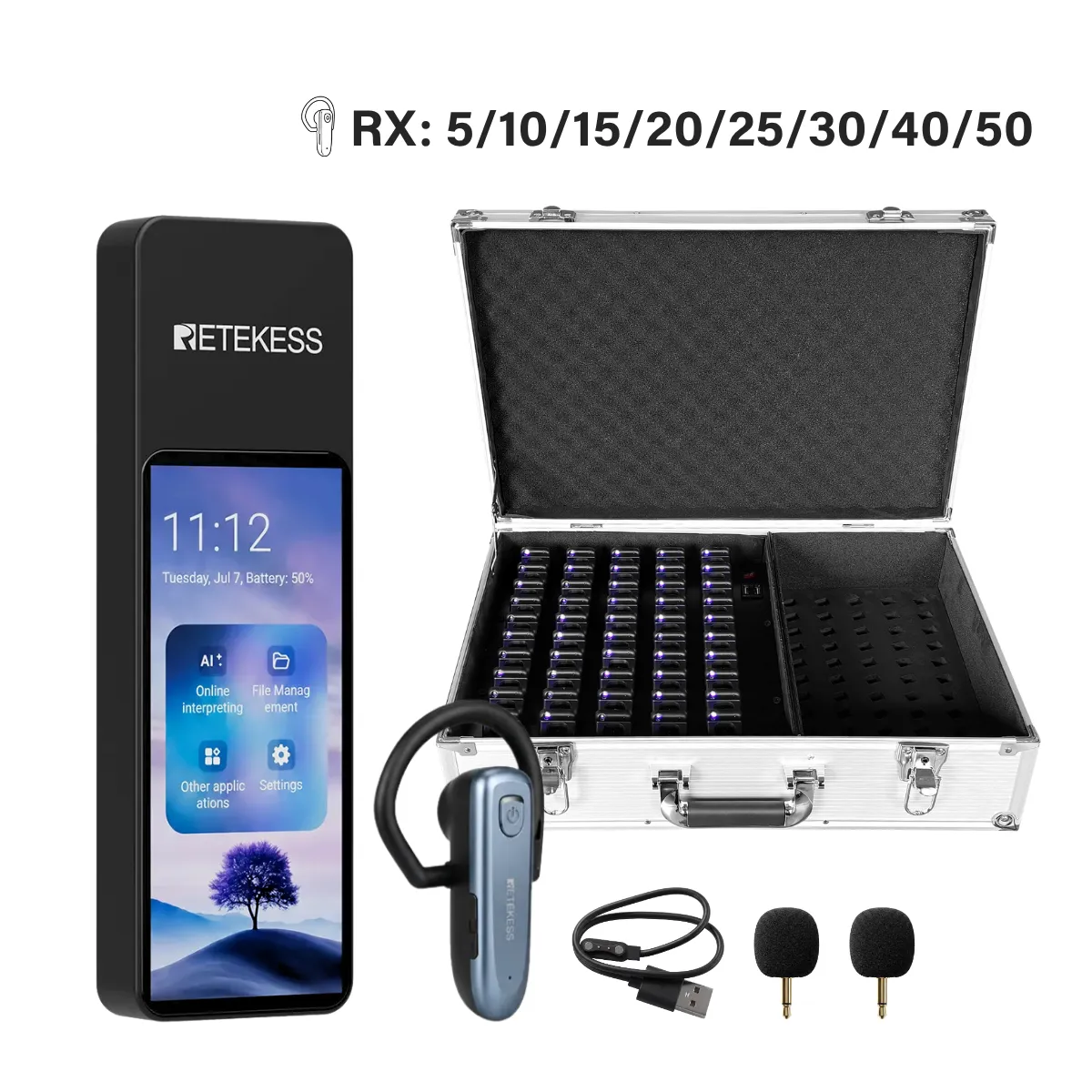
One transmitter can support any number of receivers tuned to the same frequency. Most teams use 1 transmitter with 10–50 receivers for standard training sessions, and you can easily add more receivers as your team grows.
Is the system difficult for non-technical trainers to use?
No. With automatic frequency pairing and simple one-button controls, the system is designed for everyday use by training teams with no specialized technical background. Most trainers master basic operation in under 10 minutes.
How long does the battery last for all-day training?
The Retekess TT126 offers long standby time and supports full-day use on a single charge. For extended multi-day training events, Type-C charging makes it easy to top up devices during breaks, keeping operations running smoothly.
Final Thoughts and Action Steps
Investing in the right audio infrastructure is one of the highest-impact upgrades you can make for your corporate training program. A wireless audio transmitter does not just make sessions sound clearer — it transforms passive lectures into interactive, inclusive learning experiences, streamlines group work, and closes gaps in hybrid training. Over time, this translates to better knowledge retention, higher participant satisfaction, and more measurable training ROI.
The Retekess TT126 Two-Way Tour Guide System balances performance, ease of use, and value, making it a strong fit for both small businesses and enterprise training teams. If you are currently evaluating tools to upgrade your corporate training solution, start by mapping your most common pain points — whether low participation, large room coverage, or hybrid integration — and test how a two-way audio system performs in your actual training space.
For teams ready to move past clunky microphones and disjointed hybrid sessions, a purpose-built wireless audio transmitter is a straightforward investment that delivers immediate, visible improvements to every training session.
Leave a Reply

![[18th Anniversary] 18 Years of Echoing Excellence: Making Communication Easier, Connecting Trust Beyond Borders](https://res.retekess.com/z_file/20260716/retekess-brand-story-making-communication-easier_20260716151044_7682.jpg)
![[18 Years in Wireless Communication] Silent Disco Systems Anniversary Celebration: Top-Selling Headphones & Event Mechanics Revealed!](https://res.retekess.com/z_file/20260713/18-years-in-wireless-communication-silent-disco-systems-anniversary-celebration_20260713175011_5749.webp)
![[Anniversary Carnival] Ding-dong! 18th Anniversary Mega Sale on Guest Paging & Calling Systems: Full Reveal of 12+ Products & Promo Rules!](https://res.retekess.com/z_file/20260713/18th-anniversary-mega-sale-on-guest-paging-calling-systems_20260713175257_0295.webp)
![[Retekess 18th Anniversary Teaser] Tour Guide System Exclusive Perks: Sneak Peek at Event Dates & Mechanics!](https://res.retekess.com/z_file/20260713/retekess-18th-anniversary-tour-guide-system-exclusive-perks--2-_20260713180135_6435.webp)
Follow Us
Pay With


 Google
 Amazon
Comments (0)