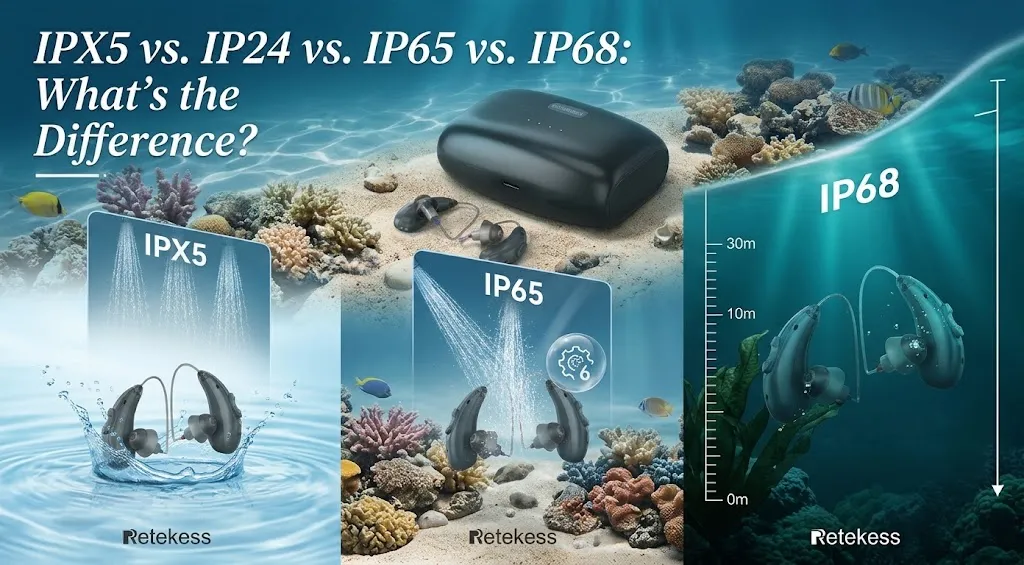
IP stands for Ingress Protection. Under the IEC 60529 standard, an IP rating describes how well an equipment enclosure protects against the entry of solid objects and water under specified test conditions.
An IP code generally consists of two characters after "IP":
The first digit indicates protection against solid objects, including dust.
The second digit indicates protection against water.
For example, in IP68, the first digit, 6, indicates a dust-tight enclosure, while the second digit, 8, indicates protection against the effects of immersion under specified conditions.
When an X appears in a rating, such as IPX5, it means that protection for that category has not been specified in the code. It does not automatically mean the product has no protection.
Here is a quick comparison of the four ratings.
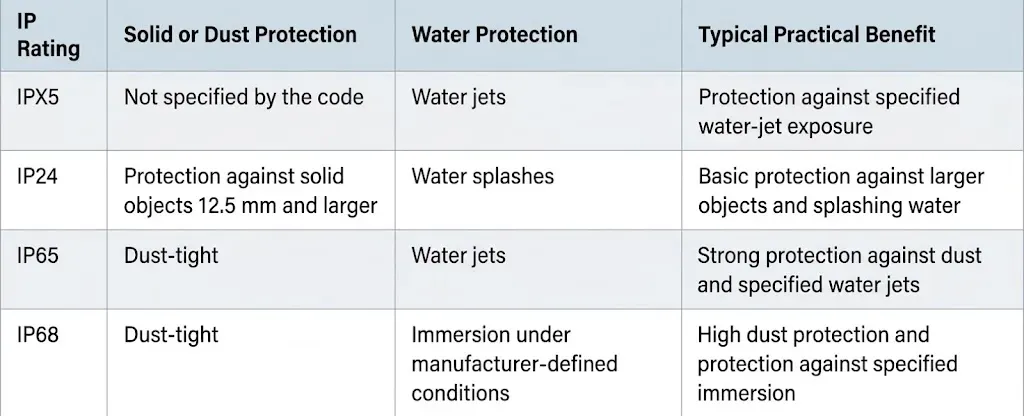
These ratings describe different types of protection. IP68 is not automatically superior in every water-exposure scenario: a product's specific test conditions matter, and IP68 alone does not establish that it has passed a separate water-jet test.
IPX5 indicates that a device has been tested against water jets under specified conditions.
Advantages:
Suitable for products designed to withstand the specified water-jet exposure.
Useful where occasional splashes or directed water may be encountered.
Provides a defined level of water protection rather than relying on vague marketing terms.
Limitations:
The X means the rating does not specify a solid-object protection level.
IPX5 does not establish protection against immersion in water.
It should not be interpreted as a guarantee against every type of moisture exposure.
For everyday electronics, IPX5 can be useful, but consumers should still follow the manufacturer's instructions for use around water.
IP24 offers protection against solid objects 12.5 mm and larger, along with water splashes from any direction under the specified test conditions.
Advantages:
Provides protection against larger solid objects.
Offers a defined level of splash protection.
May be adequate for equipment used in relatively controlled environments.
Limitations:
It is not a dust-tight rating.
It is not designed to establish protection against water jets or immersion.
It offers less extensive dust and water protection than ratings such as IP65 and IP68.
For a device worn throughout the day, exposure to dust, sweat, and moisture may extend beyond the conditions covered by IP24.
IP65 combines two important features: dust-tight protection and resistance to water jets under specified test conditions.
Advantages:
The first digit, 6, indicates a dust-tight enclosure.
The second digit, 5, indicates protection against water jets.
Provides useful protection for equipment exposed to dusty environments and certain wet conditions.
Limitations:
IP65 does not establish protection against immersion.
Water resistance is not the same as being suitable for swimming or showering.
Seals and enclosures can be affected by wear, damage, and improper maintenance.
IP65 can be a strong choice for many everyday electronics, particularly where dust protection is important. However, consumers who are concerned about accidental immersion should look for an appropriate immersion rating as well.
IP68 combines dust-tight protection with protection against immersion under conditions specified by the manufacturer and agreed upon for the relevant application.
Advantages:
The first digit, 6, indicates a dust-tight enclosure.
The second digit, 8, indicates protection against the effects of immersion under specified conditions.
Offers an important additional layer of protection for products that may encounter more demanding moisture exposure.
Limitations:
The permitted depth and duration of immersion depend on the specified test conditions.
IP68 does not automatically mean a product is suitable for swimming, showering, or prolonged underwater use.
Salt water, soap, chemicals, temperature changes, physical damage, and aging seals may affect real-world performance.
For people who wear hearing aids every day, IP68 can provide valuable reassurance. However, it is still important to follow the product's specific care instructions.
Hearing aids contain sensitive electronic components, microphones, receivers, and charging contacts. Regular use can expose them to moisture in several ways.
Walking, exercising, gardening, or spending time outdoors can expose hearing aids to perspiration. Repeated moisture exposure may affect devices that are not adequately protected.
A suitable water-resistance rating can provide an additional layer of protection during everyday activities.
Unexpected rain or humid conditions can create challenges for people who wear hearing aids throughout the day.
A higher level of tested moisture protection may help reduce concerns about ordinary environmental exposure, provided the device is used within its specified limits.
Dust and small particles may affect sensitive components, particularly when they accumulate around openings, microphones, or charging contacts.
Dust-tight protection can help reduce the risk of solid particles entering the protected enclosure. Routine cleaning remains important.
Accidents happen. A device may encounter more moisture than expected during daily use.
An appropriate immersion rating can offer an additional level of protection, but it should never be treated as permission to deliberately expose hearing aids to water beyond their instructions.
Remember: An IP rating describes protection for the device enclosure. It does not mean that moisture is harmless to the ear canal, nor does it eliminate the need for proper cleaning and drying.
Water resistance is only one part of a good hearing aid. Before making a purchase, consider the following factors.
Sound processing: Does the device help you manage conversations in different listening environments?
Personalized fitting: Can you adjust amplification to your hearing needs?
Connectivity: Does it support the phone or television features you need?
Comfort: Does the design suit your ears and allow comfortable daily wear?
Protection: Is the IP rating clearly stated, and are its limitations explained?
After-sales support: Can you get assistance with fitting, setup, and troubleshooting?
The best choice balances protection, sound performance, comfort, usability, and ongoing support.
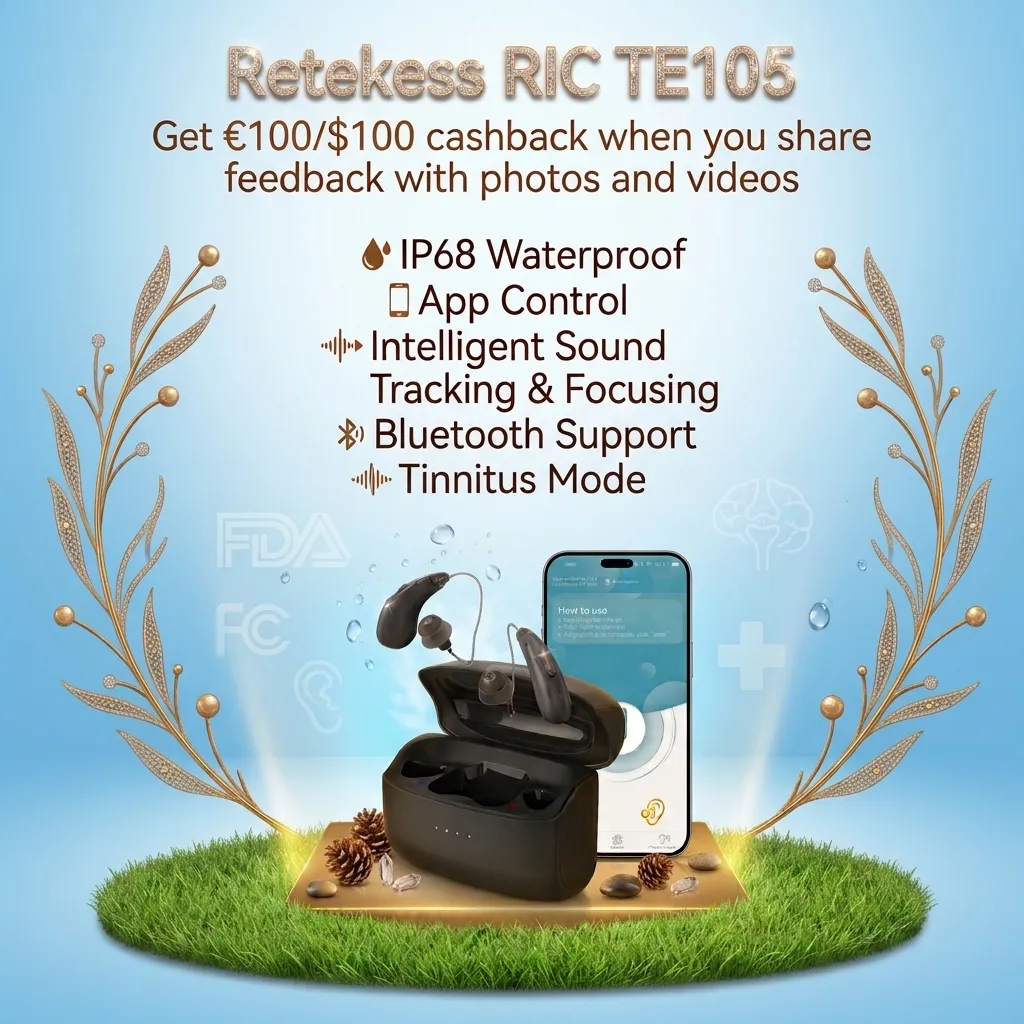
If you are looking for a hearing aid that combines advanced listening features with a high level of dust and water protection, the Retekess TE105 Smart RIC Bluetooth Hearing Aid is worth considering.
Designed for people with moderate to severe hearing loss, the TE105 brings together IP68 protection, intelligent speech tracking, Bluetooth connectivity, and personalized fitting features in a receiver-in-canal design.
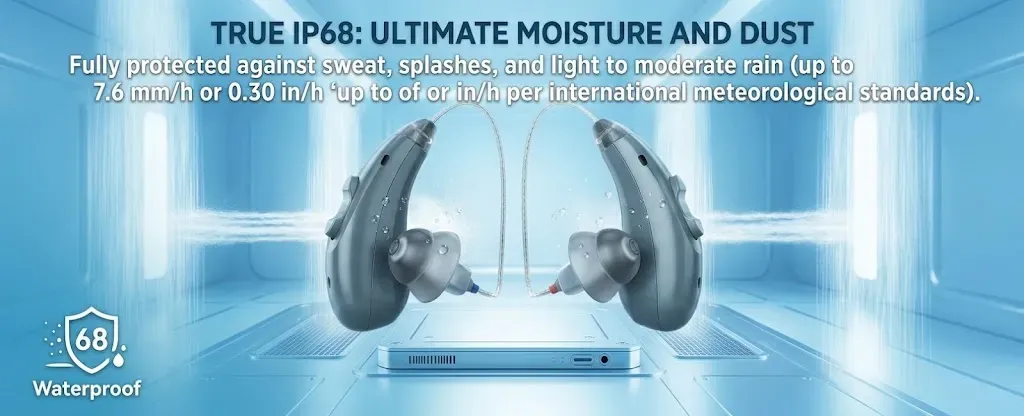
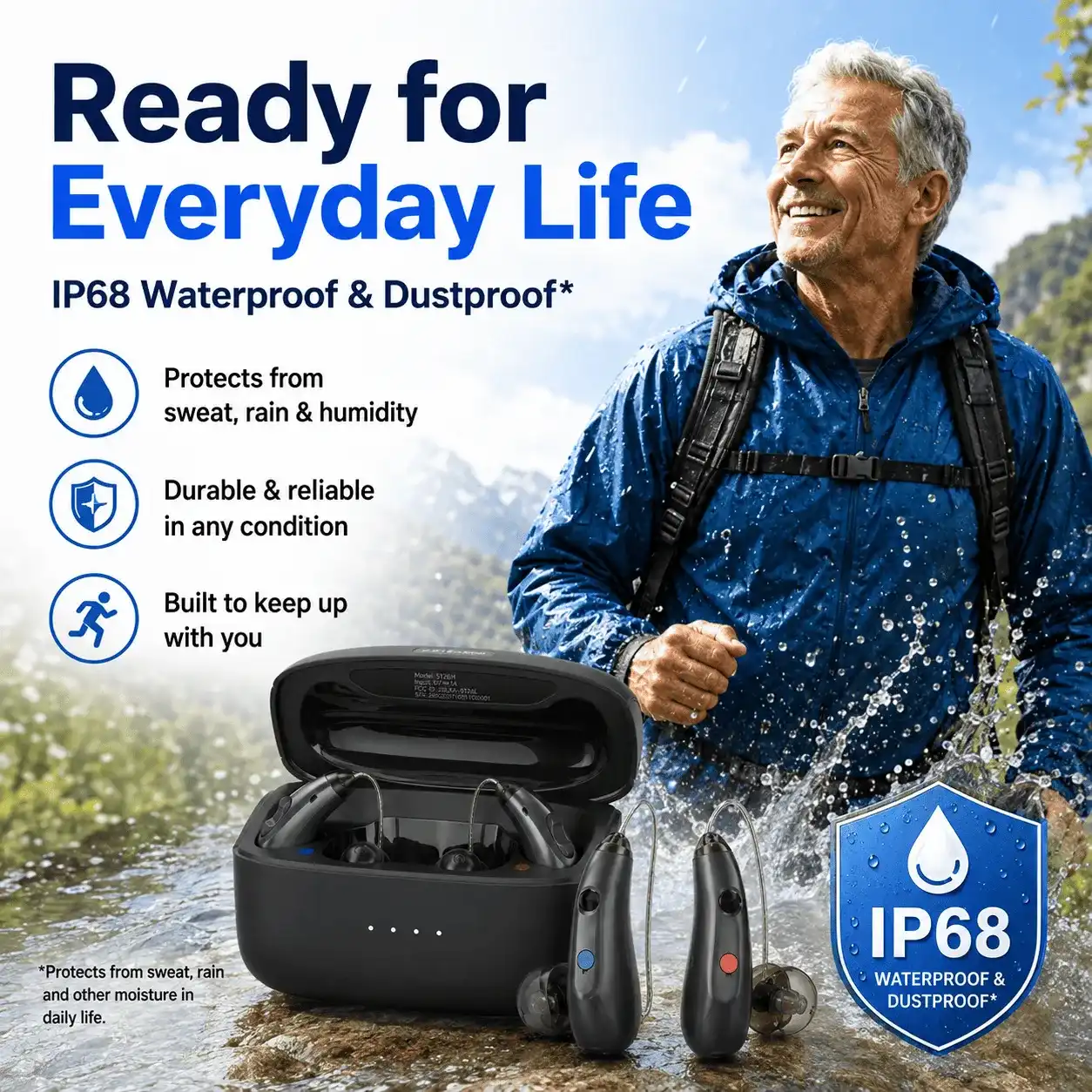
The TE105 features an IP68-rated design, combining dust-tight protection with immersion protection under its specified test conditions.
Fully protected against sweat, splashes, and light to moderate rain (up to 7.6 mm/h or 0.30 in/h per international meteorological standards).
Note: If exposed to rain, dry the microphone ports with a soft cloth to ensure clear sound quality. Do not submerge the device in water for extended periods.
This feature can be particularly useful for people who wear their hearing aids throughout the day and want additional protection against everyday environmental exposure.
As with any electronic hearing aid, follow the product's instructions and avoid assuming that IP68 makes it suitable for swimming or showering.
Hearing more sound does not always mean understanding more speech.
The TE105 incorporates intelligent speech tracking and voice-enhancement features designed to help users focus on conversations while managing unwanted environmental noise.
Whether you are talking with family at home or meeting friends in a busier environment, these features aim to make listening more manageable.
Actual results vary according to the user's hearing, surroundings, and fitting settings.
The TE105 supports app-based hearing tests, self-fitting, importing an existing audiogram, and manual parameter adjustments.
Its 16-channel WDRC digital signal processing and four adjustable sound-control bands provide options for tailoring the listening experience.
Users can adjust settings for noise suppression, human-voice enhancement, impact-noise suppression, and wind-noise suppression.
This flexibility helps users adapt settings to their preferences, although it does not replace professional assessment when needed.
The TE105 supports Bluetooth connectivity with compatible phones and televisions, along with multiple listening modes designed for different environments.
Its modes include general listening, restaurant conversation focus, TV clarity, and outdoor wind-noise reduction.
The aim is to make it easier to switch between everyday listening situations without relying on one fixed sound setting.
Choosing a hearing aid also means choosing how you will be supported after purchase.
Retekess offers a 60-day free trial, a 3-year warranty, and lifetime technical support for the TE105.
These services can help users evaluate the product in their everyday lives and get assistance with setup and troubleshooting.

The TE105 may be worth considering if you:
Want a RIC hearing aid with IP68-rated dust and water protection.
Need adjustable sound settings for different listening environments.
Want Bluetooth connectivity with compatible devices.
Prefer app-based self-fitting and personalized adjustments.
Value a trial period and ongoing technical support.
Hearing needs differ from person to person. If you have severe or profound hearing loss, persistent ear symptoms, or difficulty understanding speech even with amplification, consult a hearing healthcare professional to determine the most appropriate solution.
IPX5, IP24, IP65, and IP68 describe different levels and types of enclosure protection. Understanding these differences helps you make a more informed decision instead of relying on the word "waterproof" alone.
For everyday hearing aid users, IP68 offers the combination of dust-tight protection and specified immersion resistance. When paired with personalized fitting, speech-processing features, and dependable support, it can be an important part of a practical hearing solution.
The Retekess TE105 Smart RIC Bluetooth Hearing Aid brings these elements together, helping users explore a more personalized listening experience with added protection for everyday life.
Explore the Retekess TE105 and find out whether it fits your hearing needs.








 Google
 Amazon