When shopping for tour guide systems, "noise cancellation" is easily the most requested feature—and the most misunderstood.
Spec sheets often throw around ANC and ENC as if they were interchangeable. But treating them as synonyms is a mistake: they act on completely different parts of the audio chain and solve fundamentally different real-world problems.
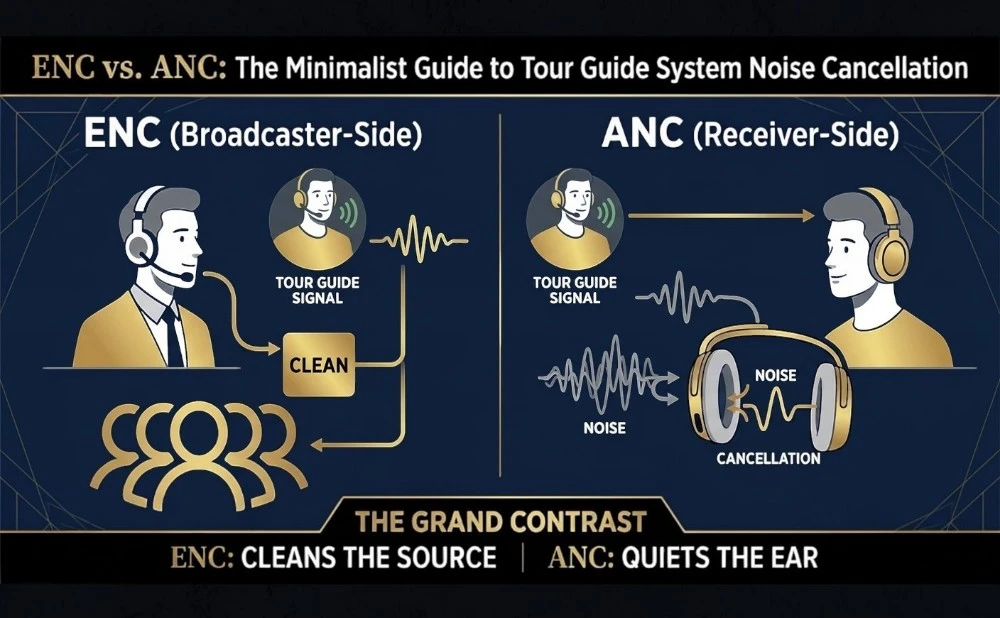
The crucial difference comes down to whether the noise processing happens before transmission or at the listener's ear:
ANC relies on microphones built into the listener's earcups. It listens to ambient room noise (like airplane engines or HVAC hums) and generates an inverted sound wave inside the earcup to cancel the noise out.
The Result: Only the individual wearing that specific headset hears a quieter environment.
The Limitation: It does not improve the tour guide's transmitted voice. If the guide is speaking in a noisy factory floor, every guest still hears the guide's voice buried under heavy background noise.
ENC operates at the front end of the audio chain before signal transmission. A DSP chip inside the guide's transmitter separates the human voice frequencies from background noise (such as machinery rumble, wind, or traffic) and filters out the noise before broadcasting the audio.
The Result: Every guest in the group receives a clean, clear voice signal over their receivers.
A tour guide system is a one-to-many broadcast. One transmitter speaks to twenty or thirty receivers simultaneously.
Personal Feature vs. System Feature: Cleaning the signal at the source (ENC) multiplies the benefit across every guest in the group. In contrast, ANC at the receiver only quiets ambient room sound for one person while leaving the guide's voice just as noisy for everyone else.
Outdoor Tour Safety: Wearing heavy ANC headphones on a city walking tour blocks out traffic sounds, creating a safety hazard. What guests actually need is a crisp, clean voice signal, not complete isolation from their surroundings.
When leading a tour, more noise reduction isn't always better.
Aggressive digital noise filtering strips away natural speech resonance, making the tour guide sound thin, synthetic, or like they are speaking through a walkie-talkie—which quickly causes listener fatigue.
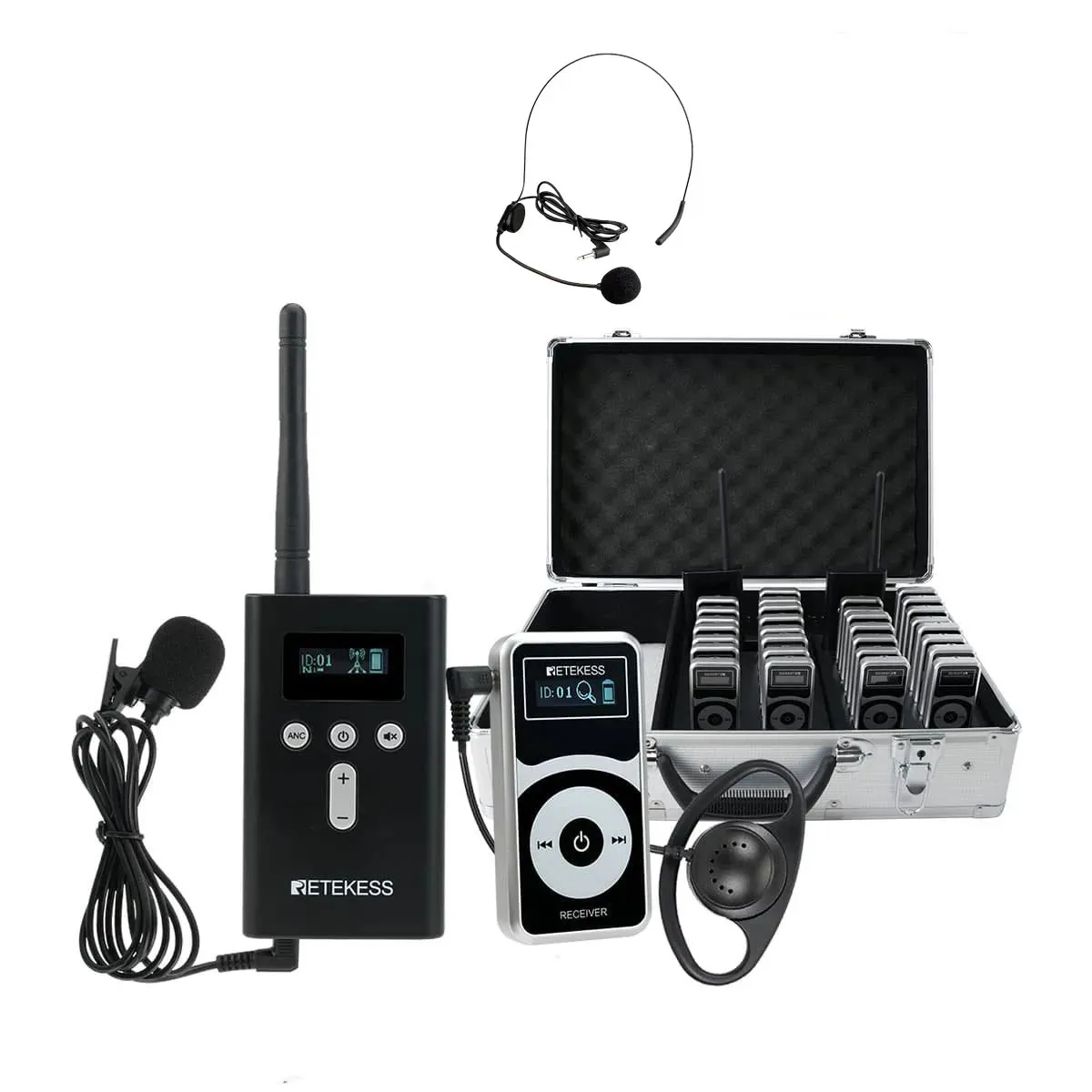
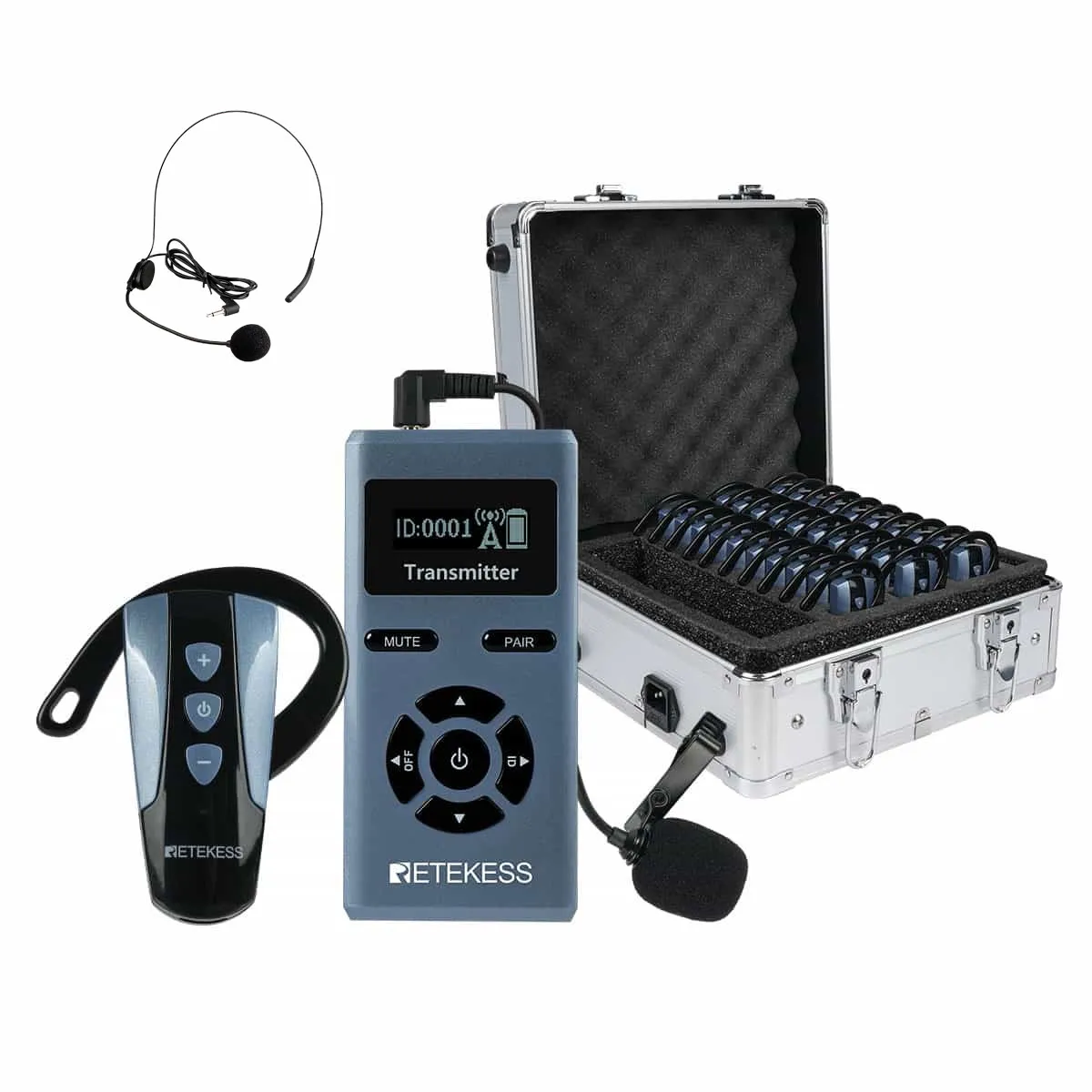
This is why professional whisper systems like the Retekess T130P feature 1 to 4 selectable levels of DSP noise cancellation:
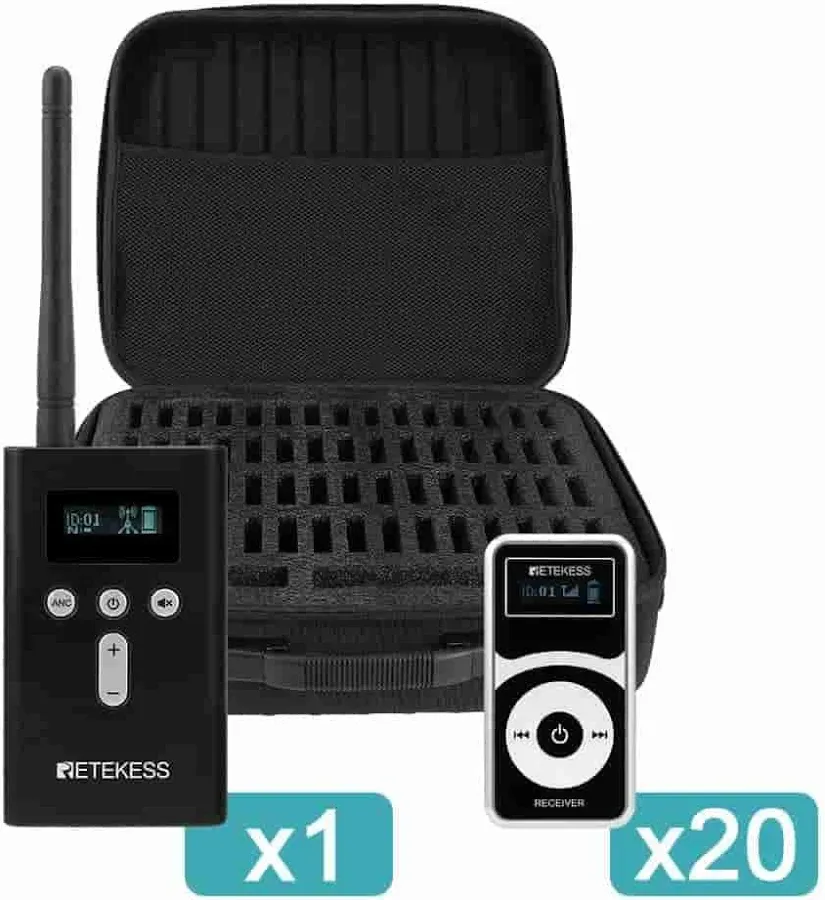
Levels 1–2 (Light Filtering): Ideal for art galleries, cathedrals, or quiet museum floors where background noise is minimal. Low filtering preserves the guide's natural, warm voice timber.
Levels 3–4 (Deep Filtering): Built for heavy industrial plants, busy machine shops, or noisy street intersections. Intelligibility takes priority over voice warmth, suppressing harsh mechanical rumbles and traffic noise.
Before running a field demo, keep these three physical limitations in mind to avoid common misattributions:
Competing Background Speech: ENC algorithms distinguish speech from continuous background rumble (like motors or fans), but cannot isolate the guide's voice from nearby people talking at the same pitch.
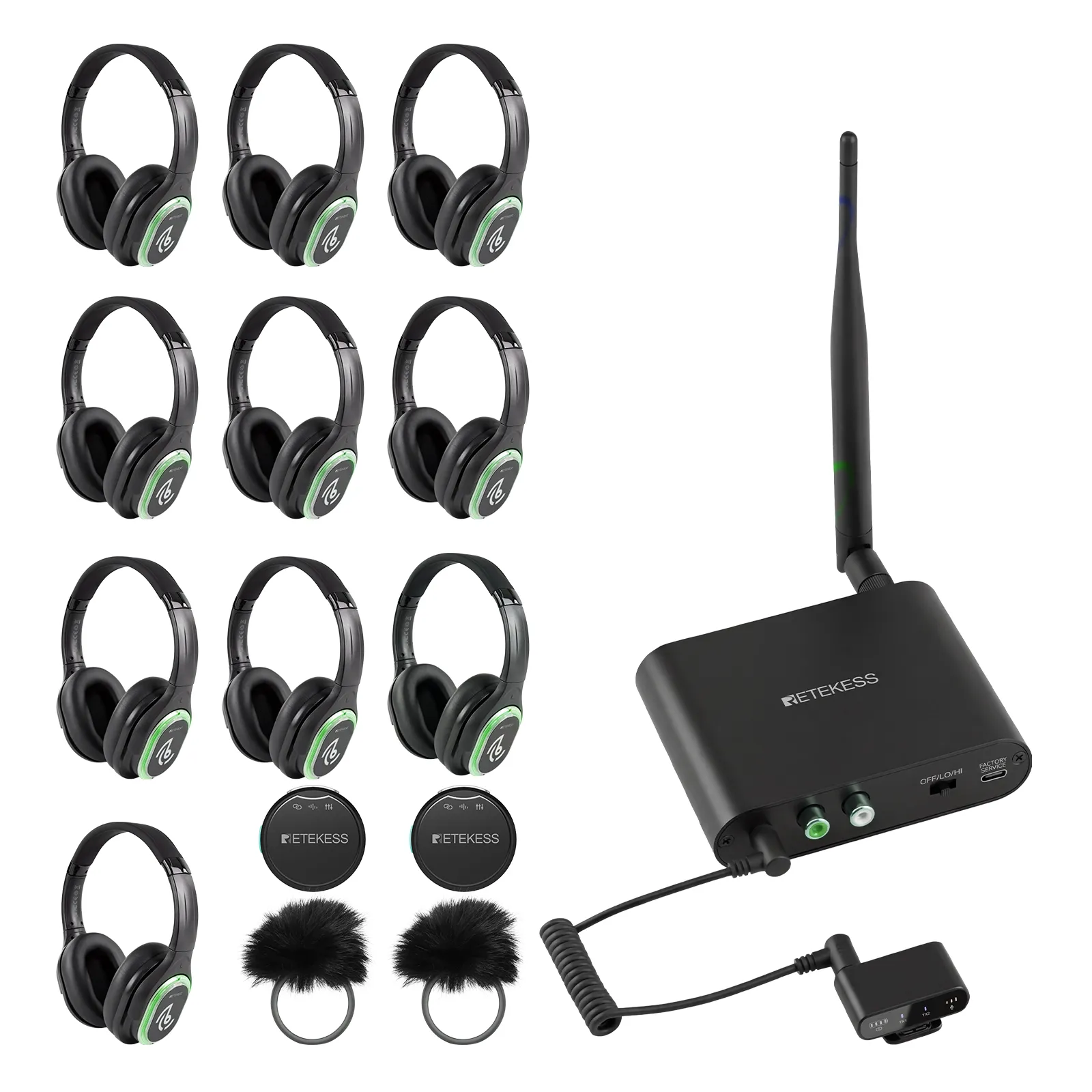
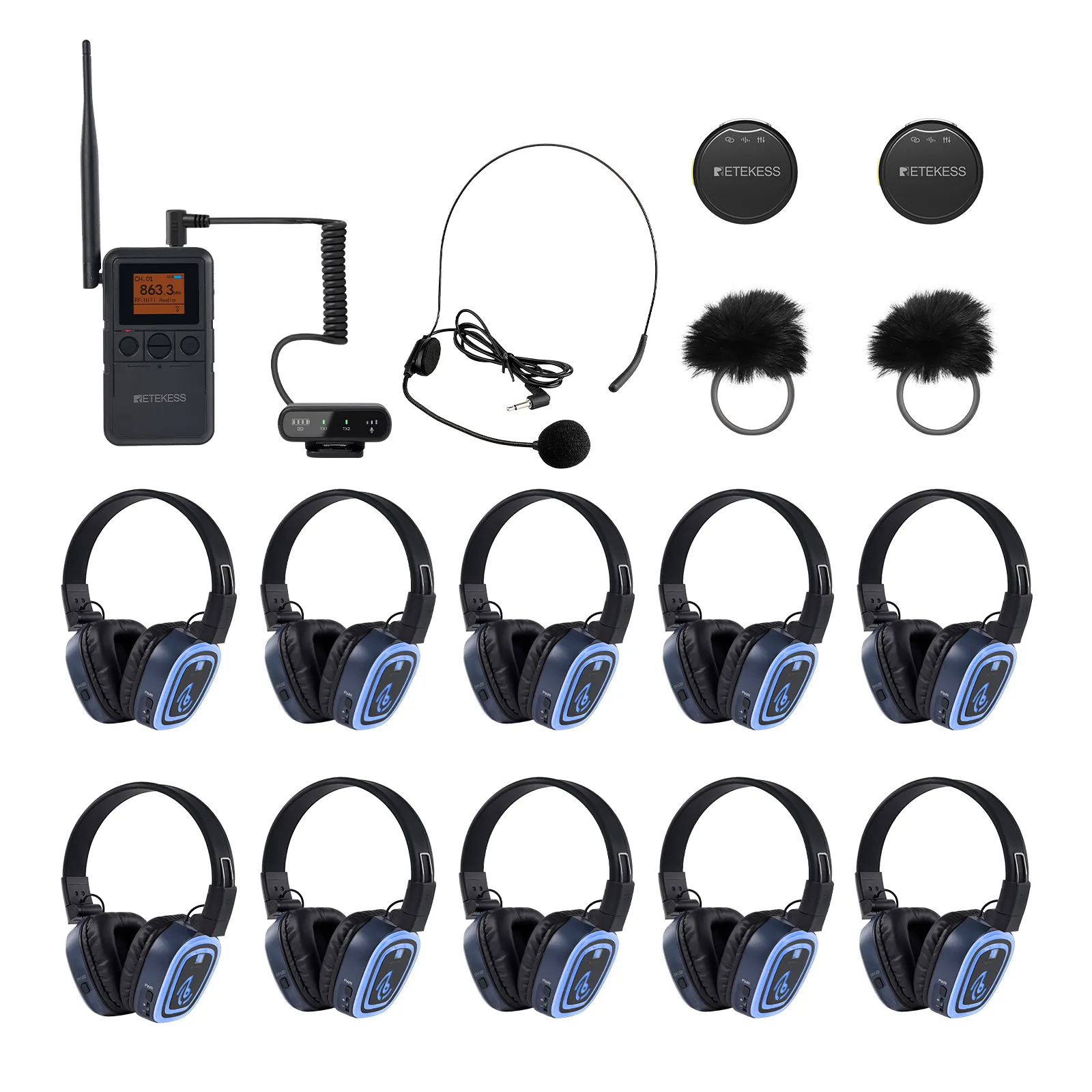
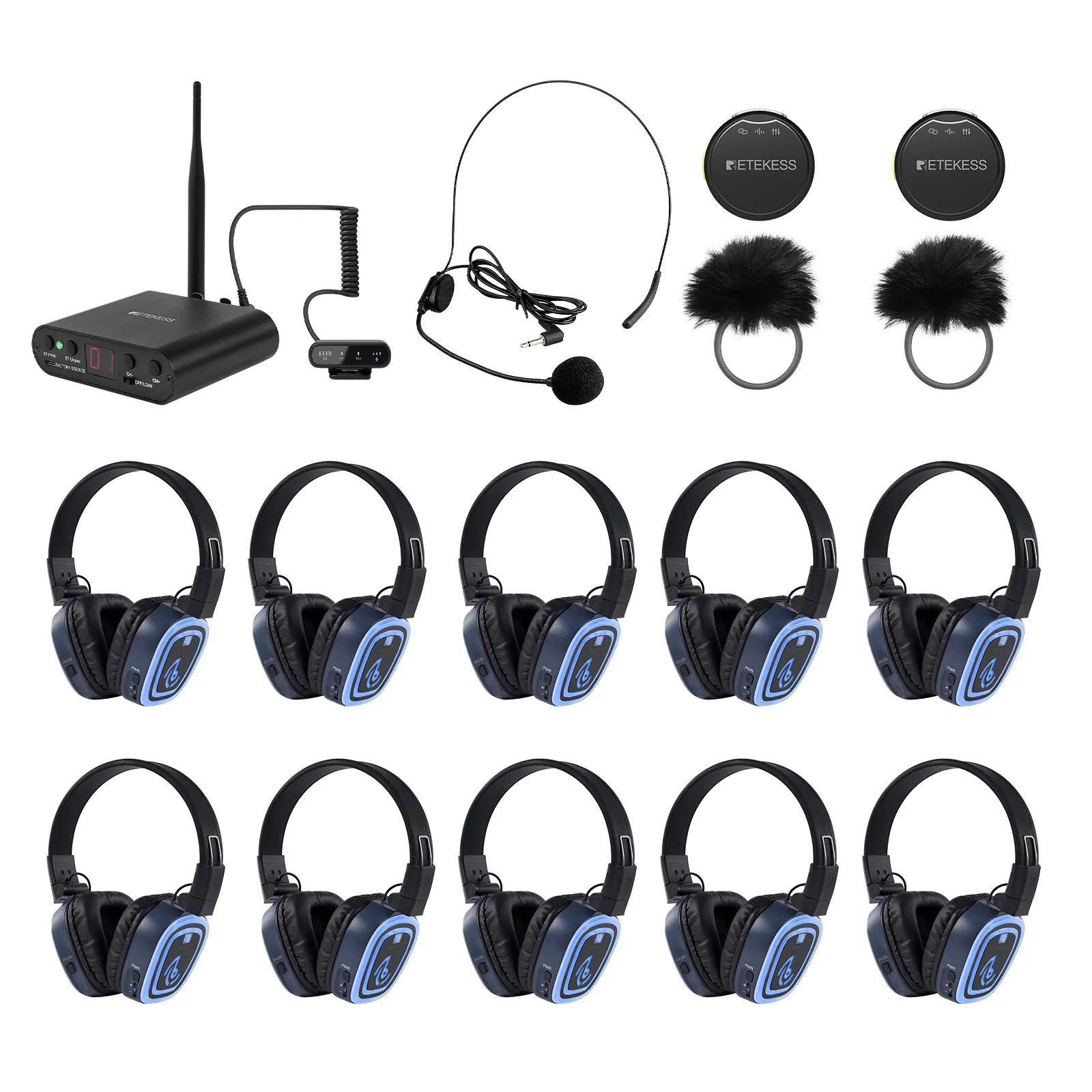
Physical Wind Noise: Wind rushing across a microphone capsule cannot be digitally modeled or removed by software. The cheapest and most effective fix is a physical foam or furry windscreen.
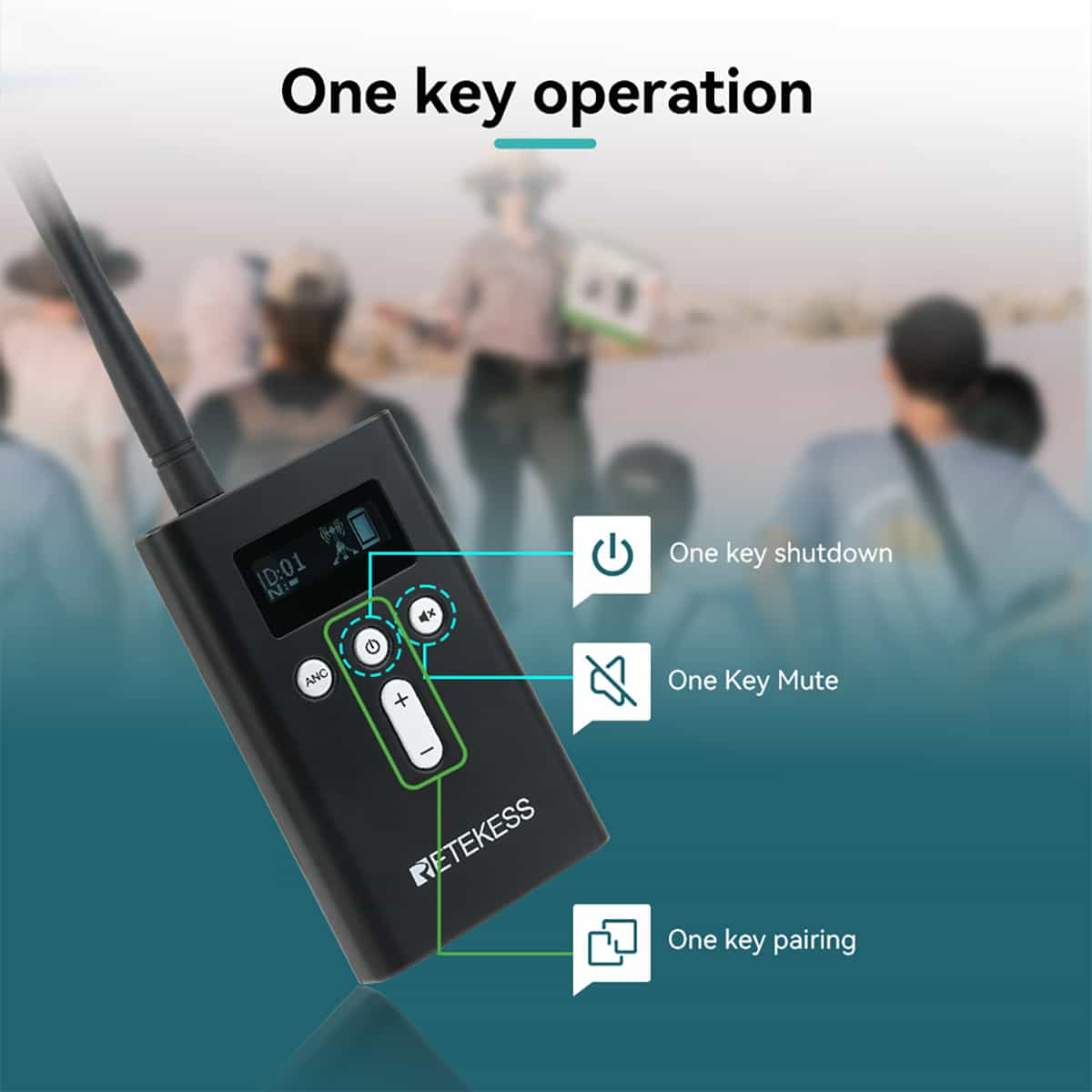
Clipping Audio: If a guide holds the microphone too close and distorts the input signal (clipping), algorithms cannot restore the lost audio detail. This is why having an adjustable gain control on the transmitter is equally essential.
| Feature / Accessory | Acting Location | Who Benefits | Practical Recommendation |
| ENC (Environmental Noise Cancellation) | Guide's Microphone Signal | The Entire Group | Choose models with adjustable levels (e.g., Levels 1–4) |
| ANC (Active Noise Cancellation) | Listener's Ear Canal | Individual Wearer | Rarely useful for tour systems; potential safety hazard outdoors |
| Foam / Furry Windscreen | Microphone Capsule (Physical) | The Entire Group | Essential, low-cost accessory for outdoor or windy routes |
| Adjustable Microphone Gain | Transmitter Input Stage | The Entire Group | Prevents audio clipping when guides speak loudly or close to the mic |







 Google
 Amazon