
Table of Contents

Kid-Proof Tour Guide Systems: Selecting Durable Audio Equipment for School Field Trips & Museums
- Retekess
- Jul 24, 2026
If you buy audio gear for school groups, you already know the math: the purchase is a one-time invoice, but equipment damage is a recurring line item. Here is how to spec audio gear that survives the school year.
It is the peak of field-trip season. The buses are unloading in front of your museum, factory floor, or heritage site. In the next ninety minutes, dozens of elementary schoolers will be handed pieces of audio equipment they did not pay for, did not choose, and have little incentive to protect. Some will treat the gear with care; most will not.
For procurement officers at museums, science centers, and school districts, "durable" is not a marketing buzzword. It is the difference between an efficient season and an emergency purchase order for replacement parts.
This guide walks through the three primary failure modes that drive field-trip equipment losses—and the design choices that eliminate them. We focus on a wireless tour guide system engineered specifically for high-churn, multi-user environments: the Retekess TT106S.
01. The Three Ways School Trips Destroy Audio Equipment
Across hundreds of post-trip equipment reports, damage consistently clusters into three predictable failure modes. When evaluating any wireless tour guide system, ensure these issues are engineered out at the hardware level, rather than relying solely on warranties.
1. The Yank (Broken Earphone Cables)
A child stands up suddenly, and the cable snags on a chair. The earbud turns out, the cable frays, or the jack bends. Wired headphones are the single most frequently replaced component in school-trip audio kits. The structural fix: Eliminate the cable entirely.
2. The Drop (Impact Damage on Hard Floors)
Standard clip-on receivers easily slide off pockets or lanyards when children bend over, striking concrete, tile, or asphalt at high velocity. Look for ultra-lightweight receivers (under 20g) equipped with dedicated lanyard attachment loops and rounded, impact-resistant housings.
3. The Button Mash (Accidental Channel Switching & Unpairing)
If a child can easily press buttons to switch channels or unpair mid-tour, tour guides spend valuable time troubleshooting lost audio instead of leading the group. Look for simplified one-touch receivers with no exposed multi-function buttons, combined with a transmitter that supports one-key auto-pairing for the entire group.
02. Why the Retekess TT106S Is Engineered for This Scenario
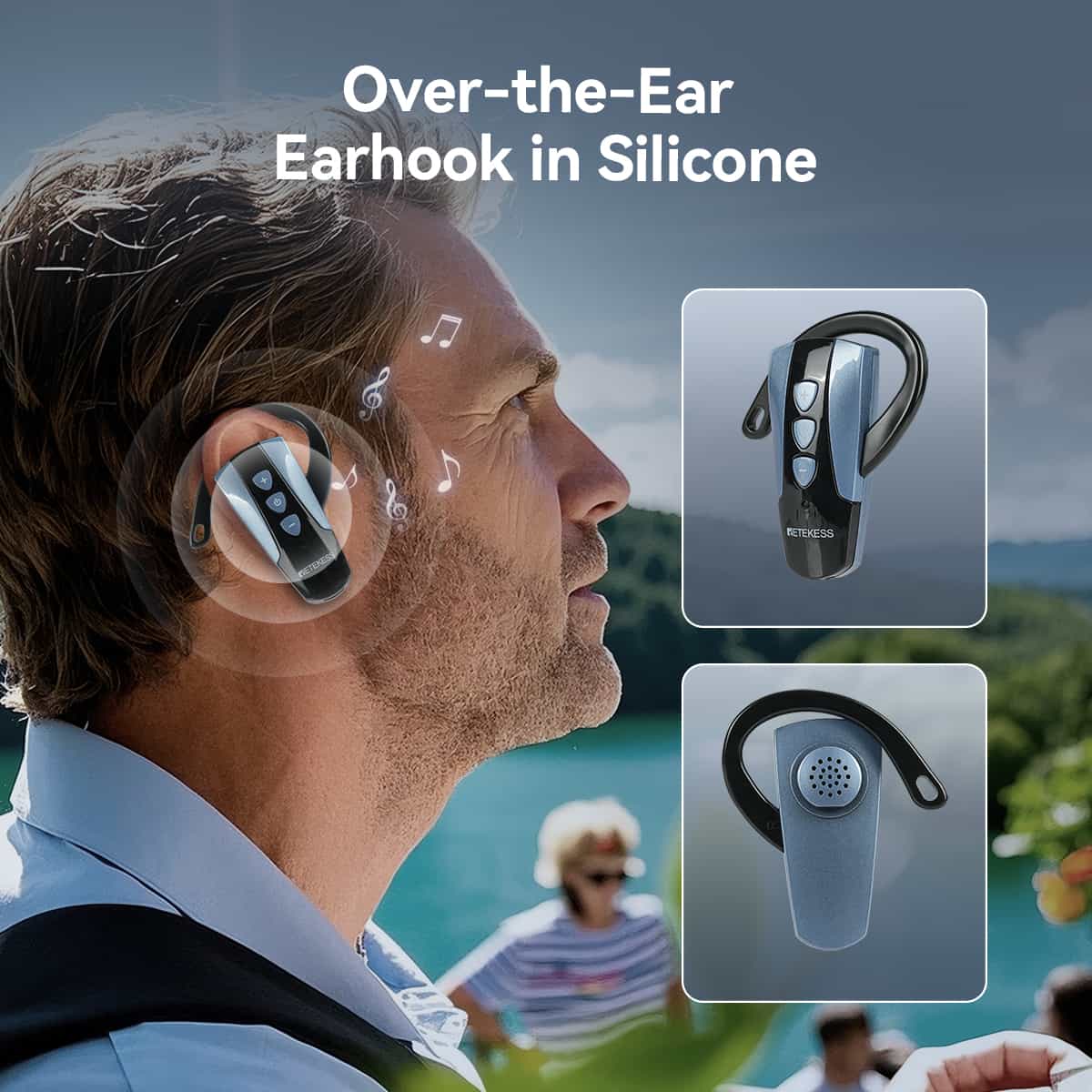
The Retekess TT106S is an upgraded earhook wireless receiver system designed specifically for high-churn group environments like school trips, museum tours, and industrial visits. As the upgraded successor to the TT106, its design directly targets the common failure points of group audio equipment.
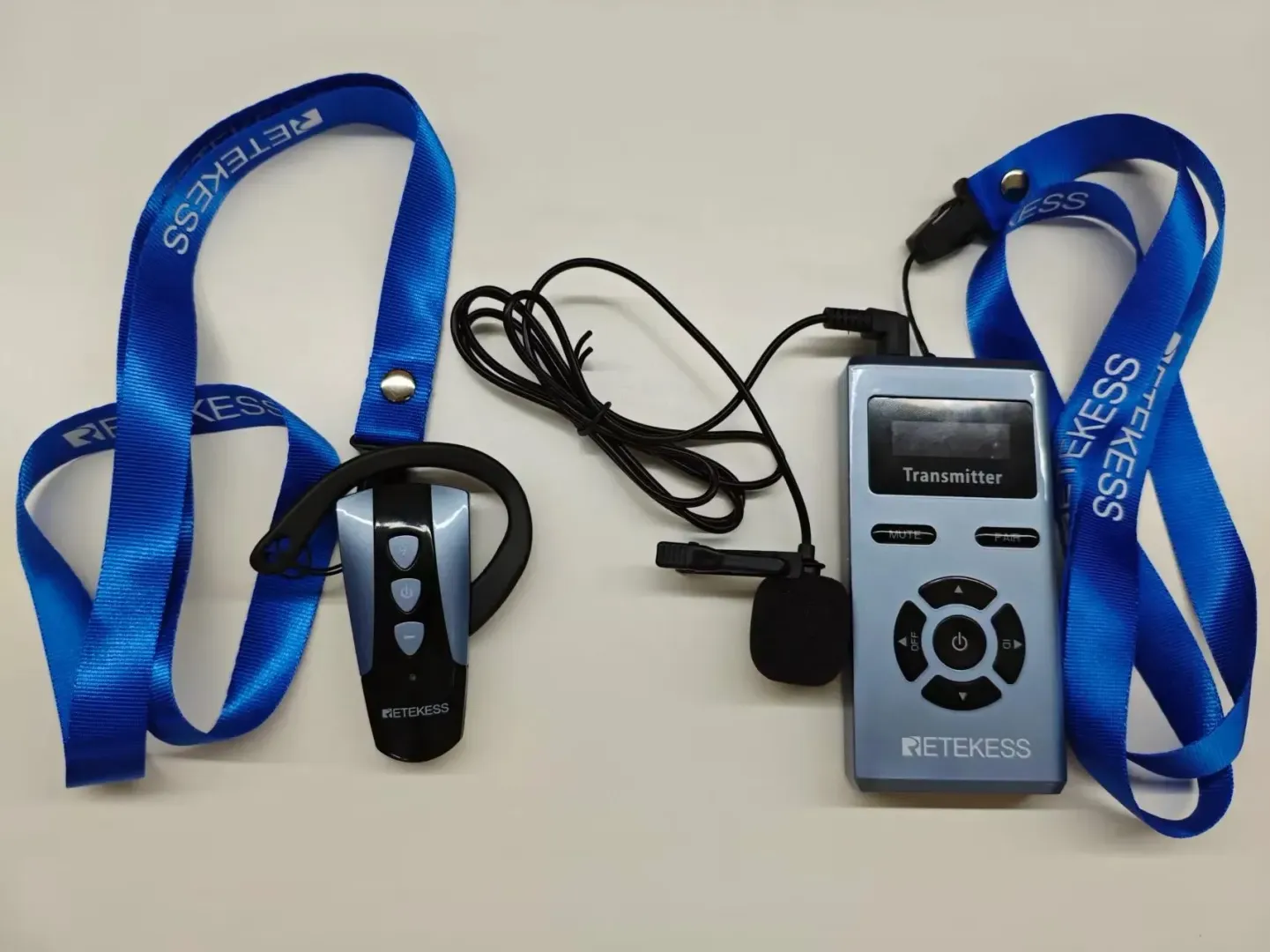
Key Design Upgrades:
-
Zero Cables, Zero Yanking: The receiver hooks directly onto the ear via a soft, ergonomic silicone earhook. There are no dangling wires to snag, twist, or break.
-
Lanyard as a Primary Safety Line: Every receiver features an integrated lanyard attachment loop. Worn around the neck, the lanyard acts as a safety harness—if a child removes the earhook, the device hangs safely on their chest instead of hitting the floor.
-
One-Touch Operation: The receiver features a simplified layout with an easy-to-use power/volume interface, eliminating complex menus or physical channel switches that children could misconfigure.
-
Smart Auto-Power Off: To preserve battery life when devices are accidentally left on in backpacks or out of range, the receivers automatically power down after receiving no transmitter signal for 20 minutes.
-
18g Ultra-Lightweight Build: Weighing just 18 grams, the receiver is comfortable for young children to wear, reducing the tendency to take it off during tours.
-
Extended Battery Life: Delivers up to 50 hours of receiver runtime on a single charge. Combined with standard USB-C charging interfaces, system maintenance remains straightforward and flexible.

03. The Lanyard System: Practical Drop Protection
The lanyard is an essential functional component of the TT106S setup.
How it works in practice:
-
The receiver is secured around the child’s neck via the woven lanyard, with the earhook resting naturally near the collarbone.
-
When the tour starts, the child places the silicone hook over their ear.
-
If the child needs to pause or remove the earhook during interactive exhibits, the unit drops onto their chest—remaining secure and accessible.
Why this matters for group management:
-
Prevents Loss: Gear stays attached to the student rather than being set down on benches or left in pockets.
-
Visual Headcounts: Lead teachers and guides can quickly perform visual inventory checks across the group.
-
Impact Reduction: Prevents accidental drops onto hard museum or outdoor surfaces.
04. Key Technical Specifications for Procurement
When evaluating equipment specifications for school districts or venues, operational stability and ease of management are essential.
| Feature / Spec | Retekess TT106S Value | Operational Advantage |
| Receiver Weight | 18 g | Prevents fatigue; comfortable for young students |
| Receiver Battery Life | Up to 50 hours | Supports multiple days of use between charges |
| Transmitter Battery Life | Up to 23 hours | Full-day continuous operating capability |
| Working Distance | Up to 200m / 656ft (Open area) | Maintains clear signal across wide venues |
| Channel Capacity | 9,999 Channels | Allows numerous groups to operate without interference |
| Signal-to-Noise Ratio | ≥ 80 dB | Clear voice transmission in noisy environments |
| Volume Control | 9 Adjustable Levels | Customizable for different environments and hearing needs |
| Earphone Style | Integrated Earhook (No Cable) | Eliminates cable-snagging damage |
| Auto-Off Function | 20 mins without signal | Prevents accidental battery drain |
| Charging Interface | USB-C & Contact Charging | Flexible charging options via base or cable |
05. Selecting the Right Configuration Kit
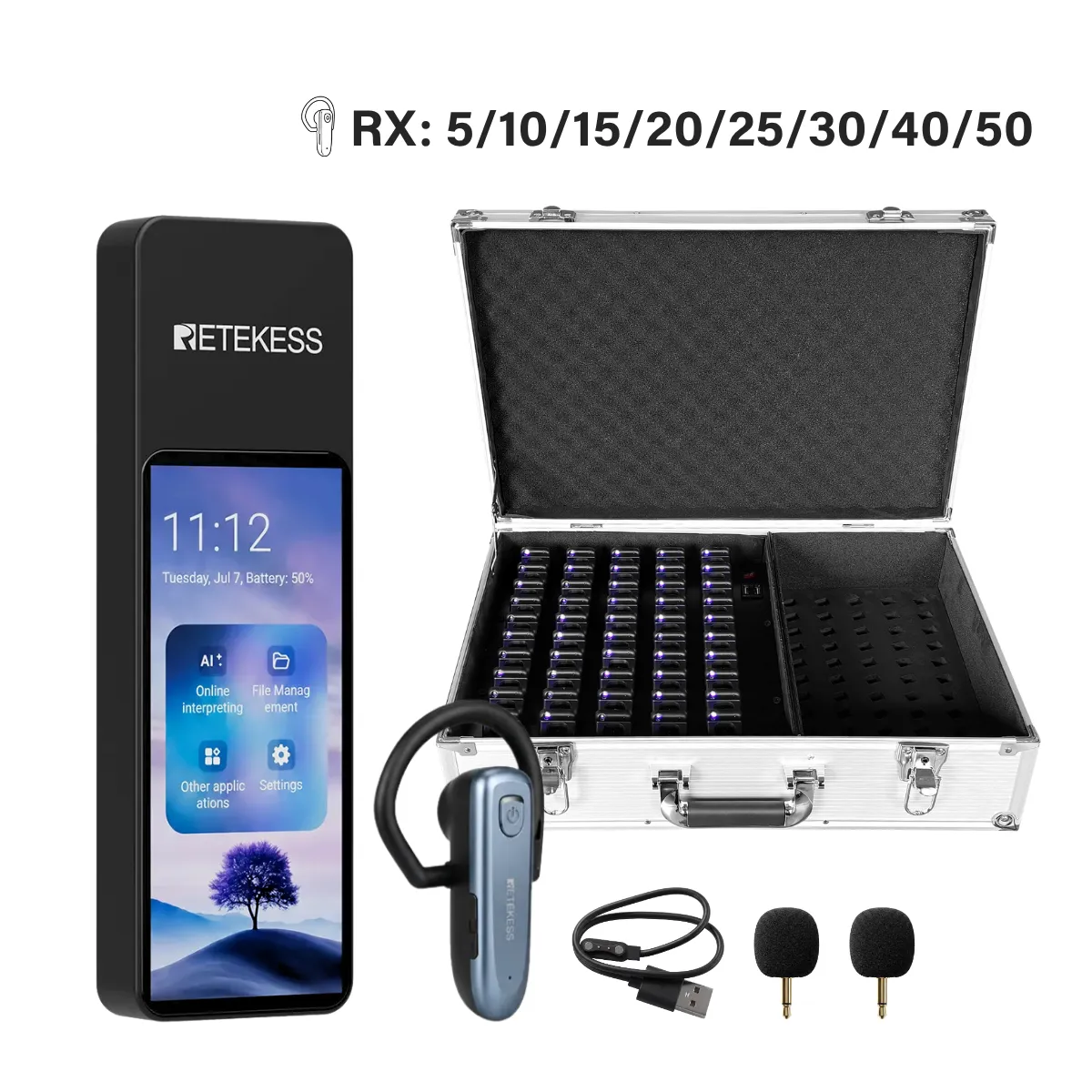
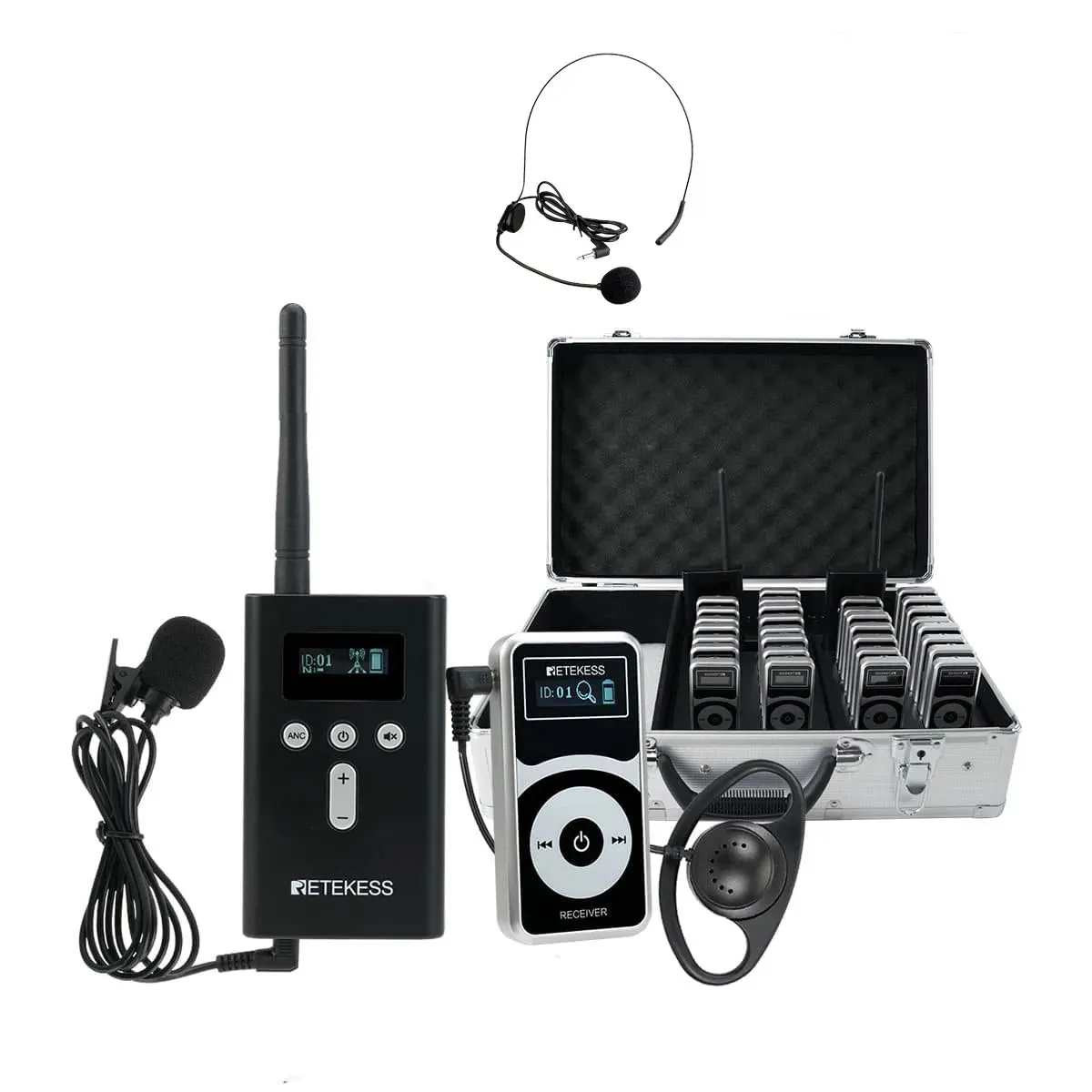
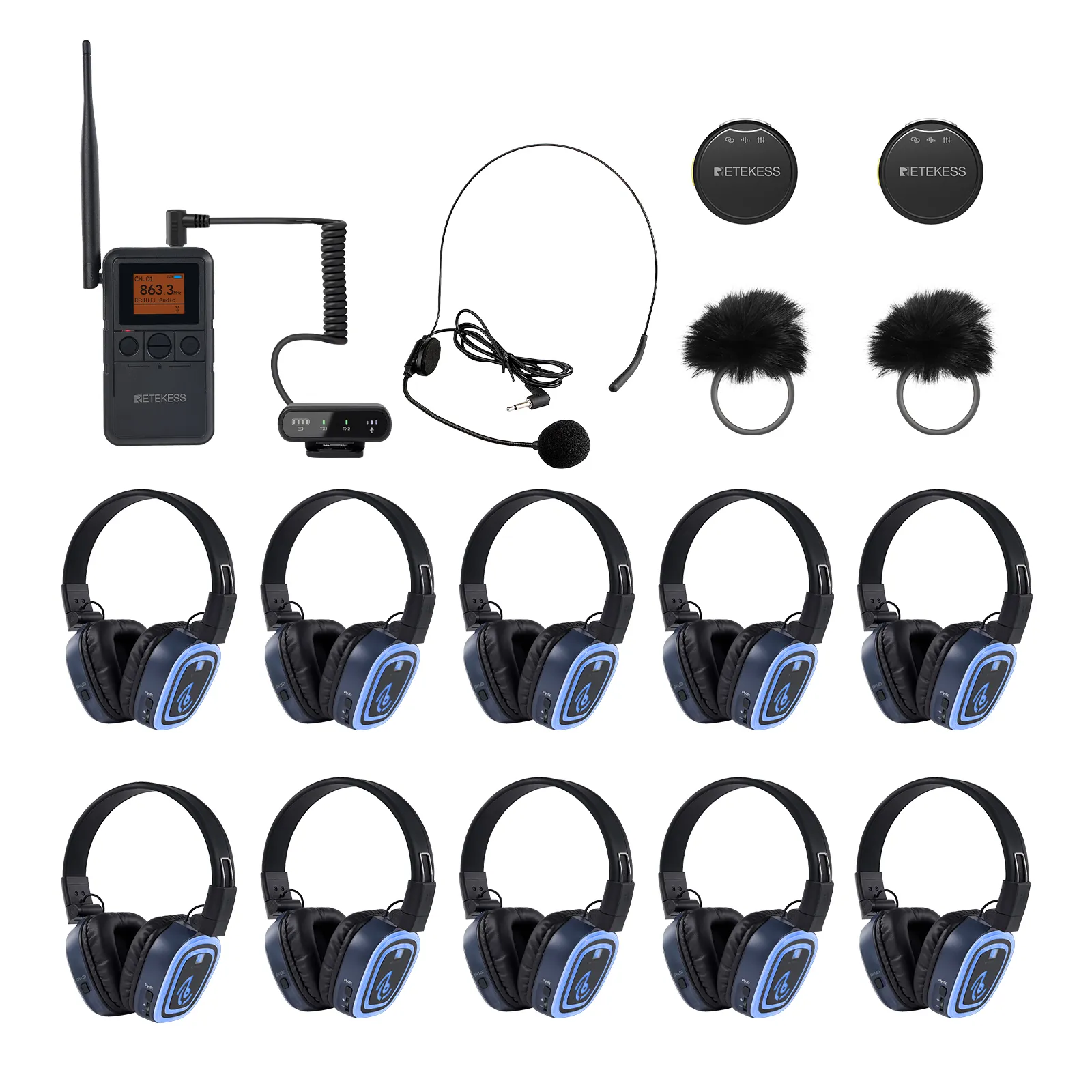
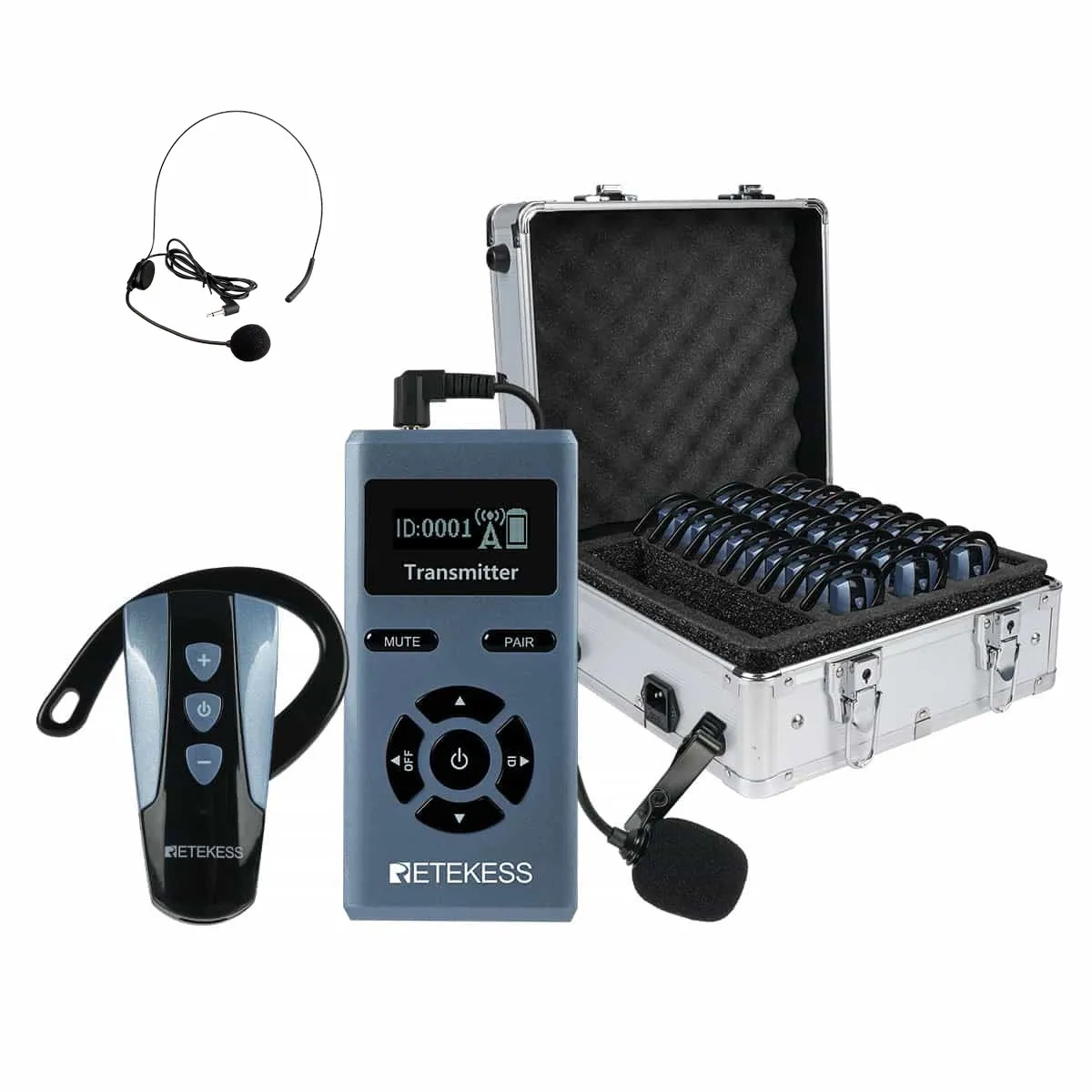
Retekess offers pre-configured TT106S packages that bundle transmitters, earhook receivers, lanyards, microphones, and dedicated charging cases to match different group sizes:
-
For Single Classrooms (20–30 Students):
-
Recommended Set: 1–2 Transmitters + 30 Earhook Receivers + Dedicated Multi-port Charging Base/Case.
-
Best for: Single grade-level visits, classroom-sized museum tours, and school site visits.
-
-
For Large Groups & Tour Operations (50–60+ Children):
-
Recommended Set: 2–4 Transmitters + 60 Earhook Receivers + 64-Slot Aluminum Charging/Carrying Case.
-
Best for: High-throughput venue operations and summer camps. The durable aluminum carrying case acts as a secure storage locker and multi-device charging station between tours.
-
06. Implementation Best Practices for Field Trips
-
Name-Tag Management: Label lanyards with student names or assigned numbers using tags. Assigning specific units to individual students encourages accountability.
-
Brief Pre-Tour Demo (30 Seconds): Show students how to place the earhook over the ear while keeping the lanyard around their neck. Emphasize keeping the unit secured throughout the visit.
-
Utilize One-Key Auto-Pairing: Use the transmitter's quick-sync function to set all receivers to the correct channel simultaneously before handing them out.
-
Establish Routine Charging: While the 50-hour battery life provides significant headroom, returning receivers to the charging case at the end of each day ensures seamless operation for morning arrivals.
Summary
For school field trips and youth group tours, selecting audio equipment is fundamentally a risk-management exercise. Cable tension, drops, complex controls, and battery management are the core factors driving ownership costs.
By removing cables, integrating lanyard safety anchors, simplifying controls, and extending battery performance, the Retekess TT106S provides a practical, low-maintenance solution for high-use educational and group environments.
Leave a Reply

![[18th Anniversary] 18 Years of Echoing Excellence: Making Communication Easier, Connecting Trust Beyond Borders](https://res.retekess.com/z_file/20260716/retekess-brand-story-making-communication-easier_20260716151044_7682.jpg)
![[18 Years in Wireless Communication] Silent Disco Systems Anniversary Celebration: Top-Selling Headphones & Event Mechanics Revealed!](https://res.retekess.com/z_file/20260713/18-years-in-wireless-communication-silent-disco-systems-anniversary-celebration_20260713175011_5749.webp)
![[Anniversary Carnival] Ding-dong! 18th Anniversary Mega Sale on Guest Paging & Calling Systems: Full Reveal of 12+ Products & Promo Rules!](https://res.retekess.com/z_file/20260713/18th-anniversary-mega-sale-on-guest-paging-calling-systems_20260713175257_0295.webp)
![[Retekess 18th Anniversary Teaser] Tour Guide System Exclusive Perks: Sneak Peek at Event Dates & Mechanics!](https://res.retekess.com/z_file/20260713/retekess-18th-anniversary-tour-guide-system-exclusive-perks--2-_20260713180135_6435.webp)
Follow Us
Pay With


 Google
 Amazon
Comments (0)