
Table of Contents
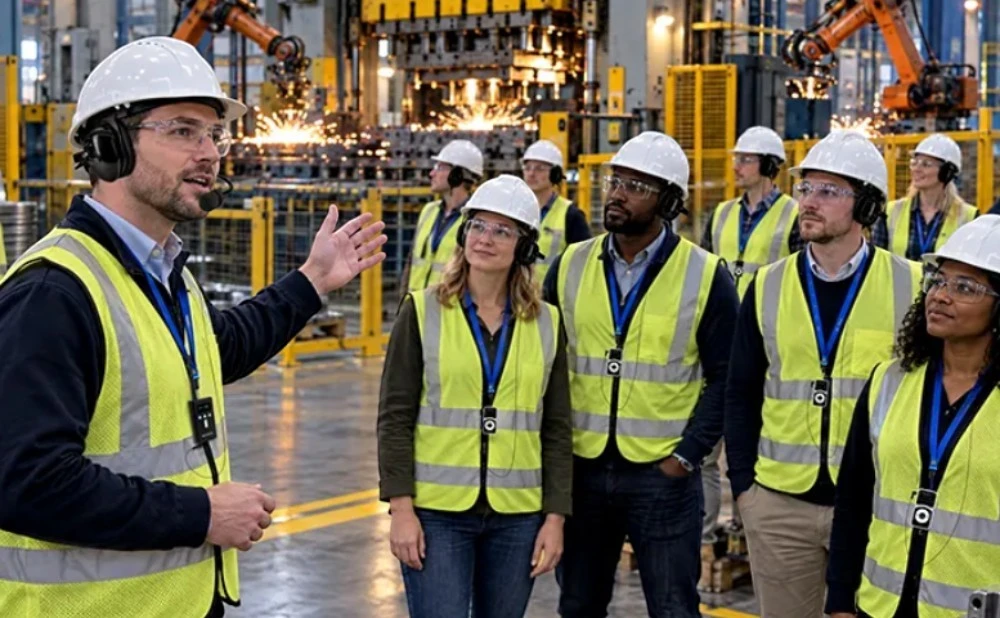
Manufacturing Day Factory Tours: Can Everyone Hear Behind the Safety Line?
- Retekess
- Oct 16, 2026
Manufacturing Day invites students, customers, suppliers, educators, and community members onto the production floor to see how products are made. But a factory tour isn’t a quiet showroom visit.
In a working plant, noise, safety boundaries, and group size can make it hard for everyone to hear the guide—even from just a few meters away.
This raises a practical question for Manufacturing Day and other factory visits:
In a 95 dB factory, can every visitor hear the guide clearly without crossing the safety line?
A well-managed factory tour needs more than a knowledgeable guide. It needs a communication approach that keeps the entire group connected while allowing visitors to remain where they are supposed to be.
Why Factory Tours Become a Communication Challenge
A factory tour has a simple objective: help visitors understand what they are seeing.
The challenge is that the production environment is not designed around the needs of a tour group. Machines continue operating, visitors move through different areas, and safety boundaries determine where people can stand.
Noise Makes Verbal Communication Unreliable
In a busy production environment, machinery and equipment can easily compete with the guide's voice.
When background noise increases, speaking louder is not always enough. The guide may need to repeat explanations, while visitors may miss important details simply because they are standing farther away from the speaker.
The problem becomes more noticeable when the tour moves between different production areas with different noise levels.
Safety Lines Limit How Close Visitors Can Get
In a normal sightseeing environment, someone who cannot hear can simply move closer.
That is not always an option on a manufacturing floor.
Visitors may need to remain behind designated safety lines or viewing areas to maintain appropriate separation from machinery and production operations. This means the communication solution has to work within the existing visitor boundary, rather than asking visitors to move closer.
Large Groups Create an Uneven Listening Experience
The first few people in a tour group may hear the guide clearly, while people farther back may miss parts of the explanation.
This creates another problem: the guide has to keep checking whether everyone is following.
A tour can quickly become a cycle of:
Explain → Ask if everyone heard → Repeat → Wait for the group → Move again.
For a factory that regularly receives customers, suppliers, students, or other visitors, this can affect both the efficiency of the tour and the overall visitor experience.
95 dB Noise: Can Visitors Still Hear Clearly?
Consider a factory tour moving through a production area reaching 95 dB.
The guide needs to explain what visitors are seeing. At the same time, machinery continues operating in the background. Visitors must remain behind a safety boundary, and some members of the group are farther away than others.
The communication challenge is created by several factors at once:
Noise + Distance + Group Size + Safety Boundaries
Simply asking the guide to speak louder does not address all four.
A wireless tour communication system changes the way the problem is approached.
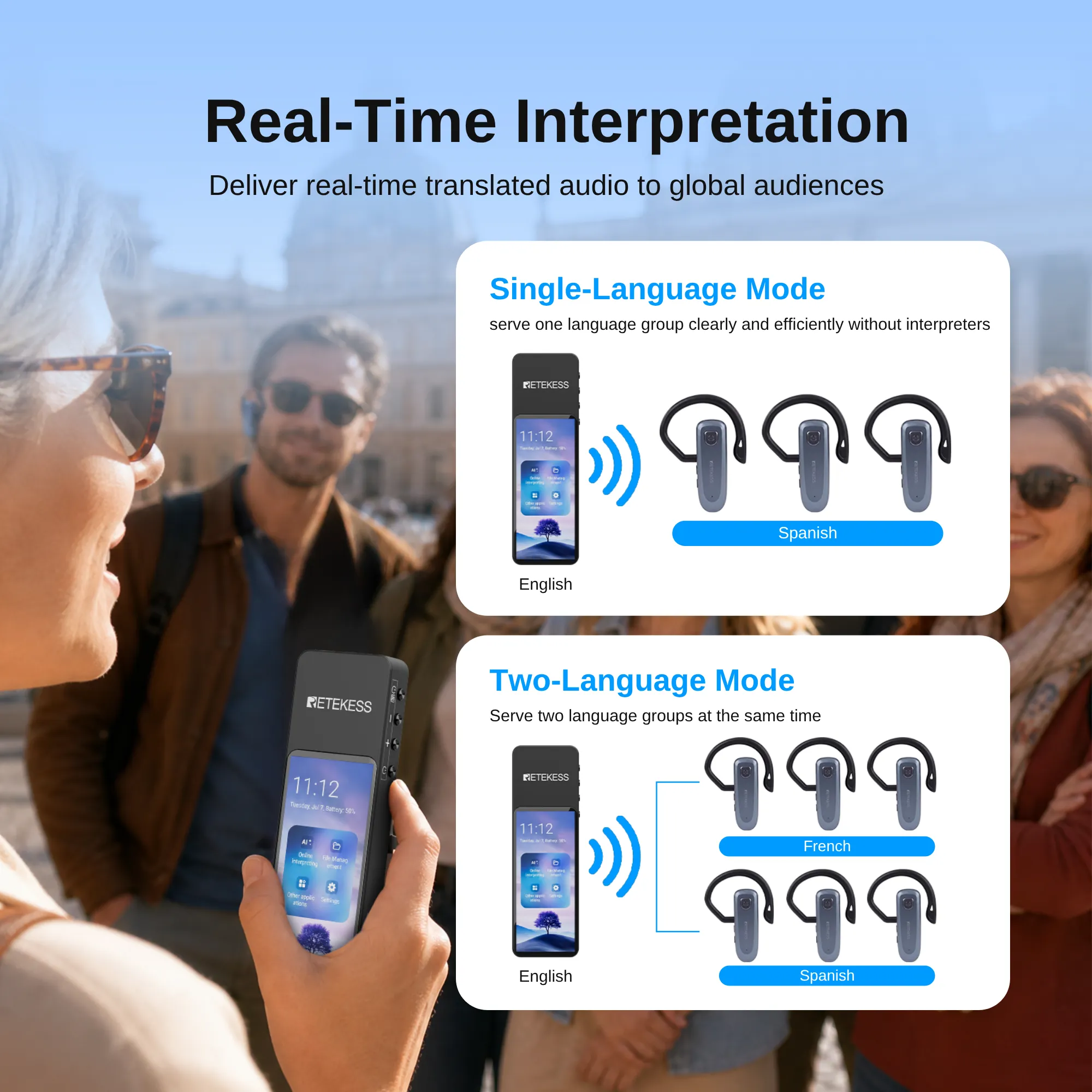
Instead of bringing visitors closer to the guide, the guide's voice is transmitted directly to the visitors' receivers.
|
Traditional Approach |
Wireless Tour Communication |
|
Guide raises their voice |
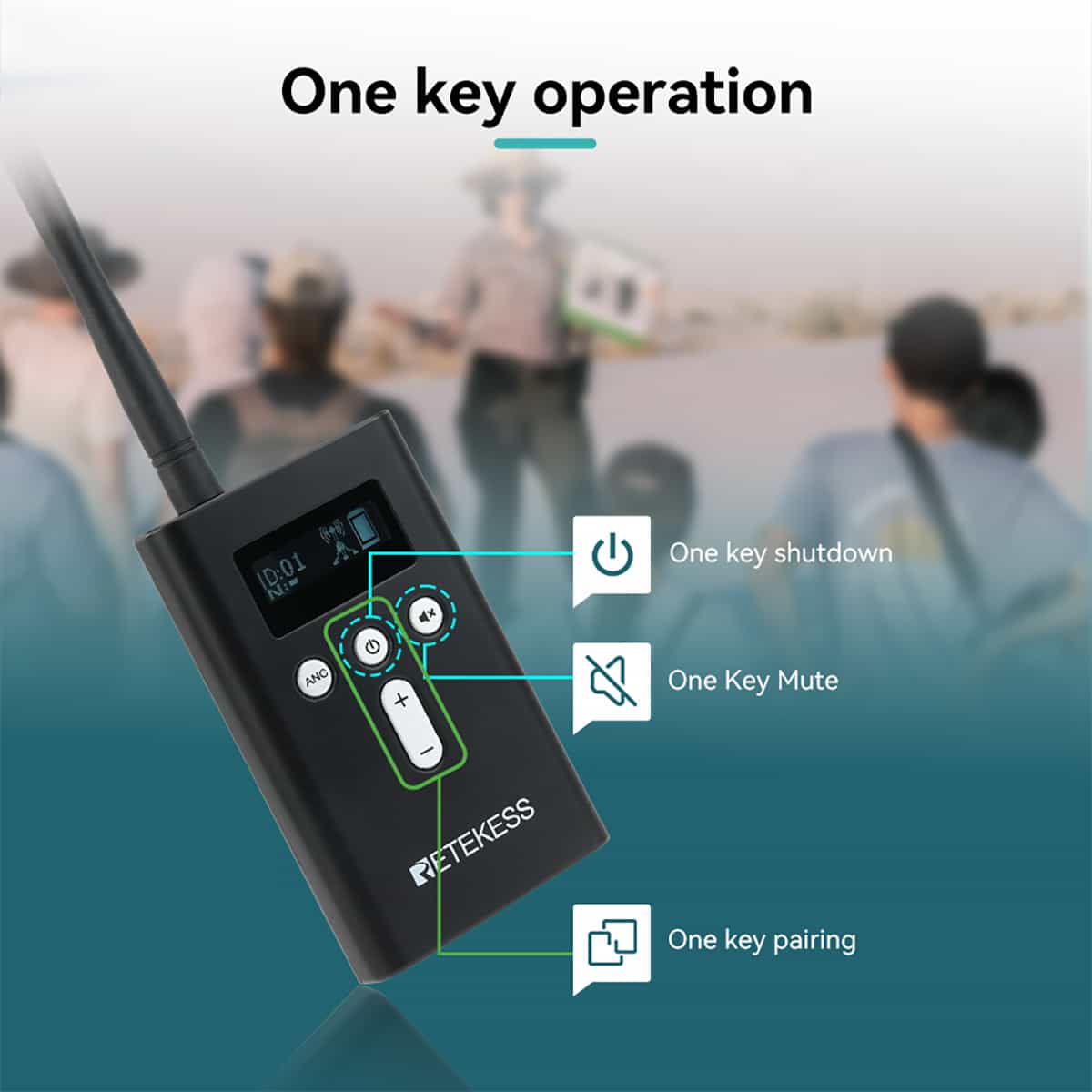
Guide speaks into a transmitter |
|
Visitors may struggle with background noise |
Audio is delivered through receivers |
|
Visitors may move closer to hear |
Visitors can remain within designated areas |
|
Guide may repeat explanations |
The group can listen simultaneously |
|
Tour pace can be interrupted |
Communication can continue while the group moves |
The solution isn't to bring visitors closer. It's to bring the audio to them.
Behind the Safety Line, Everyone Should Still Hear
For a manufacturing tour, clear communication should work together with visitor management.
A wireless tour guide system allows the guide to communicate while visitors remain in their designated viewing areas. Instead of relying on the natural volume of the guide's voice, the system creates a dedicated audio connection between the guide and the group.
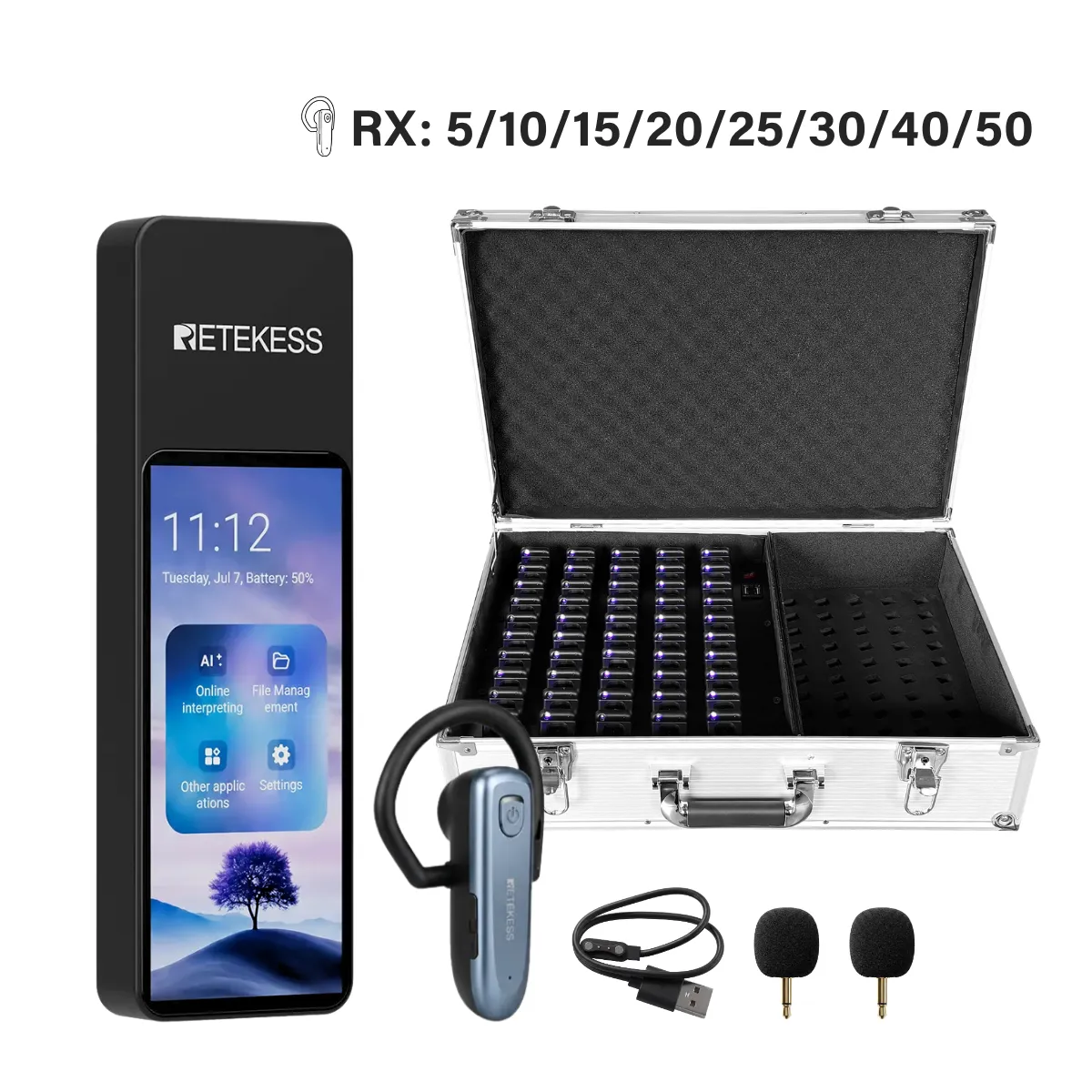
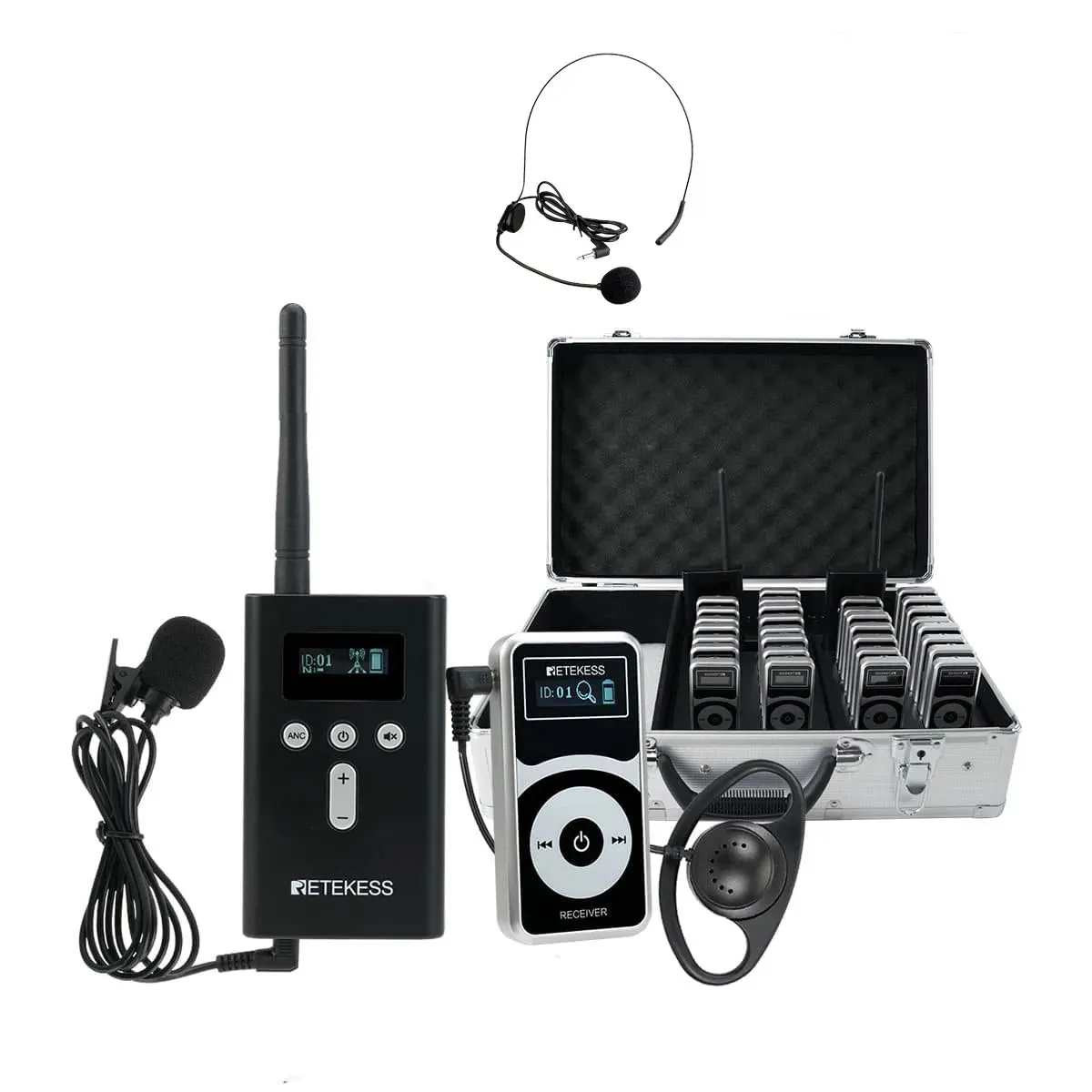
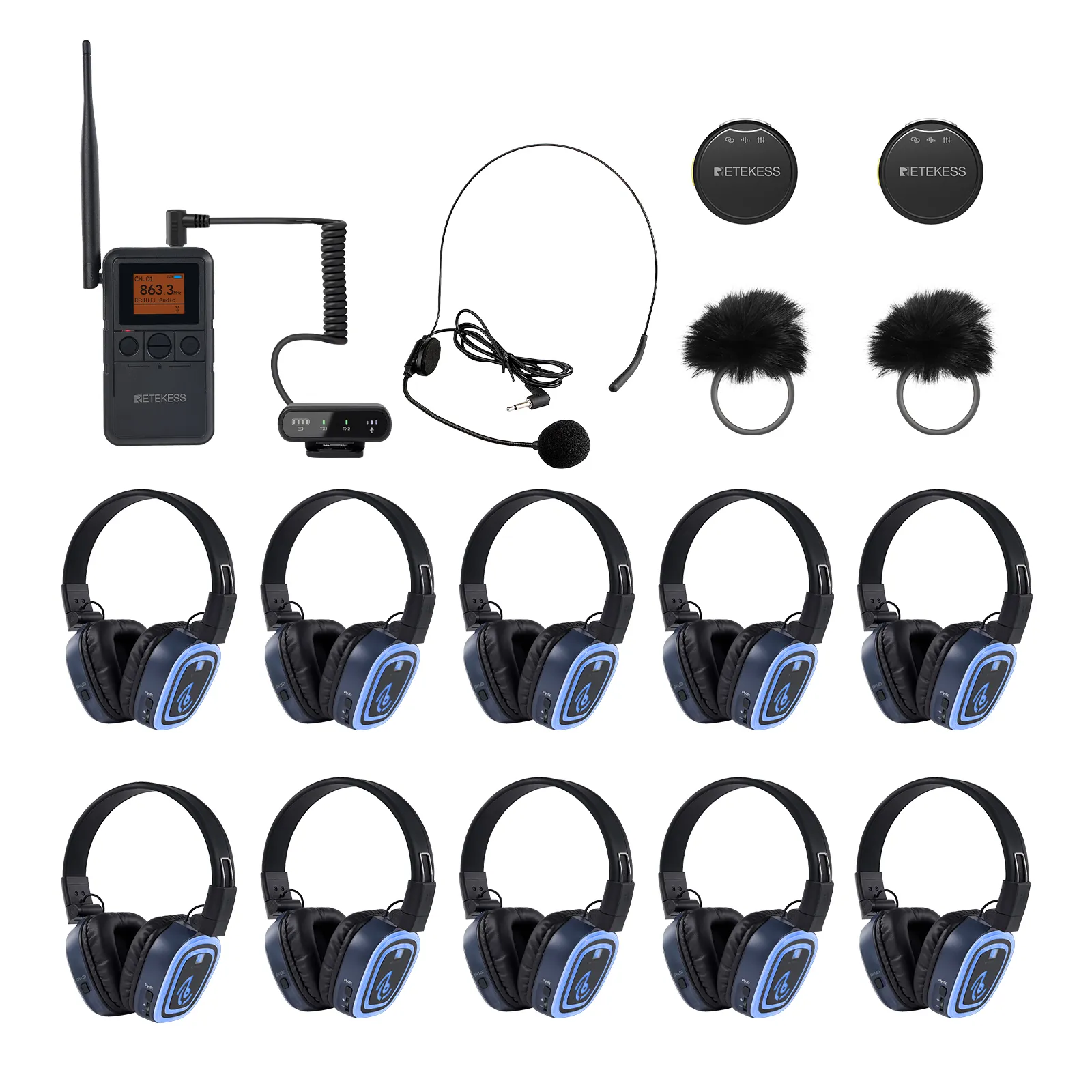
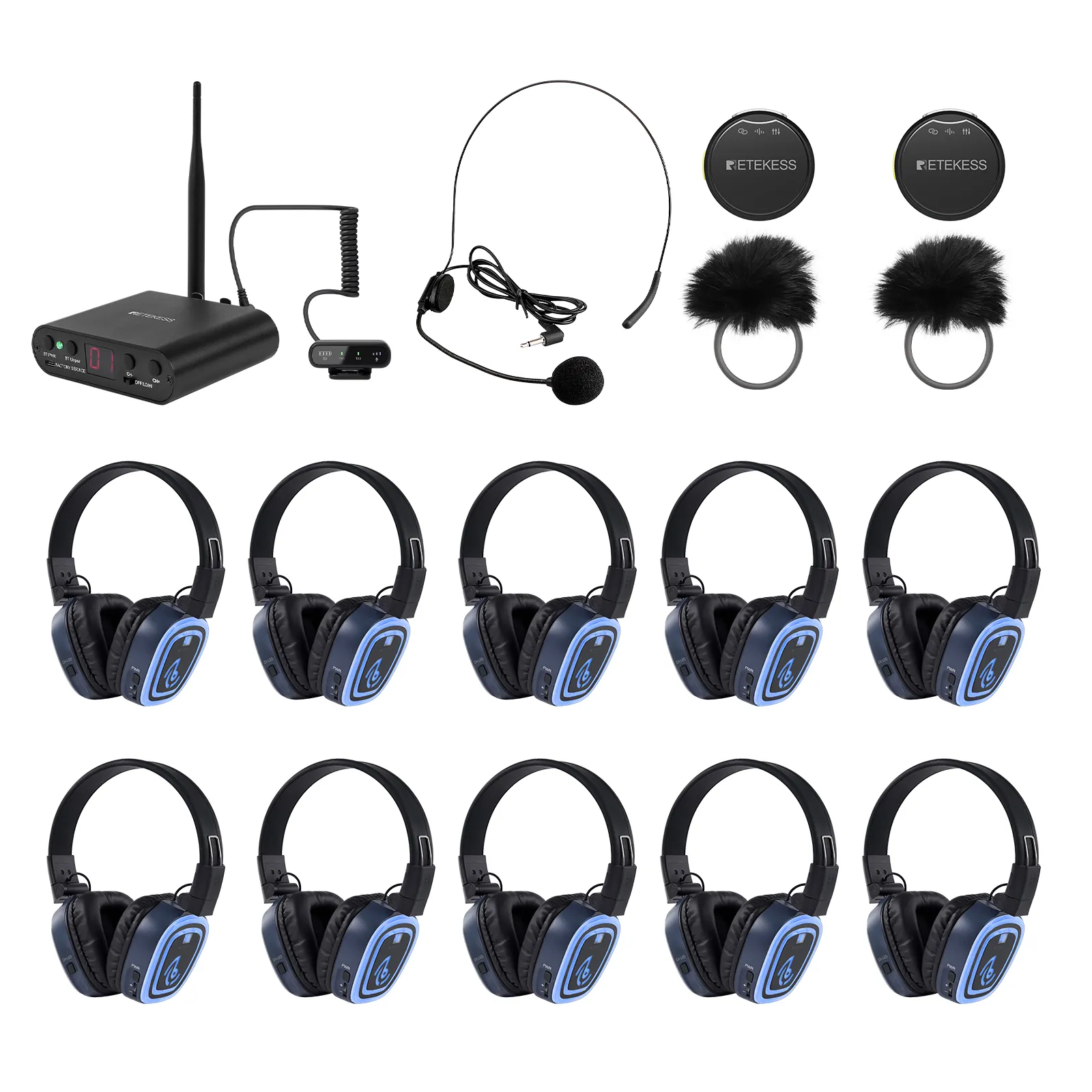
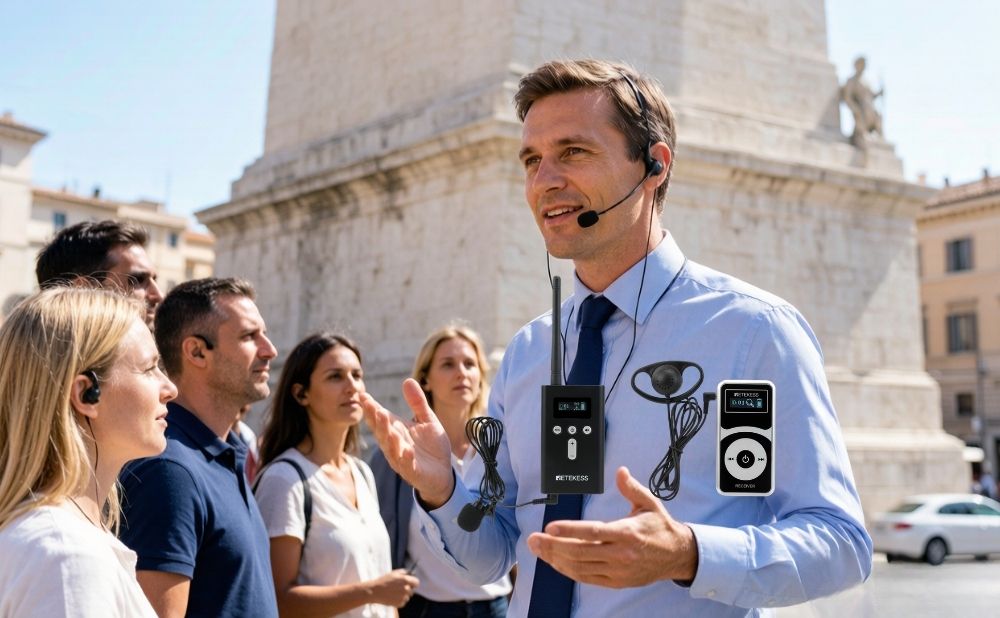
For example, a system such as Retekess T130P with TT034 Noise Reduction Headphones can support wireless group listening for factory tours and other guided visits.
The practical value is not simply the transmission distance.
It is the ability to separate where visitors need to stand from where they need to hear the guide.
That can be particularly useful when a group is viewing machinery from behind a designated boundary or when the guide needs to maintain a certain distance from an operating area.
For factory tours, communication should support the site's existing safety arrangements—not replace them. Physical barriers, visitor procedures, supervision, PPE, and other site-specific controls remain essential.
A Reliable Factory Tour Experience Starts Before the Tour
A smooth factory tour does not begin when visitors walk through the entrance.
It starts with preparation.
When multiple groups may visit a facility in one day, communication equipment needs to be ready before the first group arrives.
Before the Tour
The team can prepare the system by:
- charging transmitters and receivers
- checking the audio connection
- confirming channels
- preparing receivers according to group size
- checking receiver condition and cleanliness
During the Tour
The communication system should allow the guide to:
- explain while the group moves
- communicate without repeatedly raising their voice
- keep visitors listening from designated areas
- maintain consistent communication with the group
After the Tour
For facilities that host repeated visits, equipment management is equally important.
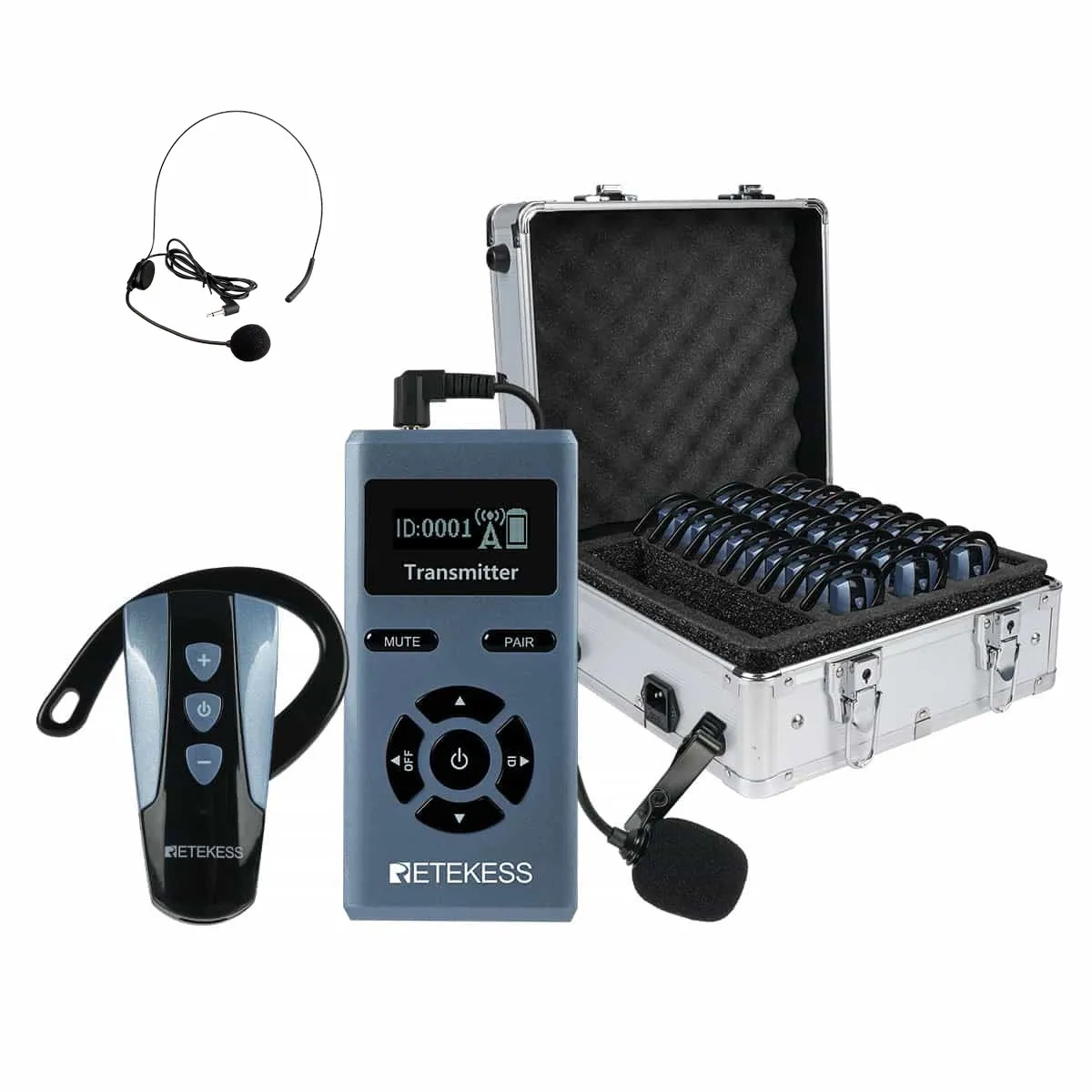
Receivers need to be collected, cleaned, recharged, and prepared for the next group. Charging cases can simplify this process when multiple receivers are used together.
This is where a tour communication system becomes more than an audio accessory. It becomes part of the operational workflow for receiving visitors.
Real Factory Tours: Communication Has to Work in the Real World
Factory tours rarely take place in quiet demonstration rooms.
Visitors may move through active production areas where machinery is running, people are working, and the group needs to follow a defined route.
That is why real-world experience matters when evaluating a communication solution.
For example, Merrillsteel's student factory visit demonstrates the type of environment where communication becomes an important part of the tour experience. During a manufacturing plant visit, students need to learn from what they see while moving through a real industrial environment.
But every production floor is different. Noise levels, visitor routes, group sizes, and safety boundaries can all affect the communication requirements.
Instead of relying only on specifications, you can experience the system in your own environment.
Get a Free Demo and test the communication setup in your actual factory tour scenario.
Is Your Factory Tour Ready for Manufacturing Day?
Manufacturing Day may be the reason visitors arrive at your facility, but the quality of their experience depends on what happens once they enter the production floor.
A wireless tour communication system does not replace factory safety procedures. Instead, it supports the communication layer that connects the guide with visitors while the group follows established routes and boundaries.
For Manufacturing Day, factory open houses, supplier visits, and customer tours, the goal is straightforward:
Keep visitors where they need to be, while making sure they can hear what they came to learn.
Explore the Factory Tour Communication Solution →
And if you decide to purchase, you can do so with a 30-Day Money-Back Guarantee policy, giving your team time to evaluate whether the solution fits your real-world visitor workflow.


![[18th Anniversary] 18 Years of Echoing Excellence: Making Communication Easier, Connecting Trust Beyond Borders](https://res.retekess.com/z_file/20260716/retekess-brand-story-making-communication-easier_20260716151044_7682.jpg)
![[18 Years in Wireless Communication] Silent Disco Systems Anniversary Celebration: Top-Selling Headphones & Event Mechanics Revealed!](https://res.retekess.com/z_file/20260713/18-years-in-wireless-communication-silent-disco-systems-anniversary-celebration_20260713175011_5749.webp)
![[Anniversary Carnival] Ding-dong! 18th Anniversary Mega Sale on Guest Paging & Calling Systems: Full Reveal of 12+ Products & Promo Rules!](https://res.retekess.com/z_file/20260713/18th-anniversary-mega-sale-on-guest-paging-calling-systems_20260713175257_0295.webp)
![[Retekess 18th Anniversary Teaser] Tour Guide System Exclusive Perks: Sneak Peek at Event Dates & Mechanics!](https://res.retekess.com/z_file/20260713/retekess-18th-anniversary-tour-guide-system-exclusive-perks--2-_20260713180135_6435.webp)
Follow Us
Pay With


 Google
 Amazon
Comments (0)