
Table of Contents

Which Tour Guide System Do You Need? A Practical Guide for Museums, Walking Tours & Churches
- Retekess
- Sep 29, 2026

Choosing a tour guide system is rarely as simple as picking a transmitter and a set of receivers.
A museum tour, walking tour, church visit, and multi-language group may all need wireless audio, but the right configuration can be very different. Group size, tour distance, wearing comfort, battery life, language requirements, and equipment hygiene can all affect how well a system works in real use.
So instead of asking, “Which tour guide system should I buy?”, a better starting point is:
“What does my tour actually require?”
This guide answers the most common questions buyers ask before choosing a wireless tour guide system and explains how to build a configuration that fits your visitors, environment, and daily tour routine.
Start With Your Tour, Not the Device
Different tour environments create different communication challenges.
Museum Tours: Comfort and Hygiene Matter
Museum visitors may spend a long time listening while moving between galleries. The equipment should be lightweight and comfortable enough for extended use without becoming a distraction.
Because receivers are often shared between different groups throughout the day, hygiene is another practical consideration.
For high-turnover tours, disposable earphones can simplify equipment sharing. For reusable receiver designs, replaceable ear pads and accessories can make routine maintenance easier.
Walking Tours: Distance and Mobility Matter
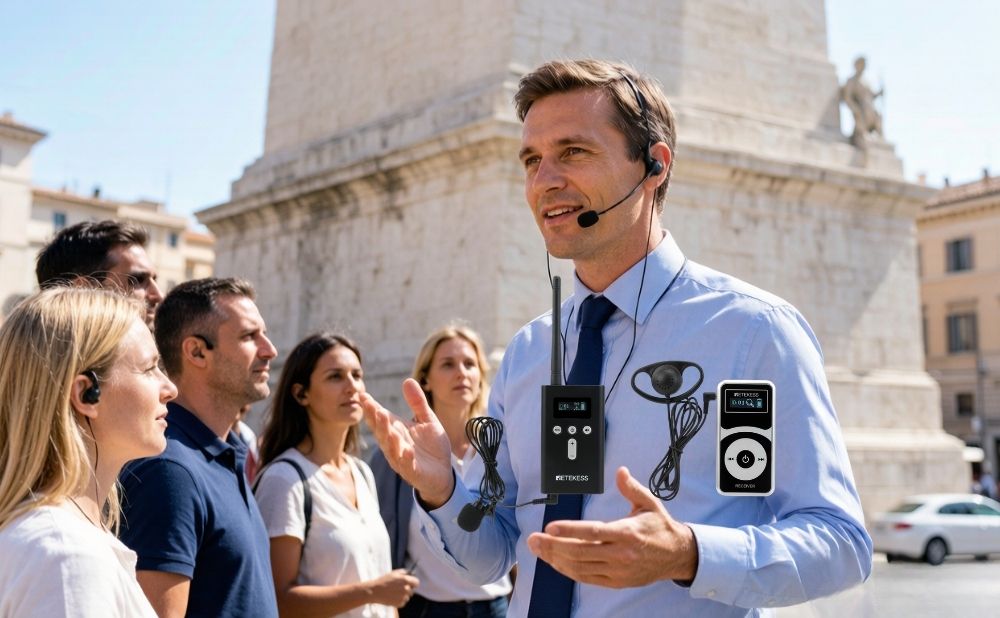
Walking tours require visitors to move while listening. The guide may be several meters ahead of the group, around a corner, or moving through a crowded street.
A wireless tour guide system allows visitors to listen without constantly gathering around the guide. The key considerations are transmission range, connection stability, secure wearing, and battery life.
The goal is not simply to achieve a long range on paper. It is to maintain a usable listening experience while the group is actually moving.
Church Tours: Group Size and Language Matter
Churches and religious sites may host large groups, international visitors, or multiple language groups.
In these situations, the communication setup needs to account for both group size and language organization. Depending on the tour format, one transmitter may be enough for a single-language group, while multiple channels or interpreters may be required for multilingual tours.
The important point is to determine the communication structure first and then select equipment around it.
From Tour Scenario to the Right Configuration
How Many Receivers Do You Actually Need?
This is one of the most common questions when buying a tour guide system.
The basic configuration is simple:
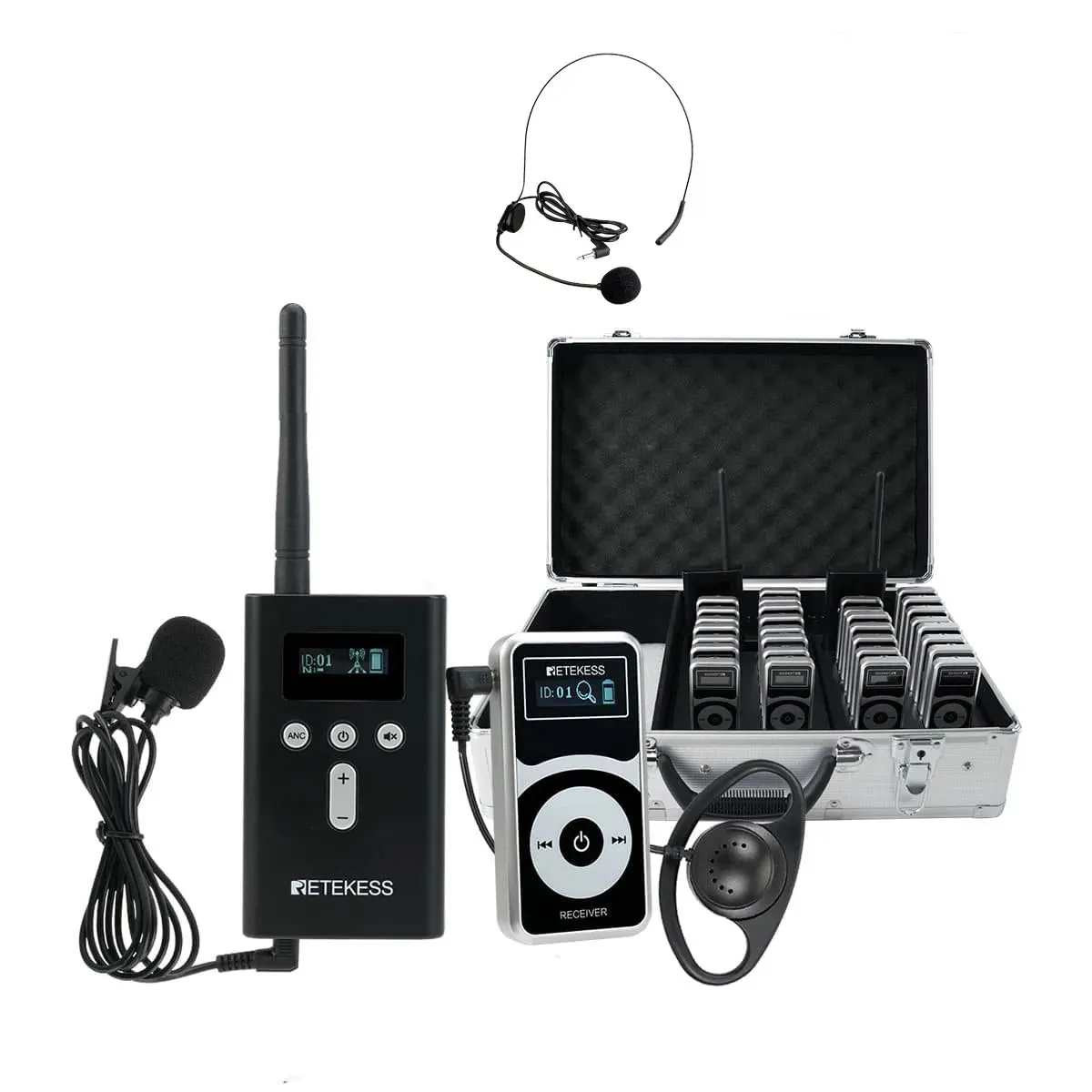
1 transmitter + 1 receiver per listener + spare receivers
But the actual quantity should not be based only on today's average group size.
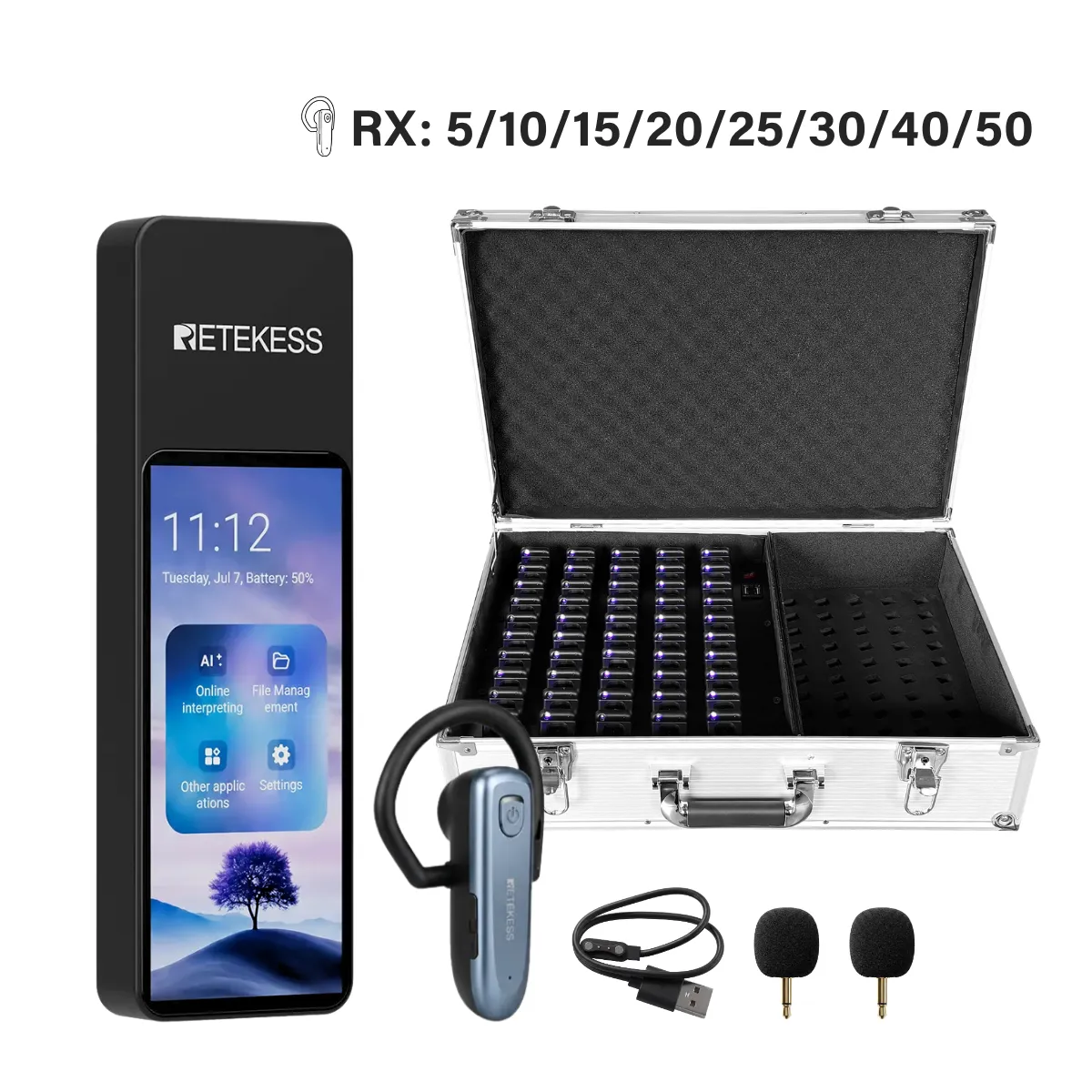
For example, if your normal tour has 30 visitors but occasionally reaches 40 or 50, buying exactly 30 receivers may create problems during busy periods.
Instead of simply choosing a fixed number of receivers, Retekess can help customers build a
configuration around theiractual group size and operating model, including the main receiver
set, charging solution, and spare units.
This is particularly useful for museums and tour operators that run multiple groups throughout
the day.
Can Elderly Visitors and Children Wear Them Comfortably?
A tour guide system can transmit excellent audio, but visitors still need to wear the receiver comfortably.
This becomes especially important when a tour includes elderly visitors, children, or people who may not be comfortable with traditional earphones.
When comparing receiver designs, look beyond weight alone. Consider:
How is it worn?
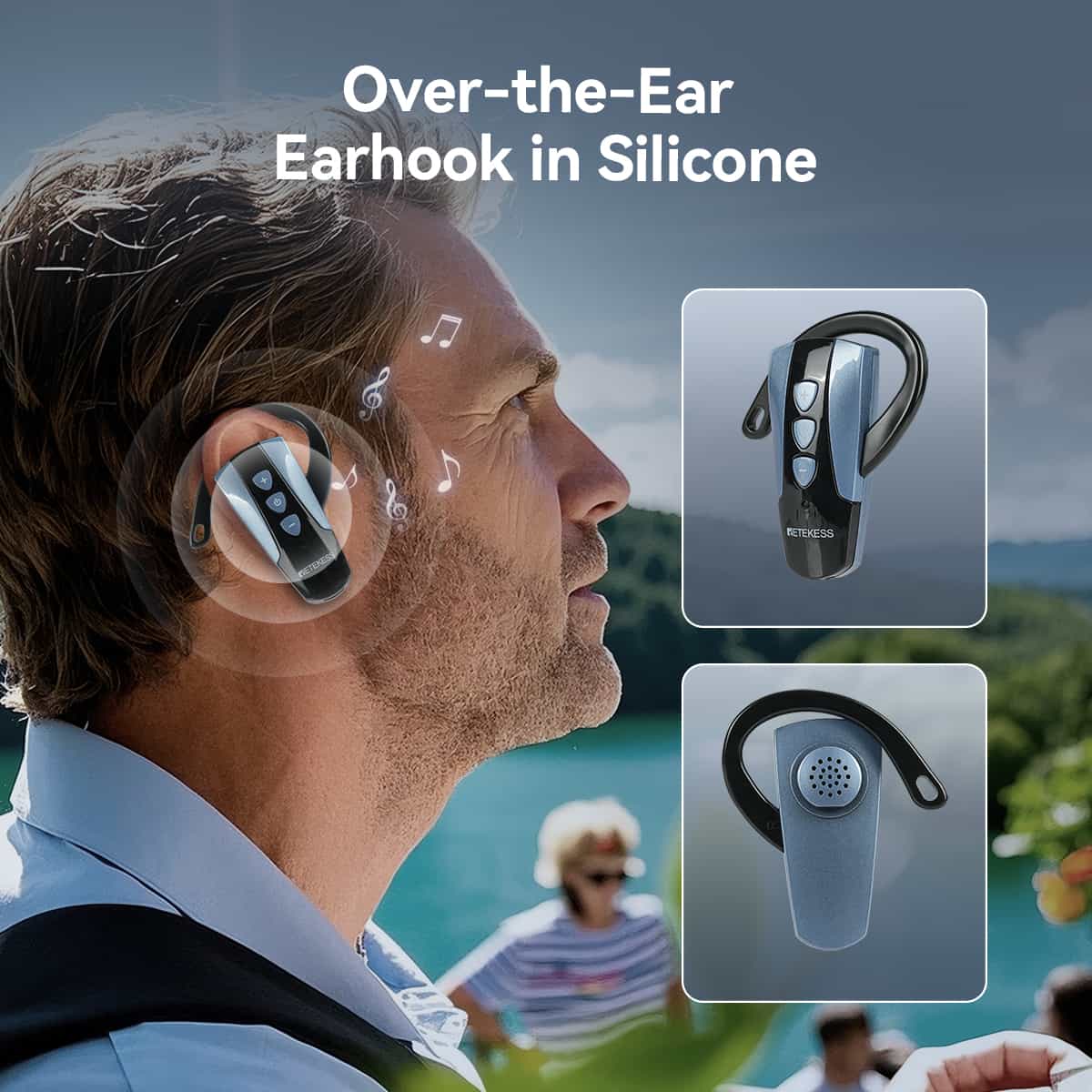
Ear-hook, headset, neck-worn, or other designs can provide different levels of stability and comfort.
Does it block the ear?
Open-ear designs allow visitors to remain aware of their surroundings while listening to the guide.
Can it be worn on either side?
Left/right wearing flexibility can make equipment easier to share between different visitors.
Will it stay in place while walking?
A receiver that moves or falls off can quickly become a distraction during a tour.
Retekess provides several receiver options to accommodate different wearing preferences.
For example, TT106S uses a lightweight ear-hook design, TT133 and T131R support left/right-ear use, allowing operators to adapt the receiver to different users.
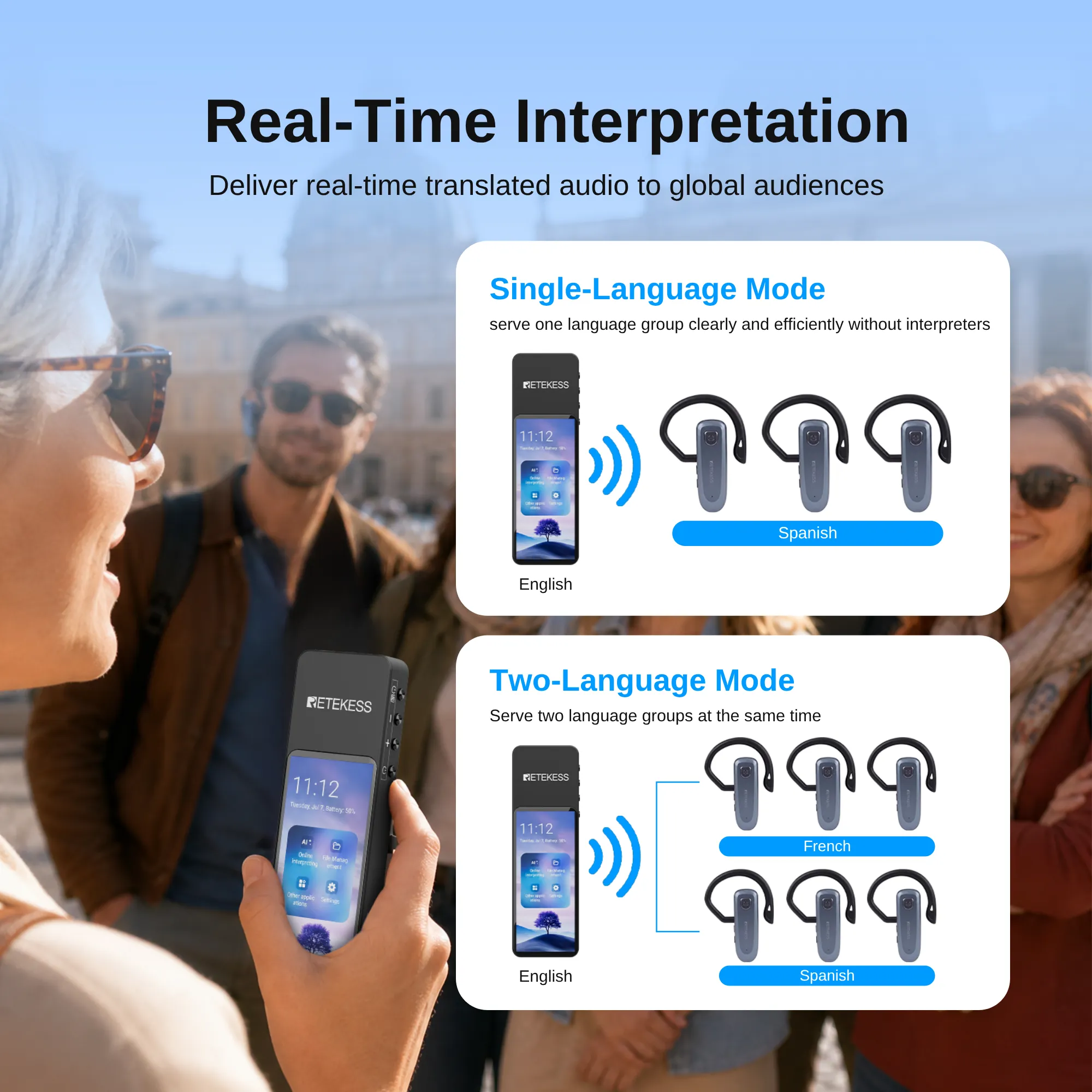
What If Your Group Speaks Different Languages?
Multilingual tours require more than simply choosing a system with enough receivers.
First determine how interpretation will work.
One Language Group: One transmitter can distribute the guide's voice to the entire group.
Multiple Language Groups: You may need separate communication channels or transmitters depending on the system architecture.
For example:
English Guide → Channel A → English Group
Spanish Guide/Interpreter → Channel B → Spanish Group
This allows different groups to listen to the appropriate language without requiring everyone to stay close to the interpreter.
For more complex tours, such as simultaneous interpretation or multi-language conferences, a dedicated interpretation system may be more appropriate than a standard single-channel tour guide system.
The key is to define the language workflow before purchasing the equipment.
How Do You Handle Shared Equipment Hygiene?
When receivers are shared by hundreds or thousands of visitors, hygiene should be part of the configuration plan from the beginning.
There are two common approaches.
- Use standard earphone-based receivers with replaceable hygiene accessories
For traditional receiver setups that use earphones, hygiene can be managed with simple accessories such as disposable earbuds or replaceable ear pads. This makes it easier to prepare devices for repeated use while giving visitors a cleaner and more reassuring experience, especially in high-turnover environments.
- Choose open-ear hook-style receivers for a cleaner, lower-contact design
Another increasingly popular option is the open-ear hook design. Retekess now offers several receiver models built with a lightweight, integrated ear-hook structure that sits comfortably on the ear without going directly into the ear canal.
In practice, the best choice depends on the type of visitors, the length of use, and how frequently equipment is shared. But in either case, hygiene should be treated as part of the visitor experience—not just an afterthought.
Will the Battery Last Through a Full Day?
Battery life should be evaluated against your tour schedule, not just the advertised maximum runtime.
Suppose a tour lasts two hours, but your attraction operates six tours every day. A receiver that lasts through one tour may still require a completely different charging strategy from a receiver designed for all-day operation.
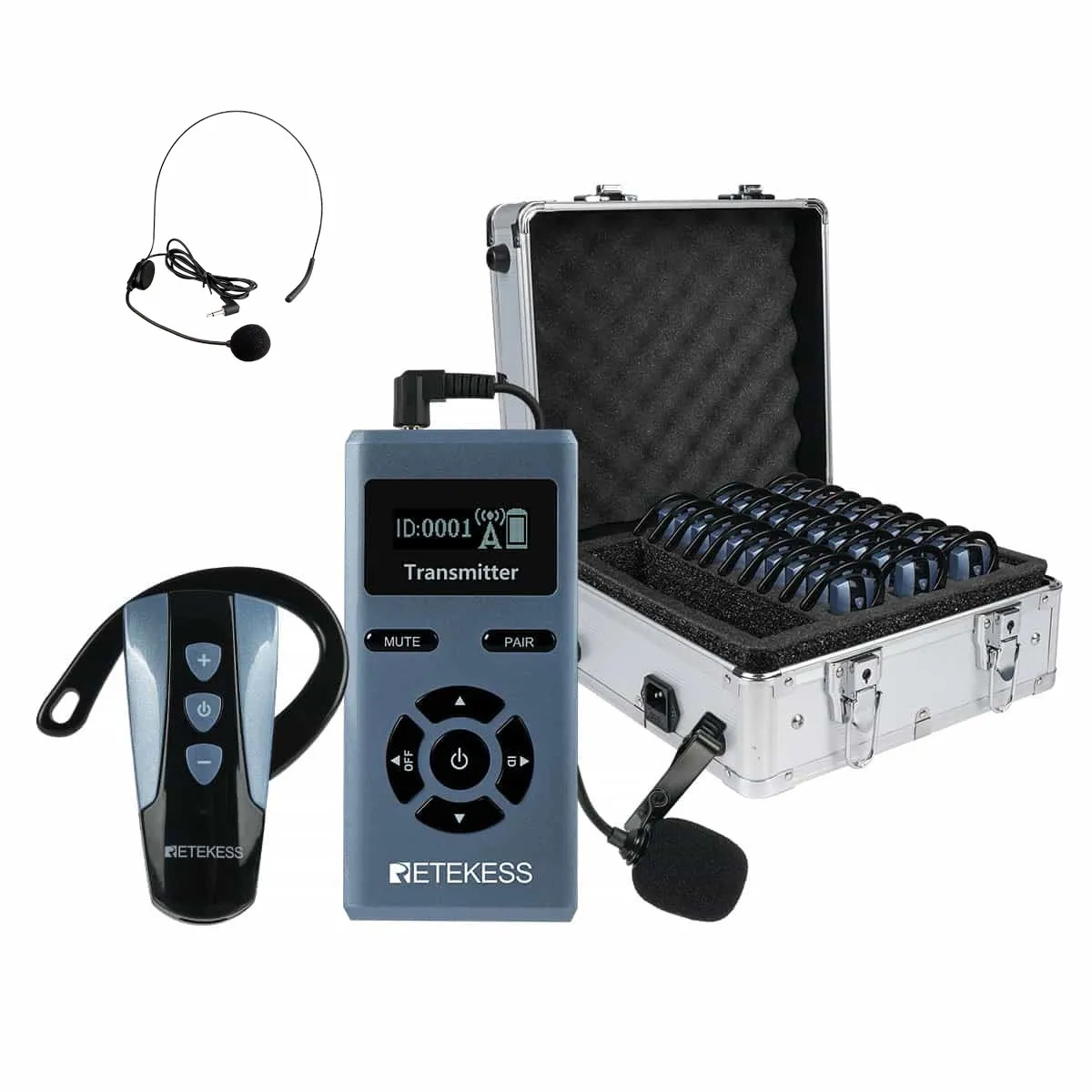
For tour operators running multiple groups, a charging case can do more than recharge equipment. It also provides a centralized place to store, organize, transport, and manage multiple receivers between tours.
Some Retekess systems also support using the equipment while charging, providing additional flexibility when the operating schedule does not leave enough time for a full recharge.
What If You're Still Not Sure Which Setup Fits?
This is where many buyers hesitate.
You may understand your group size and tour environment, but still be unsure whether a particular receiver design is comfortable enough, whether the range works in your location, or whether the system is easy for your staff to manage.
Instead of making a large purchase based only on specifications, a lower-risk approach is to validate the setup in a real environment.
If available,Get a Free Demo to test the equipment with your actual tour route and visitors.
A 30-Day Worry-Free Guarantee can provide additional time to evaluate whether the configuration fits your actual operation.
Instead of asking, “Will this work for us?”, you can move toward a more practical process:
Choose → Test → Validate → Buy
That reduces the risk of selecting equipment based only on assumptions.
A Simple Tour Guide System Selection Checklist
Before placing an order, go through this checklist:
|
Requirement |
Questions to Ask |
|
Tour environment |
Indoor, outdoor, or both? |
|
Group size |
What is the normal and maximum group size? |
|
Transmission |
How far will visitors need to move from the guide? |
|
Noise |
Is the tour conducted in a quiet or crowded environment? |
|
Comfort |
Will elderly visitors or children use the receivers? |
|
Wearing style |
Ear-hook, headset, or another design? |
|
Languages |
One language, multiple languages, or interpretation? |
|
Battery |
How many tours are operated per day? |
|
Hygiene |
Will receivers be shared frequently? |
|
Accessories |
Are disposable earphones or replaceable parts needed? |
|
Spares |
How many backup receivers are required? |
|
Validation |
Can the system be tested before a larger purchase? |
If you can answer these questions, you already have most of the information needed to define your configuration.
The Right Tour Guide System Is the One That Fits Your Workflow
There is no single tour guide system configuration that fits every museum, walking tour, church, or tourist attraction.
A large group may prioritize capacity and communication range. A museum may care more about comfort and hygiene. A walking tour may focus on mobility and transmission stability. A multilingual church tour may need multiple communication channels or interpretation support.
That is why choosing equipment should start with the tour workflow, not the product catalog.
Define your environment, group size, wearing needs, language structure, battery schedule, and hygiene requirements first. Then select the transmitter, receivers, accessories, and quantity around those needs.
And when the decision still feels uncertain, real customer cases, a free demo, and a 30-day worry-free refund can help turn a specification-based decision into a real-world validation process.
The goal is simple: the right equipment should make the tour easier to manage, easier to follow, and easier to scale.


![[18th Anniversary] 18 Years of Echoing Excellence: Making Communication Easier, Connecting Trust Beyond Borders](https://res.retekess.com/z_file/20260716/retekess-brand-story-making-communication-easier_20260716151044_7682.jpg)
![[18 Years in Wireless Communication] Silent Disco Systems Anniversary Celebration: Top-Selling Headphones & Event Mechanics Revealed!](https://res.retekess.com/z_file/20260713/18-years-in-wireless-communication-silent-disco-systems-anniversary-celebration_20260713175011_5749.webp)
![[Anniversary Carnival] Ding-dong! 18th Anniversary Mega Sale on Guest Paging & Calling Systems: Full Reveal of 12+ Products & Promo Rules!](https://res.retekess.com/z_file/20260713/18th-anniversary-mega-sale-on-guest-paging-calling-systems_20260713175257_0295.webp)
![[Retekess 18th Anniversary Teaser] Tour Guide System Exclusive Perks: Sneak Peek at Event Dates & Mechanics!](https://res.retekess.com/z_file/20260713/retekess-18th-anniversary-tour-guide-system-exclusive-perks--2-_20260713180135_6435.webp)
Follow Us
Pay With


 Google
 Amazon
Comments (0)