
Table of Contents
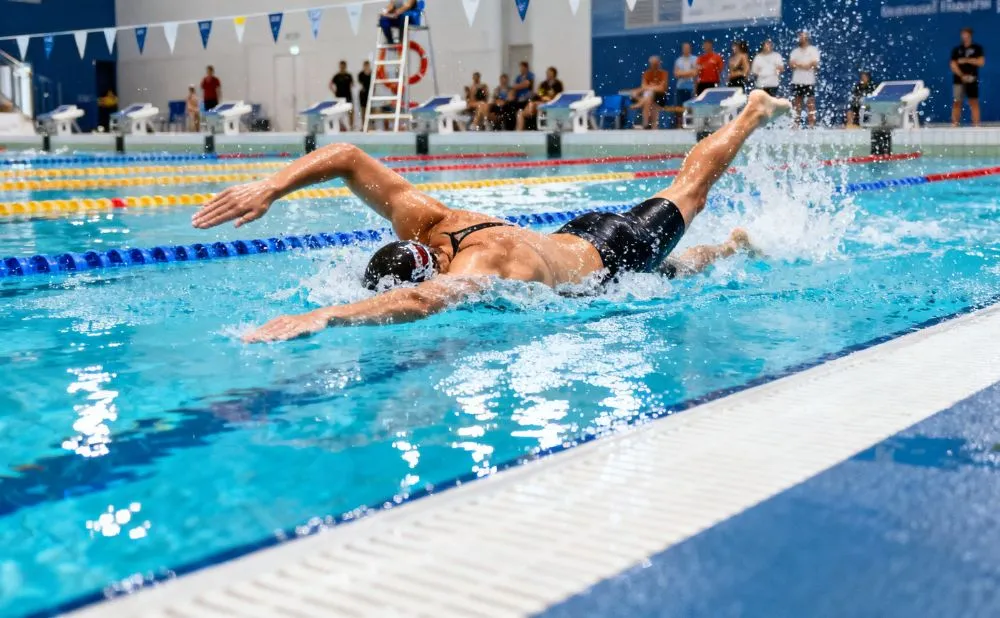
Stop Yelling from the Pool Deck! How Retekess TT120 Lets You Speak to Underwater Swimmers at a Normal Volume
- Retekess
- May 27, 2026
If you have spent more than a week coaching swimming, you know the physical toll it takes on your body—not from swimming laps, but from vocal exhaustion.
Every single day at the swimming pool, a familiar script plays out: The coach stands on the damp deck, megaphone in hand or veins popping in their neck, screaming over the deafening ambient noise of splashing water, filtration hums, and echoed acoustics. Meanwhile, fifty meters away, a swimmer executes a flip-turn with a dropped elbow or an asymmetrical kick. The coach yells the correction, but the sound waves bounce off the water’s surface, completely lost to the athlete submerged just a few inches below.
By the time the swimmer finishes the set and pushes their goggles up to listen, the crucial window for neuromuscular correction has slammed shut. Delayed feedback in competitive swimming is a massive waste of training volume. Athletes end up burning bad habits into their muscle memory, and coaches leave the facility with raw throats, headaches, and vocal fatigue.
It doesn’t have to be this way. With the advent of the modern swim coach communicator 20 generation—spearheaded by the Retekess TT120 Aquatic Communication System—the era of the yelling coach is officially over. Here is a deep dive into how this cutting-edge water talk device and swimming buzzer system allows you to train your squad at a comfortable conversational volume, drastically improving technical progression and lane efficiency.
1. The Anatomy of Pool Acoustics: Why Your Voice Cannot Penetrate the Surface
To understand why traditional shouting or standard megaphones fail, we have to look at the physics of sound transit at a swimming pool.
Water and air possess radically different acoustic densities. When sound waves traveling through the air hit the surface of a swimming pool, more than 99% of the acoustic energy is reflected away rather than refracted into the water. This is why a swimmer submerged even ten centimeters below the surface lives in a state of absolute acoustic isolation from the deck.
Furthermore, indoor aquatic facilities are notorious echo chambers. The combination of hard ceramic tiles, glass ceilings, and open water creates a chaotic environment where vocal frequencies blur into a muddy, unintelligible hum. When you scream harder, you don't make your instructions clearer; you simply increase the acoustic noise floor of the entire facility.
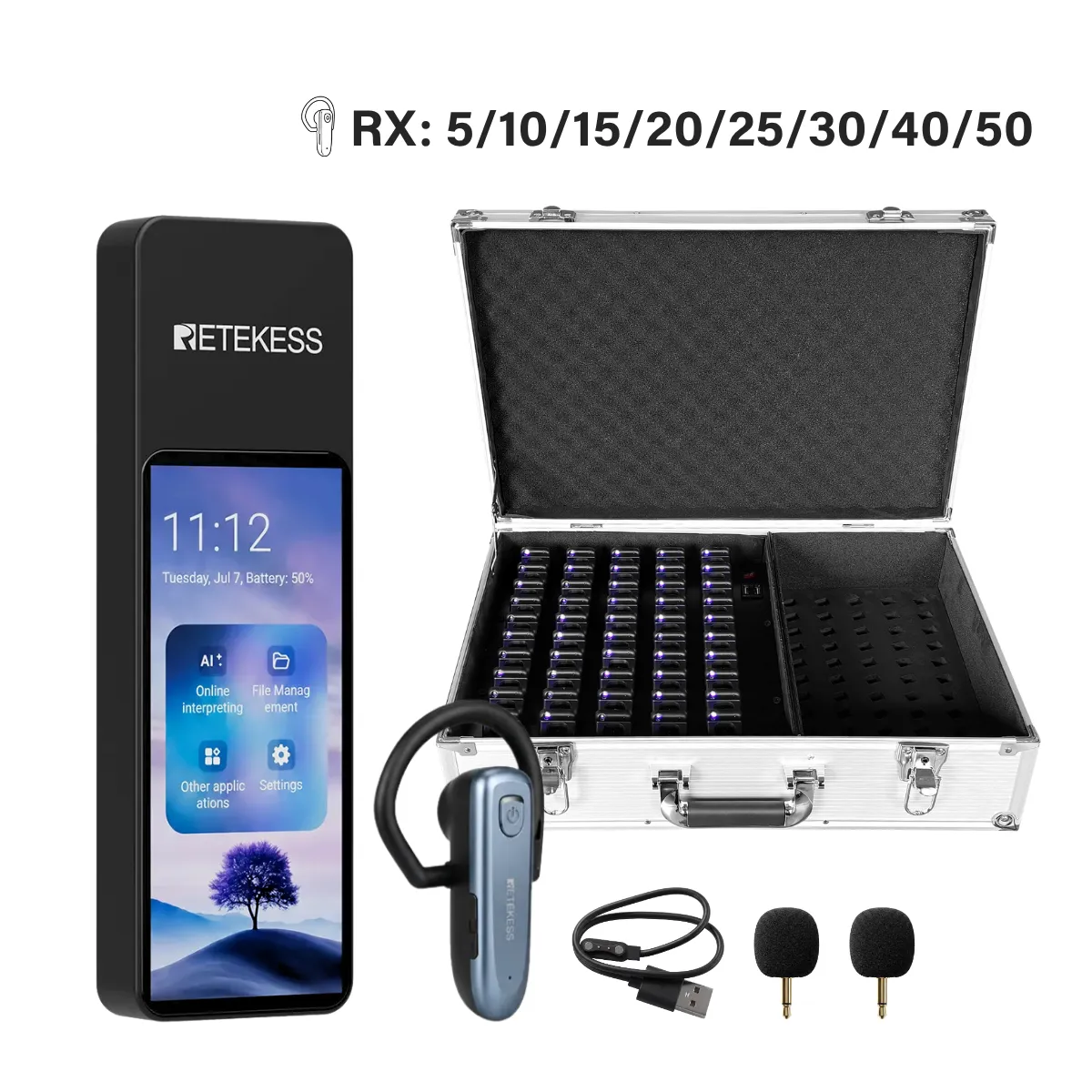
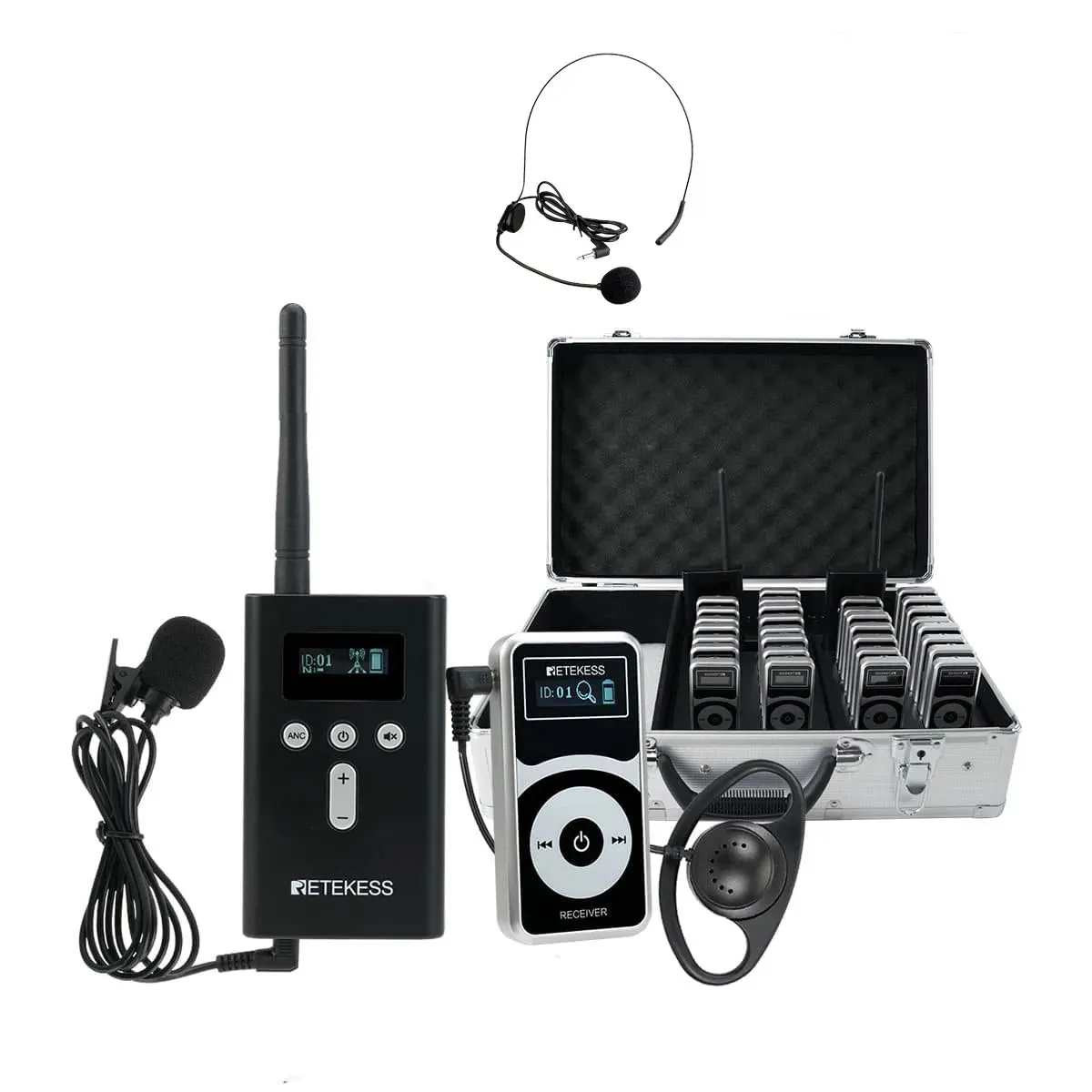
The Retekess TT120 bypasses the air-to-water barrier completely. Instead of relying on airborne sound waves to reach the ear canal, it utilizes a dedicated radio frequency network paired with open-ear bone conduction technology. The coach speaks softly into a wireless transmitter microphone on the deck, and the signal travels instantly through the air and water, translating directly into clear, crisp bone vibrations behind the swimmer's ear.
2. Core Technical Architecture: Inside the Retekess TT120 Fleet
When athletic directors and club owners source hardware for their facilities, they require commercial-grade durability and seamless backend deployment. The Retekess TT120 is engineered from the ground up to handle the demanding realities of professional swim programs.
🏊♂️ Fluid Hydrodynamics: The 39g Non-In-Ear Receiver
Traditional waterproof earbuds are a nightmare for competitive swimmers. They fall out during explosive push-offs, cause painful inner-ear pressure under water caps, and completely block environmental hearing.
The Retekess TT120 receiver features an ultra-lightweight, 39-gram ergonomic streamline profile. It hooks securely over the outside of the ear, resting comfortably beneath swim caps and goggle straps. Because it uses an open-ear style, the swimmer's ear canal remains entirely unobstructed. This ensures the athlete maintains perfect environmental awareness and balance while receiving crystal-clear, real-time vocal data from the coach.
🌐 Multi-Lane Density: 9 Independent Channels
A bustling swim club rarely has the luxury of an empty pool. On any given afternoon, Lane 1 might be running a junior development squad, Lanes 2 and 3 an elite triathlon group, and Lane 4 a master’s sprint clinic.
If your wireless communicator only features one or two channels, cross-frequency bleeding will disrupt the entire facility. The TT120 resolves this with 9 completely isolated radio channels. Up to nine coaches can run separate training matrices in adjacent lanes simultaneously without a single instance of cross-talk or radio interference.
⚡ Commercial Waterproofing and Charging Metrics
Chlorine, humidity, and constant immersion will quickly destroy standard consumer electronics. The Retekess TT120 features strategic, bifurcated waterproofing protection:
The Swimmer's Receiver: Rated at an industrial IP68 waterproof tier, built to withstand continuous underwater submersion and high-velocity flip-turns.
The Coach's Transmitter: Rated at IP54, offering heavy-duty protection against wet hands, chlorinated splashes from the deck, and sudden rain during open-water sessions.
Furthermore, the receivers eliminate open USB ports—the primary failure point for aquatic gear—in favor of fully sealed Magnetic Alignment Charging Ports. This keeps salt, chlorine, and moisture from causing terminal corrosion on internal contacts.
3. Transforming the Training Matrix: Real-Time vs. Delayed Feedback
How exactly does a water talk device change the daily workflow on the pool deck? It fundamentally shifts your coaching from a reactive, retrospective critique to proactive, real-time neuromuscular modeling.
Traditional Shouting Workflow
Retekess TT120 Real-Time Coaching
Consider these elite training scenarios where real-time feedback completely alters performance splits:
Scenario A: The Elite Freestyle Pull
A triathlete is halfway through a high-intensity threshold set. As fatigue sets in, their left hand begins crossing over the midline during the catch phase, causing a snake-like body roll and massive drag.
Without the TT120: The coach has to wait until the 200-meter repetition is over to explain the fault. By then, the athlete has repeated the broken stroke eighty times, reinforcing poor mechanics.
With the TT120: The coach notes the crossover and speaks calmly into the transmitter: "Left hand wide, catch on the rail." The athlete hears the cue mid-stroke, adjusts their hand placement on the very next stroke cycle, and immediately feels the propulsive efficiency return.
Scenario B: Pace and Cadence via Double-Input Sync
The Retekess TT120 transmitter features an incredibly valuable dual-input capability. By utilizing an external audio cable, a coach can hook up a digital metronome or an underwater swimming buzzer pacing track directly into the system.
The background tempo beat feeds directly into the swimmers' headsets, locking down their target stroke rate (Stroke Rate per Minute). At the same time, the coach can speak over the tempo track to deliver technical advice. This turns a standard endurance set into a highly coordinated cadence drill.
4. Institutional ROI: Why Aquatics Directors Choose Retekess Fleet Bundles
For swim school operators, varsity sports programs, and private country clubs, purchasing training gear must align with clear financial returns. Implementing a professional wireless fleet like the Retekess TT120 scales an aquatic business through three direct avenues:
📈 Maximizing Class Capacity per Lane
When instructors don't have to shout to be heard, noise pollution drops to near zero. A single facility can pack more concurrent group lessons or high-ticket private training blocks into the pool without coaches constantly interrupting each other's audio space. This drastically improves the monthly revenue yield per lane.
🩺 Eradicating Instructor Burnout and Vocal Loss
Vocal cord strain and chronic laryngitis are prominent occupational hazards among aquatics professionals. When a head coach loses their voice, training quality declines, and schools face scheduling conflicts or costly substitute coach fees. The TT120 allows coaches to guide their squads using a calm, relaxed speaking voice, saving their energy for tactical analysis rather than physical shouting.
💎 Premium Program Branding
In today's digital-first competitive market, families and serious athletes look for programs that utilize high-tech training methodologies. Marketing your academy as a "Tech-Driven Elite Swim Program with Real-Time Sub-Surface Communication" instantly justifies premium tuition pricing, positioning your facility well above standard city-run recreational programs.
Conclusion: Step Into the Era of Silent, Scientific Coaching
Shouting from the pool deck is a relic of the past. It causes unnecessary strain on coaches, stresses out developmental swimmers, and fails to fix real-time biomechanical issues when it matters most.
By implementing a sub-surface water talk device fleet like the Retekess TT120, you transition your facility into a sanctuary of focused, scientific progression. Your coaches will speak at a normal conversational volume, your swimmers will correct stroke mechanics instantly mid-pool, and your club's performance trajectory will speak for itself.
📦 Equip Your Aquatic Center Today
Ready to protect your voice and scale your team’s technical training capabilities? [Contact Our Sourcing Representatives Today] to receive specialized package pricing, custom team logo engraving options, and exclusive enterprise wholesale rates for 3+ sets.
Leave a Reply




![[18th Anniversary] 18 Years of Echoing Excellence: Making Communication Easier, Connecting Trust Beyond Borders](https://res.retekess.com/z_file/20260716/retekess-brand-story-making-communication-easier_20260716151044_7682.jpg)
![[18 Years in Wireless Communication] Silent Disco Systems Anniversary Celebration: Top-Selling Headphones & Event Mechanics Revealed!](https://res.retekess.com/z_file/20260713/18-years-in-wireless-communication-silent-disco-systems-anniversary-celebration_20260713175011_5749.webp)
![[Anniversary Carnival] Ding-dong! 18th Anniversary Mega Sale on Guest Paging & Calling Systems: Full Reveal of 12+ Products & Promo Rules!](https://res.retekess.com/z_file/20260713/18th-anniversary-mega-sale-on-guest-paging-calling-systems_20260713175257_0295.webp)
![[Retekess 18th Anniversary Teaser] Tour Guide System Exclusive Perks: Sneak Peek at Event Dates & Mechanics!](https://res.retekess.com/z_file/20260713/retekess-18th-anniversary-tour-guide-system-exclusive-perks--2-_20260713180135_6435.webp)
Follow Us
Pay With


 Google
 Amazon
Comments (0)