
Table of Contents
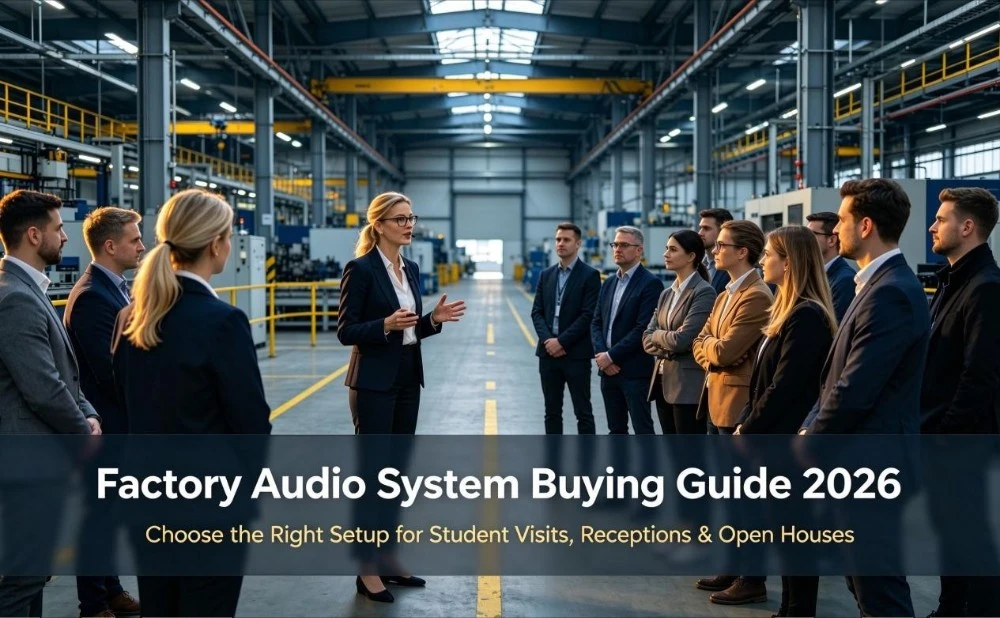
The 2026 Factory Audio System Buying Guide: Match the Right Model to Every Tour Type
- Retekess
- Sep 29, 2026

Factory floors are noisy places. NIOSH surveys find that about half of industrial work environments run at 85 to 95 decibels, and more than half of factory machines produce 90 to 100 decibels. A normal speaking voice sits around 60 decibels. On a production line, even a loud shout loses the battle.
Guides who push their voice over that noise pay a cost. Vocal strain builds up over a day of repeated shouting. Guests miss instructions near moving equipment, which raises safety risks. A scattered, confused group also leaves a weak impression on visiting clients.
A wireless factory audio system fixes the problem at the source. The guide speaks into a transmitter, and each guest hears the voice clearly through a personal receiver.
Most plants run three main tour types: student visits, business receptions, and open house days. Each has its own size, route, and noise level, so one setup does not fit all of them. This guide turns the choice into a short process and points to a model for each case.
Four Factors to Check First
Before comparing models, answer four questions.
- One-way or two-way: Does only the guide speak, or do several team leaders need to talk with each other during the route?
- Group size: How many receivers go out at once? Count the largest single tour, not the average one.
- Range: How far does the route spread across the plant, and how many steel structures sit between the guide and the last guest?
- Noise: Does the route pass running machines? Metal stamping and grinding areas often reach 95 decibels or more.
Keep these answers in mind. The decision tree below uses them.
A Quick Look at the Signal Technology
Three signal types appear across the Retekess lineup.
- 4 GHz digital (TT106S): The 2.4–2.485 GHz band supports thousands of channels, so many teams work in the same hall without cross-talk.
- Lower-frequency band (T130P, 195–216 MHz): Lower frequencies bend around obstacles well. This suits mixed indoor and outdoor routes.
- UHF (T130U and TT126): UHF balances range and obstacle handling. Digital UHF adds strong anti-interference for crowded plants.
Metal is the main enemy inside a factory. Steel racks, machines, and walls reflect or block signals, so real range always falls short of the open-air figure printed on the box. Test on the actual route.
Five Questions, One Model
Work through the five questions in order. Stop at the first one that fits.
- Do several guides or team leaders need to talk with each other during the tour? Pick the TT126. Main and vice transmitters support two-way intercom, while guests listen through receivers.
- Does the route cross high-noise areas? Pick the T130P. Its four-level DSP noise reduction keeps speech clear near running machines.
- Do several teams or languages tour at the same time? Pick the T130Ufor strong anti-interference, or the TT106S for its 9,999 channels.
- Is the plant very large, with guests spread far from the guide? Pick the TT106S. It reaches 200 meters to receivers.
- Do you host fewer than four tours a month? Rent for now, or request a free demo before buying.
Match the Model to the Tour Type
Student Visits
Student groups are large, lively, and often run in back-to-back batches.
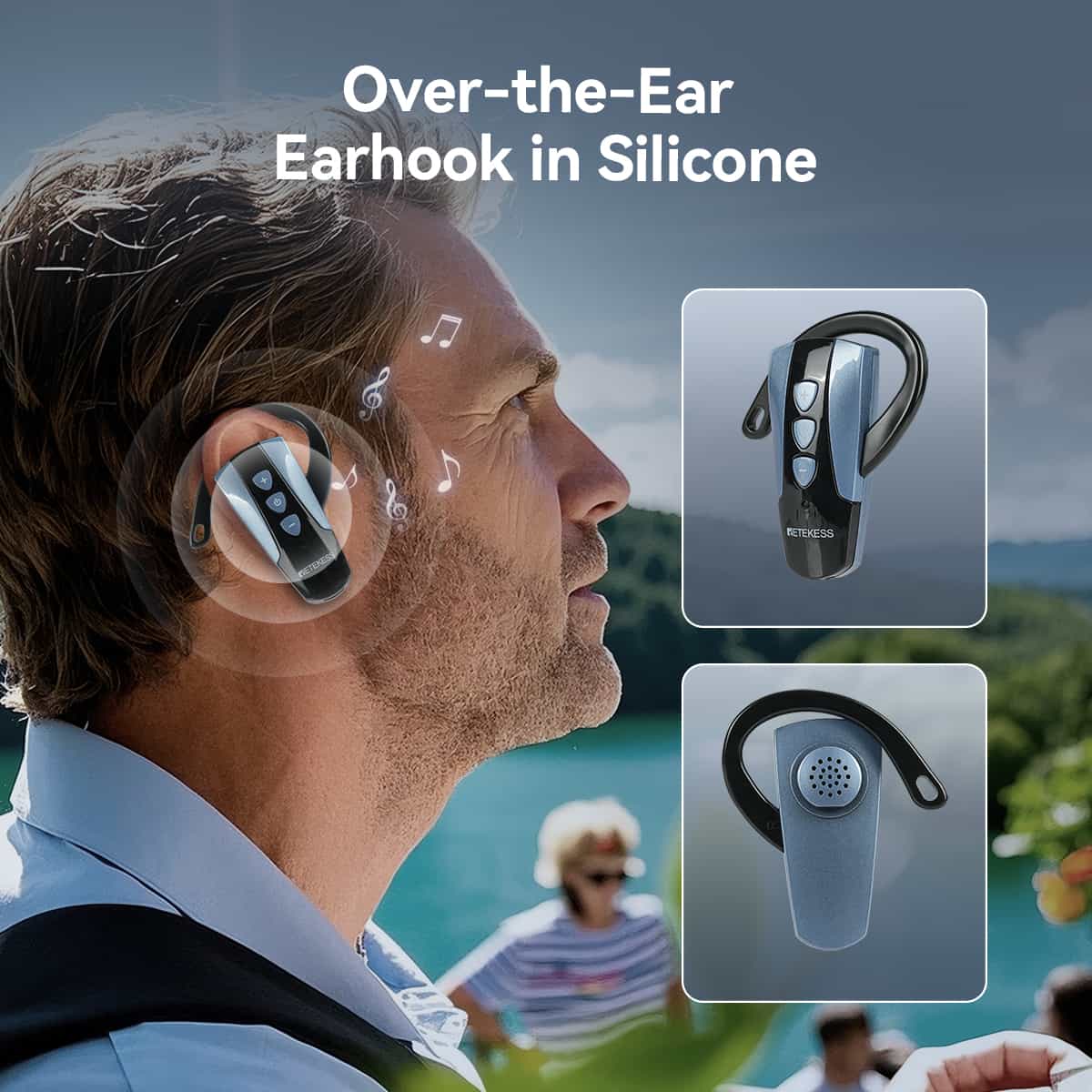
- Groups under 20: Choose the TT106S. The receiver weighs 18 grams, needs no earphone cable, and runs up to 50 hours. It stands up to repeated handling and fast turnovers.
- Large groups with several teachers or multiple batches: Choose the TT126. Two-way audio keeps teachers, guides, and plant staff in contact. They coordinate headcounts, safety, and route changes while students listen through receivers.
A quick handout routine saves time. One staff member issues receivers at the start point, and another collects them at the exit. Open earhook units go on in seconds, so a class of 30 moves through the handout in minutes.
Business Receptions
Clients and partners judge the plant on how smooth and professional the visit feels.
- Standard client groups: Choose the T130P. Four-level DSP noise reduction and ten volume steps keep speech clear and controlled.
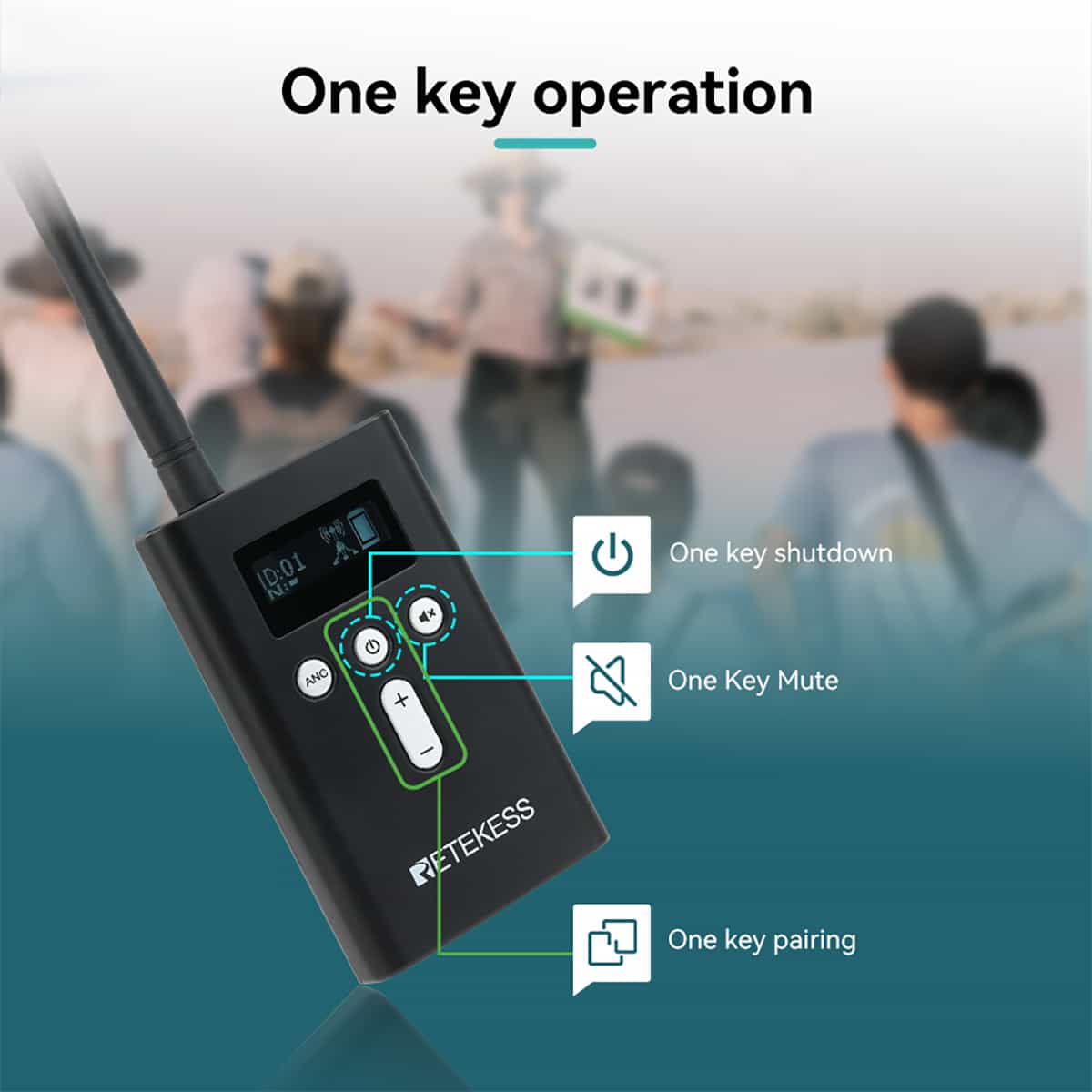
- Multilingual or parallel teams: Choose the T130U. Digital UHF transmission resists interference, and one touch shuts down or mutes all receivers at once.
For multilingual visits, each language group tunes to its own channel. One host team runs the schedule, and guests stay with their colleagues instead of splitting into separate tours.
Open House Days
Open houses spread guests across several routes at the same time.
- Use the T130P as the main system for standard guided routes.
- Add the TT106S for extra teams and lighter routes.
- For routes where staff need to coordinate closely, assign a separate channel and add TT126 vice transmitters.
Plan channels before guests arrive. Give each route a fixed channel, post it on the route sign, and keep one spare channel for late changes.
Plan the Charging Setup
The charging case is part of the system, not an afterthought. Match its slots to the largest single tour, then add spare positions.
- 16-slot casessuit small teams and single guides.
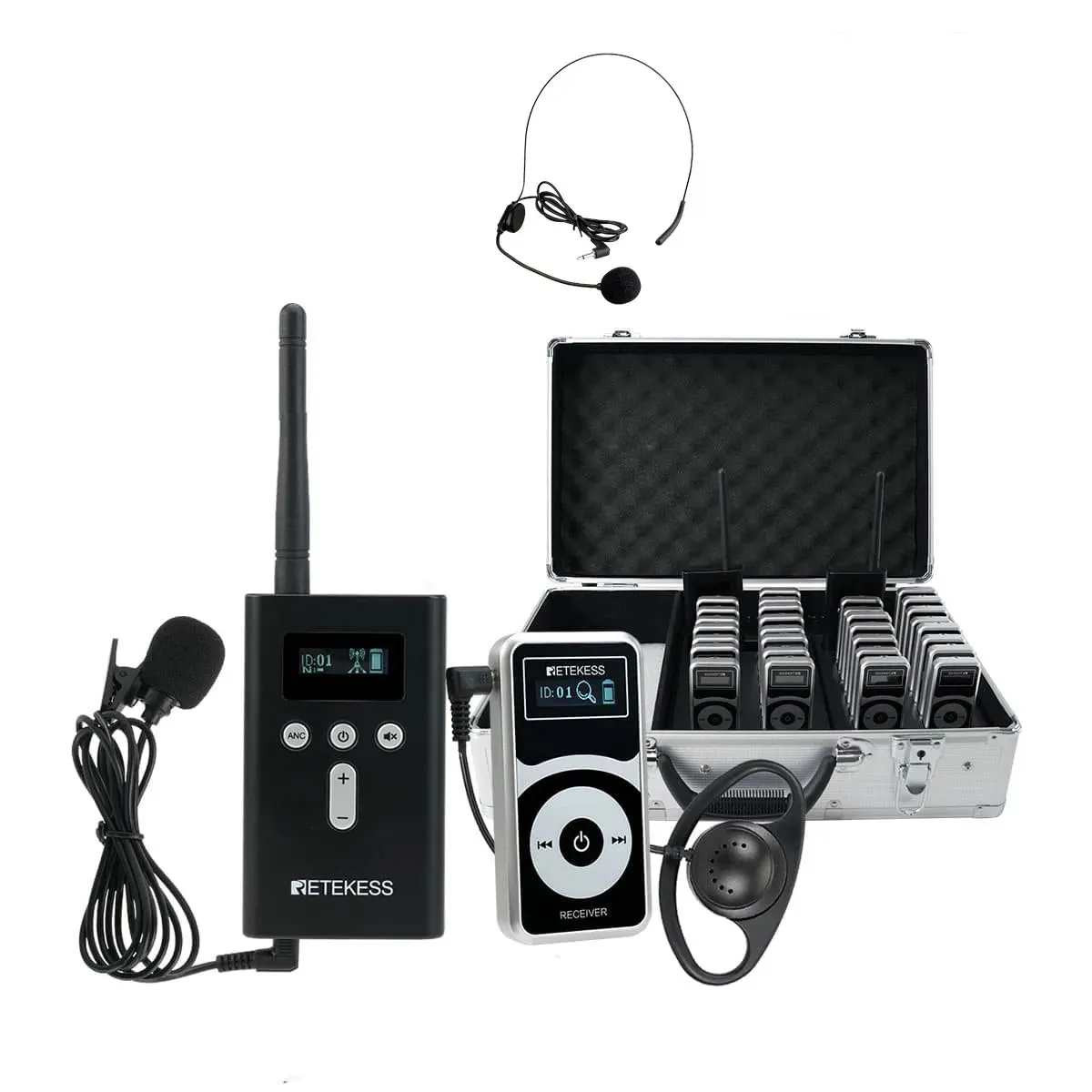
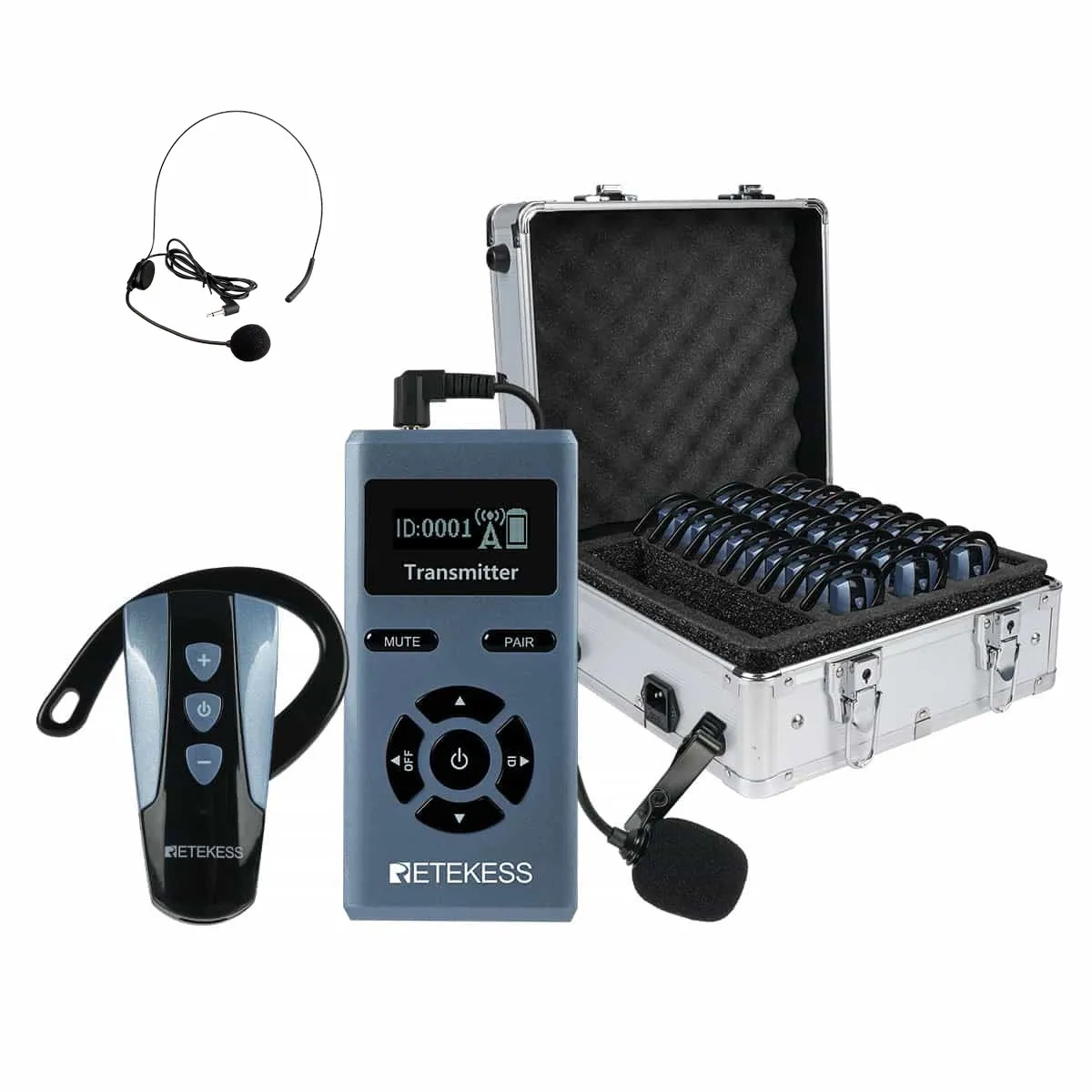
- 32-slot casescover groups around 30. For example, the TT035 holds 30 receivers plus 2 transmitters.
- 64-slot casessuit large open houses and rental fleets. The TT035A holds 60 receivers plus 4 transmitters.
Contact charging keeps the process simple. Units drop into slots with no cables to plug in, and the case doubles as storage and transport between buildings.
Rent or Buy: The Break-Even Line
Renting works for rare events. Buying works for a steady schedule.
- Host eight or more tours a month? Buy. A mid-size system often pays back within three to six months.
- Host only a few tours a year? Rent for those dates.
A simple test: multiply the daily rental cost by the number of tours in a year. Compare that figure with the price of a full kit. The higher number points to the better choice.
Remember the hidden costs of renting. Frequent rentals still leave the plant managing hygiene, pickup, and return on every event. Owned units stay on site and stay ready.
When buying, add 5 to 15 percent extra receivers. The spares cover charging, repair, and sudden larger groups.
A Short Deployment Checklist
Before the tour:
- charge every unit overnight in the case
- test the route at its noisiest point
- assign channels to each team or language
- count receivers against the guest list, with spares
On the day:
- hand out units at the fixed start point
- confirm every guest hears the guide before walking
- mute the transmitter during private breaks
After the tour:
- collect and count all units
- wipe the receivers
- return units to the case for charging
Five Common Buying Mistakes
- Trusting the listed range only. Steel frames, metal equipment, and walls reduce the real distance. Test the system on the actual route.
- Mismatching the charging case. The case slots must cover the full fleet, with a few spare positions.
- Buying one-way audio too early. Tours where several leaders run safety checks or coordinate routes need two-way units.
- Ignoring receiver hygiene. Cables and in-ear pieces collect dirt and slow down turnovers. Open earhook units wipe clean faster.
- Using standby battery figures. High volume and noise-filter use shorten real battery life. Match battery life to the longest tour day.
Quick Model Overview
- TT106S: Light and cable-free; 18g receivers, 200m, 50-hour battery.
- T130P: The noise-control choice; four-level DSP, 49 channels, 160m.
- T130U: The anti-interference choice; digital UHF, 19–50 channels by region, 200m, 40-hour receivers.
- TT126: The two-way choice; main and vice transmitters link multiple leaders, with up to 280m between transmitters.
Final Note
The right factory audio system follows the tour, not the other way around. Small student groups need light and sturdy units. Client receptions need clear, controlled audio. Open house days need several teams running at once.
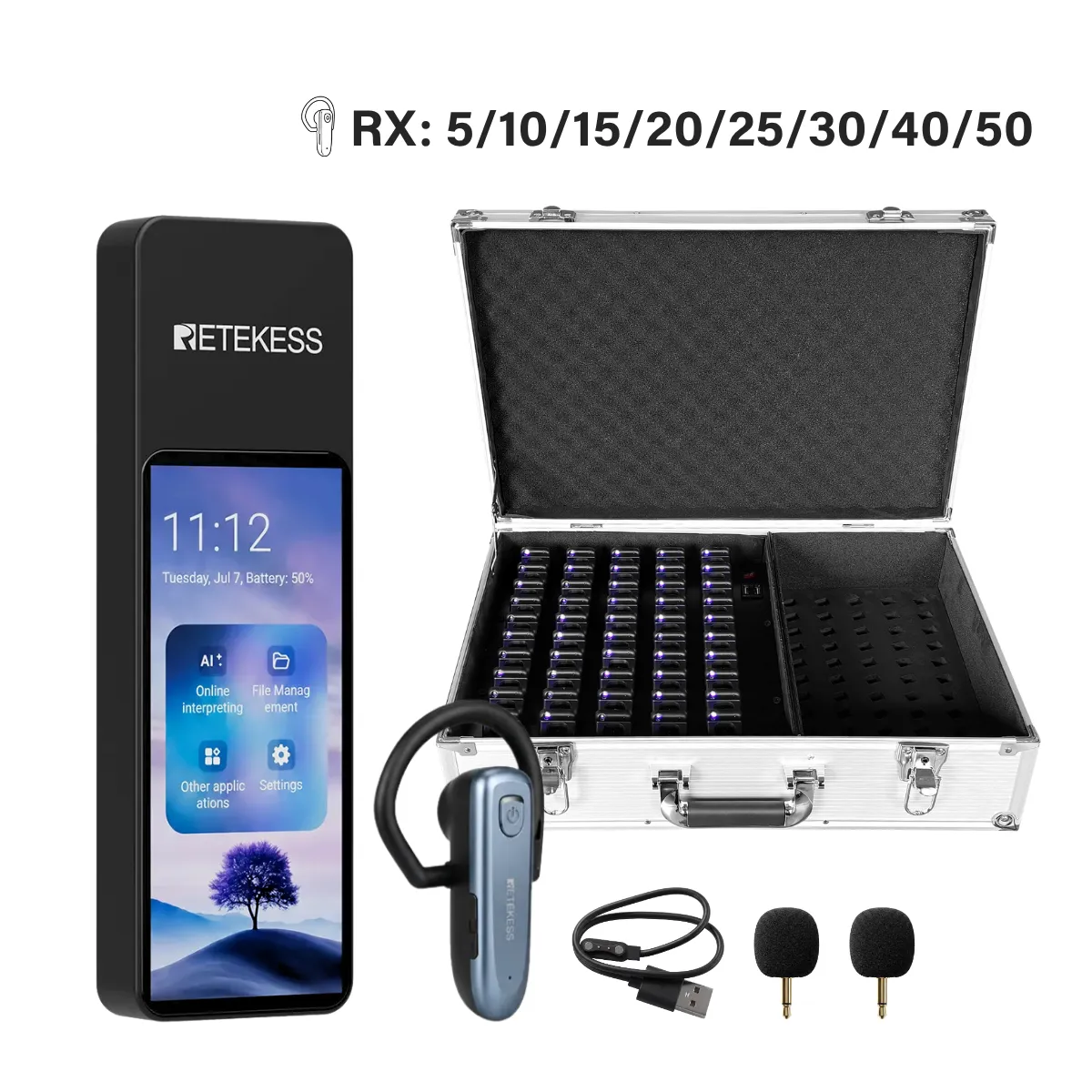
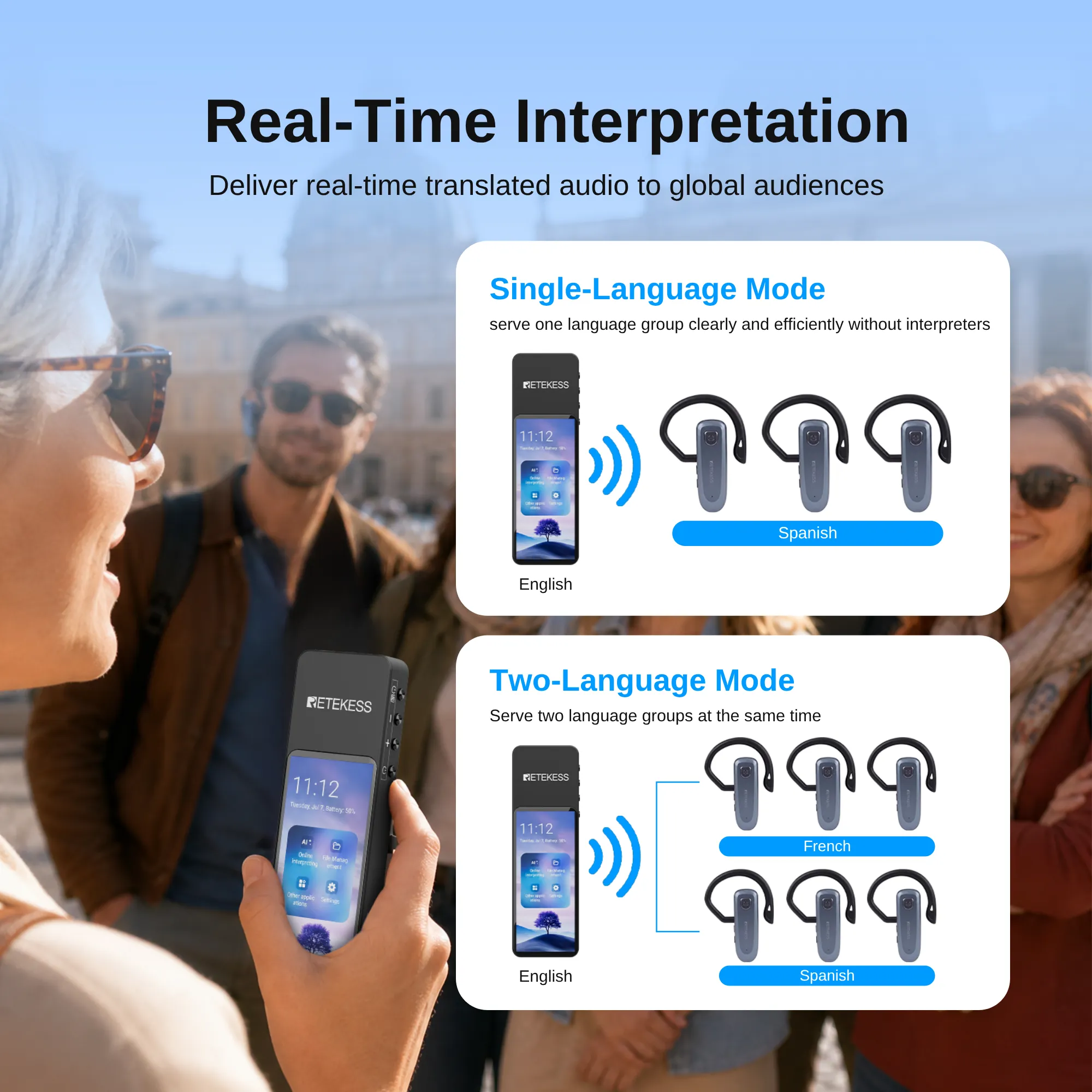
Retekess offers free, long-term selection support. Share the plant size, tour types, and monthly schedule, and the team will prepare a configuration list. Buyers can also request a free demo and test the units on a real tour before placing an order.


![[18th Anniversary] 18 Years of Echoing Excellence: Making Communication Easier, Connecting Trust Beyond Borders](https://res.retekess.com/z_file/20260716/retekess-brand-story-making-communication-easier_20260716151044_7682.jpg)
![[18 Years in Wireless Communication] Silent Disco Systems Anniversary Celebration: Top-Selling Headphones & Event Mechanics Revealed!](https://res.retekess.com/z_file/20260713/18-years-in-wireless-communication-silent-disco-systems-anniversary-celebration_20260713175011_5749.webp)
![[Anniversary Carnival] Ding-dong! 18th Anniversary Mega Sale on Guest Paging & Calling Systems: Full Reveal of 12+ Products & Promo Rules!](https://res.retekess.com/z_file/20260713/18th-anniversary-mega-sale-on-guest-paging-calling-systems_20260713175257_0295.webp)
![[Retekess 18th Anniversary Teaser] Tour Guide System Exclusive Perks: Sneak Peek at Event Dates & Mechanics!](https://res.retekess.com/z_file/20260713/retekess-18th-anniversary-tour-guide-system-exclusive-perks--2-_20260713180135_6435.webp)
Follow Us
Pay With


 Google
 Amazon
Comments (0)