
Table of Contents
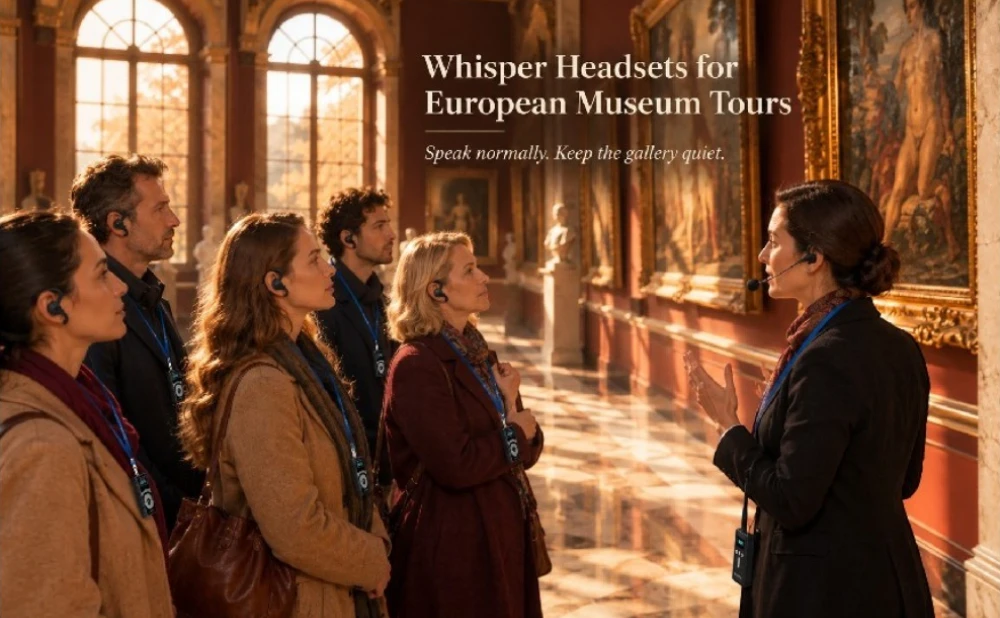
Speak Normally: How Italy and Spain Museums Keep Fall Tours Quiet
- Retekess
- Sep 29, 2026

Fall is peak touring season in Italy and Spain. Guides move groups through Florence, Venice, Capri, and Madrid from September into November. The busiest museums now set one condition at the entrance: no loud voices, and no entry without headphones for larger groups.
Whisper headsets have shifted from optional gear to a mandatory pass for the fall season. A European tour guide system is now part of standard kit for agencies serving these destinations.
The Mandatory Headset List: Six Stops to Check Before Departure
Six official rules set the baseline.
- Uffizi Gallery, Florence: No voice amplifier is permitted. Groups over six people, guide included, must use the whisper system (microphone and earphones). Groups are capped at 16 people. On-site headphone rental costs EUR 1.50 per person.
- Doge's Palace, Venice: Groups over ten people must use whisper devices. Distribution and collection happen outside the exhibition halls.
- Capri, 2026 season: Groups are capped at 40 people on arrival. Groups over 20 must use headphones; loudspeakers are banned. Large flags, umbrellas, and bulky group markers face restrictions.
- Thyssen-Bornemisza Museum, Madrid: Guided groups must use a microphone-and-receiver system. The museum rents micro-receivers at EUR 1 each.
- Museo Egizio, Turin: Guided groups use the museum's own radio devices; other devices are not permitted.
- Sistine Chapel, Vatican Museums: Speaking and live explanations inside the chapel are prohibited.
Rules change between seasons. Confirm the current wording on each museum's official site before travel.
The rental bill grows quickly. A 25-person group at the Uffizi pays EUR 37.50 for one visit. Across a fall schedule of three or four museum days per week, repeated on-site rental costs more than owning the equipment.
"Whisper" Does Not Mean Whispering
The word "whisper" appears in every rule above, and it sends many new guides down the wrong path. They read "whisper system," lower their voice to a breathy hush, and assume this protects both the room and their throat.
Voice specialists reach the opposite conclusion. A forced whisper tenses the larynx harder than relaxed speech. ENT and voice-clinic guidance treats whispering as vocal strain, not vocal rest. A six-hour day of forced hush can leave a guide as hoarse as a day of shouting.
The system is built for a different method:
- Speak into the microphone at a normal, conversational volume.
- Let the transmitter carry the voice to each receiver.
- Keep the room quiet without changing the voice itself.
One guide, one normal speaking voice, clear sound for every guest. The room stays quiet because the sound travels privately, not because the guide forces the voice into a whisper.
The difference matters across a full season. Guides talk six to eight hours on a touring day. Mild strain takes two to five days to settle; persistent strain takes two to four weeks. Normal-volume speech through a microphone is the sustainable way through.
Normal Volume on Noisy Streets
Outside the museums, normal volume still has to beat street noise. Fall routes cross narrow medieval lanes, busy squares, and church naves filled with other visitors.
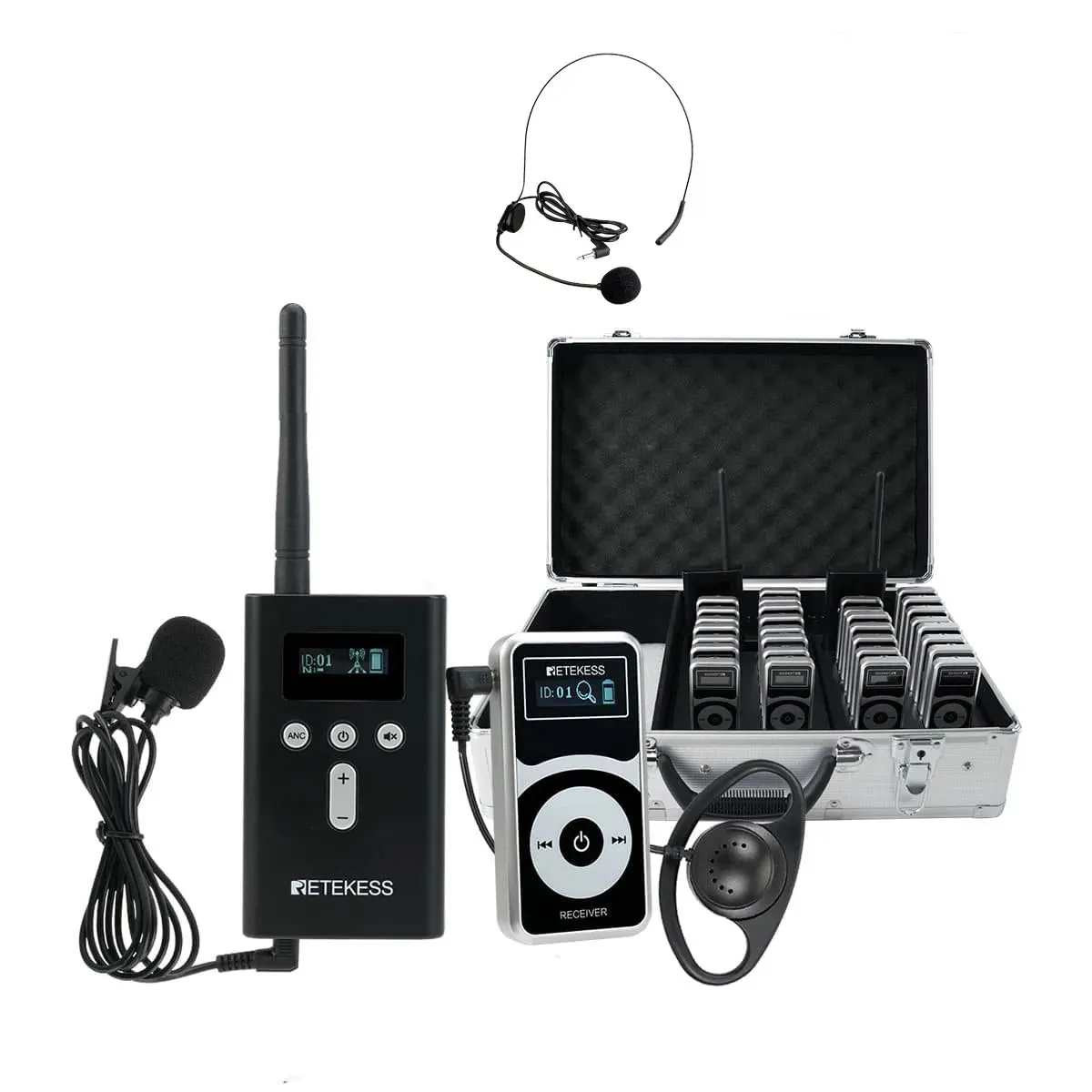
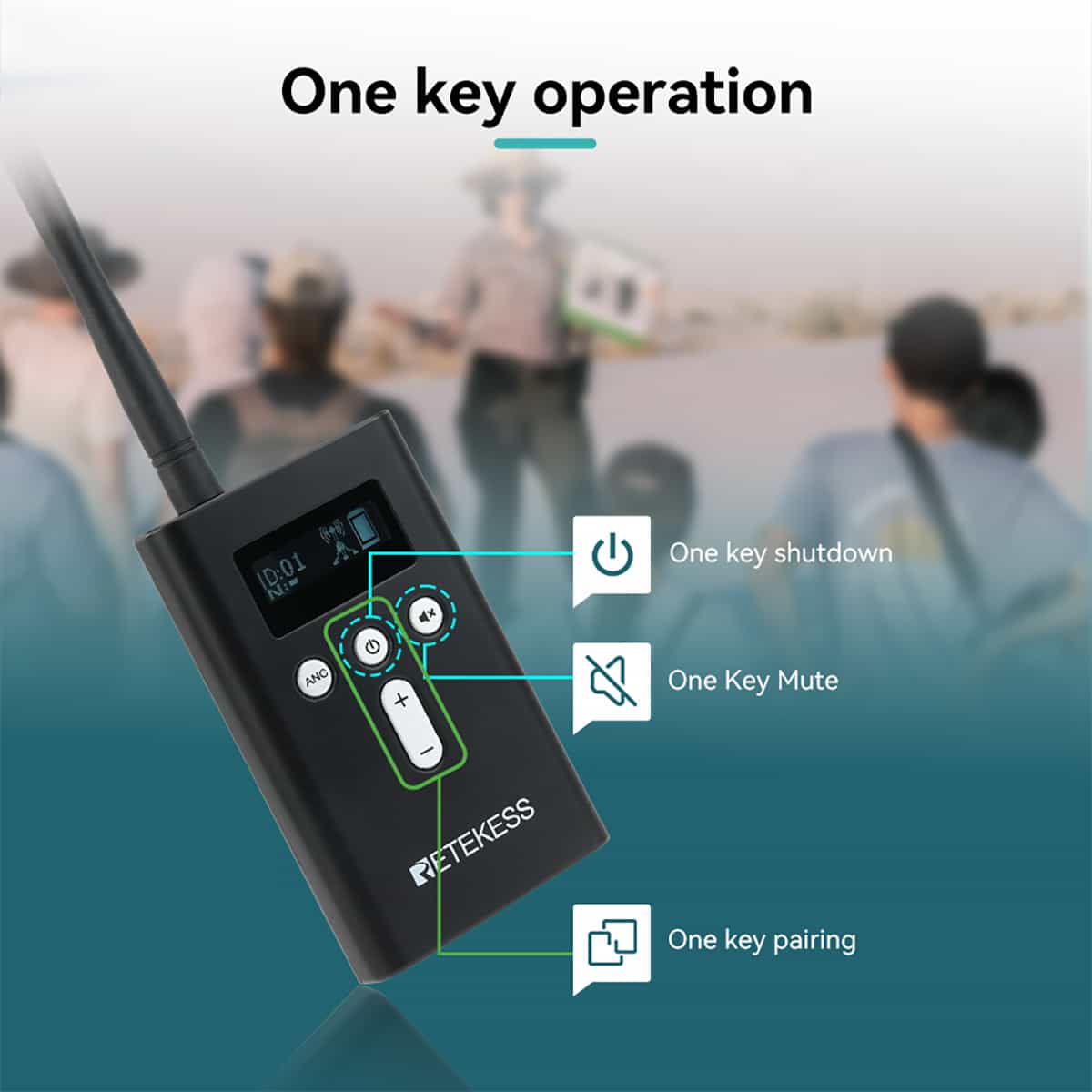
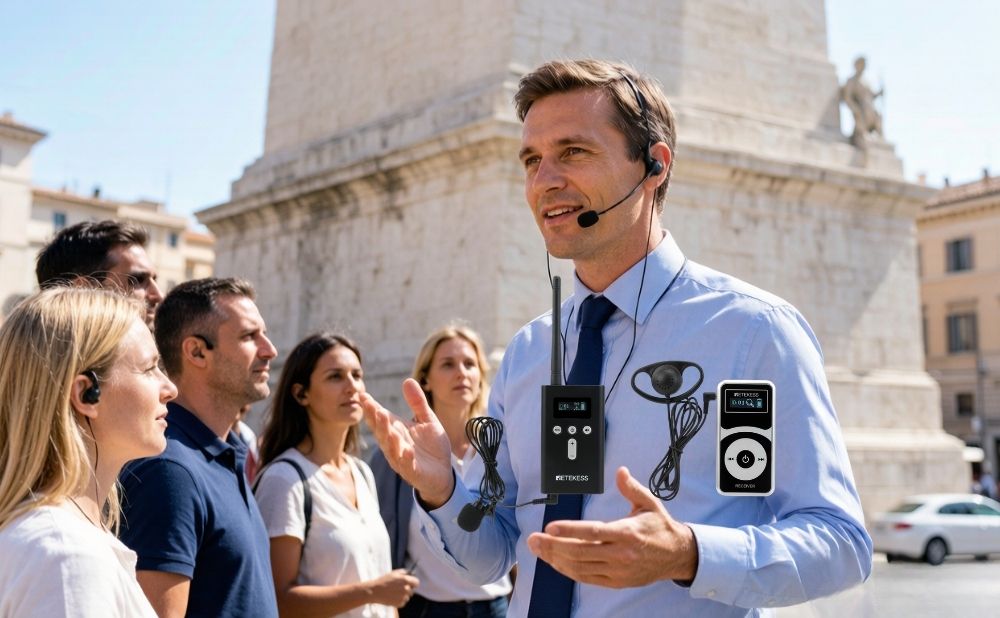
The Retekess T130P uses DSP noise reduction at four adjustable levels. Guides run a light level in quiet galleries and a stronger level on crowded streets, and the system keeps speech clear while steady background noise drops away. Ten volume steps let each guest set a comfortable level.
Keeping the Group and Its Languages Together
Groups spread out at crosswalks, photo stops, and ticket lines. Headsets close that gap without shouting.
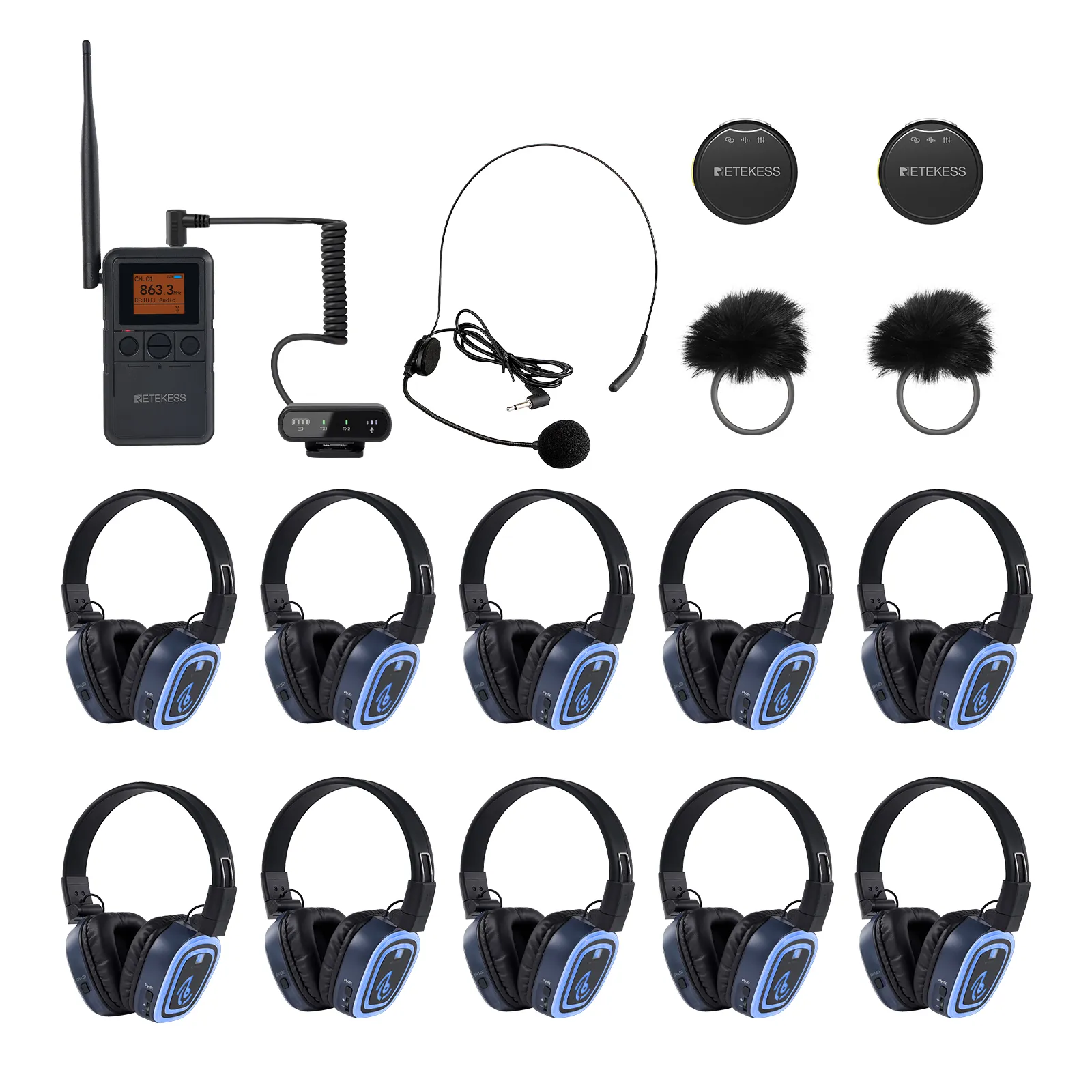
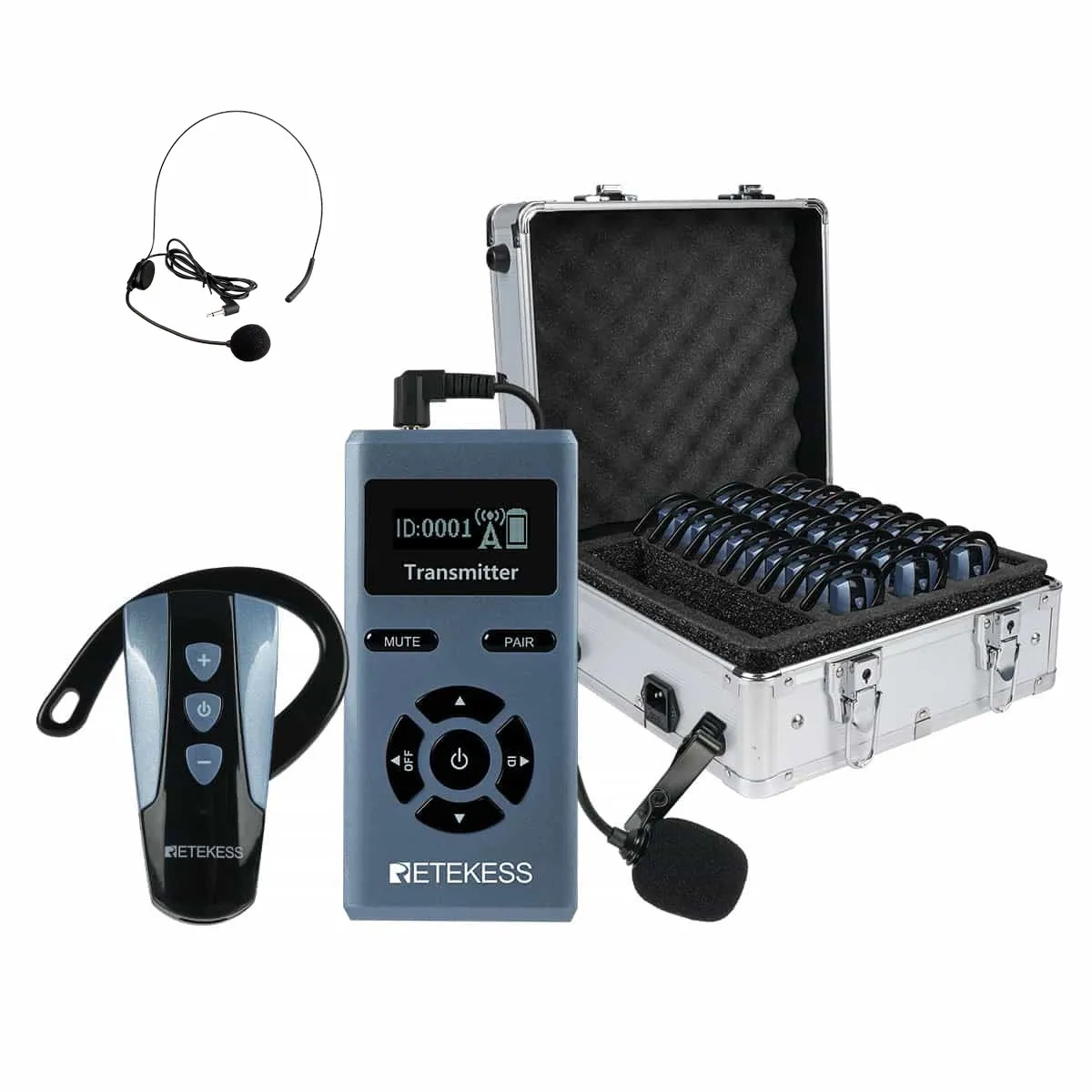
- The T130P covers 160 meters across 49 channels, so the front and back of a standard walking group hear the same commentary.
- The TT106S covers 200 meters across 9,999 channels, allowing several groups to share a museum or square without cross-talk.
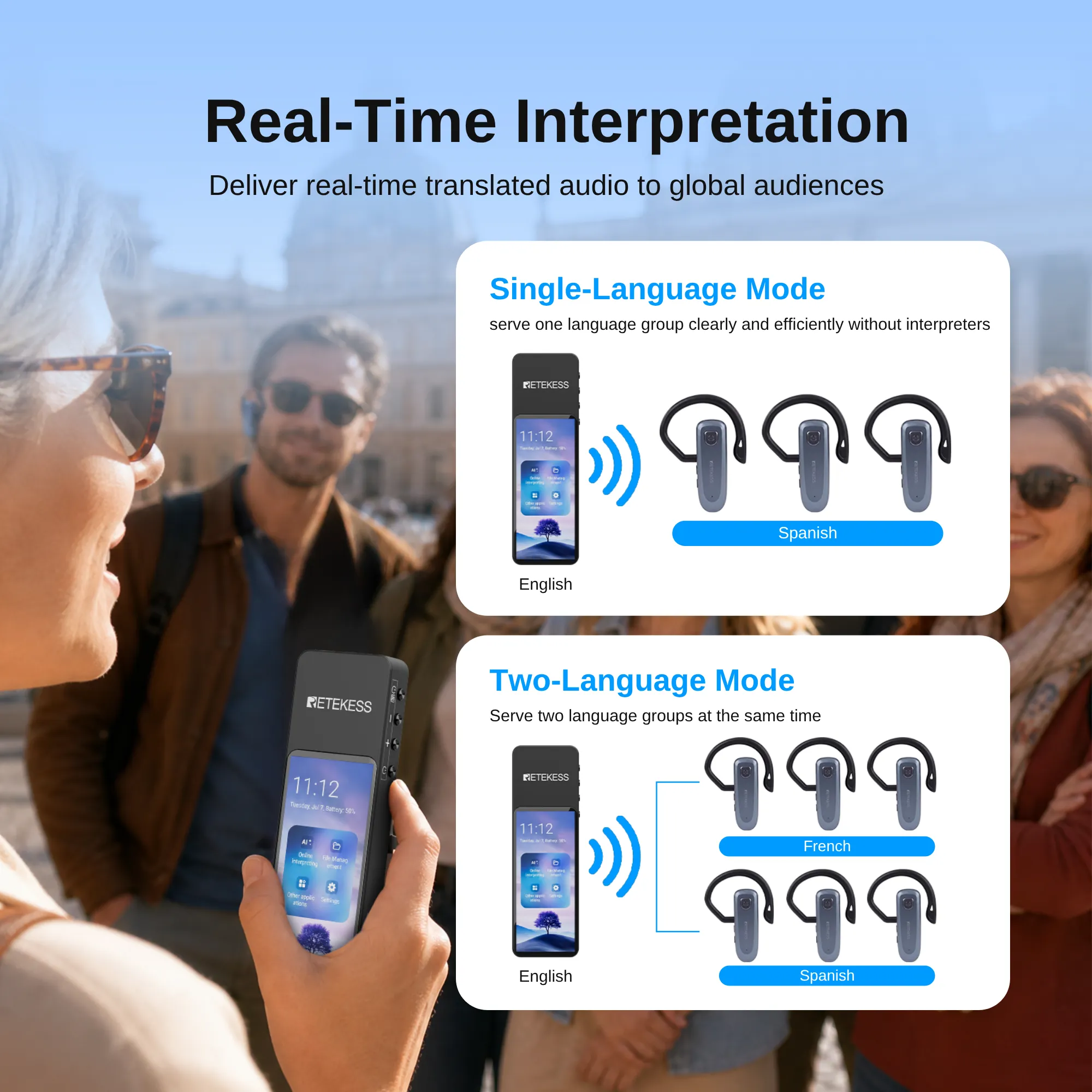
The same channel layout supports multilingual tours. Each language group tunes to its own channel while one guide team runs the whole visit. Guests stay with their companions instead of splitting into separate language tours.
Hygiene for Rental Fleets
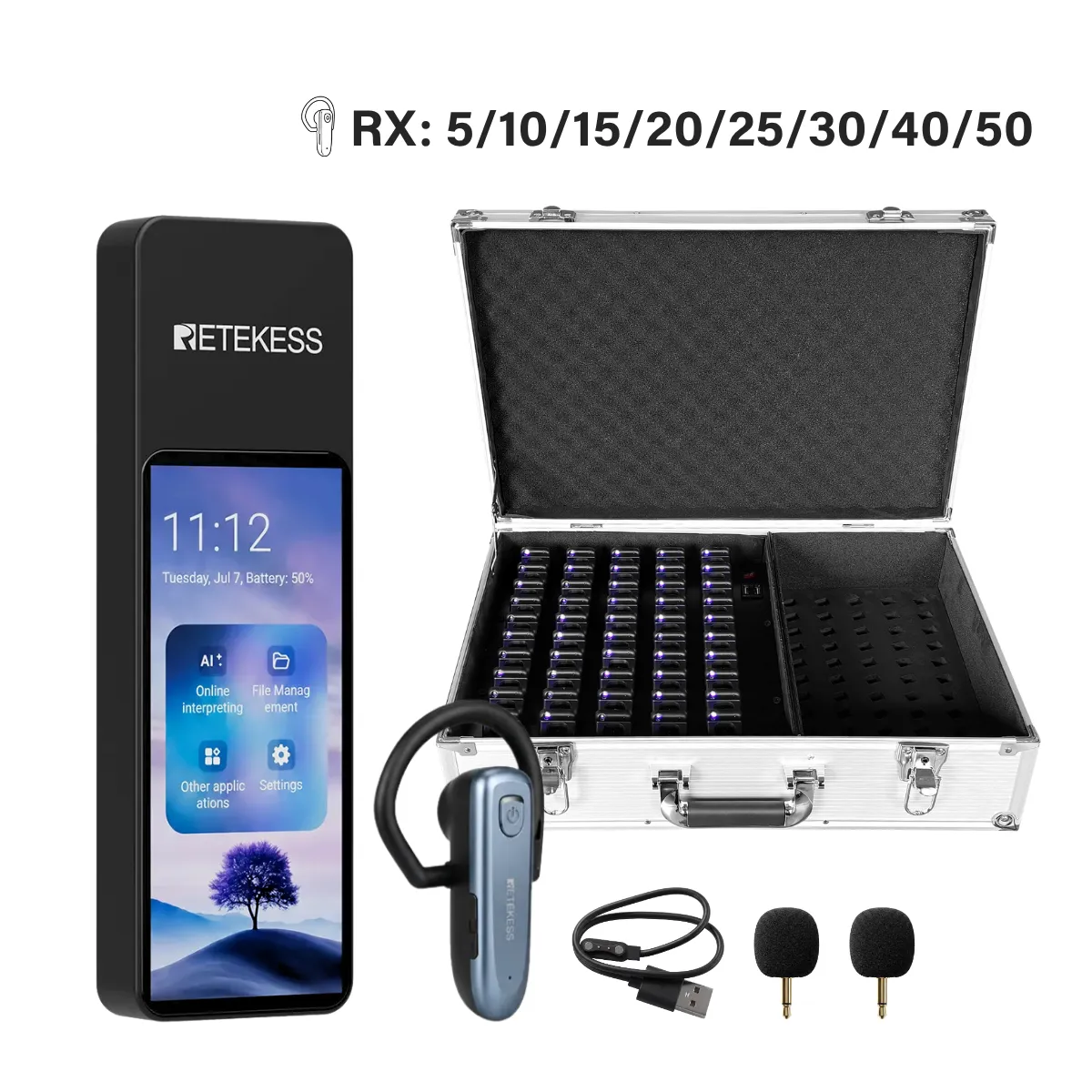
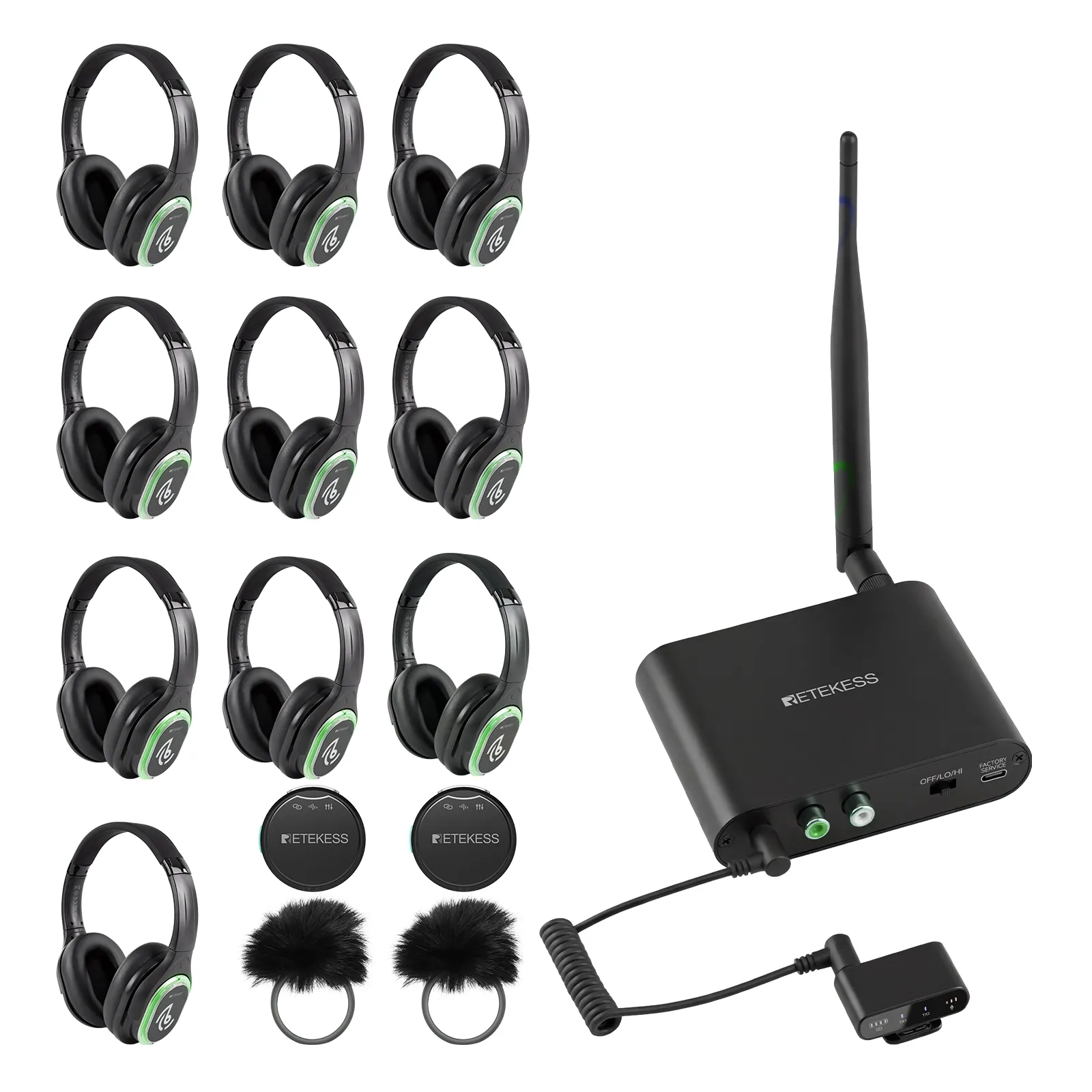
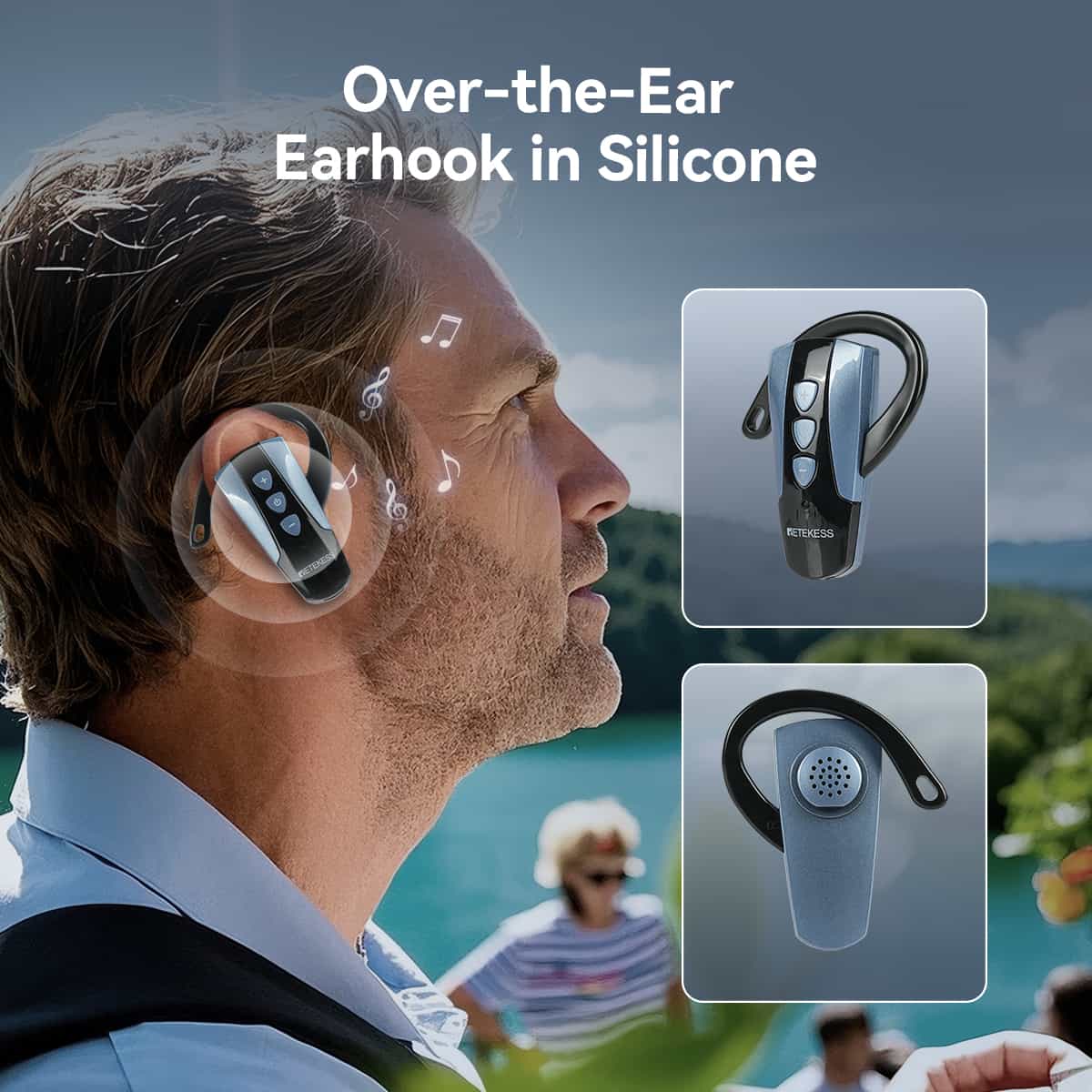
Rental companies and DMCs hand the same units to new guests daily. The TT106S is built around that cycle. Its open earhook receiver needs no in-ear earpiece and no headphone cable, so nothing enters the ear canal and there is no cable to soil or tangle. The smooth surface wipes clean between users, and the receiver weighs only 18 grams.
Battery life covers the turnover. The receiver runs up to 50 hours on a charge, and it powers off after 20 minutes without activity. Units return to a slot charging case after each tour for overnight charging and storage.
Choosing the Setup
A short guide to the two options:
- T130P for regular city tours: four-level DSP noise reduction, 49 channels, 160-meter range; the default for busy centers and mixed indoor-outdoor routes.
- TT106S for rental and long itineraries: 18-gram cable-free receivers, 50-hour battery, 200-meter range, 9,999 channels.
Many teams combine both: T130P for standard routes, TT106S for multi-day tours and rental stock.
Final Note
Museums in Italy and Spain now write the quiet rule into the entrance conditions. Guests still expect clear commentary through crowded streets and galleries, and guides should not pay for that clarity with a strained voice.
The Retekess T130P and TT106S keep the room quiet while guides speak normally, hold groups together up to 200 meters away, and keep rental fleets clean and charged.
Agencies and rental companies can request a free demo matched to their usual routes and languages. Every kit comes with a 30-day full refund, so teams can test it on a real fall tour before committing.




![[18th Anniversary] 18 Years of Echoing Excellence: Making Communication Easier, Connecting Trust Beyond Borders](https://res.retekess.com/z_file/20260716/retekess-brand-story-making-communication-easier_20260716151044_7682.jpg)
![[18 Years in Wireless Communication] Silent Disco Systems Anniversary Celebration: Top-Selling Headphones & Event Mechanics Revealed!](https://res.retekess.com/z_file/20260713/18-years-in-wireless-communication-silent-disco-systems-anniversary-celebration_20260713175011_5749.webp)
![[Anniversary Carnival] Ding-dong! 18th Anniversary Mega Sale on Guest Paging & Calling Systems: Full Reveal of 12+ Products & Promo Rules!](https://res.retekess.com/z_file/20260713/18th-anniversary-mega-sale-on-guest-paging-calling-systems_20260713175257_0295.webp)
![[Retekess 18th Anniversary Teaser] Tour Guide System Exclusive Perks: Sneak Peek at Event Dates & Mechanics!](https://res.retekess.com/z_file/20260713/retekess-18th-anniversary-tour-guide-system-exclusive-perks--2-_20260713180135_6435.webp)
Follow Us
Pay With


 Google
 Amazon
Comments (0)