
Table of Contents
Simultaneous Interpretation Equipment for Universities: A Low-Cost Solution for Multilingual Classrooms
- Retekess
- Sep 10, 2026
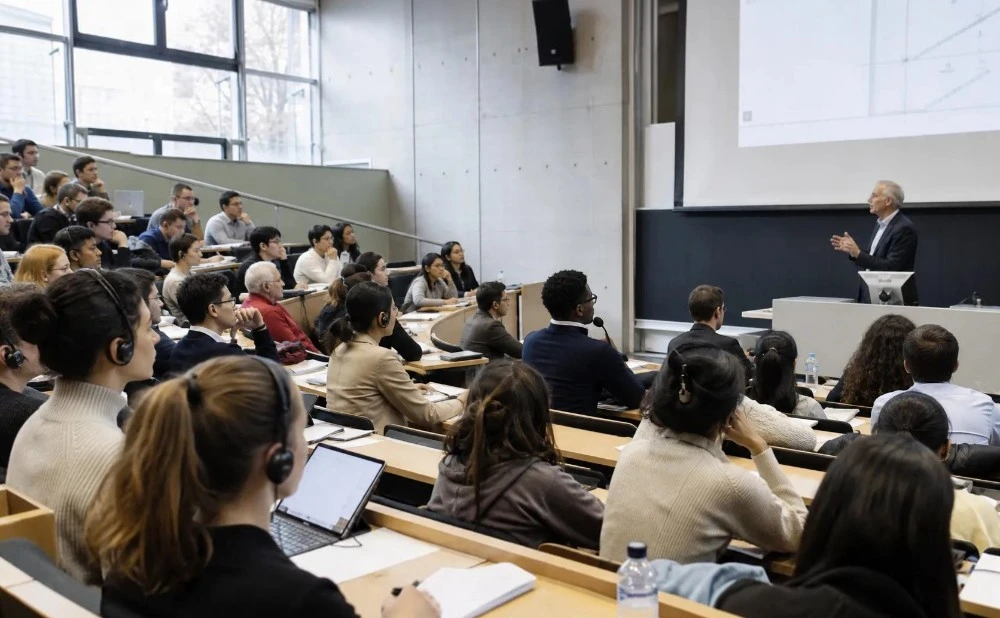
As universities become more global, multilingual classrooms are no longer the exception. Visiting professors, international students, and cross-border programs are now part of everyday campus life.
But supporting multiple languages in a classroom is still expensive. Professional simultaneous interpretation can cost $750–$1,250 per day per interpreter, while AI captions often struggle with academic terminology. For many schools, the real challenge is not whether multilingual access is needed—it is how to provide it without blowing the budget.
Why Campus Audio Is Different from Conference Audio
The instinctive response is to look at how international conferences solve this. But conference infrastructure does not transplant into a classroom.
Conference audio equipment relies on soundproof interpreter booths, dedicated technician teams, and wired infrared distribution systems that take hours to install. A university lecture hall has none of these affordances. There is no booth space behind the blackboard. There is no AV engineer on call at 9:00 a.m. on a Tuesday. And there is certainly no budget to rebuild the room every time a visiting scholar flies in for three sessions.
Campuses need something categorically different:
Space-light: It must sit on a lectern, not require construction.
Budget-light: It must cost less than a single day of booth interpretation.
Deployment-light: A teaching assistant or faculty member must be able to operate it without training.
Use-frequency: It must support weekly lectures, not annual galas.
In short, universities do not need conference-grade simultaneous interpretation equipment. They need classroom-grade multilingual audio.
How Wireless Audio Interpretation Works in a Classroom
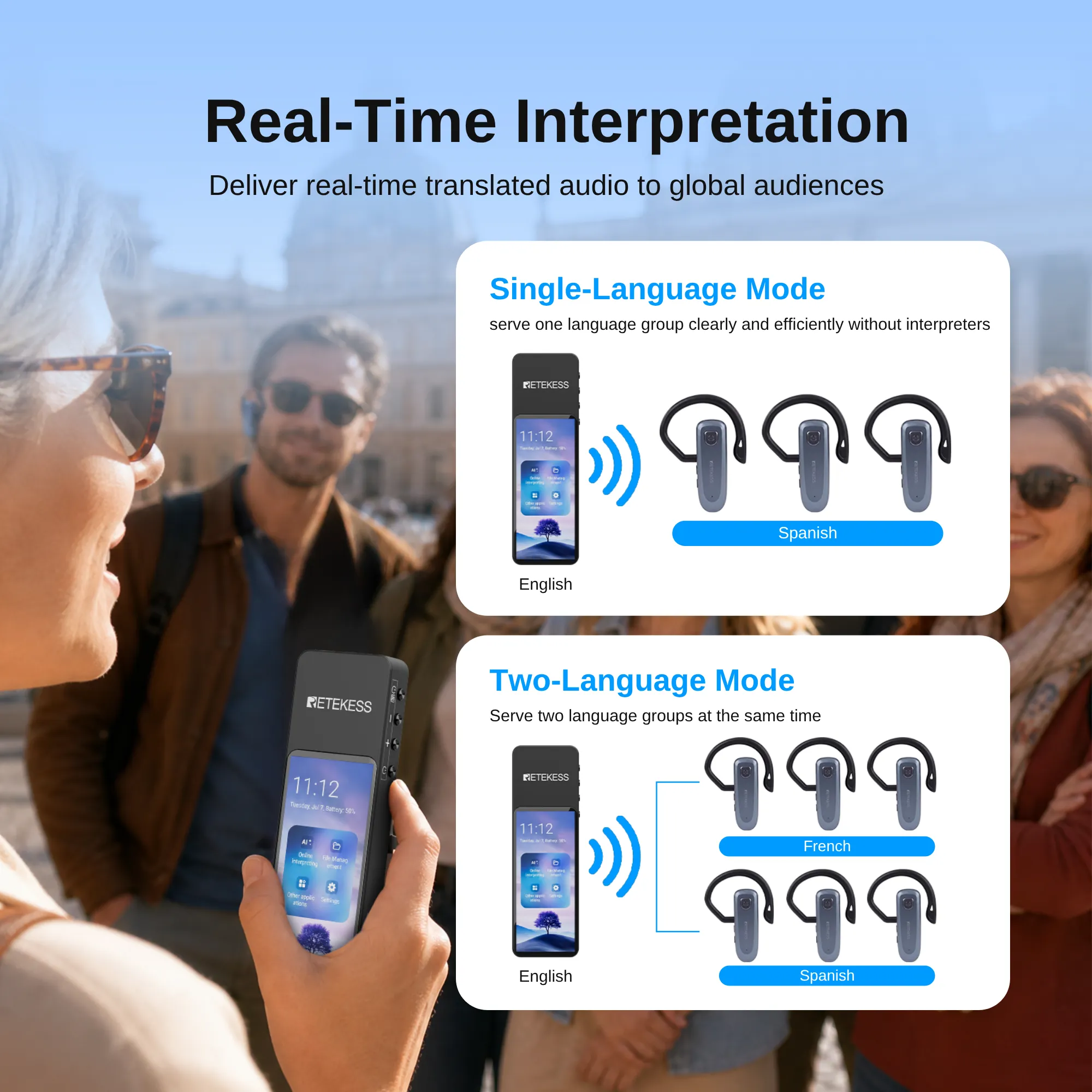
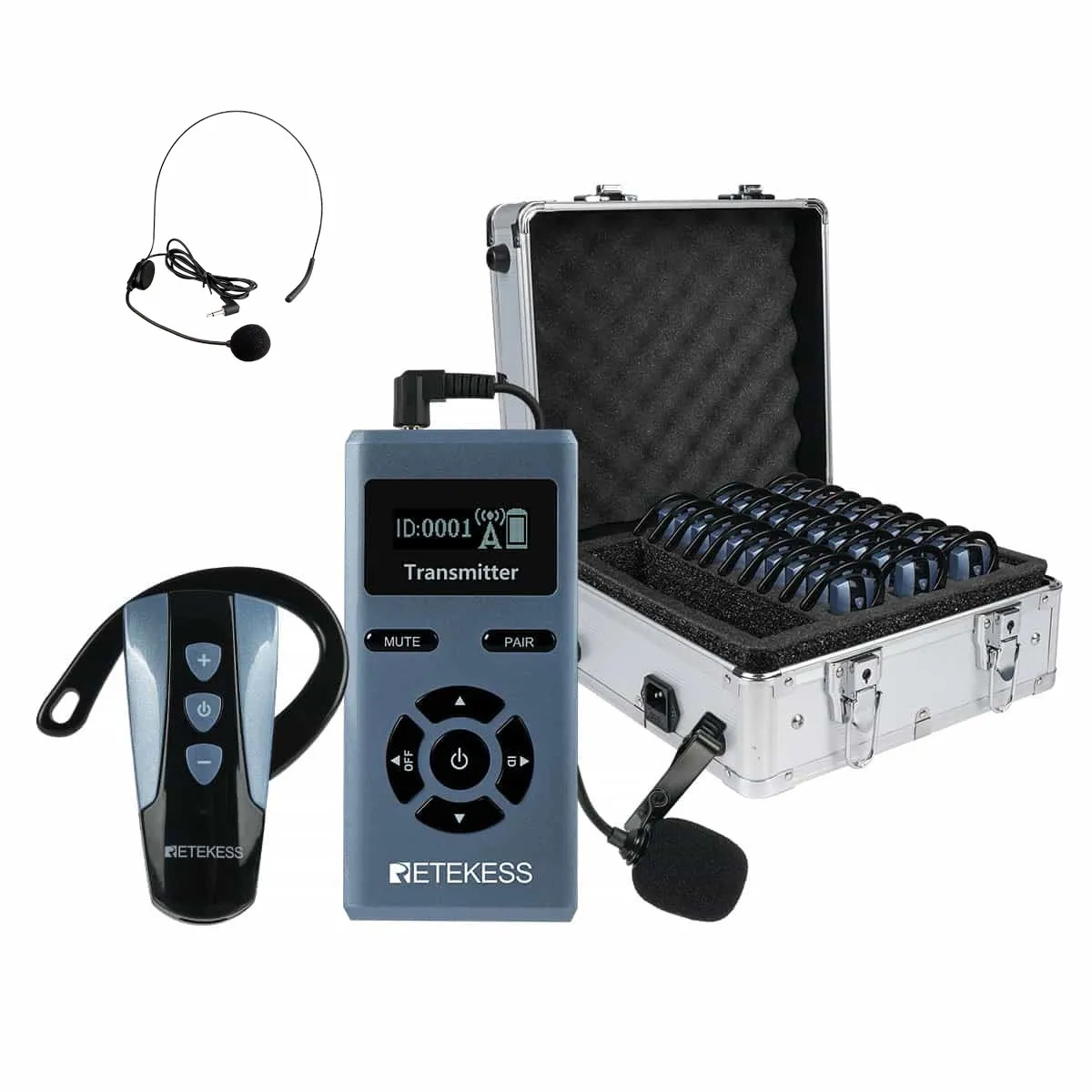
The technology is simpler than most assume. A desktop transmitter sits at the lectern. The lecturer speaks naturally. A bilingual teaching assistant, volunteer, or pre-recorded track provides real-time interpretation into a microphone input. Students wear lightweight wireless receivers and select their preferred channel—typically one for the original language and one for the translated feed.
This is fundamentally different from three alternatives often confused with it:
It is not a portable translator device. A handheld language translator device is designed for one tourist ordering coffee. It cannot distribute audio to thirty students simultaneously, and it relies on cloud connectivity that fails in basement lecture halls.
It is not AI live captioning. Captions require students to divide attention between the screen and the speaker. In STEM and humanities lectures alike, meaning lives in tone, emphasis, and pacing—nuance that text strips away.
It is not traditional booth interpretation. There is no glass enclosure, no technician, no six-figure invoice. The system is wireless, frequency-based, and operates independently of campus Wi-Fi.
The pedagogical advantage is subtle but decisive: information reaches the student through the same auditory channel they use for native-language learning. The cognitive load of translation is externalized to the equipment, freeing mental bandwidth for actual comprehension.
Three Scenarios Where Lightweight Audio Changes the Equation
International Guest Lectures
A professor from Tokyo delivers a two-week intensive on semiconductor manufacturing. The department cannot justify a $15,000 interpretation contract for a non-credit series. With a desktop wireless system, a bilingual graduate student provides live interpretation from the front row. Students toggle between the original technical terminology and the translated explanation. The lecture proceeds as scheduled, and the intellectual exchange is preserved.
Degree Programs for Non-Native Speakers
In English-taught master's programs, students with strong written skills often struggle with the speed of live academic discourse. Providing a secondary audio channel for core courses does not replace English proficiency—it removes the penalty for not yet having it. Students move from "decoding" to "thinking," and participation rates rise measurably.
Cross-Disciplinary Seminars
Regional studies, comparative literature, and international relations regularly host scholars who present in their native languages. A multi-channel wireless system allows one room to host parallel linguistic communities. A French theorist and a Mandarin historian can present in the same symposium block without sequential scheduling or diluted attendance.
What Makes a Campus Audio System Actually Work
Procurement committees and department heads evaluating interpretation equipment for academic use should look past specifications and focus on operational fit. Here are the six dimensions that determine whether a system lives in a closet or becomes daily infrastructure.
Deployment: Will It Work Without an IT Team?
Universities do not have AV engineers stationed in every humanities building. If a teaching assistant needs twenty minutes and a manual to start a lecture, the system will not survive the second week of the semester. The ideal console should sit on a lectern with front-facing controls, a single switch to toggle between original and translated audio, and a learning curve measured in minutes—not hours.
Scale: Can One Investment Serve Multiple Rooms?
Departments rarely have dedicated international lecture halls. The same system must move from a forty-seat seminar room to a two-hundred-seat auditorium and back. Rack-mounted conference systems fail here because they require permanent installation. What campuses need is standalone portable translation equipment: a unit that travels on a cart or in a carrying case, checked out from a central media pool and deployed wherever the lecture happens.
Hygiene: How Do You Share Receivers Safely?
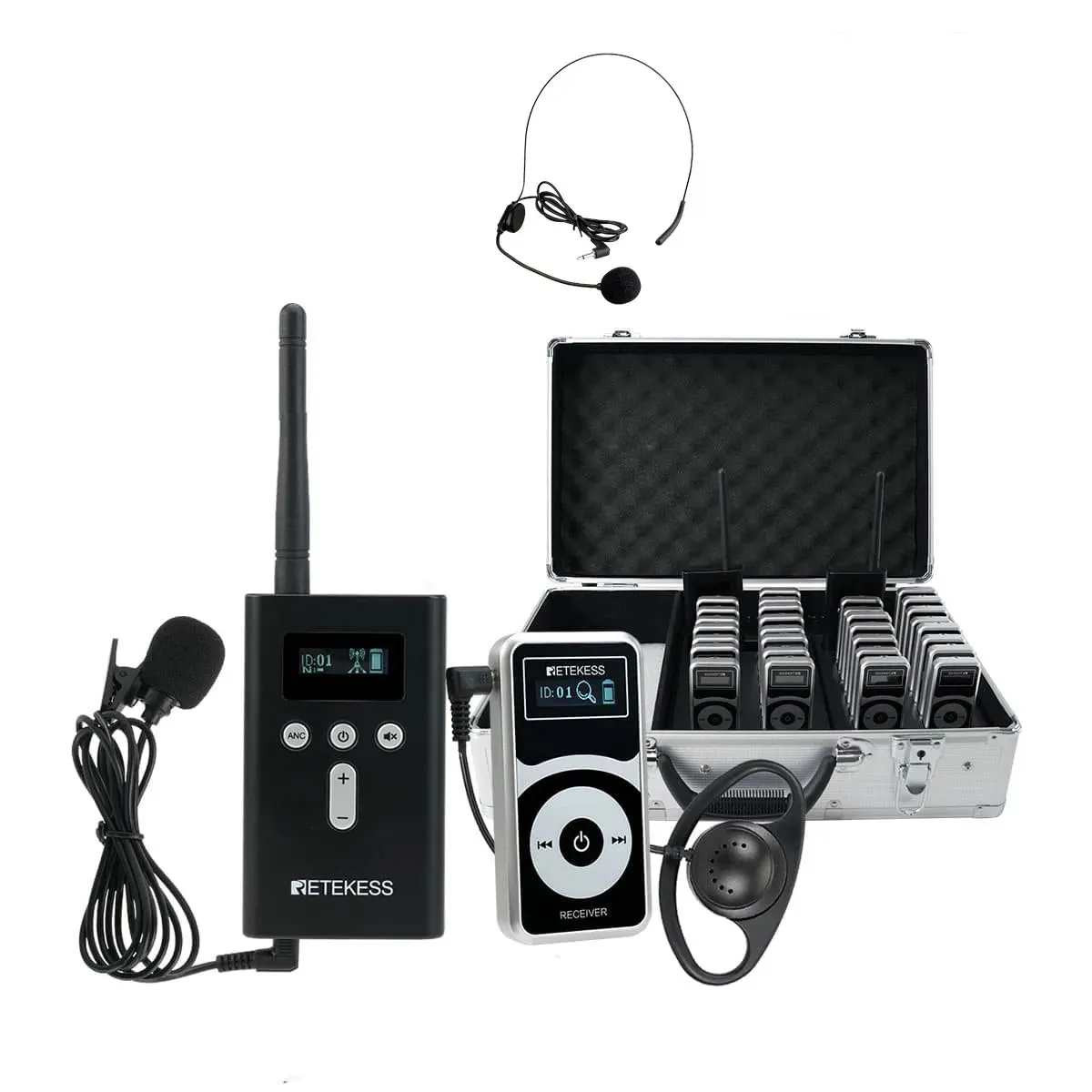
In campus environments, the same receiver may be worn by five different students in a single week. Disinfection protocols matter. The ideal system includes charging cases that sanitize multiple receivers simultaneously, transforming receiver management from a logistical headache into a routine workflow.
Frequency Coordination: What Happens When Three Lectures Run at Once?
The international office does not schedule around your radio channels. Monday mornings may feature a Mandarin lecture in Room 204, a Spanish seminar in Room 310, and an Arabic series in the auditorium—all simultaneously. Multi-channel architecture allows each room to operate on an isolated frequency. With simple channel allocation, cross-room interference is eliminated without IT intervention.
Content Retention: Can Students Review What They Missed?
For non-native speakers, comprehension is not binary. A student may follow 80 percent of a lecture live but need to revisit the remaining 20 percent to fully grasp a theoretical framework. A system that records the interpretation feed to removable storage allows the audio to be uploaded to the learning management system after class. The translation becomes a study resource, not a disposable performance.
Footprint: What If the Room Has No Lectern?
Not every department has a fixed AV setup. Seminar rooms with movable furniture, mobile teaching carts, and pop-up events need an even more compact form factor. The next generation of campus audio is moving toward consolidated desktop units—transmit and receive functions in a single compact box that asks for no renovation and no permanent installation.
What This Looks Like in Practice
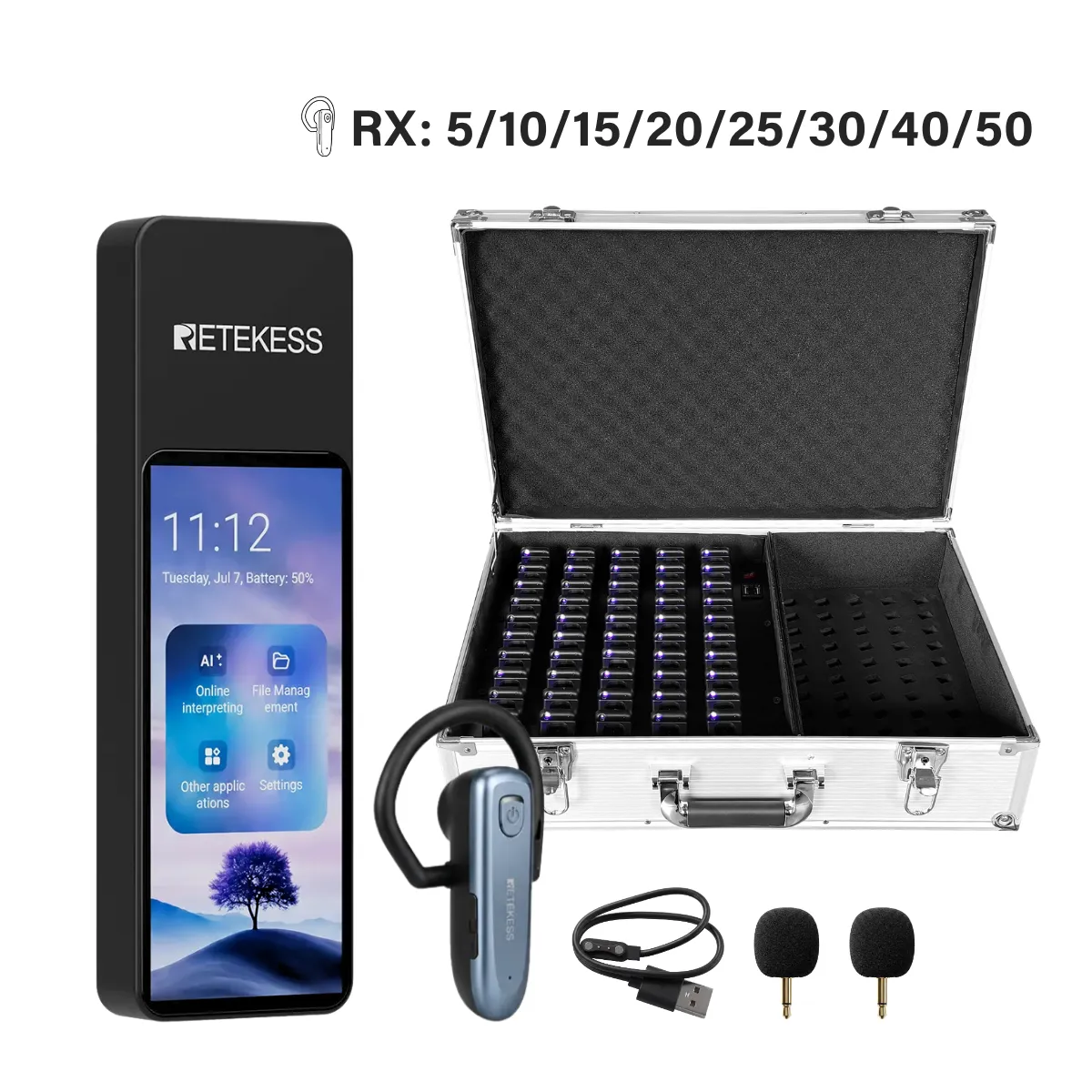
The standards above are not theoretical. A growing number of universities are already deploying desktop wireless systems that meet them: front-facing controls for untrained operators, multi-channel distribution for parallel lectures, recording outputs for learning management integration, and charging cases that keep hygiene protocols simple.
Some systems, like the Retekess TT119, have been built specifically around this operational reality—a desktop console designed for lecterns, with enough channel isolation to run multiple rooms simultaneously and enough portability to move between buildings. For smaller seminar spaces and mobile carts, newer consolidated designs (such as the upcoming T130T) are further reducing footprint without sacrificing range or audio quality.
The point is that the hardware category now exists: classroom-grade multilingual audio, priced for departmental budgets and operated by teaching assistants.
Closing: Accessibility as Academic Equity
There is a tendency to treat multilingual support as a hospitality gesture—something nice to offer international students if the budget allows. This framing misdiagnoses the problem. When a student sits in a lecture and misses the central argument because of language speed, they are not experiencing a hospitality gap. They are experiencing an educational barrier.
Lightweight wireless audio does not solve every dimension of that barrier. But it removes the most immediate one: the assumption that everyone in the room processes the lecture language at native speed. It allows a university to say, with hardware rather than rhetoric, that its intellectual community is open to anyone who can think—not just to anyone who can think in English.
The institutions that understand this will not wait for their next capital campaign to fund a single multilingual auditorium. They will put interpretation capability in every lecture hall, on every cart, and within reach of every department.
Because language should never be the reason a student misses the point.
FAQs About Simultaneous Interpretation Equipment
How many languages can run simultaneously in one room?
Most classroom systems support enough discrete channels to run two or three languages alongside the original audio. In practice, one or two interpreted channels per room covers the vast majority of academic use cases.
Do students need to download an app?
No. The system uses dedicated wireless receivers. There is no dependency on campus Wi-Fi, no Bluetooth pairing, and no smartphone battery drain.
Can this replace professional simultaneous interpretation?
No. For high-stakes diplomatic or legal settings, booth interpreters remain the gold standard. But for the weekly lecture, the visiting scholar series, and the core course with international enrollment, it provides a functional bridge that booth interpretation never could—because booth interpretation was never priced for frequency.
What if a student is hard of hearing?
Optional hearing assist receiver TT042 offers sound pickup and amplification for better student comprehension. And recorded audio can be paired with post-lecture transcription services as part of a layered accessibility strategy.



![[18th Anniversary] 18 Years of Echoing Excellence: Making Communication Easier, Connecting Trust Beyond Borders](https://res.retekess.com/z_file/20260716/retekess-brand-story-making-communication-easier_20260716151044_7682.jpg)
![[18 Years in Wireless Communication] Silent Disco Systems Anniversary Celebration: Top-Selling Headphones & Event Mechanics Revealed!](https://res.retekess.com/z_file/20260713/18-years-in-wireless-communication-silent-disco-systems-anniversary-celebration_20260713175011_5749.webp)
![[Anniversary Carnival] Ding-dong! 18th Anniversary Mega Sale on Guest Paging & Calling Systems: Full Reveal of 12+ Products & Promo Rules!](https://res.retekess.com/z_file/20260713/18th-anniversary-mega-sale-on-guest-paging-calling-systems_20260713175257_0295.webp)
![[Retekess 18th Anniversary Teaser] Tour Guide System Exclusive Perks: Sneak Peek at Event Dates & Mechanics!](https://res.retekess.com/z_file/20260713/retekess-18th-anniversary-tour-guide-system-exclusive-perks--2-_20260713180135_6435.webp)
Follow Us
Pay With


 Google
 Amazon
Comments (0)