
Table of Contents

Translator Without Interpreter: Is AI Ready for Your Event?
- Retekess
- Sep 16, 2026
The most common question we get from first-time buyers is some version of: "Can I just skip the interpreter entirely?" In the past, the answer was no. In 2026, however, the answer is "it depends — but increasingly, yes."
This guide gives you an honest framework for deciding when AI translation is good enough to replace a human interpreter at your event — and when it isn't.
The Four Questions That Decide
Before you commit to skipping the human interpreter, answer these four critical questions:
1. What is the cost of misunderstanding?
Low (a casual city tour, product demo) → AI is ready.
High (a legal deposition, medical consent, binding contract) → Stick with a human.
2. What is the depth of communication?
Shallow / Surface-level (one-way presentations, scripted tours, transactional queries) → AI shines.
Deep / Nuanced (high-stakes negotiations, emotional storytelling, conflict resolution, subtle cultural nuances) → Human expertise is indispensable.
3. How many languages and which pairs?
Top European pairs (Spanish, French, Italian, German, Portuguese, Dutch at 90%+ accuracy) → AI delivers.
Rare or complex language pairs (accuracy drops below 80%) → Human required.
4. What is your event format?
Structured (guided tours, sermons, formal lectures) → AI handles with ease.
Unstructured (rapid open Q&A, lively debates, unexpected interruptions) → Human handles best.
The Golden Rule: If all four answers lean toward AI, you can confidently skip the interpreter and run an AI-only hardware setup.
What "Translator Without Interpreter" Actually Means
In practice, "no interpreter" setups come in three flavors:
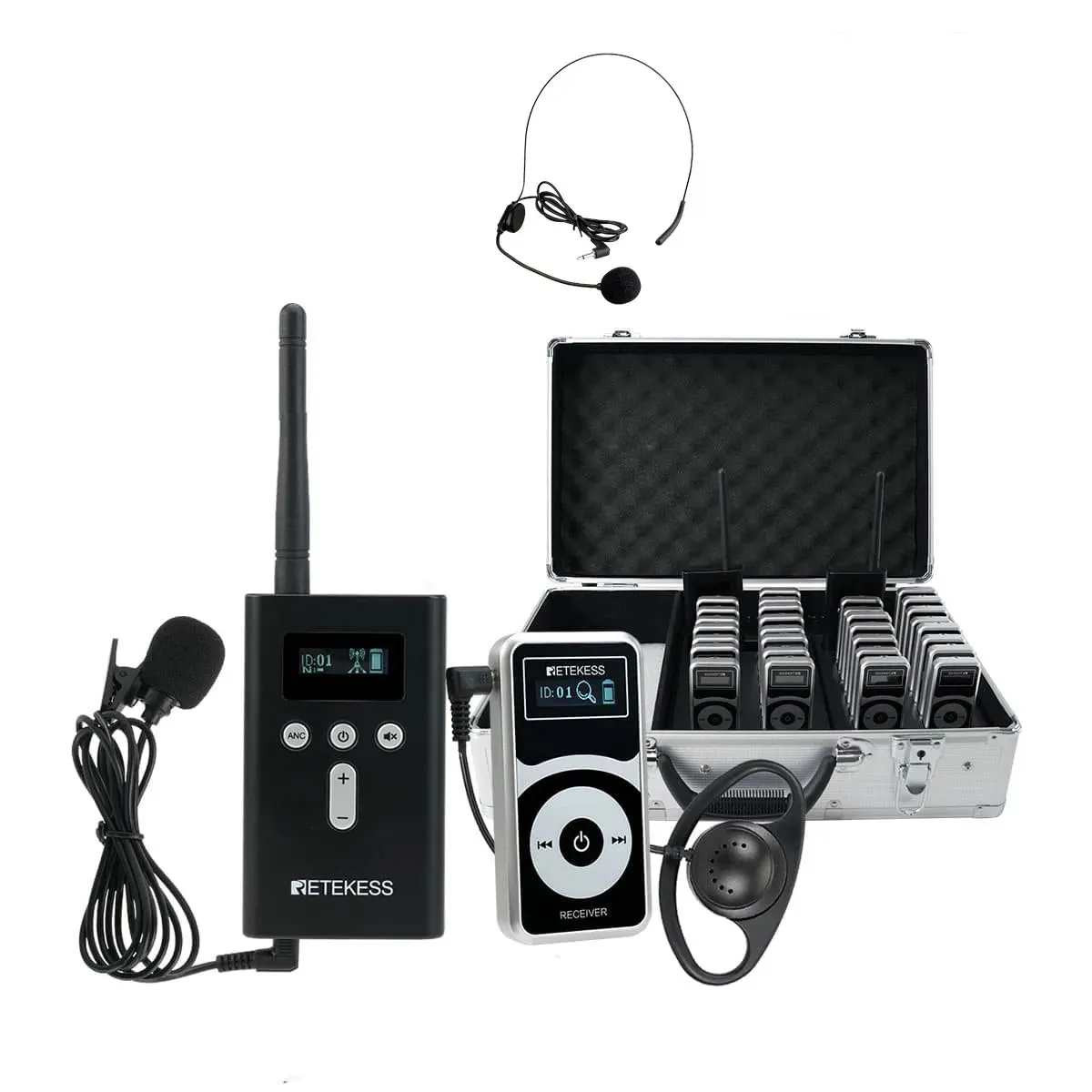
Flavor 1: AI Translation Device (Most common in 2026—suited for both small and large groups)
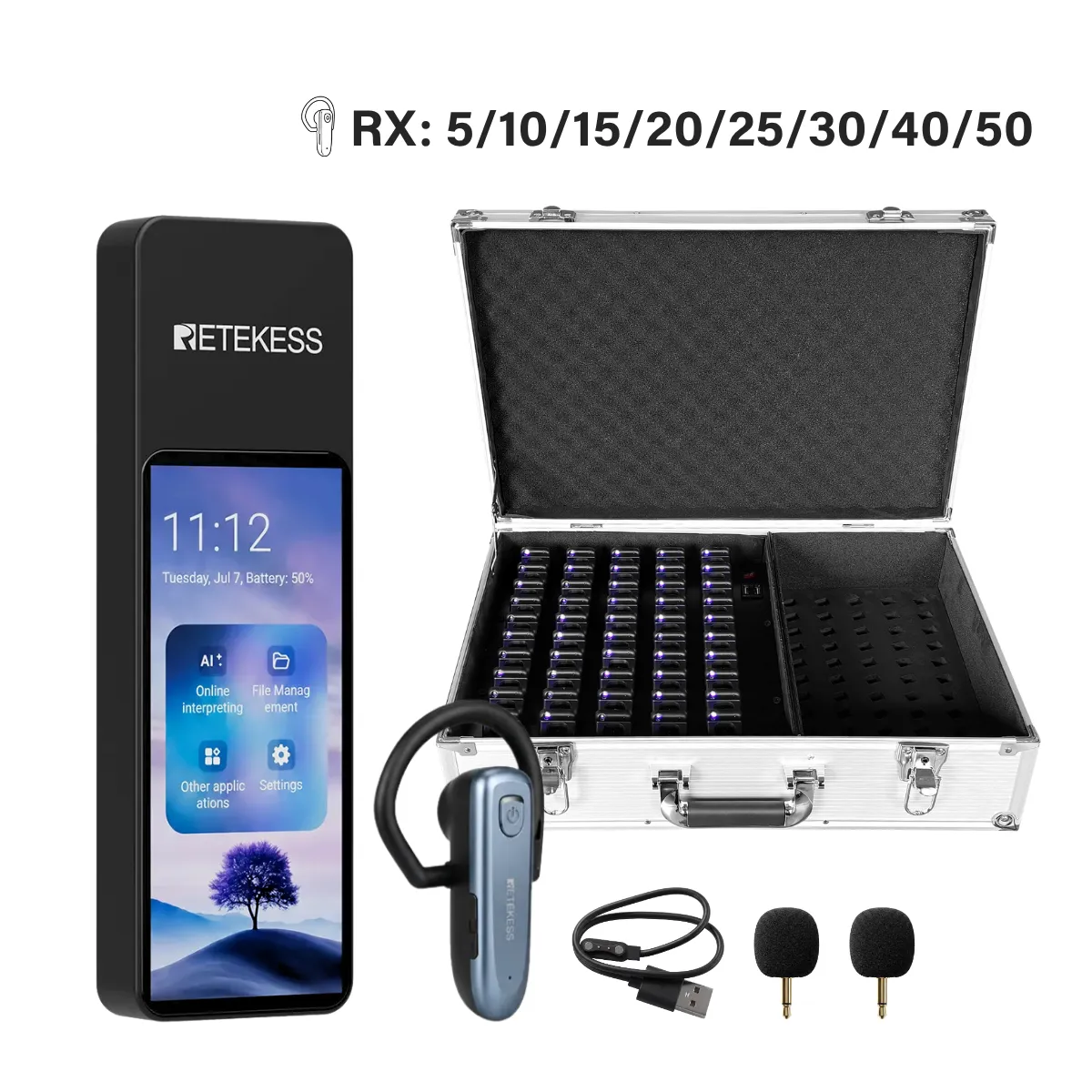
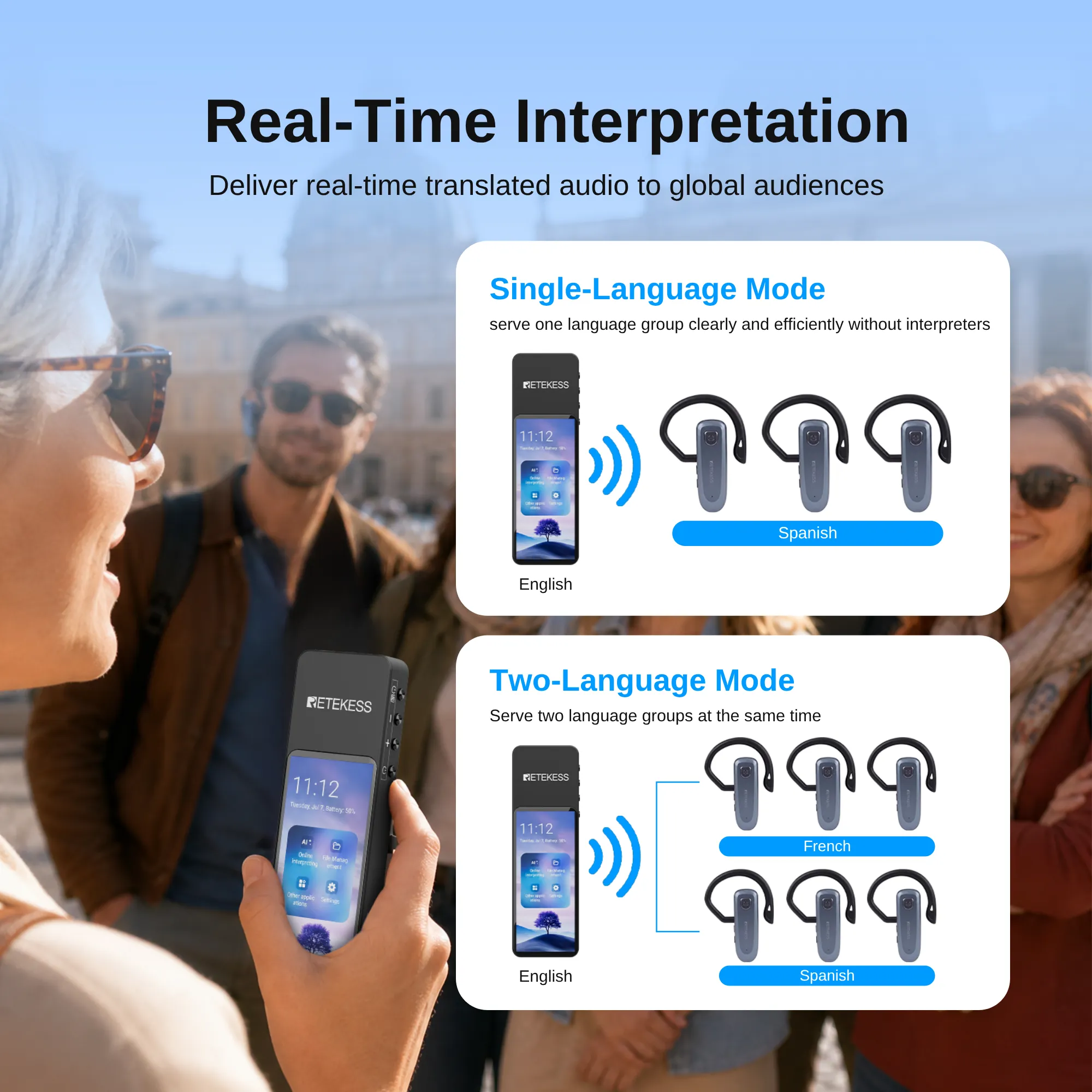
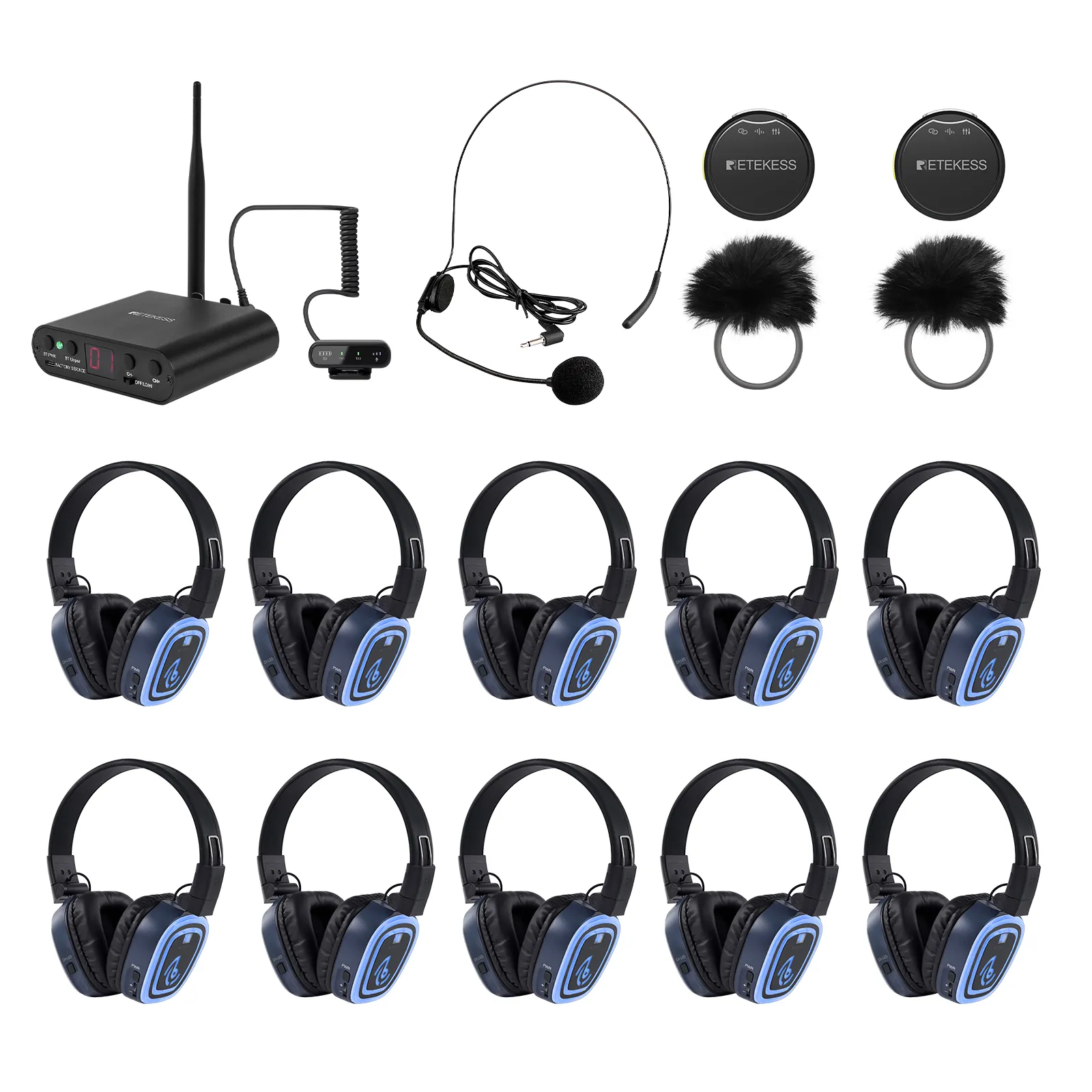
A hardware transmitter runs ASR → MT → TTS on-device and broadcasts the translation to dedicated receivers. The Retekess TT136 is the clearest example: 120 languages, supports simultaneous output for two target languages, 2–3 second latency, no smartphone required for listeners.
Flavor 2: AI Earbuds (works for small groups)
Brands like Timekettle (W4, W4 Pro, X1) and Samsung Galaxy Buds translate between two wearers. Works for 2–5 people in conversation; doesn't scale to 20.
Flavor 3: App-Based Translation (works for travel, not events)
Google Translate, Microsoft Translator, iTranslate. Useful for one-off conversations; not professional event equipment.
If your event has 10+ listeners, Flavor 1 is the only realistic option. Earbuds and apps don't broadcast one-to-many.
Where AI Works Without a Human Interpreter
These event types are production-ready with AI-only translation in 2026:
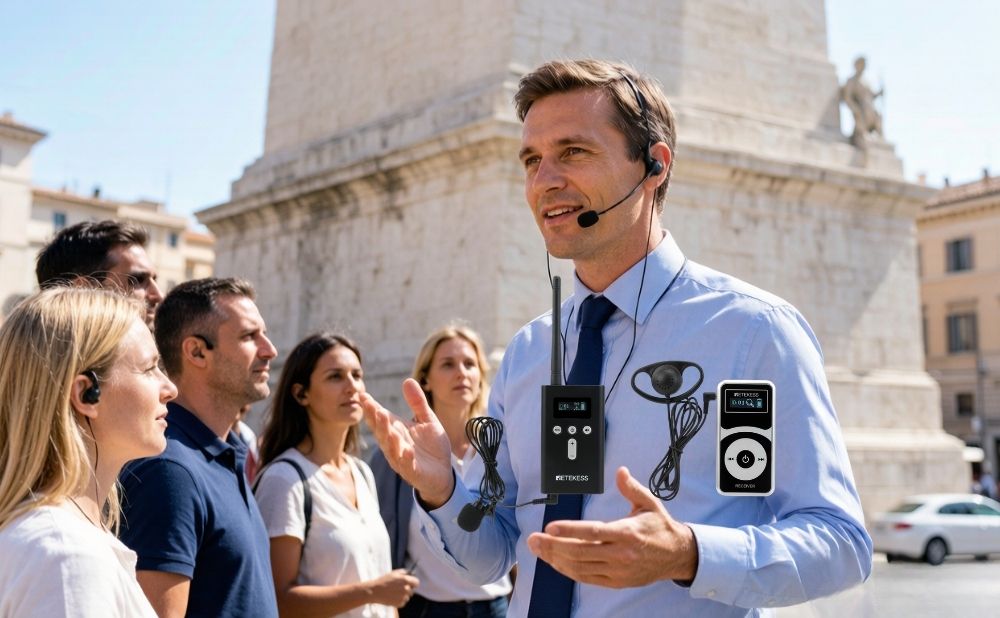
Walking tours in tourist-heavy cities — the canonical use case
Factory and supplier-audit visits — explaining processes to international buyers
Museum and gallery tours — narrating exhibits in multiple languages
Pilgrim and heritage site visits — Vatican, Alhambra, Pyramids, etc.
Trade show booth demos — multilingual product pitches
Casual business meetings between non-native English speakers
Tourist information kiosks at airports, hotels, visitor centers
Bilingual church services piloting a new language — testing demand before committing to interpreter budget
Sports camps with multilingual athletes
Wedding ceremonies with multilingual guests
In all of these, the alternative was either no translation at all or an expensive human interpreter. AI is the third option that finally exists.
Where You Still Need a Human Interpreter
Be honest with your audience when:
Legal proceedings. Depositions, court hearings, contract signings — every word matters, certified interpretation is the standard.
Medical consultations. Diagnosis, treatment consent, mental health — accuracy under 95% is dangerous.
Diplomatic and government interpretation. ISO 20109:2025 compliance is the floor.
Highly emotional or nuanced conversations. Bereavement support, mediation, therapy.
Live TV and high-profile events. Reputational risk from a mistranslation.
Conference-grade simultaneous interpretation. Multi-hour, multi-language summits — fatigue causes AI to drift, and audiences expect perfection.
Sensitive business negotiations. M&A, partnerships, contracts worth millions.
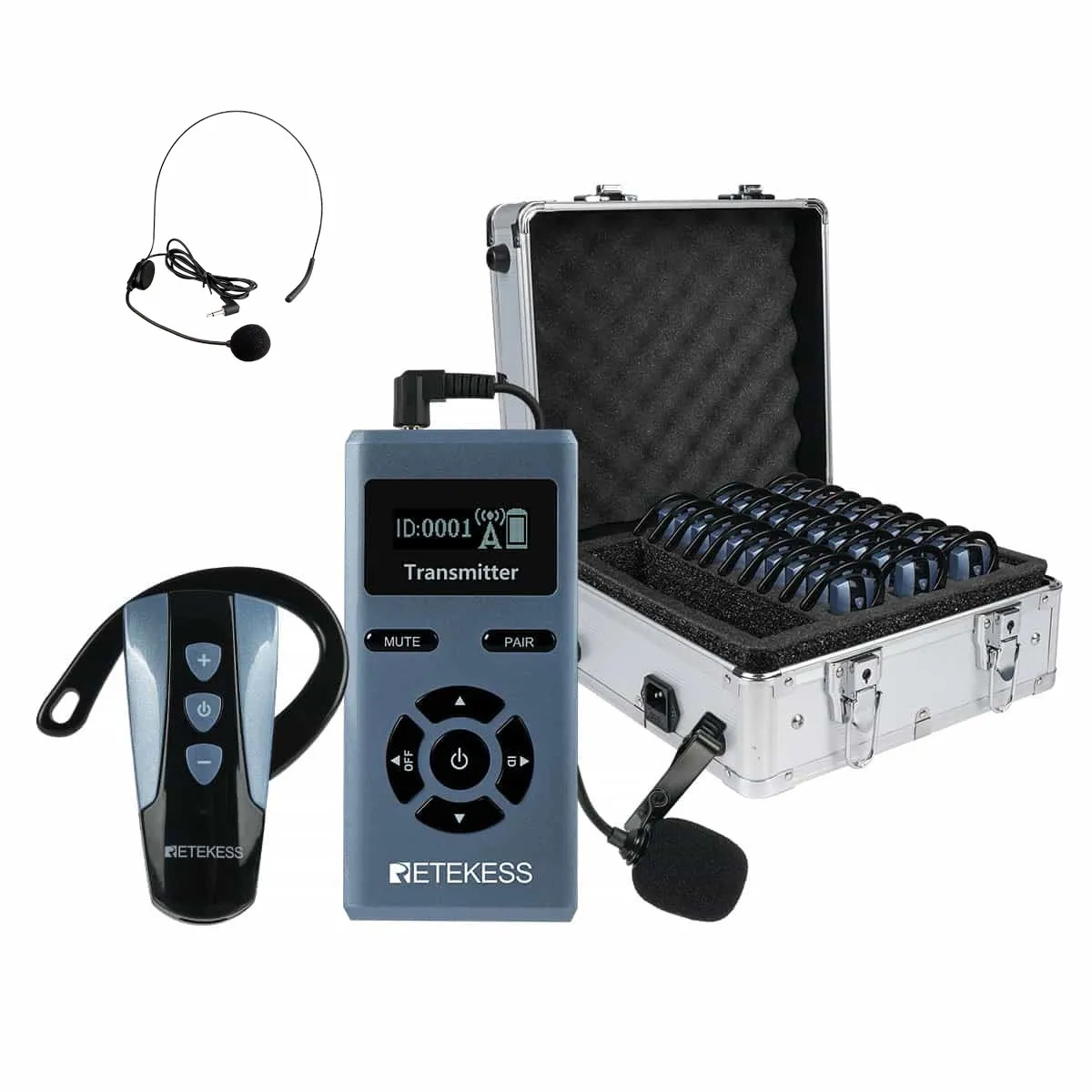
If any of these apply, hire a human interpreter and pair them with proper equipment (RetekessTT131T, TT117, TT118, or TT119 interpreter console).
The Honest Trade-Off Table
|
Aspect |
Human Interpreter |
AI Only |
|
Accuracy (top 6 European pairs) |
99%+ |
90–95% |
|
Accuracy (rare pairs) |
95%+ |
60–80% |
|
Latency |
2–5 seconds |
1–3 seconds |
|
Cost per event (25 listeners, 1 language) |
300–300–1,000 |
50–50–100 amortized |
|
Languages covered |
Whatever interpreter speaks |
120+ |
|
Fatigue over long events |
Real issue |
Not an issue |
|
Availability |
Must book days/weeks ahead |
On demand |
|
Audience trust |
High |
Variable — explain upfront |
How to Pilot AI Without an Interpreter
If you're considering going AI-only, pilot it safely:
-
Run a parallel pilot. Use AI for half the audience, human interpreter for the other half. Survey comprehension afterward.
-
Use AI for the second service, not the first. If your church or venue runs multiple sessions, test AI on the lower-stakes one first.
-
Record both versions. Compare AI and human translations afterward for your most common phrases.
-
Survey attendees. Comprehension scores and confidence scores tell you more than vendor specs.
-
Have a fallback interpreter on call. Especially for the first 3–6 months.



![[18th Anniversary] 18 Years of Echoing Excellence: Making Communication Easier, Connecting Trust Beyond Borders](https://res.retekess.com/z_file/20260716/retekess-brand-story-making-communication-easier_20260716151044_7682.jpg)
![[18 Years in Wireless Communication] Silent Disco Systems Anniversary Celebration: Top-Selling Headphones & Event Mechanics Revealed!](https://res.retekess.com/z_file/20260713/18-years-in-wireless-communication-silent-disco-systems-anniversary-celebration_20260713175011_5749.webp)
![[Anniversary Carnival] Ding-dong! 18th Anniversary Mega Sale on Guest Paging & Calling Systems: Full Reveal of 12+ Products & Promo Rules!](https://res.retekess.com/z_file/20260713/18th-anniversary-mega-sale-on-guest-paging-calling-systems_20260713175257_0295.webp)
![[Retekess 18th Anniversary Teaser] Tour Guide System Exclusive Perks: Sneak Peek at Event Dates & Mechanics!](https://res.retekess.com/z_file/20260713/retekess-18th-anniversary-tour-guide-system-exclusive-perks--2-_20260713180135_6435.webp)
Follow Us
Pay With


 Google
 Amazon
Comments (0)