
Table of Contents
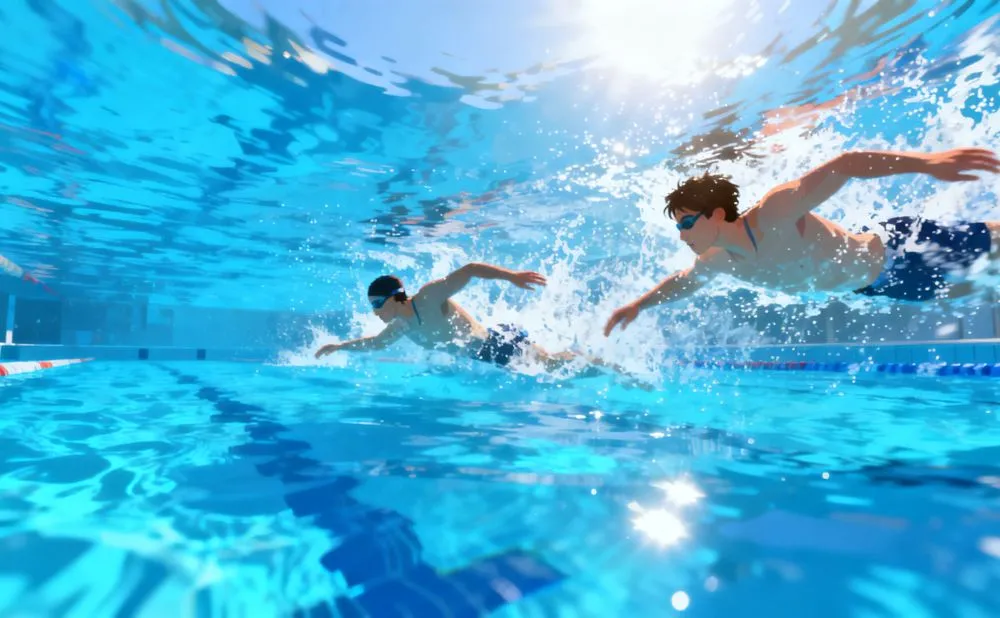
Understanding and Preventing Injuries in Swimming: A Guide for Coaches
- Retekess
- Jun 5, 2026
Swimming is often perceived as a "low-impact" sport, making it an attractive alternative to the high-stress demands of running or contact sports. However, the repetitive nature of the sport—where a competitive swimmer might perform thousands of overhead rotations per week—creates a unique environment for overuse injuries.
For coaches, the responsibility goes beyond simply managing sets and intervals; it requires an active role in injury prevention. Protecting the long-term health of your athletes is the most critical element of a sustainable coaching program.
The Anatomy of Swimming Injuries
Most swimming-related injuries are not the result of a single acute event, but rather the cumulative effect of repetitive microtrauma. The most common areas affected include:
Shoulder (Swimmer’s Shoulder): The most prevalent issue, often caused by impingement, poor stroke mechanics, or muscle imbalances.
Knee (Breaststroke Knee): Primarily seen in breaststrokers due to the rotational stress of the whip kick.
Lower Back: Often triggered by an excessive arch (hyperextension) during freestyle or butterfly, combined with poor core stability.
Key Prevention Strategies for Coaches
1. Prioritize Technical Efficiency
The primary cause of injury is almost always poor technique. When a swimmer fatigues, their form breaks down, placing mechanical stress on vulnerable joints.
The Fix: Emphasize "quality over quantity." If a swimmer’s stroke mechanics degrade significantly during a set, it is time to stop the set or adjust the interval. An ugly 100m is never worth the risk of a season-ending injury.
2. Implement Dynamic Dryland Training
Swimming alone does not provide the balanced muscular development needed to stabilize the joints against the forces of water.
The Fix: Incorporate a well-structured dryland program that focuses on rotator cuff health, thoracic mobility, and core stability. Exercises that target the posterior chain (the muscles of the back and glutes) are essential for counteracting the forward-leaning posture of the swimming stroke.
3. Manage Training Loads (The 10% Rule)
Sudden spikes in training volume are the quickest path to injury. Whether it’s moving from a holiday training camp to a heavy phase or suddenly increasing yardage, the body needs time to adapt.
The Fix: Adhere to the "10% rule"—never increase weekly volume or intensity by more than 10% at a time. This allows the tendons and ligaments (which adapt slower than muscles) to catch up to the training load.
4. The Importance of Recovery
In the modern training environment, recovery is not "time off"—it is a part of the training process.
The Fix: Educate your athletes on the non-negotiables: adequate sleep, proper hydration, and nutrition. A tired swimmer is a sloppy swimmer, and a sloppy swimmer is an injured swimmer.
The Coach’s Role: Culture Over Compliance
Ultimately, preventing injury is a matter of culture. You must create an environment where athletes feel comfortable reporting "niggles" (minor aches) before they escalate into full-blown injuries.
Open Communication: Encourage swimmers to talk to you about pain. If an athlete mentions shoulder discomfort, don't ignore it—modify the session.
Individualized Programming: Recognize that one size does not fit all. A 12-year-old growing child has different physiological needs than a 20-year-old collegiate swimmer.
Conclusion: Longevity as Success
Success in swimming shouldn't just be measured by the times on the clock at the end of the season; it should be measured by the longevity of your athletes. By focusing on technical integrity, balanced dryland training, and intelligent load management, you aren't just building a faster swimmer—you are building a healthier, more resilient athlete who can enjoy the sport for a lifetime.
Leave a Reply







![[18th Anniversary] 18 Years of Echoing Excellence: Making Communication Easier, Connecting Trust Beyond Borders](https://res.retekess.com/z_file/20260716/retekess-brand-story-making-communication-easier_20260716151044_7682.jpg)
![[18 Years in Wireless Communication] Silent Disco Systems Anniversary Celebration: Top-Selling Headphones & Event Mechanics Revealed!](https://res.retekess.com/z_file/20260713/18-years-in-wireless-communication-silent-disco-systems-anniversary-celebration_20260713175011_5749.webp)
![[Anniversary Carnival] Ding-dong! 18th Anniversary Mega Sale on Guest Paging & Calling Systems: Full Reveal of 12+ Products & Promo Rules!](https://res.retekess.com/z_file/20260713/18th-anniversary-mega-sale-on-guest-paging-calling-systems_20260713175257_0295.webp)
![[Retekess 18th Anniversary Teaser] Tour Guide System Exclusive Perks: Sneak Peek at Event Dates & Mechanics!](https://res.retekess.com/z_file/20260713/retekess-18th-anniversary-tour-guide-system-exclusive-perks--2-_20260713180135_6435.webp)
Follow Us
Pay With


 Google
 Amazon
Comments (0)