
Table of Contents
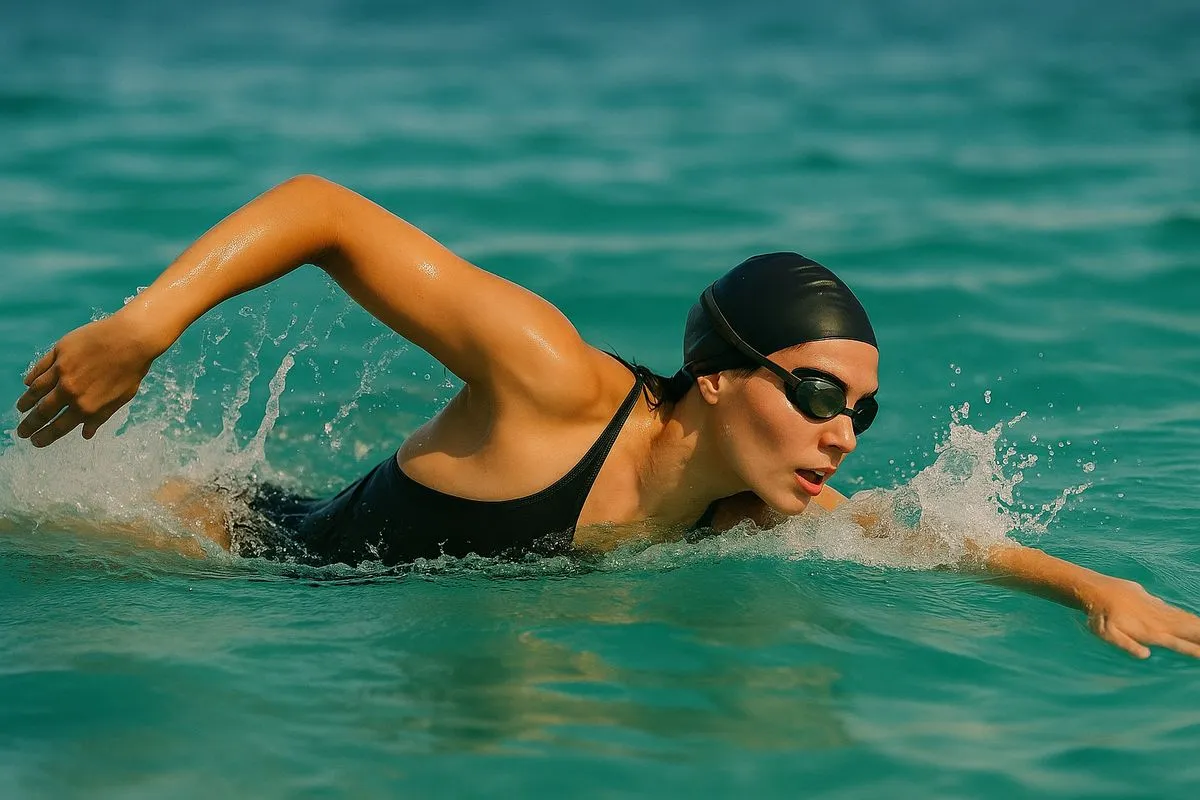
The Four Pillars of Teaching Fast Swimming: Starting with Tempo
- Retekess
- Jun 5, 2026
For swimmers at any level, the pursuit of speed often feels like a complex, elusive puzzle. Too many athletes make the mistake of simply trying to "swim harder," adding more volume or intensity without a clear structure. However, true speed is a product of efficiency, physics, and deliberate practice.
Drawing from the principles of the American Swimming Coaches Association (ASCA), we can break down the path to speed into four fundamental pillars. These pillars provide a clear, quantifiable framework for development: Tempo, Distance Per Cycle (DPC), Breakout Distance, and Underwater Velocity.
Today, we focus on the foundation of the entire system: Tempo.
1. Tempo: The Metronome of Performance
Tempo is the rate at which a swimmer completes a stroke cycle. It is perhaps the most reliable constant in swimming performance.
Why start with Tempo? Tempo acts as your internal metronome. It removes the guesswork from training. By using a tempo trainer (a small device that beeps at specific intervals), you can hold a consistent rhythm regardless of fatigue.
The Goal: It is not about swimming as fast as possible, but about finding a "controllable" rhythm that allows you to maintain technique while pushing your physical limits. If you can hold a steady tempo, you can better analyze your technical flaws.
2. Distance Per Cycle (DPC): The Metric of Efficiency
If tempo is your frequency, then Distance Per Cycle (DPC) is your output per movement.
The Growth Formula: Real improvement happens when you increase your DPC while maintaining a consistent tempo.
The Logic: If you can travel further with each stroke without changing your rate, you have objectively become a more efficient swimmer. This means you are reducing drag, improving your catch, and maximizing your power. This is "free speed" earned through technique rather than brute force.
3. Breakout Distance: Mastering the "Fifth Stroke"
Many swimmers treat the breakout—the moment you surface after a start or turn—as an afterthought. At the elite level, this is a critical performance metric.
Non-negotiable Standards: You should have a target distance for where you emerge from the water after every wall.
The Benefit: By consistently practicing disciplined, streamlined breakouts, you maximize the most efficient part of your race—the part where you are underwater and moving faster than any surface swimming speed.
4. Underwater Velocity: The Hidden Advantage
Underwater velocity is primarily driven by your ability to execute high-quality underwater dolphin kicks.
Advanced Dynamics: As you increase your proficiency, you must pair your breakout distance with an aggressive, rhythmic kick. This is where you convert potential energy from your start or turn into pure forward momentum. It requires core strength and a high degree of ankle flexibility.
Building Your Training Framework
To see long-term success, use these pillars to create a consistent training cycle:
Quantify: Use a tempo trainer to set a specific, challenging rhythm.
Evaluate: During sets, monitor your stroke count to calculate your DPC.
Refine: Focus on technical adjustments that allow you to hold that tempo with fewer strokes.
Repeat: As you grow stronger, incrementally adjust your tempo and start the process again.
Swimming fast is not about endless laps; it is about building a scalable system. By mastering the rhythm of Tempo first, you create a stable environment to improve your DPC, Breakout Distance, and Underwater Velocity. Once these four pillars are aligned, speed becomes the inevitable result of your training.
For those looking to integrate these concepts into their daily practice, check out this guide on using a Tempo Trainer to regulate your stroke rate and build better technical awareness.
Leave a Reply


![[18th Anniversary] 18 Years of Echoing Excellence: Making Communication Easier, Connecting Trust Beyond Borders](https://res.retekess.com/z_file/20260716/retekess-brand-story-making-communication-easier_20260716151044_7682.jpg)
![[18 Years in Wireless Communication] Silent Disco Systems Anniversary Celebration: Top-Selling Headphones & Event Mechanics Revealed!](https://res.retekess.com/z_file/20260713/18-years-in-wireless-communication-silent-disco-systems-anniversary-celebration_20260713175011_5749.webp)
![[Anniversary Carnival] Ding-dong! 18th Anniversary Mega Sale on Guest Paging & Calling Systems: Full Reveal of 12+ Products & Promo Rules!](https://res.retekess.com/z_file/20260713/18th-anniversary-mega-sale-on-guest-paging-calling-systems_20260713175257_0295.webp)
![[Retekess 18th Anniversary Teaser] Tour Guide System Exclusive Perks: Sneak Peek at Event Dates & Mechanics!](https://res.retekess.com/z_file/20260713/retekess-18th-anniversary-tour-guide-system-exclusive-perks--2-_20260713180135_6435.webp)
Follow Us
Pay With


 Google
 Amazon
Comments (0)