
Table of Contents
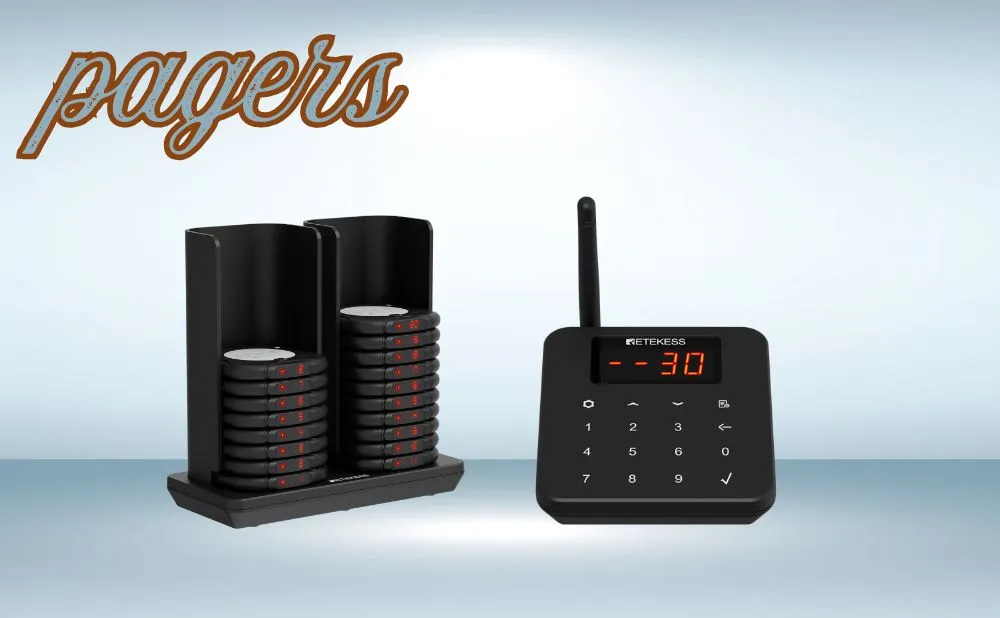
What Is a Pager? Understanding the Function and Benefits
- Retekess
- Jun 5, 2026
In an era dominated by smartphones and instant messaging, you might wonder: is the humble pager still relevant? While many associate these devices with the 1990s or classic medical dramas, the reality is that pagers remain a powerful, efficient, and essential tool in modern business operations. Whether you call them beepers, beepers pagers, or by their European nicknames like pieper or piepie, these devices continue to solve specific communication challenges that smartphones often can’t.
But what does pager meaning actually entail in a professional context today? Let’s dive into how these devices function and why they are still a game-changer for businesses.
What Does "Pager" Mean?
At its core, a pager means a wireless telecommunication device designed for receiving alphanumeric or voice messages. Historically, the first pager emerged in the 1950s, evolving from a clunky device used by doctors and emergency personnel into a streamlined, specialized tool.
Unlike the distraction-heavy nature of a smartphone, a pager is purpose-built. It is designed to deliver a specific alert or message directly to a user—often via vibration, beeping, or flashing lights—without the noise of social media notifications or emails.
How Modern Paging Systems Work
Modern paging systems have moved beyond the "old-school" limitations of early beepers. Today, they are integrated into sophisticated, industry-specific workflows:
Custom Alerts: When a call button is activated, the signal is sent to a receiver—which could be a small handheld device, a smart wristwatch, or even a digital display screen.
Versatile Applications: You’ll see them everywhere:
Hospitality: Restaurants use them to notify guests when their table is ready.
Healthcare: Hospitals and clinics use "QuietCall" systems for patient paging, maintaining a peaceful environment.
Industry & Logistics: From warehouses to production lines, home paging or staff paging systems allow for rapid communication between supervisors and floor workers.
Administrative Efficiency: Call buttons in meeting rooms allow staff to be summoned instantly, increasing overall productivity.
Why Businesses Still Rely on Pagers and Beepers
You might ask, "Why not just text or call?" The answer lies in reliability and focus.
Instantaneous Response: Paging systems cut through the clutter. A vibrating beeper on a waiter’s belt or a staff member’s wrist provides an immediate, impossible-to-ignore notification that doesn't require checking a phone screen.
Increased Productivity: By minimizing "wait time" and streamlining requests, businesses see a direct impact on their bottom line. Whether it's a pieper alerting a technician or a buzzer informing a guest their order is ready, the process becomes smoother and faster.
Ease of Installation: Modern paging systems are incredibly simple to deploy. They require minimal infrastructure compared to complex network-based mobile app solutions.
Quiet and Discreet: In professional or sensitive environments (like hospitals), these devices allow for communication that doesn’t disrupt the surroundings.
Conclusion: The Future of Paging
While the technology has evolved, the core concept remains the same: providing a direct, reliable, and efficient way to send a signal when it matters most. Whether you refer to them as beepers, pagers, or a piepie, these devices have proven their staying power. They are not just relics of the past; they are vital, modern tools for communication in industries that demand speed, focus, and reliability.
Are you looking to streamline your business communication? Paging systems might just be the simple, effective solution you have been looking for.
Leave a Reply



![[18th Anniversary] 18 Years of Echoing Excellence: Making Communication Easier, Connecting Trust Beyond Borders](https://res.retekess.com/z_file/20260716/retekess-brand-story-making-communication-easier_20260716151044_7682.jpg)
![[18 Years in Wireless Communication] Silent Disco Systems Anniversary Celebration: Top-Selling Headphones & Event Mechanics Revealed!](https://res.retekess.com/z_file/20260713/18-years-in-wireless-communication-silent-disco-systems-anniversary-celebration_20260713175011_5749.webp)
![[Anniversary Carnival] Ding-dong! 18th Anniversary Mega Sale on Guest Paging & Calling Systems: Full Reveal of 12+ Products & Promo Rules!](https://res.retekess.com/z_file/20260713/18th-anniversary-mega-sale-on-guest-paging-calling-systems_20260713175257_0295.webp)
![[Retekess 18th Anniversary Teaser] Tour Guide System Exclusive Perks: Sneak Peek at Event Dates & Mechanics!](https://res.retekess.com/z_file/20260713/retekess-18th-anniversary-tour-guide-system-exclusive-perks--2-_20260713180135_6435.webp)
Follow Us
Pay With


 Google
 Amazon
Comments (0)