
Table of Contents
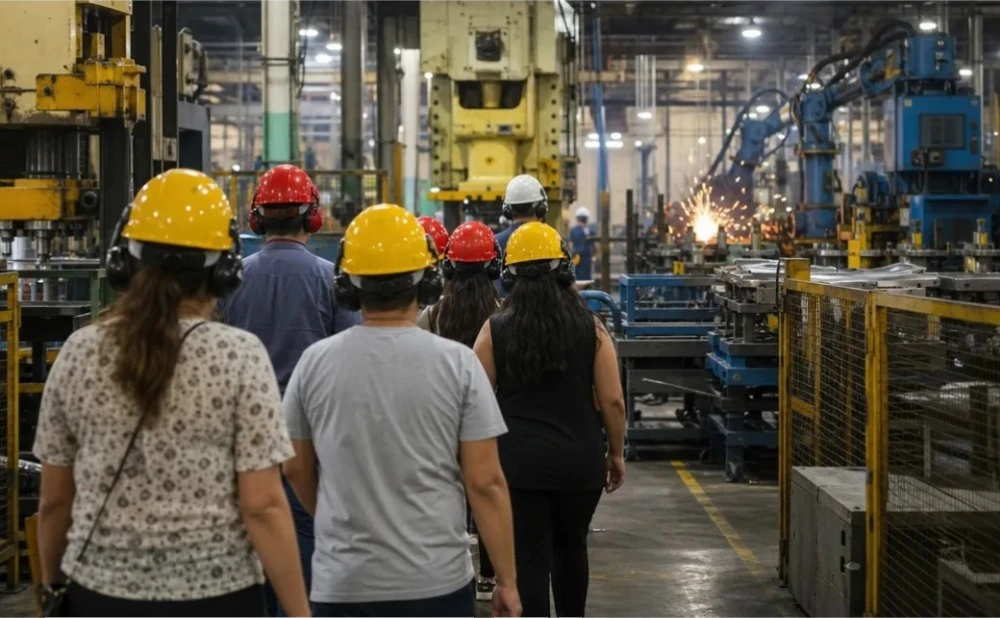
Why Can’t Visitors Hear the Guide in a Noisy Factory?
- Retekess
- Oct 6, 2026
Factory tours can be incredibly valuable. A well-run tour can turn a complex industrial process into something understandable, memorable, and impressive.
But there is one problem that quietly undermines many factory visits: people simply cannot hear the guide.
This is more than a minor inconvenience. Poor factory tour communication affects how much visitors understand, how well groups stay organized, and how professionally the company is perceived. If key explanations are missed, the tour loses part of its purpose.
So why does this happen so often in industrial settings? And what can factories do to improve the experience without interrupting operations?
The Real Reason Visitors Struggle to Hear in a Factory
The problem is rarely just one source of noise. Several factors can work together to make a guide difficult to hear.
Industrial noise overpowers speech
Factory floors are rarely quiet. Machinery, ventilation systems, conveyors, forklifts, alarms, and general production noise all compete directly with the human voice. Even a confident and experienced guide can struggle when mechanical sound fills the environment from all directions.
Human speech is not designed to dominate that kind of background noise. Once a group enters an active production zone, the guide’s voice can quickly become fragmented or lost entirely.
Large industrial spaces reduce clarity
Many factories are built with high ceilings, wide open areas, hard surfaces, and reflective materials. These features may support operations, but they are not ideal for spoken communication. Sound echoes, spreads, and weakens over distance.
This means that even if visitors can technically hear the guide, they may not hear the words clearly enough to follow the explanation. In a tour environment, clarity matters more than volume.
The group is moving, not standing still
Unlike a presentation room, a factory tour is usually in motion. Visitors walk from one area to another, pause briefly, and then move again. Some naturally drift toward the back. Others stop to observe equipment or signage. The result is that the group stretches out, often without realizing it.
As the distance between the guide and the visitors increases, communication becomes less consistent. The people closest to the guide may hear enough. Those farther back often miss the most important parts.
Personal protective equipment adds another barrier
Many factory tours require safety gear such as helmets, safety glasses, masks, or even hearing protection. These are necessary, but they also make normal communication harder. Visitors may already feel less comfortable in an unfamiliar industrial environment, and protective equipment can make them even less likely to ask someone to repeat instructions.
This matters because a visitor who misses one explanation may also miss the next one, especially if the group is already moving.
Why Poor Factory Tour Communication Matters More Than It Seems
It is easy to treat hearing problems on a tour as a minor inconvenience. In reality, the impact is broader.
First, visitors miss key information. A factory tour often exists to explain processes, quality standards, technical advantages, or safety systems. If people cannot hear those explanations, they leave with an incomplete understanding of what they came to see.
Second, the visit feels less professional. Even when a factory operation is highly capable, poor audio delivery can make the tour seem disorganized or underprepared. That affects brand perception, especially for customers, partners, or investors.
Third, group control becomes more difficult. If people do not hear movement instructions clearly, the guide has to stop more often, repeat directions, or wait for the group to regroup. That interrupts the flow and makes timing harder to manage.
Most importantly, safety messages may not be fully understood. In an industrial setting, that is not something any organization wants to leave to chance.
In short, poor factory tour communication weakens visitor understanding, group management, and the overall value of the tour.
Why Speaking Louder Is Not a Real Solution
When communication starts to break down, the most common reaction is simple: speak louder. But in a noisy factory, that approach has clear limits.
Louder speech does not automatically mean clearer speech. Once noise, distance, and echo are involved, raising the volume often adds strain without solving the underlying problem. Visitors may hear that the guide is talking, but still struggle to catch the words accurately.
Shouting also creates fatigue. A guide leading multiple tours or walking long routes cannot realistically maintain that level of vocal effort all day. Over time, it becomes exhausting and inconsistent.
There is also the issue of flow. When visitors miss explanations, the guide may stop repeatedly to restate information or wait for people to move closer. That slows the visit and makes the experience feel fragmented.
In industrial settings, better communication usually comes from better delivery systems—not just more volume.
What Should a Factory Tour Communication System Do?
A practical communication system for factory tours should support the way tours actually happen.
1. Deliver clear speech
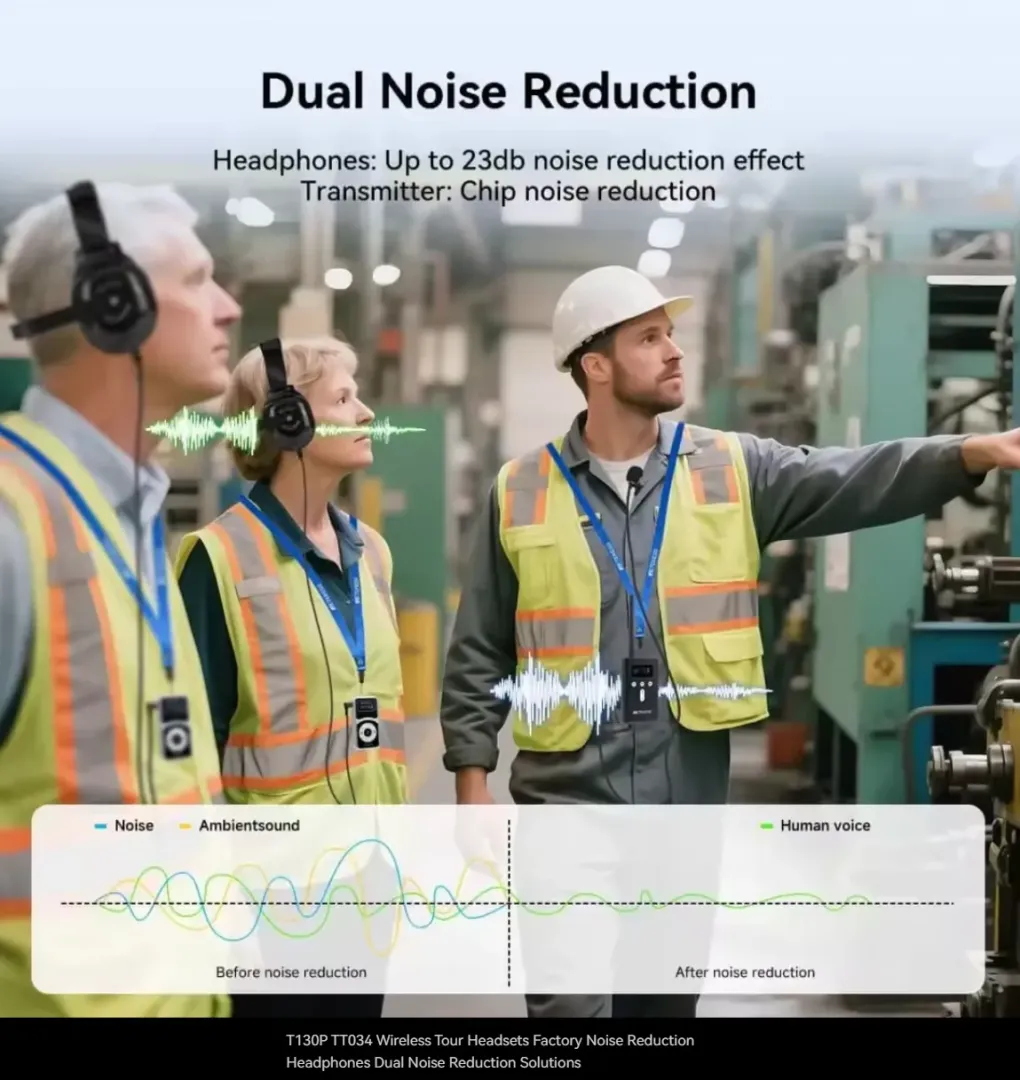
The primary goal is not maximum volume. Visitors need to understand what the guide is saying, even when the surrounding environment is busy.
2. Keep the group connected
A tour communication system should provide sufficient transmission coverage so visitors can move with the group without constantly repositioning themselves around the guide.
3. Allow the guide to move naturally
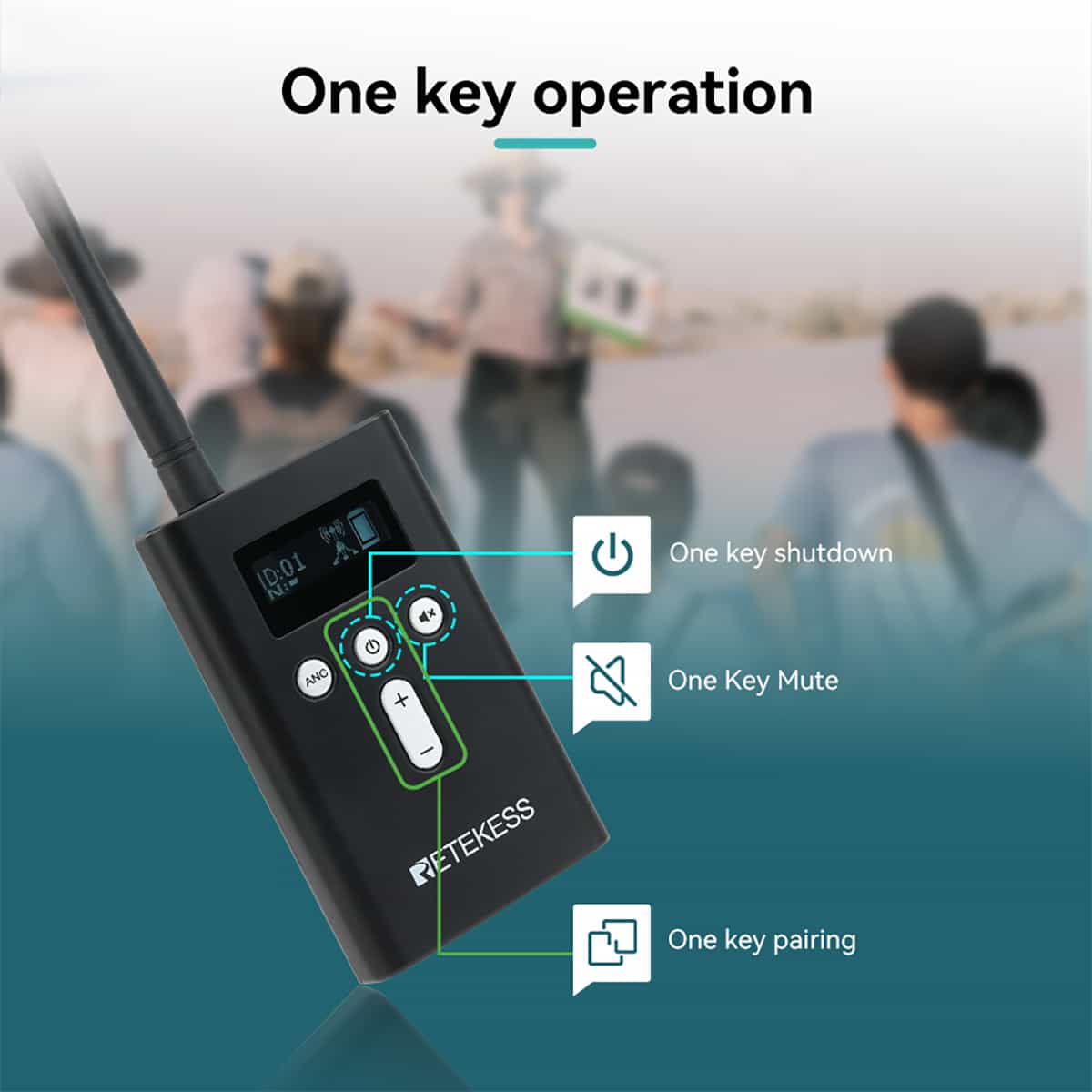
Guides may need to walk, point to equipment, demonstrate a process, or direct visitors to the next area. A hands-free wireless system allows them to communicate without carrying a microphone or repeatedly stopping to speak.
4. Keep group management simple
Factory tours may happen occasionally or several times a day. Equipment should be easy to distribute, wear, collect, charge, and prepare for the next group.
These requirements are more important than simply choosing a system with the highest volume or longest advertised range.
A Practical Solution for Noisy Factory Tours: Wireless Tour Guide System
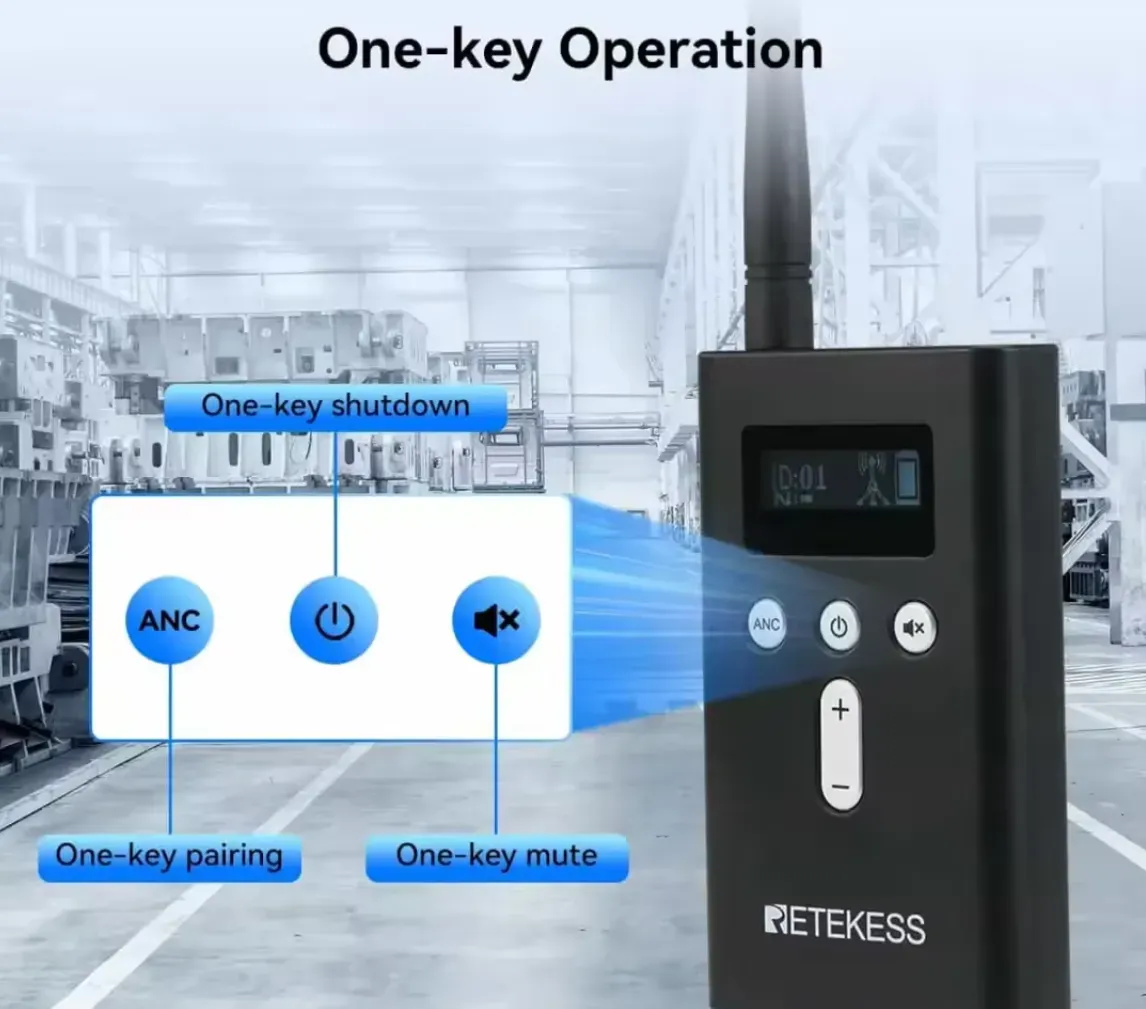
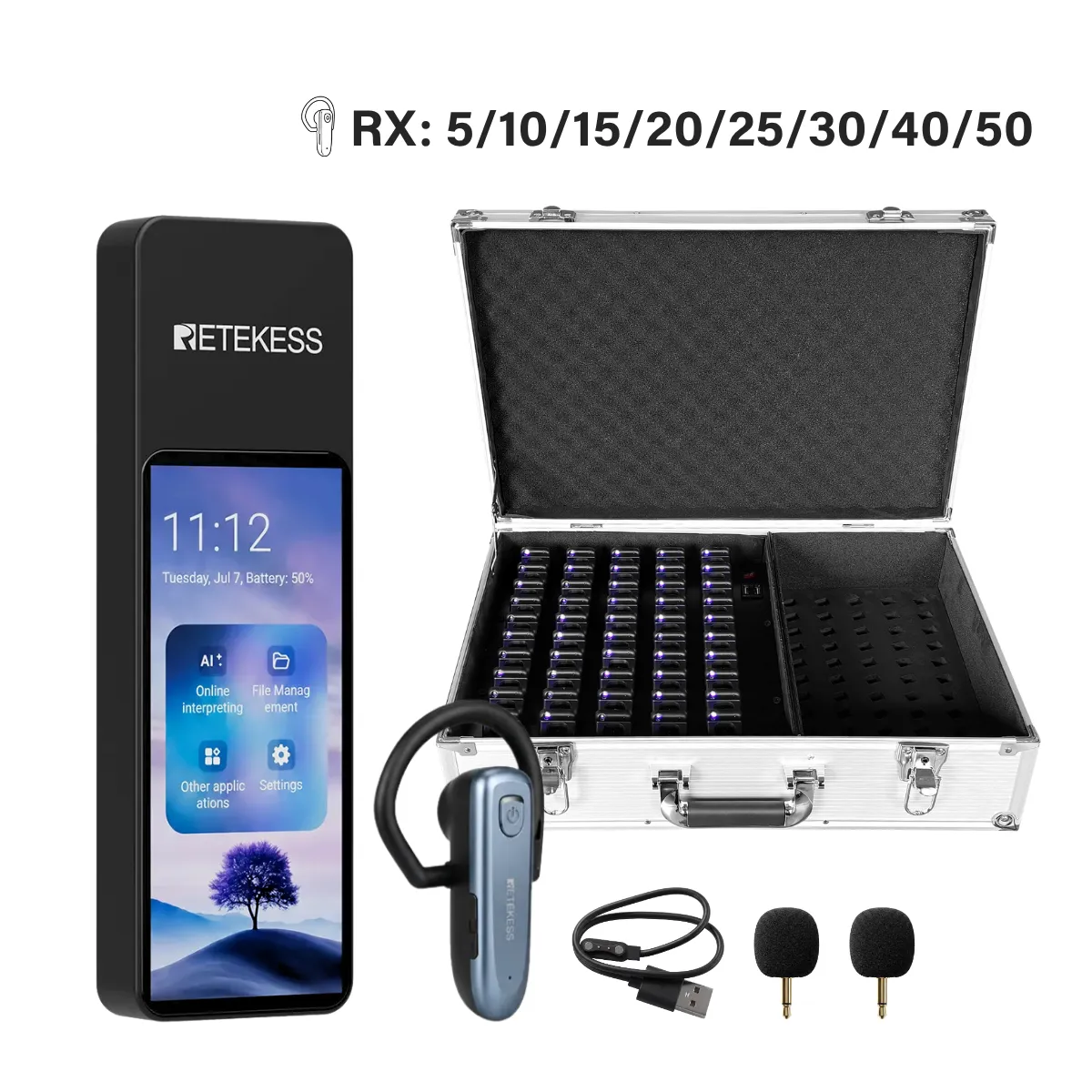
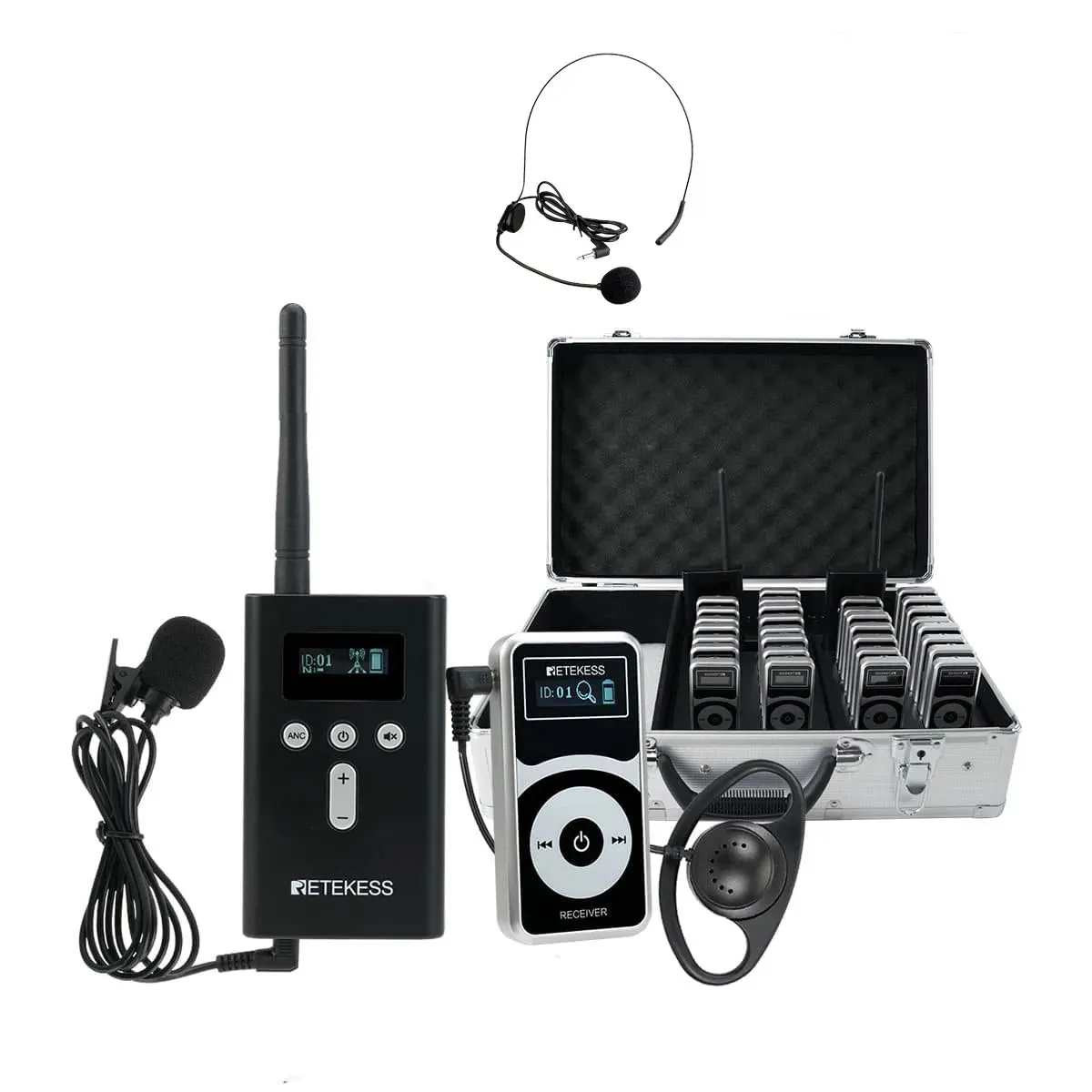
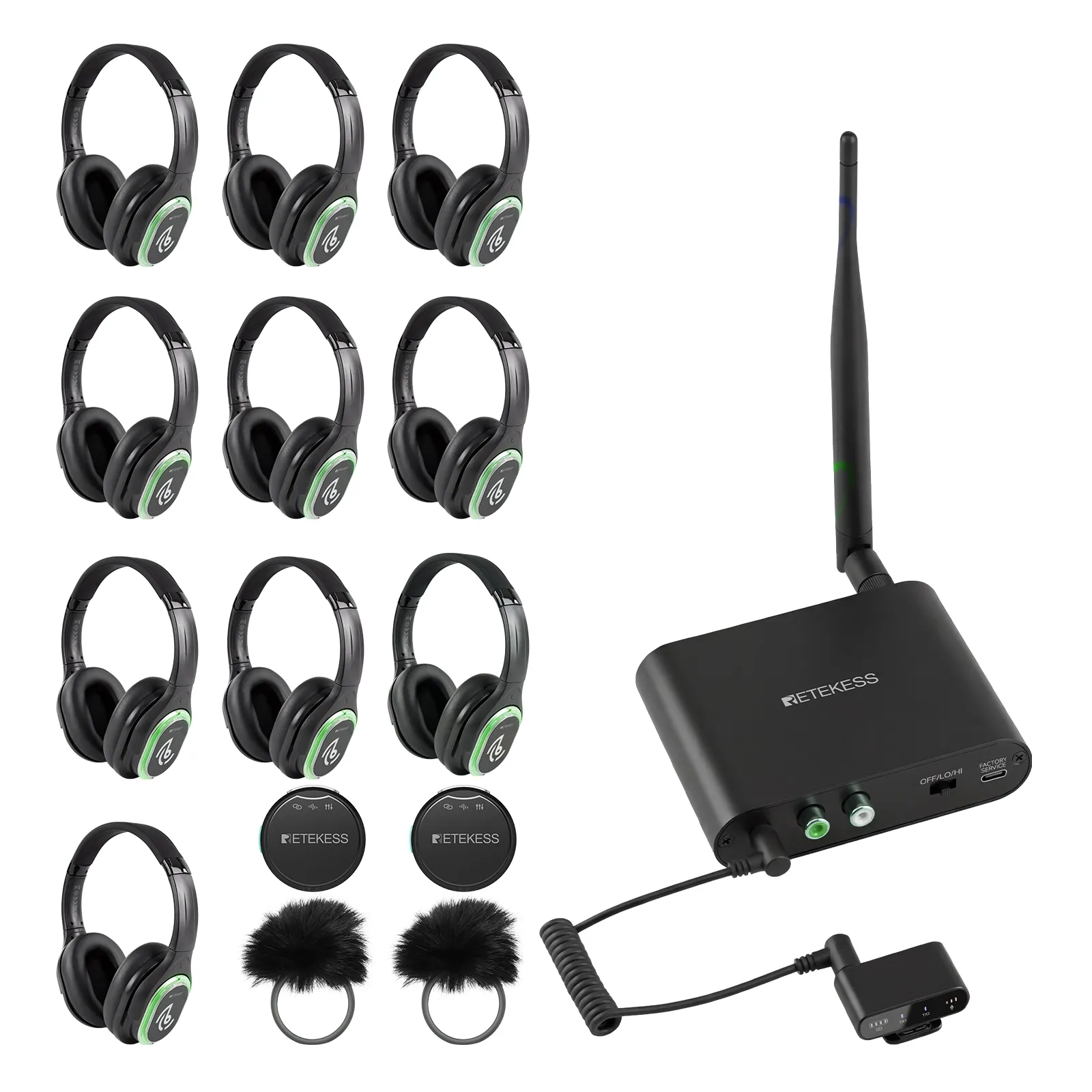
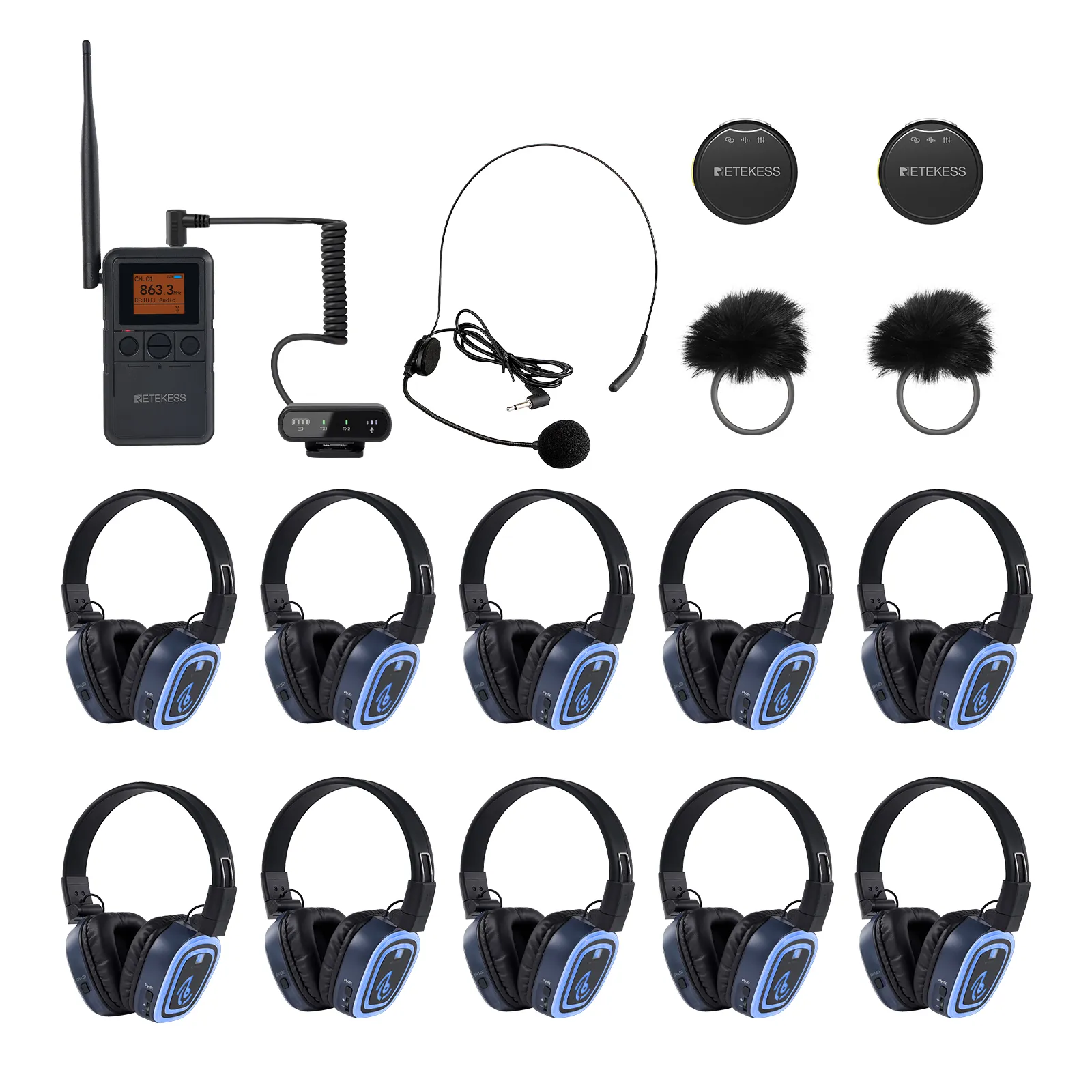
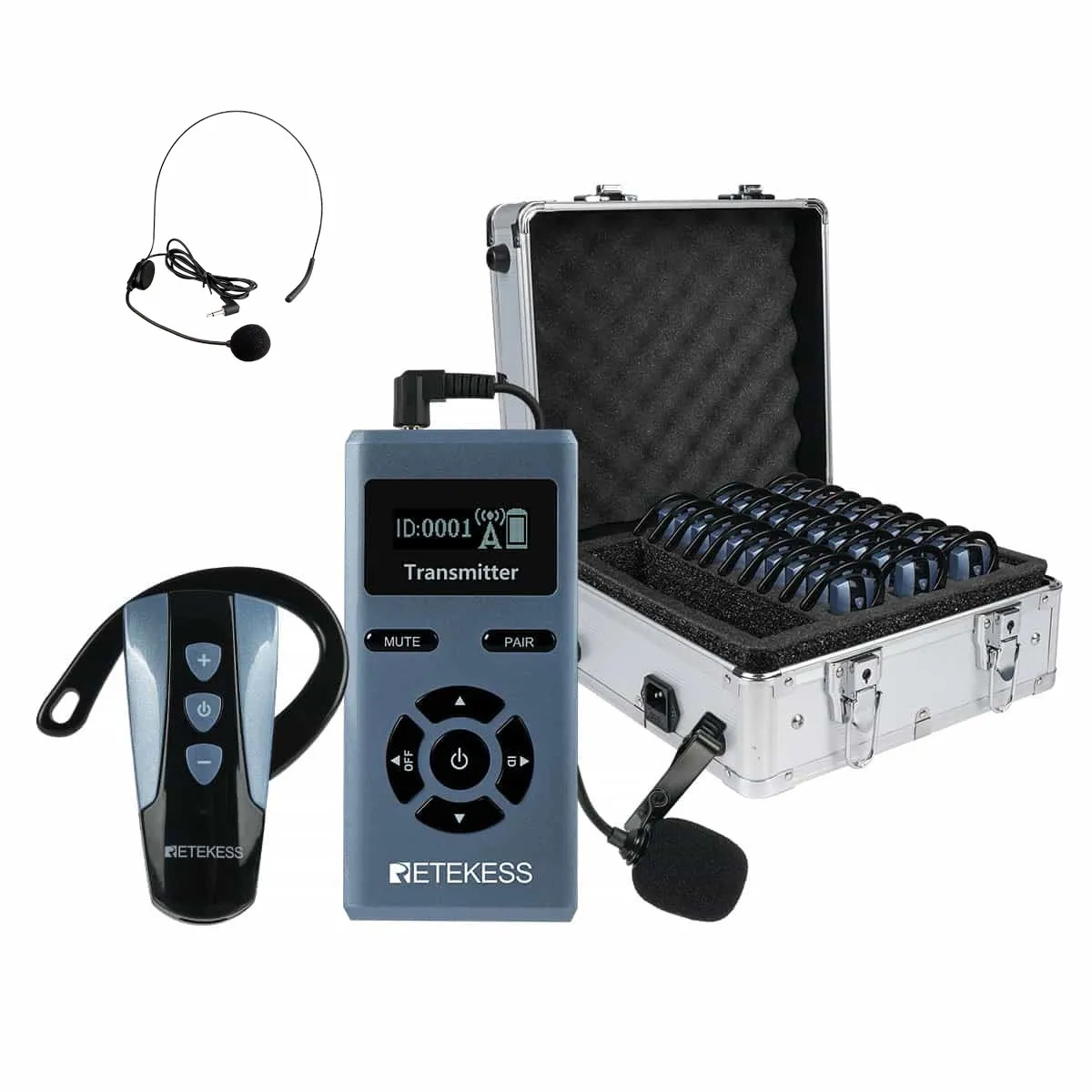
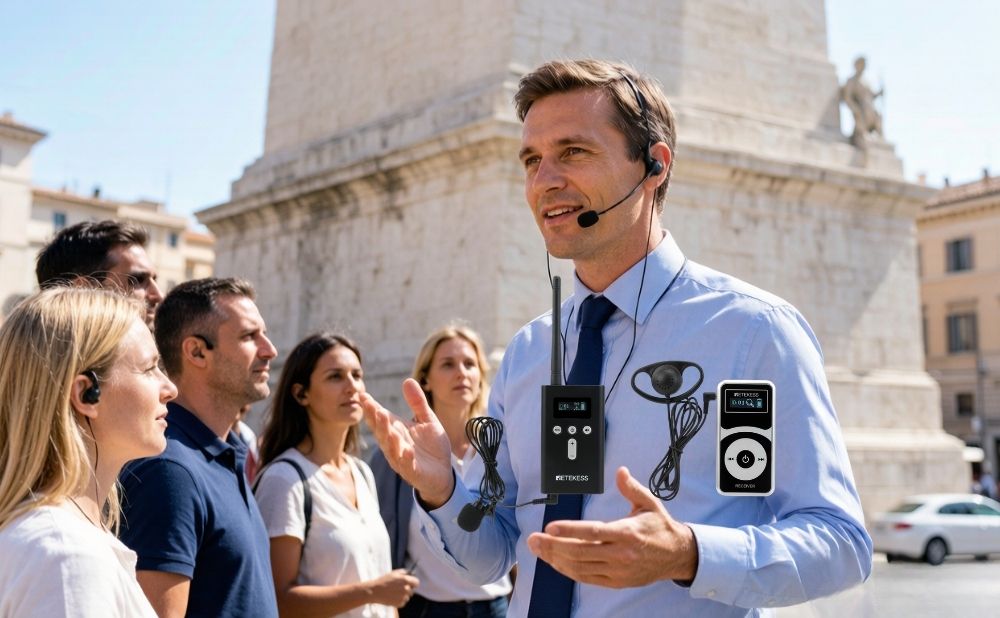
In this kind of environment, a dedicated audio guide system such as the Retekess T130P can make a clear difference.
Instead of relying on open-air speech, the T130P helps deliver the guide’s voice directly to visitors. That changes the communication model completely. Background machinery noise no longer has to compete with every word in the same way, and people farther from the guide are less likely to miss key explanations.
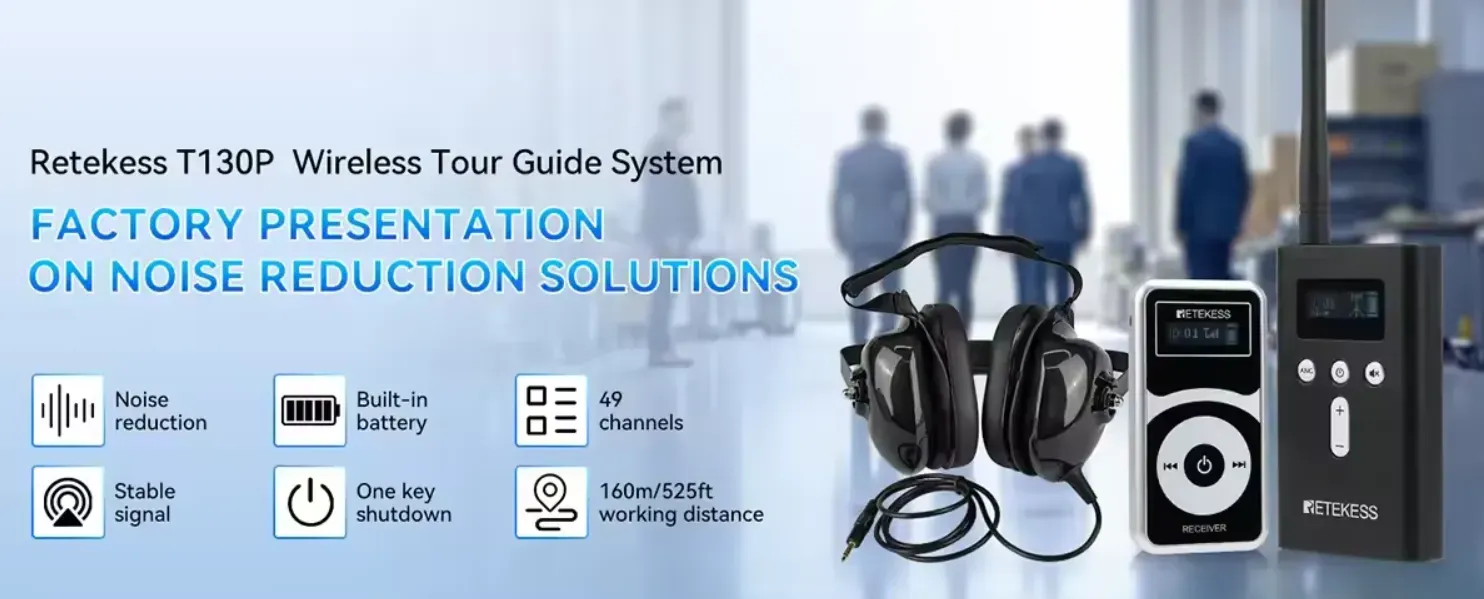
This is especially useful during walking tours, where the group is constantly moving through different zones. A direct audio system helps the guide maintain a more even experience across the group rather than only reaching the people in front.
The key advantage is not simply having another piece of equipment. It is changing how communication works during the tour: the guide can focus on explaining, while visitors can focus on listening and observing.
Which Types of Factory Visits Benefit Most?
Not every factory visit has the same purpose, but many types benefit from stronger communication tools.
These include:
- customer and partner visits
- student and educational tours
- investor visits
- compliance or audit walk-throughs
- new employee orientation tours
- international visits where clear delivery is especially important
In each of these cases, the tour is not just about seeing machines. It is about understanding what is happening, why it matters, and how the organization works. If visitors cannot hear the guide clearly, much of that value disappears.
Conclusion
If visitors cannot hear the guide, the problem is not necessarily attention. In many factories, the environment itself is working against clear communication.
Noise, distance, movement, and safety gear all make traditional speech-based touring less effective than many organizations realize. That is why improving factory tour communication is not just about convenience. It improves understanding, strengthens group control, and helps the entire visit feel more professional.
For factories that want their tours to educate, impress, and run safely, better communication tools are worth serious attention. A solution like the T130P can be a practical step toward making every factory visit easier to follow—and more valuable for everyone involved.
Leave a Reply

![[18th Anniversary] 18 Years of Echoing Excellence: Making Communication Easier, Connecting Trust Beyond Borders](https://res.retekess.com/z_file/20260716/retekess-brand-story-making-communication-easier_20260716151044_7682.jpg)
![[18 Years in Wireless Communication] Silent Disco Systems Anniversary Celebration: Top-Selling Headphones & Event Mechanics Revealed!](https://res.retekess.com/z_file/20260713/18-years-in-wireless-communication-silent-disco-systems-anniversary-celebration_20260713175011_5749.webp)
![[Anniversary Carnival] Ding-dong! 18th Anniversary Mega Sale on Guest Paging & Calling Systems: Full Reveal of 12+ Products & Promo Rules!](https://res.retekess.com/z_file/20260713/18th-anniversary-mega-sale-on-guest-paging-calling-systems_20260713175257_0295.webp)
![[Retekess 18th Anniversary Teaser] Tour Guide System Exclusive Perks: Sneak Peek at Event Dates & Mechanics!](https://res.retekess.com/z_file/20260713/retekess-18th-anniversary-tour-guide-system-exclusive-perks--2-_20260713180135_6435.webp)
Follow Us
Pay With


 Google
 Amazon
Comments (0)