
Table of Contents
Museums to Theme Parks: 4 Wireless Tour Guide System Use Cases That Boost Visitor Experience
- Retekess
- Aug 24, 2026
Most people associate wireless tour guide systems exclusively with museum galleries. In practice, these tools solve core visitor and operator pain points across almost every type of group attraction. They replace shouted commentary, eliminate crowded huddles, and turn frustrating, one-size-fits-all tours into smooth, personal experiences.
Four high-impact use cases show the full range of value wireless audio delivers. Each scenario has unique challenges, and the right system addresses all of them without adding extra work for guides or operators.
Museums: Quiet, Crowd-Friendly Gallery Tours
Museums are the most established use case for wireless tour guide systems, and for good reason. Traditional group museum tours have always come with clear tradeoffs. Guides herd visitors into tight clusters around each exhibit to make sure everyone can hear. These crowds block walkways, disrupt independent guests, and force everyone to move at the exact same pace. Visitors who want extra time with one display fall behind. Those who prefer a faster pace feel held back.
Cheaper audio systems make the problem worse with cross-channel interference. Guests listening to a lecture on ancient art can suddenly pick up commentary from a nearby food tour or school group. These mix-ups feel unprofessional for operators and break immersion for guests. Button-only receivers amplify the issue, because visitors cannot see their active channel and may not notice the mistake for half an hour.
Digital wireless systems fix all of these pain points. Guides no longer need to keep groups packed together. Guests can wander at their own pace, step back for photos, and still hear every word clearly. Independent visitors get to enjoy quiet galleries without shouted commentary breaking their focus. Encrypted digital channels eliminate cross-talk entirely, even when dozens of tours run through the same space on busy days.
Heritage Sites: Clear Audio in Challenging Spaces
Heritage sites present some of the hardest conditions for group tours. Stone architecture, high vaulted ceilings, and thick ancient walls create extreme echo. Even a slightly raised voice bounces across the entire space and disturbs other visitors. Many sacred and historic heritage sites also enforce strict silence rules out of respect for the location.
Before wireless audio, guides working these sites had few good options. They would lean in and whisper to small clusters of guests, one small group at a time. The process was slow, inefficient, and often felt awkward for everyone involved. Many sites banned group tours entirely to preserve the quiet atmosphere, cutting off a major source of revenue and educational access.
Wireless tour guide systems solve this problem completely. No external sound leaves the headsets, so tours run without disturbing other guests or breaking site rules. Guides speak at a soft, natural volume and every guest hears clearly, with no crowding or whispering required. Stable 2.4G digital signal cuts through thick stone walls better than cheaper FM or infrared systems, so audio stays consistent even in underground tombs and deep vaulted spaces. For many tour operators, wireless headsets are not an upgrade — they are the only way to run group tours at these locations.
City Tours: Comfortable Guides, Relaxed Guests
City walking tours face an entirely different set of obstacles: constant background noise, long distances, and physical strain on guides. Busy avenues, market squares, and popular tourist districts are full of traffic, street performers, and crowd chatter. Guides used to have to shout over all of it to be heard even three feet away. Most full-time city guides develop chronic throat issues from years of talking over street noise.
Guests also struggle with the traditional format. They have to walk in a tight cluster just to stay within hearing range. Stopping for a photo or a quick look in a shop means missing several minutes of commentary. Many guests leave walking tours with only a vague idea of what they saw, because they could not make out half the guide’s words over background noise.
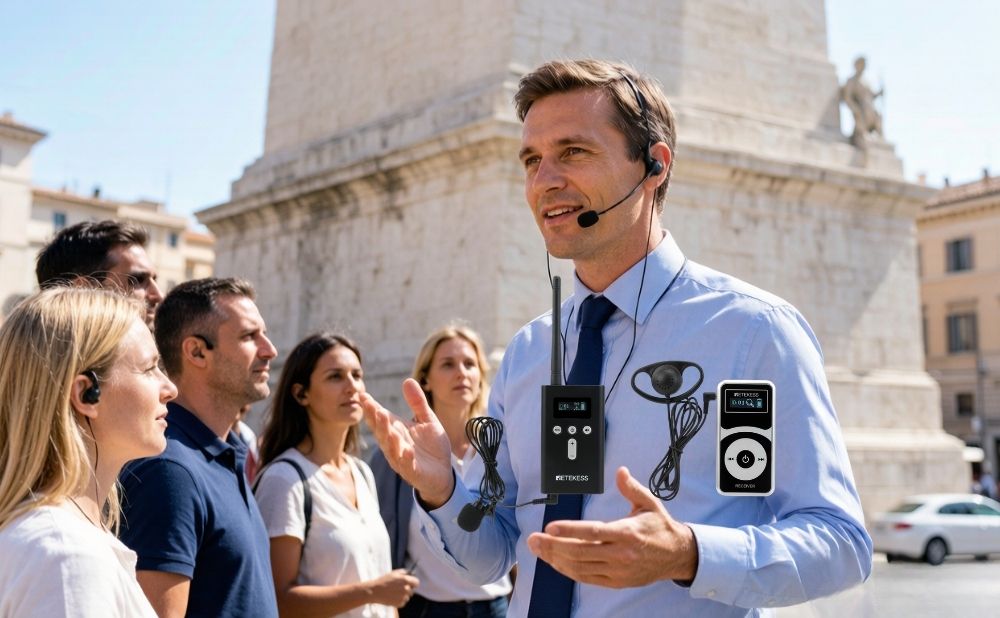
Wireless tour systems rewrite this dynamic entirely. Guides speak in a normal, conversational volume and are heard clearly by every guest, even 100 meters away. Built-in noise cancellation filters out traffic wind and background crowd sound, so commentary stays sharp even on the busiest streets. Guests can spread out, stop for photos, and walk at their own pace without falling out of audio range. For guides, it removes the single biggest source of daily physical strain on the job.
Theme Parks: Immersive Fun Beyond Rides
Theme parks are the newest and most surprising use case for wireless tour guide systems. Most people do not connect personal audio with roller coasters and character experiences. Forward-thinking parks are starting to use wireless headsets to turn dead time into a more engaging, immersive part of the visit.
The biggest pain point for any theme park guest is waiting in line. Queues for popular rides can stretch for an hour or more, with little to fill the time. Parks have tried screens and games, but most do little to make the wait feel meaningful. Wireless audio systems change this by playing backstory, character lore, and behind-the-scenes facts about the ride while guests wait. The extra context makes the ride itself feel more immersive, and the wait feels shorter.
Wireless headsets also elevate parades and seasonal events. Instead of listening through crackly park speakers, guests get clear, direct audio right in their ears. For Halloween events and seasonal celebrations, targeted sound effects and narrative audio build atmosphere far better than public address systems ever could. Lightweight, secure fit is critical here, because guests keep headsets on through rides, walks, and crowded areas.
Why the Retekess TT133 Works Across All Four Scenarios
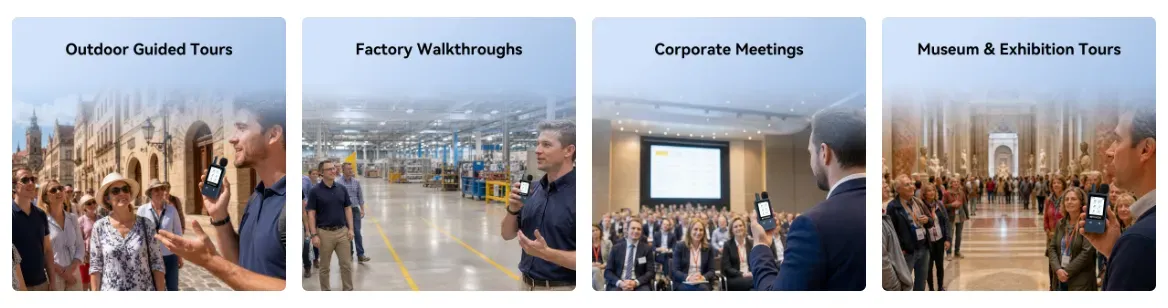
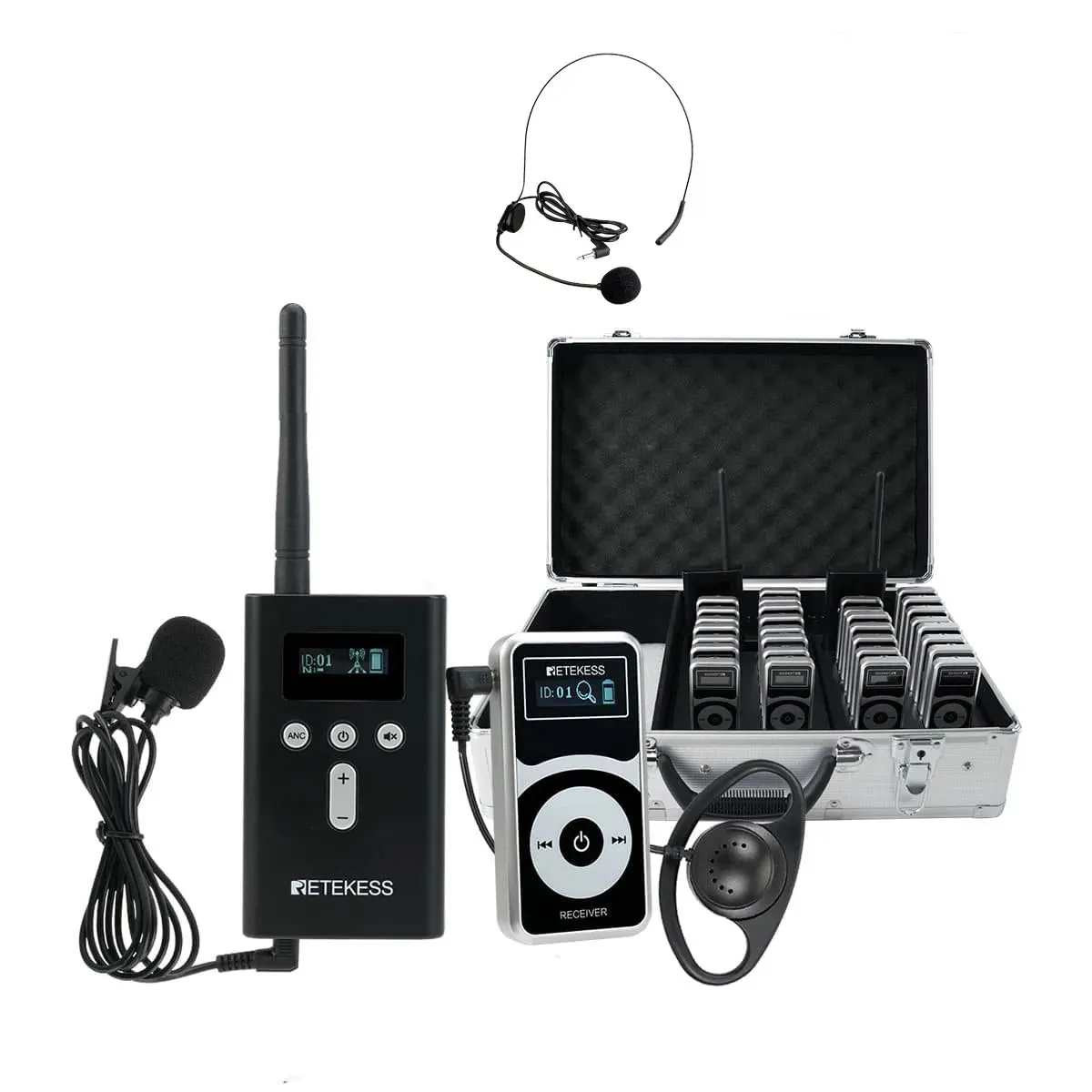
Not all tour guide systems handle this wide range of environments equally well. The Retekess TT133 is built with a smart touch-controlled design that addresses the most common pain points across every use case.
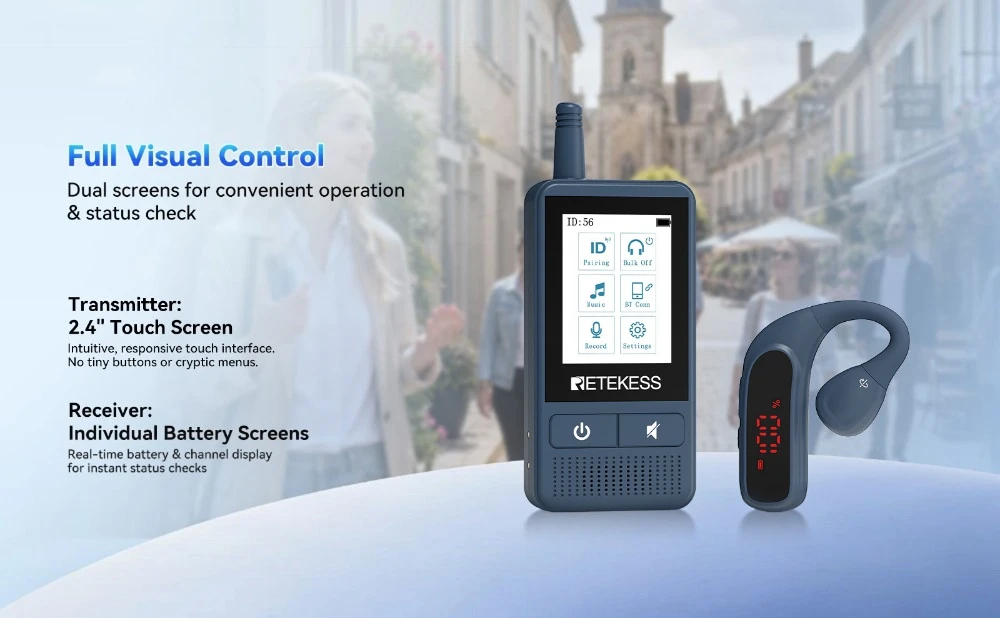
Its 2.4G digital transmission supports dozens of independent encrypted channels. Museums and busy heritage sites can run multiple tours at once without cross-talk or channel mix-ups. The touch display on every receiver shows the active channel, volume level, and remaining battery at a glance. Guests never spend half a tour listening to the wrong channel by accident, and guides spend far less time troubleshooting button mistakes.
Built-in DSP noise cancellation cuts through street traffic and crowd background sound on city walking tours. Guides can speak at a natural volume without straining their voice. Stable long-range signal keeps audio consistent even when guests spread out to take photos.
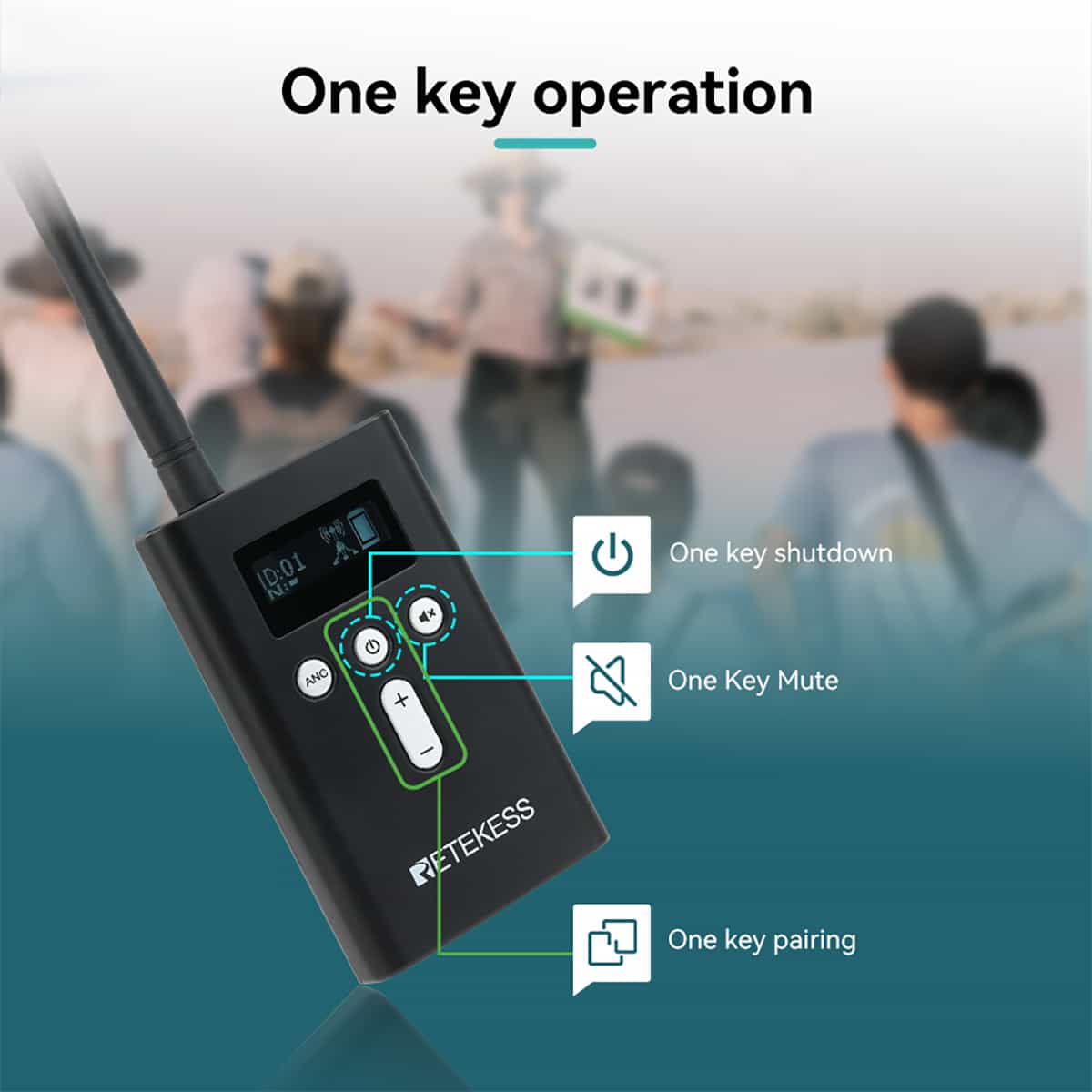
For quiet heritage sites, the touch interface operates without the loud click of physical buttons. The fully wireless design produces no external sound, keeping tours compliant and respectful of site rules.
For theme parks and all-day use, 18-hour battery life on receivers covers a full day of operation without mid-day charging gaps. The lightweight, secure fit stays comfortable for hours, even during active rides and walking. Simple, intuitive controls mean guests of all ages can use the device without a long tutorial.
Final Thought
Wireless tour guide systems have outgrown their reputation as a museum-only accessory. Across museums, heritage sites, city tours, and theme parks, they fix long-standing problems that have bothered guides and guests for decades. They make tours quieter, more flexible, and more accessible for everyone involved.
The right system does not just make audio clearer. It changes the entire feel of a group visit. Guides can focus on storytelling instead of shouting. Guests can explore at their own pace instead of sticking to a tight cluster. For operators, that translates to better reviews, fewer complaints, and a stronger product across every type of attraction.
Leave a Reply



![[18th Anniversary] 18 Years of Echoing Excellence: Making Communication Easier, Connecting Trust Beyond Borders](https://res.retekess.com/z_file/20260716/retekess-brand-story-making-communication-easier_20260716151044_7682.jpg)
![[18 Years in Wireless Communication] Silent Disco Systems Anniversary Celebration: Top-Selling Headphones & Event Mechanics Revealed!](https://res.retekess.com/z_file/20260713/18-years-in-wireless-communication-silent-disco-systems-anniversary-celebration_20260713175011_5749.webp)
![[Anniversary Carnival] Ding-dong! 18th Anniversary Mega Sale on Guest Paging & Calling Systems: Full Reveal of 12+ Products & Promo Rules!](https://res.retekess.com/z_file/20260713/18th-anniversary-mega-sale-on-guest-paging-calling-systems_20260713175257_0295.webp)
![[Retekess 18th Anniversary Teaser] Tour Guide System Exclusive Perks: Sneak Peek at Event Dates & Mechanics!](https://res.retekess.com/z_file/20260713/retekess-18th-anniversary-tour-guide-system-exclusive-perks--2-_20260713180135_6435.webp)
Follow Us
Pay With


 Google
 Amazon
Comments (0)