
Table of Contents
The Complete 2026 Guide to Audio Guide Systems: Types, Costs, and Best Practices
- Retekess
- Aug 28, 2026
An audio guide system is a communication or playback device used to deliver pre-recorded commentary or live guided audio directly to a visitor's headset. These systems are widely used in museums, city tours, and factory visits to eliminate background noise, prevent overcrowding, and overcome language barriers. This 2026 guide provides direct, actionable answers on system types, how to choose, and deployment.
What are the four main types of audio guide systems in 2026?
Audio guide systems fall into four categories: guide-operated wireless systems, self-service keypad devices, smartphone apps, and AI-powered translation systems. Each type addresses distinct operational needs from live group tours to multilingual automated experiences.
How do guide-operated wireless tour guide systems function for live groups?
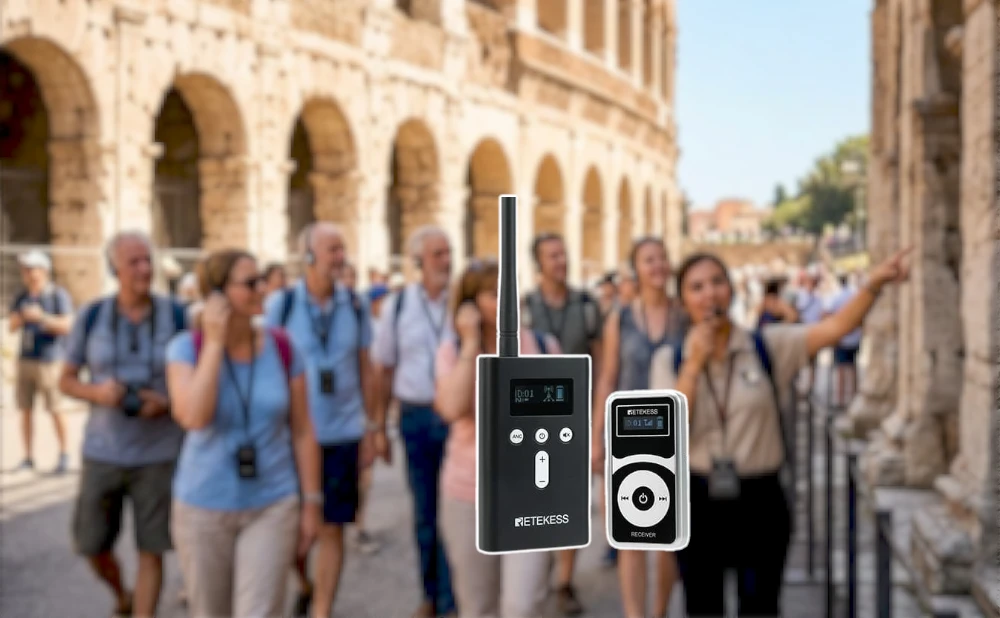
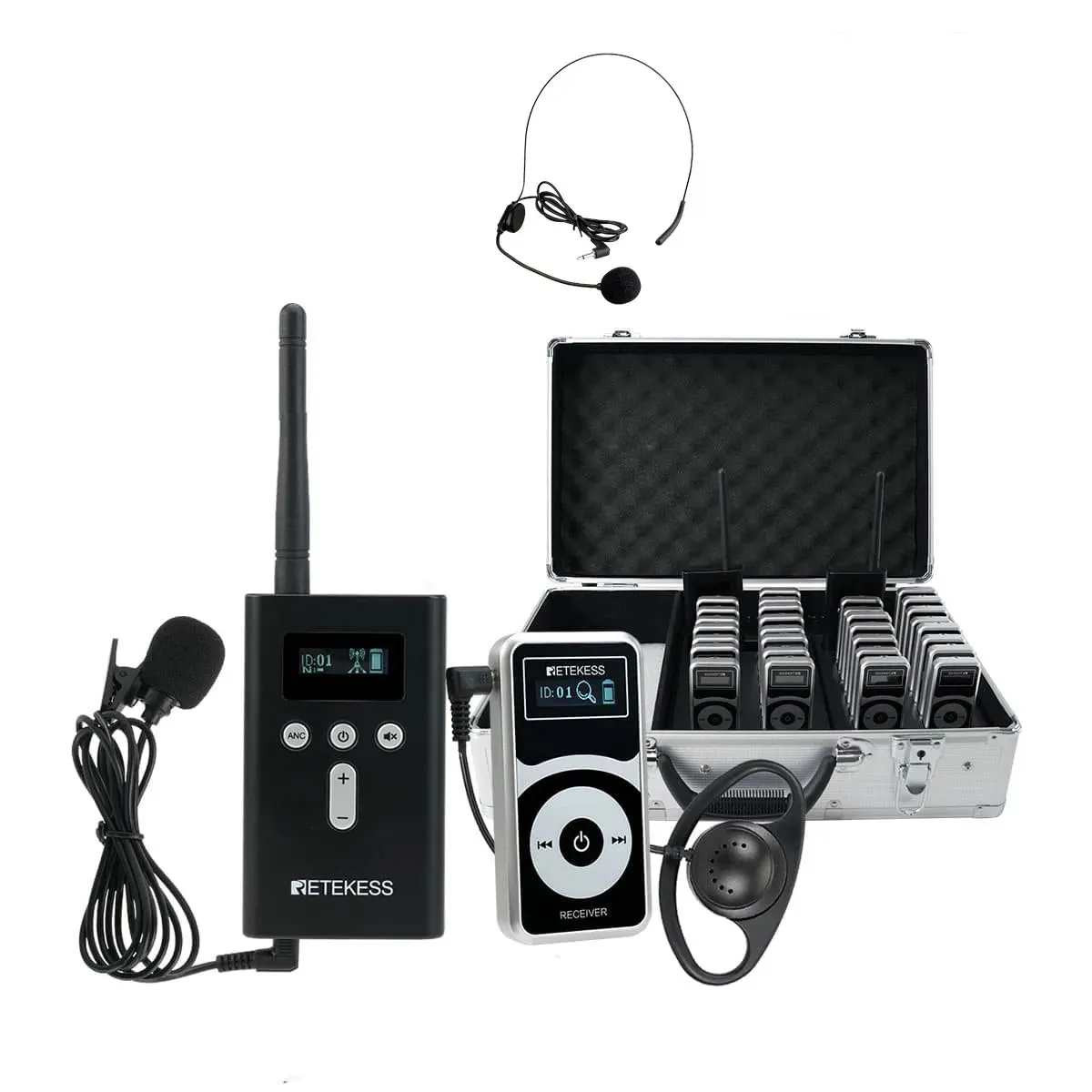
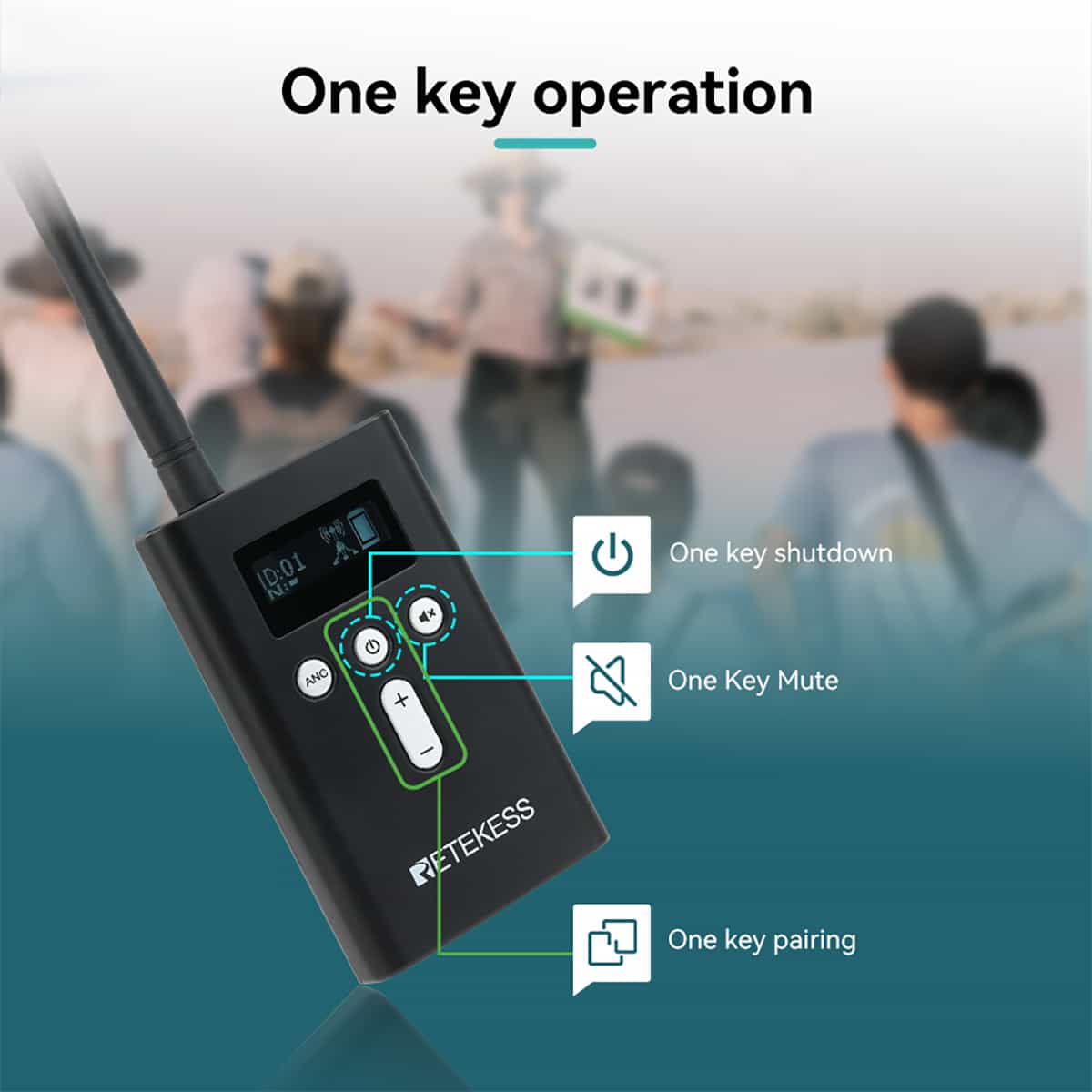
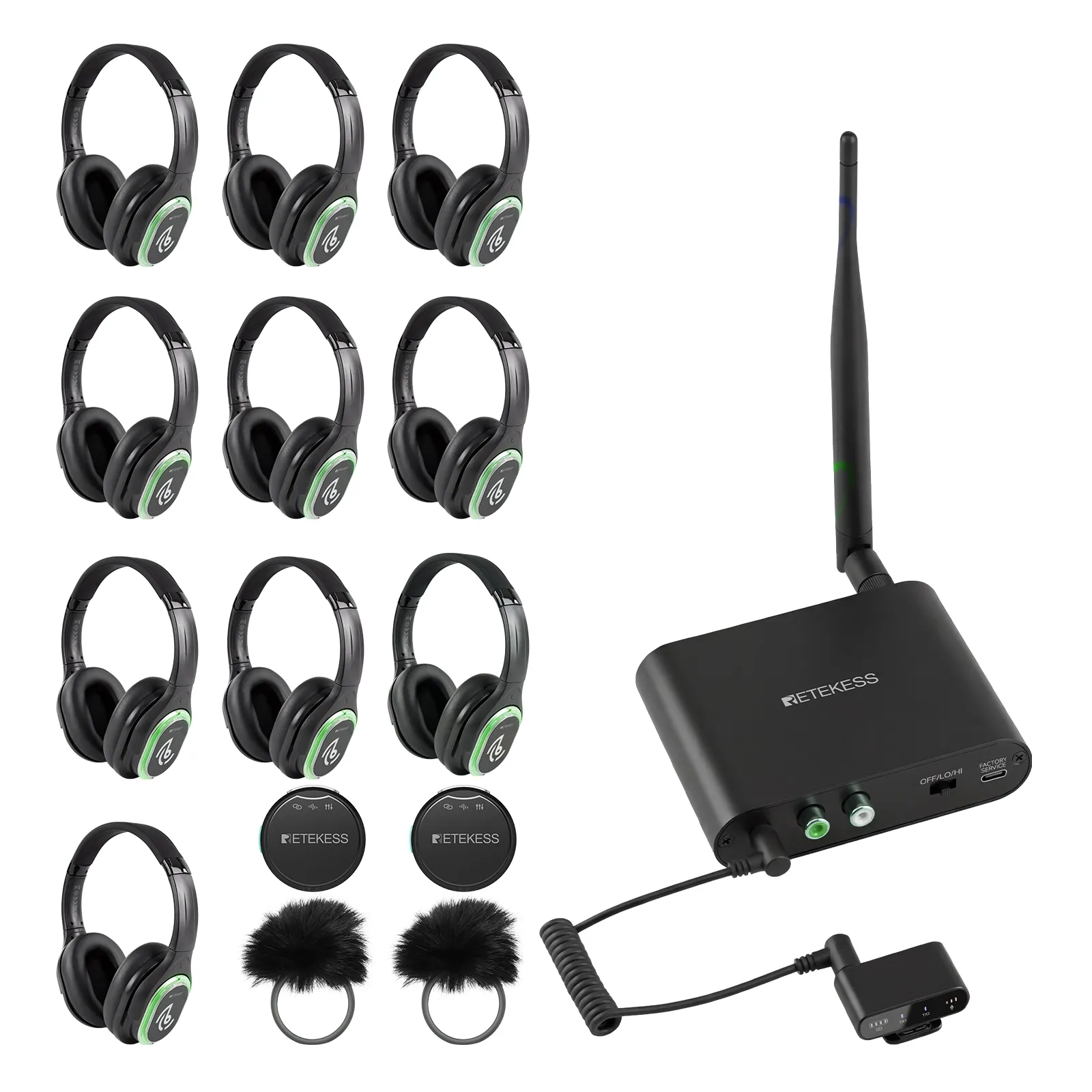
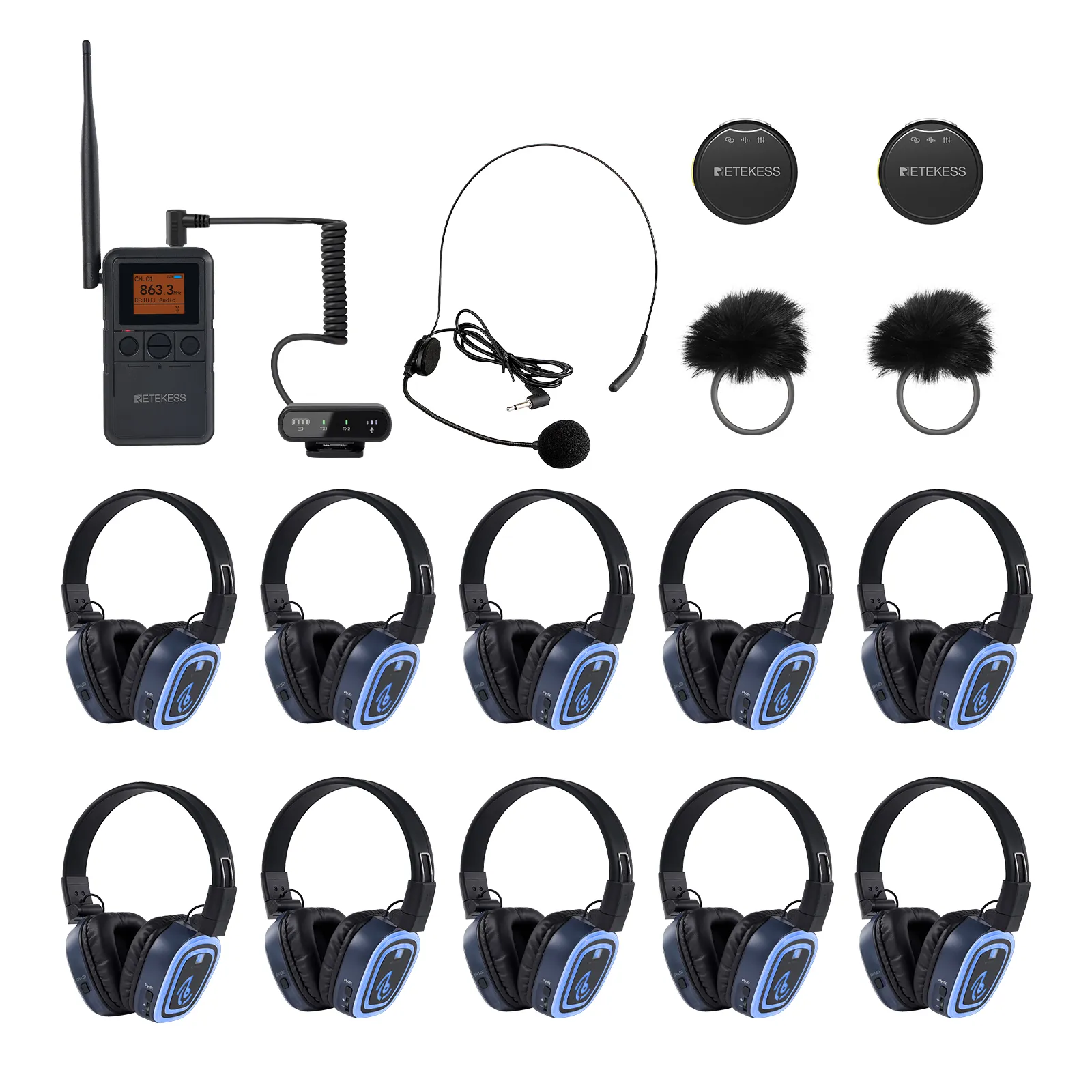
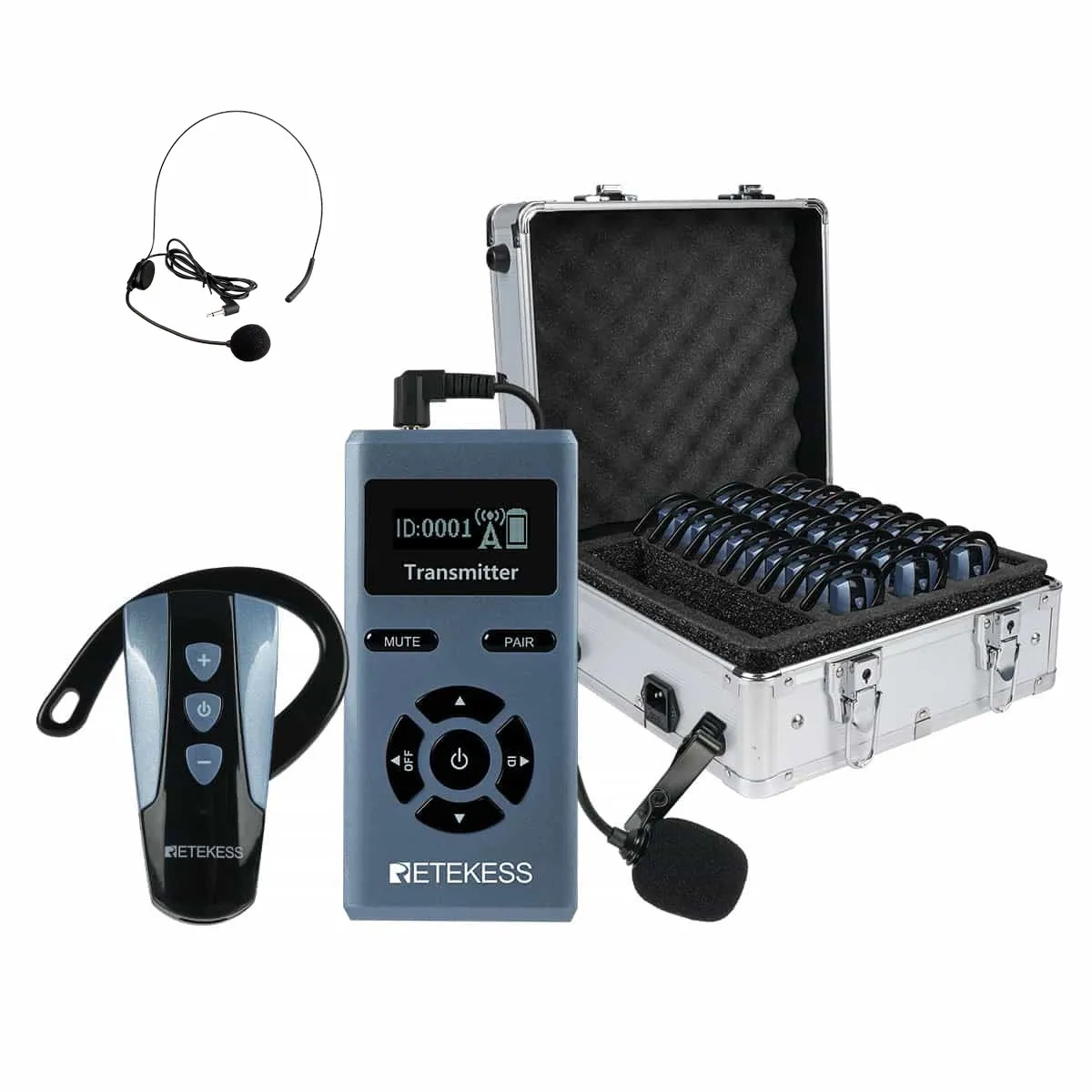
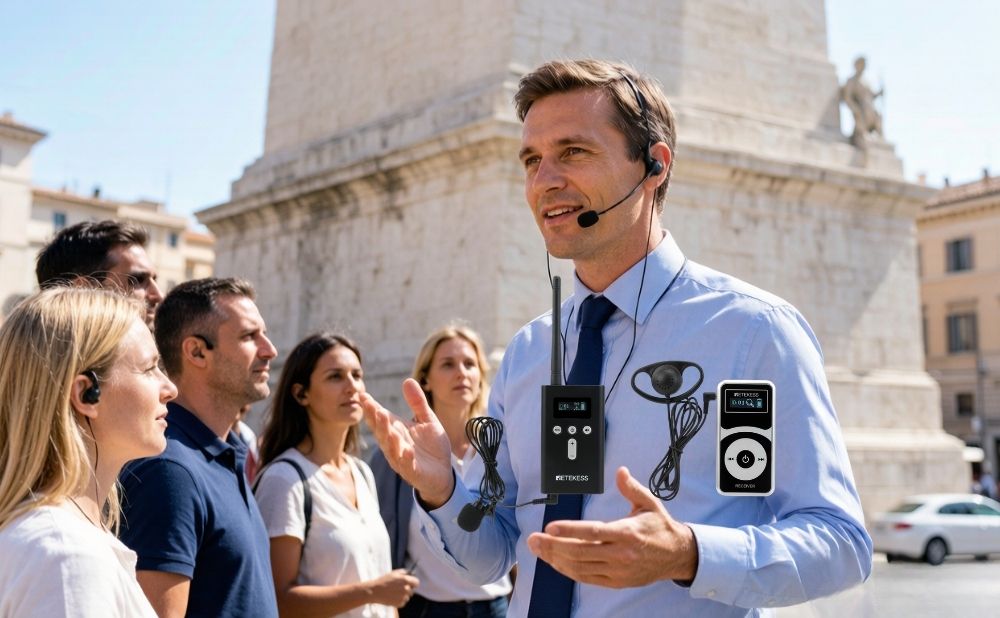
Guide-operated wireless tour guide systems feature a portable transmitter worn by the tour guide or interpreter who speaks in real-time, while participants wear lightweight receivers to hear the broadcast instantly. They excel in factory tours, outdoor city walks, and museum group visits where guides must deliver clear commentary over heavy background noise without shouting.
Why choose keypad-operated audio guides for self-paced museum visits?
Keypad-operated audio guides are dedicated self-service devices that visitors use independently to play pre-recorded tracks by entering exhibit numbers on a keypad. They offer reliable, offline playback without requiring visitors to use their own smartphones, download applications, or depend on cellular coverage, making them ideal for museums, historical sites, and galleries with structured exhibit numbering.
Are smartphone-based audio guides suitable for modern city tours?
Smartphone-based audio guides use mobile apps with GPS or QR code triggers to automatically play pre-recorded commentary on visitors' own devices as they explore. They eliminate hardware rental costs, provide interactive maps, and enable content updates without device replacement, though they require reliable internet connectivity and visitor smartphone literacy.
How do AI-powered translation guide systems bridge language barriers for international groups?
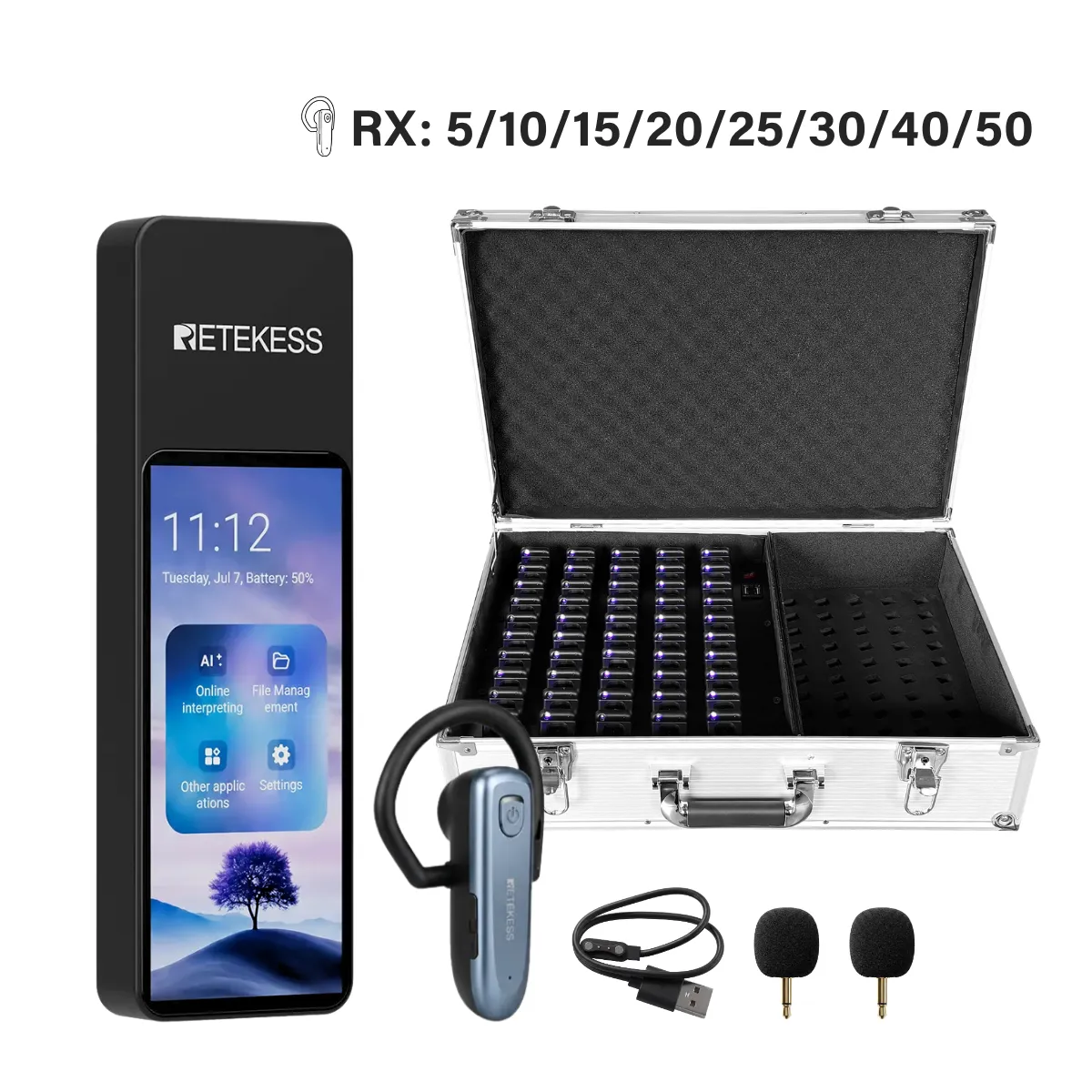
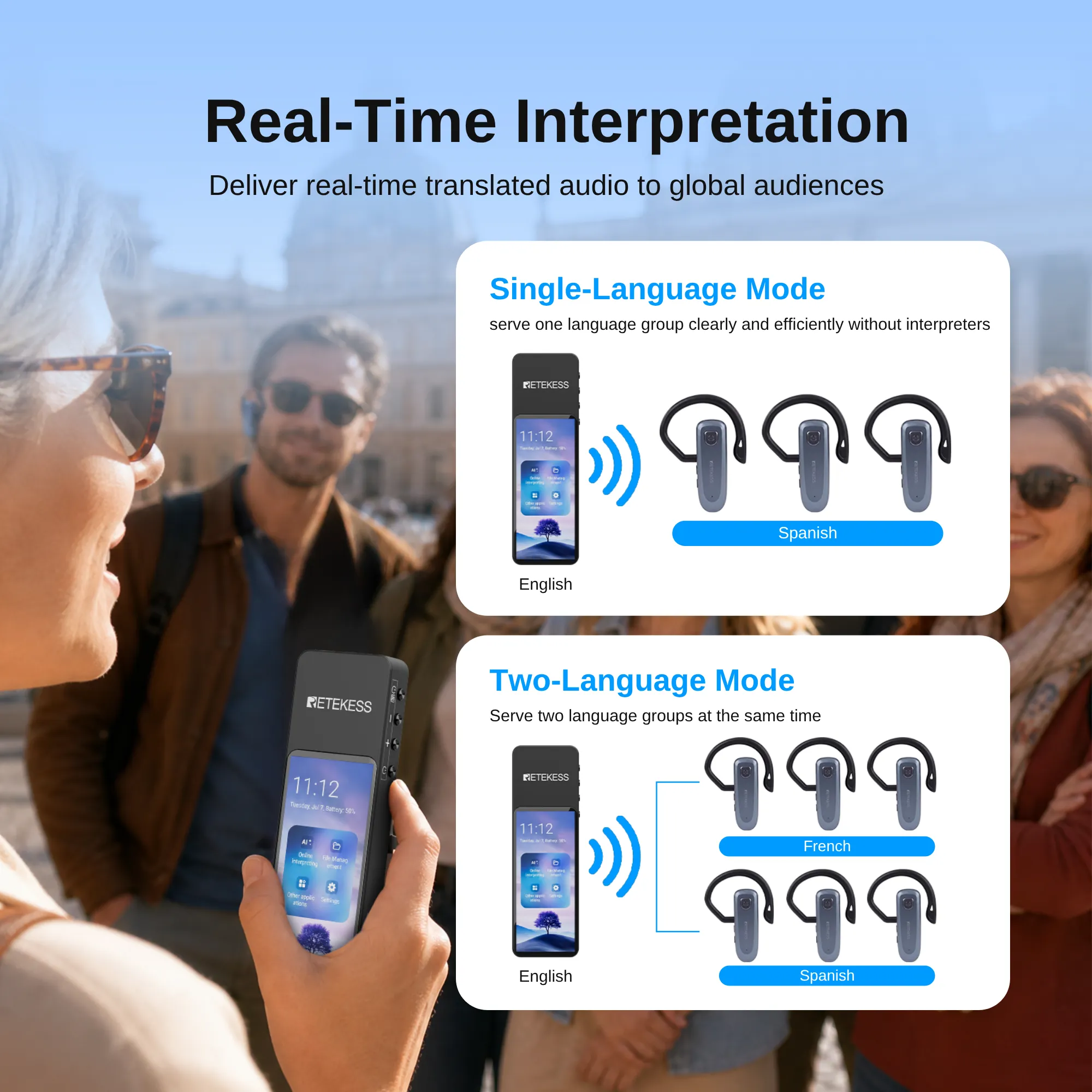
AI-powered translation guide systems combine real-time guide narration with automatic AI translation, delivering multilingual audio simultaneously to participants speaking different languages through their individual receivers. Emerging providers integrate speech-to-speech AI translation technology with traditional wireless hardware from brands like Retekess. They reduce interpreter costs by 60-80%, enable single-guide multilingual tours, and support 40+ languages instantly, making them ideal for international factory tours, global corporate visits, and multilingual museum groups without hiring multiple human translators.
How do you choose the best audio guide system for your venue?
You choose the best audio guide system by matching your venue type, group size, and content delivery method. Museums require keypad-operated devices like Retekess TT128 to enable unrestricted self-paced exploration. Factory tours need guide-operated wireless systems like Retekess T130P for real-time communication. International groups benefit from AI translation systems that reduce interpreter costs while maintaining effective multilingual communication.
|
System Type
|
Who Operates It
|
Best For
|
Key Advantage
|
|---|---|---|---|
|
Guide-Operated Wireless
|
Tour guide/interpreter speaks
|
Live group tours, factory visits
|
Real-time interaction, no pre-recording needed
|
|
Keypad-Operated
|
Visitors self-serve
|
Museums, historical sites
|
No smartphone required, works offline
|
|
Smartphone-Based
|
Visitors use own device
|
City tours, outdoor attractions
|
No hardware cost, GPS auto-trigger
|
|
AI Translation
|
Guide speaks + AI translates
|
International groups, multilingual tours
|
60-80% cost reduction vs. human interpreters
|
How do you deploy an audio guide system step-by-step?
Deploying an audio guide system requires five sequential steps: assessing venue needs, purchasing equipment, producing multilingual content, training staff, and running a pilot test. Following this sequence prevents technical failures during peak visitor hours.
- Assess Venue Needs: Determine peak visitor capacity, venue square footage, and required languages.
- Purchase Equipment: Select a vendor based on E-E-A-T signals, warranty terms, and local technical support.
- Produce Content: Hire professional voice actors to record 2-to-5-minute audio tracks per exhibit.
- Train Staff: Teach guides how to operate transmitters, sanitize receivers, and troubleshoot basic connectivity issues.
- Run a Pilot Test: Conduct a small-group trial run to identify dead zones or audio synchronization errors before the official launch.
What are the limitations and future trends of audio guide systems?
The main limitation of hardware-based audio guides is the ongoing maintenance, battery replacement, and sanitization cost. However, the industry is actively shifting toward AI-driven personalization and Augmented Reality (AR) integration by 2026. These advancements offset hardware drawbacks by offering richer, adaptive visitor experiences that adjust content depth based on user preferences.
Leave a Reply

![[18th Anniversary] 18 Years of Echoing Excellence: Making Communication Easier, Connecting Trust Beyond Borders](https://res.retekess.com/z_file/20260716/retekess-brand-story-making-communication-easier_20260716151044_7682.jpg)
![[18 Years in Wireless Communication] Silent Disco Systems Anniversary Celebration: Top-Selling Headphones & Event Mechanics Revealed!](https://res.retekess.com/z_file/20260713/18-years-in-wireless-communication-silent-disco-systems-anniversary-celebration_20260713175011_5749.webp)
![[Anniversary Carnival] Ding-dong! 18th Anniversary Mega Sale on Guest Paging & Calling Systems: Full Reveal of 12+ Products & Promo Rules!](https://res.retekess.com/z_file/20260713/18th-anniversary-mega-sale-on-guest-paging-calling-systems_20260713175257_0295.webp)
![[Retekess 18th Anniversary Teaser] Tour Guide System Exclusive Perks: Sneak Peek at Event Dates & Mechanics!](https://res.retekess.com/z_file/20260713/retekess-18th-anniversary-tour-guide-system-exclusive-perks--2-_20260713180135_6435.webp)
Follow Us
Pay With


 Google
 Amazon
Comments (0)