
Table of Contents
Tour Guide Tools: How AI Translation Devices Help Independent Tour Guides Serve More Visitors
- Retekess
- Sep 24, 2026
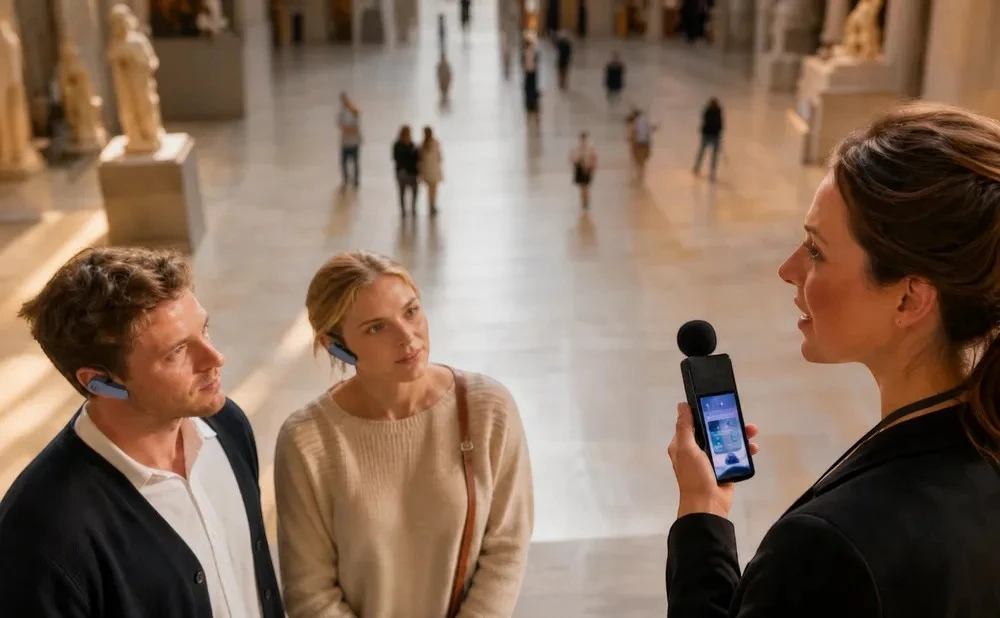
Unlike large agencies, independent guides and small tour operators often manage everything themselves—planning routes, meeting guests, adapting to weather or crowd conditions, and keeping the group engaged from start to finish. In that context, communication is not a small detail. It is part of the service.
That is why portable translation and tour audio tools are becoming more relevant for independent guides. They do not replace expertise, personality, or storytelling. But they can help guides serve multilingual visitors more smoothly, handle smaller groups more professionally, and deliver a clearer, more polished experience in a wide range of real-world settings.
What Makes an Independent Tour Guide Competitive?
A competitive independent guide is rarely defined by one skill alone. The best guides combine several strengths that work together.
Local knowledge
Visitors want more than facts. They want context, insight, and details they would not find on a signboard or in a guidebook. A guide who understands the destination deeply can turn a simple walk into a meaningful experience.
Storytelling
Knowledge becomes memorable when it is delivered well. Strong guides know how to pace a story, connect history to the present, and make a site feel alive instead of simply informative.
Communication
Even the best story loses value if guests cannot hear it, follow it, or understand it easily. Communication includes clarity, pacing, language support, and the ability to adapt the message to different audiences.
Flexibility
Independent guides often work in unpredictable environments. Streets are noisy, weather changes quickly, museums get crowded, and visitor needs vary from group to group. Flexibility is a major part of professionalism.
Professional readiness
This is where many guides stand apart. Professional readiness means showing up prepared—not only with knowledge and timing, but with the tools needed to deliver the tour well. In practice, that may include route planning, backup materials, and portable audio or translation equipment when the group requires it.
Why AI Translation Devices Matter for Independent Tour Guides
An AI Translation Tour Guide System is more than a translation tool. In a tour environment, it can support communication while fitting into the guide's existing workflow.
Support Multilingual Tours
International visitors may not always share the guide's primary language. AI translation can provide additional language support during explanations and interactions, helping guides communicate with a wider range of visitors.
This can be particularly useful for independent guides who regularly work with international tourists but do not want to prepare a completely different communication setup for every language group.
Combine Translation With Tour Communication
Translation and tour communication are often treated as separate needs. A guide may need one solution to speak to the group and another tool to handle language differences.
An AI Translation Tour Guide System can bring these functions together. Instead of adding another step to the tour workflow, the system becomes part of the communication process itself.
Support Small and Private Tours
Large tour groups may already have dedicated interpretation equipment or technical support. Small private tours are different.
A family group, a few international visitors, or a small business delegation may still need multilingual communication, but they may not require a large interpretation setup. An AI translation tour guide system gives independent guides another practical way to support these smaller assignments.
Make the Guide More Adaptable
The value is not simply in translating words. It is in giving the guide another way to respond when visitor needs change.
When the guide can handle both tour communication and language support with a dedicated system, more types of tours can become practical to offer.
Which Tours Can Benefit from an AI Translation Tour Guide System?
Different tours create different communication challenges. An AI translation tour guide system can be particularly useful when visitors move together, come from different language backgrounds, or need explanations throughout the experience.
|
Tour Type |
Common Challenge |
Potential Value |
|
Sightseeing Tours |
Visitors may speak different languages |
Supports multilingual explanations |
|
Private Tours |
Groups have different communication needs |
Provides flexible language support |
|
Business Visits |
International participants need clear information |
Helps visitors follow presentations and explanations |
|
Factory Visits |
Noise and movement can affect communication |
Supports group communication in changing environments |
|
Museum & Cultural Tours |
Detailed information needs to be explained clearly |
Helps deliver multilingual content |
|
School or Educational Tours |
Group management and communication |
Helps keep participants connected with the guide |
The key point is that the system does not change the nature of the tour. The guide remains responsible for the experience, while the technology supports communication where language may otherwise become a barrier.
Choosing an AI Translation System for Your Tour Business
For an independent guide, the right system should fit the actual workflow of a tour rather than simply offer a long list of specifications.
Before the tour, setup should be straightforward. The guide should be able to prepare the system, charge the equipment, and start working without complicated technical procedures.
During the tour, several factors become important: translation capability, audio clarity, transmission stability, operating range, ease of use, and the ability to communicate with multiple visitors.
After the tour, charging and storage should also be simple enough to become part of the normal routine.
A Practical Example: Retekess TT136
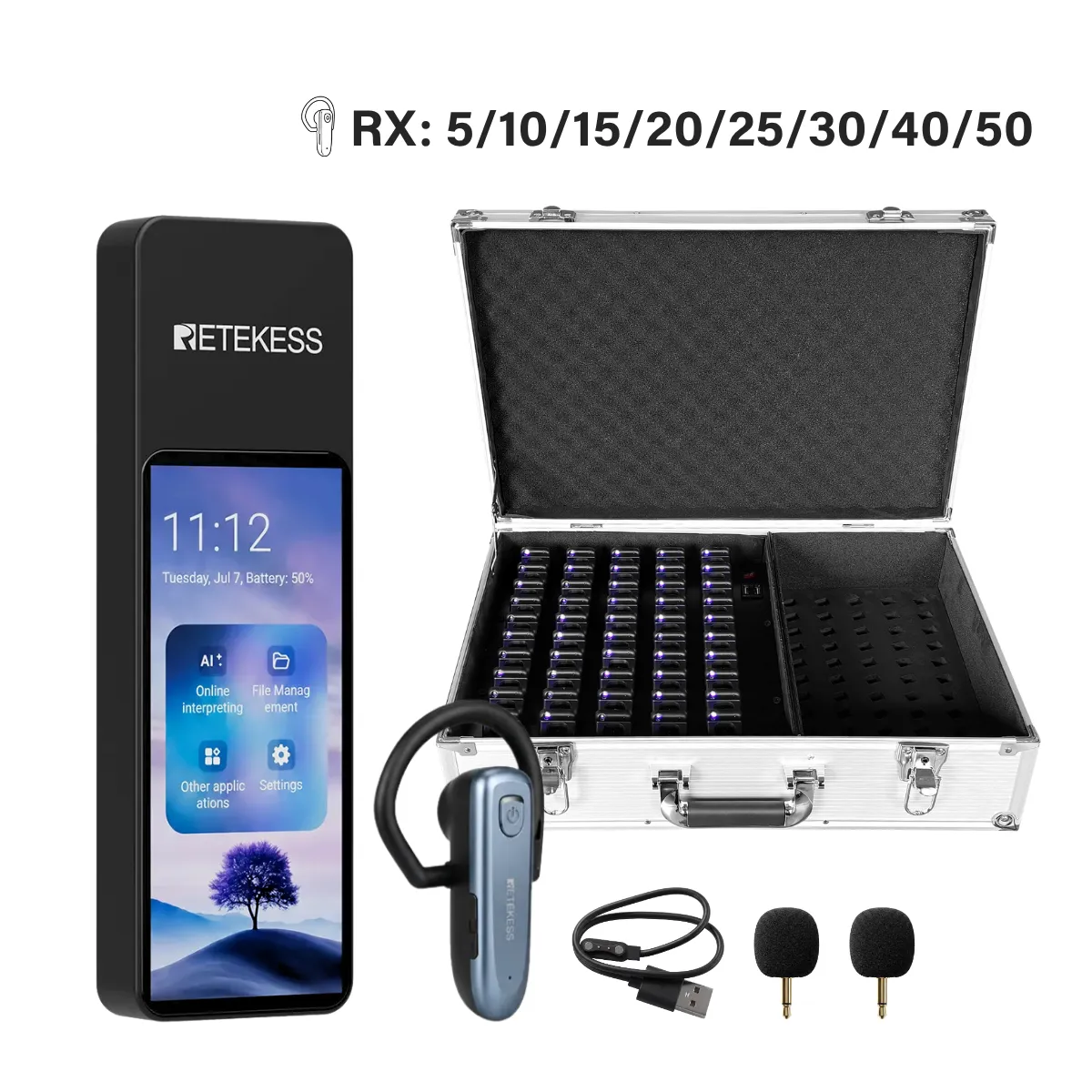
Retekess TT136 combines AI translation with wireless tour communication, giving independent guides one system for multilingual tours. It supports 120+ languages, helping guides communicate with international visitors without preparing separate translation tools for every language.
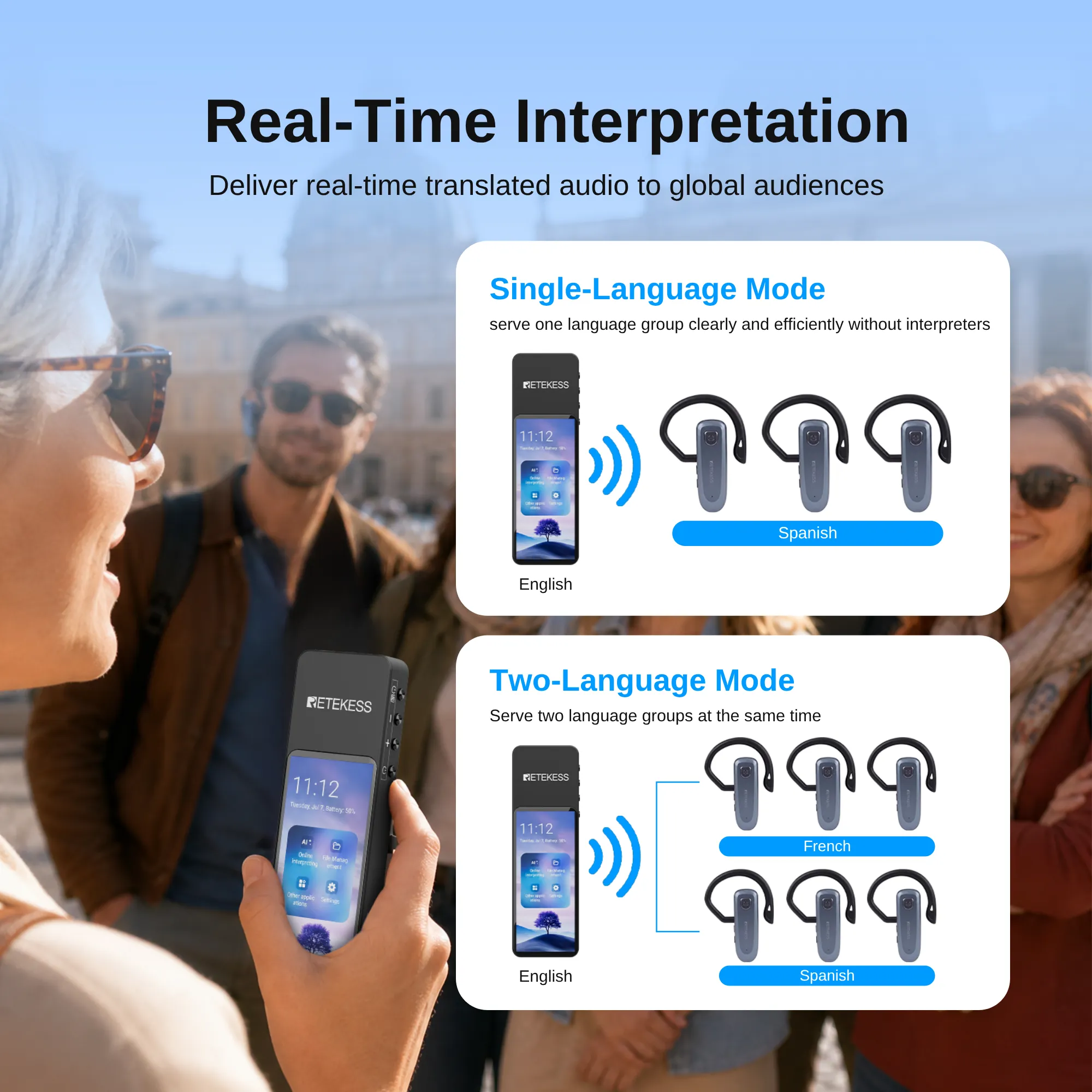
Its single and bilingual broadcast modes allow guides to adapt communication to different language groups, while 2.4GHz FHSS transmission with up to 200 m range keeps visitors connected as the group moves. The system also supports dual-team translation, making it suitable for mixed-language groups.
For independent guides, the value is not simply having an AI translator. TT136 combines translation and tour communication in one setup, making multilingual sightseeing, cultural tours, business visits, and other small-group experiences easier to manage.
A Simple Tour Guide Equipment Checklist
An independent guide's personal equipment kit may include:
- AI translation tour guide system
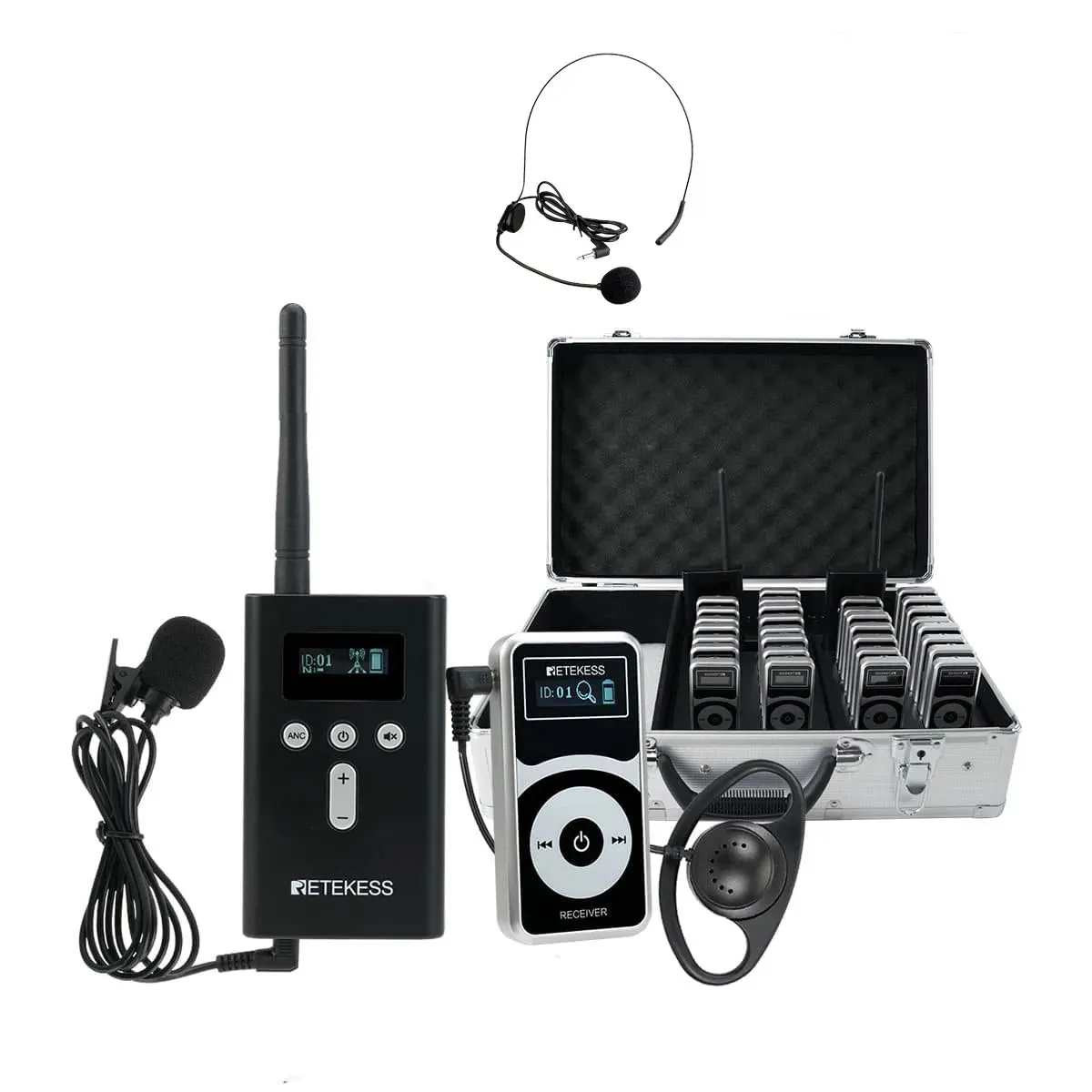
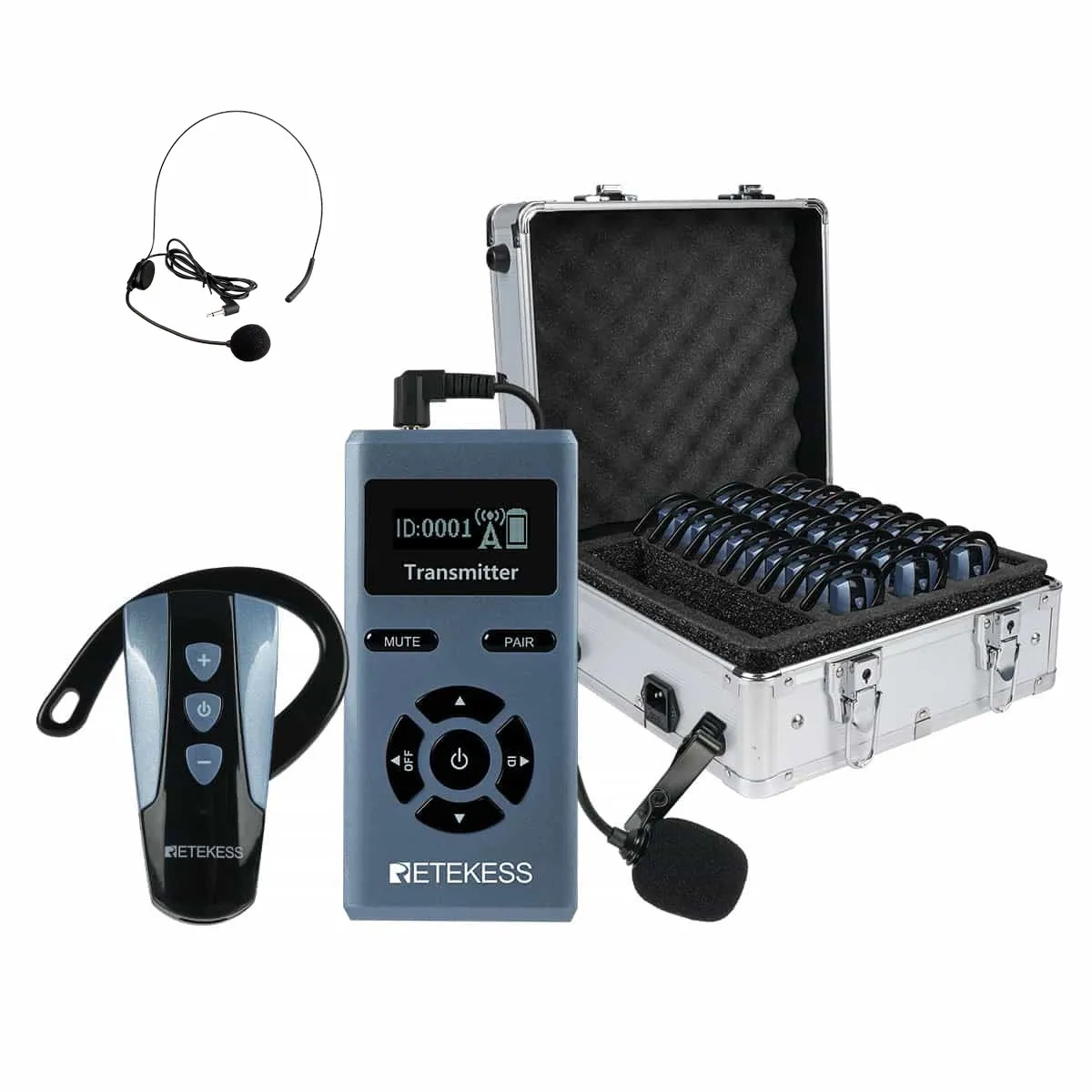
- Transmitter and visitor receivers
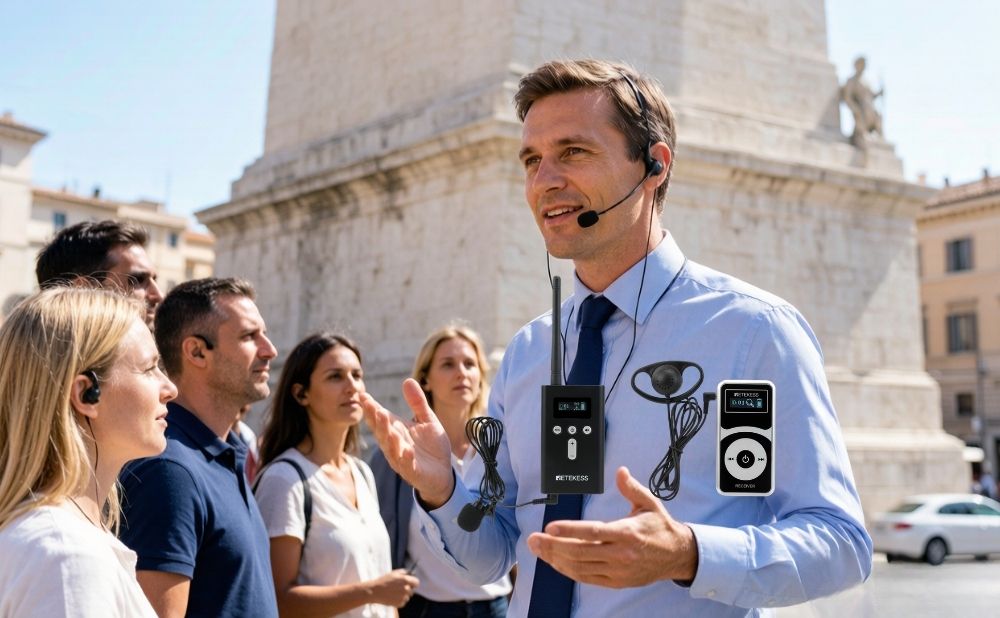
- Earphones or other compatible listening accessories
- Charging case and charging cables
- Power bank for extended tours
- Smartphone for maps, schedules, and emergency communication
- Digital tour materials and visitor information
The exact setup will depend on the type of tour, group size, and communication requirements. The goal is not to carry more equipment, but to have the tools needed for the services you actually offer.
How AI Translation Tour Guide Systems Can Help Expand Your Tour Business
For independent guides, expanding a business does not always mean finding completely new customers. It can also mean becoming capable of serving requests that previously required additional equipment, staff, or language support.
Consider a small international group visiting a city. They may want a private tour in their preferred language. Or a small company may need a guide for an overseas visitor group. A cultural organization may organize a multilingual tour without having its own interpretation equipment.
In these situations, an AI Translation Tour Guide System can reduce some of the practical barriers for the guide.
It can also help independent guides package their services more clearly. Instead of simply offering “a guided tour,” the service can include multilingual communication support as part of the tour experience.
This does not mean a translation system automatically creates more bookings. Rather, it can make a wider range of assignments feasible for a guide who already has the necessary local knowledge and tour skills.
Over time, that flexibility can become part of the guide's service offering.
Your Expertise Leads the Tour—Technology Helps You Deliver It
An AI Translation Tour Guide System does not replace the qualities that make a great tour guide valuable. Local knowledge, storytelling, organization, communication, and the ability to respond to visitors remain at the center of the experience.
Technology simply helps remove some of the practical barriers around those skills.
For independent guides, that distinction matters. The goal is not to let a device lead the tour. It is to give the guide another tool for serving multilingual visitors, handling different tour formats, and building a more flexible service.
Your expertise creates the experience. The right AI translation tour guide system can help you deliver that experience to more kinds of visitors.
FAQs About the AI Translation Tour Guide System
- What is an AI Translation Tour Guide System?
An AI Translation Tour Guide System combines translation and wireless tour communication to help guides communicate with visitors who speak different languages. It can provide translation support while allowing visitors to follow the guide during a tour.
- How can an AI translation system help freelance tour guides?
It can help independent guides support multilingual visitors, manage group communication, and handle different types of tours without relying entirely on separate translation or communication equipment.
- What types of tours can use an AI Translation Tour Guide System?
It can be used for sightseeing tours, private tours, museum and cultural tours, business visits, factory visits, school tours, and other multilingual group experiences.
- What should I look for in an AI Translation Tour Guide System?
Key factors include language coverage, translation capability, wireless range, audio clarity, group communication, ease of operation, and whether the system fits naturally into your tour workflow.
- Can Retekess TT136 support multilingual tours?
Yes. Retekess TT136 supports 120+ languages through online translation and combines translation with wireless tour communication. It also supports single and bilingual broadcast and dual-team translation for different group configurations.


![[18th Anniversary] 18 Years of Echoing Excellence: Making Communication Easier, Connecting Trust Beyond Borders](https://res.retekess.com/z_file/20260716/retekess-brand-story-making-communication-easier_20260716151044_7682.jpg)
![[18 Years in Wireless Communication] Silent Disco Systems Anniversary Celebration: Top-Selling Headphones & Event Mechanics Revealed!](https://res.retekess.com/z_file/20260713/18-years-in-wireless-communication-silent-disco-systems-anniversary-celebration_20260713175011_5749.webp)
![[Anniversary Carnival] Ding-dong! 18th Anniversary Mega Sale on Guest Paging & Calling Systems: Full Reveal of 12+ Products & Promo Rules!](https://res.retekess.com/z_file/20260713/18th-anniversary-mega-sale-on-guest-paging-calling-systems_20260713175257_0295.webp)
![[Retekess 18th Anniversary Teaser] Tour Guide System Exclusive Perks: Sneak Peek at Event Dates & Mechanics!](https://res.retekess.com/z_file/20260713/retekess-18th-anniversary-tour-guide-system-exclusive-perks--2-_20260713180135_6435.webp)
Follow Us
Pay With


 Google
 Amazon
Comments (0)