
Table of Contents

Business Negotiation Interpretation: How AI Boosts Human Interpreter Accuracy
- Retekess
- Sep 28, 2026
Translation errors in high-stakes business negotiations carry real costs. A single mistranslated contract term can create a dispute months later. A missed tone shift can signal aggression when the speaker meant caution. These are not hypothetical risks. They happen in real deal rooms every week.
Professional interpreters prevent most of these errors. But they face a hard physical limit. Research in cognitive neuroscience shows that simultaneous interpretation activates multiple brain regions at once. Measurable accuracy drops after 20 to 30 minutes of continuous output. The AIIC standard requires two interpreters rotating every 30 minutes for this exact reason.
AI tools do not solve this by replacing interpreters. They solve it by reducing the cognitive load on interpreters. Two functions matter most in negotiation settings: real-time terminology reference and recording playback with AI summaries.
Three Levels of Zero-Error Demand
High-stakes negotiations demand precision on three levels.
- Terminology precision.Legal contract language carries exact meanings. Industry jargon — product names, financial instruments, technical specifications — must map one-to-one. Paraphrasing a defined term changes the deal.
- Tone precision.Negotiators use register deliberately. A subtle shift from formal to casual can signal flexibility. A hesitant pause can indicate disagreement. The interpreter must transmit these signals, not just the words.
- Real-time precision.Negotiations are dynamic exchanges, not scripted monologues. Speakers interrupt, backtrack, and pivot. The interpreter has no pause button to verify a term. Every decision happens in seconds.
MirrorCaption's risk framework places contract negotiations, regulatory discussions, and investor communications in the highest tier. These scenarios require a human-verified record. AI can provide real-time context, but it cannot act as the sole authority.
The Interpreter's Cognitive Bottleneck
The interpreter's bottleneck is not language ability. It is cognitive bandwidth.
Simultaneous interpretation requires six tasks at once: listen, comprehend, reformulate, retrieve vocabulary, speak, and self-monitor. Gile's Effort Model describes how these tasks compete for finite mental resources. When one task spikes — a sudden technical term, a fast speaker, poor room acoustics — the others suffer.
Poor acoustics make this worse. HI-COM's analysis shows that bad room sound diverts cognitive resources to the basic task of hearing. The interpreter spends energy just catching words, leaving less for analysis and formulation.
Consecutive interpretation adds note-taking pressure. The interpreter listens to a long passage, takes structured notes, then delivers the full translation from memory and notes. A missed detail in the note phase becomes an omission in the output.
The result is measurable fatigue. Accuracy declines. Errors increase. Vocal strain sets in. InterScribe's burnout research lists reduced accuracy, increased errors, and last-minute cancellations as direct outcomes of unmanaged interpreter fatigue.
AI Assistance: Two Core Functions
AI assistance targets these pain points directly. Two functions deliver the most value in negotiation settings.
Terminology Reference Reduces Retrieval Load
Before the negotiation, the team prepares a terminology sheet: company names, product names, defined contract terms, financial metrics, and industry-specific jargon. During the negotiation, the interpreter keeps this sheet visible on a secondary screen for quick reference.
This matters because term retrieval is one of the biggest cognitive drains on interpreters. When a speaker suddenly uses a rare technical term, the interpreter's brain scrambles to find the right equivalent. That scramble takes bandwidth away from listening to the next sentence. A pre-prepared term sheet eliminates the scramble.
KUDO's Interpreter Assist system takes this further with automatic glossary creation plus real-time term suggestions. Aness AI's 2026 comparison test found that pre-registering a glossary is the single biggest factor in AI translation accuracy for specialized content.
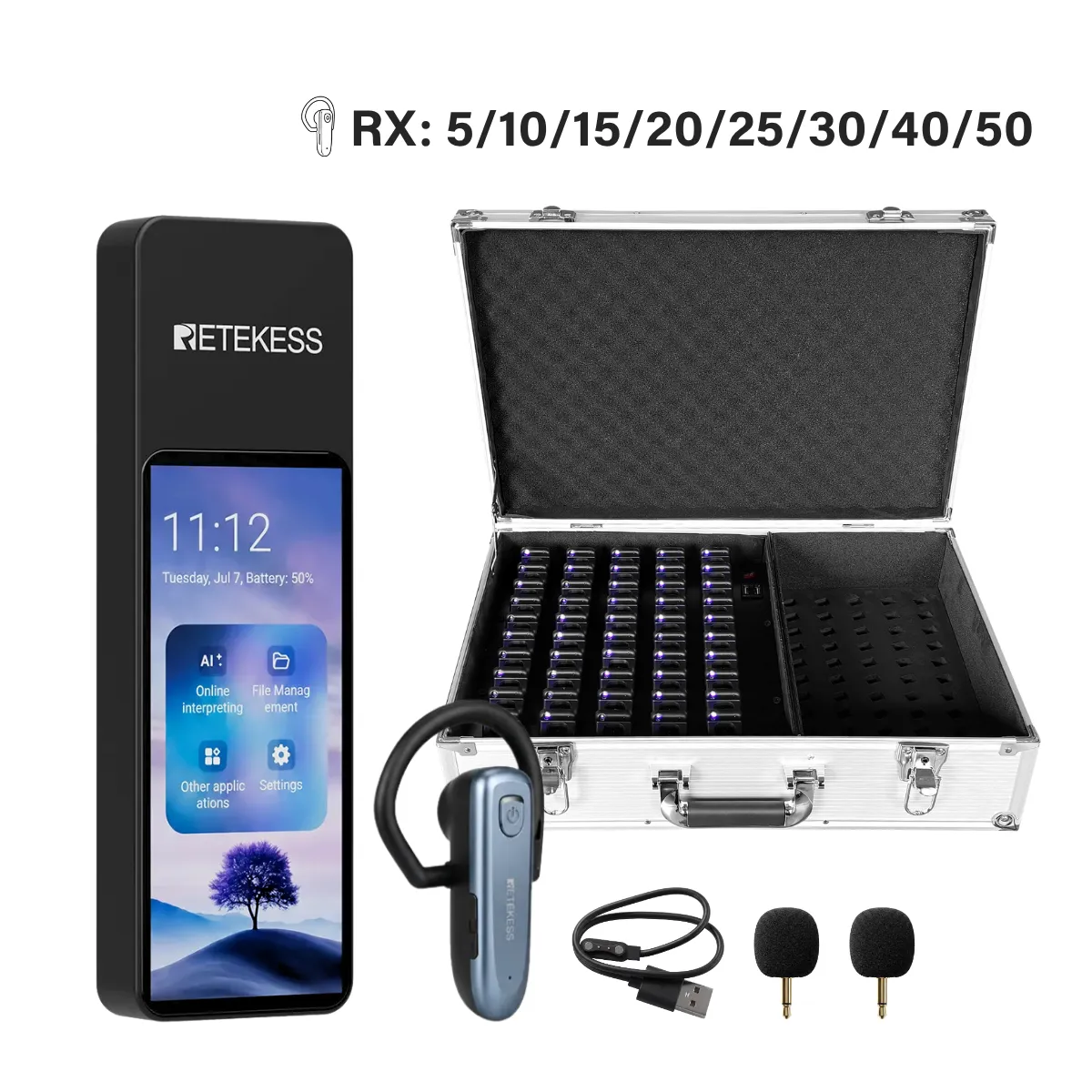
The TT136 supports this workflow with 120-language AI translation powered by Microsoft and Google engines. It automatically recognizes up to 10 spoken languages and switches translation targets without manual input. The interpreter can monitor the AI output on the 3.99-inch touchscreen as a real-time reference while delivering their own translation. Because the TT136 runs on Android and supports APK installation, interpreters can also load third-party terminology apps alongside the translation interface.
Recording Playback Creates a Verification Layer
Every negotiation produces critical details: concessions made, terms proposed, deadlines agreed, and questions left open. Human memory is unreliable for these details. Notes are incomplete. A full recording solves both problems.
The TT136 records the entire negotiation to local storage. After the meeting, the interpreter and legal team can replay specific sections to verify exact wording. The AI summary function extracts key points, action items, and agreed terms automatically.
This changes the post-negotiation workflow. Manual transcription takes roughly four hours per hour of audio, according to industry standards. AI transcription reduces that to minutes. The interpreter spends time reviewing and correcting, not typing.
Omi AI's legal use case analysis highlights the practical value: capture the negotiation call, then ask the AI to list concessions, unresolved clauses, and the counterparty's exact commitments. Directors can verify wording without replaying hours of audio. Assistants send accurate recap emails.
Local storage matters for confidentiality. High-stakes negotiations often involve non-disclosure agreements. The TT136 stores recordings on the device itself, with TF card expansion up to 128GB. No cloud upload is required.
Device Configuration:
TT136 — The AI Assistance Hub
The TT136 serves as the interpreter's real-time AI reference and recording tool during high-stakes negotiations.
- 120-language real-time AI translation with automatic language detection
- Real-time AI translation display on a 3.99-inch touchscreen for interpreter reference
- Local recording with playback and AI summaries
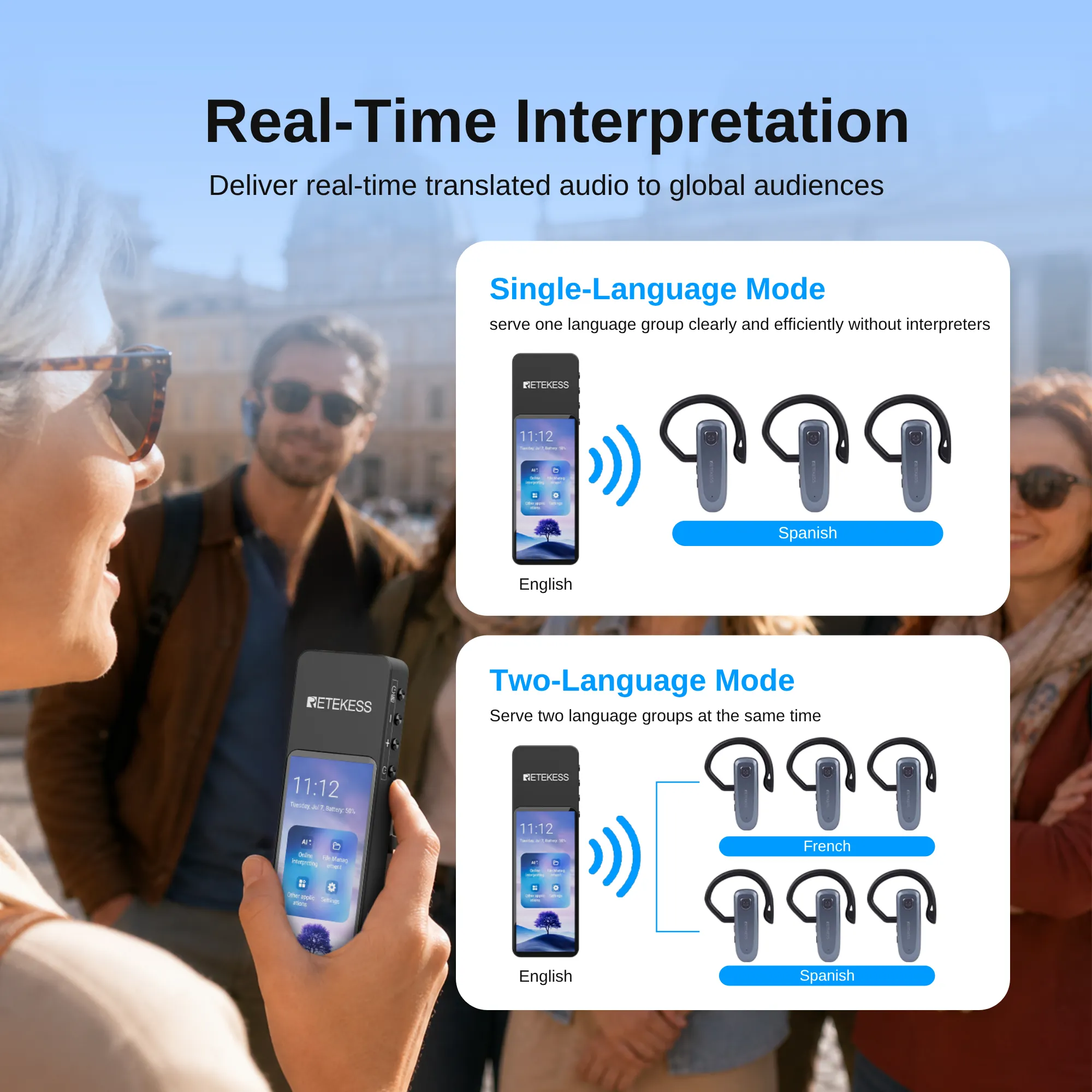
- Dual-language output: broadcasts up to 2 target languages simultaneously, or original audio plus one translated language
- 5mm audio input/output for connecting external audio sources
- Android system with APK support for third-party terminology tools
- 2GB + 16GB storage, TF card expansion up to 128GB
- 4G wireless transmission with 200-meter range, 20-hour transmitter battery
The interpreter uses the TT136 as a reference display during the negotiation. They do not rely on it for the final translation. They use it to verify terms, catch details, and maintain a complete record.
The TT136 also supports two-way group auto-translation for direct cross-language conversations. Each participant wears a lightweight earhook receiver. When one party speaks, the device translates and broadcasts in real time. When the other party responds, the same process runs in reverse. The interpreter monitors both directions and intervenes when the AI output needs correction or cultural context.
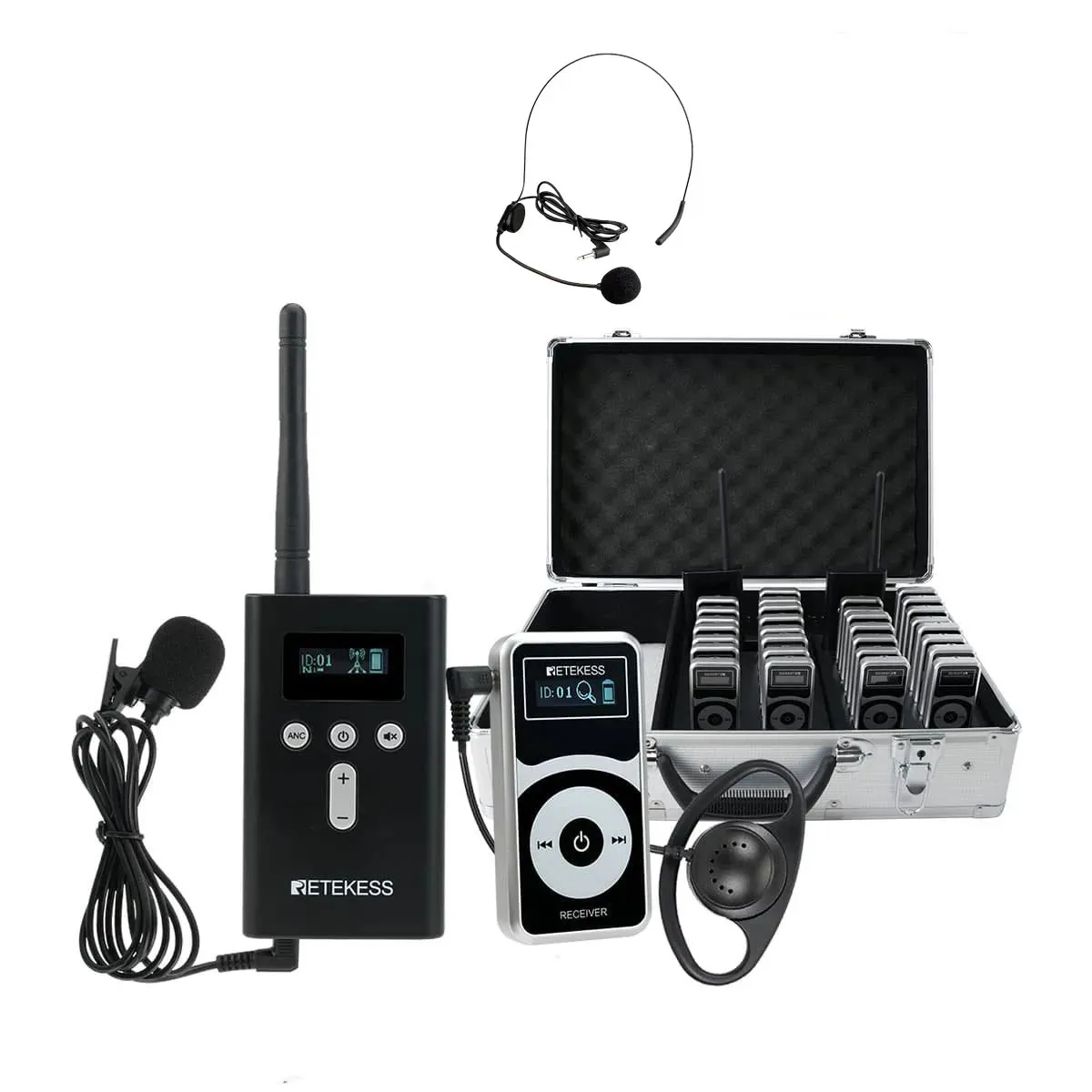
TT122 — The Audio Distribution Layer
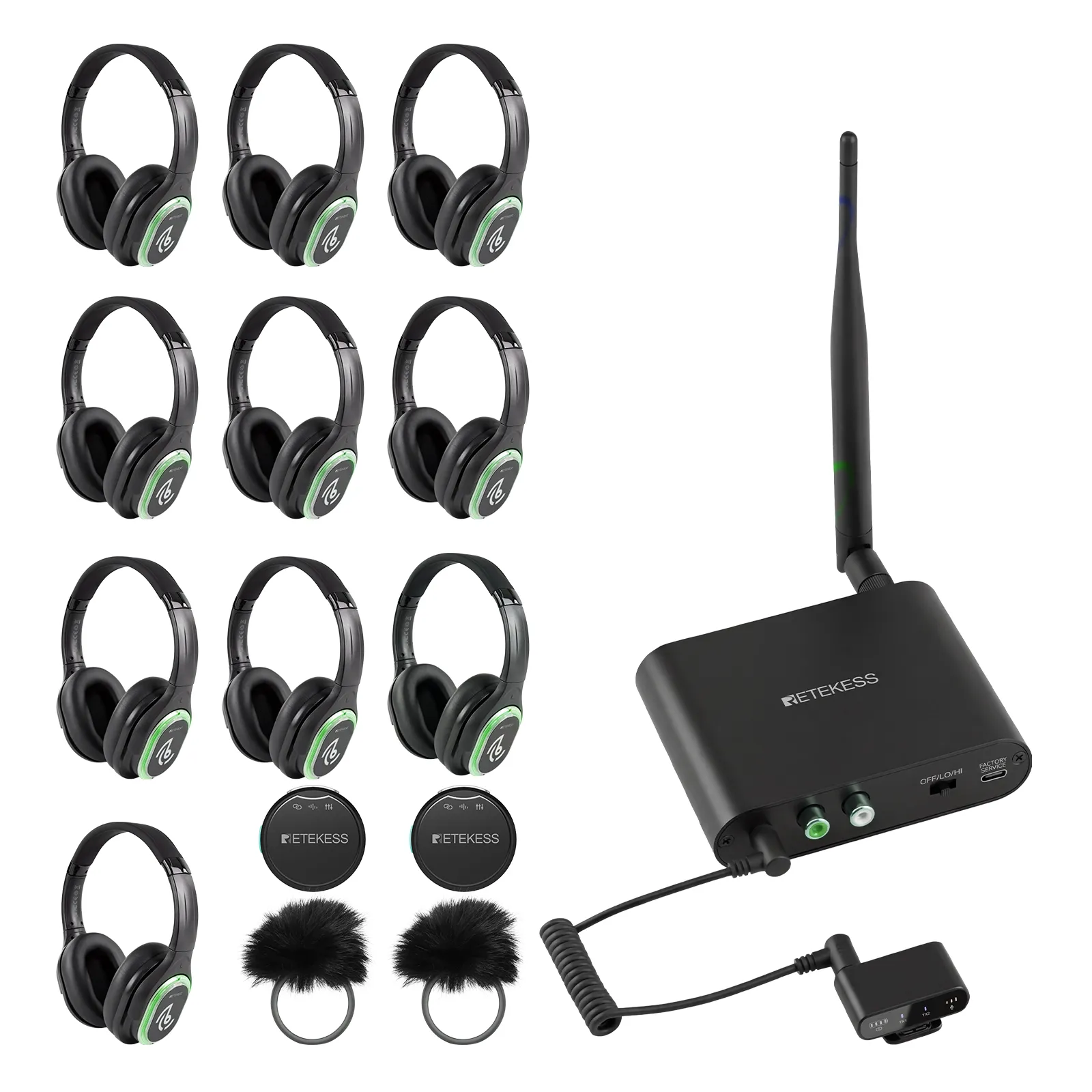
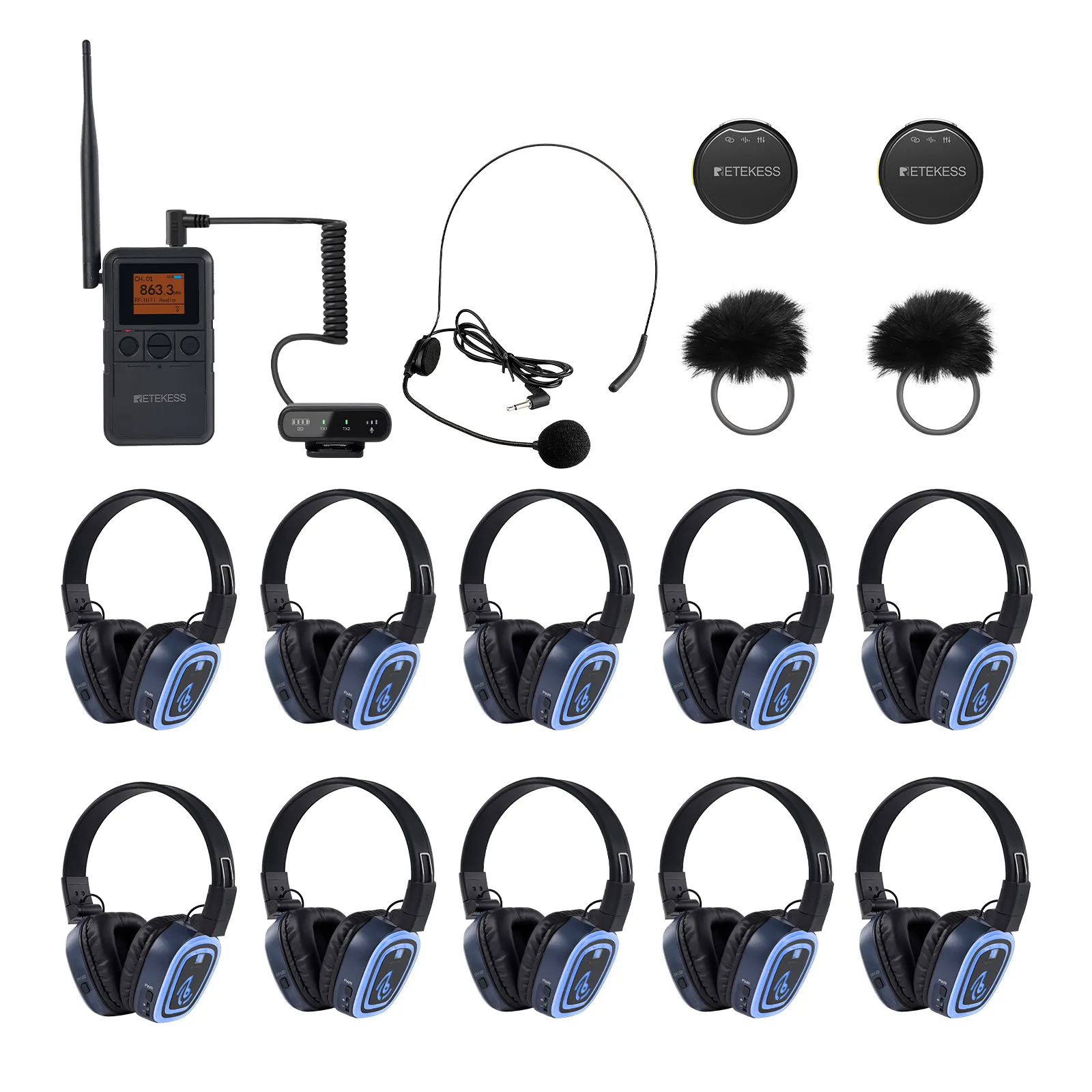
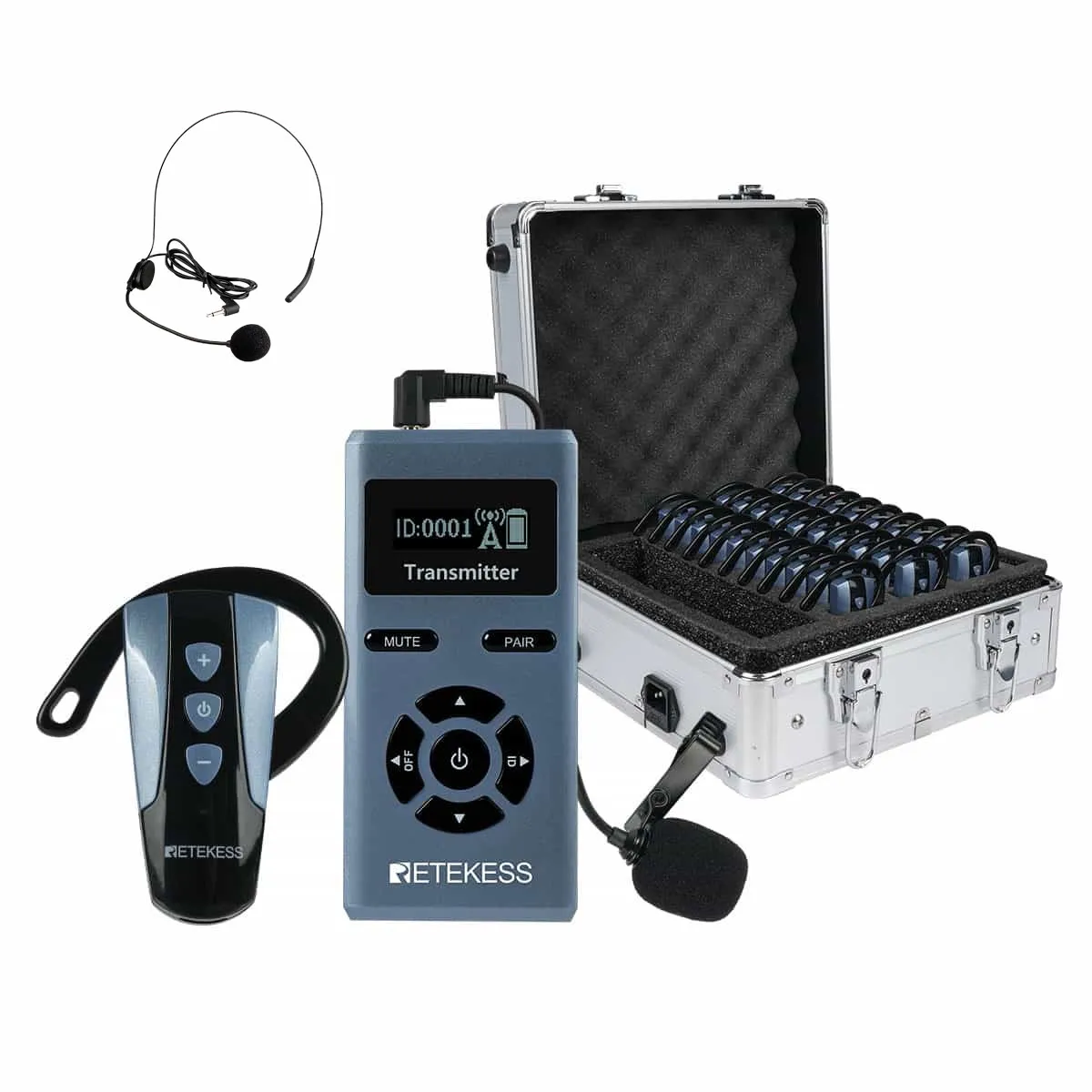
The TT122 is a professional wireless audio distribution system designed for multilingual conferences, negotiations, and guided tours.
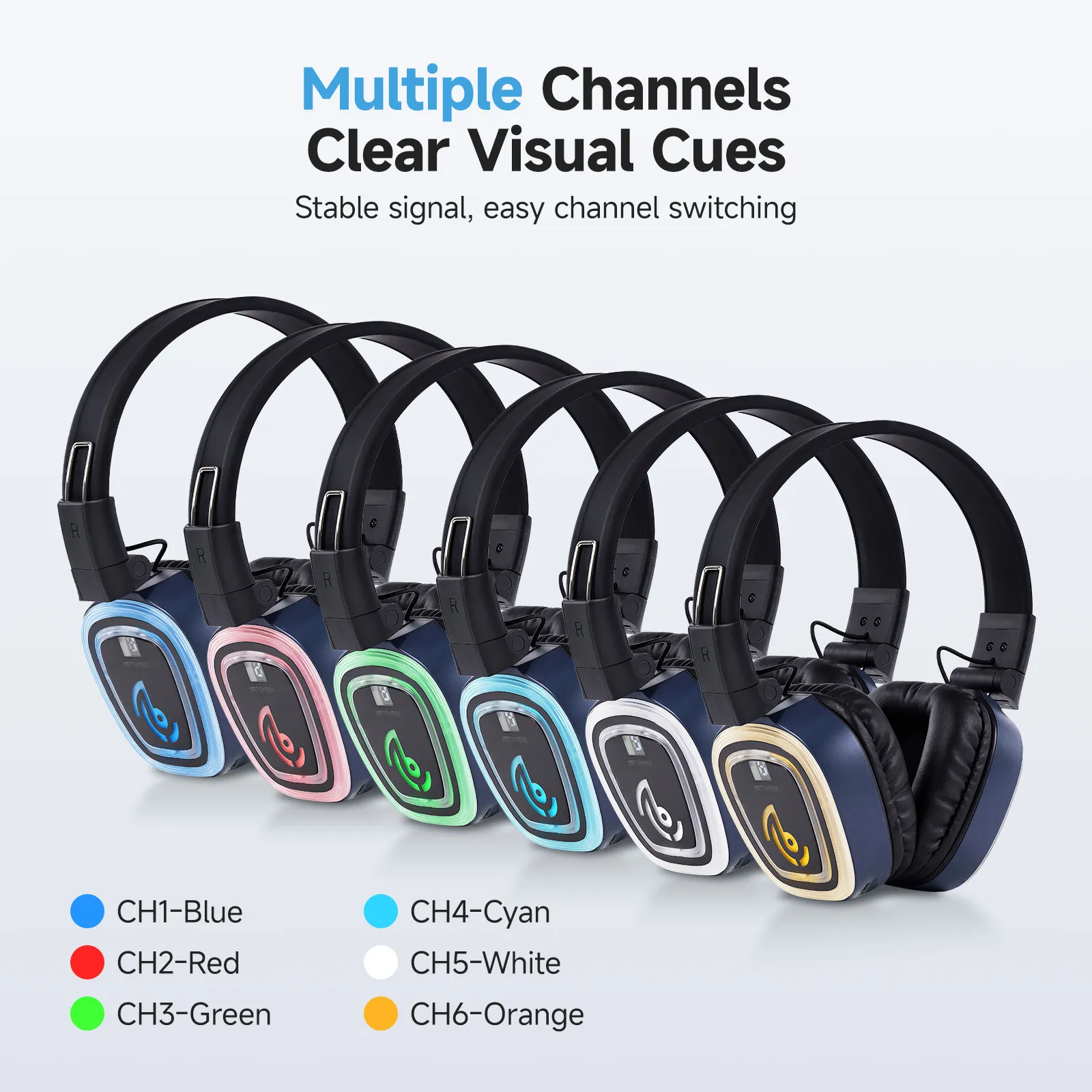
- 4GHz global frequency with 36 channels
- 150-meter open-air range
- 12-hour transmitter battery, 18-hour receiver battery
- 70g lightweight receivers
- AUX input for connecting external audio sources
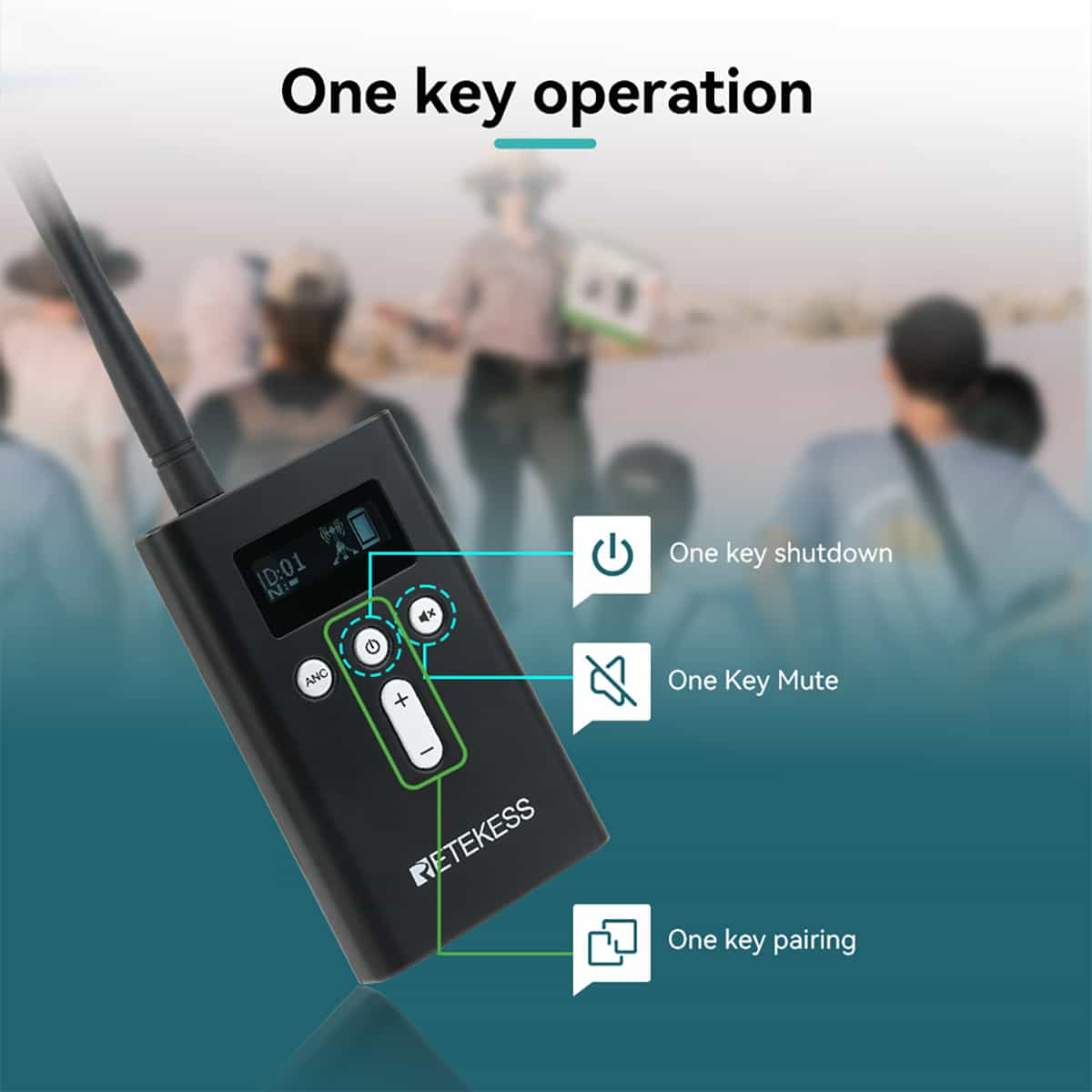
- One-button mute and one-button power-off for all receivers
- Key lock function and automatic pairing
In negotiation settings, the TT122 distributes audio to all participants wirelessly. Each attendee wears a receiver tuned to their assigned channel. The 36-channel capacity supports multilingual delegations without cross-talk. The one-button mute function allows the moderator to silence all receivers instantly during private side discussions.
The TT122 is ideal for large negotiation rooms, factory visits, and multi-party meetings where audio needs to reach every participant clearly. Its long battery life covers full-day sessions without mid-event charging.
Final Thoughts
High-stakes negotiations demand translation accuracy that approaches perfection. Human interpreters deliver that accuracy, but they operate within real cognitive limits. Twenty to thirty minutes of continuous output produces measurable fatigue. Term retrieval, note-taking, and post-meeting documentation consume bandwidth that should go to tone, intent, and cultural nuance.
AI tools do not eliminate the need for a skilled business negotiation interpreter. They eliminate the cognitive overhead that drags an interpreter's performance down. Real-time translation reference removes the term retrieval scramble. Recording playback creates an objective verification layer. AI summaries turn hours of manual transcription into minutes of review.
The most accurate negotiation interpretation comes from a human interpreter using AI tools — not from AI alone. The interpreter remains the decision-maker. The tools handle the busywork.







Follow Us
Pay With


 Google
 Amazon
Comments (0)