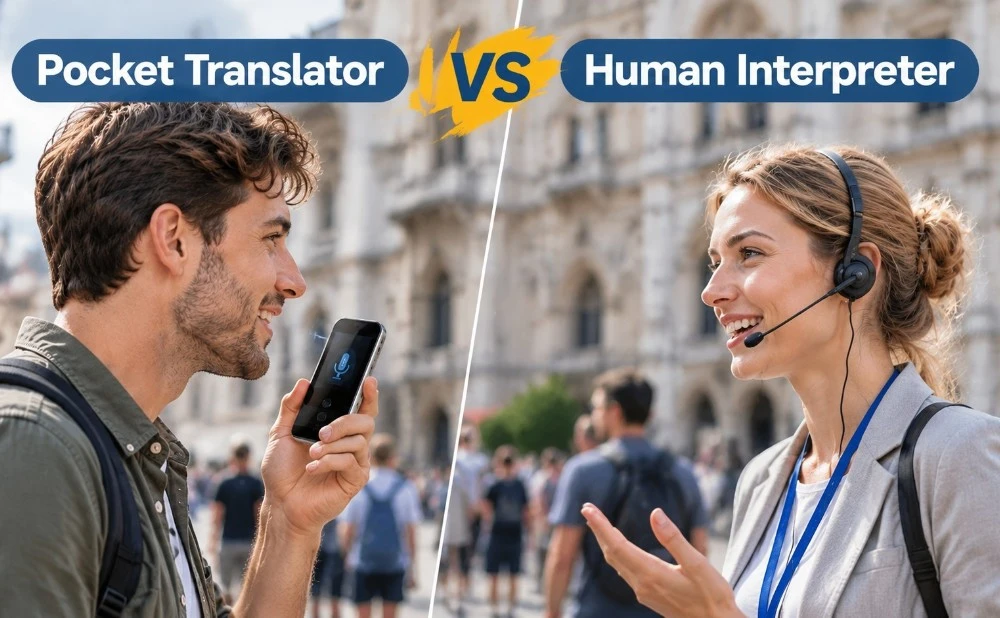
The debate around AI translation and human interpreters is often framed too simply. People ask whether AI will replace interpreters, as if the answer must be either yes or no. In reality, the situation is more practical than that. AI translation cannot replace human interpreters in every scenario, but it can handle a very large share of everyday translation needs. For many events, meetings, and guided communication settings, that share is close to 80%.
That does not mean human interpreters are no longer needed. It means the market is changing. AI translation is becoming the default solution for many common situations because it is fast, flexible, and easy to deploy. Human interpreters still matter in high-stakes, highly nuanced, or formal settings where accuracy and context are essential.
The real question is not whether AI can replace interpreters completely. The real question is: which translation method fits which use case?
The 80% vs. 20% Framework
A useful way to think about the market is this:
- AI translation covers most of the common, routine, lower-risk use cases.
- Human interpreters remain essential for the complex, formal, and high-stakes ones.
The “80%” is not a strict mathematical number. It is a practical way of saying that most translation needs are not highly specialized. They are everyday situations where the goal is to get the message across clearly enough and quickly enough.
The remaining “20%” is where precision matters more than convenience. These are the moments where a small misunderstanding can create a big problem. That is where human interpreters still lead.
This framework is useful because it helps people stop asking, “Can AI replace interpreters?” and start asking, “Is my event part of the 80% or the 20%?”
he 20% Where You Still Need a Human Interpreter
Human interpreters do not just swap words from one language to another. They reconstruct meaning, adjust tone, repair miscommunication, and navigate cultural nuance in real time. For the 20% of scenarios where accuracy matters more than cost, a human remains irreplaceable.
When a human interpreter is non-negotiable
- Legal, compliance, and contractual meetings
A single mistranslated term can change obligations, liability, or pricing. AI does not understand legal consequence; it only predicts the next likely word.
- Medical, safety, and high-risk technical briefings
In safety training, patient consultations, or equipment operation sessions, a misheard instruction can lead to injury. Human interpreters pause, verify, and restate until comprehension is confirmed.
- Culture-heavy keynote speeches and brand storytelling
Idioms, humor, local references, and rhetorical choices do not translate literally. A human interpreter rewrites the idea so it lands in the target language — AI often delivers the words but loses the point.
- Long, high-density keynote presentations
Professional simultaneous interpreters work in 20–30 minute shifts because the cognitive load is extreme. AI can run longer, but accuracy drifts on long technical passages, dense arguments, and fast speakers.
- High-interaction roundtables and negotiations
When people interrupt, talk over each other, change direction mid-sentence, or use sarcasm, AI loses track. Humans follow turn-taking, tone, and unspoken context automatically.
What human interpreters do that AI cannot
- Reconstruct intent, not just words.A phrase like “we’ll circle back on this” has no literal equivalent in many languages; a good interpreter restates the meaning.
- Calibrate for culture.Formality levels, honorifics, and polite refusal patterns are invisible to AI but critical to business outcomes.
- Correct in real time.If the audience looks confused, a human interpreter slows down, rephrases, or adds a short clarifying note. AI keeps going, even when it is wrong.
The 80% AI Handles Perfectly Well
Most day-to-day multilingual contact is not high-stakes negotiation or technical deep dive. It is short, practical, and conversational — exactly the zone where modern AI translation has become reliable enough to use.
These are the 80% use cases where an AI translation device is not just “good enough” — it is often more practical than scheduling a human interpreter.
Where AI translation excels
- Trade show booth and reception conversations
Short introductions, product overviews, pricing questions, and follow-up scheduling use common business vocabulary. For quick, rotating visitors, pulling out a portable device is faster and cheaper than staffing a full-time interpreter at the booth.
- Routine factory and facility tours
Standard walkthroughs, equipment introductions, and basic Q&A follow predictable scripts. An AI device paired with a wireless audio system lets one guide serve small groups of international visitors without a dedicated interpreter.
- Small one-on-one business meetings
For introductory meetings, site visits, and casual discussions, AI keeps the conversation moving. It is not a replacement for contract negotiation, but it removes the language barrier for relationship-building.
- Front desk and visitor welcome services
Multilingual front-desk support, wayfinding, and basic information requests are ideal for AI. It handles short, simple exchanges consistently across several languages.
- Informal networking and meal conversations
Social time is where relationships form, but it is also the hardest to justify hiring an interpreter for. AI devices let participants have basic, friendly conversation without a third person in the room.
Why these scenarios work for AI
- High tolerance for imperfection.If one sentence comes out awkwardly, people ask again.
- Everyday vocabulary.No specialized legal or medical terminology.
- Instant availability.No booking lead time, no hourly minimums, no travel costs.
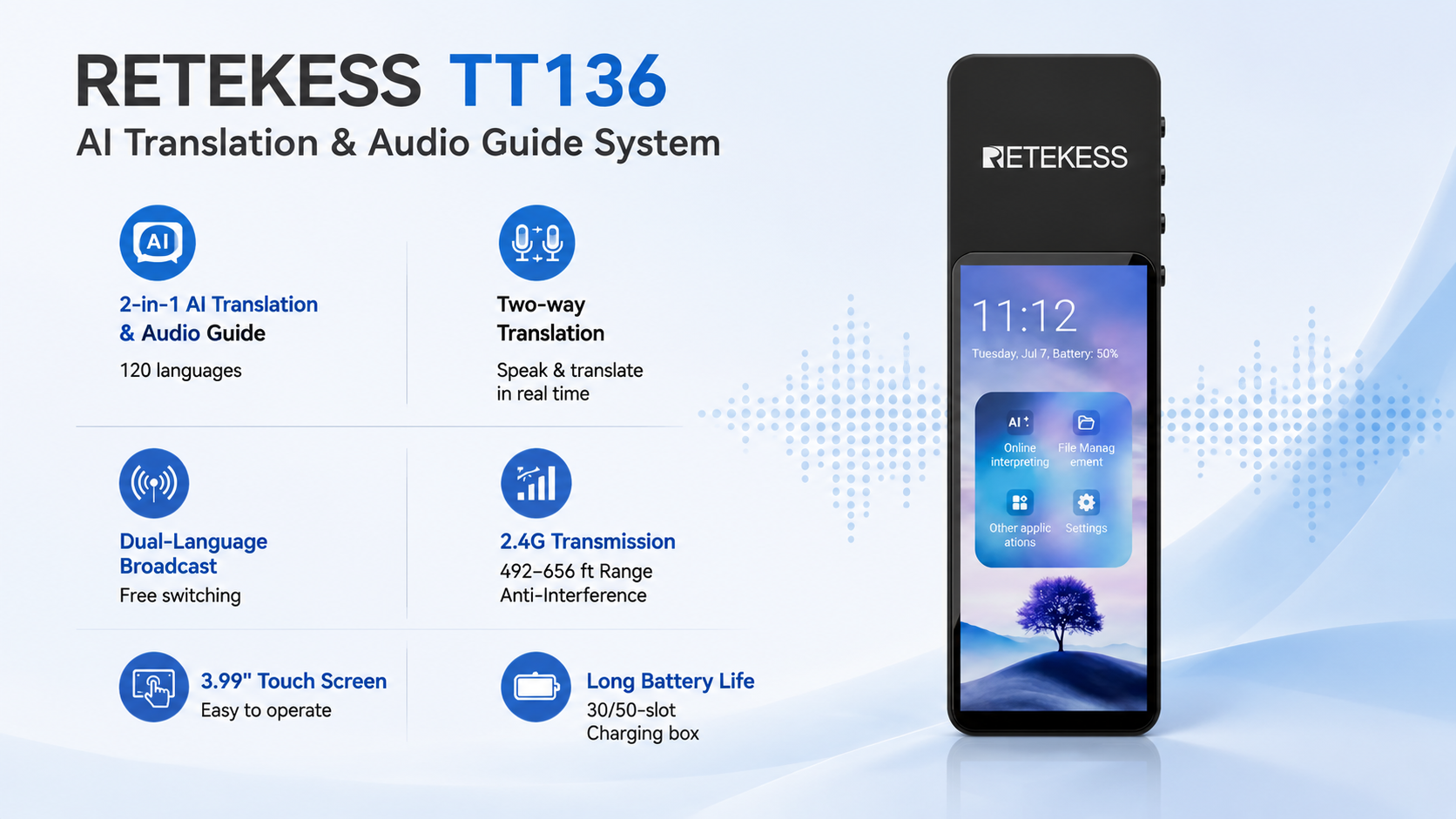
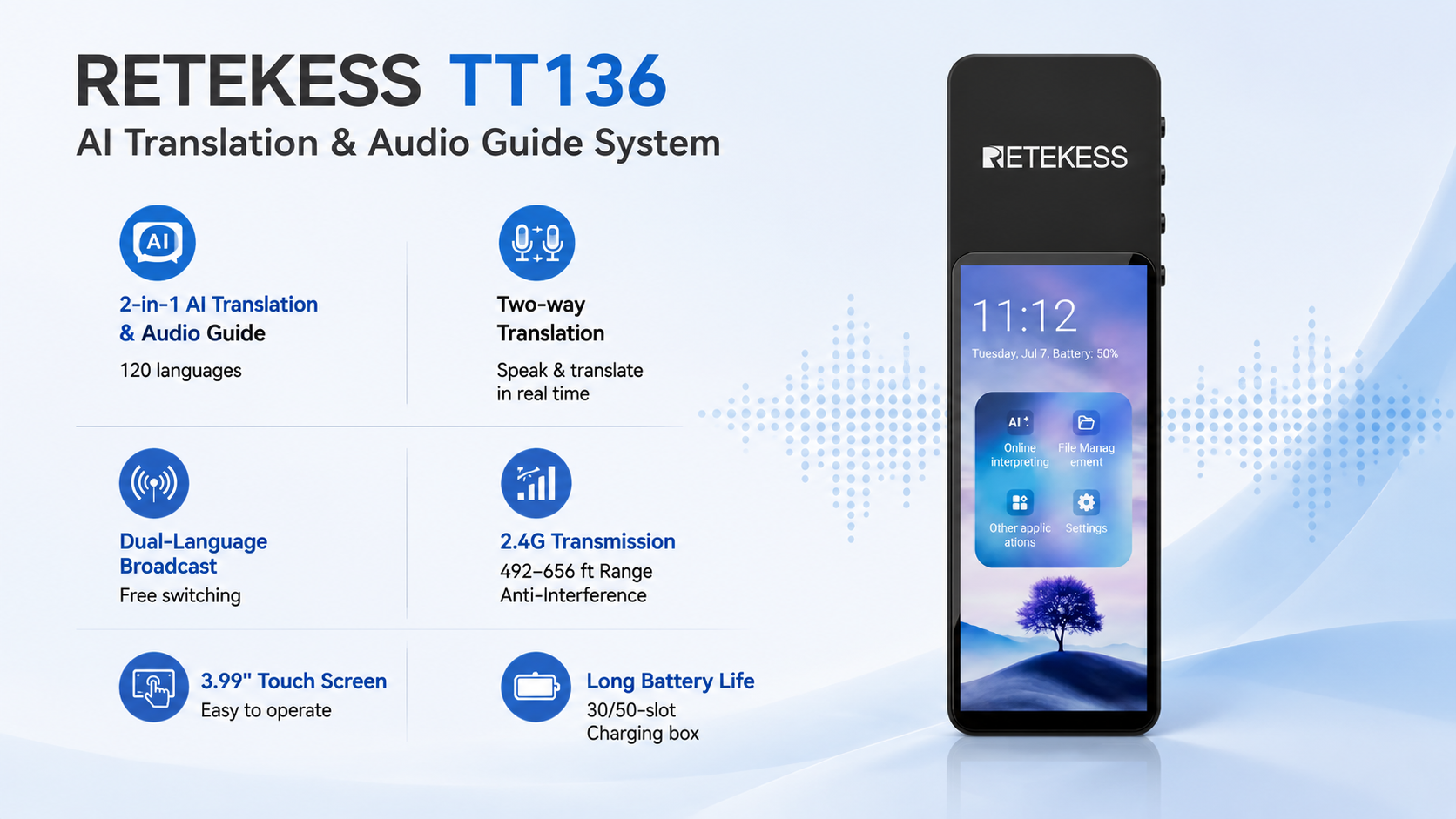
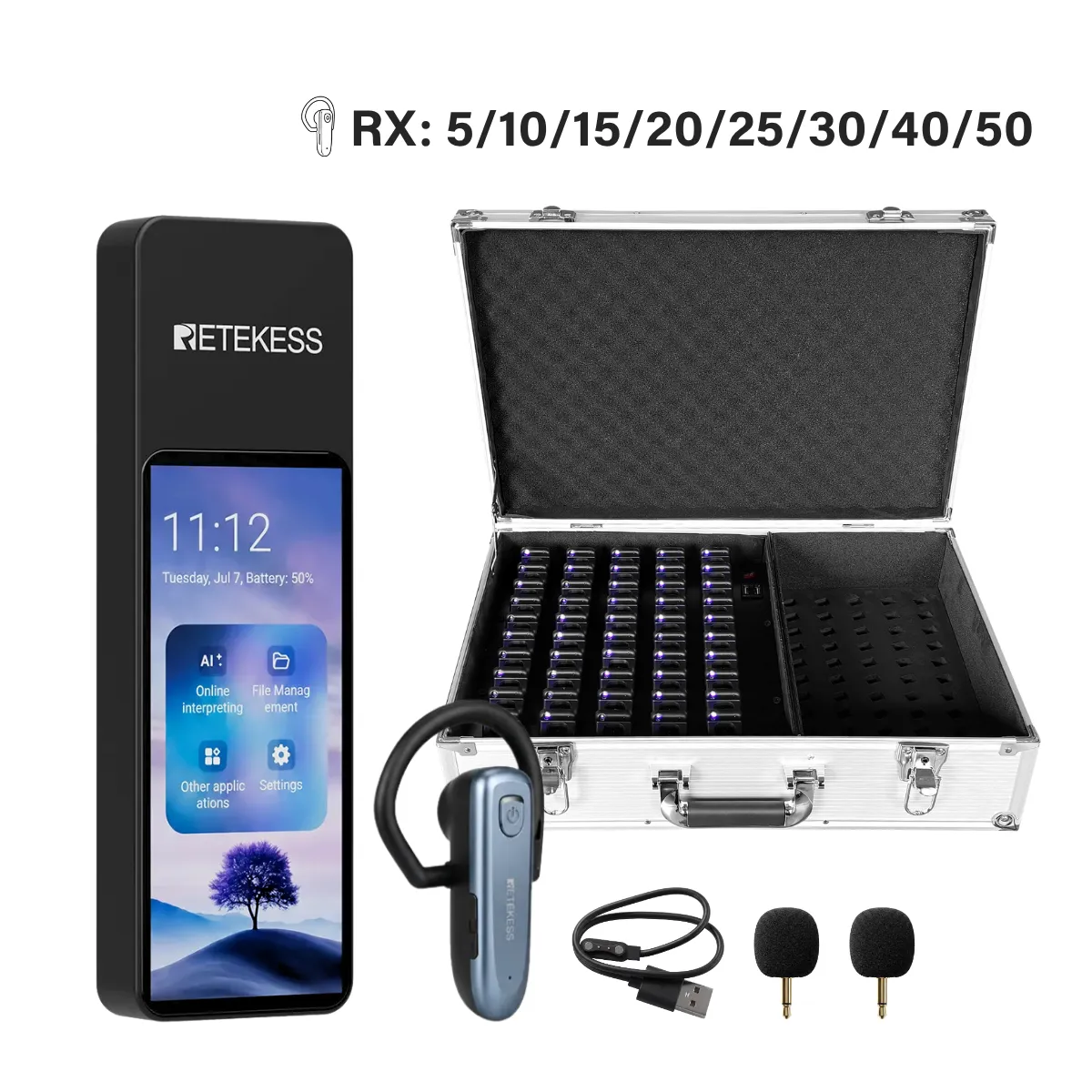
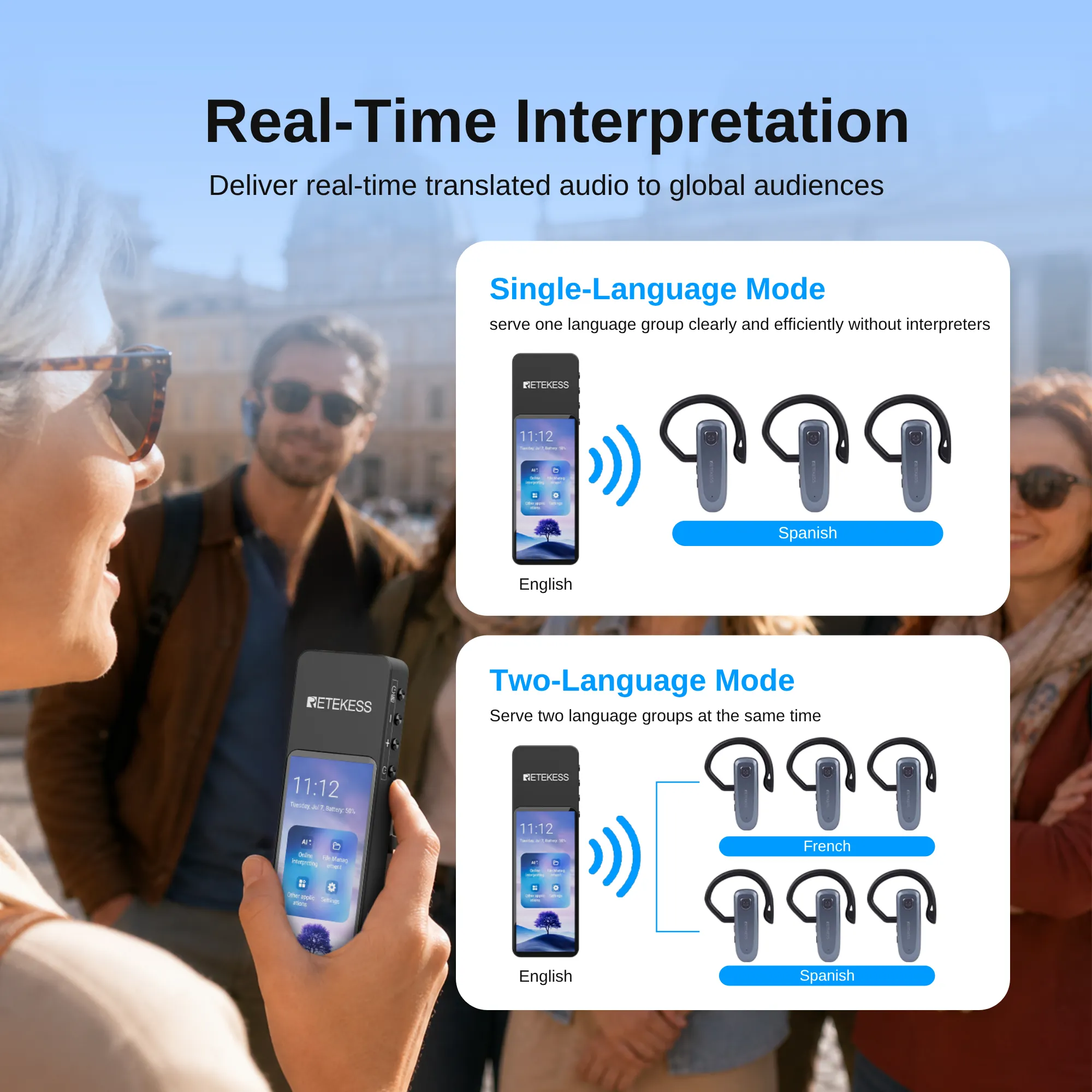
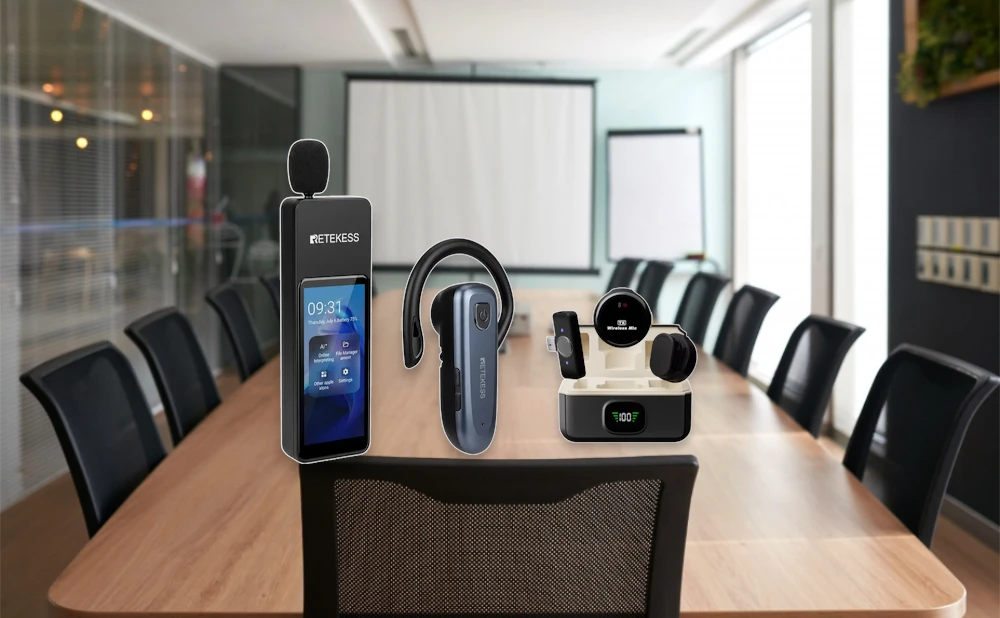
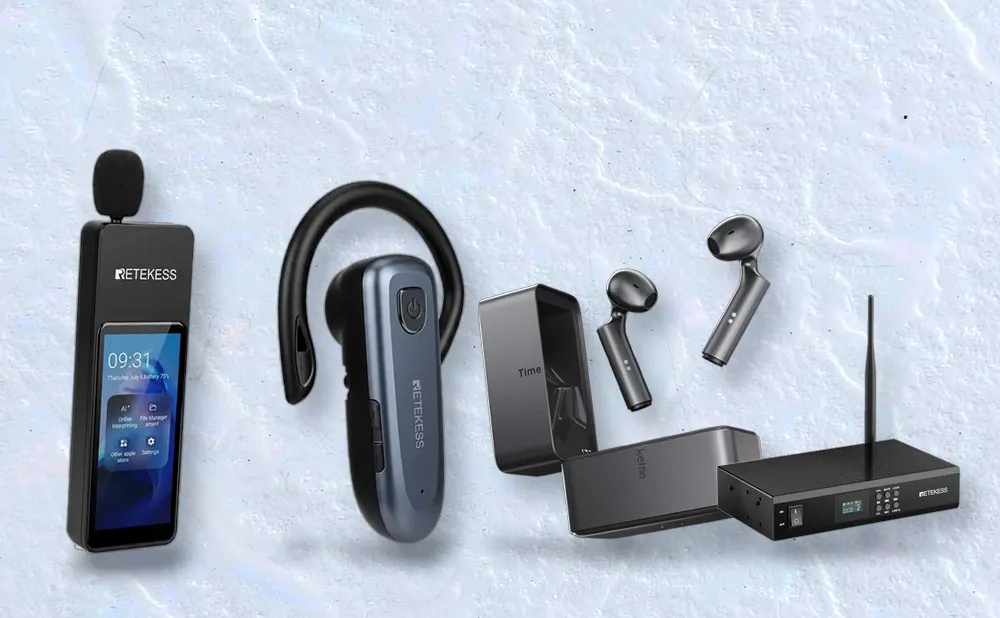
- Dramatically lower cost.One portable AI translation device like the Retekess TT136 can cover dozens of short conversations per day at a fraction of a human interpreter’s day rate.
The Smart Mix: Combine Both for One Event
The best setups do not choose AI or human. They layer them by risk level. A typical multi-day industry trade show, for example, might use three tiers:
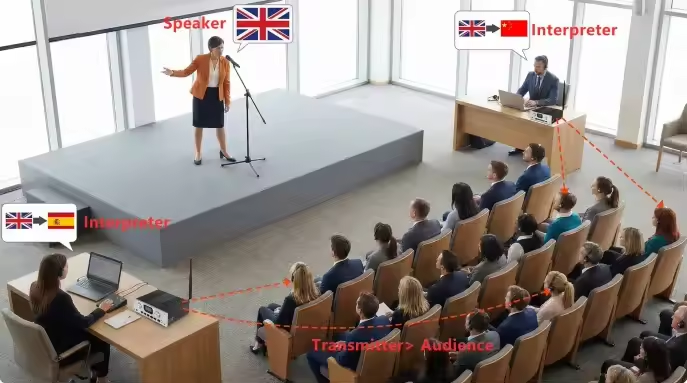
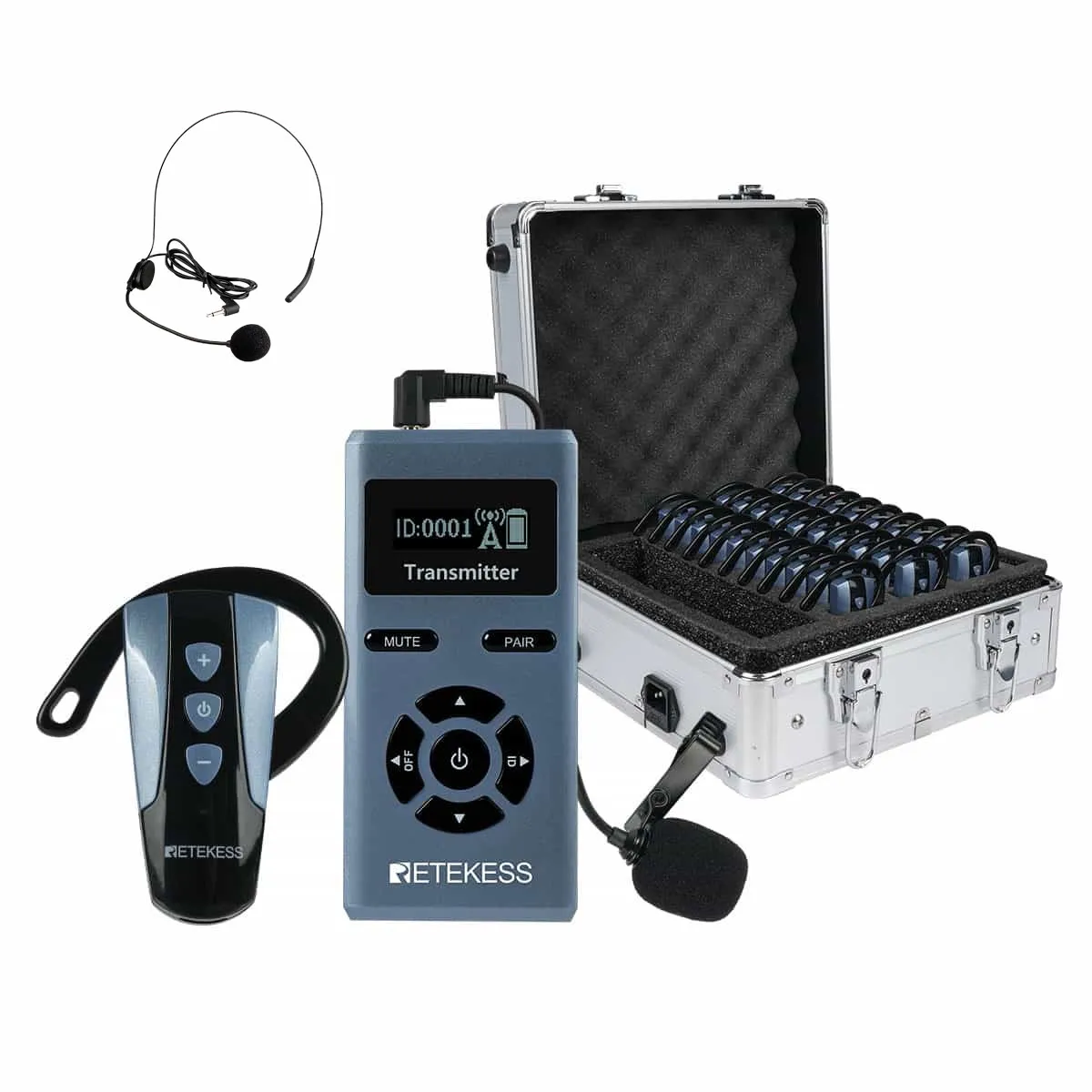
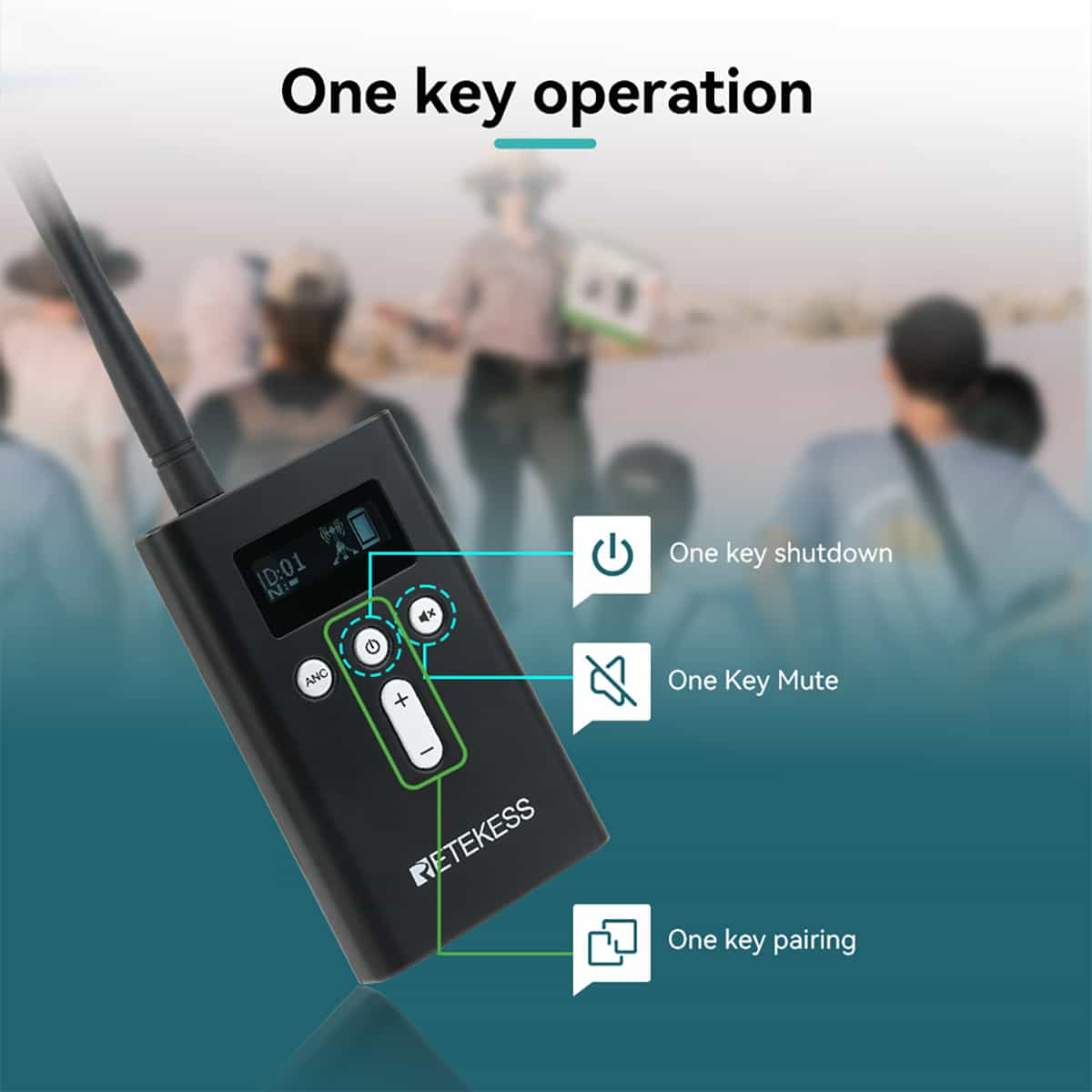
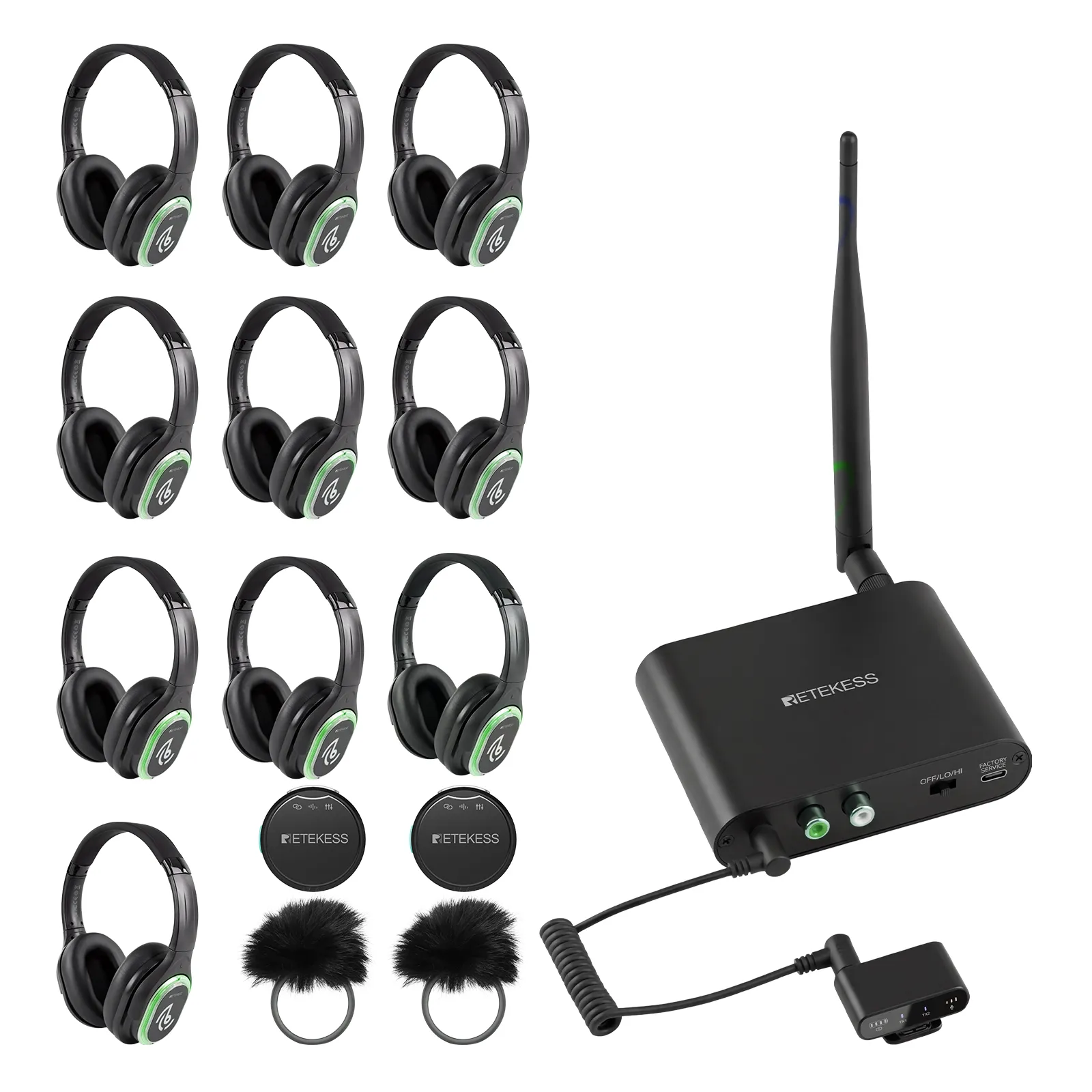
- Main stage keynotes (high-stakes, long-form):Professional human interpreters working through a equipment for simultaneous translation such as the Retekess T130T or Stable audio, dedicated translator position, and formal delivery match the importance of the content.

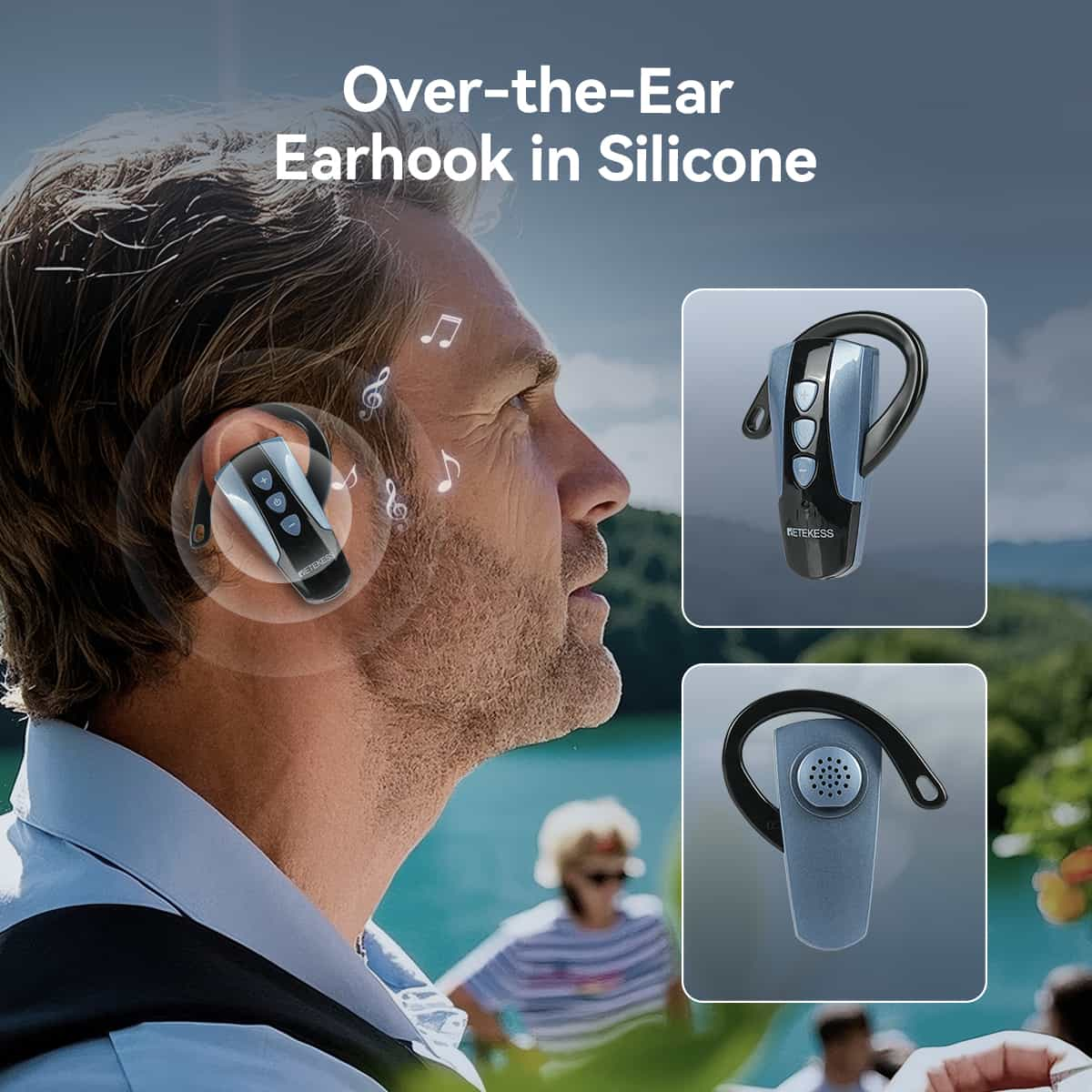
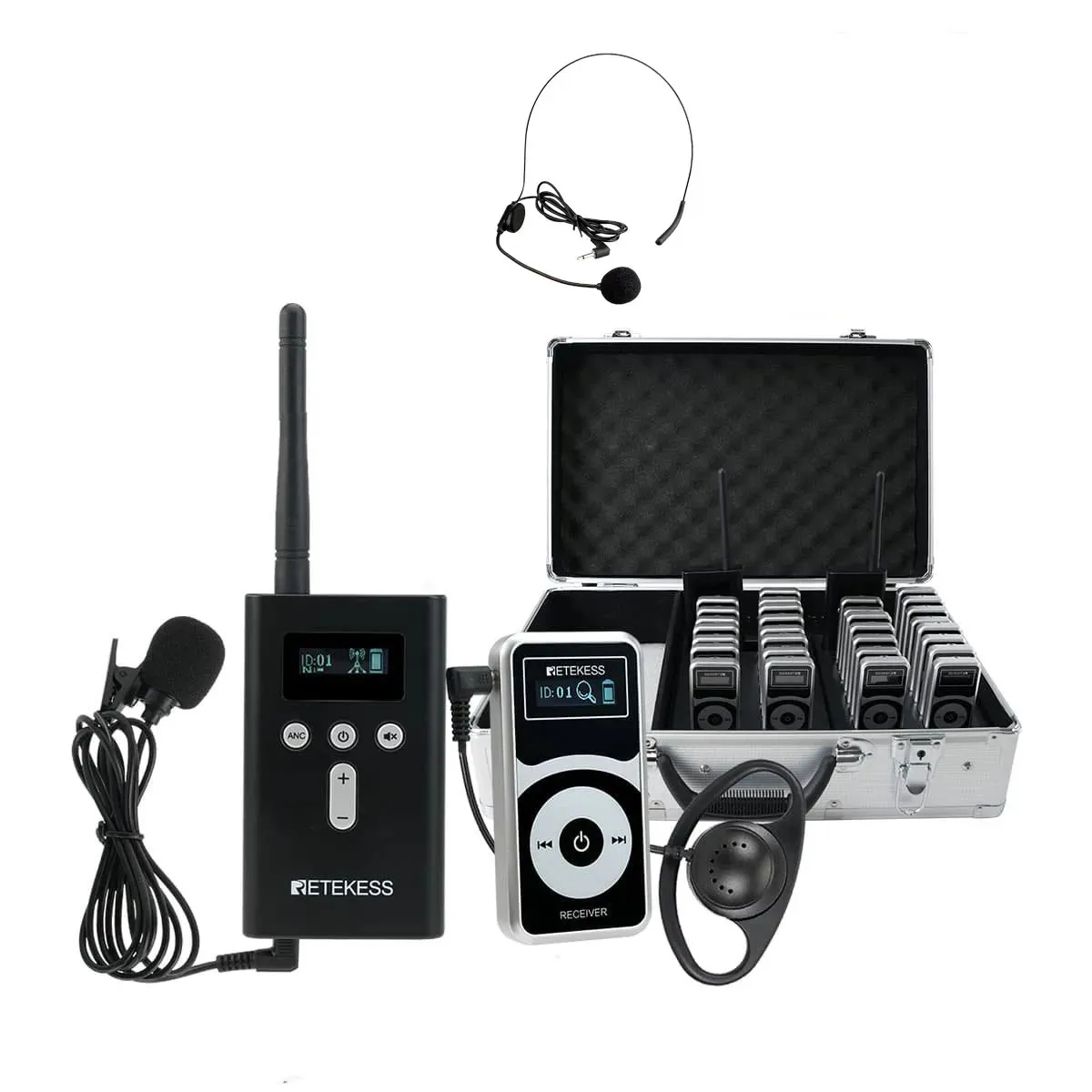
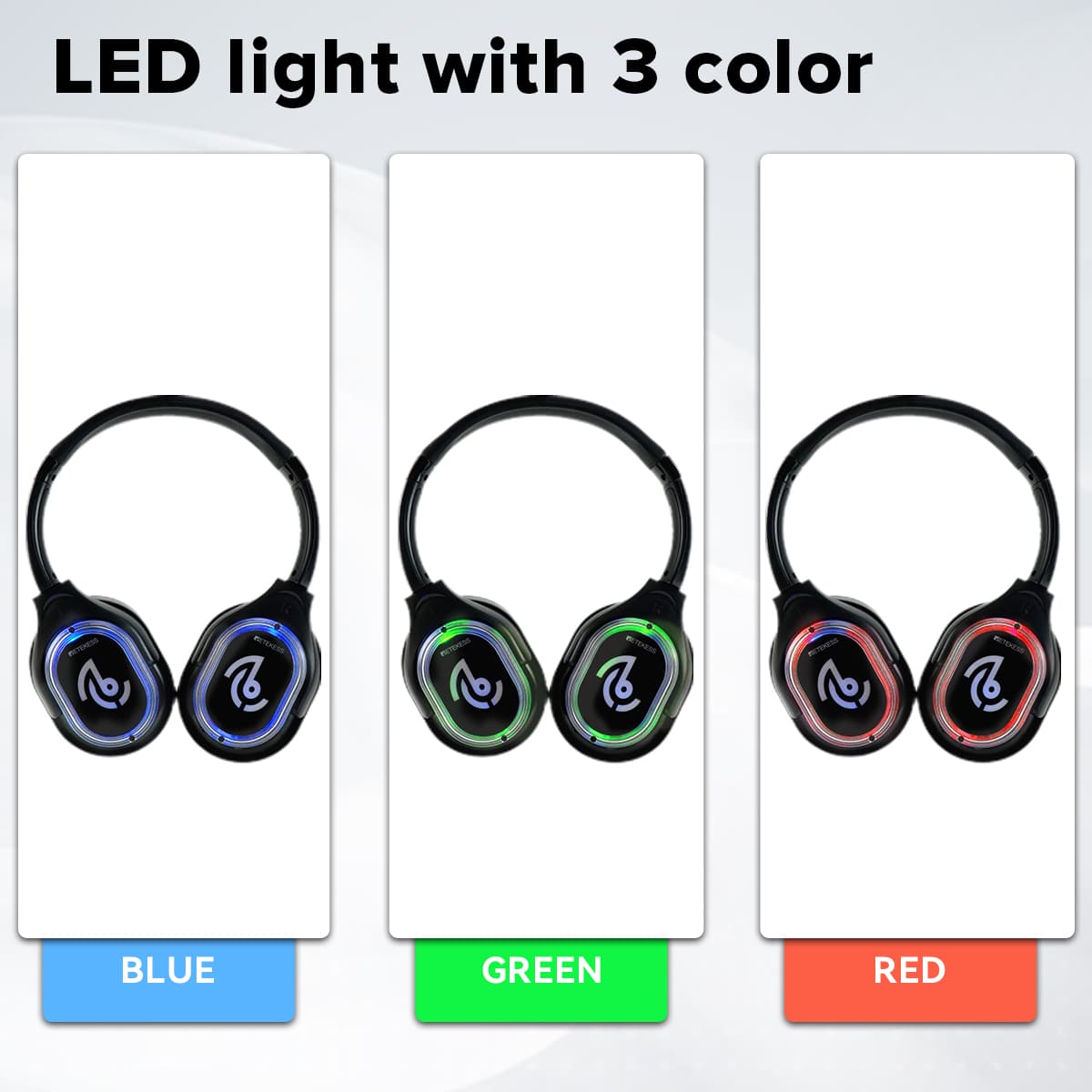
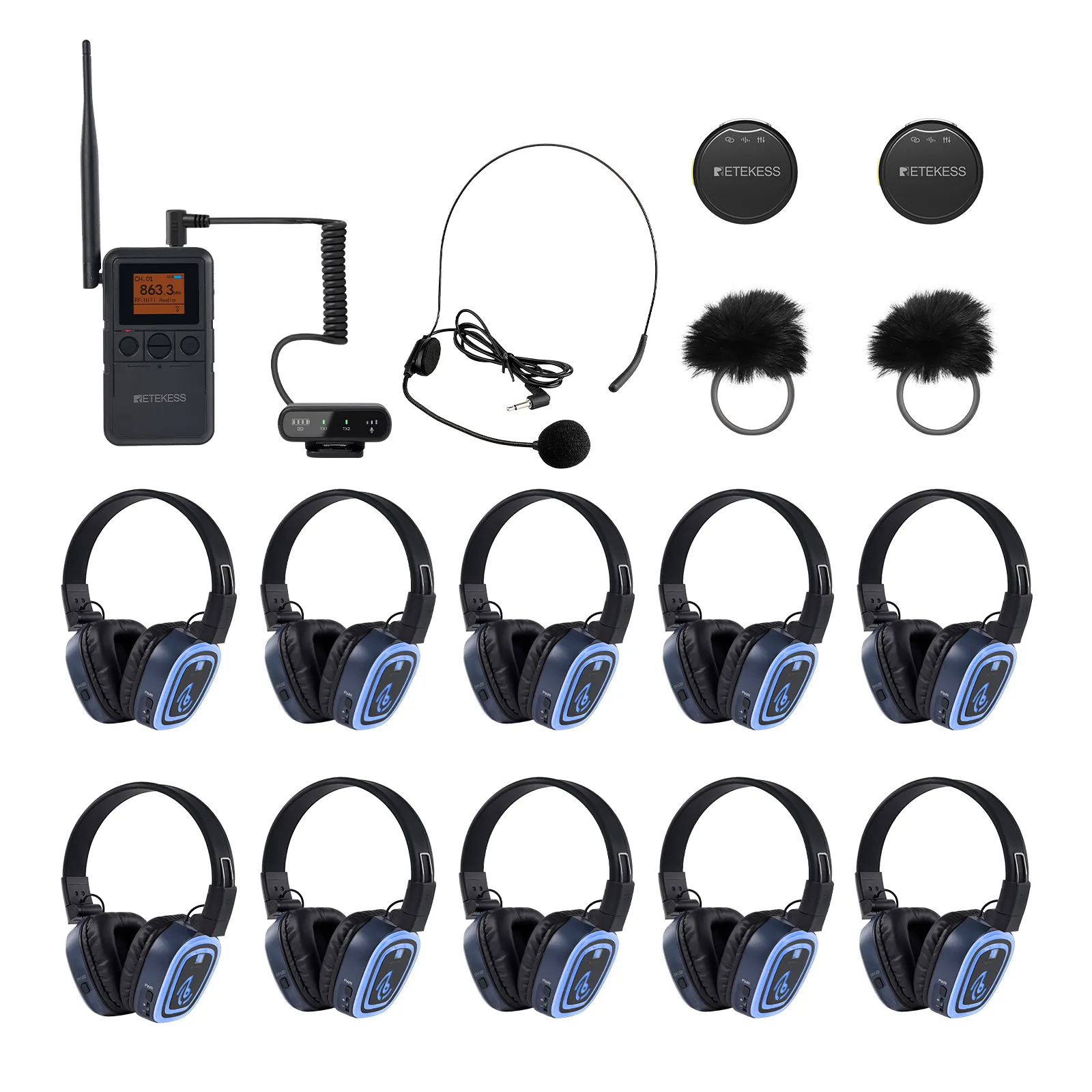
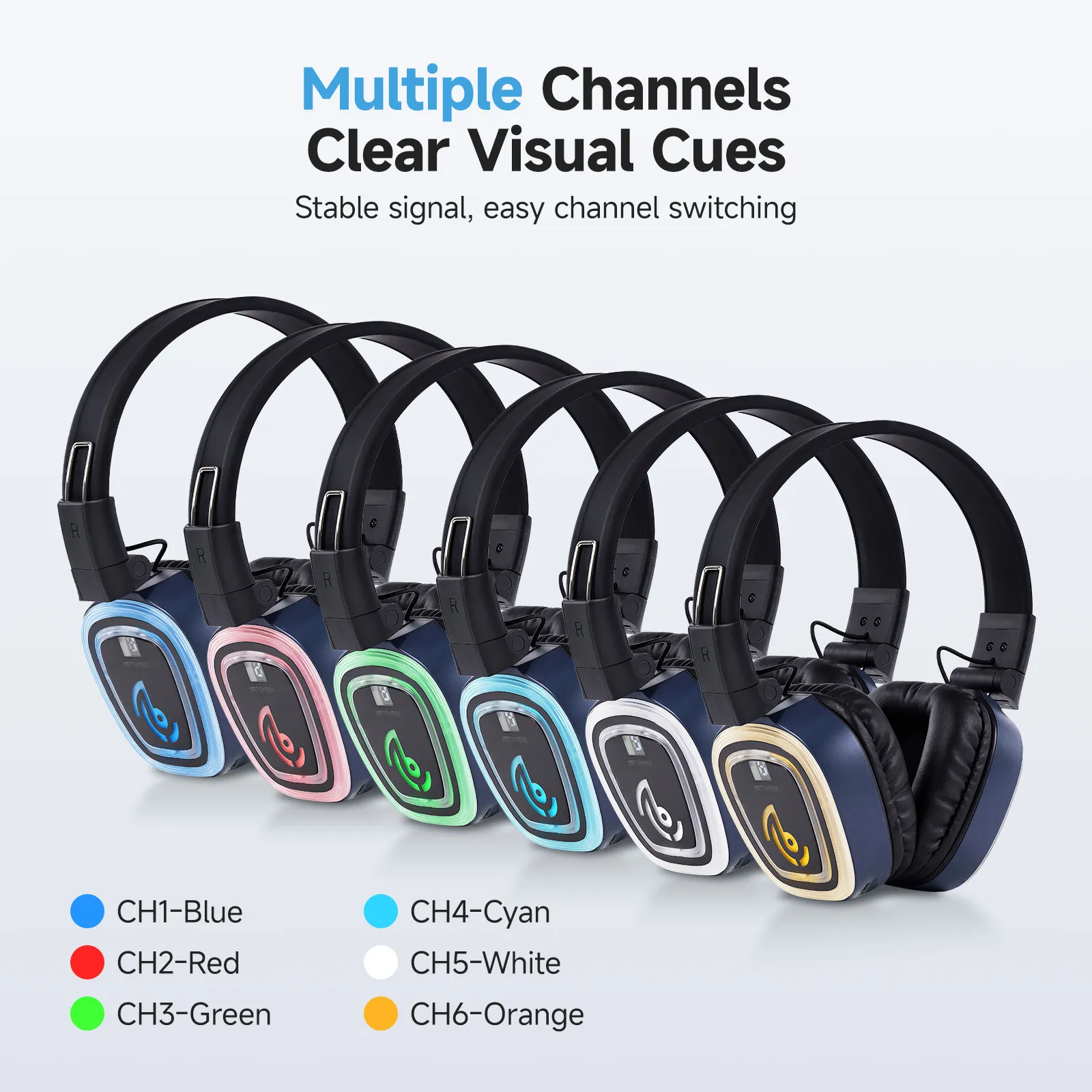
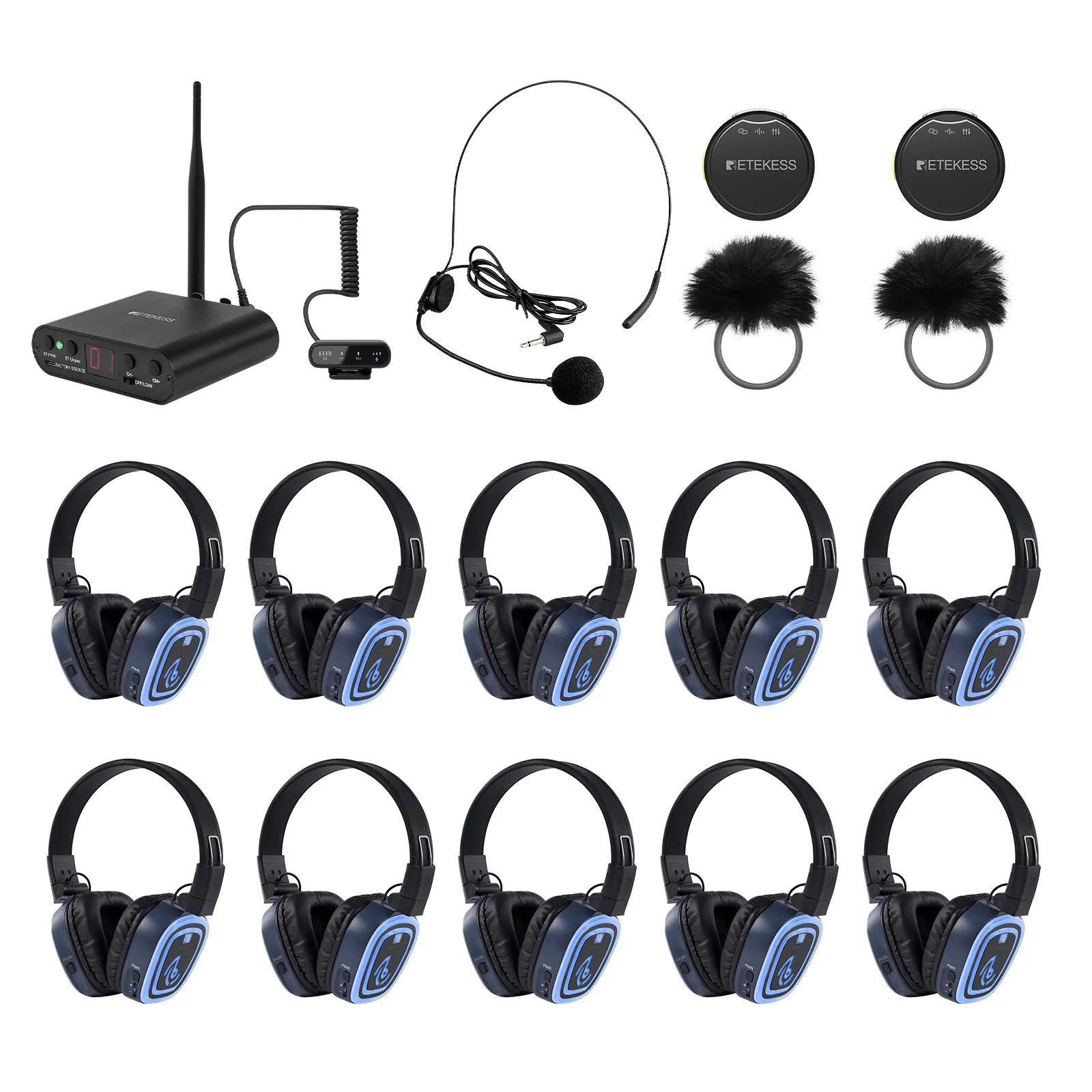
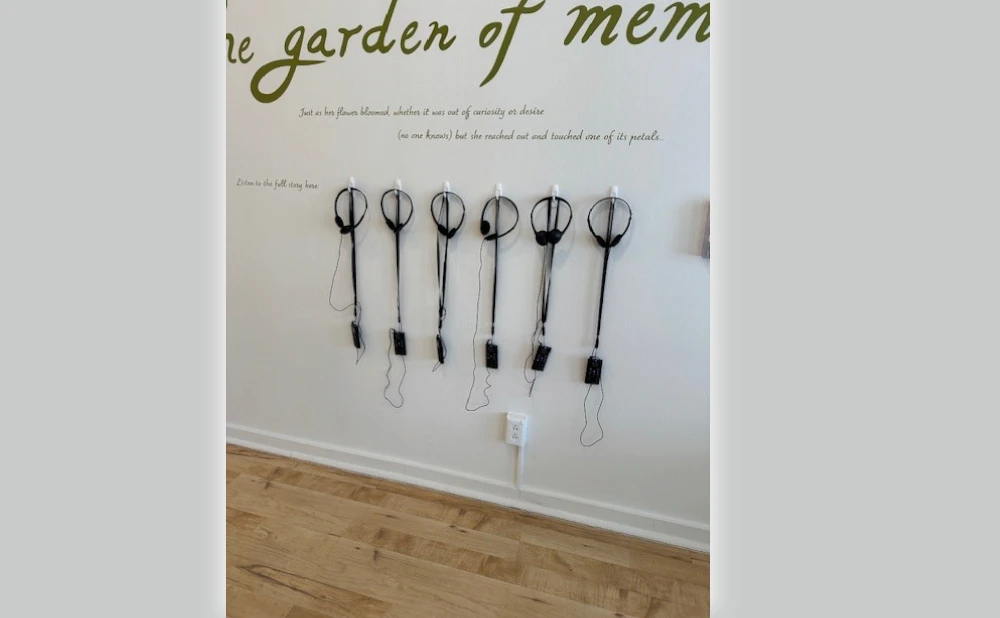
- Factory and facility tours (medium complexity, mobile):A bilingual guide or part-time interpreter using a portable tour guide system. The human handles accuracy and nuance; the wireless system delivers clear audio to every listener.
- Exhibition booth and walk-in visitors (high volume, short exchanges):AI translation devices for quick product introductions and contact collection. No interpreter scheduling required, available all day for walk-up traffic.
This layered approach puts human skill where mistakes would be expensive, and AI efficiency where volume and speed matter most.
Final Thoughts
AI translation is not a full replacement for human interpreters, and it should not be treated as one. But it is already good enough for a very large share of everyday use cases. That is why the statement “AI translation can’t replace human interpreters, but it replaces 80% of use cases” makes sense.
For routine communication, fast deployment, and standard multilingual support, AI translation is often the practical choice. For formal, complex, or high-stakes events, human interpreters still provide the precision and context that technology cannot fully match.
The best solution is usually not choosing one side forever. It is choosing the right tool for the right event. Once you think that way, the decision becomes much clearer.
FAQ
Can AI translation fully replace human interpreters?
No. AI works well for everyday conversations, but high-stakes, complex, or culturally sensitive communication still benefits from human interpreters.
How much everyday translation work can AI handle?
Around 80% of routine interactions, such as tours, booth conversations, and informal meetings, can be handled by AI. Complex or high-risk situations may still require a human.
When should I choose an AI device over a human interpreter?
Choose AI for short, low-risk conversations that need quick, affordable translation. Choose human interpreters for legal, medical, safety, and high-level business discussions.
Do AI translation devices require internet?
Most portable AI translators, including the Retekess TT136, need Wi-Fi or mobile data for real-time translation.
How accurate is AI translation for business conversations?
AI handles clear speech and everyday business terms well. Accuracy may decrease with strong accents, background noise, technical terms, or overlapping speech.
What is the best setup for a multi-language trade show?
Use human interpreters for key meetings, tour guide systems for group tours, and AI translation devices for booth conversations. This balances accuracy, flexibility, and cost.







 Google
 Amazon