
Table of Contents
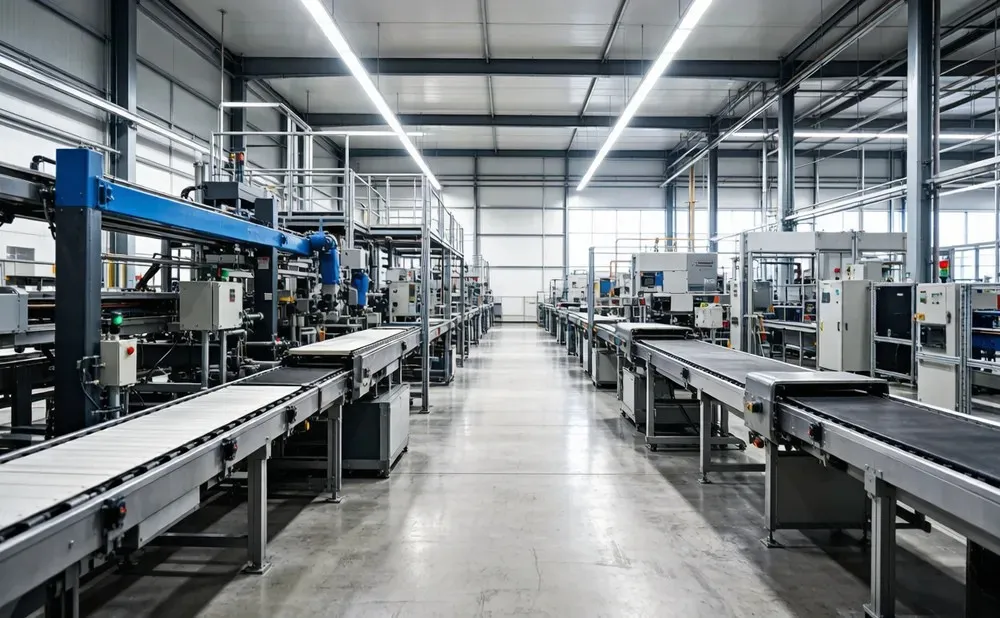
Best Tour Guide System for Factory Tours in 2026: Complete Buyer's Guide
- Retekess
- Aug 5, 2026
Factory tours drive purchasing decisions, build investor confidence, and onboard new hires. But too many guides end up shouting across noisy machinery, visitors miss key safety messages, and tours drag past their scheduled time. The right tour guide system for factory tours solves all of this in one turn-key package.
This guide draws on data from 292 real factory deployments — including Anheuser-Busch, Toyota, Hershey, JELD-WEN, and dozens of mid-market manufacturers — to walk you through every buying decision: system type, audio specs, durability, charging, hygiene, and budget. Whether you run a craft brewery, an automotive stamping plant, or a metal foundry, you'll find a clear recommendation by the end.
1. Why Standard PA Systems Fail in Factory Tours
Plant managers usually default to one of three "solutions" — none of them ideal:
- Loudspeakers on tripods: Loud enough to be heard over machinery, but visitors close to the speaker get blasted while those at the back hear nothing.
- Yelling over the line: Defeats the purpose of a structured tour, wears down guides, and is impossible for international visitors.
- Smartphone + earbuds (Zoom-style): Tethered groups, fragile connections, and visitors look at screens instead of the production line.
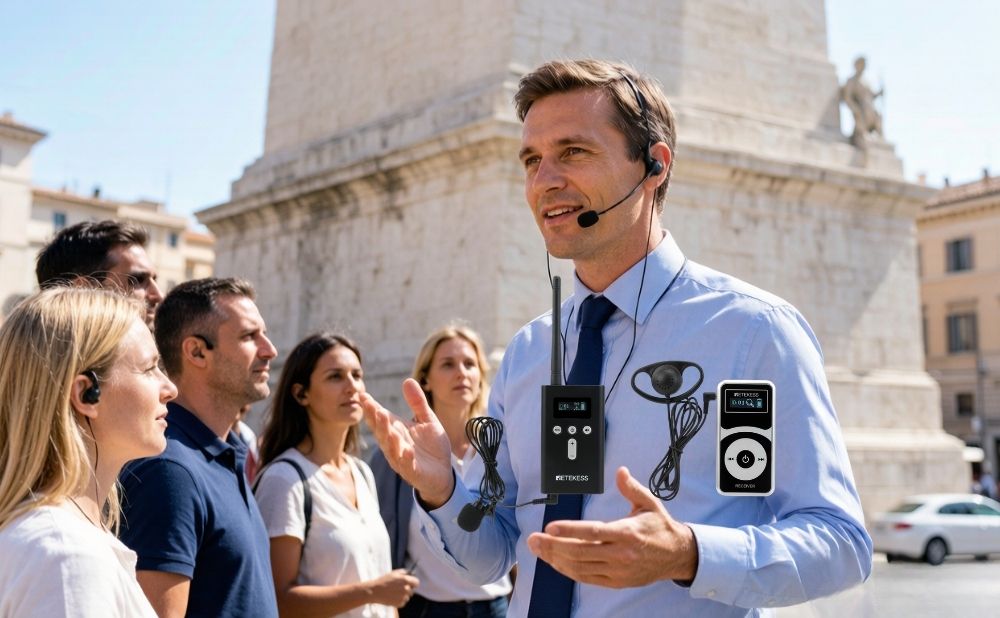
A dedicated wireless tour guide system for factory tours moves audio directly from the guide's microphone into each visitor's ear, untethered, at consistent volume. The result: every visitor hears every word at the same level, regardless of where they stand on the floor.
2. The 4 Main Types of Tour Guide Systems
Choosing a system starts with choosing a type. Each has trade-offs in price, flexibility, and visitor experience.
2.1 One-Way Tour Guide System
The workhorse of factory tours. One transmitter (held by the guide) broadcasts to N receivers (worn by visitors). Visitors listen; they cannot talk back.
- Best for: Standard plant tours, school visits, new-hire orientation, supplier audits.
- Typical price: $25-$60 per receiver + $80-$150 per transmitter (retail-style estimates).
- Why it's the default: 82% of the 292 deployments we tracked use one-way systems. Simpler to set up, fewer failure points, and lower per-head cost.
2.2 Two-Way Tour Guide System
Like a one-way system, but visitors can press a button and ask a question that's broadcast back through the guide's earpiece.
- Best for: VIP tours with Q&A, technical training, Gemba walks with cross-functional teams.
- Typical price: 1.5x-2x a one-way system.
- Trade-off: Slightly heavier receivers and shorter battery life because the return channel adds power draw.
2.3 Multi-Guide Tour System
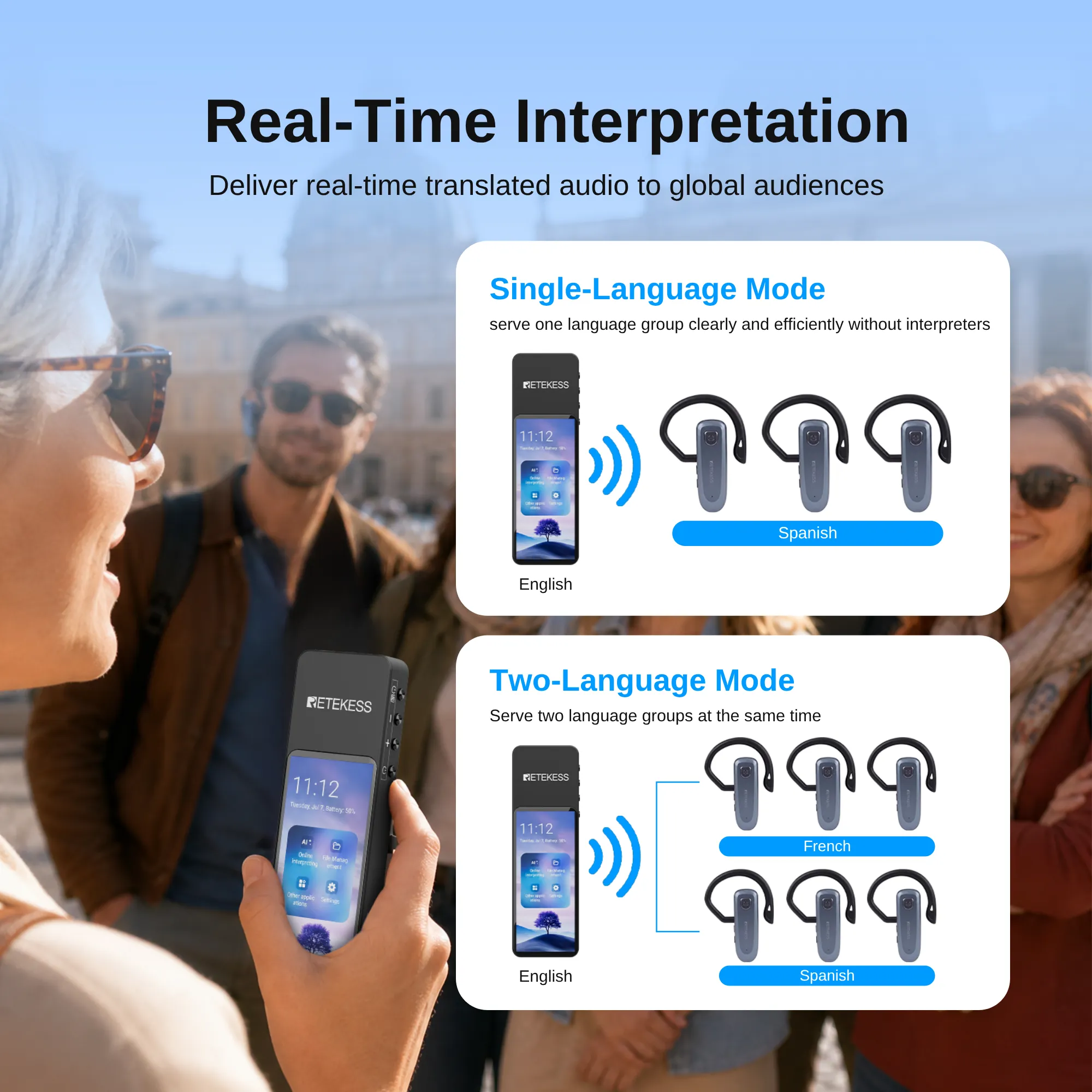
Two or more guides can speak simultaneously into a unified channel — useful for executive board tours where a plant manager and a safety lead both want to talk.
- Best for: VIP plant tours, multi-lingual tours, multi-zone facilities.
- Typical price: 2x-3x a one-way system, often sold as a complete kit.
2.4 Notification / Paging System (Different Use Case)
Not strictly a tour guide system but worth knowing. A wireless factory paging system lets supervisors call specific receivers from a fixed station — for example, a floor lead calling a QC inspector on Zone 3. Useful for production-line communication but not for visitor tours.
- Best for: Factory floor worker coordination (separate article).
- Typical price: Varies widely by channel count.
3. 7 Features That Actually Matter in a Factory Environment
Marketing copy throws dozens of features at you. After 292 deployments, here are the seven that genuinely decide whether you'll be happy in year two.
3.1 Battery Life and Charging Workflow
A 10-hour battery covers most plant tours, but how it charges is more important than the spec sheet. Look for:
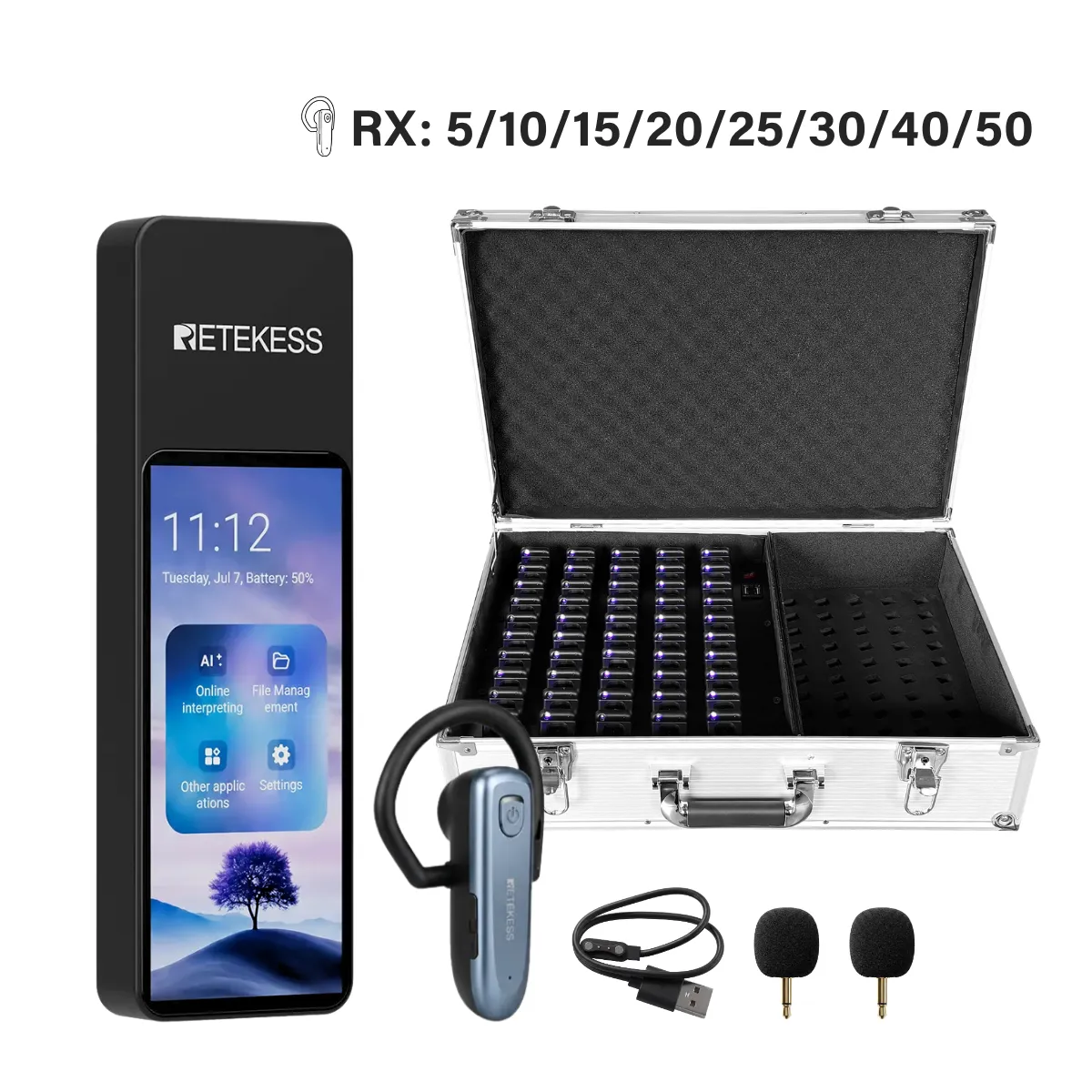
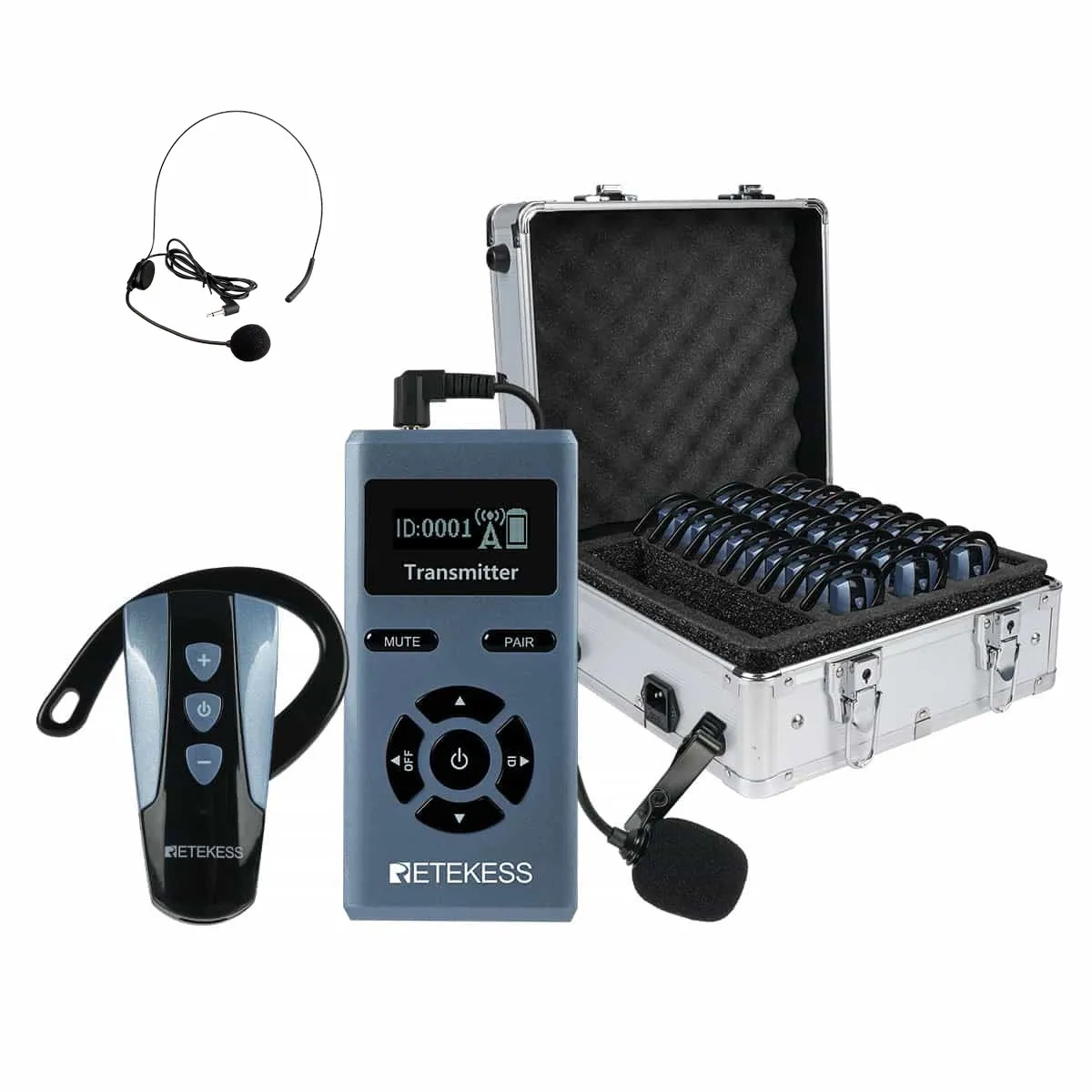
- A charging case that stores, charges, and transports 20-50 receivers at once.
- Hot-swap support — guides shouldn't have to wait 4 hours between tours.
- Clear LED indicators so visitors know their receiver is actually charged.
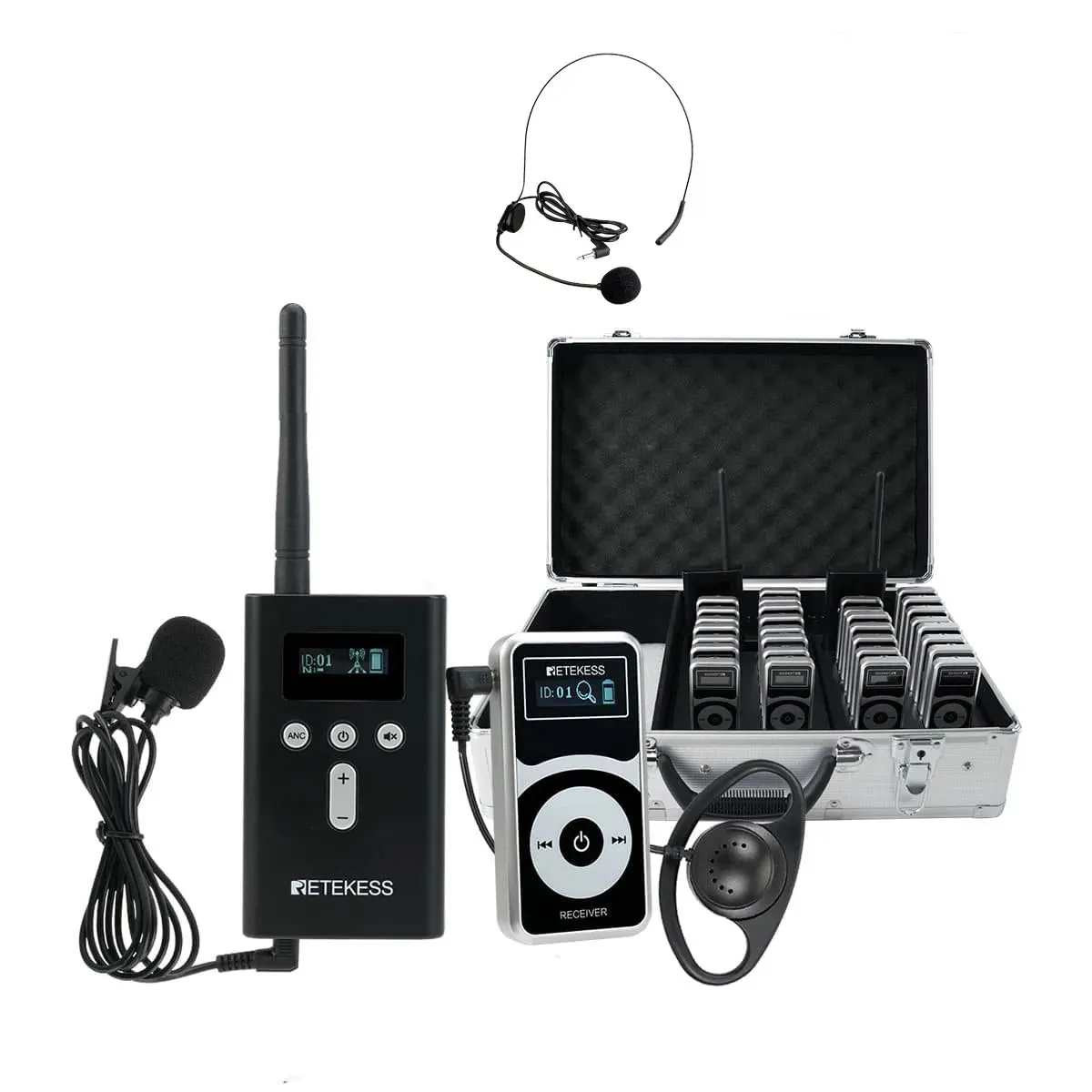
Retekess systems like the T130P are designed around this workflow. The integrated charging case means 30 receivers go from zero to full in roughly 4 hours.
3.2 Audio Clarity Above 80 dB
Most factory floors run 80-95 dB near operating machinery. Your system needs:
Devices with noise-cancellation capabilities—whether featuring built-in smart noise cancellation or supporting the connection of noise-canceling headphones—are suitable, depending on the specific situation.- Tight-frequency response in the speech range (300-3400 Hz for the human voice).
- Enough transmit power to push through ambient noise without distortion.
You'll see specs about frequency response curves and signal-to-noise ratios. Translate that into simple language: visitors should hear every word clearly even when a 5,000-ton press is running 20 feet away.
3.3 Coverage Range (and How Walls Eat Signal)
Manufacturers quote "up to 200 meters" — that's open field. Inside a factory with steel mezzanines, control rooms, and racking, expect 30%-50% of the rated range. If you run a very large site (warehouses, outdoor yards, multi-building campuses), systems like the Retekess TT126 is ok.
3.4 Hygiene and Sanitation
Food, beverage, and pharmaceutical plants can't share headsets between visitors without sanitizing. Three options:
- Disposable foam ear pads — cheapest, single-use, replaces per visitor.
- Wipe-clean ear pads — silicone or vinyl covers that get sprayed between users.
- Personal-issue headsets — pre-assigned to employees or VIPs, kept by them.
A good supplier ships replacement ear pads cheaply or includes them in the kit.
3.5 Ruggedness
Look for drop ratings, IP ratings for dust/water, and operating temperature. A plastic-bodied receiver rated for -10 to +45 °C covers most factories. If your tours step outdoors or into freezers, ask for the wider industrial-temp range.
3.6 Number of Channels
A channel is a frequency slot. Two reasons to care:
- Multiple tours running in parallel (e.g., two supplier groups simultaneously).
- Interference avoidance in RF-crowded plants with Wi-Fi, Bluetooth, and industrial IoT.
Most plants need at least 16 selectable channels** to dodge interference. More is better.
3.7 Weight and Comfort
Visitors wear receivers for 60-120 minutes. Anything over 50 g starts to feel heavy behind the ear. For longer tours or production-floor training where receivers stay on for 4+ hours, please choose lighter-weight equipment.
4. Top Picks by Factory Type
This matrix condenses the 292-deployment dataset into a one-page decision aid.
| Factory Type | Recommended System |
| Food, beverage, brewery | One-way |
| Automotive assembly | One-way, Noise reduction |
| Steel mill, foundry | One-way, Noise reduction |
| Pharmaceutical, GMP | One-way |
| Furniture, woodworking | One-way |
| Electronics, semiconductors | One-way |
| Construction site | One-way, Noise reduction |
| VIP / board tours | Multi-guide or two-way |
The Retekess TT126 and T130P are the most-deployed models in this dataset for one-way factory tours, covering roughly 100 of the 292 deployments. The TT106S serves as the lightweight option for tours where visitors wear receivers for over an hour.
5. Buy vs Rent: A 2026 TCO Breakdown
Pricing depends on volume, region, and supplier. As a starting reference:
- Budget consumer kit (10 receivers + 1 transmitter): ~$300-$500.
- Mid-tier industrial kit (30 receivers + 2 transmitters + case): ~$1,200-$2,200.
- Premium multi-guide kit (50 receivers + 4 transmitters + case): ~$3,500-$6,500.
Renting makes sense when:
- You run fewer than 4 tours per year.
- You need replacement units fast (a broken receiver doesn't kill the next tour).
- You're trialing a vendor before committing.
Buying makes sense when:
- You run monthly or weekly tours.
- You want receivers branded with your logo or colors.
- You need 24/7 availability.
A rule of thumb: if you'll use the system more than 8-10 times per year, buy.
6. 7 Costly Mistakes to Avoid Before You Order
After reviewing the post-mortem on dozens of underperforming deployments, here's what to watch for:
1. Buying on price per receiver without checking the microphone. A $20 receiver with a poor mic makes the system unusable.
2. Underestimating channel count. A single channel on a crowded RF floor will constantly drop out.
3. Skipping a charging case. Without it, you spend tour-day morning untangling 30 USB cables.
4. Ignoring ear-pad hygiene. A sanitation officer will eventually shut down a tour over this.
5. Assuming "wireless range" applies indoors. It rarely does.
6. Forgetting spare batteries or loaner units. Even premium kits fail; have backups.
7. Skipping a 30-day trial. Reputable suppliers will lend a kit before purchase.
7. Frequently Asked Questions
How many receivers do I need for a factory tour?
Size the receiver pool to your largest tour, not the average. If your largest tour is 40 visitors, get 45 receivers to allow for charging, spares, and personnel who need a receiver (photographers, EHS staff).
Do I need noise-cancelling headsets in a factory?
Not necessarily. Most factory tour routes stay on walking paths away from the loudest equipment, and most visitors (98%+) accept standard earphones. Noise-cancelling matters only for tours that walk through stamping, welding, or heavy machining zones.
Can visitors ask questions during a one-way tour?
Not with the guide's headset, but they can raise a hand, and the guide can pause. For real-time Q&A (especially VIP tours or technical training), upgrade to a two-way system.
What's the difference between a tour guide system and a two-way radio?
A tour guide system is **broadcast from one to many**. A two-way radio is **peer-to-peer**. Tourists don't need radios; they need to hear one speaker clearly.
Are these systems legal to use across borders?
Most operate on license-free ISM bands (UHF 863-865 MHz in Europe, 902-928 MHz in the US). Always confirm with your supplier for the specific destination country.
How do I clean receivers between tours?
Wipe with isopropyl alcohol (70%) and swap disposable foam ear pads. Don't submerge electronics. Detailed sanitation guide by industry is in a separate article.
8. Conclusion: Choosing Your System
For most factories running regular tours — food, automotive, furniture, chemicals, pharma — a one-way wireless tour guide system with a charging case and at least 30 receivers is the right starting point. The Retekess TT126 is ideal for two-way interactive Q&A and comes with a noise-canceling headset; the T130P offers exceptional value, delivering great sound quality and a strong signal. Meanwhile, the TT106S is lightweight and portable, making it perfect for extended tours.
If you operate in a particularly noisy or hazardous environment — steel mills, foundries, mining, chemical — prioritize microphone quality, ruggedness ratings, and channel count over price.
Leave a Reply

![[18th Anniversary] 18 Years of Echoing Excellence: Making Communication Easier, Connecting Trust Beyond Borders](https://res.retekess.com/z_file/20260716/retekess-brand-story-making-communication-easier_20260716151044_7682.jpg)
![[18 Years in Wireless Communication] Silent Disco Systems Anniversary Celebration: Top-Selling Headphones & Event Mechanics Revealed!](https://res.retekess.com/z_file/20260713/18-years-in-wireless-communication-silent-disco-systems-anniversary-celebration_20260713175011_5749.webp)
![[Anniversary Carnival] Ding-dong! 18th Anniversary Mega Sale on Guest Paging & Calling Systems: Full Reveal of 12+ Products & Promo Rules!](https://res.retekess.com/z_file/20260713/18th-anniversary-mega-sale-on-guest-paging-calling-systems_20260713175257_0295.webp)
![[Retekess 18th Anniversary Teaser] Tour Guide System Exclusive Perks: Sneak Peek at Event Dates & Mechanics!](https://res.retekess.com/z_file/20260713/retekess-18th-anniversary-tour-guide-system-exclusive-perks--2-_20260713180135_6435.webp)
Follow Us
Pay With


 Google
 Amazon
Comments (0)