
Table of Contents
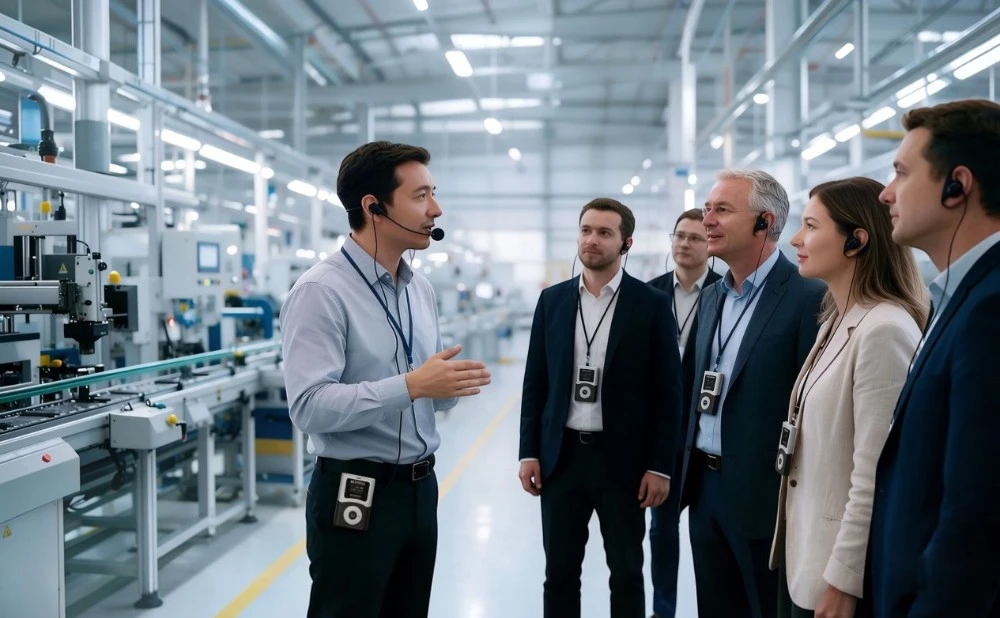
How to Build a Factory Tour Communication Solution That Works for All Plant Visit Scenarios
- Retekess
- Oct 16, 2026
Factory tours serve as a critical tool for client acquisition, employee onboarding, compliance audits, and partner collaboration. They let stakeholders see your operations firsthand, build trust, and communicate key messages about your processes and safety standards.
But factory environments create significant barriers to clear communication. Loud production machinery, complex facility layouts, and diverse visitor groups can turn a planned tour into a frustrating experience with missed details and avoidable confusion.
A strong factory tour communication solution addresses these barriers directly. It ensures every visitor hears your message clearly, stays connected across the entire route, and can engage with the tour guide when needed.
In this article, we break down four core communication challenges in factory settings and share targeted solutions to build a system that works for every tour scenario.
Key Communication Challenges in Factory Tour Environments
Factory settings differ drastically from offices, museums, or outdoor tour sites. They combine high noise levels, physical obstacles, and strict safety rules that complicate audio delivery. Below are the four most common pain points for tour organizers:
- High background noise: Production floors often reach 80–100 decibels, which drowns out spoken instructions and tour commentary. Visitors strain to hear, and key safety messages can get lost.
- Unreliable signal coverage: Concrete walls, metal machinery, and stacked inventory block wireless signals. Standard audio systems experience dropouts or static as groups move between production zones.
- One-way communication limits: Most basic tour systems only let guides speak to visitors. Visitors cannot ask questions in real time, and guides cannot check if the group is following safely.
- Multilingual coordination gaps: Hosting international visitors or multi-language teams usually requires separate tour groups or human translators walking alongside. This raises costs and reduces tour efficiency.
These pain points are why a purpose-built factory tour communication solution is essential for industrial facilities.
Four Targeted Strategies for a Robust Factory Tour Communication Solution
You can solve all four pain points with a layered approach that matches the right technology to each scenario. Below are four actionable strategies, with equipment recommendations tailored to factory environments.
Noise Reduction: A Core Feature of Any Reliable Factory Tour Communication Solution
Noise is the most immediate barrier to effective factory tours. Even loud public address systems fail in production areas, because they amplify background noise along with speech.
The solution is to use digital modulation technology for audio delivery. Unlike analog FM systems, digital processing separates speech from background noise and minimizes sound distortion.
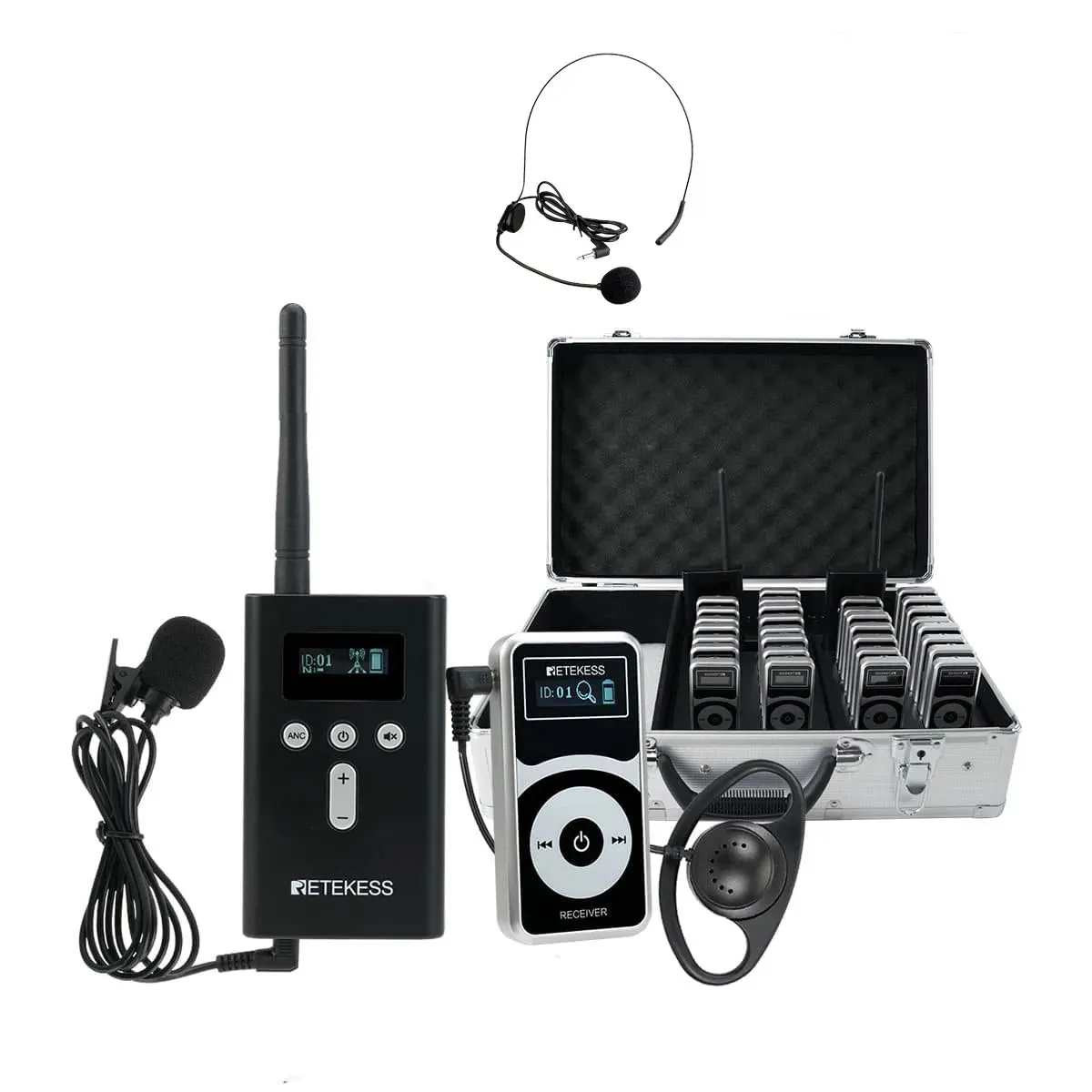
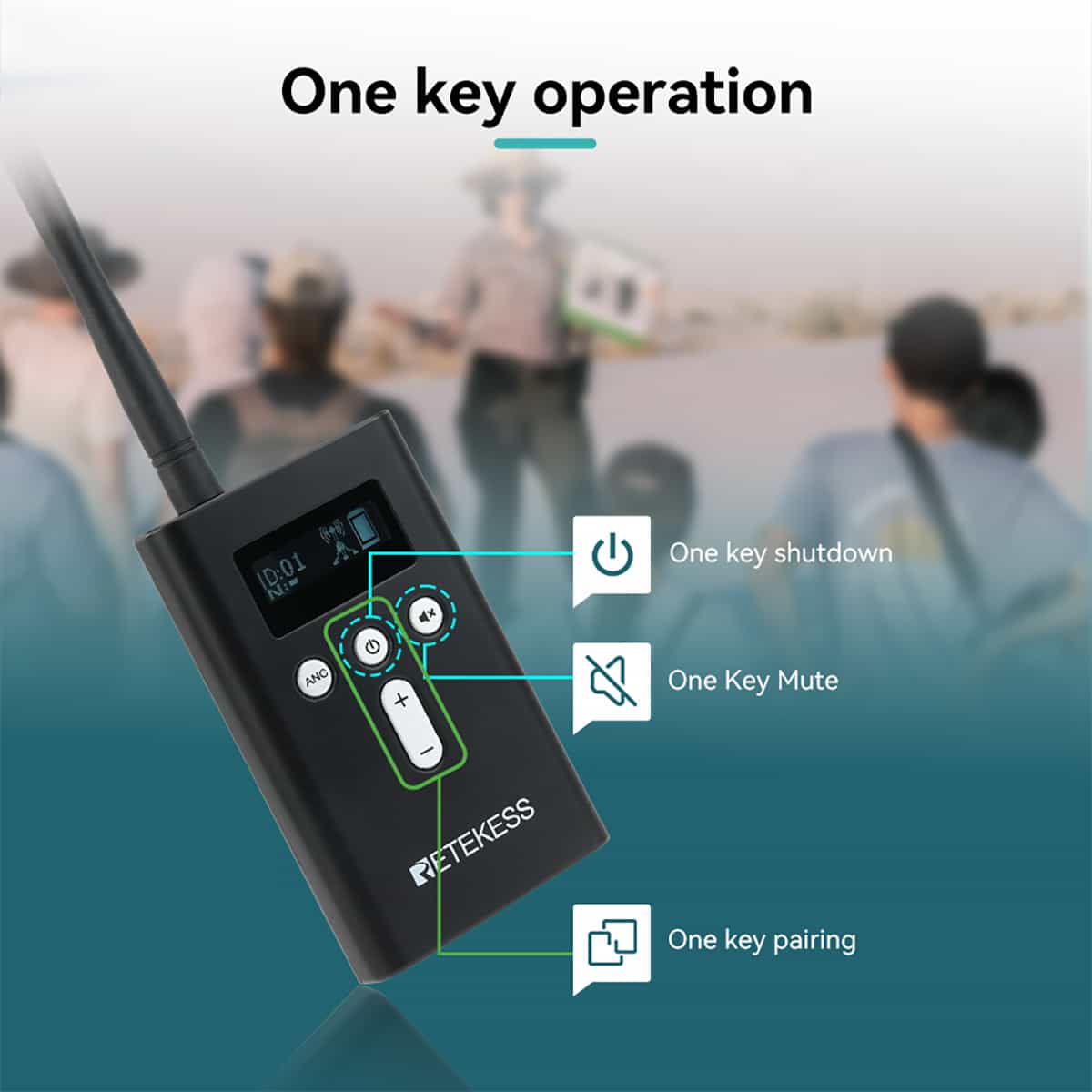
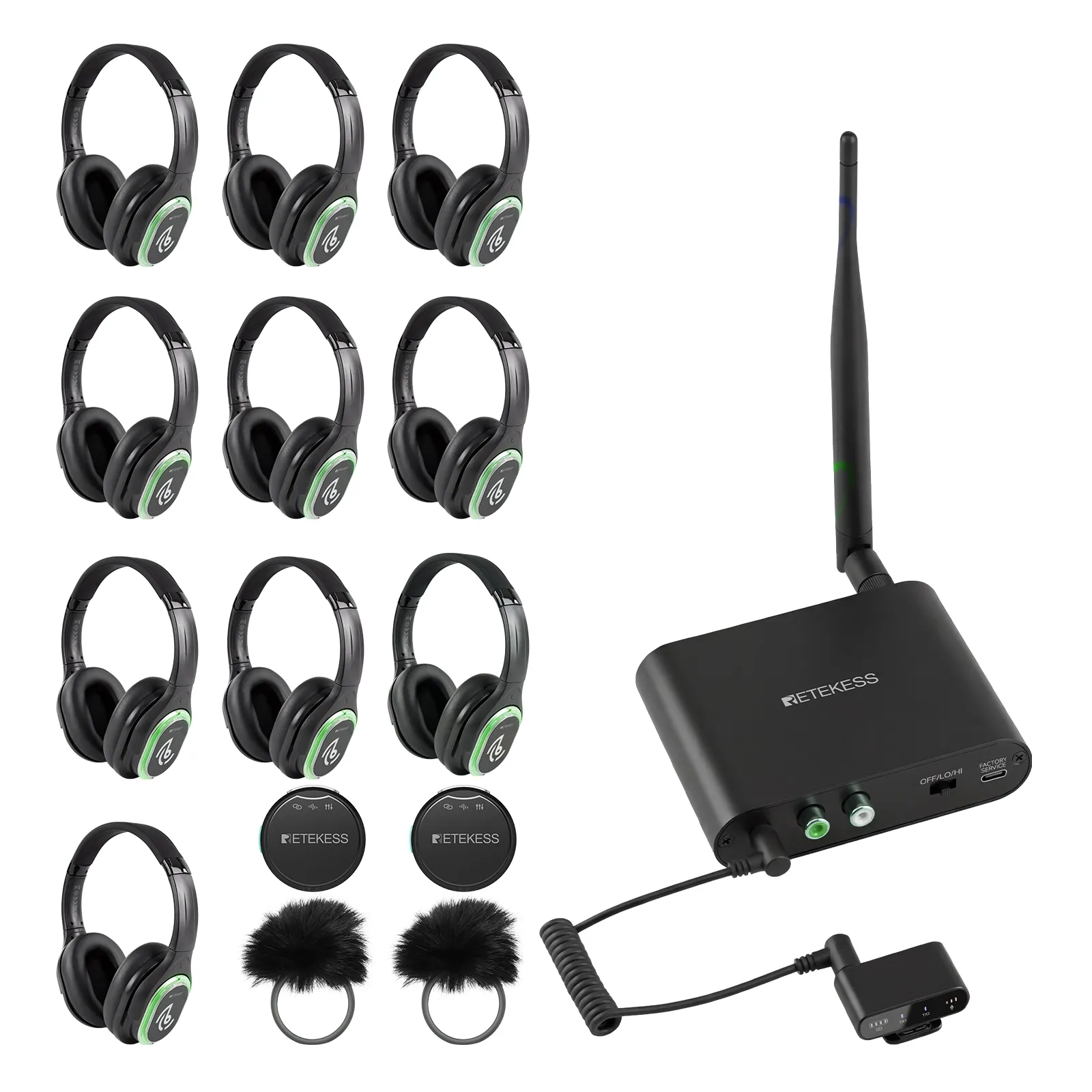
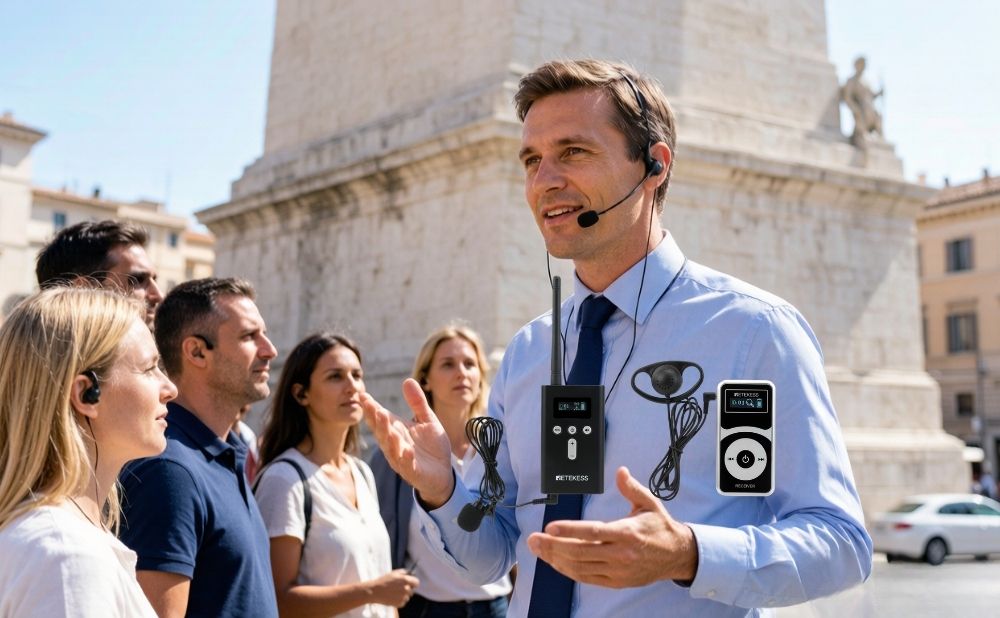
Retekess T130U and T131U digital tour guide audio equipment use advanced digital modulation tech to cut through factory noise. They minimize distortion and external interference, so visitors hear clear, natural, immersive sound instead of muffled speech or static.
This clarity does not just improve the tour experience. It also ensures visitors hear critical safety warnings, even when standing next to running machinery.
Signal Stability: Maintain Uninterrupted Coverage Across Complex Layouts
Many factory tour systems work well in open spaces but fail when groups move through doorways, around equipment, or between buildings. Signal dropouts disrupt the tour flow and force guides to repeat information.
For reliable coverage in complex facilities, you need a system with strong anti-obstacle performance. U-band digital systems operate on frequencies that penetrate walls and metal structures better than standard FM or 2.4GHz devices.
Retekess T130U and T131U run on a U-band digital mode with strong anti-obstacle ability and stable performance. They maintain consistent signal transmission even through concrete walls, around heavy production machinery, and across large warehouse spaces.
Visitors enjoy uninterrupted audio as they move through your facility, with no static or cutouts. Guides do not have to pause the tour to adjust equipment or repeat sections.
Consistent coverage is the foundation of any effective factory tour communication solution.
Two-Way Interaction: Boost Engagement and Safety With Real-Time Communication
One-way audio systems work for passive sightseeing, but they fall short in factory settings. Factory tours involve safety protocols, technical explanations, and visitor questions that require two-way exchange.
A two-way tour guide system lets visitors speak directly to the guide without leaving the group. Guides can also broadcast announcements to the whole group or check in with individual visitors.
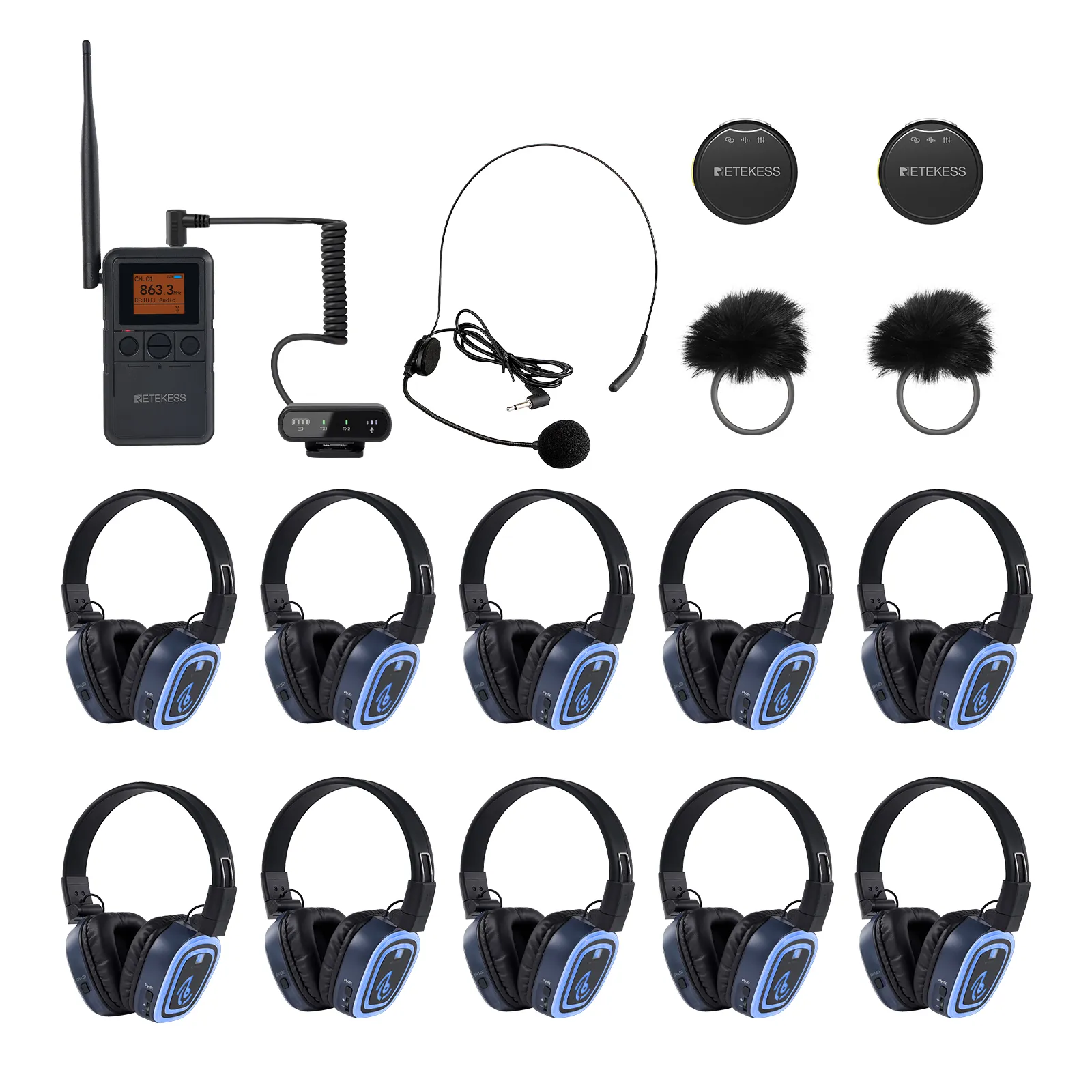
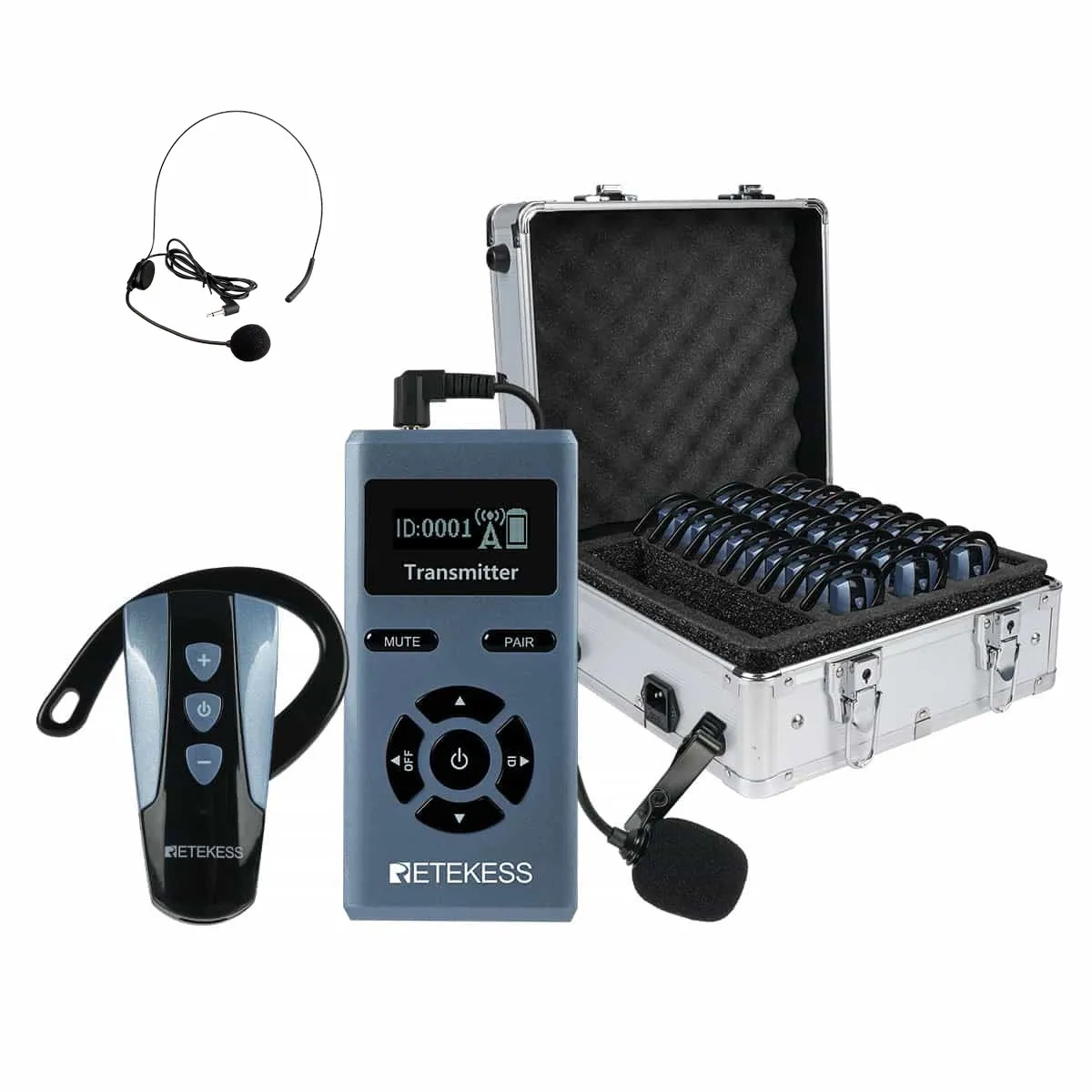
The Retekess TT126 two-way tour guide system supports full two-way communication to improve tour efficiency and keep groups connected for extended periods. Visitors can ask questions at any point, and guides can share safety reminders or headcount checks without interrupting the tour flow.
The system uses a 2500mAh lithium battery with Type-C charging for flexible power access. The vice transmitter delivers 10 to 70 hours of standby time, and the main transmitter supports 10 hours of continuous use. This makes it reliable for full-day tours, multi-shift events, and facilities with long production routes.
Multilingual Support: Run Concurrent Tours for Diverse Visitor Groups
Factories that host international clients, global suppliers, or multilingual workforces face an extra layer of communication complexity. Traditional translation setups are slow, expensive, and hard to scale.
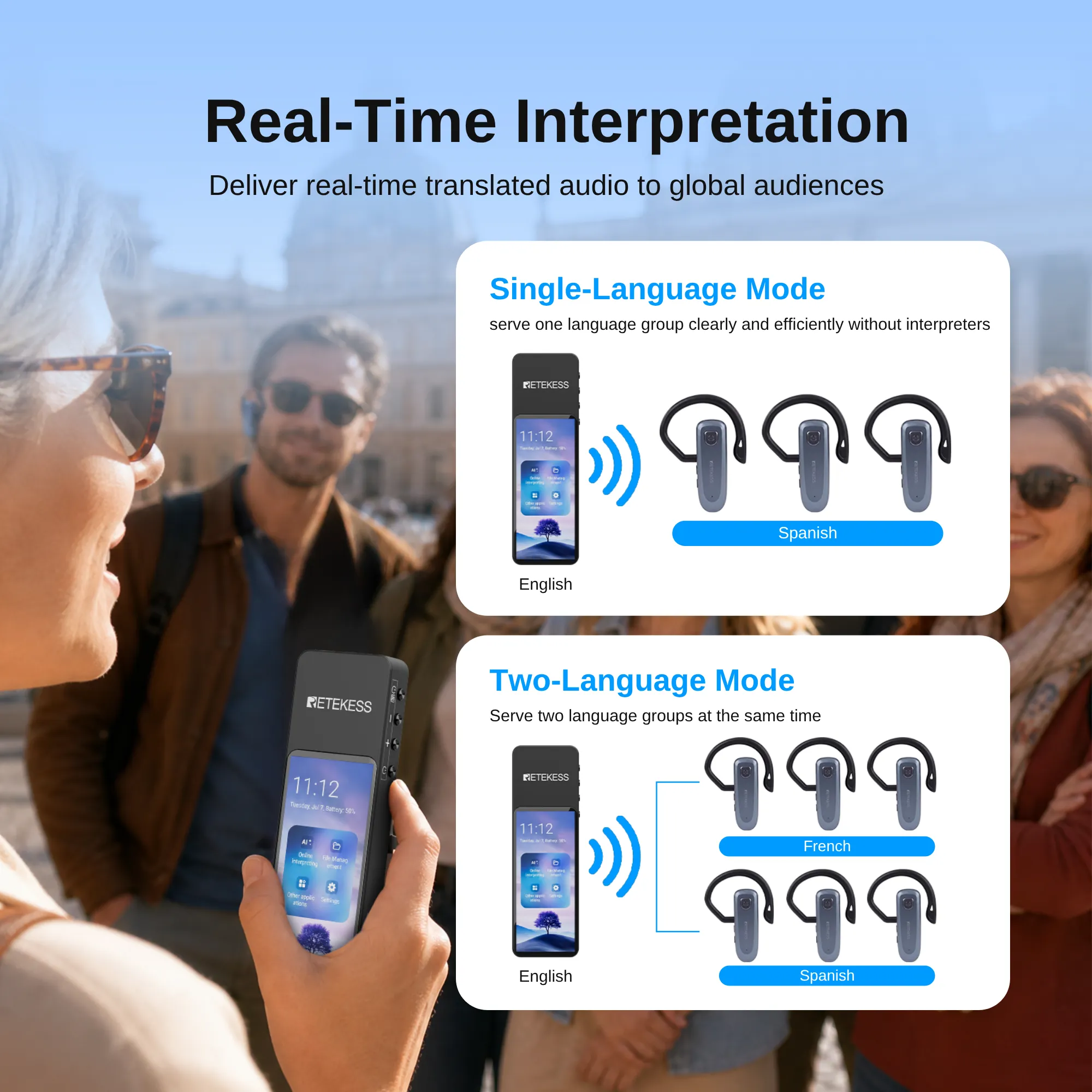
A digital tour system with multiple independent channels solves this problem. You can assign one channel per language, with a guide or interpreter speaking on each channel. Visitors select their preferred language on their receiver, and all groups follow the same tour route at the same time.
This approach works with both one-way and two-way systems. For standard informational tours, use single-channel receivers for each language. For interactive Q&A sessions, pair multilingual support with two-way functionality so visitors can ask questions in their native language.
You can scale channel support based on your visitor mix, without needing to run separate tour groups or hire extra on-site staff.
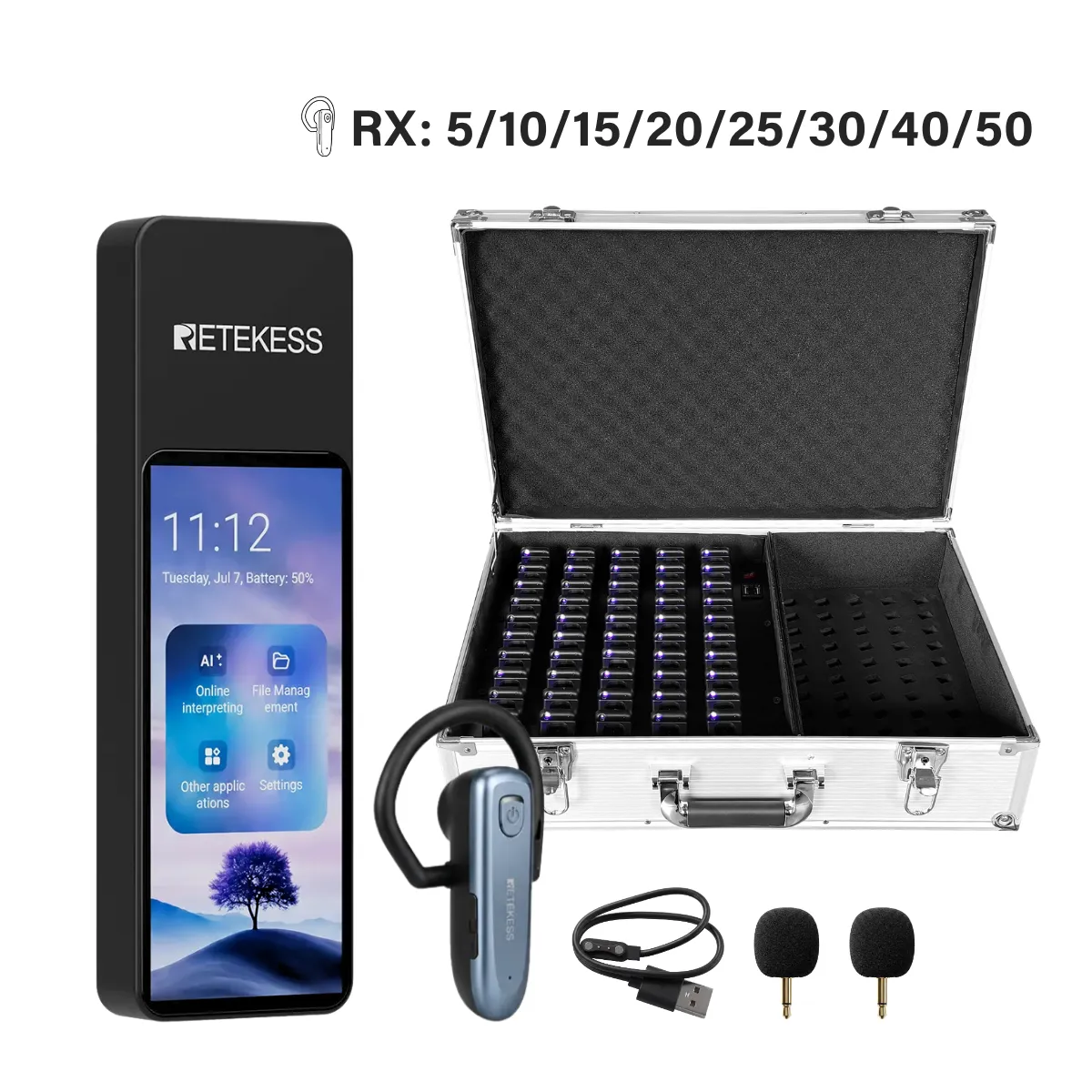
Most factories benefit from a hybrid setup. Use digital one-way receivers for large group tours focused on safety and process explanations. Add two-way transmitters for small VIP tours, training sessions, or audits that require more interaction. You can mix and match devices based on each tour’s purpose and group size.
Conclusion: Build a System That Matches Your Factory’s Unique Needs
Every factory has a different layout, noise level, and visitor profile. There is no one-size-fits-all setup, but the right factory tour communication solution will address your specific pain points around noise, signal, interaction, and language.
Start by auditing your most common tour scenarios. Identify which challenges cause the most frustration or safety risk, then prioritize equipment that solves those issues first.
Investing in a reliable audio system does not just improve visitor satisfaction. It also reduces tour delays, strengthens safety compliance, and helps you make a better impression on clients and partners.
If you want to test how these systems work in your facility, we can help. Our team can recommend a custom factory tour communication solution based on your layout, visitor volume, and use cases. Reach out today to schedule a free demo or discuss your tour requirements with our audio experts.


![[18th Anniversary] 18 Years of Echoing Excellence: Making Communication Easier, Connecting Trust Beyond Borders](https://res.retekess.com/z_file/20260716/retekess-brand-story-making-communication-easier_20260716151044_7682.jpg)
![[18 Years in Wireless Communication] Silent Disco Systems Anniversary Celebration: Top-Selling Headphones & Event Mechanics Revealed!](https://res.retekess.com/z_file/20260713/18-years-in-wireless-communication-silent-disco-systems-anniversary-celebration_20260713175011_5749.webp)
![[Anniversary Carnival] Ding-dong! 18th Anniversary Mega Sale on Guest Paging & Calling Systems: Full Reveal of 12+ Products & Promo Rules!](https://res.retekess.com/z_file/20260713/18th-anniversary-mega-sale-on-guest-paging-calling-systems_20260713175257_0295.webp)
![[Retekess 18th Anniversary Teaser] Tour Guide System Exclusive Perks: Sneak Peek at Event Dates & Mechanics!](https://res.retekess.com/z_file/20260713/retekess-18th-anniversary-tour-guide-system-exclusive-perks--2-_20260713180135_6435.webp)
Follow Us
Pay With


 Google
 Amazon
Comments (0)