
Table of Contents
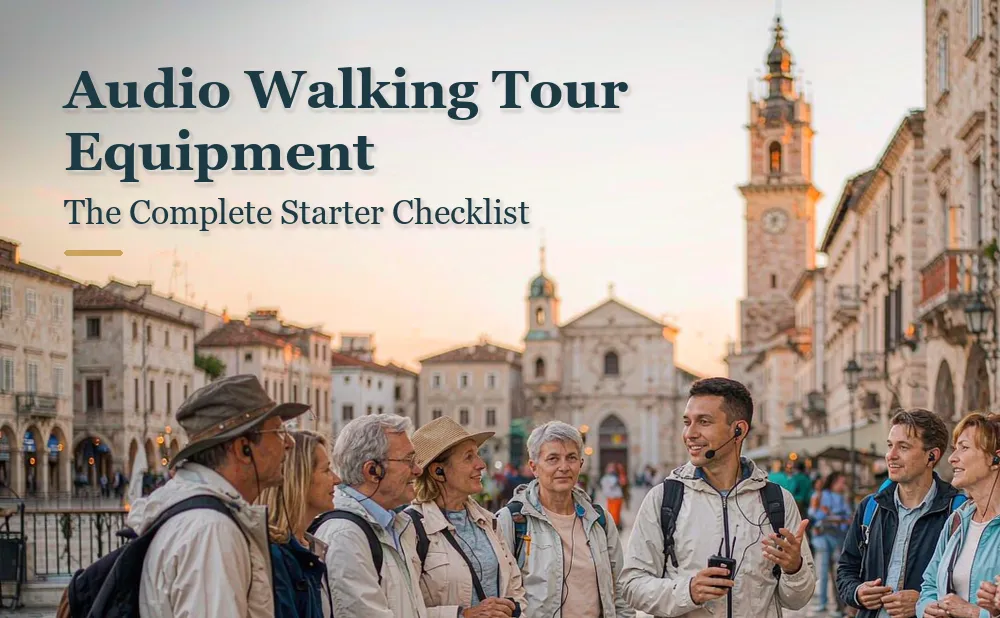
What equipment do you need for an audio walking tour?
- Retekess
- Oct 14, 2026
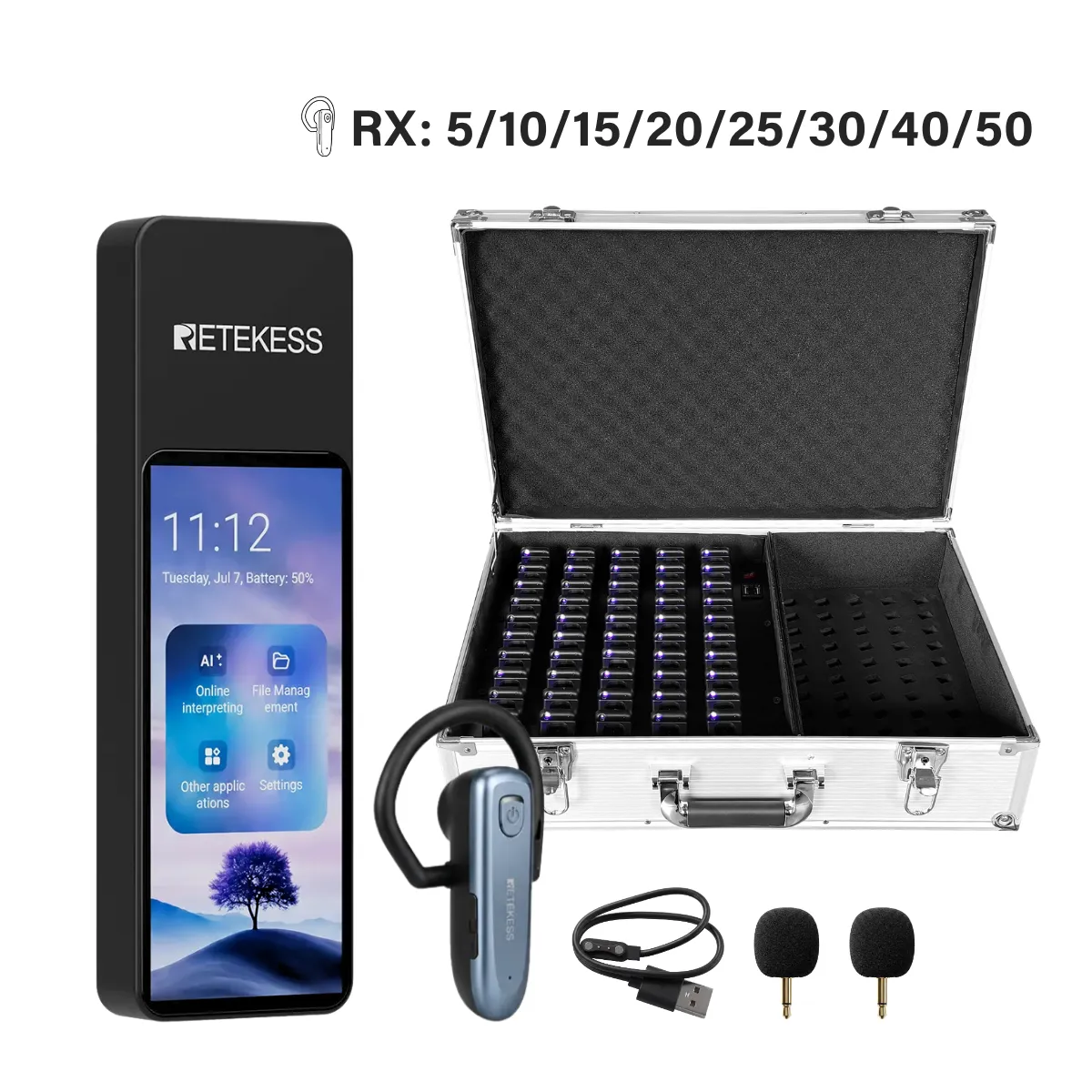
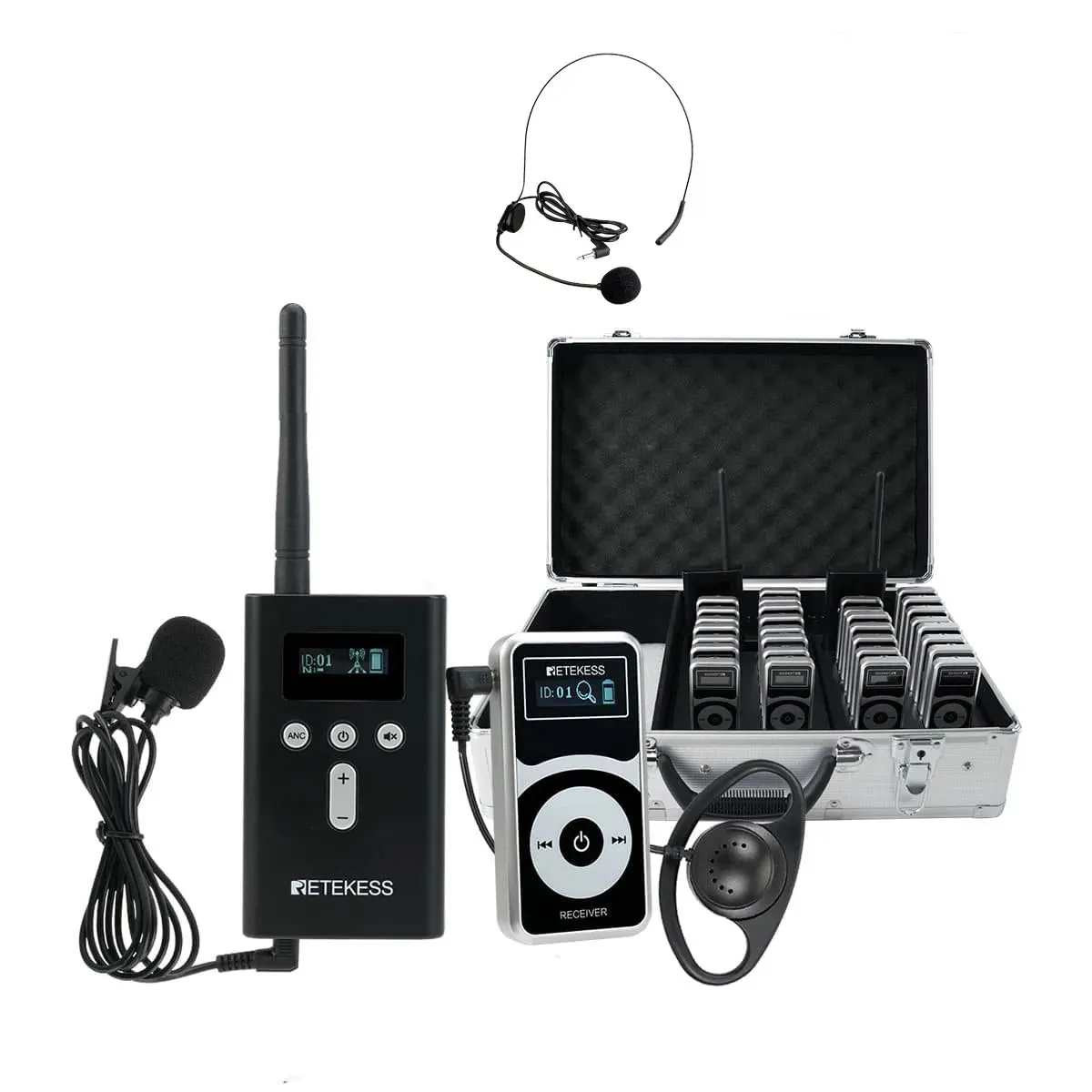
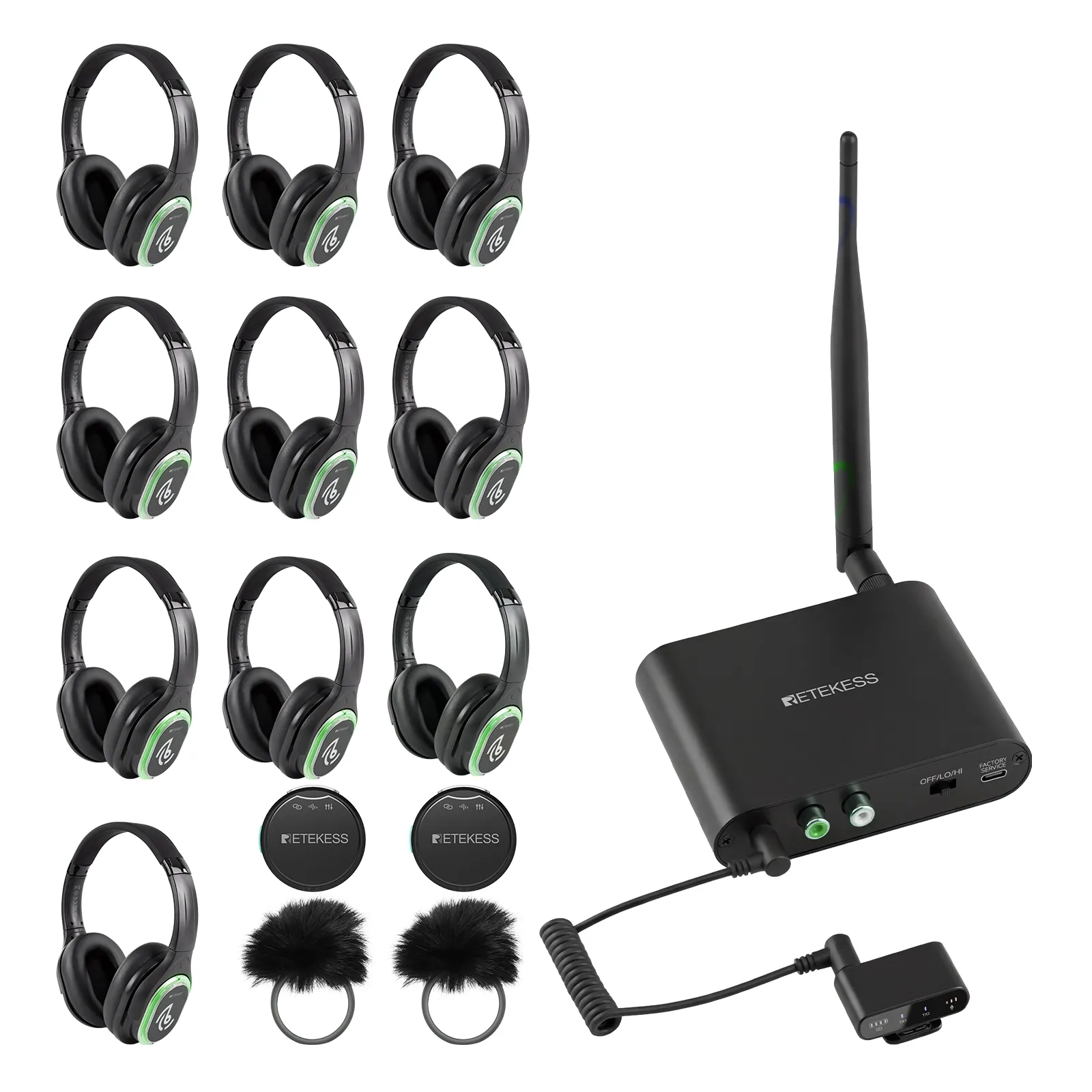
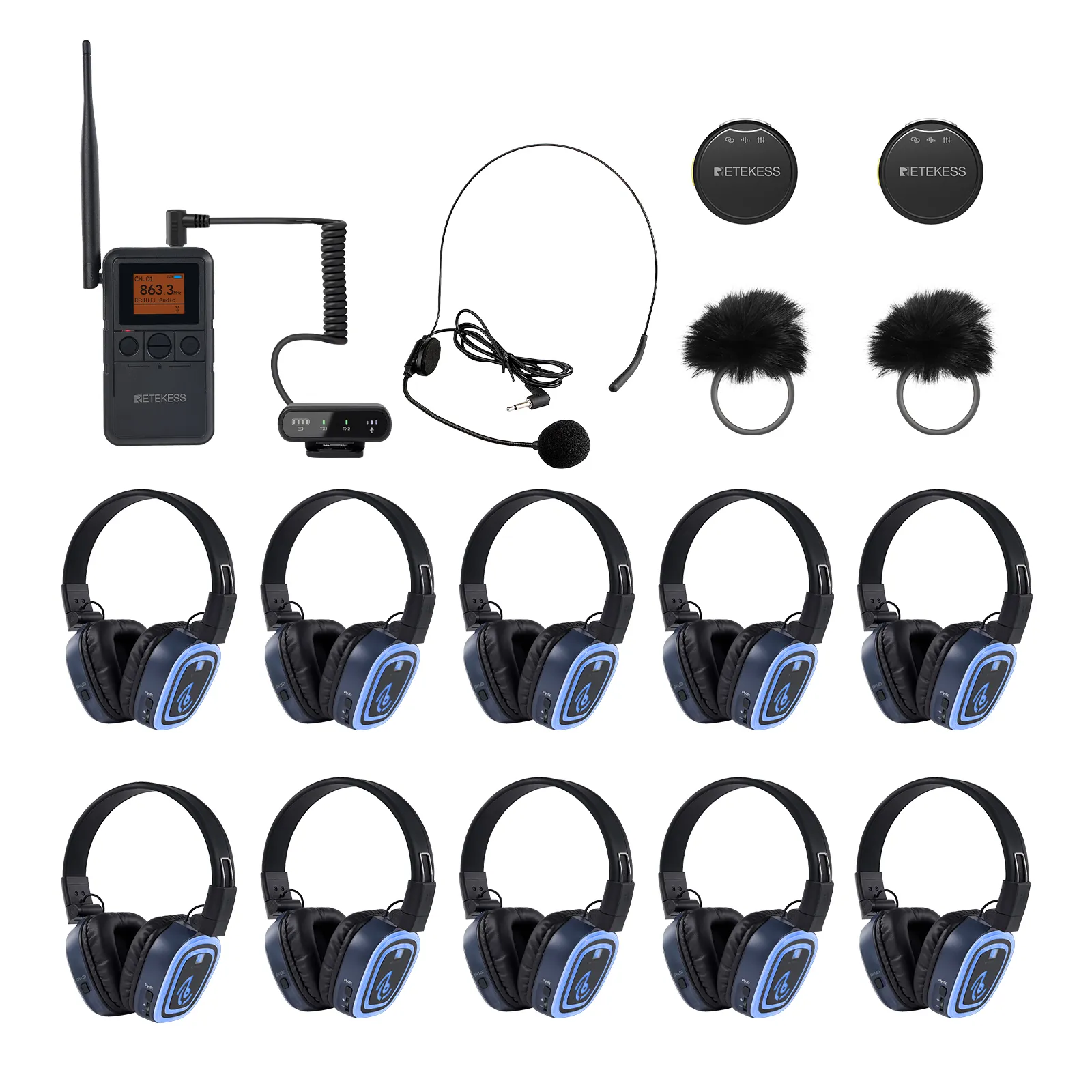
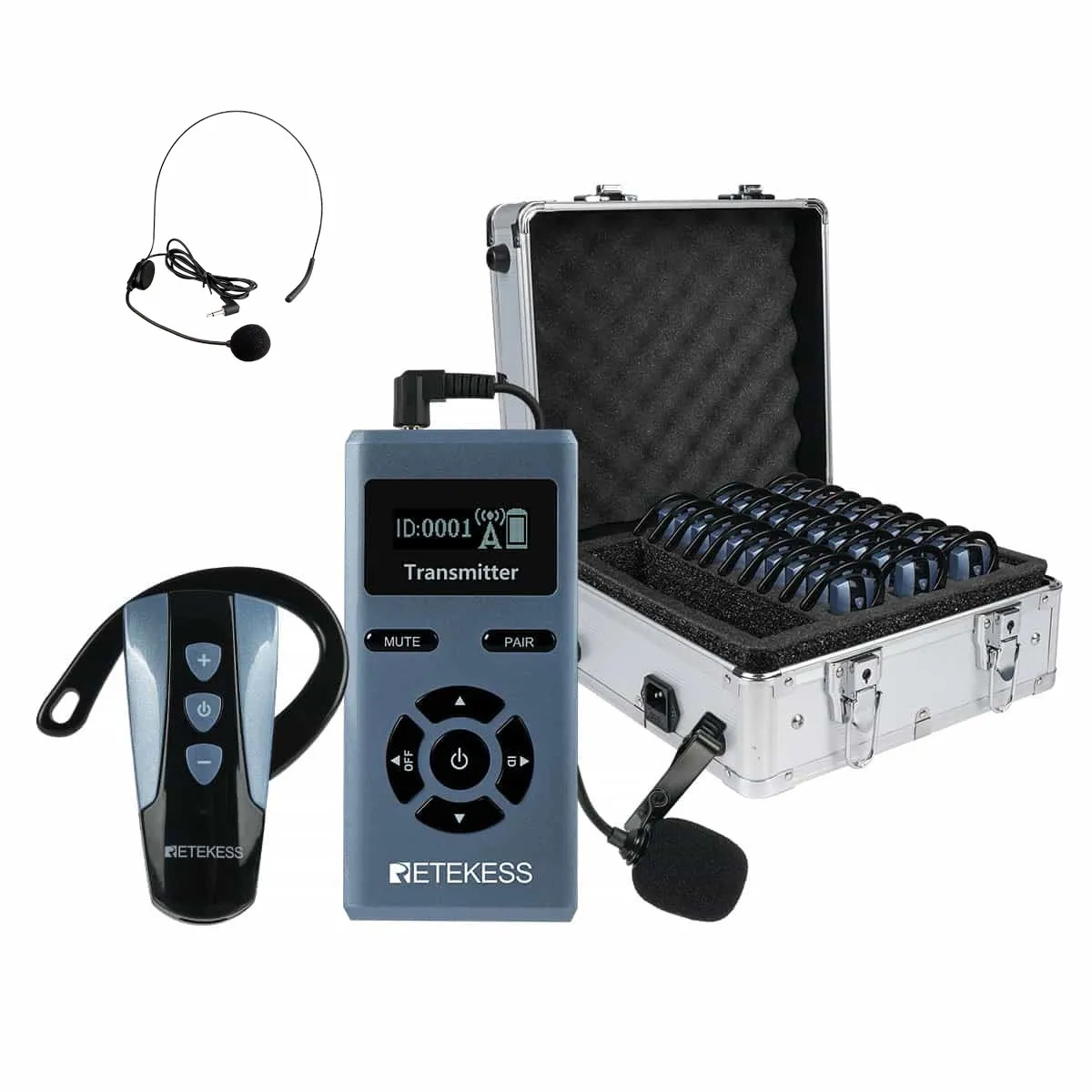
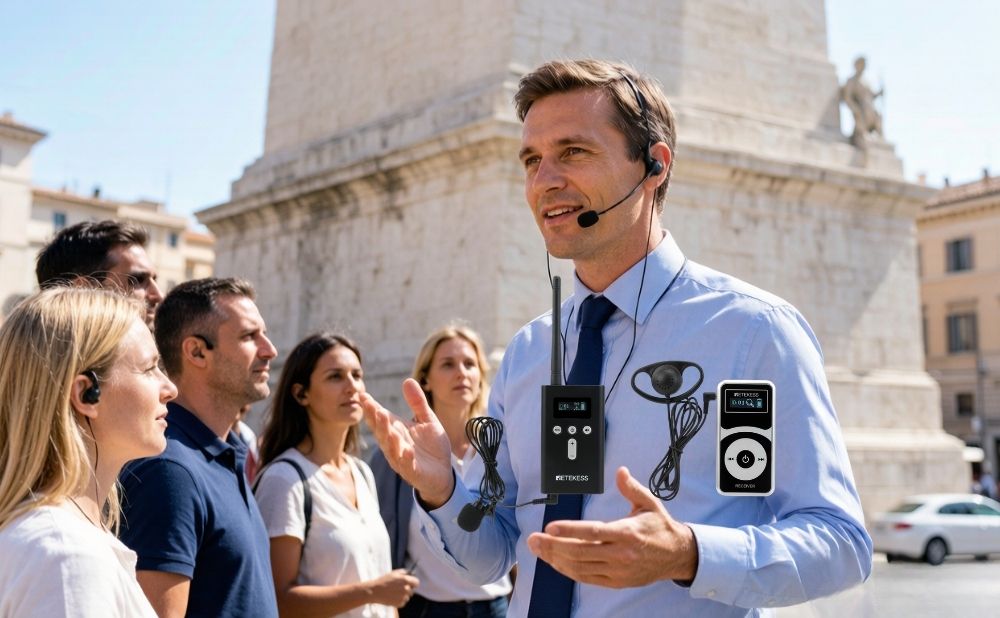
At minimum you need five things — one wireless transmitter with a microphone for the guide, one lightweight receiver per guest, earpieces or headphones, a multi-slot charging case, and a backup transmitter. Most first-time operators start with a packaged kit of one transmitter plus 10–15 receivers, add a charging case, and buy one spare transmitter. If you want self-guided tours instead of guide-led ones, add a system that plays pre-recorded narration.
Audio walking tours have quietly become one of the fastest-growing formats in travel: heritage walks, street-art routes, food crawls, ghost tours and photography walks all sell better when every guest can actually hear the guide — and when you don't have to shout on a busy street.
If you're assembling your first kit, this checklist covers what each item does, how many to buy, which specs matter outdoors, and the mistakes that cost operators money.
The essential audio walking tour equipment checklist
| # | Equipment | What it does | What to look for | Typical quantity |
|---|---|---|---|---|
| 1 | Wireless transmitter (with mic) | Sends the guide's voice to every guest | 100 m+ open-area range, 12 h+ battery, 3.5 mm mic input, one-touch mute | 1 per guide (buy 1 spare per business) |
| 2 | Receivers | Each guest hears the narration at their own volume | Ear-hook, under 50 g, auto-off when idle, individual volume control | 1 per guest + 2 spares |
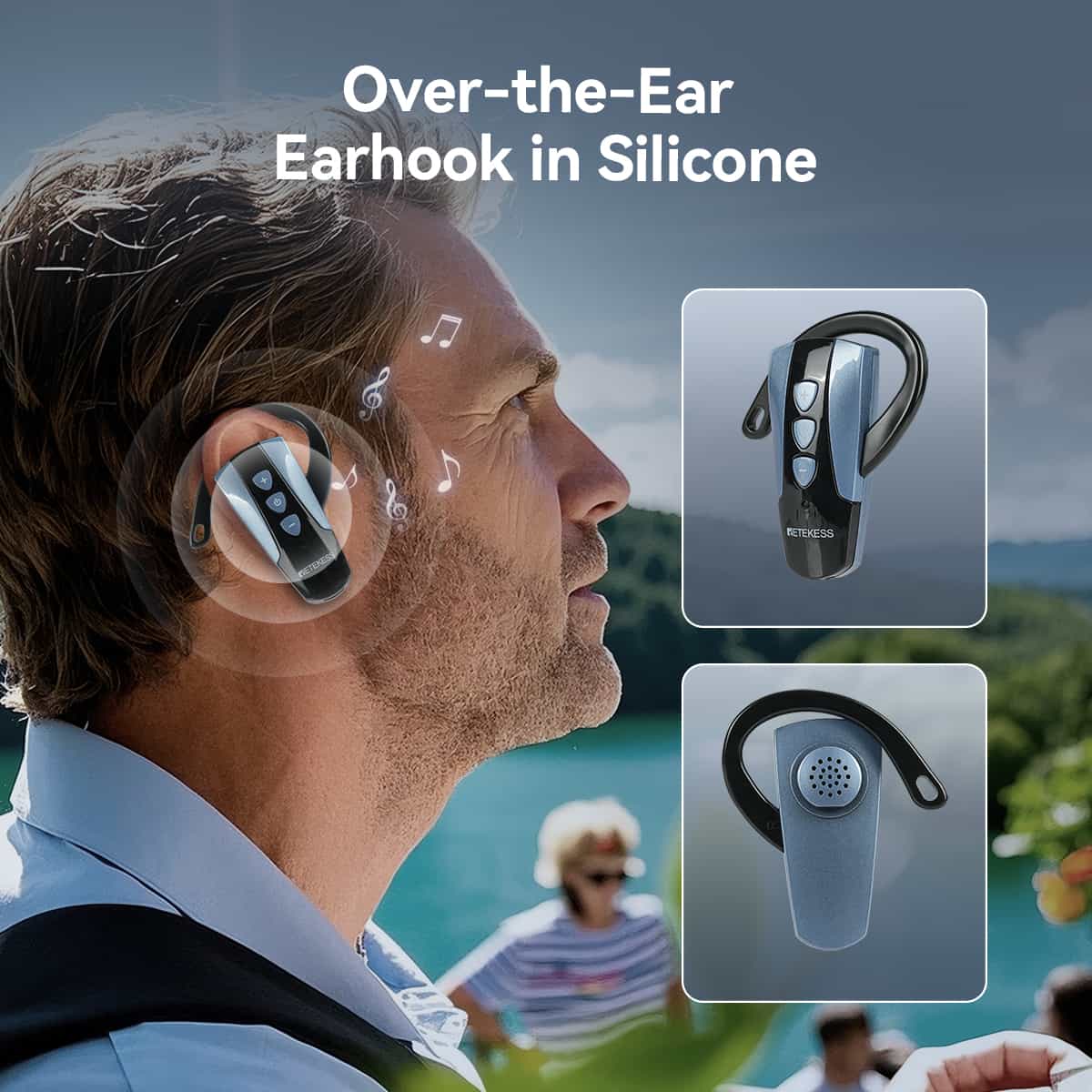
| 3 | Earpieces / headphones | Comfort and hygiene for shared devices | Silicone over-ear hook, fits left and right ear, easy to sanitize | 1 per receiver (+ disposable covers if desired) |
| 4 | Headset or lavalier microphone | Lets the guide speak hands-free at normal volume | Kits that include both styles are most flexible | 1 (or 2, so there's a clean spare) |
| 5 | Multi-slot charging case | Charges, stores and transports the whole fleet | 15/16/20/50-slot options; over-current and temperature protection | 1 per ~15–30 devices |
| 6 | Backup transmitter | Covers a failure mid-tour | Runs on a separate channel from the main unit | 1 |
| 7 | Lanyards & carry case | Distribution, collection and transport | Included in most kits | 1 set per device |
Everything above ships together in most tour guide system kits — which is usually cheaper than assembling the same list piece by piece.
One decision first: guided, self-guided, or both?
Your equipment list changes completely depending on which of the three formats you're running. Decide this before you buy.
1. Guide-led (live) tours — the guide speaks in real time. You need a transmitter + receivers. This is the classic setup and the simplest to run.
2. Self-guided (pre-recorded) tours — guests move at their own pace while a recorded track plays. You need receivers that support playback from internal storage, plus recorded content. Look for TF-card recording and playback, as on the Retekess TT133, which also accepts Bluetooth and AUX audio input — one fleet can do live narration in the morning and play pre-recorded multilingual tracks for independent walkers in the afternoon.
3. Hybrid — live for flagship departures, recorded for shoulder seasons and overflow demand. Buying a system that already supports both avoids a second purchase later. This is the option we'd recommend for most new operators.
How many receivers do you need?
Size the fleet to your largest realistic group, then add spares. Receivers get lost, dropped, and occasionally returned broken; two spares means a bad Monday doesn't force you to turn away a booking.
- Micro-tours (6–10 guests): a 1 transmitter + 6–10 receiver kit is enough.
- Standard city tours (10–15 guests): the most common starting point.
- Busy / high-season (15–30 guests): buy in one jump rather than two — prices per unit usually improve.
- Large groups & events (30–50+): transmitters pair with an effectively unlimited number of receivers, and quantities can be customized for any combination.
Battery and charging: doing the math before you buy
Outdoor walking tours punish batteries more than indoor ones: guides talk continuously, receivers stay powered for hours, and there's rarely a mid-tour charging window.
Three questions to answer:
- How long is your longest day? Look for 12 h+ transmitter runtime for all-day guiding. The T130P gives 20 hours on the transmitter; the TT106S gives 23 hours; the TT133 gives 12 hours.
- How long are receivers away from a charger? Receiver runtime of 36 h (T130P) to ~50 h (TT106S) lets you run several departures — or a full weekend — between charges. This is the single most useful spec for walking-tour operators.
- What happens between tours? A 15-, 16-, 20- or 50-slot charging case turns a nightly 45-minute cable ritual into a one-minute task, protects the ports from wear, and doubles as transport storage. Fast charge helps too: TT133 and TT126R charge in about 2 hours, so a forgotten midday charge is recoverable.
Specs that matter more outdoors than indoors
Walking tours have their own failure modes. Prioritize these:
- Range for stragglers. City intersections, traffic noise and photo stops spread a group out fast. 150–200 m of open-area coverage (TT133: 150 m; T130P: 160 m; TT106S: 200 m) keeps the narration connected even when the group is stretched across a block.
- Noise reduction against traffic. DSP noise reduction — ideally with adjustable levels, as on the T130P's four selectable settings — is what keeps narration intelligible on a busy avenue. Signal-to-noise ratio of ≥80 dB is a good benchmark.
- License-free frequency if you tour across borders. 2.4 GHz systems (TT133, TT106S) are worldwide public frequency bands, convenient for operators running tours in multiple countries. Always verify local regulations.
- Weather- and drop-resistance. Look for drop-proof, wear-resistant housings (a listed feature on the TT106S) — pavements are hard on equipment.
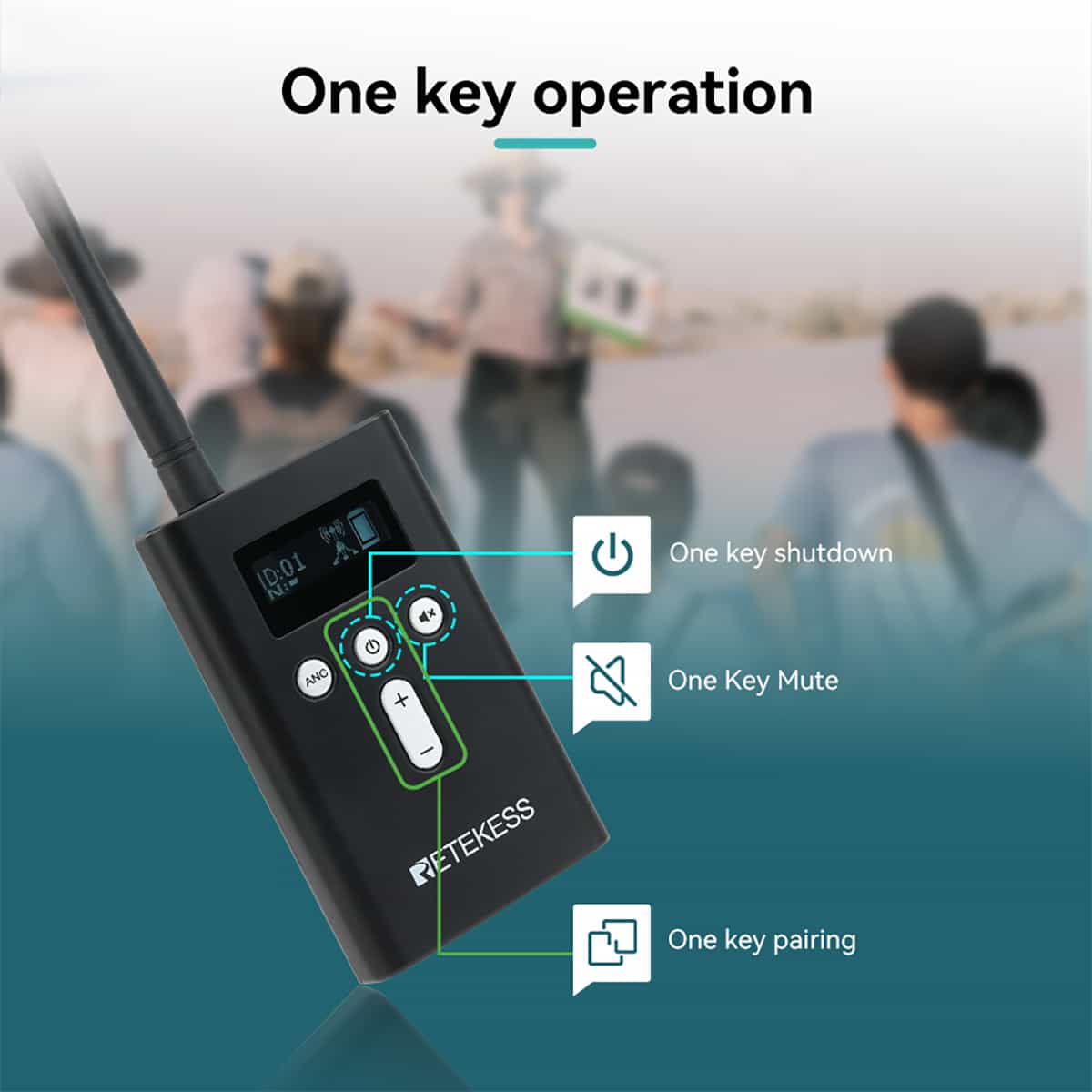
- Fast distribution and collection. Auto pairing (press once, all receivers sync) plus one-touch shutdown of all receivers from the transmitter can save ten minutes at the end of every departure.
Optional equipment worth budgeting for later
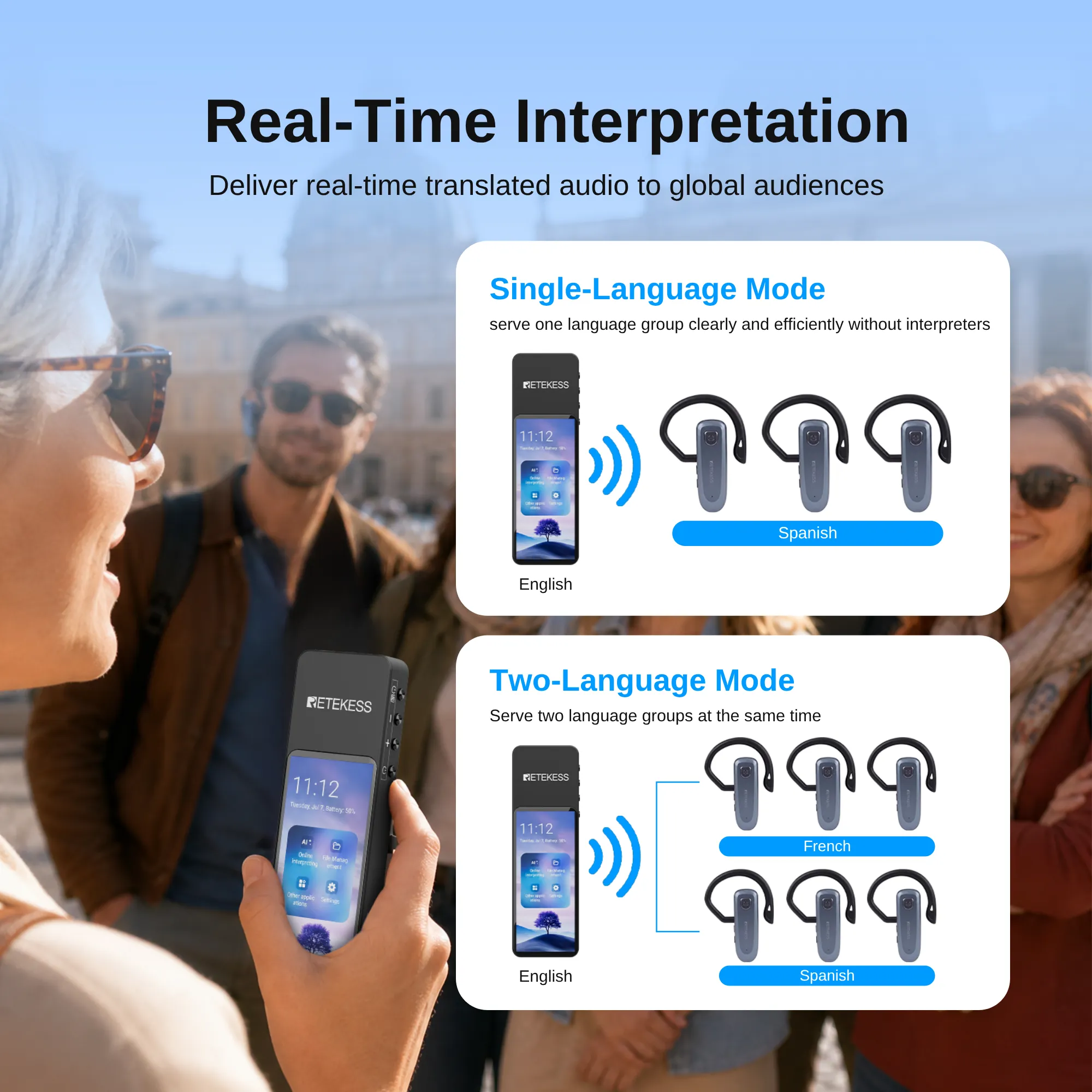
- A second transmitter for multilingual tours. Two channels let English and Spanish groups walk the same route at the same time — effectively doubling your sellable inventory on one street.
- Two-way communication units. For walking workshops, photo walks or training sessions where guests need to answer back, the TT126 / TT126R supports two-way interaction and even covers 280 m between its two transmitters.
- Branded equipment. Logo customization is available on tour guide systems, which turns your gear into sponsor inventory or a resaleable branded experience.
- Hygiene supplies. Sanitizing wipes and optional ear-hook covers for high-turnover destinations.
Equipment list by group size (quick reference)
| Group size | Starter kit | Notes |
|---|---|---|
| Up to 10 guests | 1 TX + 6–10 RX + 1 mic + charging case | Best for boutique and premium small-group tours |
| 10–15 guests | 1 TX + 10–15 RX + lavalier & headset mic + 16/20-slot case | The standard entry configuration |
| 15–30 guests | 1 TX + 15–30 RX + 2 mics + 20/50-slot case + 1 spare TX | Add the spare transmitter here — downtime now costs real money |
| 30–50+ guests | 1 TX + 30–50 RX (expandable) + 50-slot case + spare TX | Receivers expand without limit; ask about custom quantity combinations |
| Two languages at once | 2 TX on separate channels + full RX sets | Works best on 2.4 GHz or multi-channel UHF families such as T130P (49 channels) or TT106S (9,999 channels) |
Common first-time buying mistakes
- Buying too few receivers. You'll hit your first sell-out group in month two. Buy for peak, not average.
- Skipping the charging case to save money. This is the most common regret. Manually charging 30 units nightly means eventually forgetting one.
- Assuming all wireless gear is interchangeable. Receivers pair only within their family — TT106S is not compatible with TT106, T131P pairs with T130P, TT126R with TT126. Decide now which family you'll grow within.
- Buying one-way when you need two-way (or vice versa). Training and workshop formats need talk-back; a standard walking tour does not.
- Ignoring frequency regulations, especially for operators touring in more than one country.
- Not testing in the real route. Concrete, traffic and crowds change everything. Take advantage of the free demo testing Retekess offers (a deposit is required; apply through the Demo Application page and customer service arranges shipping within one business day).
- Overlooking warranty. Consumer audio gear typically carries 12 months; Retekess tour guide systems come with a 3-year warranty and free repairs during the warranty period.
Pre-departure operational checklist
Equipment isn't everything — the routine around it is what keeps tours running smoothly.
- Charge all units in the case overnight; verify the transmitter is full before leaving.
- Pair all receivers to the transmitter's channel; confirm channel memory holds after restart.
- Set receivers to lowest volume before handing out.
- Count units out and count them back in — every time.
- Carry one spare transmitter and at least two spare receivers.
- Sanitize ear-hooks between tours.
- Auto-shutoff check: enable the 20-minute idle shutdown so forgotten receivers don't drain.
- Do a 30-second sound check at the meeting point, not at stop three.
FAQ
Q: What is the basic equipment for an audio walking tour?
A: A wireless transmitter with a microphone for the guide, one receiver per guest, earpieces, a multi-slot charging case, and a spare transmitter. Everything else is optional.
Q: Do I need different equipment for a self-guided (recorded) walking tour?
A: Yes, you need receivers capable of playing pre-recorded tracks. Systems with internal recording and playback — such as the Retekess TT133 with TF-card playback, Bluetooth and AUX input — handle both live and recorded formats with one fleet.
Q: How much range do I need for a city walking tour?
A: Aim for 150–200 m (about 500–650 ft) of open-area range so guests who stop for photos or wait at crossings stay connected. The TT133 provides 150 m, the T130P 160 m and the TT106S 200 m.
Q: How long should the batteries last?
A: At least 12 hours on the transmitter for a full guiding day and 20–50 hours on receivers, so you can run several departures between charges. The T130P offers 20 hours (transmitter) and 36 hours (receivers); the TT106S offers 23 and ~50 hours.
Q: Can I start small and add receivers later?
A: Yes. Transmitters pair with an effectively unlimited number of receivers and components are sold individually, so start at your typical group size and expand within the same product family.
Q: Can I run two language groups on one system?
A: Yes, with one extra transmitter on a separate channel. Choose a system with enough channels — the T130P supports 49 simultaneous groups, the TT106S 9,999.
Q: Is there a cheaper way to test before committing?
A: Retekess offers free demo testing with a refundable-style deposit: request it through the Demo Application page, test the kit on your actual route, and get your answers in writing from support before you buy.
Leave a Reply



![[18th Anniversary] 18 Years of Echoing Excellence: Making Communication Easier, Connecting Trust Beyond Borders](https://res.retekess.com/z_file/20260716/retekess-brand-story-making-communication-easier_20260716151044_7682.jpg)
![[18 Years in Wireless Communication] Silent Disco Systems Anniversary Celebration: Top-Selling Headphones & Event Mechanics Revealed!](https://res.retekess.com/z_file/20260713/18-years-in-wireless-communication-silent-disco-systems-anniversary-celebration_20260713175011_5749.webp)
![[Anniversary Carnival] Ding-dong! 18th Anniversary Mega Sale on Guest Paging & Calling Systems: Full Reveal of 12+ Products & Promo Rules!](https://res.retekess.com/z_file/20260713/18th-anniversary-mega-sale-on-guest-paging-calling-systems_20260713175257_0295.webp)
![[Retekess 18th Anniversary Teaser] Tour Guide System Exclusive Perks: Sneak Peek at Event Dates & Mechanics!](https://res.retekess.com/z_file/20260713/retekess-18th-anniversary-tour-guide-system-exclusive-perks--2-_20260713180135_6435.webp)
Follow Us
Pay With


 Google
 Amazon
Comments (0)